


COLECALCIFEROL ALTER 50,000 IU HARD CAPSULES
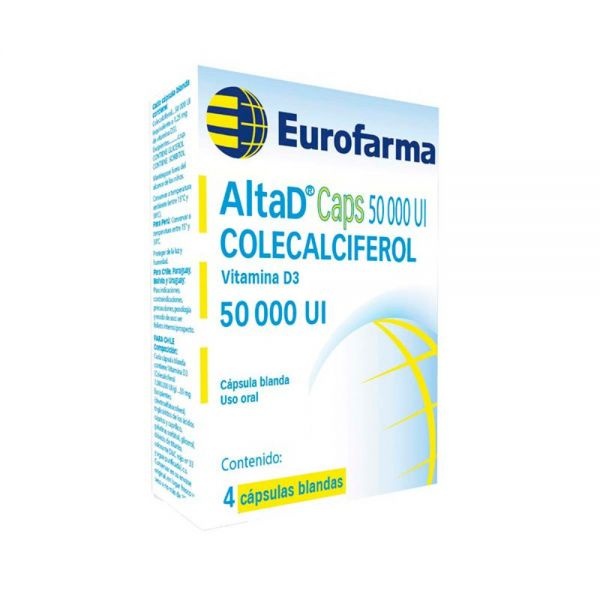



How to use COLECALCIFEROL ALTER 50,000 IU HARD CAPSULES
Translated with AI
This page provides general information and does not replace a doctor’s consultation. Always consult a doctor before taking any medication. Seek urgent medical care if symptoms are severe.
Show originalContents of the leaflet
Introduction
Package Leaflet: Information for the User
Colecalciferol Alter 25,000 IU Hard Capsules
Colecalciferol Alter 50,000 IU Hard Capsules
Read all of this leaflet carefully before you start taking this medicine because it contains important information for you.
- Keep this leaflet, you may need to read it again.
- If you have any further questions, ask your doctor, pharmacist, or nurse.
- This medicine has been prescribed for you only. Do not pass it on to others. It may harm them, even if their signs of illness are the same as yours.
- If you get any side effects, talk to your doctor, pharmacist, or nurse. This includes any possible side effects not listed in this leaflet. See section 4.
Contents of the Package Leaflet
- What is Colecalciferol Alter and what is it used for
- What you need to know before you take Colecalciferol Alter
- How to take Colecalciferol Alter
- Possible side effects
- Storage of Colecalciferol Alter
- Contents of the pack and other information
1. What is Colecalciferol Alter and what is it used for
Colecalciferol Alter contains the active substance colecalciferol (vitamin D3). Vitamin D3 can be found in some foods and is produced by the body when the skin is exposed to sunlight. Vitamin D helps the body absorb calcium in the kidneys and intestines, which helps form bones. A deficiency of vitamin D is the main cause of rickets (poor bone mineralization in children) and osteomalacia (inadequate bone mineralization in adults).
Colecalciferol is used to prevent and treat vitamin D deficiency in adults.

2. What you need to know before you take Colecalciferol Alter
Do not take Colecalciferol Alter:
- if you are allergic to vitamin D3 or any of the other ingredients of this medicine (listed in section 6);
- if you have high levels of calcium in your blood (hypercalcemia) or urine (hypercalciuria);
- if you have kidney stones (renal calculi) or severe kidney failure;
- if you have high levels of vitamin D3 in your blood (hypervitaminosis D)
- if you are allergic to peanuts or soy, as it contains soybean oil.
Warnings and precautions
Consult your doctor, pharmacist, or nurse before taking colecalciferol if you:

- are being treated with certain heart medications (e.g., cardiac glycosides, such as digoxin).
- have sarcoidosis (an autoimmune disease that can cause increased levels of vitamin D in the body).
- are being treated with diuretics (e.g., benzothiadiazine)
- are immobilized
- have pseudohypoparathyroidism
- are being treated with medications that contain vitamin D3, or are taking foods or milk enriched with vitamin D3.
- are likely to be exposed to a lot of sunlight while using colecalciferol
- are taking other calcium supplements. Your doctor should monitor your blood calcium levels to ensure they are not too high during your treatment with colecalciferol.
- have kidney disease or tend to form kidney stones. Your doctor may want to monitor your blood and urine calcium levels.
- your doctor should monitor your blood calcium levels through laboratory tests if your daily intake of vitamin D3 exceeds 1,000 IU for a prolonged period.
Children and adolescents.
The use is not recommended in children and adolescents under 18 years of age.
Other medicines and Colecalciferol Alter
Tell your doctor or pharmacist if you are taking, have recently taken, or might take any other medicines. This is especially important if you are taking:
- medicines for heart or kidney disease, such as cardiac glycosides (e.g., digoxin) or diuretics (e.g., bendroflumethiazide). When these medicines are used at the same time as vitamin D3, they can cause a significant increase in blood and urine calcium levels.
- medicines that contain vitamin D3 or foods rich in vitamin D3, such as some types of milk enriched with vitamin D3.
- actinomycin (a medicine used to treat some types of cancer) and imidazole antifungals (e.g., clotrimazole and ketoconazole, which are medicines used to treat fungal diseases). These medicines can interfere with the processing of vitamin D3 in the body.
- medicines for the treatment of tuberculosis, such as rifampicin and isoniazid
- the following medicines, as they may interfere with the effect or absorption of vitamin D3:
- antiepileptic medicines (anticonvulsants), barbiturates;
- glucocorticoids (steroid hormones such as hydrocortisone or prednisolone), as they may reduce the effect of vitamin D3;
- medicines that lower cholesterol levels in the blood (such as cholestyramine or colestipol);
- certain medicines used to lose weight by reducing fat absorption (e.g., orlistat);
- certain laxatives (such as liquid paraffin).
Taking Colecalciferol Alter with food, drinks, and alcohol
You should take colecalciferol preferably with food to help absorb vitamin D3.
Pregnancy, breastfeeding, and fertility
 If you are pregnant or breastfeeding, think you may be pregnant, or are planning to have a baby, ask your doctor or pharmacist for advice before taking this medicine.
This high concentration is not recommended for use in pregnant or breastfeeding women.
Driving and using machines
Information on the possible effects of this medicine on the ability to drive and use machines is limited. However, it is not expected to affect your ability to drive and use machines.
Excipients
Sucrose
This medicine contains sucrose. If your doctor has told you that you have an intolerance to some sugars, consult with them before taking this medicine.
Soybean oil
This medicine contains soybean oil. Do not use this medicine if you are allergic to peanuts or soy.
Orange Yellow S
This medicine may cause allergic reactions.
3. How to take Colecalciferol Alter
Follow the instructions for administration of the medicine contained in this leaflet or as indicated by your doctor or pharmacist. If you are unsure, ask your doctor or pharmacist.
The capsule should be swallowed whole (e.g., with water)
Colecalciferol should be taken preferably with food.
For patients with difficulty swallowing, the capsule can be opened and the dispersible granules poured into a half glass of water to facilitate administration.
Use in adults
The recommended dose is one 25,000 IU capsule per week for the first month. After the first month, the dose may be reduced.
High doses may be required:
50,000 IU/week for 6-8 weeks.
This initial treatment may be followed by maintenance therapy, as indicated by your doctor.
Your doctor will adjust the dose for you.
Pediatric population
Colecalciferol is not recommended in children and adolescents under 18 years of age.
Pregnancy and breastfeeding
Colecalciferol is not recommended.
If you take more Colecalciferol Alter than you should
If you take more than the prescribed amount, stop taking the medicine and call your doctor. If you cannot contact your doctor, go to the emergency department of the nearest hospital and take the medicine package with you.
You can also contact the Toxicology Information Service, phone 915620420, indicating the medicine and the amount taken.
The most common symptoms of overdose are: nausea, vomiting, excessive thirst, excessive urine production for 24 hours, constipation, dehydration, and high levels of calcium in the blood and urine (hypercalcemia and hypercalciuria) determined in clinical tests.
If you forget to take Colecalciferol Alter
If you forget to take a dose of colecalciferol, take the next missed dose as soon as possible. Then, take the next dose at the usual time. However, if it is close to the time of the next dose, do not take the missed dose and take the next dose at the usual time.
If you have any further questions on the use of this medicine, ask your doctor or pharmacist.

4. Possible side effects
Like all medicines, this medicine can cause side effects, although not everybody gets them.
The possible side effects associated with the use of colecalciferol may be:
Uncommon(affect up to 1 in 100 people):
- Excess calcium in the blood (hypercalcemia)
- Excess calcium in the urine (hypercalciuria)
Rare(affect up to 1 in 1,000 people):
- Skin rash (hives or skin eruption)
- Itching (pruritus)
- Urticaria
Reporting of side effects
If you experience any side effects, talk to your doctor, pharmacist, or nurse. This includes any possible side effects not listed in this leaflet. You can also report side effects directly through the Spanish Medicines Monitoring System for Human Use: https://www.notificaram.es. By reporting side effects, you can help provide more information on the safety of this medicine.
5. Storage of Colecalciferol Alter
Keep this medicine out of the sight and reach of children.
Do not use this medicine after the expiry date which is stated on the carton after EXP. The expiry date is the last day of the month shown.
Store below 25°C.
Medicines should not be disposed of via wastewater or household waste. Ask your pharmacist how to dispose of medicines no longer required. These measures will help protect the environment.
6. Contents of the pack and other information
Composition of Colecalciferol Alter
The active substance is colecalciferol (vitamin D3)
One capsule contains:
25,000 IU (0.625 mg) of colecalciferol in the form of colecalciferol concentrate (powder).
50,000 IU (1.250 mg) of colecalciferol in the form of colecalciferol concentrate (powder).
The other excipients are:
Colecalciferol Alter 25,000 IU hard capsules:
Contents of the hard capsule:
Gelatin, sucrose, cornstarch, partially hydrogenated soybean oil, all-rac-α-tocopherol, silicon dioxide.
Composition of the capsule
Body of the capsule: quinoline yellow (E-104), orange yellow S (E-110), titanium dioxide (E-171), gelatin.
Cap of the capsule: iron oxide red (E-172), orange yellow S (E-110), titanium dioxide (E-171), gelatin.
Colecalciferol Alter 50,000 IU hard capsules:
Contents of the hard capsule
Gelatin, sucrose, cornstarch, partially hydrogenated soybean oil, all-rac-α-tocopherol, silicon dioxide.
Composition of the capsule
Body of the capsule: quinoline yellow (E-104), orange yellow S (E-110), titanium dioxide (E-171), gelatin.
Cap of the capsule: iron oxide black (E-172), titanium dioxide (E-171), gelatin.
Appearance of the product and pack contents
Colecalciferol Alter 25,000 IU is a hard capsule with a yellow body and orange cap. The capsule size is 18 mm. It contains a white-yellowish powder and is supplied in blisters of Polyamide/Aluminum/PVC - Aluminum in cardboard boxes.
Each box may contain 4 and 8 capsules.
Colecalciferol Alter 50,000 IU is a hard capsule with a yellow body and black cap. The capsule size is 24 mm. It contains a white-yellowish powder and is supplied in blisters of Polyamide/Aluminum/PVC - Aluminum in cardboard boxes.
Each box may contain 4 capsules.
Marketing Authorization Holder and Manufacturer
Laboratorios Alter, S.A.
Mateo Inurria, 30
28036 Madrid
Spain
Date of the last revision of this leaflet: February 2024
Detailed and updated information on this medicine is available on the website of the Spanish Agency for Medicines and Health Products (AEMPS) http://www.aemps.gob.es/.
- Country of registration
- Dosage formCAPSULE, 50,000 IU
- ATC codeA11CC05
- Average pharmacy price18.73 EUR
- Active substance
- Prescription requiredYes
- Manufacturer
- This information is for reference only and does not constitute medical advice. Always consult a doctor before taking any medication. Oladoctor is not responsible for medical decisions based on this content.
- Alternatives to COLECALCIFEROL ALTER 50,000 IU HARD CAPSULESDosage form: CAPSULE, 25,000 IUActive substance: colecalciferolManufacturer: Laboratorios Alter S.A.Prescription requiredDosage form: CAPSULE, 50,000 IUActive substance: colecalciferolManufacturer: Laboratorios Alter S.A.Prescription requiredDosage form: CAPSULE, 50,000 IUActive substance: colecalciferolManufacturer: Consilient Health LimitedPrescription required

Online doctors for COLECALCIFEROL ALTER 50,000 IU HARD CAPSULES
Discuss questions about COLECALCIFEROL ALTER 50,000 IU HARD CAPSULES, including use, safety considerations and prescription review, subject to medical assessment and local regulations.








.jpg)


Frequently Asked Questions
