






How to use CODEISAN 28.7 mg TABLETS
Translated with AI
This page provides general information and does not replace a doctor’s consultation. Always consult a doctor before taking any medication. Seek urgent medical care if symptoms are severe.
Show originalContents of the leaflet
Introduction
Package Leaflet: Information for the User
Codeisan 28.7 mg Tablets
Codeine Phosphate Hemihydrate
Read all of this leaflet carefully before you start taking this medicine because it contains important information for you.
- Keep this leaflet, you may need to read it again.
- If you have any further questions, ask your doctor or pharmacist.
- This medicine has been prescribed for you only. Do not pass it on to others. It may harm them, even if their signs of illness are the same as yours.
- If you get any side effects, talk to your doctor or pharmacist. This includes any possible side effects not listed in this leaflet. See section 4.
Contents of the package leaflet:
- What is Codeisan and what is it used for
- What you need to know before you take Codeisan
- How to take Codeisan
- Possible side effects
- Storage of Codeisan
- Contents of the pack and other information
1. What is Codeisan and what is it used for
Codeine phosphate is a water-soluble salt of codeine. Codeine calms cough (antitussive), so it is used in the symptomatic treatment of unproductive cough (cough without secretions).
Codeine can also be used in children over 12 years of age for the short-term treatment of moderate pain that is not relieved by other painkillers such as paracetamol or ibuprofen alone.
This medication contains codeine. Codeine belongs to a group of medications called opioid analgesics that work by relieving pain. It can be used alone or in combination with other painkillers such as paracetamol.

2. What you need to know before you take Codeisan
Do not take Codeisan
- if you are allergic to codeine or any of the other ingredients of this medicine
(listed in section 6),
- if you have respiratory problems (chronic obstructive pulmonary disease, acute asthma attacks or respiratory depression),
if you have paralytic ileus (intestinal obstruction) or are at risk of having it,
- if you have diarrhea associated with pseudomembranous colitis or diarrhea caused by poisoning,
- to relieve pain in children or adolescents (0-18 years of age) after tonsillectomy or adenoidectomy due to obstructive sleep apnea syndrome
- if you are under 12 years of age.
- if you know you metabolize codeine very quickly into morphine.
- if you are breastfeeding.
Warnings and precautions
Consult your doctor or pharmacist before starting to take this medicine.
- If you have heart, lung, liver, gallbladder, or kidney problems, as well as in cases of prostate disorders (prostatic hypertrophy), urethral stricture (urethral stenosis), adrenal insufficiency (Addison's disease), intestinal obstructive or inflammatory disorders, chronic ulcerative colitis, acute pancreatitis, hypothyroidism, multiple sclerosis.
- Codeine is converted into morphine in the liver by an enzyme. Morphine is the substance that produces the effect of codeine and relieves pain and cough symptoms. Some people have a variant of this enzyme that can affect them differently. In some people, morphine is not produced or is produced in very low amounts, and it will not provide sufficient pain or cough relief. Other people are more likely to suffer from serious adverse reactions because they produce a very high amount of morphine. If you experience any of the following side effects, you should stop taking this medicine and seek medical help immediately: slow or shallow breathing, confusion, drowsiness, constricted pupils, discomfort or feeling of discomfort, constipation, loss of appetite.
- Elderly or debilitated people are usually more sensitive to the effects and adverse reactions of this medicine, especially respiratory depression.
- In the event of a severe head injury (cranial trauma) and increased pressure inside the brain (intracranial), codeine may increase the pressure of the cerebrospinal fluid, potentially increasing the respiratory depressant effect (slow or insufficient breathing).
- Like other opioids, codeine may inhibit intestinal movement, worsening constipation in patients with chronic constipation.
- Abuse and dependence:Prolonged and excessive administration of codeine can cause dependence and/or tolerance, especially in people with a tendency to abuse and addiction. Codeine should be used with caution in patients with a history of drug abuse or dependence. After prolonged treatments, the administration should be gradually discontinued as indicated by your doctor.
- This medicine should not be taken for more than three days. If the pain does not improve after three days, ask your doctor for advice.
Children and adolescents
- Use in children and adolescents after surgery
Codeine should not be used to relieve pain in children and adolescents after tonsillectomy or adenoidectomy due to obstructive sleep apnea syndrome.
- Use in children with respiratory problems
Codeine is not recommended for use in children with respiratory problems, as the symptoms of morphine toxicity can be worse in these children.
- Adolescents over 12 years of age
Codeine is not recommended for use in adolescents with respiratory problems for the treatment of cough.
- Codeine is not recommended for use in children who may have respiratory problems, such as neuromuscular disorders, severe respiratory or heart disease, lung or upper airway infections, multiple trauma, or those who have undergone extensive surgical procedures.
- Children under 12 years of age are at a higher risk of suffering from adverse reactions after taking codeine; these reactions can be very serious in children who break down codeine into a large amount or quickly (extensive or ultra-rapid metabolizers).
Using Codeisan with other medicines
Tell your doctor or pharmacist if you are taking, have recently taken, or might take any other medicines.
- Central nervous system depressants (CNS): The administration of codeine with other CNS depressant drugs (such as narcotic analgesics, anxiolytics, antipsychotics, neuromuscular blockers, antidepressants, antihistamines H1, neuroleptics, adrenergic blockers) may cause additive CNS depression, so the dose should be reduced.
- The concomitant use of codeine and sedative medications such as benzodiazepines or related medications increases the risk of drowsiness, difficulty breathing (respiratory depression), coma, and can be potentially fatal. Due to this, concomitant use should only be considered when other treatment options are not possible.
However, if your doctor prescribes codeine with sedative medications, your doctor should limit the dose and duration of concomitant treatment.
Tell your doctor about all sedative medications you are taking and closely follow your doctor's dose recommendation. It may be helpful to inform friends or family members who are aware of the signs and symptoms indicated above. Contact your doctor when you experience such symptoms.
- The use of opioid agonists such as buprenorphine may increase the effects of codeine. The use of opioid antagonists such as naltrexone may delay the effects of codeine.
- The simultaneous administration with anticholinergics may cause paralytic ileus and/or urinary retention.
- The use of antidepressants such as monoamine oxidase inhibitors (MAOIs) or tricyclic antidepressants may potentiate the effects of codeine or antidepressants.
- The administration of antihistamines such as hydroxyzine may produce increased analgesia and sedation.
Some phenothiazines (used for nervous, mental, or emotional disorders) increase the analgesia induced by codeine, while others decrease it.
Using Codeisan with alcohol
Consuming alcohol may increase drowsiness by potentiating the depressant effect of codeine on the central nervous system.
Pregnancy, breastfeeding, and fertility
If you are pregnant, think you may be pregnant, or plan to become pregnant, consult your doctor or pharmacist before using this medicine.
Pregnancy
Codeine is not recommended during pregnancy. Its use may cause physical dependence in the fetus, leading to withdrawal symptoms in the newborn.
Breastfeeding
Do not take codeine if you are breastfeeding. Codeine and morphine pass into breast milk.
Driving and using machines
Codeine may cause drowsiness, altering the mental and/or physical ability required for the performance of potentially hazardous activities, such as driving vehicles or operating machines. Avoid driving vehicles or using machines during treatment.
Use in athletes
This medication contains a component that can establish a positive opioid control test result.
Codeisan contains sodium
This medicine contains less than 1 mmol of sodium (23 mg) per tablet; this is, essentially "sodium-free".
3. How to take Codeisan
Follow exactly the administration instructions of this medicine indicated by your doctor or pharmacist. In case of doubt, consult your doctor or pharmacist again.
The doses must be individualized for each patient. Codeine should be used in the lowest effective dose for the shortest possible time. This dose can be taken up to 4 times a day, at intervals of not less than 6 hours. The lowest effective dose should be used to control symptoms.
The administration of the medicine is subject to the appearance of symptoms, and the dosage can be reduced as the symptoms disappear.
This medicine should not be used for more than 3 days. If the pain does not improve after 3 days, ask your doctor for advice.
Adults
Pain reliever:
The recommended dose is 1 tablet every 6 hours.
If the desired analgesic effect is not achieved, the dose can be increased to 2 tablets per dose, up to a maximum of 6 tablets in 24 hours.
Cough suppressant:
The recommended dose is 1 tablet every 6 hours.
Use in children and adolescents
This medicine is contraindicated in children under 12 years of age.
Children over 12 years of age
Pain reliever:
Children over 12 years of age should take 1 tablet every 6 hours, as needed. If the desired analgesic effect is not achieved, the dose can be increased to 2 tablets per dose, up to a maximum of 6 tablets in 24 hours.
Children under 12 years of age should not take Codeisan due to the risk of serious respiratory problems.
Elderly population
Since these patients may eliminate codeine more slowly, a dose adjustment may be necessary. The maximum daily dose should be reduced and the administration interval increased. The dose should be individualized for each patient.
The score line is only for breaking the tablet if you find it difficult to swallow it whole.
If you take more Codeisan than you should:
In codeine poisoning, the following signs and symptoms may appear:
- Respiratory depression
- Drowsiness that progresses to stupor or coma
- Muscle weakness
- Cold and clammy skin
- Bradycardia (decreased heart rate)
- Hypotension (decreased blood pressure)
- Miosis (constricted pupils)
And in severe poisoning:
- Apnea (lack of breathing), circulatory collapse, cardiac arrest, and death.
Treatment
- Reestablish adequate respiratory exchange through a permeable airway and assisted ventilation.
- Administration of activated charcoal.
- Aspiration and gastric lavage may be useful to eliminate the unabsorbed drug and should be followed by the administration of activated charcoal.
Naloxone (which counteracts the effect of codeine) is the antidote for respiratory depression and should be administered intravenously in adequate doses.
In case of overdose or accidental ingestion, consult the Toxicological Information Service. Telephone 91 562 04 20.
If you forget to take Codeisan
Do not take a double dose to make up for forgotten doses. Continue taking your normal dose when it is due.
If you stop taking Codeisan
Physical dependence and tolerance may appear with repeated administration of this drug.
The administration should be gradually discontinued after prolonged use.
If you have any further questions on the use of this medicine, ask your doctor or pharmacist.

4. Possible side effects
Like all medicines, this medicine can cause side effects, although not everybody gets them.
The side effects are generally mild. Please be aware that many of the effects can be symptoms of your illness and will therefore improve when you start to feel better.
Frequency not known (cannot be estimated from the available data):
- Mood changes.
- Headache, drowsiness.
- Tachycardia, bradycardia, and palpitations
- Hypotension
- Respiratory depression
- Constipation, nausea, vomiting, dry mouth, pancreatitis
- Itching
- Dizziness
- Biliary spasms
- Urinary retention
Reporting of side effects:
If you experience any side effects, talk to your doctor or pharmacist, even if it is possible side effects not listed in this leaflet. You can also report side effects directly through the Spanish Medicines Monitoring System for Human Use: https://www.notificaram.es. By reporting side effects, you can help provide more information on the safety of this medicine.
5. Storage of Codeisan
Keep this medicine out of the sight and reach of children.
Do not use this medicine after the expiry date which is stated on the carton after EXP. The expiry date is the last day of the month shown.
No special storage conditions are required.
Keep in the original packaging, perfectly closed.
Medicines should not be disposed of via wastewater or household waste. Return the containers and any unused medicines to the pharmacy. If you have any doubts, ask your pharmacist how to dispose of the containers and any unused medicines. This will help protect the environment.
6. Contents of the pack and other information
Composition of Codeisan
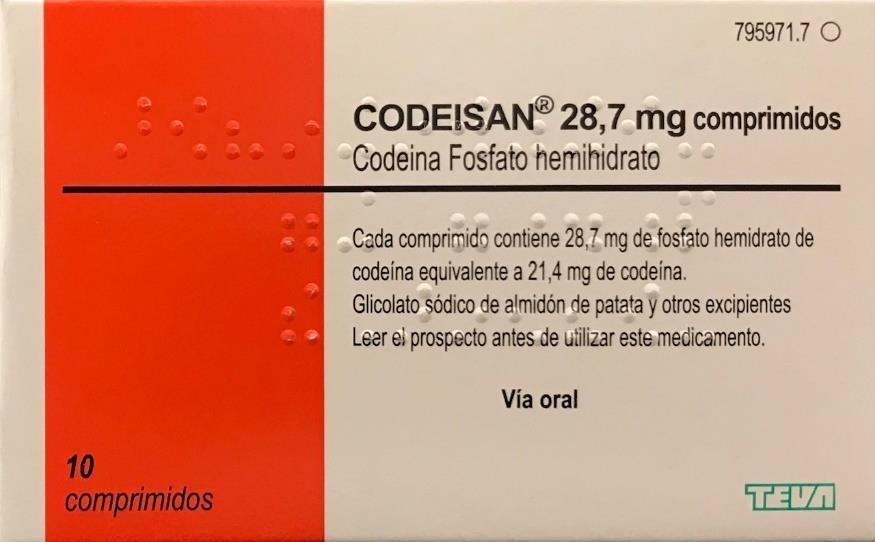
The active ingredient is codeine phosphate hemihydrate (28.7 mg). Each tablet contains 28.7 mg of codeine phosphate equivalent to 21.4 mg of codeine.
The other ingredients are: talc (E-553b), calcium phosphate dibasic, microcrystalline cellulose (E-460i), magnesium stearate (E-470b), colloidal silicon dioxide (E-551), and sodium carboxymethylcellulose type A (from potato).
Appearance of the product and contents of the pack
Codeisan are round, flat, and beveled white tablets, with one face engraved with C and the other scored.
Codeisan is available in packs of 10 and 20 tablets.
Not all pack sizes may be marketed.
Marketing authorization holder
Teva Pharma S.L.U.
C/ Anabel Segura 11, Edificio Albatros B, 1ª planta
28108 Alcobendas- Madrid
Manufacturer
Teva Pharma S.L.U.
Polígono Malpica, C/ C, 4.
50016 Zaragoza
Date of last revision of this leaflet: June 2018
Detailed and updated information on this medicine is available on the website of the Spanish Agency for Medicines and Health Products (AEMPS)
http://www.aemps.gob.es/
-

- Country of registration
- Dosage formTABLET, 28.7 mg codeine phosphate hemihydrate
- ATC codeR05DA04
- Average pharmacy price4.48 EUR
- Active substance
- Prescription requiredYes
- Manufacturer
- This information is for reference only and does not constitute medical advice. Always consult a doctor before taking any medication. Oladoctor is not responsible for medical decisions based on this content.
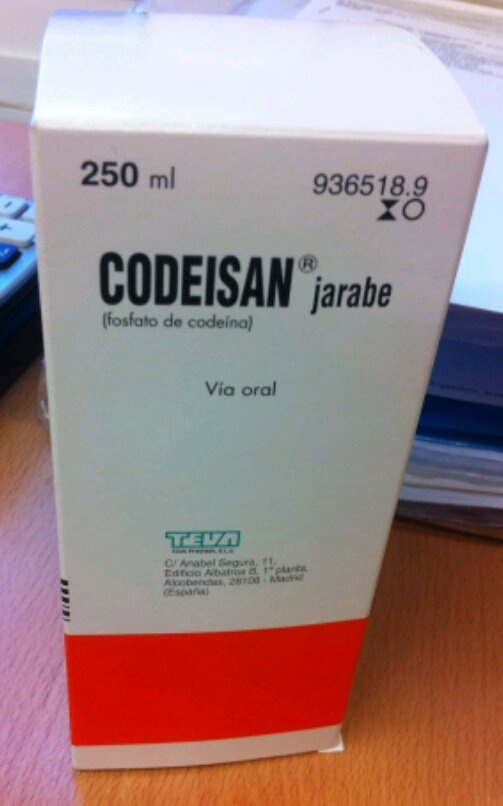
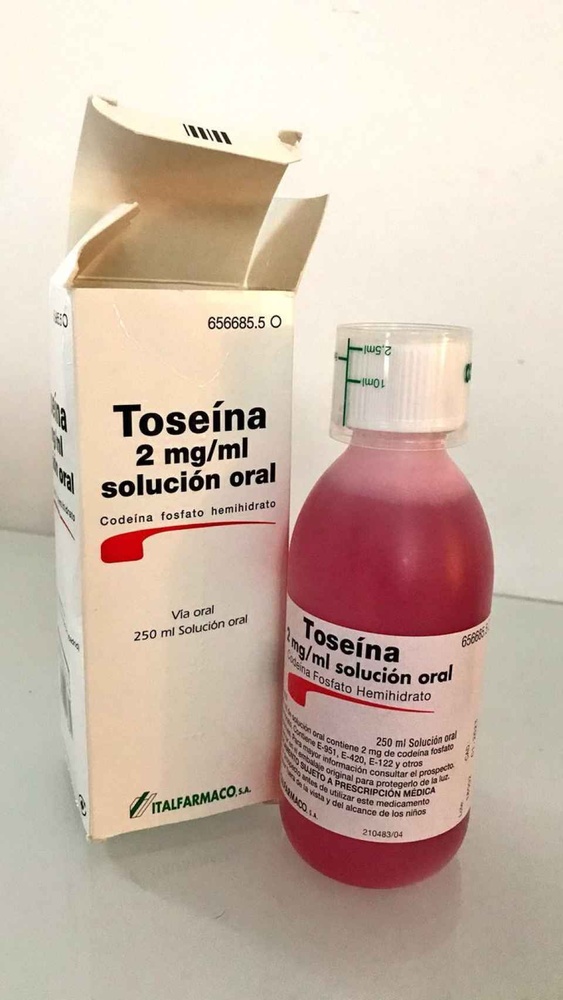
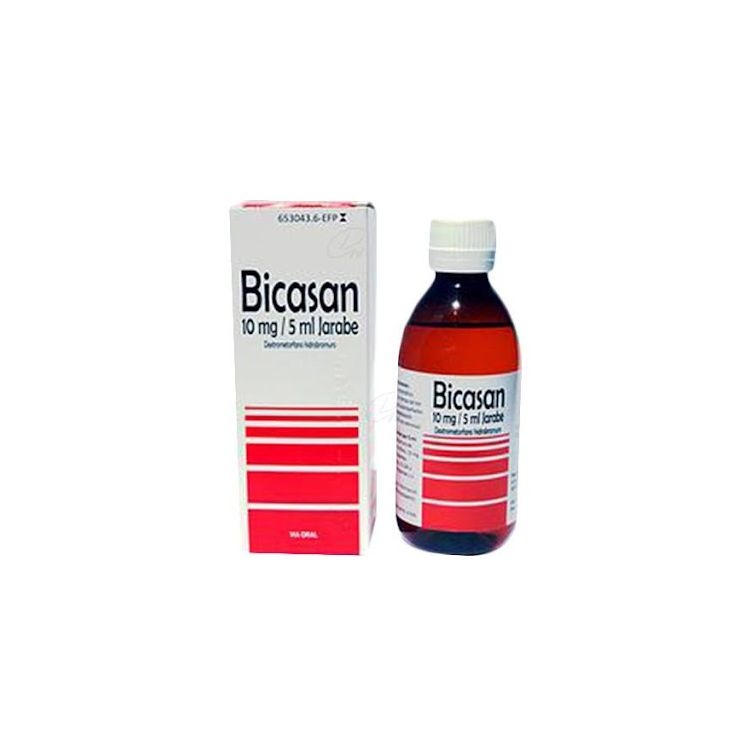
- Alternatives to CODEISAN 28.7 mg TABLETSDosage form: ORAL SOLUTION/SUSPENSION, 6.33 mg codeine phosphate hemihydrate/5 mlActive substance: codeineManufacturer: Teva Pharma S.L.U.Prescription requiredDosage form: ORAL SOLUTION/SUSPENSION, 10 mgActive substance: codeineManufacturer: Italfarmaco S.A.Prescription requiredDosage form: ORAL SOLUTION/SUSPENSION, 500 mg dextromethorphan hydrobromideActive substance: dextromethorphanManufacturer: Pharminicio S.L.Prescription not required
Online doctors for CODEISAN 28.7 mg TABLETS
Discuss questions about CODEISAN 28.7 mg TABLETS, including use, safety considerations and prescription review, subject to medical assessment and local regulations.









Get CODEISAN 28.7 mg TABLETS Prescription Online
Fill in a 2-min form
Tell us your symptoms, history, and what medicine you're requesting.
Pick a doctor or let us assign
Choose a specialist or we'll match you with the next available doctor.
Doctor reviews your case
Usually within 30 minutes. They may ask follow-up questions via chat.
Collect from any pharmacy
Electronic prescription sent to your email — valid across Spain.
Frequently Asked Questions
CODEISAN 28.7 mg TABLETS requires a prescription in Spain. You can check with a doctor online whether this medicine may be appropriate for your situation.
The active ingredient in CODEISAN 28.7 mg TABLETS is codeine. This information helps identify medicines with the same composition but different brand names.
The average pharmacy price for CODEISAN 28.7 mg TABLETS is around 4.48 EUR. Prices may vary depending on the manufacturer and dosage form.
CODEISAN 28.7 mg TABLETS is manufactured by Teva Pharma S.L.U.. Pharmacy brands and packaging may differ depending on the distributor.
Doctors such as Family doctors, Psychiatrists, Dermatologists, Cardiologists, Endocrinologists, Gastroenterologists, Pulmonologists, Nephrologists, Rheumatologists, Hematologists, Infectious disease physicians, Allergists, Geriatricians, Paediatricians, Oncologists may assess whether CODEISAN 28.7 mg TABLETS is appropriate, depending on your situation and local regulations. You can book an online consultation to discuss your symptoms and possible next steps.
Spain has a well-developed healthcare infrastructure across major cities such as Madrid, Barcelona, Valencia, and Seville. Pharmacies are widely available and operate under strict regulations, ensuring access to prescribed medications.
You can buy CODEISAN 28.7 mg TABLETS in Madrid, Barcelona, Seville, or Valencia at any local pharmacy with a valid prescription.
To obtain a prescription, you can use Oladoctor:
Other medicines with the same active substance (codeine) include CODEISAN 1.26 mg/ml SYRUP, TOSEINA 2 mg/ml ORAL SOLUTION, BICASAN 2 mg/ml SYRUP. These may have different brand names or formulations but contain the same therapeutic ingredient. Always consult a doctor before switching or starting a new medicine.
