



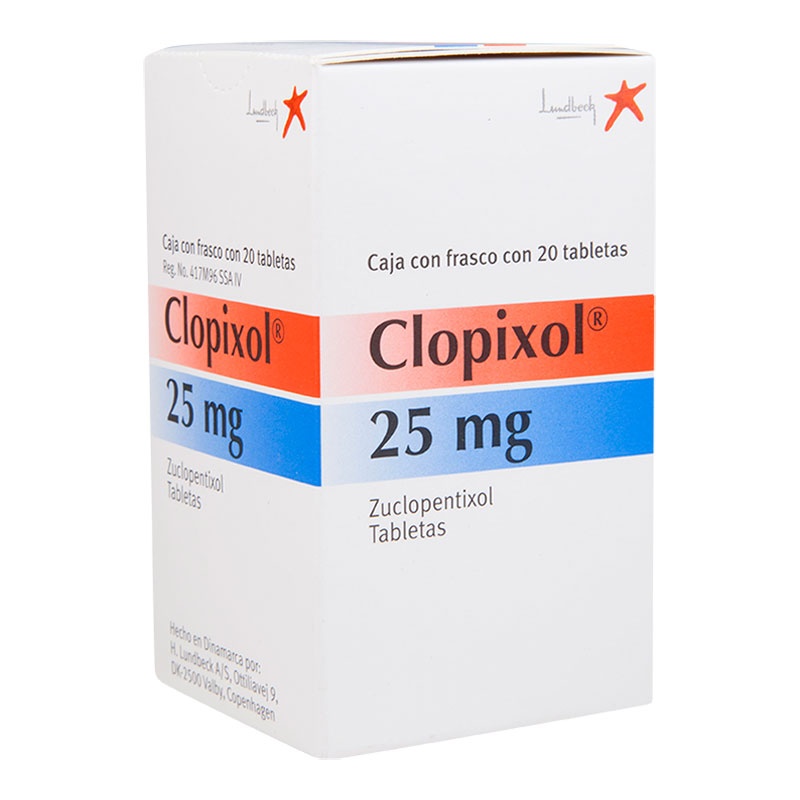
CLOPIXOL 25 mg Film-Coated Tablets

Prescription review online
A doctor will review your case and decide whether a prescription is medically appropriate.

Talk to a doctor about this medicine
Discuss your symptoms and possible next steps in a quick online consultation.



How to use CLOPIXOL 25 mg FILM-COATED TABLETS
Contents of the leaflet
- Introduction
- What is Clopixol and what is it used for
- What you need to know before you take Clopixol
- How to Take Clopixol
- Possible Side Effects
- Storing Clopixol
- Package Contents and Additional Information
Introduction
Package Leaflet: Information for the User
Clopixol 25 mg Film-Coated Tablets
Zuclopentixol
Read all of this leaflet carefully before you start taking this medicine because it contains important information for you.
- Keep this leaflet, you may need to read it again.
- If you have any further questions, ask your doctor or pharmacist.
- This medicine has been prescribed for you only. Do not pass it on to others. It may harm them, even if their signs of illness are the same as yours.
- If you get any side effects, talk to your doctor or pharmacist. This includes any possible side effects not listed in this leaflet. See section 4.
Contents of the Package Leaflet
- What is Clopixol and what is it used for.
- What you need to know before you take Clopixol.
- How to take Clopixol.
- Possible side effects.
- Storing Clopixol.
- Contents of the pack and other information.
1. What is Clopixol and what is it used for
Clopixol contains the active substance zuclopentixol. Clopixol belongs to a group of medicines called antipsychotics (also called neuroleptics).
These medicines work on the nerve pathways in specific areas of the brain and help to correct certain chemical imbalances in the brain that produce the symptoms of your disease.
Clopixol is used for the treatment of chronic and subchronic schizophrenia, with acute episodes, especially in agitated and/or aggressive patients.
However, your doctor may prescribe Clopixol for another purpose. Talk to your doctor if you have any questions about why you have been prescribed Clopixol.

Not sure if this medicine is right for you?
Discuss your symptoms and treatment with a doctor online.
2. What you need to know before you take Clopixol
Do not take Clopixol
- If you are allergic (hypersensitive) to zuclopentixol or any of the other ingredients of this medicine (listed in section 6).
- If you have a decreased level of consciousness.
- If you have circulatory failure.
Warnings and Precautions
- Tell your doctor or pharmacist before you start taking Clopixol if you:
- Suffer from liver problems.
- Suffer from severe respiratory disease.
- Suffer from Parkinson's disease, thyroid disorders, myasthenia gravis, pheochromocytoma, or prostatic hypertrophy.
- Have a history of seizures or fits.
- Suffer from diabetes (your antidiabetic therapy may need to be adjusted).
- Suffer from an organic brain syndrome (this may be a condition resulting from poisoning with alcohol or organic solvents).
- Have risk factors for stroke (e.g. smoker, hypertension).
- Clopixol belongs to a group of medicines that can cause changes in the electrocardiogram, to avoid this it should be used with caution in patients who have hypokalemia or hypomagnesemia (low potassium or magnesium in the blood) or a genetic predisposition to cardiac disorders.
- Have a history of cardiovascular disorders.
- Use other antipsychotic medicines.
- You or a family member have a history of blood clots, as drugs in this group have been associated with the formation of blood clots.
If you have persistent symptoms of infection, consult your doctor, as this may be representative of a decrease in white blood cells in the blood.
With the use of different antipsychotics, a very rare but serious condition called neuroleptic malignant syndrome has been reported, which is characterized by signs such as high fever, unusual muscle stiffness, and disturbance of consciousness, especially if it occurs with sweating and rapid heartbeat. If you experience these symptoms, they may be representative of this situation and you should see a doctor (see section on possible side effects).
Children and Adolescents
Clopixol is not recommended for this group of patients.
Taking Clopixol with Other Medicines
Tell your doctor or pharmacist if you are taking, have recently taken, or might take any other medicines.
Tell your doctor or pharmacist if you are taking any of the following medicines:
- Tricyclic antidepressants.
- Guanethidine and similar medicines (used to lower blood pressure).
- Barbiturates and similar medicines (their use with Clopixol may make you feel drowsy).
- Medicines used to treat epilepsy.
- Levodopa and similar medicines (used to treat Parkinson's disease).
- Metoclopramide (used in the treatment of gastrointestinal disorders).
- Piperazine (used in the treatment of worm and pinworm infections).
- Medicines that cause changes in the hydro-saline balance (too little potassium or magnesium in the blood).
- Medicines that are known to increase the concentration of Clopixol in the blood.
The following medicines cannot be taken at the same time as Clopixol:
- Medicines that change heartbeats (e.g. quinidine, amiodarone, sotalol, dofetilide, erythromycin, terfenadine, astemizole, gatifloxacin, moxifloxacin, cisapride, lithium).
- Other antipsychotic medicines.
Taking Clopixol with Food and Alcohol
Clopixol can be taken with or without food.
Clopixol may increase the sedative effects of alcohol, causing drowsiness. It is recommended not to drink alcohol during treatment with Clopixol.
Pregnancy, Breast-feeding, and Fertility
If you are pregnant or breast-feeding, think you may be pregnant, or are planning to have a baby, ask your doctor for advice before taking this medicine.
Do not take Clopixol if you are pregnant unless it is clearly necessary.
You should not use Clopixol during breast-feeding as small amounts of the medicine may pass into breast milk.
The following symptoms may appear in newborns of mothers who have taken Clopixol during the third trimester (last three months of pregnancy): tremors, muscle stiffness and/or weakness, tendency to sleep, agitation, breathing problems, and difficulty feeding.
If your baby presents any of these symptoms, you should contact your doctor.
Animal studies have shown that Clopixol affects fertility. Please consult your doctor.
Driving and Using Machines
Clopixol may cause symptoms such as drowsiness, dizziness, or changes in vision, and may reduce your reaction ability. These effects, as well as the disease itself, may make it difficult for you to drive vehicles or operate machines. Therefore, do not drive, operate machines, or engage in other activities that require special attention until your doctor assesses your response to this medicine.
Clopixol Contains Lactose and Hydrogenated Castor Oil
If your doctor has told you that you have an intolerance to some sugars, consult him before taking this medicine.
Hydrogenated castor oil may cause stomach upset and diarrhea.
3. How to Take Clopixol
Follow exactly the administration instructions of this medicine given by your doctor. In case of doubt, consult your doctor or pharmacist again.
The dose varies considerably and depends on the severity of the disease.
The recommended dose is:
Adults
The usual starting dose is between 20 mg and 30 mg per day, which may be gradually increased up to a maximum of 150 mg per day, divided into several doses.
In some cases, a considerable increase in dose may be required. The maximum dose is 150 mg per day.
The maintenance dose is usually 20-40 mg per day.
Elderly Patients
The dose is normally between 2 mg and 6 mg per day, taken in the late afternoon. The dose may be increased to 10-20 mg per day.
Patients with Special Risks
Patients with liver problems usually receive the lower end of the dose range.
Use in Children
Clopixol is not recommended for children.
If you feel that the effect of Clopixol is too strong or too weak, talk to your doctor or pharmacist.
How and When to Take Clopixol
Swallow the tablets with a glass of water. They should not be chewed.
At the beginning of treatment, Clopixol should be taken normally in 2 or 3 divided doses during the day.
In maintenance treatment, Clopixol can be taken as a single daily dose.
Duration of Treatment
As with other medicines for psychosis, it may take a couple of weeks before you start to feel better.
Your doctor will decide the duration of treatment. Continue taking the tablets for the recommended time. The underlying disease may persist for a long time, and if you interrupt your treatment too early, your symptoms may reappear.
Never change the dose of your medicine without talking to your doctor first.
If You Take More Clopixol Than You Should
In case of overdose, consult your doctor immediately or call the Toxicology Information Service, telephone: 91 562 04 20, indicating the medicine and the amount taken.
Symptoms of overdose may include:
- Drowsiness.
- Unconsciousness.
- Unusual or stiff muscle movements.
- Seizures.
- Low blood pressure, weak pulse, rapid heartbeat, paleness, restlessness.
- High or low body temperature.
- Changes in heartbeats, including irregular heartbeats or slow heart rate, have been observed when Clopixol is administered in overdose along with drugs that are known to affect the heart.
If You Forget to Take Clopixol
If you forget to take a dose, take the next dose at the usual time. Do not take a double dose to make up for forgotten doses.
If You Stop Taking Clopixol
Your doctor will decide when and how to stop your treatment to avoid unpleasant symptoms that may occur if treatment is stopped abruptly (e.g. difficulty sleeping, muscle stiffness, feeling unwell).
If you have any further questions on the use of this medicine, ask your doctor or pharmacist.

Started taking the medicine and have questions?
Discuss your symptoms and treatment with a doctor online.
4. Possible Side Effects
Like all medicines, this medicine can cause side effects, although not everybody gets them.
If you experience any of the following symptoms, you should contact your doctor or go to the hospital immediately.
Uncommon (May affect up to 1 in 100 people):
- Unusual movements of the mouth and tongue.
This may be an initial sign of a condition called tardive dyskinesia.
Very Rare (May affect up to 1 in 10,000 people):
- High fever, unusual muscle stiffness, and disturbance of consciousness, especially if it occurs with sweating and rapid heartbeat. These symptoms may be signs of a rare condition called neuroleptic malignant syndrome, which has been reported with the use of different antipsychotics.
- Yellowing of the skin and whites of the eyes; this may mean that your liver is affected and is a sign of a condition known as jaundice.
The following side effects are more pronounced at the beginning of treatment and most of them usually disappear during continued treatment.
Very Common (May affect more than 1 in 10 people):
- Drowsiness (somnolence), difficulty sitting or standing (akathisia),
involuntary movements (hyperkinesia), slow or reduced movements (hypokinesia).
- Dry mouth.
Common (May affect up to 1 in 10 people):
- Rapid heartbeat (tachycardia), feeling of rapid or forceful heartbeat (palpitations).
- Tremors, circles or repetitive movements or abnormal postures due to continuous muscle contractions (dystonia), increased muscle stiffness (hypertonia), dizziness, headache, sensation of tingling, pricking, or numbness of the skin (paresthesia), attention disturbance, amnesia, abnormal gait.
- Difficulty focusing objects near the eye (accommodation disorder), vision abnormalities.
- Feeling of spinning or swaying when standing (vertigo).
- Nasal congestion, difficulty breathing or painful breathing (dyspnea).
- Increased salivation (hypersalivation), constipation, vomiting, digestive problems or discomfort centered in the upper abdomen (dyspepsia), diarrhea.
- Urinary disorder (urinary retention), increased urine volume (polyuria).
- Increased sweating (hyperhidrosis), itching (pruritus).
- Muscle pain (myalgia).
- Increased appetite, weight gain.
- Fatigue, weakness (asthenia), general feeling of discomfort or restlessness (malaise), pain.
- Insomnia, depression, anxiety, nervousness, abnormal dreams, agitation, decreased sexual desire (decreased libido).
Uncommon (May affect up to 1 in 100 people):
- Overactive or overresponsive (hyperreflexia), jerky movements (dyskinesia), parkinsonism, fainting (syncope), inability to coordinate muscle activity (ataxia), speech disorder, decreased muscle tone (hypotonia), seizures, migraine.
- Circular movements of the eyes (oculogyration), dilated pupils (mydriasis).
- Increased sensitivity to certain sound frequencies or difficulty tolerating everyday sounds (hyperacusis), ringing in the ears (tinnitus).
- Abdominal pain, flatulence.
- Rash, skin reaction due to sensitivity to light (photosensitive reaction), pigmentation disorder, oily skin, shiny skin, and yellowish skin color due to increased sebum secretion (seborrhea), eczema or skin inflammation (dermatitis), bleeding under the skin observed as purple or red discolorations on the skin (purpura).
- Muscle stiffness, inability to open the mouth normally (trismus), neck twists and an unnatural position of the head (torticollis, neck twist, neck stiffness).
- Decreased appetite, weight loss.
- Low blood pressure (hypotension), hot flashes.
- Dryness, low body temperature (hypothermia), fever (pyrexia).
- Abnormal liver function tests.
- Sexual disorder (delayed ejaculation, erection problems, women may have difficulty reaching orgasm, vaginal dryness (vulvovaginal dryness)).
- Marked indifference to one's surroundings (apathy), nightmares, increased sexual desire (increased libido), confusion.
Rare (May affect up to 1 in 1,000 people):
- Low platelet count in the blood (thrombocytopenia), low white blood cell count in the blood (neutropenia), reduction in the number of white blood cells in the blood (leucopenia), bone marrow poisoning (agranulocytosis).
- Increased prolactin level in the blood (hyperprolactinemia).
- High blood sugar (hyperglycemia), altered glucose tolerance, increased blood fat levels (hyperlipidemia).
- Increased sensitivity (hypersensitivity), acute and severe allergic reaction (anaphylactic reaction).
- Development of breasts in men (gynecomastia), excessive milk production (galactorrhea), absence of menstrual periods (amenorrhea), painful and persistent erection of the penis, not accompanied by sexual excitement or desire (priapism).
As with other medicines that work similarly to zuclopentixol (the active substance of Clopixol), the following side effects have been reported in rare cases:
- Prolongation of the QT interval (slow heartbeat and change in the ECG).
- Irrregular heartbeats (ventricular arrhythmias, ventricular fibrillation, ventricular tachycardia).
- Torsades de Pointes (a special type of irregular heartbeat).
In rare cases, irregular heartbeats (arrhythmias) can result in sudden death.
Blood clots in the veins, particularly in the legs (symptoms include swelling, pain, and redness in the legs), can move through the blood vessels to the lungs and cause chest pain and difficulty breathing. If you notice any of these symptoms, consult your doctor immediately.
In elderly patients with dementia, a small increase in the number of deaths has been reported in those patients taking antipsychotics compared to those not taking them.
Reporting of Side Effects
If you experience any side effects, talk to your doctor, pharmacist, or nurse. This includes any possible side effects not listed in this leaflet. You can also report side effects directly through the Spanish Pharmacovigilance System for Human Use Medicines: https://www.notificaram.es. By reporting side effects, you can help provide more information on the safety of this medicine.
5. Storing Clopixol
Keep this medicine out of the sight and reach of children.
Do not use this medicine after the expiry date which is stated on the carton after EXP.
The expiry date is the last day of the month stated.
No special storage conditions are required.
Medicines should not be disposed of via wastewater or household waste. Return any unused medicine to a pharmacy for disposal. Ask your pharmacist how to dispose of medicines no longer required. This will help protect the environment.
6. Package Contents and Additional Information
Clopixol Composition
The active ingredient is zuclopentixol (as dihydrochloride).
Each film-coated tablet contains 25 mg of zuclopentixol as dihydrochloride.
The other components are: potato starch, lactose monohydrate, microcrystalline cellulose, copovidone, glycerol 85%, talc, hydrogenated ricin oil and magnesium stearate.
Coating: hypromellose 5 and macrogol 6000.
Colorants: titanium dioxide (E-171) and red iron oxide (E-172).
Product Appearance and Package Contents
Clopixol is presented in film-coated tablet packs (tablets) of 25 mg.
Description of the film-coated tablets:
The 25 mg film-coated tablets are round, biconvex, reddish-brown.
Clopixol film-coated tablets are available in packs containing 30 tablets.
Marketing Authorization Holder and Manufacturer
Holder
Lundbeck Spain, S.A.
Av. Diagonal, 605, 7th-2nd
E-08028 Barcelona
Tel.: 93 494 96 20
Manufacturer
- Lundbeck A/S
Ottiliavej 9
2500 Valby
Denmark
Date of the Last Revision of this Prospectus: May 2017
Detailed and updated information on this medication is available on the website of the Spanish Agency for Medicines and Health Products (AEMPS)http://www.aemps.gob.es/
- Country of registration
- Dosage formTABLET, 25 mg
- ATC codeN05AF05
- Average pharmacy price13.39 EUR
- Active substance
- Prescription requiredYes
- Manufacturer
- CompositionLACTOSA (22 mg mg), GLICEROL (E 422) (2,4 mg mg), ALCOHOL ETILICO (ETANOL) (- - mg)
- This information is for reference only and does not constitute medical advice. Always consult a doctor before taking any medication. Oladoctor is not responsible for medical decisions based on this content.
- Alternatives to CLOPIXOL 25 mg FILM-COATED TABLETSDosage form: TABLET, 10 mgActive substance: zuclopenthixolManufacturer: Lundbeck Espana S.A.Prescription requiredDosage form: ORAL SOLUTION/SUSPENSION DROPS, 20 mg zuclopenthixolActive substance: zuclopenthixolManufacturer: Lundbeck Espana S.A.Prescription requiredDosage form: INJECTABLE, 50 mgActive substance: zuclopenthixolManufacturer: Lundbeck Espana S.A.Prescription required
Online doctors for CLOPIXOL 25 mg FILM-COATED TABLETS
Discuss questions about CLOPIXOL 25 mg FILM-COATED TABLETS, including use, safety considerations and prescription review, subject to medical assessment and local regulations.







Get CLOPIXOL 25 mg FILM-COATED TABLETS Prescription Online
Fill in a 2-min form
Tell us your symptoms, history, and what medicine you're requesting.
Pick a doctor or let us assign
Choose a specialist or we'll match you with the next available doctor.
Doctor reviews your case
Usually within 30 minutes. They may ask follow-up questions via chat.
Collect from any pharmacy
Electronic prescription sent to your email — valid across Spain.
Frequently Asked Questions
CLOPIXOL 25 mg FILM-COATED TABLETS requires a prescription in Spain. You can check with a doctor online whether this medicine may be appropriate for your situation.
The active ingredient in CLOPIXOL 25 mg FILM-COATED TABLETS is zuclopenthixol. This information helps identify medicines with the same composition but different brand names.
The average pharmacy price for CLOPIXOL 25 mg FILM-COATED TABLETS is around 13.39 EUR. Prices may vary depending on the manufacturer and dosage form.
CLOPIXOL 25 mg FILM-COATED TABLETS is manufactured by Lundbeck Espana S.A.. Pharmacy brands and packaging may differ depending on the distributor.
Doctors such as Family doctors, Psychiatrists, Dermatologists, Cardiologists, Endocrinologists, Gastroenterologists, Pulmonologists, Nephrologists, Rheumatologists, Hematologists, Infectious disease physicians, Allergists, Geriatricians, Paediatricians, Oncologists may assess whether CLOPIXOL 25 mg FILM-COATED TABLETS is appropriate, depending on your situation and local regulations. You can book an online consultation to discuss your symptoms and possible next steps.
Spain has a well-developed healthcare infrastructure across major cities such as Madrid, Barcelona, Valencia, and Seville. Pharmacies are widely available and operate under strict regulations, ensuring access to prescribed medications.
You can buy CLOPIXOL 25 mg FILM-COATED TABLETS in Madrid, Barcelona, Seville, or Valencia at any local pharmacy with a valid prescription.
To obtain a prescription, you can use Oladoctor:
Other medicines with the same active substance (zuclopenthixol) include CLOPIXOL 10 mg FILM-COATED TABLETS, CLOPIXOL 20 mg/ml ORAL SOLUTION DROPS, CLOPIXOL ACUFASE 50 mg/ml INJECTABLE SOLUTION. These may have different brand names or formulations but contain the same therapeutic ingredient. Always consult a doctor before switching or starting a new medicine.
