



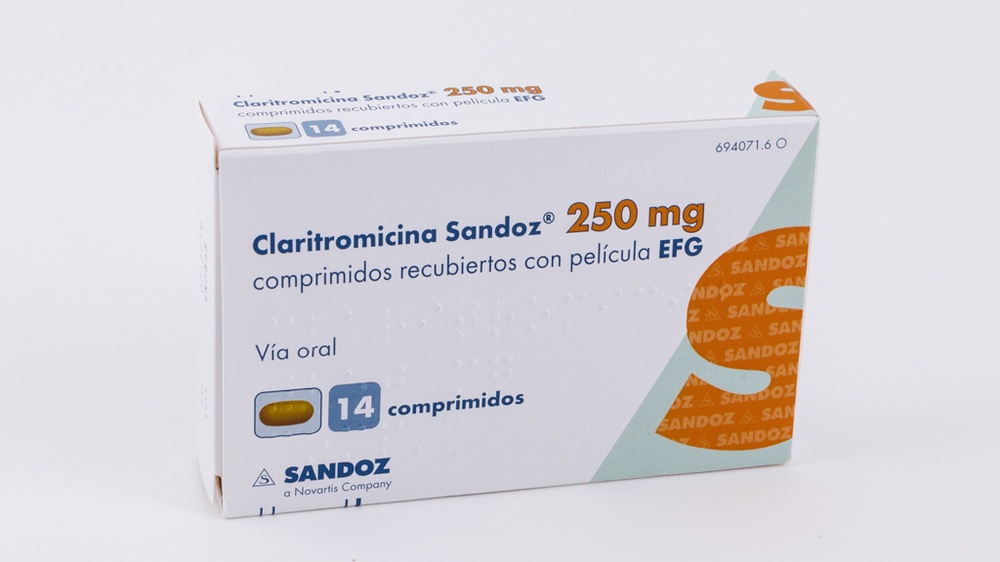
CLARITROMICINA 250 mg Film-Coated Tablets

Prescription review online
A doctor will review your case and decide whether a prescription is medically appropriate.

Talk to a doctor about this medicine
Discuss your symptoms and possible next steps in a quick online consultation.



How to use CLARITHROMYCIN SANDOZ 250 mg FILM-COATED TABLETS
Contents of the leaflet
- Introduction
- What is Claritromicina Sandoz and what is it used for
- What you need to know before you take Claritromicina Sandoz
- How to take Claritromicina Sandoz
- Possible side effects
- Storage of Claritromicina Sandoz
- Package Contents and Additional Information
Introduction
Package Leaflet: Information for the Patient
Claritromicina Sandoz 250 mg film-coated tablets EFG
Claritromicina Sandoz 500 mg film-coated tablets EFG
Read all of this leaflet carefully before you start taking this medicine because it contains important information for you.
- Keep this leaflet, you may need to read it again.
- If you have any further questions, ask your doctor or pharmacist.
- This medicine has been prescribed for you only. Do not pass it on to others. It may harm them, even if their signs of illness are the same as yours.
- If you get any side effects, talk to your doctor or pharmacist. This includes any possible side effects not listed in this leaflet. See section 4.
Contents of the pack
- What is Claritromicina Sandoz and what is it used for
- What you need to know before you take Claritromicina Sandoz
- How to take Claritromicina Sandoz
- Possible side effects
5 Storage of Claritromicina Sandoz
- Contents of the pack and other information
1. What is Claritromicina Sandoz and what is it used for
Claritromicina is a medicine that belongs to the group of macrolide antibiotics. Antibiotics stop the growth of certain bacteria.
Antibiotics are used to treat bacterial infections and are not effective against viral infections, such as the flu or the common cold.
It is essential that you follow the instructions regarding dosage, administration interval, and treatment duration indicated by your doctor.
Do not store or reuse this medicine. If you have any antibiotic left over after finishing the treatment, return it to the pharmacy for proper disposal. Do not throw away medicines via wastewater or household waste.
Claritromicina is used for the treatment in adults and adolescents (12 years of age and older) of infections caused by microorganisms sensitive to clarithromycin:
- infections of the throatand sinusitis,
- infections of the respiratory tract, such as bronchitis and pneumonia,
- infections of the skinand soft tissues,
- gastric ulcerscaused by the bacteria Helicobacter pylori.

Not sure if this medicine is right for you?
Discuss your symptoms and treatment with a doctor online.
2. What you need to know before you take Claritromicina Sandoz
Do not take Claritromicina Sandoz
- if you are allergicto clarithromycin, to other macrolide antibiotics, or to any of the other components of this medicine included in section 6,
- if you or someone in your family has a history of certain abnormal heart rhythms (ventricular arrhythmia, including torsades de pointes) or alterations in the electrocardiogram (ECG, electrical recording of the heart), known as “long QT syndrome”,
- if you have severe liver failureand kidney problemsat the same time,
- if you have abnormally low levels of potassium or magnesiumin your blood (hypokalemia or hypomagnesemia),
- if you are taking:
- ticagrelor, ivabradine, or ranolazine(for angina pectoris or to reduce the risk of myocardial infarction or stroke), ergotamine, dihydroergotamine(medicines for the treatment of migraine),
- oral midazolam(for anxiety or to help you sleep),
- cisapride and domperidone(gastric medicine),
- pimozide(antipsychotic),
- terfenadine, astemizole(hay fever, antihistamines),
- lovastatin, simvastatin(medicines to lower cholesterol),
- a medicine containing lomitapide,
- colchicine(for the treatment of gout),
- other medicines that are known to cause serious alterations in heart rhythm.
Warnings and precautions
Consult your doctor or pharmacist before starting to take clarithromycin:
- if you are pregnant, think you may be pregnant, or plan to become pregnant,
- if you have reduced liver or kidney function,
- if you have diabetes,
- if you develop severe or prolonged diarrhea(pseudomembranous colitis) during or after taking clarithromycin, consult your doctor immediately. Inflammation of the colon (pseudomembranous colitis) has been reported with almost all antibacterial medicines, including clarithromycin,
- if you have heart problems.
Other medicines and Claritromicina Sandoz
Tell your doctor or pharmacist if you are taking, have recently taken, or might take any other medicines.
Do not take with ergot alkaloids, astemizole, terfenadine, cisapride, domperidone, pimozide, ticagrelor, ranolazine, colchicine, some medicines for the treatment of high cholesterol, and medicines that are known to cause serious alterations in heart rhythm (see “Do not take Claritromicina Sandoz”).
Some medicines may affect the effectiveness of clarithromycin or vice versa. These medicines are:
Claritromicina may increase the effect of the following medicines:
- ibrutinib (chronic lymphocytic leukemia),
- alprazolam, triazolam, intravenous or oral midazolam (for anxiety or to help you sleep),
- digoxin, quinidine, disopyramide, amlodipine, diltiazem (heart medicines),
- theophylline (anti-asthmatic),
- warfarin or other anticoagulants, e.g., dabigatran, rivaroxaban, apixaban, edoxaban (to thin the blood),
- other statins (not contraindicated with lovastatin and simvastatin) such as atorvastatin, rosuvastatin (medicines to lower cholesterol),
- cyclosporin, sirolimus, tacrolimus (immunosuppressants),
- carbamazepine, phenytoin, or valproate (medicines for epilepsy),
- cilostazol (used to improve leg circulation),
- insulin and other medicines for the treatment of diabetes (such as nateglinide, pioglitazone, rosiglitazone, or repaglinide),
- methylprednisolone (a cortisone for the treatment of inflammation),
- omeprazole (gastric medicine),
- sildenafil, tadalafil, vardenafil (medicines for the treatment of erectile dysfunction),
- tolterodine (medicine for the treatment of overactive bladder),
- vinblastine (medicine for the treatment of cancer),
- medicines with the risk of producing hearing problems, especially aminoglycosides, such as gentamicin or neomycin (group of antibiotics),
The effect of clarithromycin and the effect of the following medicines may be increased when taken together:
- atazanavir, saquinavir (medicines for the treatment of HIV),
- itraconazole (medicine for the treatment of fungal infections).
If your doctor recommends that you take any of the above-mentioned medicines at the same time as clarithromycin, your doctor should monitor you more closely.
The following medicines may have a weak effect on clarithromycin:
- rifampicin, rifabutin, rifapentine (antibiotics),
- efavirenz, etravirine, nevirapine (medicines for the treatment of HIV),
- phenytoin, carbamazepine, phenobarbitone (antiepileptic),
- St. John's Wort (a herbal preparation for the treatment of depression).
This is also important if you take medicines called:
- hydroxychloroquine or chloroquine(used to treat diseases such as rheumatoid arthritis, or to treat or prevent malaria). Taking these medicines at the same time as clarithromycin may increase the possibility of suffering from abnormal heart rhythms and other serious adverse reactions that affect the heart,
- corticosteroids, administered orally, by injection, or inhaled (used to suppress the immune system; this is useful in the treatment of a wide range of diseases).
Note that:
- ritonavir(antiviral) and fluconazole(medicine for the treatment of fungal infections) may increase the effect of clarithromycin,
- clarithromycin may have a weak effect on zidovudine(antiviral). To eliminate this effect, you should leave a 4-hour interval between taking these medicines.
- the use of clarithromycin with digoxin, quinidine, disopyramide, or verapamil(heart medicines) at the same time, or other macrolide antibioticsmay cause serious side effects,
- the use of clarithromycin together with disopyramidemay cause a decrease in blood sugar levels (hypoglycemia).
Pregnancy and breastfeeding
Consult your doctor or pharmacist before using any medicine.
If you are pregnant or breastfeeding, think you may be pregnant, or plan to become pregnant, consult your doctor or pharmacist before using this medicine.
Driving and using machines
Claritromicina does not generally affect the ability to drive and use machines, but it may cause side effects such as dizziness, confusion, and disorientation. If you feel affected, do not drive, operate machinery, or participate in activities in which you may put yourself or others at risk. Visual disturbance and blurred vision may affect the patient's ability to drive or operate machinery.
Claritromicina Sandoz contains sodium
This medicine contains less than 1 mmol of sodium (23 mg) per tablet; this is, essentially “sodium-free”.
3. How to take Claritromicina Sandoz
Follow the administration instructions of this medicine exactly as indicated by your doctor or pharmacist. In case of doubt, consult your doctor or pharmacist again.
Dose
Adults and adolescents (12 years of age and older)
The recommended dose is 1 tablet of clarithromycin 250 mg twice a day.
The dose may be increased to 2 tablets of clarithromycin 250 mg twice a day or 1 tablet of clarithromycin 500 mg twice a day.
Gastric ulcer caused by the bacteria Helicobacter pylori:
2 tablets of clarithromycin 250 mg twice a day or 1 tablet of clarithromycin 500 mg twice a day in combination with other suitable antibiotics and medicines used for the treatment of excessive gastric acid production.
Children (under 12 years)
The use of this medicine is not recommended in children under 12 years.
For these patients, other pharmaceutical forms are available, e.g., suspension.
Renal insufficiency
Your doctor may need to reduce the dose.
How to take Claritromicina Sandoz
For oral use.
Take the medicine with a glass of water.
This medicine can be taken with or without food.
Duration of treatment
- The duration of treatment is generally 6 to 14 days. Treatment should be continued for at least 2 days after symptoms have disappeared.
- In the case of streptococcal infections, the minimum duration of treatment is 10 days.
- Treatment of gastric ulcer by Helicobacter pylorishould continue for 7 days.
If you take more Claritromicina Sandoz than you should
If you have taken many tablets of clarithromycin at the same time, contact your doctor or go to the emergency department as soon as possible. The symptoms of overdose include gastrointestinal symptoms.
If you have taken more clarithromycin than you should, consult your doctor, pharmacist, or call the Toxicology Information Service, phone: 91 562 04 20, indicating the medicine and the amount used.
If you forget to take Claritromicina Sandoz
If you forget to take clarithromycin, continue treatment with the normal recommended dose indicated by your doctor. Do not take a double dose to make up for forgotten doses.
If you stop taking Claritromicina Sandoz
It is essential that you take your medicine according to your doctor's instructions. Do not suddenly stop treatment with clarithromycin without consulting your doctor first.
Otherwise, symptoms may reappear.
If you have any other questions about the use of this medicine, ask your doctor or pharmacist.

Started taking the medicine and have questions?
Discuss your symptoms and treatment with a doctor online.
4. Possible side effects
Like all medicines, this medicine can cause side effects, although not everybody gets them.
Serious side effects:
If you experience any of the following symptoms of a severe allergic reaction, stop taking the medicine and contact your doctor immediately or go to the emergency departmentof your nearest hospital:
- sudden difficulty breathing, speaking, and swallowing, swelling of the lips, face, and neck,
- extreme dizziness or collapse,
- severe skin rash or itching, especially if blisters appear and there is pain in the eyes, mouth, and genitals.
- severe diarrheafor a prolonged period during or after treatment, or with blood, with stomach pain or fever. This can be a symptom of a severe intestinal inflammation. Your doctor should stop the treatment. Do not take medicines to reduce intestinal movements,
- liver problems with possible signs of:
- loss of appetite,
- yellowing of the skin or the whites of the eyes (jaundice),
- unusually dark urine, pale stools,
- itching of the skin,
- abdominal pain.
- fast or irregular heartbeat,
- inflammation of the pancreas, which causes severe abdominal and back pain,
- red and scaly rash with blisters and bumps under the skin (pustular exanthem).
Other possible side effects:
Frequent side effects(may affect up to 1 in 10 people)
- insomnia,
- headache,
- changes in the sense of taste and smell (e.g., metallic or bitter taste),
- abdominal pain, feeling dizzy or vomiting, diarrhea, indigestion,
- abnormal liver function test results,
- rash,
- excessive sweating,
- vasodilation.
Uncommon(may affect up to 1 in 100 people)
- fungal infections (candidiasis), for example, in the mouth,
- vaginal infections,
- low levels of white blood cells (leukopenia, neutropenia),
- increased number of certain white blood cells (eosinophilia),
- allergic reactions,
- anorexia, loss of appetite,
- anxiety, dizziness, somnolence, tremors,
- vertigo,
- hearing disturbance, ringing in the ears (tinnitus),
- changes in heart activity measured on the ECG, called “prolonged QT”,
- feeling the heartbeat,
- inflammation of the stomach, mouth, and tongue,
- gas, constipation, belching, bloating
- dry mouth,
- bile flow failure,
- discomfort,
- general feeling of discomfort,
- weakness,
- chest pain,
- chills,
- fatigue,
- fainting,
- bullous dermatitis (see “Serious side effects” above).
Frequency not known(cannot be estimated from the available data)
- inflammation of the intestine, from mild to severe (see "Serious side effects" above),
- certain skin and underlying tissue infections (erysipelas),
- severe reduction of certain white blood cells (agranulocytosis),
- reduced number of platelets in the blood: the signs may be unusual bruising and bleeding
unusual,
- severe allergic reaction (anaphylactic reaction, see "Serious side effects" above),
- psychosis, a feeling of loss of identity,
- feeling of not being yourself, confusion,
- depression, abnormal sleep, disorientation, hallucinations, mania,
- seizures,
- changes in the sense of smell, loss of sense of smell and taste,
- tingling or numbness,
- deafness,
- heart rhythm disorders, including fatal cases (ventricular arrhythmia, torsades de pointes, see "Serious side effects" above),
- prolongation of blood coagulation time,
- acute inflammation of the pancreas (see "Serious side effects" above),
- discoloration of teeth and tongue,
- severe liver failure, including fatal cases (see "Serious side effects" above),
- yellowing of the skin or the whites of the eyes (jaundice),
- severe skin diseases with discomfort, redness, peeling, and swelling (Stevens-Johnson syndrome, toxic epidermal necrolysis, DRESS, see "Serious side effects" above),
- acne,
- muscle pain or weakness,
- kidney inflammation, kidney failure,
- abnormal urine color,
- vision problems (blurred vision),
- visual disturbance.
Reporting of side effects
If you experience any side effects, talk to your doctor or pharmacist, even if it is possible side effects that are not listed in this leaflet. You can also report them directly through the Spanish Pharmacovigilance System for Human Use Medicines: https://www.notificaram.es. By reporting side effects, you can help provide more information on the safety of this medicine.
5. Storage of Claritromicina Sandoz
Keep this medication out of sight and reach of children.
Do not use this medication after the expiration date that appears on the blister pack and carton, after CAD/EXP. The expiration date is the last day of the indicated month.
This medication does not require any special storage temperature.
Store in the original packaging to protect it from light.
Medicines should not be disposed of via wastewater or household waste. Deposit the packaging and unused medications at the SIGRE collection point in the pharmacy. In case of doubt, ask your pharmacist how to dispose of the packaging and unused medications. This will help protect the environment.
6. Package Contents and Additional Information
Composition of Claritromicina Sandoz
- The active ingredient is clarithromycin.
Claritromicina Sandoz 250 mg film-coated tablets
Each tablet contains 250 mg of clarithromycin.
Claritromicina Sandoz 500 mg film-coated tablets
Each tablet contains 500 mg of clarithromycin.
- The other components are:
Core:sodium croscarmellose (E 468), microcrystalline cellulose (E 460), povidone, magnesium stearate (E 572), colloidal anhydrous silica (E 551), talc (E 553b).
Coating:hypromellose (E 464), propylene glycol (E 1520), titanium dioxide (E 171), hydroxypropylcellulose (E 463), sorbitan monoleate (E 494), quinoline yellow (E104), vanilla.
Appearance of the Product and Package Contents
Claritromicina Sandoz 250 mg film-coated tablets are film-coated tablets, dark yellow in color, in a capsule shape (15.6 x 7.9 mm).
Claritromicina Sandoz 500 mg film-coated tablets are film-coated tablets, light yellow in color, in an oval shape (18.8 x 8.8 mm).
They are presented in PVC/PVDC/Aluminum blisters.
Package sizes:
Claritromicina Sandoz 250 mg film-coated tablets:
7, 10, 12, 14, or 21 film-coated tablets.
Claritromicina Sandoz 500 mg film-coated tablets:
7, 10, 14, or 21 film-coated tablets.
Only some package sizes may be marketed.
Marketing Authorization Holder and Manufacturer
Marketing Authorization Holder
Sandoz Farmacéutica, S.A.
Centro Empresarial Parque Norte
Edificio Roble
C/ Serrano Galvache, 56
28033 Madrid
Spain
Manufacturer
Lek Pharmaceuticals d.d.
Verovskova ulica 57
1526 Ljubljana
Slovenia
or
Lek Pharmaceuticals d.d.
Trimlini 2D, 9220
Lendava,
Slovenia
or
Lek S.A.
Ul. Domaniewska 50 C
02-672 Warszawa
Poland
or
Salutas Pharma GmbH
Otto-von-Guericke-Allee 1
39179 Barleben
Germany
or
S.C. Sandoz, S.R.L.
Str. Livezeni nr. 7A
RO-540472 Targu-Mures
Romania
This medication is authorized in the member states of the European Economic Area under the following names
Netherlands | Claritromycine Sandoz 250 mg, film-coated tablets Claritromycine Sandoz 500 mg, film-coated tablets |
Belgium | Clarithromycine Sandoz 250 mg film-coated tablets Clarithromycine Sandoz 500 mg film-coated tablets |
Bulgaria | Lekoklar 250 mg film-coated tablets Lekoklar 500 mg film-coated tablets |
Poland | LEKOKLAR MITE, 250 MG, film-coated tablets LEKOKLAR FORTE, 500 MG, film-coated tablets |
Lithuania | Lekoklar 500 mg film-coated tablets |
Romania | Lekoklar 250 mg film-coated tablets Lekoklar 500 mg film-coated tablets |
Slovakia | LEKOKLAR 250 mg film-coated tablets LEKOKLAR 500 mg film-coated tablets |
Date of the last revision of this leaflet:May 2024
Detailed and updated information on this medication is available on the website of the Spanish Agency for Medicines and Health Products (AEMPS) http://www.aemps.gob.es/
- Country of registration
- Dosage formTABLET, 250 mg
- ATC codeJ01FA09
- Average pharmacy price6.56 EUR
- Active substance
- Prescription requiredYes
- Manufacturer
- CompositionCROSCARMELOSA SODICA (34,00 mg mg), PROPILENGLICOL (4,97 mg mg), SORBITAN MONOOLEATO (1,40 mg mg)
- This information is for reference only and does not constitute medical advice. Always consult a doctor before taking any medication. Oladoctor is not responsible for medical decisions based on this content.
- Alternatives to CLARITHROMYCIN SANDOZ 250 mg FILM-COATED TABLETSDosage form: TABLET, 500 mgActive substance: clarithromycinManufacturer: Accord Healthcare S.L.U.Prescription requiredDosage form: TABLET, 500 mg clarithromycinActive substance: clarithromycinManufacturer: Almus Farmaceutica S.A.U.Prescription requiredDosage form: INJECTABLE INFUSION, 500 mgActive substance: clarithromycinManufacturer: Altan Pharmaceuticals SaPrescription required
Online doctors for CLARITHROMYCIN SANDOZ 250 mg FILM-COATED TABLETS
Discuss questions about CLARITHROMYCIN SANDOZ 250 mg FILM-COATED TABLETS, including use, safety considerations and prescription review, subject to medical assessment and local regulations.









Get CLARITHROMYCIN SANDOZ 250 mg FILM-COATED TABLETS Prescription Online
Fill in a 2-min form
Tell us your symptoms, history, and what medicine you're requesting.
Pick a doctor or let us assign
Choose a specialist or we'll match you with the next available doctor.
Doctor reviews your case
Usually within 30 minutes. They may ask follow-up questions via chat.
Collect from any pharmacy
Electronic prescription sent to your email — valid across Spain.
Frequently Asked Questions
CLARITHROMYCIN SANDOZ 250 mg FILM-COATED TABLETS requires a prescription in Spain. You can check with a doctor online whether this medicine may be appropriate for your situation.
The active ingredient in CLARITHROMYCIN SANDOZ 250 mg FILM-COATED TABLETS is clarithromycin. This information helps identify medicines with the same composition but different brand names.
The average pharmacy price for CLARITHROMYCIN SANDOZ 250 mg FILM-COATED TABLETS is around 6.56 EUR. Prices may vary depending on the manufacturer and dosage form.
CLARITHROMYCIN SANDOZ 250 mg FILM-COATED TABLETS is manufactured by Sandoz Farmaceutica S.A.. Pharmacy brands and packaging may differ depending on the distributor.
Doctors such as Family doctors, Psychiatrists, Dermatologists, Cardiologists, Endocrinologists, Gastroenterologists, Pulmonologists, Nephrologists, Rheumatologists, Hematologists, Infectious disease physicians, Allergists, Geriatricians, Paediatricians, Oncologists may assess whether CLARITHROMYCIN SANDOZ 250 mg FILM-COATED TABLETS is appropriate, depending on your situation and local regulations. You can book an online consultation to discuss your symptoms and possible next steps.
Spain has a well-developed healthcare infrastructure across major cities such as Madrid, Barcelona, Valencia, and Seville. Pharmacies are widely available and operate under strict regulations, ensuring access to prescribed medications.
You can buy CLARITHROMYCIN SANDOZ 250 mg FILM-COATED TABLETS in Madrid, Barcelona, Seville, or Valencia at any local pharmacy with a valid prescription.
To obtain a prescription, you can use Oladoctor:
Other medicines with the same active substance (clarithromycin) include CLARITHROMYCIN ACCORD 500 mg FILM-COATED TABLETS, CLARITHROMYCIN ALMUS 500 mg FILM-COATED TABLETS, CLARITHROMYCIN ALTAN 500 mg LYOPHILIZED POWDER FOR SOLUTION FOR INFUSION. These may have different brand names or formulations but contain the same therapeutic ingredient. Always consult a doctor before switching or starting a new medicine.
