


CLARITHROMYCIN SANDOZ 25 mg/ml ORAL SUSPENSION GRANULES
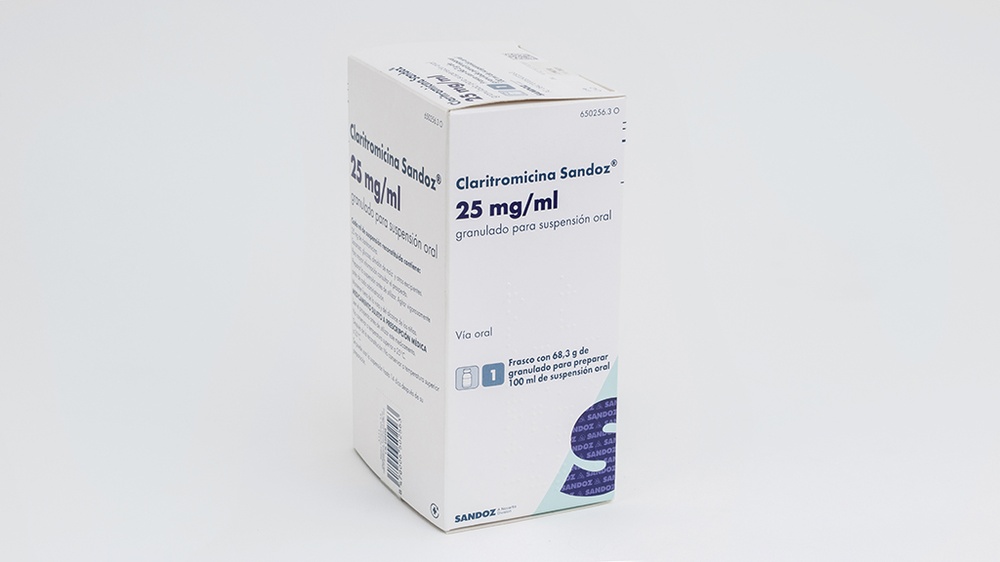



How to use CLARITHROMYCIN SANDOZ 25 mg/ml ORAL SUSPENSION GRANULES
Translated with AI
This page provides general information and does not replace a doctor’s consultation. Always consult a doctor before taking any medication. Seek urgent medical care if symptoms are severe.
Show originalContents of the leaflet
Introduction
Package Leaflet: Information for the Patient
Claritromicina Sandoz 25 mg/ml Granules for Oral Suspension
Read all of this leaflet carefully before you start taking this medicine because it contains important information for you.
- Keep this leaflet, you may need to read it again.
- If you have any further questions, ask your doctor or pharmacist.
- This medicine has been prescribed for you only. Do not pass it on to others. It may harm them, even if their signs of illness are the same as yours.
- If you get any side effects, talk to your doctor or pharmacist. This includes any possible side effects not listed in this leaflet. See section 4.
Contents of the Pack
- What is Claritromicina Sandoz and what is it used for
- What you need to know before you take Claritromicina Sandoz
- How to take Claritromicina Sandoz
- Possible side effects
- Storage of Claritromicina Sandoz
- Pack Contents and Further Information
1. What is Claritromicina Sandoz and what is it used for
Claritromicina is an antibiotic belonging to the group of macrolide antibiotics. Claritromicina stops the growth of certain bacteria.
Antibiotics are used to treat bacterial infections and are not effective against viral infections such as the flu or the common cold.
It is essential that you follow the instructions regarding dosage, administration, and duration of treatment as indicated by your doctor.
Do not store or reuse this medication. If you have any leftover antibiotic after completing treatment, return it to the pharmacy for proper disposal. Do not throw medicines down the drain or in the trash.
Claritromicina is used for the treatment of:
- throat and nasal sinus infections,
- middle ear infections in children,
- lower respiratory tract infections, such as bronchitis and pneumonia,
- skin and soft tissue infections,
- gastric ulcers caused by the bacteria Helicobacter pylori.

2. What you need to know before you take Claritromicina Sandoz
Do not take Claritromicina Sandoz
- if you are allergicto claritromicina, macrolide antibiotics, or any of the other ingredients of this medicine (listed in section 6),
- if you or a family member have a history of heart rhythm disorders(ventricular arrhythmia, including Torsades de Pointes) or abnormal electrocardiogram (ECG, electrical recording of the heart), known as “long QT syndrome”,
- if you have severe liver impairmentand kidney problemsat the same time,
- if you have abnormally low levels of potassium or magnesium in the blood (hypokalemia or hypomagnesemia),
- if you are taking:
- ticagrelor, ivabradine, or ranolazine(for angina or to reduce the risk of heart attack or stroke),
- ranolazine(used for the treatment of angina),
- ergotamine, dihydroergotamine(medicines for the treatment of migraines),
- oral midazolam(for anxiety or to help sleep),
- cisaprideand domperidone(gastric medicines),
- pimozide(antipsychotic),
- terfenadine, astemizole(antihistamines for hay fever),
- lovastatin, simvastatin(medicines that lower cholesterol levels),
- a medicine containing lomitapide,
- colchicine(for the treatment of gout),
- other medicines known to cause severe heart rhythm disorders.
Warnings and Precautions
Consult your doctor or pharmacist before starting to take claritromicina
- if you have reduced liver or kidney function,
- if you are allergic to lincomycin or clindamycin(antibiotics),
- if you develop severe or prolonged diarrhea(pseudomembranous colitis) during or after taking claritromicina, consult your doctor immediately. Inflammation of the colon (pseudomembranous colitis) has been reported with almost all antibacterial medicines, including claritromicina,
- if you have severe myasthenia, a rare disease that causes muscle weakness,
- if you have diabetes,
- if you have or have had heart problems, or
- if you have used claritromicina previously on multiple occasions or for a long period.
Other Medicines and Claritromicina Sandoz
Tell your doctor or pharmacist if you are taking, have recently taken, or might take any other medicines, including those obtained without a prescription.
Do not take Claritromicina Sandoz with ergot alkaloids, astemizole, terfenadine, cisapride, domperidone, pimozide, ticagrelor, ranolazine, colchicine, certain cholesterol-lowering medicines, or medicines known to cause severe heart rhythm disorders (see section “Do not take Claritromicina Sandoz”).
Some medicines may influence the use of claritromicina or vice versa. These medicines are:
Claritromicina may increase the effect of the following medicines:
- ibrutinib (medicine for chronic lymphocytic leukemia),
- alprazolam, triazolam, midazolam intravenous or oral (oromucosal) (for anxiety or to help sleep),
- digoxin, verapamil, amlodipine, diltiazem (heart medicines),
- theophylline (anti-asthmatic),
- warfarin or any other anticoagulant, e.g., dabigatran, rivaroxaban, apixaban, edoxaban (used as an anticoagulant),
- atorvastatin, rosuvastatin (medicines that lower cholesterol levels),
- cyclosporine, sirolimus, tacrolimus (immunosuppressants),
- carbamazepine, phenytoin, valproate (medicines for the treatment of epilepsy),
- cilostazol (used to improve blood circulation in the legs),
- insulin and other diabetes medicines (such as nateglinide, repaglinide),
- methylprednisolone (cortisone for anti-inflammatory treatment),
- omeprazole (gastric medicine),
- sildenafil, tadalafil, vardenafil (medicines for the treatment of erectile dysfunction),
- tolterodine (for the treatment of overactive bladder),
- vinblastine (medicine for cancer treatment),
- medicines with a risk of affecting hearing, especially aminoglycosides such as gentamicin or neomycin (group of antibiotics).
The effect of Claritromicina Sandoz and the following medicines may increase when taken together:
- atazanavir, saquinavir (medicines for HIV treatment),
- itraconazole (medicine for fungal infections).
If your doctor has recommended taking claritromicina and any of the above medicines at the same time, your doctor may need to monitor you closely.
The following medicines may decrease the effect of Claritromicina Sandoz:
- rifampicin, rifabutin, rifapentine (antibiotics),
- efavirenz, etravirine, nevirapine (medicines for HIV treatment),
- phenytoin, carbamazepine, phenobarbital (antiepileptics),
- St. John's Wort.
This is also important if you take medicines called:
- hydroxychloroquine or chloroquine(used to treat diseases such as rheumatoid arthritis or to treat or prevent malaria). Taking these medicines at the same time as claritromicina may increase the risk of abnormal heart rhythms and other serious adverse reactions affecting the heart.
- corticosteroids, administered orally, by injection, or inhaled (used to suppress the immune system; this is useful in the treatment of a wide range of diseases).
Please note
Ritonavir(antiviral) and fluconazole(antifungal) may increase the effect of claritromicina.
Claritromicina may decrease the effect of zidovudine(antiviral). To avoid this, it is recommended to leave a 4-hour interval between taking these medicines.
The concomitant use of claritromicina with digoxin, quinidine, disopyramide, or verapamil(heart medicines) or other macrolide antibioticsmay cause cardiac arrhythmias.
The concomitant use of claritromicina with disopyramidemay cause a decrease in blood sugar levels (hypoglycemia).
Pregnancy and Breastfeeding
If you are pregnant or breastfeeding, think you may be pregnant, or are planning to have a baby, ask your doctor or pharmacist for advice before taking this medicine.

Driving and Using Machines
Claritromicina Sandoz generally does not affect the ability to drive or use machines, but it may cause side effects such as dizziness, confusion, and disorientation. If you experience these side effects, do not drive or use machines, or engage in activities that may put you or others at risk. Visual disturbances and blurred vision may affect the patient's ability to drive or operate machinery.
Claritromicina Sandoz contains sucrose and sodium.
This medicine contains 2.4 g of sucrose per 5 ml of reconstituted suspension. If your doctor has told you that you have an intolerance to some sugars, consult them before taking this medicine. This should be taken into account in patients with diabetes mellitus.
This medicine contains less than 1 mmol of sodium (23 mg) per dose; it is essentially “sodium-free”.
3. How to Take Claritromicina Sandoz
Follow the instructions for administration of this medicine as indicated by your doctor or pharmacist. In case of doubt, consult your doctor or pharmacist again.
The dispensing conditions indicated on your prescription will indicate the dose and frequency with which you should take this medicine. Please read it carefully. The prescribed dose by the doctor will depend on the type of infection you have and its severity. This also depends on your kidney function. Your doctor will explain this to you.
Adults and Adolescents:
The recommended dose is 10 ml, twice a day.
For severe infections or gastric ulcers caused by Helicobacter pylori, the usual dose is 20 ml twice a day.
Children from 6 months to 12 years of age:
The daily dose is calculated according to the child's weight.
The following table will provide a dosing guide:
Body Weight (kg) | Age (years) | Dose (ml) twice a day |
8 - 11 | 1 - 2 | 2.5 |
12 - 19 | 2 - 4 | 5 |
20 - 29 | 4 - 8 | 7.5 |
30 - 40 | 8 - 12 | 10 |
Children who weigh less than 8 kg should take a dose of 0.3 ml/kg twice a day.
Duration of Treatment
Your doctor will indicate the duration of treatment with claritromicina, usually between 5 and 14 days. Do not stop treatment on your own, e.g., because you or your child feel better. If you stop treatment too early, the infection may recur.
Instructions for Use
Claritromicina is usually taken twice a day, once in the morning and once at night.
It can be taken with or without food.
Claritromicina may leave a bitter taste in the mouth after taking it. This can be avoided by eating or drinking something immediately after taking it.
How to Measure the Dose
A 5 ml syringe, marked at 2.5, 3.75, and 5 ml, is included in the package. It comes with an adapter that fits into the neck of the bottle. To measure the dose of the medicine:
- shake the bottle,
- put the adapter into the neck of the bottle,
- put the end of the syringe into the adapter,
- turn the bottle upside down,
- pull the plunger to measure the necessary dose,
- put the bottle back in its normal position, remove the syringe, leave the adapter in the bottle, and close.
Always remember to shake the bottle before measuring each dose.
Instructions for Administering the Dose with a Syringe:
- make sure the child is always in a vertical position,
- put the end of the syringe carefully into the child's mouth. Point the syringe towards the inside of the cheek,
- press the syringe plunger slowly: do not administer it quickly,
- give the child time to swallow the medicine.
Alternatively, empty the measured dose from the syringe into a spoon for your child to take the medicine.
How to Prepare this Medicine
Your doctor or pharmacist will have prepared the medicine. To open the bottle, you need to remove the child-resistant cap by pressing down and then turning it.
If you need to prepare this medicine, you should fill the bottle with cold water carefully, without exceeding the mark. Then, shake the bottle well. Add more water to the mark on the bottle and shake again.
You only need to prepare the suspension once, at the beginning of the process.
If you take more Claritromicina Sandoz than you should
If you have taken more Claritromicina Sandoz than you should, consult your doctor, pharmacist, or call the Toxicology Information Service, phone: 91 562 04 20, indicating the medicine and the amount used.
The most frequent symptoms accompanying an overdose are gastrointestinal disorders.
If you forget to take Claritromicina Sandoz
If you forget to take a dose, continue with the treatment in the same way as your doctor has indicated. Do not take a double dose to make up for the forgotten doses.
If you interrupt treatment with Claritromicina Sandoz
It is essential that you take the medicine following your doctor's instructions. Do not stop treatment abruptly without first talking to your doctor. If you do, the symptoms may recur.
If you have any doubts about the use of this medicine, ask your doctor or pharmacist.
4. Possible Adverse Effects
Like all medicines, this medicine can cause adverse effects, although not all people suffer from them.
Severe Adverse Effects
If any of the following occur, stop taking the medicine and consult your doctor or go to the nearest hospital immediately:
Uncommon Adverse Effects(may affect up to 1 in 100 people):
- allergic reactions such as sudden difficulty breathing, speaking, or swallowing, swelling of lips, face, and neck, extreme dizziness or collapse, itching, papular skin rash,
- irregular heartbeat (change in heart electrical activity),
- blood coagulation risk, caused by an increase in platelet levels,
- bullous dermatitis.
Severe Adverse Effects of Unknown Frequency(cannot be estimated from available data)
- fever, sore throat, more frequent infections, caused by a lack of white blood cells (agranulocytosis),
- rash, fever, blood disorders (which can be signs of hypersensitivity syndrome, called DRESS),
- yellowing of the skin and eyes, nausea, loss of appetite, mild yellowing of the skin and eyes, abnormal liver blood test results (signs of liver problems),
- severe, long-lasting, or bloody diarrhea with stomach pain or fever. This can be a symptom of a severe intestinal infection. Your doctor may stop treatment. Do not take medications that reduce intestinal movement,
- severe pain in the abdomen and back, caused by pancreatic inflammation,
- increased or decreased urine production, drowsiness, confusion, and nausea, caused by kidney inflammation,
- severe skin rash or with intense itching, especially if blisters appear and there is inflammation in the eyes, mouth, or genital organs,
- unusual bruising or bleeding caused by low platelet levels,
- irregular or rapid heartbeat,
- red, scaly rash with bumps under the skin and blisters (acute generalized exanthematous pustulosis).
These are severe adverse effects. You may need urgent medical attention.
Other Possible Adverse Effects
Consult your doctor if you experience any of the following adverse effects:
Common(may affect up to 1 in 10 people)
- headache,
- changes in taste (e.g., metallic or bitter taste),
- abdominal pain, feeling unwell, diarrhea, indigestion,
- difficulty sleeping,
- altered liver function test results,
- rash,
- excessive sweating,
- vasodilation.
Uncommon(may affect up to 1 in 100 people)
- decrease in white blood cell levels in the blood,
- inflammation of the stomach and intestines,
- decrease in neutrophils (neutropenia),
- increase in eosinophils (white blood cells involved in immunity),
- involuntary muscle movements,
- increase in liver enzymes in the blood,
- fungal infection (candidiasis),
- infections, e.g., in the vagina,
- decreased or lost appetite,
- anxiety, nervousness, screaming,
- dizziness, trembling, drowsiness, fainting,
- feeling that everything is spinning, hearing loss, ringing in the ears (tinnitus),
- feeling your heartbeat,
- chest pain or changes in heart rhythm, such as palpitations or irregular heartbeats,
- inflammation of the stomach lining, constipation, gas, dry mouth, belching,
- itching, hives, red, blistering rashes,
- muscle spasms,
- fever and weakness,
- muscle spasms, muscle pain, or muscle tissue loss. If your child has myasthenia gravis (a condition in which muscles weaken and tire easily), clarithromycin may worsen these symptoms,
- anal pain,
- asthma: lung disease associated with narrowing of the airways, making breathing difficult,
- nasal bleeding,
- blood clot that causes a sudden blockage in a pulmonary artery (pulmonary embolism),
- inflammation of the throat lining (esophagus) and stomach mucosa,
- increase in abnormal renal and liver function blood test results and elevated blood test results.
Unknown Frequency(cannot be estimated from available data)
- discoloration of teeth and tongue,
- bacterial skin and underlying tissue infections,
- alterations in the sense of smell, loss of sense of smell or taste,
- deafness,
- acne,
- depression,
- pain or weakness in the muscles,
- abnormal urine color,
- nightmares, disorientation, confusion, feeling sick or hearing things that are not real, loss of contact with reality, feeling loss of identity, mania (feeling of euphoria or overexcitement),
- seizures, tingling, and numbness of the skin,
- bleeding,
- vision problems (blurred vision),
- vision alteration.
Reporting of Adverse Effects
If you experience any adverse effects, consult your doctor or pharmacist, even if they are possible adverse effects not listed in this leaflet. You can also report them directly through the Spanish Pharmacovigilance System for Human Use Medicines: https://www.notificaram.es. By reporting adverse effects, you can contribute to providing more information on the safety of this medicine.
5. Storage of Clarithromycin Sandoz
Keep this medicine out of the sight and reach of children.
Do not use this medicine after the expiration date stated on the bottle after CAD/EXP. The expiration date is the last day of the month indicated.
Do not store above 25°C.
After reconstitution: do not store above 25°C.
The suspension can be used for up to 14 days after preparation.
Medicines should not be disposed of via wastewater or household waste. Deposit the packaging and any unused medicines in the pharmacy's SIGRE collection point. If in doubt, ask your pharmacist how to dispose of the packaging and any unused medicines. This will help protect the environment.
6. Package Contents and Additional Information
Composition of Clarithromycin Sandoz 25 mg/ml Granules for Oral Suspension
- The active ingredient is clarithromycin. 5 ml of reconstituted oral suspension contains 125 mg of clarithromycin.
- The other ingredients are: poloxamer 188, povidone K 30, hypromellose, macrogol 6000, titanium dioxide (E171), methacrylic acid - ethyl acrylate copolymer (1:1), triethyl citrate, glycerol monostearate, polysorbate 80, sucrose, maltodextrin (contains corn starch), potassium sorbate, anhydrous colloidal silica, xanthan gum, fruit flavor (natural and artificial, including maltodextrin, modified starch, and maltol).
Appearance and Package Contents
White to beige granules in 60 ml, 120 ml, or 240 ml HDPE bottles with a child-resistant closure system (press + turn) and a guarantee ring, and a 5 ml PE/PP syringe marked at 2.5 ml, 3.75 ml, and 5.0 ml and/or a 1.25 ml, 2.5 ml, and 5.0 ml measuring spoon.
Package sizes:
A bottle containing 27.3 g of granules for oral suspension, to prepare 40 ml of suspension (required water amount: 23.6 ml) or
34.1 g of granules for oral suspension, to prepare 50 ml of suspension (required water amount: 29.5 ml) or
41.0 g of granules for oral suspension, to prepare 60 ml of suspension (required water amount: 35.4 ml) or
47.8 g of granules for oral suspension, to prepare 70 ml of suspension (required water amount: 41.3 ml) or
54.6 g of granules for oral suspension, to prepare 80 ml of suspension (required water amount: 47.2 ml) or
68.3 g of granules for oral suspension, to prepare 100 ml of suspension (required water amount: 59.0 ml) or
81.9 g of granules for oral suspension, to prepare 120 ml of suspension (required water amount: 70.8 ml) or
Double pack of 2 x 60 ml prepared for oral suspension: 2 x 41 g of granules for oral suspension each, to prepare 2 x 60 ml of oral suspension each (required water amount: 2 x 35.4 ml each).
1, 2, 5, 10, 20, 30, 40, 50, and 100 bottles.
Not all package sizes may be marketed.
Marketing Authorization Holder and Manufacturer
Marketing Authorization Holder
Sandoz Farmacéutica, S.A.
Centro Empresarial Parque Norte
Edificio Roble
C/ Serrano Galvache, 56
28033 Madrid
Spain
Manufacturer
Sandoz GmbH
Biochemiestrasse 10
A-6250 Kundl
Austria
or
Lek Pharmaceuticals d.d.
Verovškova 57
1526 Ljubljana
Slovenia
or
Sandoz S.R.L.
Livezeni Street no 7A
Targu Mures
Romania
Date of Last Revision of this Leaflet:May 2024
Detailed and updated information on this medicine is available on the website of the Spanish Agency for Medicines and Health Products (AEMPS) http://www.aemps.gob.es/
-------------------------------------------------------------------------------------------------------------------
The following information is intended only for doctors or healthcare professionals:
For the preparation of the suspension, fill the bottle with the following amounts of water:
- For 40 ml bottles, add 23.6 ml of water,
- For 50 ml bottles, add 29.5 ml of water,
- For 60 ml bottles, add 35.4 ml of water,
- For 70 ml bottles, add 41.3 ml of water,
- For 80 ml bottles, add 47.2 ml of water,
- For 100 ml bottles, add 59.0 ml of water,
- For 120 ml bottles, add 70.8 ml of water.
Shake the bottle well when adding water. After reconstitution with water, the resulting product is a white or beige suspension.
- Country of registration
- Dosage formORAL SOLUTION/SUSPENSION, 125 mg clarithromycin / 5 ml
- ATC codeJ01FA09
- Average pharmacy price4.68 EUR
- Active substance
- Prescription requiredYes
- Manufacturer
- This information is for reference only and does not constitute medical advice. Always consult a doctor before taking any medication. Oladoctor is not responsible for medical decisions based on this content.
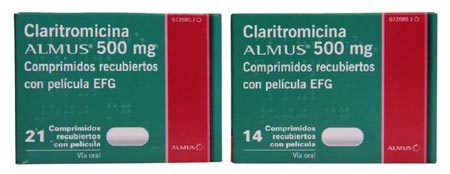
- Alternatives to CLARITHROMYCIN SANDOZ 25 mg/ml ORAL SUSPENSION GRANULESDosage form: TABLET, 500 mgActive substance: clarithromycinManufacturer: Accord Healthcare S.L.U.Prescription requiredDosage form: TABLET, 500 mg clarithromycinActive substance: clarithromycinManufacturer: Almus Farmaceutica S.A.U.Prescription requiredDosage form: INJECTABLE INFUSION, 500 mgActive substance: clarithromycinManufacturer: Altan Pharmaceuticals SaPrescription required


Online doctors for CLARITHROMYCIN SANDOZ 25 mg/ml ORAL SUSPENSION GRANULES
Discuss questions about CLARITHROMYCIN SANDOZ 25 mg/ml ORAL SUSPENSION GRANULES, including use, safety considerations and prescription review, subject to medical assessment and local regulations.








.jpg)


Frequently Asked Questions
