



CELECOXIB 200 mg Hard Capsules

Prescription review online
A doctor will review your case and decide whether a prescription is medically appropriate.

Talk to a doctor about this medicine
Discuss your symptoms and possible next steps in a quick online consultation.



How to use CELECOXIB ALTER 200 mg HARD CAPSULES
Contents of the leaflet
- Introduction
- What is Celecoxib Alter and what is it used for
- What you need to know before taking Celecoxib Alter
- How to take Celecoxib Alter
- Possible Adverse Effects
- Storage of Celecoxib Alter
- Package Contents and Additional Information
Introduction
Package Leaflet: Information for the Patient
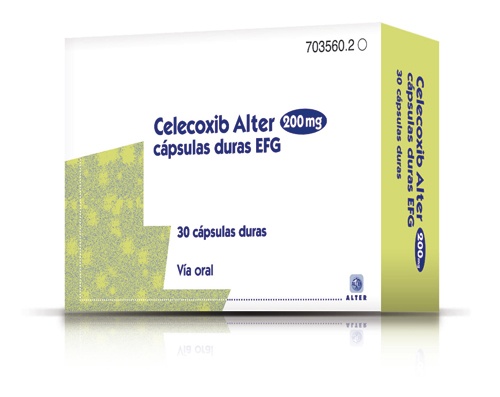
Celecoxib Alter 200 mg Hard Capsules EFG
Read the entire package leaflet carefully before starting to take this medication, as it contains important information for you.
- Keep this package leaflet, as you may need to read it again.
- If you have any questions, consult your doctor or pharmacist.
- This medication has been prescribed to you only, and you should not give it to others, even if they have the same symptoms as you, as it may harm them.
- If you experience side effects, consult your doctor or pharmacist, even if they are side effects not listed in this package leaflet. See section 4.
Contents of the Package Leaflet
- What is Celecoxib Alter and what is it used for
- What you need to know before taking Celecoxib Alter
- How to take Celecoxib Alter
- Possible side effects
- Storage of Celecoxib Alter
- Contents of the pack and further information
1. What is Celecoxib Alter and what is it used for
Celecoxib Alter is indicated in adults to relieve the signs and symptoms of rheumatoid arthritis, osteoarthritis, and ankylosing spondylitis.
Celecoxib Alter belongs to a class of medications called non-steroidal anti-inflammatory drugs (NSAIDs), and specifically to the subgroup known as selective cyclooxygenase-2 (COX-2) inhibitors. Your body produces prostaglandins that can cause pain and inflammation. In conditions such as rheumatoid arthritis or osteoarthritis, your body produces them in greater quantities. Celecoxib Alter works by reducing the production of prostaglandins, thus reducing pain and inflammation.
You should expect this medication to start taking effect within a few hours of taking the first dose, but you may not experience a full effect for several days.

Not sure if this medicine is right for you?
Discuss your symptoms and treatment with a doctor online.
2. What you need to know before taking Celecoxib Alter
Your doctor has prescribed Celecoxib Alter. The following information will help you get better results with Celecoxib Alter. If you have any other questions, please ask your doctor or pharmacist.
Do not take Celecoxib Alter
Tell your doctor if any of the following circumstances apply to you, as patients with these conditions should not take Celecoxib Alter:
- if you are allergic to celecoxib or any of the other components of this medication (listed in section 6)
- if you have had an allergic reaction to any medication in the group called "sulfonamides" (e.g., some antibiotics used to treat infections)
- if you currently have a stomach or intestinal ulcer or bleeding
- if you have previously experienced any of the following symptoms as a result of taking acetylsalicylic acid or any other anti-inflammatory medication: asthma, nasal polyps, severe nasal congestion, or allergic symptoms such as skin rash with itching, swelling of the face, lips, tongue, or throat, difficulty breathing, or wheezing
- if you are pregnant. If you can become pregnant during treatment, you should discuss the use of contraceptive methods with your doctor
- if you are breastfeeding
- if you have severe liver disease
- if you have severe kidney disease
- if you have inflammatory bowel disease such as ulcerative colitis or Crohn's disease
- if you have heart failure, diagnosed ischemic heart disease, or cerebrovascular disease, e.g., you have been diagnosed with a heart attack, stroke, or transient ischemic attack (temporary reduction in blood flow to the brain; also known as a "mini-stroke"), angina pectoris, or obstruction of the blood vessels to the heart or brain
- if you have had circulation problems (peripheral arterial disease) or have had surgery on the arteries in your legs.
Warning and precautions
Consult your doctor before starting to take Celecoxib Alter:
- if you have previously had a stomach or intestinal ulcer or bleeding (do not take Celecoxib Alter if you currently have a stomach or intestinal ulcer or bleeding)
- if you are taking acetylsalicylic acid (even at low doses as a cardiac protector)
- if you are taking medications to reduce blood clotting (e.g., warfarin or new oral anticoagulants, e.g., apixaban)
- if you are taking corticosteroids (e.g., prednisone)
- if you are taking Celecoxib Alter at the same time as other non-acetylsalicylic NSAIDs such as ibuprofen or diclofenac. The concomitant use of these medications should be avoided
- if you are a smoker, have diabetes, high blood pressure, or high cholesterol
- if your heart, liver, or kidneys do not function properly, your doctor may want to monitor you regularly
- if you have fluid retention (such as swollen feet or ankles)
- if you are dehydrated, for example, due to a disease with vomiting, diarrhea, or the use of diuretics (used to treat excess fluid in the body)
- if you have had a severe allergic reaction or a severe skin reaction to any medication
- if you feel unwell due to an infection or think you have an infection, as taking Celecoxib Alter may mask fever or other signs of infection and inflammation
- if you are over 65 years old, your doctor may want to monitor you regularly
- the consumption of alcohol and NSAIDs can increase the risk of gastrointestinal problems.
As with other anti-inflammatory medications (e.g., ibuprofen or diclofenac), this medication may increase your blood pressure, so your doctor may perform periodic blood pressure checks.
Some cases of severe liver reactions have been reported with celecoxib, including severe liver inflammation, liver damage, and liver failure (some with a fatal outcome or requiring liver transplantation). Of the cases reported when the event started, most severe liver reactions occurred within the first month of treatment.
Celecoxib Alter may make it more difficult to become pregnant. You should inform your doctor if you plan to become pregnant or if you are having difficulty becoming pregnant (see section Pregnancy, breastfeeding, and fertility).
Other medications and Celecoxib Alter
Tell your doctor or pharmacist if you are taking, have recently taken, or may take any other medication:
- Dextromethorphan (used to treat cough)
- ACE inhibitors or angiotensin II receptor antagonists, beta-blockers, and diuretics (medications used to treat hypertension and heart failure)
- Fluconazole and rifampicin (used to treat bacterial and fungal infections)
- Warfarin or other warfarin analogs (agents that reduce blood clot formation), including newer medications such as apixaban
- Lithium (used to treat some types of depression)
- Other medications used to treat depression, sleep disorders, high blood pressure, or irregular heartbeat
- Neuroleptics (used to treat some mental disorders)
- Methotrexate (used in rheumatoid arthritis, psoriasis, and leukemia)
- Carbamazepine (used to treat epilepsy/seizures and some forms of pain or depression)
- Barbiturates (used to treat epilepsy/seizures and some sleep disorders)
- Cyclosporine and tacrolimus (used to suppress the immune system, e.g., after transplants)
Celecoxib Alter can be taken with low doses of acetylsalicylic acid (75 mg daily or less). Ask your doctor for advice before taking both medications together.
Pregnancy, breastfeeding, and fertility
If you are pregnant or breastfeeding, think you may be pregnant, or plan to become pregnant, consult your doctor or pharmacist before using this medication.
Pregnancy
Celecoxib Alter should not be used by pregnant women or women who may become pregnant (i.e., women of childbearing age who do not use an adequate contraceptive method) during treatment. If you become pregnant during treatment with Celecoxib Alter, you should stop treatment and contact your doctor for alternative treatment.
Breastfeeding
Celecoxib Alter should not be used during breastfeeding.
Fertility
NSAIDs, including Celecoxib Alter, may make it more difficult to become pregnant. You should inform your doctor if you plan to become pregnant or if you are having difficulty becoming pregnant.
Driving and using machines
You should know how you react to Celecoxib Alter before driving or using machinery. If you feel dizzy or drowsy after taking Celecoxib Alter, do not drive or operate machinery until these effects have passed.
Celecoxib Alter contains lactose
This medication contains
3. How to take Celecoxib Alter
Follow the administration instructions for this medication exactly as indicated by your doctor. If you are unsure, consult your doctor or pharmacist again. If you think or believe that the effect of Celecoxib Alter is too strong or too weak, inform your doctor or pharmacist.
Your doctor will indicate the dose you should take. Since the risk of side effects associated with heart problems may increase with the dose and duration of treatment, it is essential to use the lowest dose that controls your pain, and you should not take Celecoxib Alter for longer than necessary to control the symptoms.
Method of administration:
Celecoxib Alter should be taken orally. The capsules can be taken at any time of day, with or without food. However, try to take each dose of Celecoxib Alter at the same time every day.
If you have difficulty swallowing the capsules: you can sprinkle the entire contents of the capsule onto a spoonful of semi-solid food (such as apple sauce, rice, yogurt, or mashed banana at room temperature or cold) and swallow it immediately with a glass of water (approximately 240 ml).
To open the capsule, hold it in a vertical position to keep the granules at the bottom; then press the top and twist it to remove it, being careful not to spill the contents. Do not chew or crush the granules.
Contact your doctor if, after two weeks of treatment, you do not experience an improvement.
The recommended dose is:
The usual dose for the treatment of osteoarthritisis 200 mg per day; if necessary, your doctor may increase it to a maximum of 400 mg.
The dose is usually:
- one 200 mg capsule once a day
- .
The usual dose for the treatment of rheumatoid arthritisis 200 mg per day (administered in two doses); if necessary, your doctor may increase it to a maximum of 400 mg.
The dose is usually:
- one 100 mg capsule twice a day (this dose of 100 mg of celecoxib twice a day cannot be administered with this medication. For this administration regimen, there are other medications with a concentration of 100 mg of celecoxib. Please consult your doctor).
The usual dose for the treatment of ankylosing spondylitisis 200 mg per day; if necessary, your doctor may increase it to a maximum of 400 mg.
The dose is usually:
- one 200 mg capsule once a day
- .
Kidney or liver problems:make sure your doctor knows if you have liver or kidney problems, as you may need a lower dose.
Patient over 65 years old, especially those weighing less than 50 kg:your doctor may want to monitor you more closely if you are over 65 years old, especially if you weigh less than 50 kg.
Do not take more than 400 mg per day.
Use in children
Celecoxib Alter is only for adults; it is not indicated in children.
If you take more Celecoxib Alter than you should
Do not take more capsules than indicated by your doctor. If you take more capsules than prescribed, consult your doctor, pharmacist, or hospital immediately and bring the medication with you.
In case of overdose or accidental ingestion, consult your doctor, pharmacist, or the Toxicology Information Service (telephone 91 562 04 20) immediately, indicating the medication and the amount taken.
If you forget to take Celecoxib Alter
If you forget to take a capsule, take it as soon as you remember. Do not take a double dose to make up for forgotten doses.
If you stop taking Celecoxib Alter
Abruptly stopping treatment with Celecoxib Alter may cause a worsening of symptoms. Do not stop taking Celecoxib Alter unless your doctor tells you to. Your doctor will indicate that you should reduce the dose over a few days before stopping treatment completely.
If you have any other questions about the use of this medication, ask your doctor or pharmacist.

Started taking the medicine and have questions?
Discuss your symptoms and treatment with a doctor online.
4. Possible Adverse Effects
Like all medicines, this medicine can cause adverse effects, although not all people suffer from them.
The adverse effects mentioned below were observed in patients with arthritis who took celecoxib. The adverse effects marked with an asterisk (*) occurred in patients who took celecoxib for the prevention of colon polyps and have been classified taking into account the highest frequency of occurrence. The patients included in these studies took celecoxib at high doses and for a prolonged period.
If you experience any of the following adverse effects, discontinue treatment with Celecoxib Alter and inform your doctor immediately:
If you have:
- an allergic reaction such as skin rash, swelling of the face, wheezing or difficulty breathing.
- heart problems such as chest pain
- severe stomach pain or any sign of bleeding in the stomach or intestines, such as dark urine or stools stained with blood, or blood in vomit.
- a skin reaction such as rash, blisters or peeling of the skin.
- liver failure (symptoms may include nausea, diarrhea, jaundice (yellowing of the skin or eyes)).
Very common adverse effects: may affect more than 1 in 10 people:
- Increased blood pressure, including worsening of existing high blood pressure*
Common adverse effects: may affect up to 1 in 10 people:
- Heart attack*
- Fluid retention with swelling of ankles, legs and/or hands
- Urinary tract infection
- Difficult breathing*, sinusitis (inflammation and infection of the paranasal sinuses, obstruction or pain of the paranasal sinuses), stuffy nose or runny nose, sore throat, cough, cold, flu-like symptoms.
- Dizziness, difficulty sleeping
- Vomiting*, stomach pain, diarrhea, indigestion, gas
- Rash, itching
- Muscle stiffness
- Difficulty swallowing*
- Headache
- Nausea (feeling of discomfort)
- Joint pain
- Worsening of existing allergies
- Accidental injury
Uncommon adverse effects: may affect up to 1 in 100 people:
- Stroke*
- Heart failure, palpitations (perception of heartbeat), accelerated heartbeat
- Abnormalities in blood tests related to the liver
- Abnormalities in blood tests related to the kidneys
- Anemia (changes in red blood cells that can cause fatigue and difficulty breathing)
- Anxiety, depression, fatigue, numbness, tingling sensation
- Elevated potassium levels in blood test results (can cause nausea, fatigue, muscle weakness or palpitations)
- Blurred or altered vision, ringing in the ears, mouth ulcers, difficulty hearing*
- Constipation, belching, stomach inflammation (indigestion, stomach pain or vomiting), worsening of stomach or intestinal inflammation
- Leg cramps
- Rash with itching and relief (urticarial habon)
- Eye inflammation
- Difficulty breathing
- Discoloration of the skin (bruises)
- Chest pain (generalized pain not related to the heart)
- Swelling of the face
Rare adverse effects: may affect up to 1 in 1,000 people:
- Ulcers (bleeding) in the stomach, throat or intestines; or rupture of the intestine (can cause stomach pain, fever, nausea, vomiting, intestinal obstruction), dark stools or black stools, pancreatic inflammation (can cause stomach pain), throat inflammation (can cause difficulty swallowing)
- Low sodium levels in the blood (a disease known as hyponatremia)
- Decrease in the number of white blood cells and platelets in the blood (increases the possibility of bleeding and bruising)
- Difficulty in muscular coordination of movements
- Feeling of confusion, alterations in taste
- Increased sensitivity to light
- Hair loss
- Hallucinations
- Eye bleeding
- Acute reaction that can lead to pulmonary inflammation
- Irregular heartbeat
- Flush
- Blood clots in the blood vessels of the lungs. Symptoms may include sudden difficulty breathing, acute pain when breathing or collapse
- Stomach or intestinal bleeding (can lead to stools or vomit with blood), intestinal or colon inflammation
- Severe liver inflammation (hepatitis). Symptoms may include nausea, diarrhea, jaundice (yellowing of the skin and eyes), dark urine, pale stools, ease of bleeding, itching or chills
- Acute kidney failure
- Menstrual disorders
- Swelling in the face, lips, mouth, tongue or throat, or difficulty swallowing
Very rare adverse effects: may affect up to 1 in 10,000 people:
- Severe allergic reactions (including potentially fatal anaphylactic shock)
- Severe skin disorders such as Stevens-Johnson syndrome, exfoliative dermatitis and toxic epidermal necrolysis (can cause rash, blistering or peeling of the skin) and generalized acute pustular exanthema (symptoms include redness of the skin with swollen areas and numerous small pustules)
- A late-onset allergic reaction with possible symptoms such as rash, swelling of the face, fever, swollen glands and abnormalities in clinical test results (e.g. liver, blood cells (eosinophilia, a type of increase in blood cell count))
- Cerebral hemorrhage that causes death
- Meningitis (inflammation of the membrane that surrounds the brain and spinal cord)
- Liver failure, liver damage and severe liver inflammation (fulminant hepatitis) (sometimes with fatal outcome or requiring liver transplant). Symptoms may include nausea, diarrhea, jaundice (yellowing of the skin and eyes), dark urine, pale stools, ease of bleeding, itching or chills
- Liver problems (such as cholestasis and cholestatic hepatitis, which may be accompanied by symptoms such as discolored stools, nausea and yellowing of the skin or eyes)
- Kidney inflammation and other kidney problems (such as nephrotic syndrome and minimal change disease, which may be accompanied by symptoms such as fluid retention, foamy urine, fatigue and loss of appetite)
- Worsening of epilepsy (possibly more frequent and/or severe seizures)
- Obstruction of an artery or vein in the eye that leads to partial or complete loss of vision
- Vasculitis (can cause fever, pain, purple spots on the skin)
- Reduction in the number of red and white blood cells and platelets in the blood (can cause fatigue, ease of bruising, frequent nosebleeds and increased risk of infections)
- Muscle pain and weakness
- Alteration of taste
- Loss of taste
Adverse effects of unknown frequency: the frequency cannot be estimated from the available data:
- Decreased fertility in women, which is normally reversible if treatment is discontinued
Adverse effects reported in clinical trials in which celecoxib was administered at a dose of 400 mg per day for a period of up to 3 years, in patients with diseases unrelated to arthritis or other arthritic conditions, were:
Common adverse effects: may affect up to 1 in 10 people:
- Cardiac problems: angina pectoris (chest pain)
- Stomach problems: irritable bowel syndrome (may include abdominal pain, diarrhea, indigestion and gas)
- Kidney stones (which can lead to stomach or back pain, blood in the urine), difficulty urinating
- Weight gain
Uncommon adverse effects: may affect up to 1 in 100 people:
- Deep vein thrombosis (blood clotting usually in the leg, which can cause pain, swelling or redness of the calf or breathing problems)
- Stomach problems: stomach infection (which can cause irritation or ulcers in the stomach and intestines)
- Fracture of lower limbs
- Herpes, skin infection, eczema (dry rash with itching), pneumonia (infection in the chest (possibility of cough, fever, difficulty breathing))
- Floaters in the eye that cause vision disturbance or blurred vision, vertigo due to problems in the inner ear, ulcers, inflammation or bleeding of the gums, mouth ulcers.
- Excessive urination at night, bleeding from hemorrhoids, frequent bowel movement
- Fat lumps on the skin or other places, ganglion cyst (painless inflammation in the joints or tendons or around them, in the hand or foot) difficulty speaking, abnormal or heavy vaginal bleeding, chest pain
- Elevated sodium levels in blood test results.
Reporting of adverse effects
If you experience any type of adverse effect, consult your doctor or pharmacist, even if it is a possible adverse effect that does not appear in this prospectus. You can also report them directly through the Spanish Pharmacovigilance System for Human Use Medicines: https://www.notificaram.es. By reporting adverse effects, you can contribute to providing more information on the safety of this medicine.
5. Storage of Celecoxib Alter
Keep this medicine out of sight and reach of children.
Do not use this medicine after the expiration date that appears on the packaging after CAD. The expiration date is the last day of the month indicated.
Do not store above 30°C.
Medicines should not be thrown down the drain or into the trash. Deposit the packaging and medicines that you no longer need in the SIGRE Point of the pharmacy. In case of doubt, ask your pharmacist how to dispose of the packaging and medicines that you no longer need. This way, you will help protect the environment.
6. Package Contents and Additional Information
Celecoxib Alter Composition
- The active ingredient is celecoxib. Each capsule contains 200 mg of celecoxib.
- The other ingredients are: lactose monohydrate, sodium lauryl sulfate, povidone K30, sodium croscarmellose, magnesium stearate (see section 2, Celecoxib Alter contains lactose).
The capsule shell contains gelatin and titanium dioxide (E171).
Appearance of the Product and Package Contents
Celecoxib Alter is presented in the form of hard capsules.
The capsules are opaque white.
The capsules are presented in PVC-aluminum blisters.
Celecoxib Alter is presented in packages containing 30 hard capsules.
Marketing Authorization Holder and Manufacturer
Laboratorios Alter, S.A.
Mateo Inurria, 30
28036 Madrid
Spain
Date of the Last Revision of this Prospectus: August 2018
Detailed and updated information on this medicine is available on the website of the Spanish Agency for Medicines and Health Products (AEMPS) http://www.aemps.gob.es/
- Country of registration
- Dosage formCAPSULE, 200 mg
- ATC codeM01AH01
- Average pharmacy price22.28 EUR
- Active substance
- Prescription requiredYes
- Manufacturer
- CompositionLACTOSA MONOHIDRATO (270 mg mg), LAURILSULFATO DE SODIO (8,100 mg mg), CROSCARMELOSA SODICA (2,700 mg mg)
- This information is for reference only and does not constitute medical advice. Always consult a doctor before taking any medication. Oladoctor is not responsible for medical decisions based on this content.
- Alternatives to CELECOXIB ALTER 200 mg HARD CAPSULESDosage form: CAPSULE, 200 mgActive substance: celecoxibManufacturer: Viatris Healthcare LimitedPrescription requiredDosage form: CAPSULE, 200 mgActive substance: celecoxibManufacturer: Laboratorio Stada S.L.Prescription requiredDosage form: CAPSULE, 100 mg of celecoxibActive substance: celecoxibManufacturer: Viatris Healthcare LimitedPrescription required
Online doctors for CELECOXIB ALTER 200 mg HARD CAPSULES
Discuss questions about CELECOXIB ALTER 200 mg HARD CAPSULES, including use, safety considerations and prescription review, subject to medical assessment and local regulations.









Get CELECOXIB ALTER 200 mg HARD CAPSULES Prescription Online
Fill in a 2-min form
Tell us your symptoms, history, and what medicine you're requesting.
Pick a doctor or let us assign
Choose a specialist or we'll match you with the next available doctor.
Doctor reviews your case
Usually within 30 minutes. They may ask follow-up questions via chat.
Collect from any pharmacy
Electronic prescription sent to your email — valid across Spain.
Frequently Asked Questions
CELECOXIB ALTER 200 mg HARD CAPSULES requires a prescription in Spain. You can check with a doctor online whether this medicine may be appropriate for your situation.
The active ingredient in CELECOXIB ALTER 200 mg HARD CAPSULES is celecoxib. This information helps identify medicines with the same composition but different brand names.
The average pharmacy price for CELECOXIB ALTER 200 mg HARD CAPSULES is around 22.28 EUR. Prices may vary depending on the manufacturer and dosage form.
CELECOXIB ALTER 200 mg HARD CAPSULES is manufactured by Laboratorios Alter S.A.. Pharmacy brands and packaging may differ depending on the distributor.
Doctors such as Family doctors, Psychiatrists, Dermatologists, Cardiologists, Endocrinologists, Gastroenterologists, Pulmonologists, Nephrologists, Rheumatologists, Hematologists, Infectious disease physicians, Allergists, Geriatricians, Paediatricians, Oncologists may assess whether CELECOXIB ALTER 200 mg HARD CAPSULES is appropriate, depending on your situation and local regulations. You can book an online consultation to discuss your symptoms and possible next steps.
Spain has a well-developed healthcare infrastructure across major cities such as Madrid, Barcelona, Valencia, and Seville. Pharmacies are widely available and operate under strict regulations, ensuring access to prescribed medications.
You can buy CELECOXIB ALTER 200 mg HARD CAPSULES in Madrid, Barcelona, Seville, or Valencia at any local pharmacy with a valid prescription.
To obtain a prescription, you can use Oladoctor:
Other medicines with the same active substance (celecoxib) include ARTILOG 200 mg HARD CAPSULES, AXATAL 200 mg HARD CAPSULES, CELEBREX 100 mg HARD CAPSULES. These may have different brand names or formulations but contain the same therapeutic ingredient. Always consult a doctor before switching or starting a new medicine.
