


CEFTRIAXONE SALA 1 g POWDER FOR SOLUTION FOR INJECTION AND INFUSION
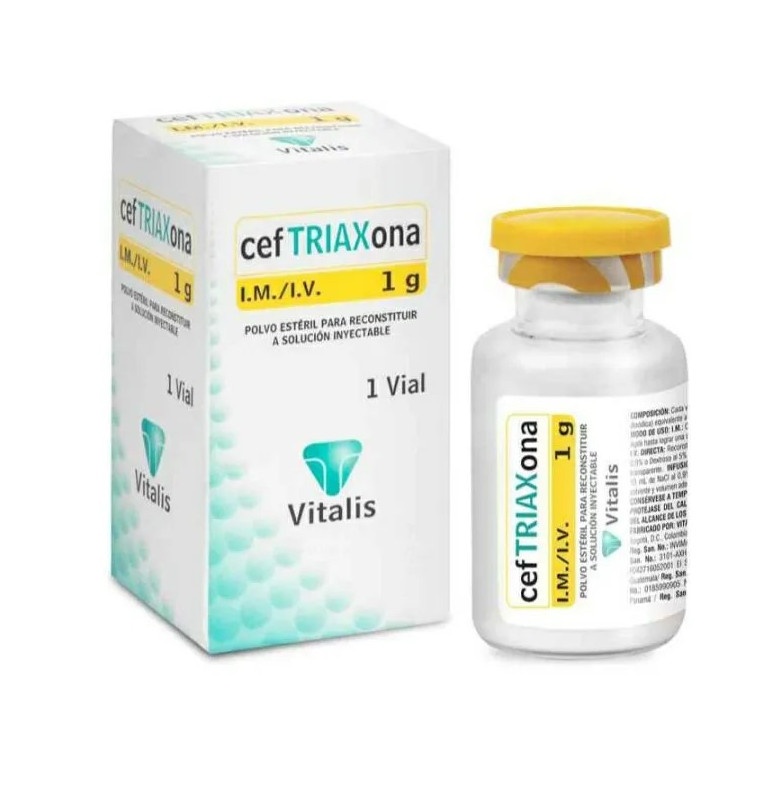



How to use CEFTRIAXONE SALA 1 g POWDER FOR SOLUTION FOR INJECTION AND INFUSION
Translated with AI
This page provides general information and does not replace a doctor’s consultation. Always consult a doctor before taking any medication. Seek urgent medical care if symptoms are severe.
Show originalContents of the leaflet
- Introduction
- What Ceftriaxone Sala is and what it is used for
- What you need to know before you use Ceftriaxone Sala
- Consult your doctor, pharmacist, or nurse before starting to take ceftriaxone:
- How to use Ceftriaxone Sala
- Possible side effects
- Storage of Ceftriaxone Sala
- Container Content and Additional Information
Introduction
Package Leaflet: Information for the User
Ceftriaxone Sala 1g Powder for Solution for Injection and Infusion EFG
Read all of this leaflet carefully before you start using this medicine because it contains important information for you.
- Keep this leaflet, you may need to read it again.
- If you have any further questions, ask your doctor or pharmacist.
- This medicine has been prescribed for you only. Do not pass it on to others. It may harm them, even if their signs of illness are the same as yours.
- If you get any side effects, talk to your doctor or pharmacist. This includes any possible side effects not listed in this leaflet. See section 4.
Contents of the pack:
- What Ceftriaxone Sala is and what it is used for
- What you need to know before you use Ceftriaxone Sala
- How to use Ceftriaxone Sala
- Possible side effects
- Storage of Ceftriaxone Sala
- Contents of the pack and further information
1. What Ceftriaxone Sala is and what it is used for
Ceftriaxone is an antibiotic for adults and children (including newborn babies). It works by killing the bacteria that cause infections. It belongs to a group of medicines called cephalosporins.
Antibiotics are used to treat bacterial infections and do not work for viral infections such as flu or the common cold. It is important that you follow the instructions regarding dose, administration interval, and treatment duration as indicated by your doctor. Do not store or reuse this medicine. If you have any leftover antibiotic after finishing treatment, return it to the pharmacy for proper disposal. Do not throw medicines down the drain or into the trash. |
Ceftriaxone is used to treat infections of:
- the brain (meningitis)
- the lungs
- the middle ear
- the abdomen and abdominal wall (peritonitis)
- the urinary tract and kidneys
- the bones and joints
- the skin and soft tissues
- the blood
- the heart
Ceftriaxone can be used:
- to treat specific sexually transmitted infections (gonorrhea and syphilis).
- to treat patients with low white blood cell counts (neutropenia) who have a fever due to a bacterial infection.
due to a bacterial infection.
- to treat chest infections in adults with chronic bronchitis.
- to treat Lyme disease (transmitted by ticks) in adults and children, including newborns from 15 days of age.
- to prevent infections during surgical procedures.
You should consult a doctor if you get worse or do not improve.

2. What you need to know before you use Ceftriaxone Sala
Do not use Ceftriaxone Sala
- if you are allergic to ceftriaxone or any of the other ingredients of this medicine (including those listed in section 6).
in the section 6).
- if you have had a sudden or severe allergic reaction to penicillin or other similar antibiotics (such as cephalosporins, carbapenems, or monobactams); signs of this reaction are sudden swelling of the throat or face that makes it difficult to breathe or swallow, sudden swelling of hands, feet, and ankles, chest pain, or a severe and rapid skin rash.
- if you are allergic to lidocaine and are going to receive ceftriaxone by intramuscular injection.
Ceftriaxone should not be administered to babies if:
- the baby is premature.
- the baby is a newborn (up to 28 days of age) and has certain blood problems or jaundice (yellowing of the skin or whites of the eyes) or is going to be given a product containing calcium in a vein.
Warnings and precautions

Consult your doctor, pharmacist, or nurse before starting to take ceftriaxone:
- if you have recently received or are going to receive a product containing calcium.
- if you have recently had diarrhea after antibiotic treatment; if you have ever had intestinal problems, particularly colitis (inflammation of the intestine).
have ever had intestinal problems, particularly colitis (inflammation of the intestine).
- if you have had liver or kidney problems (see section 4).
- if you have gallstones or kidney stones.
- if you have had other diseases, for example, hemolytic anemia (a decrease in your red blood cells that can make your skin pale yellow and cause weakness and shortness of breath).
- if you are on a low-sodium diet.
- if you experience or have experienced a combination of any of the following symptoms: rash, skin redness, blisters on the lips, eyes, and mouth, skin peeling, high fever, flu-like symptoms, increased liver enzyme levels, an increase in a type of white blood cell (eosinophilia), and an increase in lymph node size (signs of severe skin reactions, see also section 4 "Possible side effects").
If you need a blood or urine test
If you are going to receive ceftriaxone for a long time, you may need to have blood tests done periodically. Ceftriaxone can affect the result of a urine sugar test (glucosuria) and a blood test called the Coombs test. If you are having tests:
- tell the person taking the sample that you have received ceftriaxone.
If you are diabetic or need to control your blood sugar levels (glycemia), you should not use certain glucose control systems that may give incorrect glucose estimates while you are being treated with ceftriaxone. If you use such a system, consult the instructions for use and talk to your doctor, pharmacist, or nurse. If necessary, alternative test methods should be used.
Children
Before your child receives ceftriaxone, consult your doctor, pharmacist, or nurse if:
- your child has recently been given or is going to be given a product containing calcium in a vein.
Other medicines and Ceftriaxone Sala
Tell your doctor or pharmacist if you are using, have recently used, or might use any other medicines.
Particularly, tell your doctor or pharmacist if you are taking any of the following medicines:
- a type of antibiotic called aminoglycoside.
- an antibiotic called chloramphenicol (used to treat infections, especially of the eyes).
Pregnancy, breastfeeding, and fertility
If you are pregnant or breastfeeding, think you may be pregnant, or plan to become pregnant, consult your doctor before using this medicine.
Your doctor will assess the expected benefits of treatment with ceftriaxone against the risks for your baby.
Driving and using machines
Ceftriaxone may cause dizziness. If you feel dizzy, do not drive vehicles or operate tools or machines. Talk to your doctor if you have this symptom.
Ceftriaxone Sala contains sodium
This medicine contains 82.8 mg of sodium (the main component of cooking/table salt) per vial. This is equivalent to 4.14% of the maximum recommended daily sodium intake for an adult.
3. How to use Ceftriaxone Sala
Ceftriaxone is usually administered by a doctor or nurse. It can be administered:
- by intravenous infusion or
- by direct injection into a vein or
- into a muscle
Ceftriaxone is prepared for administration by a doctor, pharmacist, or nurse. It must not be mixed or administered at the same time with other injected products containing calcium.
Recommended dose
Your doctor will decide the correct dose of ceftriaxone for you. The dose will depend on the type and severity of the infection, whether you are already receiving other antibiotics, your weight and age, as well as the condition of your liver and kidneys. The number of days or weeks you will receive ceftriaxone will depend on the type of infection.
Adults, elderly patients, and adolescents from 12 years of age with a weight of 50 kg or more:
- 1 to 2 g once a day, depending on the type and severity of the infection. If your infection is severe, your doctor will prescribe a higher dose (up to 4 g per day). If your daily dose is more than 2 g, it may be administered as a single dose per day or as two separate doses.
Newborns, infants, and children from 15 days to 12 years of age with a weight below 50 kg:
- 50 to 80 mg of ceftriaxone per kilogram of the child's weight once a day, depending on the type and severity of the infection. If the infection is severe, your doctor will prescribe a higher dose, up to 100 mg per kilogram up to a maximum of 4 g per day. If your daily dose is more than 2 g, it may be administered as a single dose per day or as two separate doses.
- Children with a weight of 50 kg or more should receive the recommended adult dose.
Newborns (0-14 days)
- 20 to 50 mg of ceftriaxone per kilogram of the child's weight once a day, depending on the type and severity of the infection.
- The maximum daily dose should not exceed 50 mg per kilogram of the baby's weight.
Patients with liver or kidney problems
If you have impaired liver or kidney function, you may receive a different dose than recommended. Your doctor will decide how much ceftriaxone you need and will examine you thoroughly according to the severity of the kidney or liver disease.
If you use more Ceftriaxone Sala than you should
If you accidentally receive a higher dose than prescribed, contact your doctor or go to the nearest hospital as soon as possible.
In case of overdose or accidental ingestion, consult your doctor or pharmacist immediately or call the Toxicology Information Service, phone: 91 562 04 20, indicating the medicine and the amount ingested.
If you forget to use Ceftriaxone Sala
If you miss a dose of this medicine, you should receive it as soon as possible. However, if it is almost time for the next injection, skip the missed injection. You should not receive a double dose (two injections at the same time) to make up for a missed dose.
If you stop treatment with Ceftriaxone Sala
Do not stop receiving ceftriaxone unless your doctor tells you to.
If you have any further questions about the use of this medicine, ask your doctor or nurse.
4. Possible side effects
Like all medicines, this medicine can cause side effects, although not everybody gets them.
Serious side effects
Severe allergic reactions (frequency not known, cannot be estimated from available data)
If you have a severe allergic reaction, tell your doctor immediately.
The signs may be:
- sudden swelling of the face, throat, lips, or mouth, which can cause difficulty breathing or swallowing.
- sudden swelling of hands, feet, and ankles.
- Chest pain in the context of allergic reactions, which can be a symptom of allergy-induced heart attack (Kounis syndrome).
Severe skin reactions (frequency not known, cannot be estimated from available data)
If you have a severe skin rash, inform a doctor immediately.
The symptoms may include:
- A severe rash that develops rapidly, with blisters or peeling of the skin, and possibly blisters in the mouth (Stevens-Johnson syndrome and toxic epidermal necrolysis, also known as SJS and TEN).
- A combination of any of the following symptoms: widespread skin rash, high body temperature, elevated liver enzyme values, blood abnormalities (eosinophilia), lymph node enlargement, and involvement of other organs of the body (drug reaction with eosinophilia and systemic symptoms, also known as DRESS or drug hypersensitivity syndrome).
- Jarisch-Herxheimer reaction, which causes fever, chills, headache, muscle pain, and rash, usually self-limiting. This occurs shortly after starting treatment with ceftriaxone for infections with spirochetes such as Lyme disease.
Other possible side effects:
Common (may affect up to 1 in 10 people)
- Abnormalities in white blood cell counts (e.g., decreased leukocyte count and increased eosinophils) and platelets (decreased platelet count).
- Loose stools or diarrhea.
- Changes in liver function test results.
- Skin rash.
Uncommon (may affect up to 1 in 100 people)
- Fungal infections (e.g., oral candidiasis).
- Decreased white blood cell count (granulocytopenia).
- Decreased red blood cell count (anemia).
- Blood coagulation problems. The signs may include frequent bruising, as well as pain and swelling of the joints.
- Headache.
- Dizziness.
- Feeling unwell or sick.
- Itching.
- Pain or burning sensation at the injection site. Pain at the injection site.
- High temperature (fever).
- Impaired kidney function (increased creatinine in blood).
Rare (may affect up to 1 in 1,000 people)
- Inflammation of the large intestine (colon). The signs may include diarrhea, usually with blood and mucus, stomach pain, and fever.
- Difficulty breathing (bronchospasm).
- Hives (urticaria) that can cover a large area of the body, with itching and swelling.
- Blood or sugar in the urine.
- Edema (swelling due to fluid accumulation).
- Chills.
- Treatment with ceftriaxone, particularly in elderly patients with severe kidney problems or with nervous system problems, can rarely cause decreased consciousness, abnormal movements, agitation, and convulsions.
Frequency not known (cannot be estimated from available data)
- Secondary infection that may not have responded to previous antibiotic treatment.
- Hemolytic anemia (a form of anemia with destruction of red blood cells).
- Agranulocytosis (severe decrease in white blood cells).
- Seizures.
- Vertigo (feeling of spinning).
- Pancreatitis (inflammation of the pancreas). The signs may include severe stomach pain that radiates to the back.
- Stomatitis (inflammation of the mucous membrane lining the mouth).
- Glossitis (inflammation of the tongue). The signs may include swelling, redness, and pain in the tongue.
- Problems with the gallbladder or liver, which can cause pain, nausea, vomiting, yellowing of the skin, itching, dark urine, and clay-colored stools.
- A neurological disorder that can occur in newborns with severe jaundice (bilirubin encephalopathy - kernicterus).
- Kidney problems caused by ceftriaxone calcium deposits. You may have pain when urinating or little urine.
- A false-positive result in the Coombs test (a test to detect some blood abnormalities).
- A false-positive result for galactosemia (abnormal accumulation of galactose in the blood).
- Ceftriaxone may interfere with some glucose tests (blood sugar), consult your doctor.
Reporting of side effects
If you experience any side effects, talk to your doctor, pharmacist, or nurse, even if it is possible that they are not listed in this leaflet. You can also report side effects directly through the Spanish Medicines Monitoring System for Human Use (Website: www.notificaRAM.es). By reporting side effects, you can help provide more information on the safety of this medicine.
5. Storage of Ceftriaxone Sala
Keep this medicine out of the reach and sight of children.
Store below 25°C. Store in the original packaging to protect from light.
Before reconstitution: Do not use this medicine after the expiration date stated on the packaging after "CAD". The expiration date is the last day of the month indicated.
After reconstitution: Physical and chemical stability during use has been demonstrated for up to 8 hours at 25°C and 24 hours in the refrigerator (between 2-8°C).
From a microbiological point of view, unless the opening/reconstitution/dilution method excludes the risk of microbial contamination, the product should be used immediately. If not used immediately, the storage times and conditions of the solution before administration are the responsibility of the user and should not exceed the times indicated above for physical and chemical stability during use, whichever is shorter.
Medicines should not be disposed of via wastewater or household waste. Dispose of the packaging and any unused medicine in the SIGRE collection point at the pharmacy. If in doubt, ask your pharmacist how to dispose of packaging and unused medicines. This will help protect the environment.
6. Container Content and Additional Information
Composition of Ceftriaxone Sala
The active ingredient is ceftriaxone (as ceftriaxone sodium).
Each vial contains 1 g of ceftriaxone (as ceftriaxone sodium).
Once reconstituted with 10 ml of water for injectable preparations, the concentration of the solution is 100 mg of ceftriaxone (as ceftriaxone sodium) per ml.
The powder vial has no other components (excipients).
Appearance of the Product and Container Content
It is presented in a glass vial, closed with a rubber stopper and sealed with a capsule.
It is presented in cardboard boxes containing 1 powder vial or in clinical packages of 100 powder vials.
Only some package sizes may be marketed.
Marketing Authorization Holder and Manufacturer
LABORATORIO REIG JOFRE, S.A.
Gran Capitán, 10 – 08970
Sant Joan Despí (Barcelona),
Spain
Date of the Last Revision of this Prospectus:April 2024
Detailed and updated information on this medication is available on the website of the Spanish Agency for Medicines and Health Products (AEMPS) http://www.aemps.gob.
This information is intended only for healthcare professionals
Administration Route
Intramuscular Administration
For intramuscular administration, use commercial presentations that incorporate a lidocaine ampoule as a solvent.
Since the solvent used is lidocaine, the resulting solution should never be administered intravenously. The information collected in the Summary of Product Characteristics or the Technical Data Sheet of lidocaine should be taken into account.
Intravenous Administration
Ceftriaxone can be administered by intravenous infusion for at least 30 minutes (preferred route) or by slow intravenous injection for 5 minutes. Intermittent intravenous injections should be administered over 5 minutes, preferably in large veins. Intravenous doses of 50 mg/kg or more in infants and children up to 12 years of age should be administered by infusion. In neonates, intravenous doses should have a duration of approximately 60 minutes to reduce the risk of bilirubin encephalopathy. Intramuscular administration should be considered when the intravenous route is not possible or is less suitable for the patient. For doses greater than 2 g, intravenous administration should be used.
Concentrations for intravenous injection: 100 mg/ml
Concentrations for intravenous infusion: 50 mg/ml
Ceftriaxone is contraindicated in neonates (≤ 28 days) if they require (or are expected to require) treatment with intravenous solutions containing calcium, including continuous infusions containing calcium, such as parenteral nutrition, due to the risk of precipitation of ceftriaxone calcium.
Diluents containing calcium (e.g., Ringer's solution or Hartmann's solution) should not be used to reconstitute ceftriaxone vials or for subsequent dilution of a reconstituted vial for intravenous administration, as a precipitate may form. Precipitation of ceftriaxone calcium can also occur if ceftriaxone is mixed with solutions containing calcium in the same intravenous line. Therefore, ceftriaxone and solutions containing calcium should not be mixed or administered simultaneously.
For preoperative prophylaxis of surgical site infections, ceftriaxone should be administered 30-90 minutes before surgery.
Instructions for Use
For the post-reconstitution stability of the vial, see section 5.
Ceftriaxone should not be mixed in the same syringe with any drug other than a 1.06% lidocaine hydrochloride solution (for intramuscular injection only). See Administration Route.
Lidocaine solutions should not be administered intravenously.
Intravenous injection: 1 g of ceftriaxone should be dissolved in 10 ml of water for injectable preparations. The injection should be administered over 5 minutes, directly into a vein or through an intravenous perfusion catheter.
Intravenous infusion: 2 g of ceftriaxone should be dissolved in 40 ml of one of the following calcium-free solutions: 0.9% sodium chloride, 5% glucose, 10% glucose, 5% glucose in 0.9% sodium chloride, or sterile water for injection. The infusion should be administered over at least 30 minutes.
Consult the Dosageand Administration Routesections for more information.
Incompatibilities
According to specialized literature, ceftriaxone is incompatible with amsacrine, vancomycin, fluconazole, aminoglycosides, and labetalol.
Solutions containing ceftriaxone should not be mixed or added to other compounds, except those mentioned in the Instructions for Usesection. In particular, diluents containing calcium (e.g., Ringer's solution or Hartmann's solution) should not be used to reconstitute ceftriaxone vials or for subsequent dilution of a reconstituted vial for intravenous administration, as a precipitate may form. Ceftriaxone and solutions containing calcium, including total parenteral nutrition, should not be mixed or administered simultaneously.
Mixtures of beta-lactam antibiotics (penicillins and cephalosporins) and aminoglycosides can result in substantial mutual inactivation. If administered simultaneously, they should be done at separate sites. Do not mix them in the same syringe or vial.
- Country of registration
- Dosage formINJECTABLE, 1 g ceftriaxone disodium
- ATC codeJ01DD04
- Availability in pharmacies
Supply issue reported
Data from the Spanish Agency of Medicines (AEMPS) indicates a supply issue affecting this medicine.<br><br>Availability may be limited in some pharmacies.<br><br>For updates or alternatives, consult your pharmacist. - Active substance
- Prescription requiredYes
- Manufacturer
- This information is for reference only and does not constitute medical advice. Always consult a doctor before taking any medication. Oladoctor is not responsible for medical decisions based on this content.
- Alternatives to CEFTRIAXONE SALA 1 g POWDER FOR SOLUTION FOR INJECTION AND INFUSIONDosage form: INJECTABLE, 1 g ceftriaxone disodiumActive substance: ceftriaxoneManufacturer: Fresenius Kabi España, S.A.U.Prescription requiredDosage form: INJECTABLE, 1 g ceftriaxone disodiumActive substance: ceftriaxoneManufacturer: Fresenius Kabi España, S.A.U.Prescription requiredDosage form: INJECTABLE PERFUSION, 2 g ceftriaxone disodiumActive substance: ceftriaxoneManufacturer: Fresenius Kabi España, S.A.U.Prescription required



Online doctors for CEFTRIAXONE SALA 1 g POWDER FOR SOLUTION FOR INJECTION AND INFUSION
Discuss questions about CEFTRIAXONE SALA 1 g POWDER FOR SOLUTION FOR INJECTION AND INFUSION, including use, safety considerations and prescription review, subject to medical assessment and local regulations.








.jpg)


Frequently Asked Questions
