



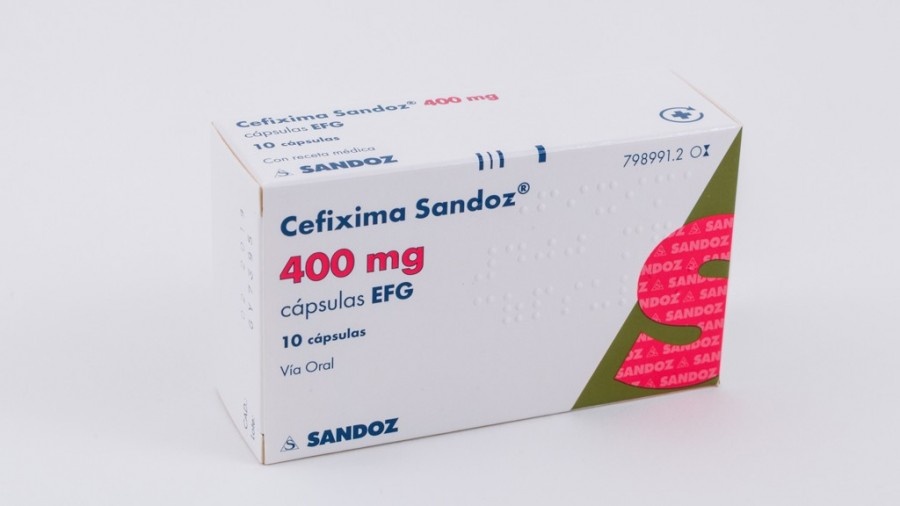
CEFIXIMA 400 mg Film-Coated Tablets

Prescription review online
A doctor will review your case and decide whether a prescription is medically appropriate.

Talk to a doctor about this medicine
Discuss your symptoms and possible next steps in a quick online consultation.



How to use CEFIXIME SANDOZ 400 mg FILM-COATED TABLETS
Contents of the leaflet
- Introduction
- What is Cefixima Sandoz and what is it used for
- What you need to know before taking Cefixima Sandoz
- How to take Cefixima Sandoz
- Possible side effects
- Storage of Cefixima Sandoz
- Container Content and Additional Information
Introduction
Package Leaflet: Information for the Patient
Cefixima Sandoz 400 mg film-coated tablets EFG
Read the package leaflet carefully before you start taking this medicine because it contains important information for you.
- Keep this package leaflet, you may need to read it again. If you have any further questions, ask your doctor or pharmacist.
- This medicine has been prescribed for you only. Do not pass it on to others, as it may harm them, even if their symptoms are the same as yours.
- If you experience any side effects, talk to your doctor or pharmacist. This includes any possible side effects not listed in this package leaflet. See section 4.
Contents of the package leaflet
- What is Cefixima Sandoz and what is it used for
- What you need to know before taking Cefixima Sandoz
- How to take Cefixima Sandoz
- Possible side effects
- Storage of Cefixima Sandoz
- Package contents and further information
1. What is Cefixima Sandoz and what is it used for
Cefixima Sandoz contains the active substance cefixime. An antibiotic belonging to a group called "cephalosporins".
Antibiotics are used to treat bacterial infections and do not work for viral infections such as flu or common cold.
It is essential to follow the dosage, intake, and treatment duration instructions indicated by your doctor.
Do not store or reuse this medication. If you have any leftover antibiotic after completing treatment, return it to the pharmacy for proper disposal. Do not throw away medications down the drain or in the trash.
This medication is used to treat the following bacterial infections in adults and adolescents over 12 years of age:
- acute ear infection,
- acute infection of the nasal cavity and paranasal sinuses,
- infection causing sudden worsening of chronic bronchitis,
- community-acquired pneumonia,
- uncomplicated acute infections in the urinary tract,
- uncomplicated acute gonorrhea.
Consult your doctor if it worsens or does not improve.

Not sure if this medicine is right for you?
Discuss your symptoms and treatment with a doctor online.
2. What you need to know before taking Cefixima Sandoz
Do not take Cefixima Sandoz if:
- you are allergic to cefixime or any of the other components of this medication (listed in section 6),
- you are allergic to any other type of antibiotic in the cephalosporin family.
Warnings and precautions
Consult your doctor or pharmacist before starting to take cefixime:
- if you have ever had an allergic reaction due to antibiotic treatment. You may also be allergic to this treatment,
- if you have kidney failure. Your doctor will adjust your daily dose,
- if you have ever had hemolytic anemia induced by antibiotic treatment from the cephalosporin group, including cefixime (reduction of red blood cells in the blood, which can cause paleness, weakness, or difficulty breathing).
During or after treatment, inform your doctor immediately:
- if you have diarrhea. Do not take any medication for diarrhea without consulting your doctor first,
- if you have rash or itching.
- As with all medications in this class of antibiotics (beta-lactam antibiotics), the administration of this medication may carry a risk of encephalopathy, which can cause seizures, confusion, altered consciousness, or abnormal movements, especially in cases of overdose or impaired renal function. If you experience these symptoms, consult your doctor or pharmacist immediately (see sections 3 and 4).
- Severe skin reactions such as toxic epidermal necrolysis (TEN, also known as Lyell's syndrome), Stevens-Johnson syndrome (SJS), drug hypersensitivity syndrome with eosinophilia and systemic symptoms (DRESS), and acute generalized exanthematous pustulosis (AGEP) have been reported with Cefixima Sandoz (see section 4).
Your doctor may decide to interrupt treatment with this medication and/or prescribe appropriate treatment (see section 4. Possible side effects)
If you develop severe skin reactions or any of the reactions listed in section 4, stop treatment immediately and contact your doctor or healthcare professional.
Children
Cefixima Sandoz is not recommended for children under 12 years of age.
Other medications and Cefixima Sandoz
Inform your doctor or pharmacist if you are taking, have recently taken, or may need to take any other medication. Inform your doctor if you are taking the following medications because they may interact with cefixime:
- anticoagulants (medications that prevent blood clotting),
- caution when taking calcium channel blockers.
Interference with laboratory tests
If you are going to undergo any blood or urine test, inform your doctor that you are taking cefixime, as cefixime may alter the results of some of these tests.
Pregnancy, breastfeeding, and fertility
If you are pregnant or breastfeeding, think you may be pregnant, or plan to become pregnant or breastfeed, consult your doctor or pharmacist before using this medication.
Pregnancy
Other substances in the group of medications to which cefixime belongs are well tolerated during pregnancy.
Your doctor will decide if the benefit of treatment outweighs the possible risk to your baby.
Breastfeeding
Since cefixime is excreted in small amounts in breast milk, you should ask your doctor if you can take this medication during breastfeeding. Your doctor will decide whether you should interrupt breastfeeding or interrupt/abstain from treatment with cefixime, considering the benefit of breastfeeding for your child and the benefit of treatment for you.
Driving and using machines
Cefixime may cause dizziness. If you are affected, do not drive or operate machinery.
Cefixima Sandoz contains sodium
This medication contains less than 1 mmol of sodium (23 mg) per tablet; this is, essentially "sodium-free".
3. How to take Cefixima Sandoz
Follow the administration instructions of this medication indicated by your doctor exactly. In case of doubt, consult your doctor or pharmacist again.
Dose
Your doctor will decide the correct dose of Cefixima Sandoz and tell you how long you should take your medication. The number of tablets you should take will depend on your condition. Follow your doctor's instructions to the letter and never change the dose yourself. Ask your doctor or pharmacist if you are unsure how much medication to take or when to take it.
Adults and adolescents over 12 years of age
The recommended dose is 400 mg of cefixime: 400 mg (1 tablet of Cefixima Sandoz) per day, as a single dose every 24 hours.
If your doctor has prescribed a daily dose, you should take it every 24 hours. The medication should always be taken at the same time every day.
Treatment duration
Most infections can be treated in 7 days. However, in severe cases, cefixime may be used for 14 days.
Children under 12 years of age
Note that Cefixima Sandoz tablets are not suitable for children; instead, an oral suspension may be used, or you should consult your doctor for more information.
Elderly patients
No dose adjustment is necessary in elderly patients with normal kidney function.
Patients with kidney problems If you have severe kidney problems or are undergoing dialysis, your doctor may reduce your dose. There is not enough data on the use of cefixime in children with kidney problems. Therefore, the use of cefixime is not recommended in these patients.
In case of creatinine clearance values below 20 ml/min, in ambulatory peritoneal dialysis or hemodialysis, the recommended dosage is 200 mg once daily.
Patients with liver problems No dose adjustment is necessary in patients with liver problems.
Method of administration
Oral
The tablet should be taken with a sufficient amount of water and swallowed whole. The score line is only for breaking the tablet if you find it difficult to swallow it whole. The halves should be taken one immediately after the other.
Cefixima Sandoz can be taken with or without food.
If you take more Cefixima Sandoz than you should
If you accidentally take or ingest more tablets of Cefixima Sandoz or if a child ingests any of the cefixime tablets, inform your doctor or contact the nearest Emergency Service immediately.
In case of overdose or accidental ingestion, consult your doctor or pharmacist immediately or call the Toxicology Information Service (telephone: 91 562 04 20), indicating the medication and the amount ingested.
If you forget to take Cefixima Sandoz
If you forget to take a dose, take it as soon as you remember. But if it is less than 6 hours before the next dose, do not take it and resume your regular schedule. Do not take a double dose to make up for forgotten doses.
If you stop taking Cefixima Sandoz
Do not stop treatment prematurely because it is essential to take this medication until you complete the prescribed cycle. If you stop taking it too soon, the infection may recur.
If you have any further questions about the use of this medication, ask your doctor or pharmacist.

Started taking the medicine and have questions?
Discuss your symptoms and treatment with a doctor online.
4. Possible side effects
Like all medications, this medication can cause side effects, although not everyone gets them.
You should contact your doctor immediately if you experience any of the following serious side effects:
Allergic reactions
All medications can cause allergic reactions, although serious allergic reactions are rare (may affect up to 1 in 1,000 people), very rare (may affect up to 1 in 10,000 people), or frequency not known (frequency cannot be estimated from available data). They may include the following allergic reactions with unknown frequency:
- serum sickness-like reaction (an allergic reaction that may include symptoms such as rash, joint pain, muscle pain, fever),
- sudden wheezing and chest tightness,
- swelling of the eyelids, face, or lips.
Diarrhea (may affect up to 1 in 10 people):
- there is a frequent risk of diarrhea. There may be blood in the diarrhea. In very rare cases, it can be a severe form of colitis (pseudomembranous colitis or enterocolitis), for which you should interrupt treatment.
Severe skin reactions
- symptoms similar to flu with rash, fever, inflammation of the lymph nodes, and abnormal blood test results (including increased white blood cells (eosinophilia) and liver enzymes) (Drug Hypersensitivity Syndrome with Eosinophilia and Systemic Symptoms (DRESS)). (Frequency not known)
- blisters or bleeding of the skin around the lips, eyes, mouth, nose, and genitals. Also, flu-like symptoms and fever (Stevens-Johnson syndrome). (May affect up to 1 in 10,000 people)
- severe rash with blisters in which the skin layers may peel off and leave large areas of skin exposed and raw all over the body. Also, a feeling of general malaise, fever, chills, and muscle pain (toxic epidermal necrolysis). (May affect up to 1 in 10,000 people)
- the symptoms of AGEP may include a red, scaly, and widespread rash with bumps under the skin (including skin folds, chest, abdomen (including stomach), back, and arms) and blisters accompanied by fever. (May affect up to 1 in 10,000 people)
All these allergic reactions require urgent medical attention. If you think you are suffering from any of these types of reactions, stop taking this medication and contact your doctor or the nearest hospital emergency service.
The following side effects have been reported
Uncommon(may affect up to 1 in 100 people):
- headache,
- nausea,
- vomiting,
- abdominal pain,
- skin rash,
- changes in blood tests that measure liver function.
Rare(may affect up to 1 in 1,000 people):
- severe allergic reaction that causes swelling of the face or throat (angioneurotic edema),
- hypersensitivity reactions (these are less severe skin rashes, urticaria, itching),
- dizziness/vertigo,
- loss of appetite (anorexia),
- flatulence (gas),
- dyspepsia,
- itching,
- fever,
- abnormal increase in the number of cells (eosinophils) in the blood, characteristic of allergic states,
- increase in blood urea (measure of kidney function),
- inflammation of the mucous membranes,
- repeated bacterial infections,
- repeated fungal infections.
Very rare(may affect up to 1 in 10,000 people):
- severe allergic reaction that causes difficulty breathing or shock (anaphylactic shock),
- intestinal inflammation that sometimes occurs after antibiotic treatment (antibiotic-associated colitis),
- severe reduction in the number of white blood cells, which increases the likelihood of infections (agranulocytosis),
- severe reduction in the number of blood cells that can cause weakness, bruising, or make infections more likely (pancytopenia),
- decrease in the number of small cells necessary for blood clotting, which increases the risk of bleeding or bruising (thrombocytopenia) (if you undergo a blood test for any reason, inform the person taking the sample that you are taking this medication, as it may affect the result),
- reduction in red blood cells that can make the skin turn pale yellow and cause weakness or shortness of breath (hemolytic anemia),
- low white blood cell count (leukopenia),
- feeling of restlessness associated with increased activity (psychomotor hyperactivity),
- reversible inflammation of the kidneys that affects their structure and function,
- inflammation of the liver (hepatitis),
- biliary disorder (cholestatic jaundice),
- changes in special blood tests that show kidney function (increase in blood creatinine).
Frequency not known(cannot be estimated from available data):
- acute kidney failure, including inflammation of the kidneys that affects their structure and function (acute kidney failure, including tubulointerstitial nephritis),
- a brain condition with symptoms such as seizures, confusion, altered consciousness, or abnormal movements. This may be something called encephalopathy. This side effect is more likely if you have taken an overdose or if you already have kidney problems,
- feeling of itching in the genital or vaginal area,
- thrombocytosis,
- decrease in the number of neutrophils in the blood (neutropenia).
Reporting of side effects
If you experience any side effects, talk to your doctor or pharmacist, even if it is a possible side effect not listed in this package leaflet. You can also report them directly through the Spanish Pharmacovigilance System for Human Use Medicines: www.notificaRAM.es. By reporting side effects, you can help provide more information on the safety of this medication.
5. Storage of Cefixima Sandoz
Keep this medication out of the sight and reach of children.
Do not use this medication after the expiration date stated on the packaging and blister after CAD/EXP. The expiration date is the last day of the month indicated.
Do not store above 30°C.
Medications should not be disposed of via wastewater or household waste. Deposit the packaging and medications you no longer need at the pharmacy's SIGRE point. If in doubt, ask your pharmacist how to dispose of the packaging and medications you no longer need. This will help protect the environment.
6. Container Content and Additional Information
Composition of Cefixima Sandoz:
The active ingredient is cefixime.
Each film-coated tablet contains 400 mg of cefixime (as cefixime trihydrate).
The other components are:
- Core: calcium hydrogen phosphate, microcrystalline cellulose, sodium croscarmellose, sodium lauryl sulfate, magnesium stearate.
- Coating: macrogol grafted copolymer of poly(vinyl alcohol), talc, mono/diglycerides, titanium dioxide (E171), poly(vinyl alcohol).
Appearance of the Product and Container Content
Film-coated tablets,
White to off-white, oblong, biconvex, and approximately 8.4 x 19.8 mm in size.
This medication is available in Al/Al blisters in a cardboard box.
Package sizes: 5, 7, 10, and 14 film-coated tablets.
Only some package sizes may be marketed.
Marketing Authorization Holder and Manufacturer
Marketing Authorization Holder
Sandoz Farmacéutica, S.A.
Centro Empresarial Parque Norte
Edificio Roble,
C/Serrano Galvache, 56
28033 Madrid
Spain
Manufacturer
Sandoz GmbH
Biochemiestrasse 10
Kundl Triol 6250
Austria
This medication is authorized in the Member States of the European Economic Area under the following names:
Germany: Cefixim HEXAL 400 mg Filmtabletten
Bulgaria: ???????? 400 mg ????????? ????????s
Italy: Cefixima Sandoz
Romania: Axtrifia 400 mg, film-coated tablets
Slovenia: Cefixim Sandoz 400 mg
Date of the Last Revision of this Leaflet:03/2025
Detailed information on this medication is available on the website of the Spanish Agency for Medicines and Health Products (AEMPS) http://www.aemps.gob.es/
Medical Advice/Information
Antibiotics are used to treat infections caused by bacteria. They have no effect against infections caused by viruses.
Sometimes, a bacterial infection does not respond to treatment with an antibiotic. One of the most common reasons for this is that the bacteria causing the infection are resistant to the antibiotic being taken. This means they can survive and even multiply despite the antibiotic.
Bacteria can become resistant to antibiotics for many reasons. The rational use of antibiotics can help reduce the likelihood of bacteria becoming resistant to them.
When your doctor prescribes antibiotic treatment, it is intended to treat only your current illness. Pay attention to the following tips to help prevent the emergence of resistant bacteria that could stop the antibiotic from working.
- You should not take an antibiotic unless it has been specifically prescribed for you, and you should only use it to treat the infection for which it was prescribed.
- You should not take antibiotics that have been prescribed for other people, even if they had a similar infection to yours.
- You should not give antibiotics that have been prescribed for you to other people.
- If you have any antibiotic left over after completing the treatment as directed by your doctor, you should take the remainder to a pharmacy for proper disposal.
- Country of registration
- Dosage formTABLET, 400 mg
- ATC codeJ01DD08
- Active substance
- Prescription requiredYes
- Manufacturer
- CompositionLAURILSULFATO DE SODIO (2 mg mg), CROSCARMELOSA SODICA (120 mg mg)
- This information is for reference only and does not constitute medical advice. Always consult a doctor before taking any medication. Oladoctor is not responsible for medical decisions based on this content.
- Alternatives to CEFIXIME SANDOZ 400 mg FILM-COATED TABLETSDosage form: TABLET, 400 mgActive substance: cefiximeManufacturer: Codal-Synto LimitedPrescription requiredDosage form: TABLET, 200 mgActive substance: cefiximeManufacturer: Mabo Farma S.A.Prescription requiredDosage form: TABLET, 400 mgActive substance: cefiximeManufacturer: Mabo Farma S.A.Prescription required
Online doctors for CEFIXIME SANDOZ 400 mg FILM-COATED TABLETS
Discuss questions about CEFIXIME SANDOZ 400 mg FILM-COATED TABLETS, including use, safety considerations and prescription review, subject to medical assessment and local regulations.









Get CEFIXIME SANDOZ 400 mg FILM-COATED TABLETS Prescription Online
Fill in a 2-min form
Tell us your symptoms, history, and what medicine you're requesting.
Pick a doctor or let us assign
Choose a specialist or we'll match you with the next available doctor.
Doctor reviews your case
Usually within 30 minutes. They may ask follow-up questions via chat.
Collect from any pharmacy
Electronic prescription sent to your email — valid across Spain.
Frequently Asked Questions
CEFIXIME SANDOZ 400 mg FILM-COATED TABLETS requires a prescription in Spain. You can check with a doctor online whether this medicine may be appropriate for your situation.
The active ingredient in CEFIXIME SANDOZ 400 mg FILM-COATED TABLETS is cefixime. This information helps identify medicines with the same composition but different brand names.
CEFIXIME SANDOZ 400 mg FILM-COATED TABLETS is manufactured by Sandoz Farmaceutica S.A.. Pharmacy brands and packaging may differ depending on the distributor.
Doctors such as Family doctors, Psychiatrists, Dermatologists, Cardiologists, Endocrinologists, Gastroenterologists, Pulmonologists, Nephrologists, Rheumatologists, Hematologists, Infectious disease physicians, Allergists, Geriatricians, Paediatricians, Oncologists may assess whether CEFIXIME SANDOZ 400 mg FILM-COATED TABLETS is appropriate, depending on your situation and local regulations. You can book an online consultation to discuss your symptoms and possible next steps.
Spain has a well-developed healthcare infrastructure across major cities such as Madrid, Barcelona, Valencia, and Seville. Pharmacies are widely available and operate under strict regulations, ensuring access to prescribed medications.
You can buy CEFIXIME SANDOZ 400 mg FILM-COATED TABLETS in Madrid, Barcelona, Seville, or Valencia at any local pharmacy with a valid prescription.
To obtain a prescription, you can use Oladoctor:
Other medicines with the same active substance (cefixime) include CEFIXIME CODAL 400 mg FILM-COATED TABLETS, CEFIXIME MABO 200 mg FILM-COATED TABLETS, CEFIXIME MABO 400 mg FILM-COATED TABLETS. These may have different brand names or formulations but contain the same therapeutic ingredient. Always consult a doctor before switching or starting a new medicine.
