


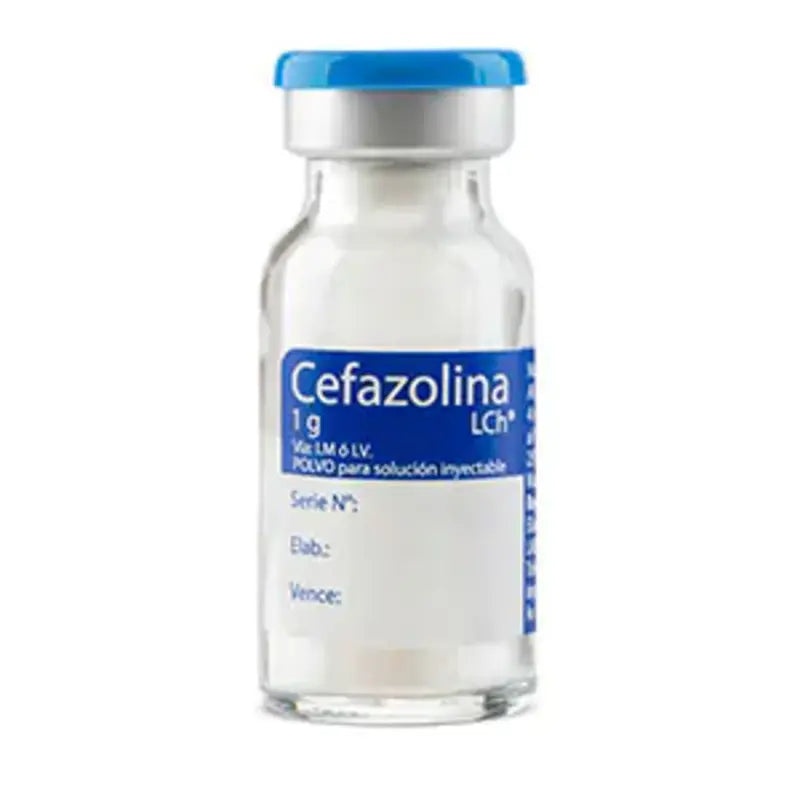
Cefazolina Ldp Laboratorios Torlan 1000 mg injectable

Prescription review online
A doctor will review your case and decide whether a prescription is medically appropriate.

Talk to a doctor about this medicine
Discuss your symptoms and possible next steps in a quick online consultation.



How to use CEFAZOLIN LDP LABORATORIOS TORLAN 1g POWDER FOR INJECTABLE SOLUTION AND FOR INFUSION
Contents of the leaflet
- Introduction
- Package Leaflet: Information for the Patient
- C:
- What Cefazoline LDP-Laboratorios TORLAN is and what it is used for
- What you need to know before taking Cefazoline LDP-Laboratorios TORLAN
- N
- A
- OefazolineLDP-L
- E
- C
- C
- How to take Cefazoline LDP-Laboratorios TORLAN
- S
- Possible side effects
- C
- Storage of Cefazoline LDP-Laboratorios TORLAN
- Contents of the pack and further information on Cefazoline LDP-Laboratorios TORLAN
- Composition of cefazoline ldp-laboratorios torlan
- The active ingredient is cefazoline. Each vial of cefazoline ldp-laboratorios torlan contains 1 g of cefazoline (in the form of cefazoline sodium).
- Appearance of the product and contents of the pack
- Marketing authorization holder and manufacturer
- Date of the last revision of this package leaflet: September 2023
Introduction
Package Leaflet: Information for the Patient
Cefazoline LDP-Laboratorios TORLAN 1 g powder for solution for injection and infusion EFG.
Read the entire package leaflet carefully before starting to use this medication, as it contains important information for you.
- Keep this package leaflet, as you may need to read it again.
- If you have any questions, consult your doctor or pharmacist.
- This medication has been prescribed to you only, and you should not give it to others, even if they have the same symptoms as you, as it may harm them.
- If you experience side effects, consult your doctor or pharmacist, even if they are not listed in this package leaflet. See section 4.

Not sure if this medicine is right for you?
Discuss your symptoms and treatment with a doctor online.
C:
- What Cefazoline LDP-Laboratorios TORLAN is and what it is used for
- What you need to know before taking Cefazoline LDP-Laboratorios TORLAN
- How to take Cefazoline LDP-Laboratorios TORLAN
- Possible side effects
- Storage of Cefazoline LDP-Laboratorios TORLAN
- Contents of the pack and further information
1. What Cefazoline LDP-Laboratorios TORLAN is and what it is used for
This medication contains the active ingredient cefazoline (in the form of cefazoline sodium).
 Cefazoline belongs to a group of antibiotics called cephalosporins that work by eliminating bacteria.
Cefazoline is used when it is known that an infection has been caused or is likely to be caused by a bacterium that is sensitive to cefazoline. It is used to treat the following infections:
- Respiratory tract infections
- Genitourinary tract infections
- Skin and soft tissue infections
- Biliary tract infections
- Bone and joint infections
- Septicemia (blood infection caused by bacteria)
- Endocarditis (infection of the heart lining)
- Prevention of infections in surgery and postoperative period
.

Started taking the medicine and have questions?
Discuss your symptoms and treatment with a doctor online.
2. What you need to know before taking Cefazoline LDP-Laboratorios TORLAN
N
If you are allergic to cefazoline sodium.
If you have ever had a severe allergic reaction to penicillin or another similar antibiotic.
If you are allergic to lidocaine and are going to receive Cefazoline by intramuscular injection.
A
Consult your doctor, pharmacist, or nurse before starting to take Cefazoline LDP-Laboratorios TORLAN.
- If you have had a mild allergic reaction to penicillin or other similar antibiotics, such as skin rashes that can cause itching.
- If you are allergic to something not mentioned in this package leaflet.
- If you have had intestinal disorders, especially colitis (inflammation of the intestine).
- If you have kidney problems.
- If you are on a low-sodium diet.
Risk factors that may cause vitamin K deficiency or risk factors that affect other blood coagulation mechanisms.
On rare occasions, blood coagulation disorders may occur during treatment with cefazoline. Additionally, changes in blood coagulation may occur in patients with diseases that can cause or worsen bleeding, such as hemophilia or stomach or intestinal ulcers. In these cases, your blood coagulation will be monitored.
This medication should not be injected into the area near the spinal cord (intrathecally), as cases of central nervous system toxicity (including seizures) have been reported.
Prolonged use of cefazoline may cause superinfections. Your doctor will monitor you closely for this and treat you if necessary.
Children
Cefazoline should notbe used in premature infants or breastfed babies in the first month of life
OefazolineLDP-L
Tell your doctor or pharmacist if you are taking, have recently taken, or may need to take any other medication. This also applies to over-the-counter medications and herbal remedies, as Cefazoline may affect how other medications work. Additionally, other medications may affect how Cefazoline works.
It is very important that you consult your doctor or nurse, especially if you are taking any of the following medications:
- Aminoglycosides or other antibiotics (used to treat infections).
- Probenecid (used to treat gout).
- Vitamin K.
- Anticoagulants (blood-thinning medications).
- Furosemide (a medication to urinate).
You should also inform your doctor or nurse if you need to have blood tests to measure glucose levels or other blood tests.
E
If you are pregnant or breastfeeding, or think you may be pregnant or plan to become pregnant, consult your doctor or pharmacist before using this medication.
C
Cefazoline has no influence on the ability to drive and use machines. However, side effects may occur (see also section "Possible side effects") that can affect the ability to drive and use machines.
C
This medication contains 48 mg of sodium (main component of table salt/cooking salt) per vial. This is equivalent to 2.4% of the maximum recommended daily sodium intake for an adult.
3. How to take Cefazoline LDP-Laboratorios TORLAN
Follow the administration instructions of Cefazoline LDP-Laboratorios Torlan indicated by your doctor or pharmacist. If in doubt, ask your doctor or pharmacist.
Cefazoline will be administered by a doctor or nurse. It will be administered in one of the following ways:
- In an intramuscular injection (e.g., in a muscle of the arm).
- By slow injection into a vein (can take 3-5 minutes).
- Through a small tube in a vein (this method is called "intravenous infusion").
Remember to use your medication.
Your doctor will determine the dose of Cefazoline based on your age, weight, the severity of the infection, and the condition of your kidneys. The doctor will explain it to you.
The recommended dose is:
Adults and children over 12 years:in the case of mild infections, 500 mg every 8 hours (total daily dose 1.5g); in moderate to severe infections, 500 mg to 1g every 6 or 8 hours (total daily dose 3g-4g); in severe infections 1 to 1.5g every 6 hours (total daily dose 4g-6g).
Children (under 12 years and over 1 month):a total daily dose of 25 to 50 mg per kg of body weight, divided into three or four equal doses, is effective in most mild to moderate infections. The total daily dose should not exceed 100 mg/kg even in cases of severe infections.
Prevention of surgical/postoperative infections in adults:
To prevent postoperative infection in surgery, the recommended doses are as follows:
- 1-2 g administered 30 minutes to 60 minutes before starting surgery.
- for prolonged surgical procedures (e.g., 2 hours or more) 500 mg to 1 g during surgery (the dosage will be adjusted depending on the duration of the procedure).
- 500 mg to 1 g every 6 to 8 hours during the 24 hours postoperative.
Prevention of surgical/postoperative infections in children
- 25-30 mg/kg for children up to a maximum of 50 mg/kg (the maximum dose should not exceed 2 g). It is important that the preoperative dose is administered just before (30 to 60 minutes) starting the procedure. Similarly, cefazoline will be administered, if necessary, at appropriate intervals during the procedure.
In patients for whom infection at the surgical site may pose a serious risk (e.g., open-heart surgery and prosthetic joint replacement), prophylactic administration of cefazoline may be continued for 3 to 5 days after surgery. If signs of infection appear, samples should be taken for culture to identify the causal germ, in order to establish appropriate therapy.
Adults and children with reduced renal function
If you have kidney problems, you may receive a lower dose. A blood test may be necessary to ensure that you have received a sufficient dose.
Duration of treatment
The duration of treatment depends on the course of the disease. According to the general principles of antibiotic therapy, cefazoline should be continued for at least 2 to 3 days after the fever has subsided or the test for eradication of the causal agent has been obtained.
S
Tell your doctor or nurse if you think you have received too much Cefazoline.
In case of overdose or accidental ingestion, consult your doctor or pharmacist immediately or call the Toxicology Information Service, phone 915 620 420, indicating the medication and the amount ingested.
If you have any other questions about the use of this medication, ask your doctor or nurse.
4. Possible side effects
Like all medications, this medication can cause side effects, although not everyone gets them.
Severe allergic reactions(very rare, may affect up to 1 in 10,000 people).
If you have a severe allergic reaction, tell your doctor immediately.
Possible symptoms include:
- Sudden swelling of the face, throat, mouth, or lips, which can cause difficulty breathing or swallowing.
- Sudden swelling of hands, feet, and ankles.
Other possible side effects
Frequent(may affect up to 1 in 10 people):
- Skin rash.
- Nausea and vomiting.
- Diarrhea.
- Pain or induration (hardened skin) at the injection site.
Uncommon(may affect up to 1 in 100 people):
- Oral thrush.
- Fever.
- Seizures.
- Phlebitis.
- Itching and redness of the skin, joint pain, skin lesions, generalized rash, and hives.
Rare(may affect up to 1 in 1,000 people):
- Genital infection, vaginal candidiasis — vaginal pain or itching or vaginal discharge.
- Prolonged use may cause the proliferation of non-susceptible bacteria.
- Increased or decreased number of blood cells.
- Hyperglycemia (high blood sugar), hypoglycemia (low blood sugar)
- Dizziness.
- Respiratory disorders (breathing).
- Kidney and urinary tract disorders.
- Cough.
- Rhinorrhea.
- Lack of appetite.
- Liver failure (detectable in blood tests), jaundice.
- Severe rash with rapid progression (with blisters on the skin and skin peeling, and possible blisters in the mouth).
- Severe fatigue and weakness.
- Chest pain.
Very rare(may affect up to 1 in 10,000 people):
- Blood coagulation disorders.
- Colitis. Symptoms include diarrhea, usually with blood and mucus, abdominal pain, and fever.
- Genital itching.
C
If you experience any side effects, consult your doctor or pharmacist, even if they are not listed in this package leaflet. You can also report them directly through the Spanish Medicines and Healthcare Products Agency's (AEMPS) website: https://www.notificaram.es. By reporting side effects, you can help provide more information on the safety of this medication.
5. Storage of Cefazoline LDP-Laboratorios TORLAN
Keep out of sight and reach of children.
This medication does not require special storage conditions.
The reconstituted solution with sterile water or 1% lidocaine solution is stable for up to 8 hours at 25°C and up to 24 hours if stored in the refrigerator (2-8°C).
Do not use this medication after the expiration date shown on the vial label and the outer packaging after the "EXP" date. The expiration date is the last day of the month indicated.
Do not use this medication if you notice visible signs of deterioration.
Medications should not be disposed of through wastewater or household waste. Deposit the packaging and medications you no longer need at the pharmacy's SIGRE point or any other medication waste collection system. If in doubt, ask your pharmacist how to dispose of the packaging and medications you no longer need. This will help protect the environment.
6. Contents of the pack and further information on Cefazoline LDP-Laboratorios TORLAN
Composition of cefazoline ldp-laboratorios torlan
The active ingredient is cefazoline. Each vial of cefazoline ldp-laboratorios torlan contains 1 g of cefazoline (in the form of cefazoline sodium).
Appearance of the product and contents of the pack
Each pack of Cefazoline LDP-Laboratorios TORLAN contains a vial with a white or almost white powder.
Marketing authorization holder and manufacturer
LDP-Laboratorios TORLAN S.A
Ctra de Barcelona, 135 B
08290 Cerdanyola del Vallès, Barcelona
Spain
Local Representative
LAPHYSAN, SAU
C/ Anabel Segura nº11. Edificio A. Planta 4. Puerta D
28108 Alcobendas, Madrid
Spain
Date of the last revision of this package leaflet: September 2023
Detailed and updated information on this medication is available on the website of the Spanish Agency for Medicines and Healthcare Products (AEMPS) http://www.aemps.gob.es/
----------------------------------------------------------------------------------------------------------------
This information is intended only for healthcare professionals:
Before administration, drugs administered intravenously should be visually inspected for discoloration, if the solution and container allow it.
Validity period after reconstitution/dilution:
After reconstitution:the reconstituted solution with sterile water or 1% lidocaine solution is stable for up to 8 hours at 25°C and up to 24 hours if stored in the refrigerator (2-8°C). From a microbiological point of view, the product should be used immediately. If not used immediately, the storage times and conditions are the responsibility of the user, which should not exceed 8 hours at 25°C and 24 hours between 2-8°C.
Instructions for the correct administration of the product:
- Intramuscular administration: Cefazoline 1 g is reconstituted with 10 ml of sterile water or with 4 ml of 1% lidocaine solution. Shake well until dissolved. Cefazoline should be injected into a large muscle mass.
- Intravenous administration: cefazoline can be administered by direct intravenous injection or by continuous or intermittent infusion (never dissolved in lidocaine). Two forms of administration are distinguished:
- Continuous or intermittent intravenous infusion: cefazoline can be administered through the main infusion systems of liquids, controlling the infusion rate or in a second intravenous infusion bottle.
Where: The reconstitution of 1 g of cefazoline should be initially done in 5 ml of sterile water and then diluted in 50 to 100 ml of one of the following intravenous solutions:
Sodium chloride 0.9%.
Glucose 10%.
Glucose 5% in Ringer's lactate.
Sodium chloride 0.9% and glucose 5%.
Ringer's solution.
Ringer's lactate.
- Direct intravenous injection (bolus): dilute 1 g reconstituted in a minimum of 10 ml. Inject the solution slowly over 3 to 5 minutes (should not be administered in less than three minutes).
- Country of registration
- Dosage formINJECTABLE, 1000 mg
- ATC codeJ01DB04
- Active substance
- Prescription requiredYes
- Manufacturer
- This information is for reference only and does not constitute medical advice. Always consult a doctor before taking any medication. Oladoctor is not responsible for medical decisions based on this content.
- Alternatives to CEFAZOLIN LDP LABORATORIOS TORLAN 1g POWDER FOR INJECTABLE SOLUTION AND FOR INFUSIONDosage form: INJECTABLE, 2000 mgActive substance: cefazolinManufacturer: Ldp Laboratorios Torlan S.A.Prescription requiredDosage form: INJECTABLE, 1 g sodium cefazolinActive substance: cefazolinManufacturer: Laboratorios Normon S.A.Prescription requiredDosage form: INJECTABLE, 1 g sodium cefazolinActive substance: cefazolinManufacturer: Laboratorios Normon S.A.Prescription required
Online doctors for CEFAZOLIN LDP LABORATORIOS TORLAN 1g POWDER FOR INJECTABLE SOLUTION AND FOR INFUSION
Discuss questions about CEFAZOLIN LDP LABORATORIOS TORLAN 1g POWDER FOR INJECTABLE SOLUTION AND FOR INFUSION, including use, safety considerations and prescription review, subject to medical assessment and local regulations.









Frequently Asked Questions
CEFAZOLIN LDP LABORATORIOS TORLAN 1g POWDER FOR INJECTABLE SOLUTION AND FOR INFUSION requires a prescription in Spain. You can check with a doctor online whether this medicine may be appropriate for your situation.
The active ingredient in CEFAZOLIN LDP LABORATORIOS TORLAN 1g POWDER FOR INJECTABLE SOLUTION AND FOR INFUSION is cefazolin. This information helps identify medicines with the same composition but different brand names.
CEFAZOLIN LDP LABORATORIOS TORLAN 1g POWDER FOR INJECTABLE SOLUTION AND FOR INFUSION is manufactured by Ldp Laboratorios Torlan S.A.. Pharmacy brands and packaging may differ depending on the distributor.
Doctors such as Family doctors, Psychiatrists, Dermatologists, Cardiologists, Endocrinologists, Gastroenterologists, Pulmonologists, Nephrologists, Rheumatologists, Hematologists, Infectious disease physicians, Allergists, Geriatricians, Paediatricians, Oncologists may assess whether CEFAZOLIN LDP LABORATORIOS TORLAN 1g POWDER FOR INJECTABLE SOLUTION AND FOR INFUSION is appropriate, depending on your situation and local regulations. You can book an online consultation to discuss your symptoms and possible next steps.
The prescription is issued by a doctor after assessing your health. In Spain, CEFAZOLIN LDP LABORATORIOS TORLAN 1g POWDER FOR INJECTABLE SOLUTION AND FOR INFUSION is then dispensed in pharmacies with that prescription. An online consultation does not guarantee that a prescription will be issued: the decision always rests with the doctor.
To request a review, you can use Oladoctor:
Other medicines with the same active substance (cefazolin) include CEFAZOLIN LDP LABORATORIOS TORLAN 2g POWDER FOR INJECTABLE SOLUTION AND FOR INFUSION, CEFAZOLIN NORMON 1 g POWDER AND SOLVENT FOR INTRAMUSCULAR INJECTION, CEFAZOLINE NORMON 1 g POWDER AND SOLVENT FOR INTRAVENOUS INJECTION SOLUTION. These may have different brand names or formulations but contain the same therapeutic ingredient. Always consult a doctor before switching or starting a new medicine.
