



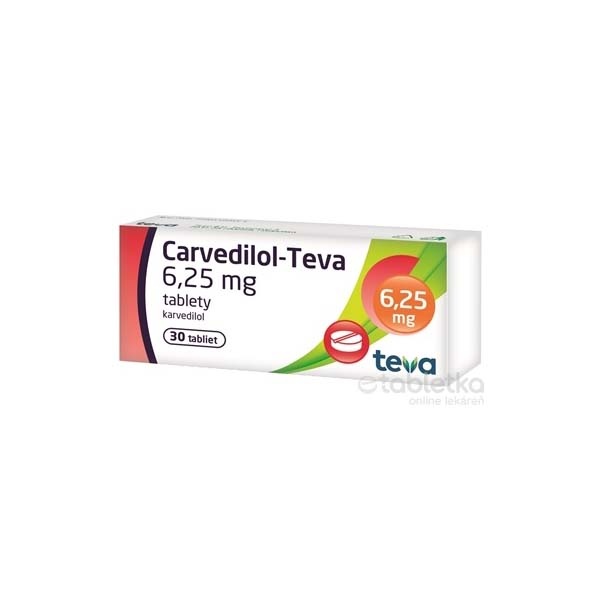
CARVEDILOL 6.25 mg Tablets

Prescription review online
A doctor will review your case and decide whether a prescription is medically appropriate.

Talk to a doctor about this medicine
Discuss your symptoms and possible next steps in a quick online consultation.



How to use CARVEDILOL TEVA-RATIOPHARM 6.25 mg TABLETS
Contents of the leaflet
- Introduction
- What is Carvedilol Teva-ratiopharm and what is it used for
- What you need to know before you take Carvedilol Teva-ratiopharm
- How to take Carvedilol Teva-ratiopharm
- Possible Adverse Effects
- Conservation of Carvedilol Teva-ratiopharm
- Package Contents and Additional Information
Introduction
Patient Information Leaflet: Information for the Patient
Carvedilol Teva-ratiopharm 6.25 mg Tablets EFG
carvedilol
Read the entire leaflet carefully before you start taking the medicine, as it contains important information for you.
- Keep this leaflet, as you may need to read it again.
- If you have any further questions, ask your doctor or pharmacist.
- This medicine has been prescribed for you only. Do not pass it on to others. It may harm them, even if their symptoms are the same as yours.
- If you experience any side effects, talk to your doctor or pharmacist. This includes any possible side effects not listed in this leaflet. See section 4.
Contents of the pack:
- What is Carvedilol Teva-ratiopharm and what is it used for
- What you need to know before you take Carvedilol Teva-ratiopharm
- How to take Carvedilol Teva-ratiopharm
- Possible side effects
- Storage of Carvedilol Teva-ratiopharm
- Contents of the pack and further information
1. What is Carvedilol Teva-ratiopharm and what is it used for
Carvedilol Teva-ratiopharm belongs to a group of medicines called alpha and beta-blockers. Carvedilol is used to treat high blood pressure and angina pectoris. Carvedilol is also used as a complementary treatment in heart failure.

Not sure if this medicine is right for you?
Discuss your symptoms and treatment with a doctor online.
2. What you need to know before you take Carvedilol Teva-ratiopharm
Do not take Carvedilol Teva-ratiopharm
- if you are allergic to carvedilol or any of the other ingredients of this medicine (listed in section 6),
- if you have unstable/decompensated heart failureor certain types of conduction disorders(so-called AV block type II and III unless you have a pacemaker, or so-called sick sinus syndrome),
- if you have liver diseasethat causes problems,
- if you have a very slow pulse (less than 50 beats per minute)or very low blood pressure,
- if you have severely impaired heart function(cardiogenic shock),
- if you have a severe acid-base imbalancein the body(metabolic acidosis, acidemia),
- if you have asthmaor other respiratory diseaseswith a tendency to throat constriction caused by spasms (e.g. chronic obstructive pulmonary disease),
- if you have severe respiratory problems(acute pulmonary embolism),
- if you have a rare form of angina pectoris(Prinzmetal's angina),
- if you have heart failure as a result of a respiratory disease(cor pulmonale),
- if you have an overactive adrenal gland(phaeochromocytoma) and are not being treated with medication,
- if you are taking monoamine oxidase inhibitors (MAOIs)(e.g. moclobemide) (except MAOI-B inhibitors),
- if you are receiving intravenous treatment with verapamil, diltiazemor other medicines used to treat heart rhythm disorders (antiarrhythmics),
- if you are breast-feeding.
Warnings and precautions
Talk to your doctor or pharmacist before taking Carvedilol Teva-ratiopharm
- if you have heart failureaccompanied by
- low blood pressure,
- impaired blood and oxygen supply to the heart(ischaemic heart disease) and hardening of the arteries(arteriosclerosis)
- and/or kidney problems,
Your kidney function should then be monitored. It may be necessary to reduce your dose.
- if you have had a heart attack. This should be treated before taking carvedilol,
- if you have a certain type of conduction disorder(so-called AV block type I),
- if you have high blood pressure due to organic causes,
- if you have diabetes. Treatment with Carvedilol Teva-ratiopharm may mask signs of low blood sugar. Therefore, your blood sugar should be monitored regularly,
- if you have severely impaired circulation in your hands and feet,
- concomitant treatment with medicines used to treat heart failure (digitalis glycosides) or heart rhythm disorders (e.g. verapamil, diltiazem)
- low blood pressure (orthostatic hypotension),
- acute inflammatory heart disease,
- narrowing of the heart valves or the outlet tract,
- terminal peripheral arteriopathy,
- labile or secondary hypertension,
- concomitant treatment with other blood pressure-lowering medicines (alpha-1 receptor antagonists, alpha-2 receptor agonists)
- and medicines where blood pressure reduction occurs as a side effect, e.g. barbiturates(in the treatment of epilepsy), phenothiazines(to treat psychosis), tricyclic antidepressants(to treat depression), vasodilating medicines(medicines to widen blood vessels).
- Neuromuscular blocking agents(medicines that reduce muscle tension).
- Ergotamine(medicine for migraine).
- Anaesthetics(medicines used in anaesthesia).
- Certain analgesic tablets(NSAIDs), oestrogens(hormones) and corticosteroids(adrenal hormone), as they may occasionally lower blood pressure, reducing the effect of Carvedilol Teva-ratiopharm.
- Cinacalcet(medicine used to treat problems with the parathyroid gland).
Carvedilol Teva-ratiopharm with food, drinks and alcohol
You should avoid taking carvedilol at the same time or near grapefruit or grapefruit juice during the initiation of treatment. Grapefruit and grapefruit juice may cause an increase in the amount of the active substance carvedilol in the blood and possibly unpredictable side effects. During treatment with carvedilol, you should limit your alcohol consumption, as alcohol may affect how carvedilol works.
Pregnancy and breast-feeding
If you are pregnant or breast-feeding, think you may be pregnant or are planning to have a baby, ask your doctor or pharmacist for advice before taking any medicine.
There is a risk of harm to the unborn child. Carvedilol Teva-ratiopharm should only be used during pregnancy if your doctor considers it necessary. Therefore, always consult your doctor before using Carvedilol Teva-ratiopharm during pregnancy.
It is not known whether Carvedilol Teva-ratiopharm passes into human breast milk and therefore should not be used during breast-feeding.
Driving and using machines
Dizziness and fatigue may occur at the start of treatment, after a dose increase, when the treatment is changed or in combination with alcohol. At the correct dose levels, it is not known whether carvedilol reduces the ability to drive or use machines. If you feel dizzy or weak when taking the tablets, you should avoid driving or work that requires great attention.
Carvedilol Teva-ratiopharm contains lactose
If your doctor has told you that you have an intolerance to some sugars, consult them before taking this medicine.
3. How to take Carvedilol Teva-ratiopharm
Always take this medicine exactly as your doctor has told you. If you are not sure, check with your doctor or pharmacist. If you feel that the effect of Carvedilol Teva-ratiopharm is too strong or too weak, talk to your doctor or pharmacist.
You should swallow the tablets with at least half a glass of water. You can take the tablets with or without food. However, patients with heart failure should take the tablets with food to reduce the risk of dizziness when standing up suddenly.
The tablets can be divided into equal doses.
Carvedilol Teva-ratiopharm tablets are available in the following strengths: 6.25 mg and 25 mg
High blood pressure
Adults
The usual dose is 1 tablet of Carvedilol 12.5 mg tablets (corresponding to 12.5 mg of carvedilol) for the first two days and 2 tablets of Carvedilol 12.5 mg tablets (corresponding to 25 mg of carvedilol) once daily thereafter. For this dosage, other strengths of carvedilol are available.
If necessary, the dose can be gradually increased at intervals of at least two weeks. The maximum recommended daily dose is 50 mg.
Elderly patients
The recommended dose is 1 tablet of Carvedilol 12.5 mg tablets (corresponding to 12.5 mg of carvedilol) once daily.
If necessary, the dose can be gradually increased at intervals of at least two weeks up to a maximum daily dose of 50 mg.
Angina pectoris
Adults
The usual dose is 1 tablet of Carvedilol 12.5 mg tablets (corresponding to 12.5 mg of carvedilol) twice daily for two days and 2 tablets of Carvedilol 12.5 mg tablets (corresponding to 25 mg of carvedilol) twice daily thereafter. For this dosage, other strengths of Carvedilol Teva-ratiopharm are available.
If necessary, the dose can be gradually increased at intervals of at least two weeks. The maximum recommended daily dose is 100 mg.
Elderly patients
The usual dose is 1 tablet of Carvedilol 12.5 mg tablets (corresponding to 12.5 mg of carvedilol) twice daily for two days and 2 tablets of Carvedilol 12.5 mg tablets (corresponding to 25 mg of carvedilol) twice daily thereafter. The maximum recommended daily dose is 50 mg.
Heart failure
The usual initial dose is 3.125 mg of carvedilol twice daily for two weeks. The dose can be gradually increased, usually at intervals of two weeks.
However, it may be necessary to increase or decrease the dose. Your doctor will advise you accordingly.
The maximum recommended dose is 25 mg administered twice daily in patients weighing less than 85 kg, and 50 mg twice daily in patients weighing more than 85 kg, provided that the heart failure is not severe. Dose escalation to 50 mg twice daily should be done carefully with close medical supervision.
If you take more Carvedilol Teva-ratiopharm than you should
If you take more Carvedilol Teva-ratiopharm than you should, or if children have taken the medicine by accident, contact your doctor, hospital or poison centre for advice on the risk and the necessary actions to take.
In case of overdose or accidental ingestion, consult your doctor or pharmacist immediately or call the Toxicology Information Centre, telephone: 91 562 04 20, stating the medicine and the amount taken.
Symptoms of overdose may include feeling faint due to excessively low blood pressure, slow heart rate, and in severe cases, pauses in the heartbeat. Breathing difficulties, narrowed airways, discomfort, decreased level of consciousness and seizures may occur.
If you forget to take Carvedilol Teva-ratiopharm
If you miss a dose (or doses), take the next dose at the usual time.
Do not take a double dose to make up for forgotten doses.
If you stop taking Carvedilol Teva-ratiopharm
Do not stop your treatment suddenly or change the dose unless your doctor tells you to. Your treatment should be gradually discontinued over a period of two weeks. Sudden interruption may worsen your symptoms.
If you have any further questions on the use of this medicine, ask your doctor or pharmacist.

Started taking the medicine and have questions?
Discuss your symptoms and treatment with a doctor online.
4. Possible Adverse Effects
Like all medicines, this medicine can cause adverse effects, although not all people suffer from them.
Most adverse effects are related to the dose and disappear when the dose is reduced or treatment is discontinued. Some adverse effects may occur at the beginning of treatment and resolve spontaneously as treatment continues.
Contact your doctor immediately if you experience any of the following adverse effects
- Chest pain with simultaneous difficulty breathing, sweating, and nausea (may affect up to 1 in 100 people).
- Severe skin reactions, such as skin rash, redness, blisters on the lips, around the eyes or in the mouth, scaly skin (symptoms of erythema multiforme), sores in the mouth, lips, and skin (signs of Stevens-Johnson syndrome), peeling of the top layer of the skin from the lower layers of the skin all over the body (signs of toxic epidermal necrolysis) (very rare frequency).
Very Common (may affect more than 1 in 10 people)
- dizziness,
- headache,
- heart failure,
- low blood pressure,
- weakness.
Common (may affect up to 1 in 10 people)
- bronchitis, pneumonia, upper respiratory tract infection,
- urinary tract infections,
- decrease in the number of red blood cells in the blood,
- weight gain,
- high cholesterol levels,
- loss of blood sugar control in people with diabetes,
- depression, depressive mood,
- visual disturbances,
- decreased tear production, eye irritation,
- low heart rate,
- edema (inflammation of the body or parts of the body), fluid overload, increased blood volume in the body,
- dizziness when standing up suddenly,
- fainting,
- problems with blood circulation (signs include cold hands and feet), hardening of the arteries (atherosclerosis), worsening of symptoms in patients with Raynaud's disease (fingers and toes turn blue, then white, and then reddish along with pain) or claudication (pain in the legs that worsens when walking),
- asthma and respiratory problems,
- fluid accumulation in the lungs,
- diarrhea,
- discomfort, nausea, vomiting, stomach pain, indigestion,
- pain, (e.g. in arms and legs),
- acute kidney failure and disorders of renal function in patients with hardened arteries and/or altered renal function,
- difficulty urinating.
Uncommon (may affect up to 1 in 100 people)
- sleep disturbance,
- confusion, hallucinations,
- nightmares,
- abnormal sensation,
- disorders of the heart conduction system, angina pectoris (including chest pain),
- certain skin reactions (e.g. allergic dermatitis, urticaria, itching and skin inflammation, increased sweating, psoriatic or lichen planus-like skin lesions),
- constipation,
- impotence.
Rare (may affect up to 1 in 1,000 people)
- decrease in platelet count (thrombocytopenia),
- nasal congestion,
- dry mouth,
Very Rare (may affect up to 1 in 10,000 people, including isolated cases)
- decrease in the number of white blood cells in the blood,
- psychosis,
- allergic reactions,
- liver function test alteration,
- involuntary loss of urine in women (urinary incontinence).
Frequency Not Known (cannot be estimated from the available data)
- hair loss.
The pharmacological class of beta-blocker receptor blockers may trigger hidden diabetes.
Sinoatrial arrest (lack of impulse from the sinus node, the "pacemaker" of the heart that controls heart contractions and regulates heart rate) in predisposed patients (e.g. elderly patients or patients with pre-existing bradycardia, sinoatrial dysfunction or AV block).
Reporting of Adverse Effects
If you experience any type of adverse effect, consult your doctor, pharmacist, or nurse, even if it is a possible adverse effect that does not appear in this prospectus. You can also report them directly through the Spanish Pharmacovigilance System for Human Use Medicines http://www.notificaram.es. By reporting adverse effects, you can contribute to providing more information on the safety of this medicine.
5. Conservation of Carvedilol Teva-ratiopharm
Keep this medicine out of sight and reach of children.
Do not use this medicine after the expiration date that appears on the packaging after the expiration date abbreviation CAD. The expiration date refers to the last day of that month.
PVC/PVdC/Aluminum blisters
Do not store at a temperature above 30°C.
Keep in the original packaging to protect it from light.
OPA/Aluminum/PVC/Aluminum blisters
Keep in the original packaging to protect it from light.
This medicine does not require special temperature storage conditions.
Medicines should not be thrown down the drain or into the trash. Deposit the packaging and medicines you no longer need at the SIGRE point in the pharmacy. In case of doubt, ask your pharmacist how to dispose of the packaging and medicines you no longer need. This way, you will help protect the environment.
6. Package Contents and Additional Information
Composition of Carvedilol Teva-ratiopharm 6.25 mg tablets
- The active ingredient is: Carvedilol
Each tablet contains 6.25 mg of carvedilol
- The other ingredients are:
- microcrystalline cellulose
- lactose monohydrate
- crospovidone
- povidone
- colloidal anhydrous silica
- magnesium stearate
Appearance of the Product and Package Contents
Tablets, white, biconvex, capsule-shaped, engraved with "C" with a score and "2" on one side and smooth on the other.
The tablets can be divided into equal doses.
Package sizes: 10, 14, 28, 30, 50, 56, 60, 98, 100, and 105 tablets.
Only some package sizes may be marketed.
Marketing Authorization Holder and Manufacturer
Marketing Authorization Holder:
Teva Pharma, S.L.U.
Anabel Segura, 11 Edificio Albatros B, 1st Floor
28108 Alcobendas, Madrid (Spain)
Manufacturer:
Merckle GmbH
Ludwig Merckle Strasse 3
89143 Blaubeuren
Germany
Or
Teva Operations Poland Sp. z o.o.
Mogilska 80 Str.
31-546 Krakow
Poland
Or
Teva Pharmaceutical Works Private Limited
Pallagi út 13
Debrecen H-4042
Hungary
This medicine is authorized in the Member States of the European Economic Area under the following names:
Germany, Austria: Carvedilol-ratiopharm 6.25 mg tablets
Finland, Sweden: Carveratio
Spain: Carvedilol Teva-ratiopharm 6.25 mg tablets EFG
Poland, Portugal: Carvedilol-ratiopharm
Date of the Last Revision of this Prospectus:April 2024
Detailed information about this medicine is available on the website of the Spanish Agency for Medicines and Health Products (AEMPS) http://www.aemps.gob.es/
You can access detailed and updated information about this medicine by scanning the QR code included in the packaging with your mobile phone (smartphone). You can also access this information at the following internet address: https://cima.aemps.es/cima/dochtml/p/70655/P_70655.html
QR Code + URL
- Country of registration
- Dosage formTABLET, 6.25 mg
- ATC codeC07AG02
- Average pharmacy price2.5 EUR
- Active substance
- Prescription requiredYes
- Manufacturer
- CompositionLACTOSA MONOHIDRATO (89,30 mg mg)
- This information is for reference only and does not constitute medical advice. Always consult a doctor before taking any medication. Oladoctor is not responsible for medical decisions based on this content.
- Alternatives to CARVEDILOL TEVA-RATIOPHARM 6.25 mg TABLETSDosage form: TABLET, 25 mgActive substance: carvedilolManufacturer: Almus Farmaceutica S.A.U.Prescription requiredDosage form: TABLET, 6.25 mgActive substance: carvedilolManufacturer: Almus Farmaceutica S.A.U.Prescription requiredDosage form: TABLET, 25 mgActive substance: carvedilolManufacturer: Laboratorios Alter S.A.Prescription required
Online doctors for CARVEDILOL TEVA-RATIOPHARM 6.25 mg TABLETS
Discuss questions about CARVEDILOL TEVA-RATIOPHARM 6.25 mg TABLETS, including use, safety considerations and prescription review, subject to medical assessment and local regulations.
Get CARVEDILOL TEVA-RATIOPHARM 6.25 mg TABLETS Prescription Online
Fill in a 2-min form
Tell us your symptoms, history, and what medicine you're requesting.
Pick a doctor or let us assign
Choose a specialist or we'll match you with the next available doctor.
Doctor reviews your case
Usually within 30 minutes. They may ask follow-up questions via chat.
Collect from any pharmacy
Electronic prescription sent to your email — valid across Spain.
Frequently Asked Questions
CARVEDILOL TEVA-RATIOPHARM 6.25 mg TABLETS requires a prescription in Spain. You can check with a doctor online whether this medicine may be appropriate for your situation.
The active ingredient in CARVEDILOL TEVA-RATIOPHARM 6.25 mg TABLETS is carvedilol. This information helps identify medicines with the same composition but different brand names.
The average pharmacy price for CARVEDILOL TEVA-RATIOPHARM 6.25 mg TABLETS is around 2.5 EUR. Prices may vary depending on the manufacturer and dosage form.
CARVEDILOL TEVA-RATIOPHARM 6.25 mg TABLETS is manufactured by Teva Pharma S.L.U.. Pharmacy brands and packaging may differ depending on the distributor.
Doctors such as Family doctors, Psychiatrists, Dermatologists, Cardiologists, Endocrinologists, Gastroenterologists, Pulmonologists, Nephrologists, Rheumatologists, Hematologists, Infectious disease physicians, Allergists, Geriatricians, Paediatricians, Oncologists may assess whether CARVEDILOL TEVA-RATIOPHARM 6.25 mg TABLETS is appropriate, depending on your situation and local regulations. You can book an online consultation to discuss your symptoms and possible next steps.
Spain has a well-developed healthcare infrastructure across major cities such as Madrid, Barcelona, Valencia, and Seville. Pharmacies are widely available and operate under strict regulations, ensuring access to prescribed medications.
You can buy CARVEDILOL TEVA-RATIOPHARM 6.25 mg TABLETS in Madrid, Barcelona, Seville, or Valencia at any local pharmacy with a valid prescription.
To obtain a prescription, you can use Oladoctor:
Other medicines with the same active substance (carvedilol) include CARVEDILOL ALMUS 25 mg TABLETS, CARVEDILOL ALMUS 6.25 mg TABLETS, CARVEDILOL ALTER 25 mg TABLETS. These may have different brand names or formulations but contain the same therapeutic ingredient. Always consult a doctor before switching or starting a new medicine.
