


Carbocal D 600 mg/400 IU comprimidos masticables

Prescription review online
A doctor will review your case and decide whether a prescription is medically appropriate.

Talk to a doctor about this medicine
Discuss your symptoms and possible next steps in a quick online consultation.



How to use CARBOCAL D 600 mg/400 IU CHEWABLE TABLETS ORANGE FLAVOR
Contents of the leaflet
- Introduction
- What is Carbocal D and what is it used for
- Before taking Carbocal D
- How to take Carbocal D
- Possible side effects
- Storage of Carbocal D
- Additional information
Introduction
Package Leaflet: Information for the User
CARBOCAL D 600 mg/400 UI Orange-Flavored Chewable Tablets
Calcium/Colecalciferol
Read the entire package leaflet carefully before starting to take the medication.
- Keep this package leaflet, as you may need to read it again.
- If you have any questions, consult your doctor or pharmacist.
- This medication has been prescribed to you and should not be given to others, even if they have the same symptoms, as it may harm them.
- If you consider any of the side effects you are experiencing to be serious or if you notice any side effect not mentioned in this package leaflet, inform your doctor or pharmacist.
Contents of the Package Leaflet:
- What is Carbocal D and what is it used for.
- Before taking Carbocal D.
- How to take Carbocal D.
- Possible side effects.
- Storage of Carbocal D.
- Additional information
1. What is Carbocal D and what is it used for
This medication contains two active ingredients: calcium and vitamin D3. Calcium is an important component of bones, and vitamin D3 helps with calcium absorption in the intestine and its deposition in bones.
It is indicated for:
- Correction of vitamin D and calcium deficiencies in the elderly.
- In combination with osteoporosis treatments, if calcium and vitamin D levels are too low, or there is a high risk of them being too low.

Not sure if this medicine is right for you?
Discuss your symptoms and treatment with a doctor online.
2. Before taking Carbocal D
Do not take Carbocal D
- If you are allergic (hypersensitive) to calcium, vitamin D, or any of the other components of Carbocal D (in particular, soybean or peanut oil) (see section 6).
- If you have abnormally high levels of calcium in the blood (hypercalcemia) and/or excessive loss of calcium in the urine (hypercalciuria).
- If you have any condition that may lead to hypercalcemia and/or hypercalciuria (e.g., overactive parathyroid glands, bone marrow disease (myeloma), malignant bone tumor (bone metastases)).
- If you have kidney failure.
- If you have kidney stones (lithiasis) or calcium deposits in your kidneys (nephrocalcinosis).
- If you have an excessive intake of vitamin D (hypervitaminosis D).
Be careful with Carbocal D
In the case of long-term treatments with Carbocal D, the amount of calcium in the blood should be regularly monitored (calcemia). This monitoring is particularly important in the elderly and when the treatment is being administered at the same time as cardiac glycosides (e.g., digoxin) or diuretics. Depending on the result, your doctor will decide whether to reduce or interrupt the treatment.
Before taking Carbocal D, consult your doctor or pharmacist:
- If you have had kidney stones.
- If you are suffering from any immune disorder (sarcoidosis), for which calcium levels in the blood and urine should be monitored.
- If you are immobile and have a reduction in bone mass (osteoporosis). This may cause an excessive increase in calcium levels in the blood, which can cause side effects.
- If you are taking other medications that contain vitamin D3 or calcium. This may cause an excessive increase in calcium levels in the blood, which can cause side effects.
Use of other medications
Inform your doctor or pharmacist if you are using or have recently used other medications, including those purchased without a prescription.
In particular:
- Thiazide diuretics (medications used to treat high blood pressure), as they may increase the amount of calcium in the blood.
- Oral steroids, as they may reduce the amount of calcium in the blood.
- Orlistat (a medication used to treat obesity), cholestyramine, or laxatives such as paraffin oil, as they may reduce the absorption of vitamin D3.
- Phenytoin (a medication for epilepsy) and barbiturates (medications that help with sleep), as they may make vitamin D3 less effective.
- Cardiac glycosides (medications used to treat heart problems), as they may cause more side effects if too much calcium is taken.
- Tetracycline antibiotics, as they may reduce the amount absorbed. In this case, it is recommended to take them at least 2 hours before or 4-6 hours after taking Carbocal D.
- Estramustine (a medication used in chemotherapy), thyroid hormones, or medications that contain iron, zinc, or strontium, as they may reduce the amount absorbed. They should be administered at least 2 hours before or after Carbocal D.
- Bisphosphonates (a treatment for certain bone conditions), fluoride, or fluoroquinolones (a type of antibiotic), as they may reduce the amount absorbed. These medications should be taken at least 3 hours before or after Carbocal D.
- Other medications that contain calcium or vitamin D while taking Carbocal D. This may cause an excessive increase in calcium levels in the blood.
Taking Carbocal D with food and drinks
In the two hours prior to taking Carbocal D, you should avoid eating foods that contain oxalates (e.g., spinach and rhubarb) or phytic acid (e.g., whole grains), which may reduce calcium absorption.
Pregnancy and Breastfeeding
Consult your doctor or pharmacist before using any medication.
This medication can be used during pregnancy; however, the daily intake of calcium should not exceed 1500 mg, and the daily intake of vitamin D should not exceed 600 UI. Therefore, in the case of pregnancy, the daily dose of Carbocal D should not exceed one tablet per day. Higher amounts may have negative effects on the baby.
During breastfeeding, you can take Carbocal D. Since calcium and vitamin D3 pass into breast milk, you should consult your doctor first if your child is receiving any other product that contains vitamin D3.
Driving and using machines
No effects on the ability to drive and use machines are known.
Important information about some of the components of Carbocal D
This medication contains sorbitol. If your doctor has told you that you have an intolerance to certain sugars, consult with them before taking/using this medication.
This medication may be harmful to people with phenylketonuria because it contains aspartame, which is a source of phenylalanine.
This medication contains sucrose. If your doctor has told you that you have an intolerance to certain sugars, consult with them before taking the medication.
Carbocal D also contains partially hydrogenated soybean oil. It should not be used in case of peanut or soy allergy.
3. How to take Carbocal D
Follow the administration instructions of Carbocal D indicated by your doctor exactly. Consult your doctor if you have any doubts.
The normal dose is 1 tablet twice a day for adults and the elderly (e.g., one tablet in the morning and one tablet at night). Pregnant women should take only one tablet per day.
Chew the Carbocal D tablets and then drink water if desired.
If you take more Carbocal D than you should
If you take more Carbocal D than you should and experience any symptoms of overdose, stop taking Carbocal D and contact your doctor immediately.
Symptoms of overdose may include: anorexia, excessive thirst, nausea, vomiting, constipation, abdominal pain, muscle weakness, fatigue, mental health problems, increased urine production, bone pain, kidney stones.
In the case of prolonged overdose, calcium deposits may appear in blood vessels or other body tissues.
In the case of severe overdose, cardiac arrest may occur.
In case of overdose or accidental ingestion, call the Toxicology Information Service, phone: 91 562 04 20, indicating the medication and the amount ingested.
If you forget to take Carbocal D
Do not take a double dose to make up for forgotten doses.
If you have any other questions about the use of this product, ask your doctor or pharmacist.

Started taking the medicine and have questions?
Discuss your symptoms and treatment with a doctor online.
4. Possible side effects
Like all medications, Carbocal D can cause side effects, although not everyone experiences them.
Uncommon side effects (affects 1 to 10 patients per 1000): excess calcium levels in the blood or urine.
Rare side effects (affects 1 to 10 patients per 10,000): constipation, flatulence, nausea, abdominal pain, diarrhea, itching, rash, and hives.
If you consider any of the side effects you are experiencing to be serious or if you notice any side effect not mentioned in this package leaflet, inform your doctor or pharmacist.
5. Storage of Carbocal D
Keep this medication out of the sight and reach of children.
Do not store at a temperature above 30°C.
Keep the bottle tightly closed to protect it from moisture.
Do not use this medication after the expiration date shown on the packaging and on the bottle after CAD. The expiration date is the last day of the month indicated.
Medications should not be disposed of through wastewater or household waste. Deposit the packaging and any unused medications in the pharmacy's SIGRE point. If in doubt, ask your pharmacist how to dispose of the packaging and medications you no longer need. This will help protect the environment.
6. Additional information
Composition of Carbocal D
- The active ingredients are calcium carbonate and colecalciferol (vitamin D3).
Each tablet contains 1500 mg of calcium carbonate (equivalent to 600 mg of calcium) and 400 UI of colecalciferol (equivalent to 10 micrograms of vitamin D3).
- The other ingredients (excipients) are: DL-alpha-tocopherol, partially hydrogenated soybean oil, gelatin, sucrose, corn starch, pregelatinized corn starch, polysorbate 80, sorbitol, orange flavor (natural flavorings, flavoring substances, maltodextrin, and E-307), sodium croscarmellose, aspartame, magnesium stearate, and xylitol.
Appearance of the product and packaging content
Carbocal D is presented in the form of white, orange-flavored chewable tablets.
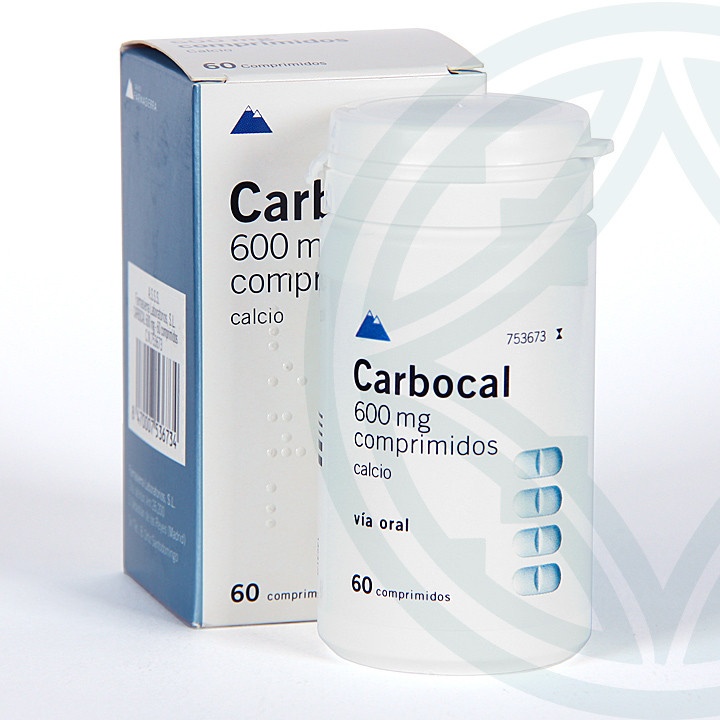
Each package contains 60 chewable tablets.
Marketing authorization holder and manufacturer
The holder is: Farmasierra Laboratorios S.L.
Ctra. de Irún 26,200
San Sebastián de los Reyes 28709
Madrid, Spain
The manufacturer is:
Farmasierra Manufacturing S.L.
Carretera de Irún km 26,200
San Sebastián de los Reyes
28709 – Madrid - Spain
This package leaflet was approved in May 2011.
Detailed and updated information about this medication is available on the website of the Spanish Agency for Medicines and Health Products (AEMPS): http://www.aemps.es/
- Country of registration
- Dosage formCHEWABLE TABLET, 600 mg of calcium, 400 IU of cholecalciferol
- Average pharmacy price7.21 EUR
- Prescription requiredYes
- Manufacturer
- CompositionSORBITOL (100 mg mg), CROSCARMELOSA SODICA (50 mg mg), ASPARTAMO (E-951) (3,5 mg mg), ACEITE DE SOJA PARCIALMENTE HIDROGENADO (0,3 mg mg), SACAROSA (1,52 mg mg), XILITOL (E-967) (C.S.P 2.000 mg mg), POLISORBATO 80 (15,79 mg mg)
- This information is for reference only and does not constitute medical advice. Always consult a doctor before taking any medication. Oladoctor is not responsible for medical decisions based on this content.
- Alternatives to CARBOCAL D 600 mg/400 IU CHEWABLE TABLETS ORANGE FLAVORDosage form: CHEWABLE TABLET, 1000 mg/880 IUActive substance: Calcium, combinations with vitamin D and/or other drugsManufacturer: Lacer S.A.Prescription requiredDosage form: ORALLY DISINTEGRATING TABLET/LIOTAB, 1500 mg calcium carbonate; 400 IU cholecalciferolActive substance: Calcium, combinations with vitamin D and/or other drugsManufacturer: Itf Medilab Farma S.A.Prescription requiredDosage form: ORALLY DISINTEGRATING TABLET/LYOTAB, 1500 mg calcium carbonate (600 mg Calcium) + 2000 IU cholecalciferolActive substance: Calcium, combinations with vitamin D and/or other drugsManufacturer: Italfarmaco S.A.Prescription required
Online doctors for CARBOCAL D 600 mg/400 IU CHEWABLE TABLETS ORANGE FLAVOR
Discuss questions about CARBOCAL D 600 mg/400 IU CHEWABLE TABLETS ORANGE FLAVOR, including use, safety considerations and prescription review, subject to medical assessment and local regulations.









Frequently Asked Questions
CARBOCAL D 600 mg/400 IU CHEWABLE TABLETS ORANGE FLAVOR requires a prescription in Spain. You can check with a doctor online whether this medicine may be appropriate for your situation.
The average pharmacy price for CARBOCAL D 600 mg/400 IU CHEWABLE TABLETS ORANGE FLAVOR is around 7.21 EUR. Prices may vary depending on the manufacturer and dosage form.
CARBOCAL D 600 mg/400 IU CHEWABLE TABLETS ORANGE FLAVOR is manufactured by Farmasierra Laboratorios S.L.. Pharmacy brands and packaging may differ depending on the distributor.
Doctors such as Family doctors, Psychiatrists, Dermatologists, Cardiologists, Endocrinologists, Gastroenterologists, Pulmonologists, Nephrologists, Rheumatologists, Hematologists, Infectious disease physicians, Allergists, Geriatricians, Paediatricians, Oncologists may assess whether CARBOCAL D 600 mg/400 IU CHEWABLE TABLETS ORANGE FLAVOR is appropriate, depending on your situation and local regulations. You can book an online consultation to discuss your symptoms and possible next steps.
The prescription is issued by a doctor after assessing your health. In Spain, CARBOCAL D 600 mg/400 IU CHEWABLE TABLETS ORANGE FLAVOR is then dispensed in pharmacies with that prescription. An online consultation does not guarantee that a prescription will be issued: the decision always rests with the doctor.
To request a review, you can use Oladoctor:
Other medicines with the same active substance () include ADIAVAL 1000 mg/880 IU CHEWABLE TABLETS, BONESIL D FLAS 1500 mg/400 IU ORALLY DISINTEGRATING TABLETS, CADELIUS D 600 MG/2000 IU ORALLY DISINTEGRATING TABLETS. These may have different brand names or formulations but contain the same therapeutic ingredient. Always consult a doctor before switching or starting a new medicine.
