



CAPECITABINA 150 mg Film-Coated Tablets

Prescription review online
A doctor will review your case and decide whether a prescription is medically appropriate.

Talk to a doctor about this medicine
Discuss your symptoms and possible next steps in a quick online consultation.



How to use Capecitabine Teva 150 mg FILM-COATED TABLETS
Contents of the leaflet
- Introduction
- What Capecitabine Teva is and what it is used for
- What you need to know before you take Capecitabine Teva
- How to take Capecitabine Teva
- Possible Adverse Effects
- Storage of Capecitabina Teva
- Package Contents and Additional Information
Introduction
Package Leaflet: Information for the User
Capecitabine Teva 150 mg film-coated tablets EFG
Capecitabine Teva 500 mg film-coated tablets EFG
capecitabine
Read all of this leaflet carefully before you start taking this medicine because it contains important information for you.
- Keep this leaflet, you may need to read it again.
- If you have any further questions, ask your doctor or pharmacist.
- This medicine has been prescribed for you only. Do not pass it on to others. It may harm them, even if their signs of illness are the same as yours.
- If you get any side effects, talk to your doctor or pharmacist. This includes any possible side effects not listed in this leaflet. See section 4.
Contents of the pack
- What Capecitabine Teva is and what it is used for
- What you need to know before you take Capecitabine Teva
- How to take Capecitabine Teva
- Possible side effects
- Storage of Capecitabine Teva
- Contents of the pack and other information
1. What Capecitabine Teva is and what it is used for
Capecitabine Teva belongs to a group of medicines called “cytostatic medicines”, which stop the growth of cancer cells. Capecitabine Teva contains capecitabine and by itself is not a cytostatic medicine. Only after being absorbed into the body does it change into an active anti-cancer medicine (more in tumor tissue than in normal tissue).
Capecitabine Teva is used for the treatment of colon, rectal, gastric, or breast cancer. Additionally, Capecitabine Teva is used to prevent the reappearance of colon cancer after the complete removal of the tumor through surgery.
Capecitabine Teva can be used alone or in combination with other medicines.

Not sure if this medicine is right for you?
Discuss your symptoms and treatment with a doctor online.
2. What you need to know before you take Capecitabine Teva
Do not take Capecitabine Teva
- if you are allergic to capecitabine or any of the other ingredients of this medicine (listed in section 6). You should inform your doctor if you have any type of allergy or exaggerated reaction to this medicine,
- if you have previously had severe reactions to treatment with fluoropyrimidine (a group of cancer medicines, such as fluorouracil),
- if you are pregnant or breastfeeding,
- if you have very low levels of white blood cells or platelets in your blood (leukopenia, neutropenia, or thrombocytopenia),
- if you have severe liver or kidney problems,
- if you know you have no activity of the enzyme dihydropyrimidine dehydrogenase (DPD) (complete DPD deficiency),
- if you are being treated or have been treated in the last 4 weeks with brivudine as part of the treatment for herpes zoster (chickenpox or shingles).
Warnings and precautions
Consult your doctor or pharmacist before starting to take Capecitabine Teva
- if you know you have a partial deficiency of the enzyme dihydropyrimidine dehydrogenase (DPD)
- if you are a relative of a person with a partial or complete deficiency of the enzyme dihydropyrimidine dehydrogenase (DPD)
- if you have liver or kidney disease
- if you have or have had heart problems (e.g., irregular heartbeat or chest pain, jaw, and back pain due to physical exertion and due to problems with blood flow to the heart)
- if you have or have had brain diseases (e.g., cancer that has spread to the brain or nerve damage (neuropathy)
- if you have a calcium imbalance (seen in blood tests)
- if you have diabetes
- if due to severe nausea and vomiting you are unable to retain food or water in your body
- if you have diarrhea
- if you are dehydrated or become dehydrated
- if you have an electrolyte imbalance in your blood (electrolyte imbalance, see in analysis)
- if you have a history of eye problems, as you will need extra monitoring of your eyes.
- if you have a severe skin reaction.
DPD deficiency:DPD deficiency is a genetic condition that is not usually related to health problems, unless you are being treated with certain medicines. If you have a DPD deficiency and take Capecitabine Teva, you will have a higher risk of suffering from serious side effects (indicated in section 4, Possible side effects). It is recommended that you undergo a test to detect DPD deficiency before starting treatment. If you have no enzyme activity, you should not take Capecitabine Teva. If you have reduced enzyme activity (partial deficiency), your doctor may prescribe a reduced dose. Although the results of the test for DPD deficiency are negative, serious and potentially fatal side effects may still occur.
Contact your doctor immediately if you are concerned about any of the side effects or if you experience any side effect not mentioned in this leaflet (see section 4 Possible side effects).
Children and adolescents
Capecitabine is not indicated in children and adolescents. Do not administer capecitabine to children and adolescents.
Other medicines and Capecitabine Teva
Before starting treatment, inform your doctor or pharmacist if you are using, have recently used, or may need to use any other medicine. This is very important, as if you take more than one medicine at the same time, their effects may be enhanced or weakened.
Do not take brivudine (an antiviral medicine for the treatment of herpes zoster or chickenpox) at the same time as you are receiving treatment with capecitabine (including any rest period in which you are not taking any Capecitabine Teva tablets). If you have taken brivudine, you must wait at least 4 weeks after finishing brivudine before starting to take capecitabine. See also the section “Do not take Capecitabine Teva”. |
You also need to be very careful if you are taking any of the following medicines:
- medicines for gout (allopurinol),
- medicines to reduce blood clotting (coumarin, warfarin),
- medicines for seizures or tremors (phenytoin)
- certain medicines used to treat various cancers or viral infections (interferon alfa)
- radiation therapy and certain medicines used to treat cancer (folinic acid, oxaliplatin, bevacizumab, cisplatin, irinotecan)
- medicines used to treat folic acid deficiency.
Taking Capecitabine Teva with food and drinks
You should take Capecitabine Teva within 30 minutes after finishing a meal.
Pregnancy and breastfeeding
If you are pregnant or breastfeeding, think you may be pregnant, or plan to become pregnant, consult your doctor or pharmacist before using this medicine. You should not take Capecitabine Teva if you are pregnant or think you may be pregnant.
Do not breastfeed your baby while taking Capecitabine Teva and for 2 weeks after the last dose.
If you are a woman who could become pregnant, you must use an effective contraceptive method during treatment with Capecitabine Teva and for 6 months after the last dose.
If you are a male patient and your female partner could become pregnant, you must use an effective contraceptive method during treatment with Capecitabine Teva and for 3 months after the last dose.
Driving and using machines
When taking Capecitabine Teva, you may feel dizzy, nauseous, or tired. Therefore, Capecitabine Teva may affect your ability to drive vehicles or use machines.
Capecitabine Teva contains lactose
If your doctor has told you that you have an intolerance to some sugars, consult them before taking this medicine.
Capecitabine Teva contains sodium
This medicine contains less than 1 mmol of sodium (23 mg) per film-coated tablet; this is essentially “sodium-free”.
3. How to take Capecitabine Teva
Follow exactly the administration instructions of this medicine indicated by your doctor or pharmacist. In case of doubt, consult your doctor or pharmacist again.
Capecitabine should only be prescribed by a doctor with experience in the use of cancer medicines.
Your doctor will prescribe a treatment schedule and the correct dose for you. The dose of Capecitabine Teva depends on your body surface area. This is calculated by measuring your height and weight. The usual dose for adults is 1,250 mg/m2 of body surface area twice a day (morning and evening). We give two examples: a person whose weight is 64 kg and measures 1.64 m has a body surface area of 1.7 m2, so they should take 4 tablets of 500 mg and 1 tablet of 150 mg twice a day. A person whose weight is 80 kg and measures 1.80 m has a body surface area of 2.0 m2, so they should take 5 tablets of 500 mg twice a day.
Your doctor will tell you what dose you need to take, when you should take it, and for how long you need to take it.
Your doctor may indicate that you take a combination of 150 mg and 500 mg tablets for each dose.
- Take the tablets in the morning and in the evening, as prescribed by your doctor.
- Take the tablets before 30 minutes have passed after finishing breakfast or dinner and swallow them whole with water. Do not crush or divide the tablets.
If you cannot swallow the Capecitabine Teva tablets whole, tell your healthcare professional.
- It is important that you take all your medication as prescribed by your doctor.
The Capecitabine Teva tablets are usually given for 14 days followed by a 7-day rest period (in which no tablets are taken). This 21-day period is a treatment cycle.
In combination with other medicines, the usual dose in adults may be less than 1,250 mg/m2 of body surface area, and it may be necessary for you to take the tablets for a different period of time (e.g., every day, without a rest period).
If you take more Capecitabine Teva than you should
If you take more Capecitabine Teva than you should, contact your doctor as soon as possible before taking the next dose.
You may experience the following side effects if you take much more capecitabine than you should: feeling unwell, diarrhea, inflammation, or ulcers in the stomach or mouth, pain or bleeding in the intestine or stomach, or bone marrow depression (decrease in certain types of blood cells). Inform your doctor immediately if you experience any of these symptoms.
If you forget to take Capecitabine Teva
Do not take the missed dose. Do not take a double dose to make up for missed doses. Instead, continue your usual dosing schedule and consult your doctor.
If you stop taking Capecitabine Teva
Stopping treatment with capecitabine does not produce side effects. If you are taking anticoagulant medicines that contain coumarin (e.g., phenprocoumon), the end of treatment with capecitabine may require your doctor to adjust the doses of the anticoagulant.
If you have any other questions about the use of this medicine, ask your doctor or pharmacist.

Started taking the medicine and have questions?
Discuss your symptoms and treatment with a doctor online.
4. Possible Adverse Effects
Like all medicines, this medicine can cause adverse effects, although not all people suffer from them.
STOPtaking Capecitabina Teva immediately and contact your doctor if some of these symptoms appear:
- Diarrhea:if you have an increase of 4 or more bowel movements compared to your normal daily bowel movements or have nighttime diarrhea.
- Vomiting:if you vomit more than once in a 24-hour period.
- Nausea:if you lose your appetite and the amount of food you eat each day is much less than usual.
- Stomatitis:if you have pain, redness, swelling, or sores in the mouth and/or throat.
- Skin reaction on hands and feet: if you have pain, swelling, and redness or tingling in hands and/or feet.
- Fever:if you have a temperature of 38°C or higher.
- Infection:if you have signs of infection caused by bacteria or viruses or other organisms.
- Chest pain:if you have localized pain in the center of the chest, especially if it occurs while exercising.
- Steven-Johnson syndrome:if you have painful red or purple rashes that spread and blisters and other lesions that start to appear on the mucous membrane (e.g., mouth and lips), particularly if you have had sensitivity to light, respiratory system infections (e.g., bronchitis), and/or fever before.
- DPD deficiency:if you have a known DPD deficiency, you have a higher risk of early onset of toxicity and severe adverse reactions, potentially fatal or life-threatening, caused by Capecitabina Teva (e.g., stomatitis, mucositis, diarrhea, neutropenia, and neurotoxicity).
- Angioedema:seek immediate medical attention if you notice any of the following symptoms; you may need urgent medical treatment: swelling mainly of the face, lips, tongue, or throat that makes swallowing or breathing difficult, itching, and rashes. It could be a sign of angioedema.
Detected in time, these adverse effects usually improve within 2 or 3 days of interrupting treatment. However, if these adverse effects continue, contact your doctor immediately. Your doctor may advise you to resume treatment with a lower dose.
If severe stomatitis (sores in the mouth and/or throat), mucositis, diarrhea, neutropenia (increased risk of infections), or neurotoxicity occur during the first treatment cycle, there may be a DPD deficiency (see section 2: Warnings and precautions).
The skin reaction on hands and feet can lead to the loss of fingerprints, which can affect your identification through fingerprint analysis.
In addition to the above, when capecitabine is used alone, very frequent adverse effects that may affect more than 1 in 10 people are:
- abdominal pain
- rash, dry or itchy skin
- fatigue
- loss of appetite (anorexia)
These adverse effects can be serious; therefore, always contact your doctor immediately whenyou start to feel an adverse effect. Your doctor may advise you to reduce the dose and/or temporarily stop treatment with Capecitabina Teva. This will help reduce the likelihood of the adverse effect continuing or becoming serious.
Other adverse effects are:
Frequent adverse effects (may affect up to 1 in 10 people) include:
- decrease in white or red blood cell count (seen in blood tests)
- dehydration, weight loss
- insomnia, depression
- headache, drowsiness, dizziness, strange sensation in the skin (tingling or numbness), taste disturbances
- eye irritation, increased tearing, redness of the eyes (conjunctivitis)
- vein inflammation (thrombophlebitis)
- difficulty breathing, nosebleeds, cough, runny nose
- cold sores or herpes infections
- lung or respiratory tract infections (e.g., pneumonia or bronchitis)
- intestinal bleeding, constipation, upper abdominal pain, indigestion, excessive flatulence, dry mouth
- skin rashes, hair loss (alopecia), redness of the skin, dry skin, itching (pruritus), skin color changes, skin loss, skin inflammation, nail disorders
- joint pain, or pain in the limbs, chest, or back
- fever, swelling of the limbs, feeling of discomfort
- liver function problems (seen in blood tests) and increased bilirubin in the blood (excreted by the liver)
Infrequent adverse effects (may affect up to 1 in 100 people) include:
- blood infection, urinary tract infection, skin infection, nose and throat infection, fungal infections (including those of the mouth), flu, gastroenteritis, dental abscesses
- skin inflammation (lipomas)
- decrease in blood cells, including platelets, blood dilution (detected in tests)
- allergy
- diabetes, decreased potassium in the blood, malnutrition, increased triglycerides in the blood
- confusion, panic attacks, depression, decreased libido
- difficulty speaking, memory problems, loss of motor coordination, balance disorder, fainting, nerve damage (neuropathy), and sensation problems
- blurred or double vision
- vertigo, ear pain
- irregular heartbeat and palpitations (arrhythmias), chest pain, and heart attack (infarction)
- blood clots in deep veins, high or low blood pressure, hot flashes, cold limbs, purple spots on the skin
- blood clots in the lungs (pulmonary embolism), lung collapse, coughing up blood, asthma, breathing difficulties with exertion
- intestinal obstruction, fluid accumulation in the abdomen, inflammation of the small or large intestine, stomach, or esophagus, lower abdominal pain, abdominal discomfort, acid reflux (food regurgitation from the stomach), blood in the stool
- jaundice (yellowing of the skin and eyes)
- skin ulcers and blisters, sun-related skin reaction, redness of the palms, swelling, or pain in the face
- joint swelling or stiffness, bone pain, muscle weakness or stiffness
- fluid accumulation in the kidneys, increased frequency of urination at night, incontinence, blood in the urine, increased creatinine in the blood (sign of kidney dysfunction)
- unusual vaginal bleeding
- swelling (edema), chills, and stiffness
Rare adverse effects (may affect up to 1 in 1,000 people) include:
- angioedema (swelling mainly of the face, lips, tongue, or throat, itching, and rashes)
Some of these adverse effects are more frequent when capecitabine is used with other cancer medications. Other adverse effects observed in this situation are the following:
Frequent adverse effects (may affect up to 1 in 10 people) include:
- decreased sodium, magnesium, or calcium in the blood, increased blood sugar
- neuropathic pain
- ringing or buzzing in the ears (tinnitus), hearing loss
- vein inflammation
- hoarseness, voice changes
- pain or altered sensation in the mouth, jaw pain
- sweating, night sweats
- muscle spasms
- difficulty urinating, blood or protein in the urine
- bruises or reactions at the injection site (caused by medications administered by injection at the same time)
Rare adverse effects (may affect up to 1 in 1,000 people) include:
- narrowing or obstruction of the tear duct (stenosis of the tear duct)
- liver failure
- inflammation leading to dysfunction or obstruction of bile secretion (cholestatic hepatitis)
- specific changes in the electrocardiogram (QT interval prolongation)
- certain types of arrhythmia (including ventricular fibrillation, torsades de pointes, and bradycardia)
- eye inflammation causing eye pain and potential vision problems
- skin inflammation causing red scaly patches due to an immune system disorder
Very rare adverse effects (may affect up to 1 in 10,000 people) include:
- severe skin reactions such as skin rashes, ulcers, and blisters that may involve ulcers in the mouth, nose, genitals, hands, feet, and eyes (red and swollen eyes)
Reporting of Adverse Effects
If you experience any type of adverse effect, consult your doctor, pharmacist, or nurse, even if it is a possible adverse effect that does not appear in this leaflet. You can also report them directly through the national reporting system included in Appendix V. By reporting adverse effects, you can contribute to providing more information on the safety of this medicine.
5. Storage of Capecitabina Teva
Keep this medicine out of the sight and reach of children.
Do not use this medicine after the expiration date that appears on the box and on the blister after EXP. The expiration date is the last day of the month indicated.
Store below 30°C.
Keep in the original packaging to protect from moisture.
Medicines should not be disposed of through wastewater or household waste. Ask your pharmacist how to dispose of the packaging and medicines you no longer need. This will help protect the environment.
6. Package Contents and Additional Information
Composition of Capecitabina Teva
- The active ingredient is capecitabine.
Capecitabina Teva 150 mg film-coated tablets EFG
Each film-coated tablet contains 150 mg of capecitabine.
Capecitabina Teva 500 mg film-coated tablets EFG
Each film-coated tablet contains 500 mg of capecitabine.
- Other ingredients are:
Tablet core: lactose, microcrystalline cellulose, hypromellose, sodium croscarmellose, magnesium stearate.
Tablet coating: macrogol 400, hypromellose, titanium dioxide (E171), yellow iron oxide (E172), red iron oxide (E172).
Product Appearance and Package Contents
Capecitabina Teva 150 mg film-coated tablets EFG
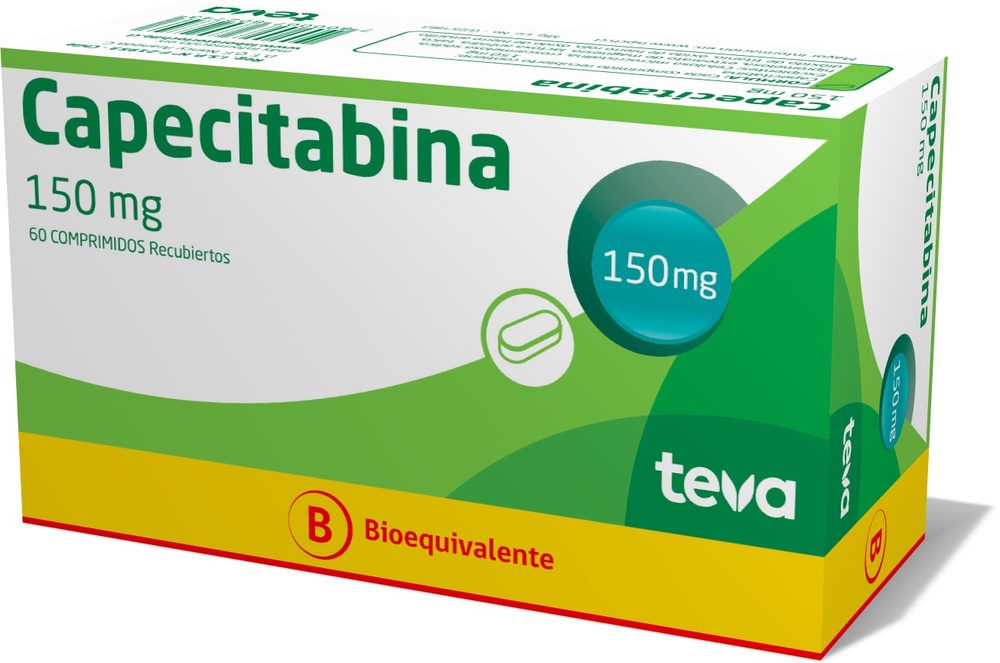
Light peach-colored, oval, biconvex film-coated tablets with the mark "C" on one side and "150" on the other side.
The tablets are available in blisters containing 10 film-coated tablets. Each package contains 60 tablets.
Capecitabina Teva 500 mg film-coated tablets EFG
Light peach-colored, oval, biconvex film-coated tablets with the mark "C" on one side and "500" on the other side.
The tablets are available in blisters containing 10 film-coated tablets. Each package contains 120 tablets.
Marketing Authorization Holder
Teva B.V.
Swensweg 5
2031 GA Haarlem
Netherlands
Manufacturer
Teva Czech Industries s.r.o.
Ostravska 29, c.p. 305, 74770
Opava-Komarov
Czech Republic
Pharmachemie B.V.
Swensweg 5, 2031 GA Haarlem
Netherlands
Merckle GmbH
Ludwig Merckle Str. 3
89143 Blaubeuren
Germany
Teva Operations Poland Sp. z.o.o.
ul. Mogilska 80
31-546 Cracow
Poland
You can request more information about this medicine by contacting the local representative of the marketing authorization holder:
Belgium/Belgique/Belgien Teva Pharma Belgium N.V./S.A./AG Tel: +32 38207373 | Lithuania UAB Teva Baltics Tel: +370 52660203 |
| Luxembourg/Luxemburg Teva Pharma Belgium N.V./S.A./AG Belgium/Belgien Tel: +32 38207373 |
Czech Republic Teva Pharmaceuticals CR, s.r.o. Tel: +420 251007111 | Hungary Teva Gyógyszergyár Zrt. Tel: +36 12886400 |
Denmark Teva Denmark A/S Tel: +45 44985511 | Malta Teva Pharmaceuticals Ireland Ireland Tel: +44 2075407117 |
Germany TEVA GmbH Tel: +49 73140208 | Netherlands Teva Nederland B.V. Tel: +31 8000228400 |
Estonia UAB Teva Baltics Eesti filiaal Tel: +372 6610801 | Norway Teva Norway AS Tel: +47 66775590 |
Greece Specifar A.B.E.E. Tel: +30 2118805000 | Austria ratiopharm Arzneimittel Vertriebs-GmbH Tel: +43 1970070 |
Spain Teva Pharma, S.L.U. Tel: +34 913873280 | Poland Teva Pharmaceuticals Polska Sp. z o.o. Tel: +48 223459300 |
France Teva Santé Tel: +33 155917800 | Portugal Teva Pharma - Produtos Farmacêuticos, Lda. Tel: +351 214767550 |
Croatia Pliva Hrvatska d.o.o. Tel: +385 13720000 | Romania Teva Pharmaceuticals S.R.L. Tel: +40 212306524 |
Ireland Teva Pharmaceuticals Ireland Tel: +44 2075407117 | Slovenia Pliva Ljubljana d.o.o. Tel: +386 15890390 |
Iceland Teva Pharma Iceland ehf. Tel: +354 5503300 | Slovakia TEVA Pharmaceuticals Slovakia s.r.o. Tel: +421 257267911 |
Italy Teva Italia S.r.l. Tel: +39 028917981 | Finland Teva Finland Oy Tel: +358 201805900 |
Cyprus Specifar A.B.E.E. Greece Tel: +30 2118805000 | Sweden Teva Sweden AB Tel: +46 42121100 |
Latvia UAB Teva Baltics filiale Latvija Tel: +371 67323666 | United Kingdom (Northern Ireland) Teva Pharmaceuticals Ireland Ireland Tel: +44 2075407117 |

Date of the Last Revision of this Leaflet:
Detailed information about this medicine is available on the European Medicines Agency website: http://www.ema.europa.eu/.
- Country of registration
- Dosage formTABLET, 150 mg
- ATC codeL01BC06
- Active substance
- Prescription requiredYes
- Manufacturer
- CompositionLACTOSA ANHIDRA (15,60 mg mg), CROSCARMELOSA SODICA (6,60 mg mg)
- This information is for reference only and does not constitute medical advice. Always consult a doctor before taking any medication. Oladoctor is not responsible for medical decisions based on this content.
- Alternatives to Capecitabine Teva 150 mg FILM-COATED TABLETSDosage form: TABLET, 150 mgActive substance: capecitabineManufacturer: Accord Healthcare S.L.U.Prescription requiredDosage form: TABLET, 150 mgActive substance: capecitabineManufacturer: Accord Healthcare S.L.U.Prescription requiredDosage form: TABLET, 150 mgActive substance: capecitabineManufacturer: Accord Healthcare S.L.U.Prescription required
Online doctors for Capecitabine Teva 150 mg FILM-COATED TABLETS
Discuss questions about Capecitabine Teva 150 mg FILM-COATED TABLETS, including use, safety considerations and prescription review, subject to medical assessment and local regulations.
Get Capecitabine Teva 150 mg FILM-COATED TABLETS Prescription Online
Fill in a 2-min form
Tell us your symptoms, history, and what medicine you're requesting.
Pick a doctor or let us assign
Choose a specialist or we'll match you with the next available doctor.
Doctor reviews your case
Usually within 30 minutes. They may ask follow-up questions via chat.
Collect from any pharmacy
Electronic prescription sent to your email — valid across Spain.
Frequently Asked Questions
Capecitabine Teva 150 mg FILM-COATED TABLETS requires a prescription in Spain. You can check with a doctor online whether this medicine may be appropriate for your situation.
The active ingredient in Capecitabine Teva 150 mg FILM-COATED TABLETS is capecitabine. This information helps identify medicines with the same composition but different brand names.
Capecitabine Teva 150 mg FILM-COATED TABLETS is manufactured by Teva B.V.. Pharmacy brands and packaging may differ depending on the distributor.
Doctors such as Family doctors, Psychiatrists, Dermatologists, Cardiologists, Endocrinologists, Gastroenterologists, Pulmonologists, Nephrologists, Rheumatologists, Hematologists, Infectious disease physicians, Allergists, Geriatricians, Paediatricians, Oncologists may assess whether Capecitabine Teva 150 mg FILM-COATED TABLETS is appropriate, depending on your situation and local regulations. You can book an online consultation to discuss your symptoms and possible next steps.
Spain has a well-developed healthcare infrastructure across major cities such as Madrid, Barcelona, Valencia, and Seville. Pharmacies are widely available and operate under strict regulations, ensuring access to prescribed medications.
You can buy Capecitabine Teva 150 mg FILM-COATED TABLETS in Madrid, Barcelona, Seville, or Valencia at any local pharmacy with a valid prescription.
To obtain a prescription, you can use Oladoctor:
Other medicines with the same active substance (capecitabine) include CAPECITABINE ACCORD 150 MG FILM-COATED TABLETS, CAPECITABINE ACCORD 150 MG FILM-COATED TABLETS, CAPECITABINE ACCORD 150 mg FILM-COATED TABLETS. These may have different brand names or formulations but contain the same therapeutic ingredient. Always consult a doctor before switching or starting a new medicine.
