



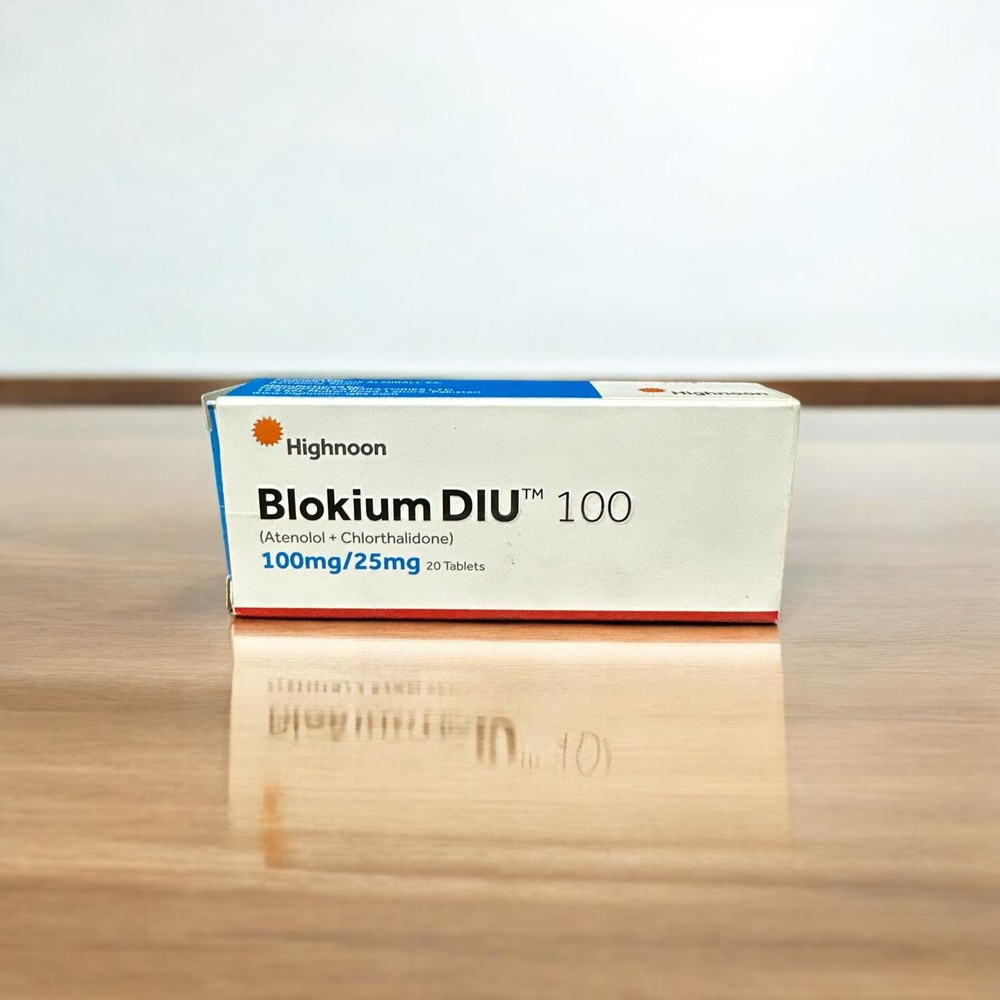
BLOKIUM-DIU 100 mg/25 mg Tablets

Prescription review online
A doctor will review your case and decide whether a prescription is medically appropriate.

Talk to a doctor about this medicine
Discuss your symptoms and possible next steps in a quick online consultation.



How to use BLOKIUM-DIU 100 mg/25 mg TABLETS
Contents of the leaflet
- Introduction
- What is Blokium-Diu and what is it used for
- What you need to know before you take Blokium-Diu
- How to take Blokium-Diu
- Possible side effects
- Storage of Blokium-Diu
- Contents of the pack and other information
Introduction
Package Leaflet: Information for the User
Blokium-Diu 100 mg/25 mg Tablets
atenolol/chlorthalidone
Read all of this leaflet carefully before you start taking this medicine because it contains important information for you.
- Keep this leaflet, you may need to read it again.
- If you have any further questions, ask your doctor or pharmacist.
- This medicine has been prescribed for you only. Do not pass it on to others. It may harm them, even if their signs of illness are the same as yours.
- If you get any side effects, talk to your doctor or pharmacist. This includes any possible side effects not listed in this leaflet. See section 4.
Contents of the package leaflet:
- What is Blokium-Diu and what is it used for
- What you need to know before you take Blokium-Diu
- How to take Blokium-Diu
- Possible side effects
- Storage of Blokium-Diu
- Contents of the pack and other information
1. What is Blokium-Diu and what is it used for
Blokium-Diu is a medicine that contains a combination of two active substances that can lower high blood pressure. One of the active substances (atenolol) belongs to a group of medicines called cardioselective beta-blockers and acts mainly on the heart; the other active substance (chlorthalidone) is a diuretic (a medicine that promotes the elimination of urine).
Doctors prescribe this medicine to people with high blood pressure (hypertension) if their blood pressure is not adequately controlled with atenolol or chlorthalidone alone.

Not sure if this medicine is right for you?
Discuss your symptoms and treatment with a doctor online.
2. What you need to know before you take Blokium-Diu
Do not take Blokium-Diu
- if you are allergic to atenolol, chlorthalidone (or sulfonamide-derived medicines), or any other medicine of the same family as these (beta-blockers and thiazide diuretics) or to any of the other components of this medicine (listed in section 6).
- if you have or have had heart diseases such as: uncontrolled heart failure (the heart does not pump enough blood to the rest of the body), bradycardia (very slow pulse), second- or third-degree heart block, or sick sinus syndrome (diseases in which the pulse is irregular).
- if you have ever had very low blood pressure, circulatory failure, or cardiac shock.
- if you have been told that you have a pheochromocytoma (a tumor of the adrenal glands) and are not being treated, metabolic acidosis, severe liver disorders, uncorrected hypokalemia (low potassium in the blood), or acute gout.
- if you are pregnant or breastfeeding.
- if you have severe kidney problems.
Warnings and precautions
Consult your doctor before starting to take this medicine.
- consult your doctor if you have health problems such as asthma or respiratory difficulties, if you have diabetes, depression, circulatory disorders, kidney, liver, or thyroid problems, or heart problems other than those mentioned in the previous section.
- if you have been diagnosed with a type of coronary chest pain called Prinzmetal's angina.
- if you have ever had an allergic reaction to something, for example, an insect bite, you should be cautious when taking this medicine, as it may increase the severity of these allergic reactions.
- if you notice that your pulse is slower while taking these tablets. This is normal, but if you are concerned, inform your doctor.
- if you are using any eye drops that contain a beta-blocker medicine, as the effect of this medicine may be enhanced.
- if you are diabetic, this medicine may mask a drop in blood sugar (hypoglycemia), reducing the rapid heartbeat, palpitations, and sweating that occur during hypoglycemia. The manifestations of hyperthyroidism or thyrotoxicosis (disorders in which thyroid hormone levels are elevated in the blood) may also be masked.
- chlorthalidone, one of the components of this medicine, may promote an increase in blood sugar (hyperglycemia), so it is necessary to have greater control over blood glucose levels.
- if you are going to have a study of parathyroid function, you should inform your doctor, as this medicine may interfere with calcium levels in the blood.
- this medicine may produce an increase in uric acid in the blood, for which your doctor will provide additional treatment with another medicine in case this elevation is prolonged.
- your doctor should perform periodic checks, especially in the following situations: if you are over 65 years old, if you are being treated with a type of heart medicine called digitalis, if you are on a low-potassium diet, or if you have any gastrointestinal disease that causes potassium loss, as this medicine may decrease potassium levels in the blood.
- in case of hospitalization, inform the healthcare staff and, in particular, the anesthesiologist, that you are being treated with this medicine, as certain medicines used in anesthesia may be incompatible with Blokium-Diu.
- avoid exposure to the sun (even on cloudy days) and ultraviolet lamps while using this medicine.
- if you experience a decrease in vision or eye pain, these could be symptoms of fluid accumulation in the vascular layer of the eye (choroidal effusion) or increased pressure in the eye, which can occur within a few hours to a week after taking Blokium-Diu. This can lead to permanent vision loss if not treated. If you have previously had an allergy to sulfonamides or penicillin, you may have a greater risk factor for developing this condition.
If you have any doubts about any of the above points, consult your doctor before taking this medicine.
Other medicines and Blokium-Diu
Tell your doctor or pharmacist if you are using, have recently used, or might use any other medicines.
Be especially careful and inform your doctor if you are taking disopyramide (for irregular heartbeats), other treatments for hypertension or angina (in particular, verapamil, diltiazem, nifedipine, clonidine), treatment for heart failure (digoxin), non-steroidal anti-inflammatory medicines such as indomethacin or ibuprofen (for inflammation and/or pain), baclofen (used as a muscle relaxant), adrenaline (used in case of cardiac arrest or severe allergic reactions), reserpine (for hypertension), or lithium (to treat a type of depression).
The administration of other beta-blockers such as celiprolol, propranolol, metoprolol, timolol, bisoprolol, carvedilol, oxprenolol, or nebivolol may increase the depressant effect of atenolol (one of the active ingredients of this medicine) on the heart.
You should also inform your doctor if you are being treated with any medicine for nasal congestion or other cold products that you may have purchased yourself at a pharmacy.
If you are taking clonidine for hypertension or to prevent migraine, do not stop treatment with this medicine or with Blokium-Diu without consulting your doctor first.
Never take another medicine on your own initiative without your doctor's recommendation, as some combinations should be avoided.
Use in children and adolescents
Blokium-Diu should not be used in children.
Use in older people (over 65 years)
Older patients have a higher risk of suffering adverse reactions due to the use of this medicine, so Blokium-Diu should be used with caution in these patients (see the Warnings and precautionssection of section 2 and section 3).
Use in athletes
Athletes are informed that this medicine contains a component that may produce a positive result in doping tests.
Pregnancy, breastfeeding, and fertility
If you are pregnant or breastfeeding, think you may be pregnant, or plan to become pregnant, consult your doctor or pharmacist before using this medicine. This medicine should not be used during pregnancy or breastfeeding (see the Do not take Blokium-Diusection of section 2).
Driving and using machines
Some people may occasionally experience dizziness and fatigue while being treated with Blokium-Diu. If you feel these effects, you should not drive vehicles or operate machinery.
This medicine contains less than 23 mg of sodium (1 mmol) per tablet; it is essentially "sodium-free".
3. How to take Blokium-Diu
Follow the instructions for administration of this medicine exactly as indicated by your doctor. If in doubt, consult your doctor or pharmacist again.
Remember to take your medicine.
This medicine is for oral administration. Swallow the tablet whole with the help of water.
Try to take your tablet at the same time every day.
Your doctor will decide the dose of this medicine that you should take each day depending on your situation. It is usually taken 1 tablet per day in the morning.
Use in older people (over 65 years)
Your doctor should adjust the dose of this medicine if you are over 65 years old.
Use in patients with kidney disease
Your doctor should adjust the dose of this medicine if you have kidney disease.
Use in patients with liver disease
It is not necessary to adjust the dose of this medicine if you have liver disease.
If you think the action of this medicine is too strong or too weak, tell your doctor or pharmacist.
If you take more Blokium-Diu than you should
You may have difficulty breathing or a decrease in pulse or blood pressure. Contact your doctor or go to the nearest hospital as soon as possible. Take this leaflet with you.
In case of overdose or accidental ingestion, consult the Toxicology Information Service. Telephone 915 620 420.
If you forget to take Blokium-Diu
If you forget to take this medicine, take a dose as soon as you remember. Do not take a double dose to make up for forgotten doses.
If you stop taking Blokium-Diu
Your doctor will indicate the duration of your treatment with this medicine. Do not stop taking the tablets before finishing the treatment, even if you feel well, unless your doctor tells you to do so. If your doctor tells you to stop taking this medicine, you should stop treatment gradually.
If you have any other questions about the use of this medicine, ask your doctor or pharmacist.

Started taking the medicine and have questions?
Discuss your symptoms and treatment with a doctor online.
4. Possible side effects
Like all medicines, Blokium-Diu can cause side effects, although not everybody gets them.
If you experience any of the following side effects, tell your doctor, who will indicate whether you should interrupt treatment and how to do it correctly.
The side effects that have been observed with this medicine are the following:
Side effects associated with atenolol:
Very common (may affect more than 1 in 10 people):
- insomnia, drowsiness
- depression
Common (may affect up to 1 in 10 people):
- peripheral neuropathy (pain, loss of sensitivity, and inability to control muscles), somnolence, fatigue
- circulatory problems with cold extremities and tingling sensation
- decrease in blood pressure and/or slow or irregular pulse
- muscle disorders
Uncommon (may affect up to 1 in 100 people):
- sleep disorders
- pulmonary fibrosis, pleural effusion
- diarrhea, nausea, vomiting
- allergic reactions, skin rashes, itching
- decrease in white blood cells, increase in eosinophils in blood
- decrease in sexual desire
- increase in transaminases (a type of liver enzyme)
Rare (may affect up to 1 in 1,000 people):
- dizziness, headache, neurological disorders such as paresthesia (tingling and numbness of the limbs)
- mood changes, nightmares, confusion, psychosis, hallucinations
- difficulty breathing (bronchospasm)
- orthostatic hypotension (sudden drop in blood pressure when standing up)
- numbness and spasms in the fingers, followed by heat and pain (Raynaud's phenomenon)
- severe circulatory disorders (heart block, heart failure)
- dry eyes and vision disorders
- dry mouth
- hair loss, skin rash, including worsening of psoriasis
- non-thrombocytopenic purpura (blood disorder characterized by bruising and bleeding), decreased platelets
- impotence (erectile dysfunction)
Very rare (may affect up to 1 in 10,000 people):
- Changes in some blood components, for example, antinuclear antibodies (ANA), have been very rarely observed.
Frequency not known:
- Constipation
- Lupus-like syndrome (a disease in which the immune system produces antibodies that mainly attack the skin and joints)
Side effects associated with chlorthalidone:
Common (may affect up to 1 in 10 people):
- metabolic disorders (increase in blood glucose and urine), increase in uric acid in blood with possible onset of gout, hypochloremic alkalosis (increase in bicarbonate in blood due to a decrease in chloride), decrease in sodium and potassium as well as increase in calcium in blood, alteration of glucose tolerance
- weakness, sedation, somnolence
- muscle pain and cramps
- dry mouth, gastrointestinal disorders including nausea, loss of appetite, vomiting, constipation, diarrhea, dyspepsia (difficulty digesting), pancreatic disorders (pancreatitis)
Uncommon (may affect up to 1 in 100 people):
- metabolic disorders (decrease in magnesium in blood and calcium in urine, increase in cholesterol and triglycerides in blood)
- headache, dizziness, neurological disorders such as paresthesia (tingling and numbness of the limbs)
- orthostatic hypotension (sudden drop in blood pressure when standing up), alteration of heart rhythm
- impotence (erectile dysfunction)
- pulmonary edema
- exanthematous eruptions, photodermatitis (allergic reaction caused by sunlight)
- liver disorders (yellowing of the skin)
Rare (may affect up to 1 in 1,000 people):
- hepatic toxicity, pancreatitis
- decrease in platelets, decrease in white blood cells, decrease in red blood cells in blood (hemolytic and aplastic anemia).
Frequency not known:
- decrease in vision or eye pain due to increased pressure (possible signs of fluid accumulation in the vascular layer of the eye (choroidal effusion) or acute angle-closure glaucoma).
Reporting of side effects:
If you experience any side effect, talk to your doctor or pharmacist, even if it is possible side effects not listed in this leaflet. You can also report them directly through the Spanish Pharmacovigilance System for Human Use Medicines: https://www.notificaram.es. By reporting side effects, you can help provide more information on the safety of this medicine.
5. Storage of Blokium-Diu
Store below 25°C.
Keep this medicine out of the sight and reach of children.
Do not use this medicine after the expiry date stated on the packaging. The expiry date is the last day of the month indicated.
Medicines should not be disposed of via wastewater or household waste. Place the packaging and any unused medicine in the SIGRE  collection point at the pharmacy. If in doubt, ask your pharmacist how to dispose of the packaging and any unused medicine. This will help protect the environment.
6. Contents of the pack and other information
Composition of Blokium-Diu
- The active ingredients are atenolol and chlorthalidone. Each tablet contains 100 mg of atenolol and 25 mg of chlorthalidone.
- The other ingredients are microcrystalline cellulose (E-460), magnesium stearate (E-572), sodium croscarmellose, macrogol 6000, sodium lauryl sulfate, colloidal silica (E-551), talc (E-553b).
Appearance of the product and packaging contents
Blokium-Diu tablets are grayish-white, flat, and round, engraved with BLOKIUM-DIU on the upper face and a central score line on the lower face.
Blokium-Diu is available in packs of 28 or 56 tablets.
Marketing authorization holder and manufacturer
Marketing authorization holder
Almirall, S.A.
General Mitre, 151
08022 Barcelona (Spain)
Manufacturer
Industrias Farmacéuticas Almirall, S.A.
Ctra. de Martorell, 41-61
08740 Sant Andreu de la Barca - Barcelona (Spain)
Date of revision of this leaflet: May 2021
Detailed and updated information on this medicine is available on the website of the Spanish Agency for Medicines and Health Products (AEMPS) http://www.aemps.gob.es/
- Country of registration
- Dosage formTABLET, 100 mg atenolol/25 mg chlortalidone
- ATC codeC07CB03
- Average pharmacy price6.54 EUR
- Active substance
- Prescription requiredYes
- Manufacturer
- CompositionLAURILSULFATO DE SODIO (3 mg mg), CROSCARMELOSA SODICA (20 mg mg)
- This information is for reference only and does not constitute medical advice. Always consult a doctor before taking any medication. Oladoctor is not responsible for medical decisions based on this content.
- Alternatives to BLOKIUM-DIU 100 mg/25 mg TABLETSDosage form: TABLET, 100/25 mg/mgActive substance: atenolol and other diureticsManufacturer: Atnahs Pharma Netherlands Bv.Prescription requiredDosage form: TABLET, 100 mgActive substance: atenololManufacturer: Laboratorios Alter S.A.Prescription requiredDosage form: TABLET, 50 mgActive substance: atenololManufacturer: Laboratorios Alter S.A.Prescription required
Online doctors for BLOKIUM-DIU 100 mg/25 mg TABLETS
Discuss questions about BLOKIUM-DIU 100 mg/25 mg TABLETS, including use, safety considerations and prescription review, subject to medical assessment and local regulations.
Get BLOKIUM-DIU 100 mg/25 mg TABLETS Prescription Online
Fill in a 2-min form
Tell us your symptoms, history, and what medicine you're requesting.
Pick a doctor or let us assign
Choose a specialist or we'll match you with the next available doctor.
Doctor reviews your case
Usually within 30 minutes. They may ask follow-up questions via chat.
Collect from any pharmacy
Electronic prescription sent to your email — valid across Spain.
Frequently Asked Questions
BLOKIUM-DIU 100 mg/25 mg TABLETS requires a prescription in Spain. You can check with a doctor online whether this medicine may be appropriate for your situation.
The active ingredient in BLOKIUM-DIU 100 mg/25 mg TABLETS is atenolol and other diuretics. This information helps identify medicines with the same composition but different brand names.
The average pharmacy price for BLOKIUM-DIU 100 mg/25 mg TABLETS is around 6.54 EUR. Prices may vary depending on the manufacturer and dosage form.
BLOKIUM-DIU 100 mg/25 mg TABLETS is manufactured by Almirall S.A.. Pharmacy brands and packaging may differ depending on the distributor.
Doctors such as Family doctors, Psychiatrists, Dermatologists, Cardiologists, Endocrinologists, Gastroenterologists, Pulmonologists, Nephrologists, Rheumatologists, Hematologists, Infectious disease physicians, Allergists, Geriatricians, Paediatricians, Oncologists may assess whether BLOKIUM-DIU 100 mg/25 mg TABLETS is appropriate, depending on your situation and local regulations. You can book an online consultation to discuss your symptoms and possible next steps.
Spain has a well-developed healthcare infrastructure across major cities such as Madrid, Barcelona, Valencia, and Seville. Pharmacies are widely available and operate under strict regulations, ensuring access to prescribed medications.
You can buy BLOKIUM-DIU 100 mg/25 mg TABLETS in Madrid, Barcelona, Seville, or Valencia at any local pharmacy with a valid prescription.
To obtain a prescription, you can use Oladoctor:
Other medicines with the same active substance (atenolol and other diuretics) include TENORETIC 100 mg/25 mg TABLETS, ATENOLOL ALTER 100 mg TABLETS, ATENOLOL ALTER 50 mg TABLETS. These may have different brand names or formulations but contain the same therapeutic ingredient. Always consult a doctor before switching or starting a new medicine.
