



BETAMICAN 25 µg/inhalation PRESSURIZED INHALER SUSPENSION

Prescription review online
A doctor will review your case and decide whether a prescription is medically appropriate.

Talk to a doctor about this medicine
Discuss your symptoms and possible next steps in a quick online consultation.



How to use BETAMICAN 25 micrograms/inhalation PRESSURIZED INHALER SUSPENSION
Contents of the leaflet
- Introduction
- What is Betamican and what is it used for
- What you need to know before you start using Betamican
- How to use Betamican
- IMPORTANT
- Cleaning:
- Possible side effects
- Storage of Betamican
- Contents of the pack and further information
Introduction
Package Leaflet: Information for the User
Betamican 25 micrograms/inhalation, inhalation suspension in a pressurized container
salmeterol (xinafoate)
Read this package leaflet carefully before you start using this medicine, because it contains important information for you.
- Keep this package leaflet, you may need to read it again.
- If you have any further questions, ask your doctor or pharmacist.
- This medicine has been prescribed for you, do not pass it on to others, even if they have the same symptoms as you, as it may harm them.
- If you experience any side effects, talk to your doctor or pharmacist, even if they are not listed in this package leaflet. See section 4.
Contents of the package leaflet
- What is Betamican and what is it used for
- What you need to know before you start using Betamican
- How to use Betamican
- Possible side effects
- Storage of Betamican
- Contents of the pack and further information
1. What is Betamican and what is it used for
Betamican belongs to a group of medicines called bronchodilators.
Betamican is indicated for the regular long-term treatment of reversible airway obstruction caused by asthma and chronic bronchitis (COPD). In asthma, it will be administered in combination with long-term anti-inflammatory therapy with inhaled or oral glucocorticoids.

Not sure if this medicine is right for you?
Discuss your symptoms and treatment with a doctor online.
2. What you need to know before you start using Betamican
Do not use Betamican
- if you are allergic to salmeterol or any of the other components of this medicine (listed in section 6).
Warnings and precautions
Talk to your doctor or pharmacist before you start using Betamican:
- If you have ever had to stop taking any other medicine for your condition due to allergy problems or other reasons.
- If you are being treated for any thyroid problems.
- If you are being treated for high blood pressure.
- If you are being treated for heart problems.
- If you have diabetes mellitus.
- If you have a tendency to have low potassium levels in your blood.
- If you are being treated with ketoconazole (a medicine used to treat fungal infections).
If you are using Betamican for the treatment of your asthma, your doctor will want to see you regularly to check your symptoms. Go to your doctor immediately if:
- Your asthma gets worse.
- You have more difficulty breathing.
- You wheeze more.
- You feel short of breath more often.
- You need to use your rescue medication more frequently.
If you experience any of the above situations, do not increase the number of applications of Betamican (your respiratory condition may worsen and you may become seriously ill). Go to your doctor, as it may be necessary to change your medication for the treatment of your asthma.
Patients who have previously been treated with Betamican should know that it no longer contains chlorofluorocarbon (CFC) propellants. It should be used exactly as your doctor indicates. Your doctor may change your dosage regimen.
The active ingredient of CFC-free Betamican is exactly the same as that of Betamican that contained CFCs. The only differences you may notice are the taste and the sensation of feeling the spray in your mouth, as well as the sound of the inhaler during use. This is due to the change in propellant to eliminate CFCs. This modification does not affect the mechanism of action of the drug. CFC-free Betamican can be used in the same way as the previous one.
Other medicines and Betamican
Tell your doctor or pharmacist if you are using, have recently used, or might use any other medicines.
Pregnancy and breastfeeding
If you are pregnant or breastfeeding, think you may be pregnant, or plan to become pregnant, consult your doctor or pharmacist before using this medicine.
Important information about some of the components of Betamican
Use in athletes: this medicine contains salmeterol, which may produce a positive result in doping tests.
3. How to use Betamican
Follow your doctor's instructions for using this medicine exactly. If you are in doubt, consult your doctor or pharmacist again.
Remember to use your medicine. IT IS VERY IMPORTANT TO USE IT REGULARLY EVERY DAY. This will help you stay symptom-free throughout the day and night.
Your doctor will tell you how long to use Betamican. Do not stop treatment before, even if you feel better, unless your doctor tells you to.
Betamican should only be used by inhalation and should not be used in children under 4 years of age.
If you have been prescribed Betamican for your asthma, you should continue using any other medication you are taking to control your asthma. These should include an inhaled corticosteroid or tablets. Continue taking the same doses as before, unless your doctor tells you otherwise. Do this even if you feel better. Do not stop taking your inhaled corticosteroid (or tablets) when you start using Betamican.
It is very important that you follow your doctor's instructions about how many times and how often you should use Betamican. The instructions for use are given below. If you have difficulties or do not understand the instructions, ask your doctor or pharmacist.
The recommended dose is:
Adults
- Two inhalations (50 micrograms) twice a day. If your doctor advises you to, you can increase this dose up to four inhalations (100 micrograms) twice a day.
Use in children and adolescents
- Children over 4 years: two inhalations (50 micrograms) twice a day.
If you think the effect of Betamican is too strong or too weak, tell your doctor or pharmacist.
Instructions for use:
Before using the inhaler for the first time or if it has not been used for a week or more, remove the mouthpiece cover by squeezing it gently on the sides, shake the inhaler well, and release two applications into the air to ensure the inhaler is working.
Using the inhaler:
- Remove the mouthpiece cover by squeezing it gently on the sides.
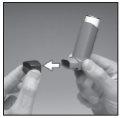
- Check that there are no foreign particles inside and outside the inhaler, including the mouthpiece.
- Shake the inhaler well to ensure that any foreign particles are eliminated and that the contents of the inhaler are mixed properly.
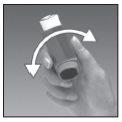
- Hold the inhaler in a vertical position between your index and thumb fingers, placing your thumb on the base, below the mouthpiece.
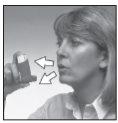
- Exhale as much air as you can and then put the mouthpiece in your mouth, between your teeth, closing your lips around the device, but not biting it.
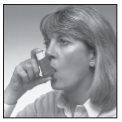
- Immediately after starting to breathe in through your mouth, press the top of the inhaler to release the medication and continue breathing in deeply and steadily.
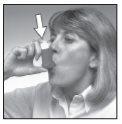
- Hold your breath and remove the inhaler from your mouth, taking your finger off the top of the inhaler. Continue holding your breath for as long as you can.
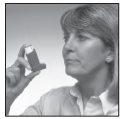
- If you need to take another inhalation, keep the inhaler in a vertical position and wait for about half a minute before repeating steps 3 to 7.
- Put the mouthpiece cover back on by pushing it firmly and clicking it into place.

Started taking the medicine and have questions?
Discuss your symptoms and treatment with a doctor online.
IMPORTANT
Do not perform steps 5, 6, and 7 quickly. It is important to start breathing in as slowly as possible, just before pressing the inhaler.
Practice in front of a mirror during the first few times. If you see a "mist" coming out of the top of the inhaler or the sides of your mouth, start again from step 2.
Patients who have difficulty coordinating the use of the inhaler with inhalation may use an appropriate spacer device (BABYHALER, spacer device for children up to 5 years).
Young children may need help, and their parents should handle the inhaler for them. Encourage the child to exhale and handle the inhaler just after the child starts breathing in. Practice the technique together. Older children or people with fragile hands should hold the inhaler with both hands; they should put their two index fingers on the top of the inhaler and their two thumbs on the base, below the mouthpiece.
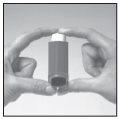
If your doctor has given you different instructions for using the inhaler, follow them carefully. Tell your doctor if you have any difficulties.
Cleaning:
Clean the inhaler at least once a week.
- Remove the mouthpiece cover.
- Do not remove the cartridge from the plastic casing.
- Clean the mouthpiece from the inside and outside, as well as the plastic casing, with a dry cloth, a paper towel, or a little cotton.
- Put the mouthpiece cover back on.
DO NOT SUBMERGE THE METAL CONTAINER IN WATER.
Talk to your doctor or pharmacist if you have any doubts.
If you use more Betamican than you should
If you have used Betamican more than you should, you may notice: that your heart beats faster than usual, headache, tremors, increased blood pressure, low potassium levels in the blood, feeling of agitation and/or dizziness. Talk to your doctor or pharmacist immediately or the Toxicology Information Service, phone: 91 562 04 20. If the dose taken was very high, go to the doctor immediately or the Emergency Department of the nearest hospital. Bring this package leaflet or the medicine with you.
If you forget to use Betamican
If you forget a dose, do not worry. Inhale a dose when you remember and then continue as before.
Do not take a double dose to make up for forgotten doses.
If you have any other questions about the use of this product, ask your doctor or pharmacist.
4. Possible side effects
Like all medicines, this medicine can cause side effects, although not everybody gets them.
Some people may be allergic to medicines. If you have any of the following symptoms soon after using Betamican, STOP using this medicine and tell your doctor immediately:
- Sudden onset of wheezing or chest tightness.
- Swelling of the eyelids, face, or lips.
- Rash (hives) or urticaria on any part of the body.
Some people, particularly those taking high doses of this type of medicine, may occasionally feel a little agitated, have a headache, or notice that their heart beats a little faster than normal, but these effects usually disappear with continued treatment. If this feeling continues, tell your doctor, but do not stop treatment unless he tells you to.
The following are side effects associated with salmeterol. Tell your doctor if you have any of the following symptoms:
Common side effects(may affect up to 1 in 10 people)
- Tremors and headache. These are characteristic of this type of medication and usually disappear with time. Tremors occur more frequently if you receive doses higher than 50 micrograms, twice a day.
- Palpitations, which usually disappear with time.
- Muscle cramps.
Uncommon side effects(may affect up to 1 in 100 people)
- Hypersensitivity reactions with skin rash.
- Nervousness.
- Tachycardia (occurs more frequently if you receive doses higher than 50 micrograms, twice a day).
Rare side effects(may affect up to 1 in 1,000 people)
- Hypokalemia (low potassium levels in the blood).
- Insomnia.
- Dizziness.
Very rare side effects(may affect up to 1 in 10,000 people)
- Hypersensitivity reactions including edema (swelling) and angioedema (skin reaction with redness, swelling, itching, and difficulty breathing), bronchospasm (contraction of the bronchi causing difficulty breathing), and anaphylactic shock (severe allergic reaction).
- Hyperglycemia (high blood sugar levels). If you have diabetes, you may need to check your blood sugar levels more frequently and may need to adjust your diabetes treatment.
- Cardiac arrhythmias, including atrial fibrillation, supraventricular tachycardia, and extrasystoles (heart rhythm disorders).
- Irritation of the throat or pharynx, paradoxical bronchospasm (narrowing of the bronchi with decreased airflow and difficulty breathing).
- Nausea.
- Arthralgia (joint pain).
- Unspecific chest pain.
Reporting of side effects
If you experience any side effects, talk to your doctor or pharmacist, even if they are not listed in this package leaflet. You can also report them directly through the Spanish Medicines Monitoring System: www.notificaRAM.es. By reporting side effects, you can help provide more information on the safety of this medicine.
5. Storage of Betamican
Put the mouthpiece cover back on by pushing it firmly and clicking it into place.
Keep this medicine out of the sight and reach of children.
Do not store above 30°C. Do not freeze.
Keep in the original packaging to protect from direct sunlight.
If the inhaler is very cold, remove the cartridge and warm it in your handfor a few minutes before use. Do not use any other method to warm it up.
The cartridge contains a pressurized liquid. Do not expose to temperatures above 50°C. Do not puncture, break, or burn the cartridge even if it is empty.
Do not use this medicine after the expiry date stated on the packaging after EXP. The expiry date is the last day of the month indicated.
Medicines should not be disposed of via wastewater or household waste. Dispose of the packaging and any unused medicine in the pharmacy's SIGRE collection point. If you have any doubts, ask your pharmacist how to dispose of the packaging and any unused medicine. This will help protect the environment.
6. Contents of the pack and further information
Composition of Betamican
- The active ingredient is 25 micrograms of salmeterol (as xinafoate) per application.
- The other component is norflurane (HFA 134a).
This medicine contains fluorinated greenhouse gases.
Each inhaler contains 12 g of HFC-134a (also known as norflurane or HFA 134a), which corresponds to 0.0172 tons of CO2 equivalent (global warming potential GWP = 1430).
Appearance of the product and contents of the pack
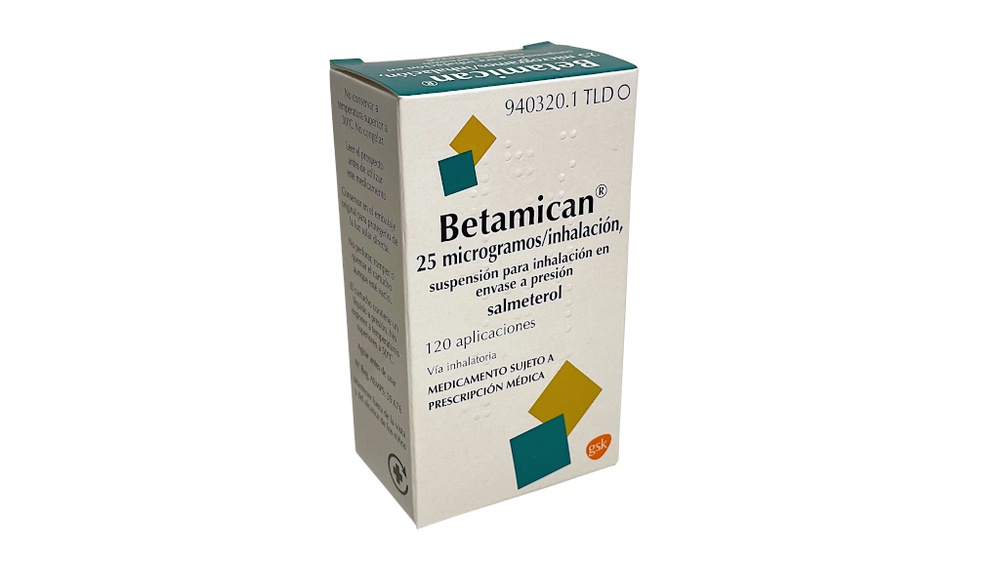
Betamican is an inhalation suspension in a pressurized container. Each inhaler provides 120 applications.
Marketing authorization holder and manufacturer
Marketing authorization holder:
GlaxoSmithKline, S.A.
P.T.M. C/ Severo Ochoa, 2
28760 Tres Cantos (Madrid)
Tel: +34 900 202 700
Manufacturer:
Glaxo Wellcome Productions, S.A.S
23, Rue Lavoisier - Zone Industrielle Nº 2 (Evreux La Madeleine) - F-27000 - France
or
Glaxo Wellcome, S.A.
Avda. de Extremadura, 3
Aranda de Duero (Burgos) – Spain.
Date of last revision of this package leaflet:01/2025
Detailed and updated information on this medicine is available on the website of the Spanish Agency for Medicines and Health Products (AEMPS) http://www.aemps.gob.es/
- Country of registration
- Dosage formPULMONARY INHALATION, 25 µg salmeterol xinafoate/application
- ATC codeR03AC12
- Average pharmacy price29.58 EUR
- Active substance
- Prescription requiredYes
- Manufacturer
- This information is for reference only and does not constitute medical advice. Always consult a doctor before taking any medication. Oladoctor is not responsible for medical decisions based on this content.
- Alternatives to BETAMICAN 25 micrograms/inhalation PRESSURIZED INHALER SUSPENSIONDosage form: PULMONARY INHALATION, 0.294 mg salmeterol xinafoateActive substance: salmeterolManufacturer: Glaxosmithkline S.A.Prescription requiredDosage form: PULMONARY INHALATION, salmeterol 50 mcgActive substance: salmeterolManufacturer: Glaxosmithkline S.A.Prescription requiredDosage form: PULMONARY INHALATION, 50 µgActive substance: salmeterolManufacturer: Glaxosmithkline S.A.Prescription required
Online doctors for BETAMICAN 25 micrograms/inhalation PRESSURIZED INHALER SUSPENSION
Discuss questions about BETAMICAN 25 micrograms/inhalation PRESSURIZED INHALER SUSPENSION, including use, safety considerations and prescription review, subject to medical assessment and local regulations.









Get BETAMICAN 25 micrograms/inhalation PRESSURIZED INHALER SUSPENSION Prescription Online
Fill in a 2-min form
Tell us your symptoms, history, and what medicine you're requesting.
Pick a doctor or let us assign
Choose a specialist or we'll match you with the next available doctor.
Doctor reviews your case
Usually within 30 minutes. They may ask follow-up questions via chat.
Collect from any pharmacy
Electronic prescription sent to your email — valid across Spain.
Frequently Asked Questions
BETAMICAN 25 micrograms/inhalation PRESSURIZED INHALER SUSPENSION requires a prescription in Spain. You can check with a doctor online whether this medicine may be appropriate for your situation.
The active ingredient in BETAMICAN 25 micrograms/inhalation PRESSURIZED INHALER SUSPENSION is salmeterol. This information helps identify medicines with the same composition but different brand names.
The average pharmacy price for BETAMICAN 25 micrograms/inhalation PRESSURIZED INHALER SUSPENSION is around 29.58 EUR. Prices may vary depending on the manufacturer and dosage form.
BETAMICAN 25 micrograms/inhalation PRESSURIZED INHALER SUSPENSION is manufactured by Glaxosmithkline S.A.. Pharmacy brands and packaging may differ depending on the distributor.
Doctors such as Family doctors, Psychiatrists, Dermatologists, Cardiologists, Endocrinologists, Gastroenterologists, Pulmonologists, Nephrologists, Rheumatologists, Hematologists, Infectious disease physicians, Allergists, Geriatricians, Paediatricians, Oncologists may assess whether BETAMICAN 25 micrograms/inhalation PRESSURIZED INHALER SUSPENSION is appropriate, depending on your situation and local regulations. You can book an online consultation to discuss your symptoms and possible next steps.
Spain has a well-developed healthcare infrastructure across major cities such as Madrid, Barcelona, Valencia, and Seville. Pharmacies are widely available and operate under strict regulations, ensuring access to prescribed medications.
You can buy BETAMICAN 25 micrograms/inhalation PRESSURIZED INHALER SUSPENSION in Madrid, Barcelona, Seville, or Valencia at any local pharmacy with a valid prescription.
To obtain a prescription, you can use Oladoctor:
Other medicines with the same active substance (salmeterol) include BEGLAN 25 micrograms/inhalation, pressurized inhaler suspension, BEGLAN ACCUHALER 50 micrograms/inhalation, powder for inhalation, BETAMICAN ACCUHALER 50 micrograms/inhalation INHALATION POWDER. These may have different brand names or formulations but contain the same therapeutic ingredient. Always consult a doctor before switching or starting a new medicine.
