



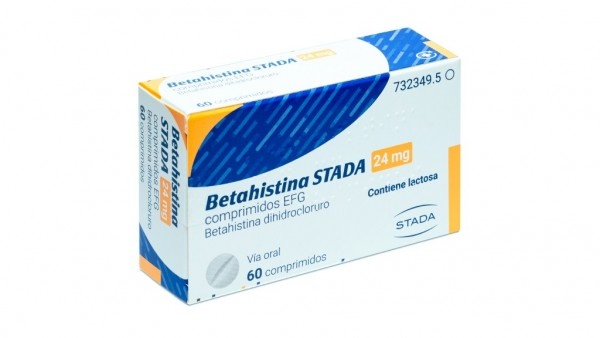
BETAHISTINA 24 mg Tablets

Prescription review online
A doctor will review your case and decide whether a prescription is medically appropriate.

Talk to a doctor about this medicine
Discuss your symptoms and possible next steps in a quick online consultation.



How to use BETAHISTINE STADAFARMA 24 mg TABLETS
Contents of the leaflet
- Introduction
- What is Betahistina Stadafarma and what is it used for
- What you need to know before taking Betahistina Stadafarma
- Pregnancy and breast-feeding
- If you are pregnant or breast-feeding, think you may be pregnant or are planning to have a baby, ask your doctor or pharmacist for advice before taking this medicine.
- How to take Betahistina Stadafarma
- Possible side effects
- Storage of Betahistina Stadafarma
- Contents of the pack and further information
Introduction
Package Leaflet: Information for the Patient
Betahistina Stadafarma 24 mg Tablets EFG
Betahistina Dihydrochloride
Read this package leaflet carefully before you start taking this medicine because it contains important information for you.
- Keep this package leaflet, you may need to read it again.
- If you have any further questions, ask your doctor or pharmacist.
- This medicine has been prescribed for you only. Do not pass it on to others. It may harm them, even if their signs of illness are the same as yours.
- If you get any side effects, talk to your doctor or pharmacist. This includes any possible side effects not listed in this leaflet. See section 4.
Contents of the package leaflet
- What is Betahistina Stadafarma and what is it used for
- What you need to know before you take Betahistina Stadafarma
- How to take Betahistina Stadafarma
- Possible side effects
- Storage of Betahistina Stadafarma
- Contents of the pack and further information
1. What is Betahistina Stadafarma and what is it used for
Betahistina Stadafarma contains betahistina dihydrochloride. This medicine is a type of medicine called a histamine analogue.
It is used for the treatment of Meniere's Syndrome, the symptoms of which include:
- dizziness (vertigo)
- a feeling of noise in the ear (tinnitus)
- hearing loss
This medicine works by improving circulation in the inner ear and thus reducing pressure.

Not sure if this medicine is right for you?
Discuss your symptoms and treatment with a doctor online.
2. What you need to know before taking Betahistina Stadafarma
Do not take Betahistina Stadafarma
- if you are allergic to betahistina or any of the other ingredients of this medicine (listed in section 6).
- if you have high blood pressure due to a certain type of adrenal gland cancer called phaeochromocytoma.
Do not take this medicine if you are suffering from any of the above-mentioned symptoms and consult your doctor.
Warnings and precautions
Consult your doctor before starting to take betahistina:
- if you have a stomach ulcer
- if you have asthma
- if you suffer from skin rashes, skin eruptions or nasal discharge caused by an allergy, as these symptoms may worsen
- if you have low blood pressure
Your doctor will indicate if it is safe to start taking this medicine. Your doctor may also want to monitor your asthma while taking this medicine.
Children and adolescents
This medicine is not recommended for use in children and adolescents under 18 years of age. There is no experience with the safety and efficacy in these patients.
Other medicines and Betahistina Stadafarma
Tell your doctor or pharmacist if you are taking, have recently taken or might take any other medicines.
In particular, tell your doctor or pharmacist if you are taking any of the following medicines:
- antihistamines - these may decrease (in theory) the effect of betahistina. Betahistina may also decrease the effect of antihistamines.
- monoamine oxidase inhibitors (MAOIs) - used to treat depression or Parkinson's disease. These may increase the amount of betahistina in your body.
Pregnancy and breast-feeding

Started taking the medicine and have questions?
Discuss your symptoms and treatment with a doctor online.
If you are pregnant or breast-feeding, think you may be pregnant or are planning to have a baby, ask your doctor or pharmacist for advice before taking this medicine.
Do not take betahistina if you are pregnant unless your doctor considers it absolutely necessary. Consult your doctor.
Do not breast-feed your child while using this medicine unless your doctor advises you to. It is not known if betahistina passes into breast milk.
Driving and using machines
Betahistina is unlikely to affect your ability to drive or use machines. However, remember that the disease for which you are being treated with betahistina may make you feel dizzy or unwell, and this may affect your ability to drive or use machines.
3. How to take Betahistina Stadafarma
Follow exactly the administration instructions of this medicine given by your doctor or pharmacist. If you are unsure, consult your doctor or pharmacist again.
Posology
The recommended dose is:
Adults
- the recommended initial dose is 16 mg three times a day (48 mg)
- your doctor may reduce your dose to 8 mg three times a day (24 mg)
Always follow the instructions of your doctor, as they can adjust your dose.
The daily dose should not exceed 48 mg.
Use in children and adolescents
Betahistina is not recommended for use in children and adolescents.
Method of administration
- swallow the tablets whole with water
- take the tablet with or after meals. Betahistina may cause mild stomach problems (see section 4); taking the tablets with food may help reduce stomach problems
- if you take more than one tablet a day, distribute the intake evenly throughout the day. For example, take one tablet in the morning, one around noon and one in the afternoon
- try to take the tablet at the same time every day. This will ensure that there is a constant amount of the medicine in your body. Taking the tablets at the same time every day will help you remember to take them
Duration of treatment
Continue taking your medicine until your doctor tells you to stop. The medicine may take some time to start working.
If you take more Betahistina Stadafarma than you should
If you or someone else takes too many betahistina tablets (overdose), you may experience nausea, drowsiness or abdominal pain. Talk to your doctor or go to the hospital immediately. Bring the betahistina package with you.
In case of overdose or accidental ingestion, consult your doctor or pharmacist immediately or call the Toxicology Information Service, phone: 91.562.04.20, indicating the medicine and the amount taken.
If you forget to take Betahistina Stadafarma
Wait until the next dose. Do not take a double dose to make up for the forgotten doses.
If you stop taking Betahistina Stadafarma
Continue taking the tablets until your doctor tells you to stop.
Even when you start feeling better, your doctor may tell you to continue taking the tablets for a while to make sure the medicine has done its job.
If you have any further questions about the use of this medicine, ask your doctor or pharmacist.
4. Possible side effects
Like all medicines, this medicine can cause side effects, although not everybody gets them.
The following serious side effects may occur during treatment with betahistina:
Allergic reactions such as:
- redness or lumps on the skin, skin eruptions or itching of the inflamed skin
- swelling of the face, lips, tongue or throat
- decrease in blood pressure
- loss of consciousness
- difficulty breathing
If you experience any of these side effects, stop treatment immediately and contact your doctor.
Other side effects include:
Common (may affect up to 1 in 10 people):
- discomfort (nausea)
- indigestion (dyspepsia)
- headache
Other side effects that have been reported with the use of betahistina
Mild stomach problems such as discomfort (vomiting), gastrointestinal pain, abdominal distension and bloating. Taking betahistina during meals may help reduce stomach problems.
Reporting of side effects:
If you experience any side effects, talk to your doctor or pharmacist. This includes any possible side effects not listed in this leaflet. You can also report side effects directly via the Spanish Medicines Surveillance System for Human Use: https://www.notificaram.es. By reporting side effects, you can help provide more information on the safety of this medicine.
5. Storage of Betahistina Stadafarma
Keep this medicine out of the sight and reach of children.
Do not use this medicine after the expiry date which is stated on the package and on the blister after EXP. The expiry date is the last day of the month stated.
This medicine does not require any special storage conditions.
Medicines should not be disposed of via wastewater or household waste. Ask your pharmacist how to dispose of medicines no longer required. These measures will help protect the environment.
6. Contents of the pack and further information
Composition of Betahistina Stadafarma 24 mg tablets:
- The active substance is betahistina dihydrochloride. Each tablet contains 24 mg of betahistina dihydrochloride.
- The other ingredients are microcrystalline cellulose, mannitol, povidone, crospovidone, citric acid, colloidal anhydrous silica, talc and stearic acid.
Appearance and packaging of the product
White or almost white, round (diameter 10.0 mm) tablet, not coated, with a score line and an "X" marked on one side and "89" on the other side.
The tablet can be divided into equal doses.
Betahistina 24 mg is available in blister packs of Poliamide/Aluminium/PVC/Aluminium in packs of 20, 30, 50, 60 or 100 tablets.
Not all pack sizes may be marketed.
Marketing authorisation holder and manufacturer
Marketing authorisation holder
Laboratorio STADA, S.L.
Frederic Mompou, 5
08960 – Sant Just Desvern (Barcelona)
Spain
Manufacturer
STADA Arzneimittel AG
Stadastrasse 2 -18,
61118 Bad Vilbel
Germany
or
APL Swift Services (Malta) Limited,
HF26, Hal Far Industrial Estate,
Hal Far, Birzebbugia BBG 3000,
Malta
This medicine is authorised in the Member States of the European Economic Area under the following names:
Portugal | Beta-histina Ciclum |
Germany | Betahistin AL 24 mg Tabletten |
Denmark | Betahistine STADA |
Spain | Betahistina Stadafarma 24 mg comprimidos EFG |
Finland | Betahistine STADA 24 mg tablets |
Hungary | Betahistine Dihydrochloride STADA 24 mg tablets |
Italy | Betaistina EG |
Sweden | Betahistine STADA 24 mg tablets |
Date of last revision of this leaflet:March 2019
Detailed information on this medicine is available on the website of the Spanish Agency for Medicines and Health Products (AEMPS) http://www.aemps.gob.es/
- Country of registration
- Dosage formTABLET, 24 mg
- ATC codeN07CA01
- Active substance
- Prescription requiredYes
- Manufacturer
- CompositionMANITOL 35 (E-421) (18,75 mg mg)
- This information is for reference only and does not constitute medical advice. Always consult a doctor before taking any medication. Oladoctor is not responsible for medical decisions based on this content.
- Alternatives to BETAHISTINE STADAFARMA 24 mg TABLETSDosage form: TABLET, 24 mgActive substance: betahistineManufacturer: Accord Healthcare S.L.U.Prescription requiredDosage form: TABLET, 16 mgActive substance: betahistineManufacturer: Aurovitas Spain, S.A.U.Prescription requiredDosage form: TABLET, 8 mgActive substance: betahistineManufacturer: Aurovitas Spain, S.A.U.Prescription required
Online doctors for BETAHISTINE STADAFARMA 24 mg TABLETS
Discuss questions about BETAHISTINE STADAFARMA 24 mg TABLETS, including use, safety considerations and prescription review, subject to medical assessment and local regulations.









Get BETAHISTINE STADAFARMA 24 mg TABLETS Prescription Online
Fill in a 2-min form
Tell us your symptoms, history, and what medicine you're requesting.
Pick a doctor or let us assign
Choose a specialist or we'll match you with the next available doctor.
Doctor reviews your case
Usually within 30 minutes. They may ask follow-up questions via chat.
Collect from any pharmacy
Electronic prescription sent to your email — valid across Spain.
Frequently Asked Questions
BETAHISTINE STADAFARMA 24 mg TABLETS requires a prescription in Spain. You can check with a doctor online whether this medicine may be appropriate for your situation.
The active ingredient in BETAHISTINE STADAFARMA 24 mg TABLETS is betahistine. This information helps identify medicines with the same composition but different brand names.
BETAHISTINE STADAFARMA 24 mg TABLETS is manufactured by Laboratorio Stada S.L.. Pharmacy brands and packaging may differ depending on the distributor.
Doctors such as Family doctors, Psychiatrists, Dermatologists, Cardiologists, Endocrinologists, Gastroenterologists, Pulmonologists, Nephrologists, Rheumatologists, Hematologists, Infectious disease physicians, Allergists, Geriatricians, Paediatricians, Oncologists may assess whether BETAHISTINE STADAFARMA 24 mg TABLETS is appropriate, depending on your situation and local regulations. You can book an online consultation to discuss your symptoms and possible next steps.
Spain has a well-developed healthcare infrastructure across major cities such as Madrid, Barcelona, Valencia, and Seville. Pharmacies are widely available and operate under strict regulations, ensuring access to prescribed medications.
You can buy BETAHISTINE STADAFARMA 24 mg TABLETS in Madrid, Barcelona, Seville, or Valencia at any local pharmacy with a valid prescription.
To obtain a prescription, you can use Oladoctor:
Other medicines with the same active substance (betahistine) include BETAHISTINE ACCORD 24 mg TABLETS, BETAHISTINE AUROVITAS 16 mg TABLETS, BETAHISTINE AUROVITAS 8 mg TABLETS. These may have different brand names or formulations but contain the same therapeutic ingredient. Always consult a doctor before switching or starting a new medicine.
