


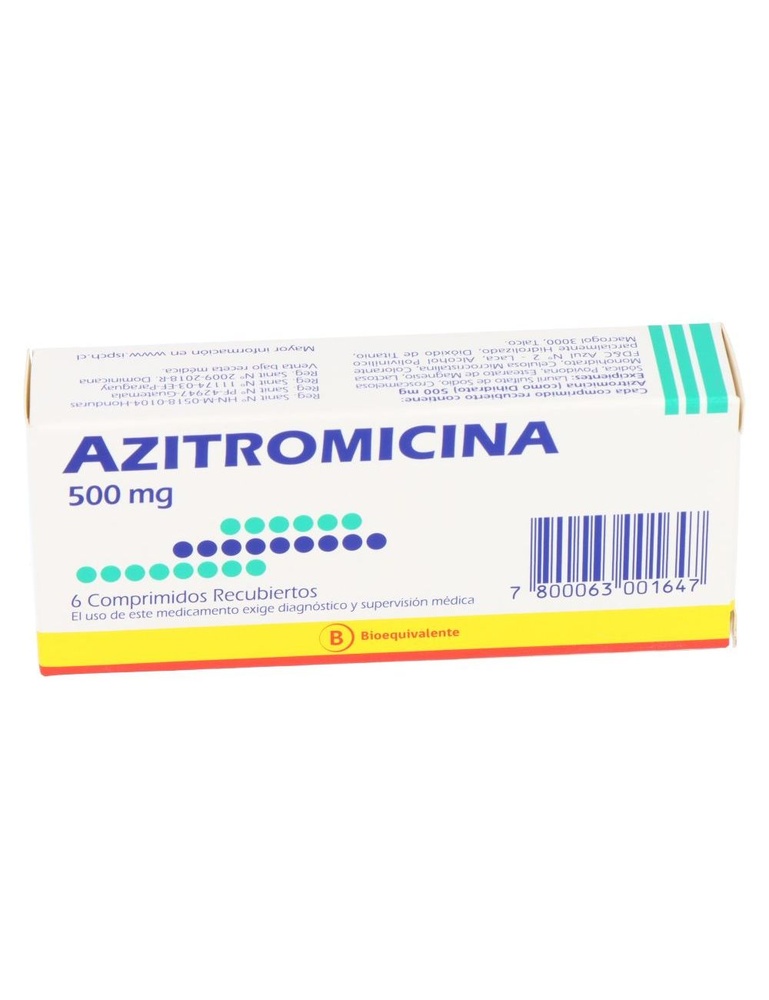
Azitromicina 500 mg comprimidos recubiertos con película

Prescription request online
A doctor will review your case and decide whether a prescription is medically appropriate.

Talk to a doctor about this medicine
Discuss your symptoms and possible next steps in a quick online consultation.



How to use AZITHROMYCIN ARISTOGEN 500 MG FILM-COATED TABLETS
Contents of the leaflet
- Introduction
- What Azithromycin Aristogen is and what it is used for
- What you need to know before you take Azithromycin Aristogen
- How to take Azithromycin Aristogen
- Possible Adverse Effects
- Storage of Azithromycin Aristogen
- Package Contents and Additional Information
Introduction
Package Leaflet: Information for the User
AzithromycinAristogen500 mg film-coated tablets EFG
Read all of this leaflet carefully before you start taking this medicine because it contains important information for you.
- Keep this leaflet, you may need to read it again.
- If you have any further questions, ask your doctor or pharmacist.
- This medicine has been prescribed for you only. Do not pass it on to others. It may harm them, even if their signs of illness are the same as yours.
- If you get any side effects, talk to your doctor or pharmacist. This includes any possible side effects not listed in this leaflet. See section 4.
Contents of the pack
- What Azithromycin Aristogen is and what it is used for
- What you need to know before you take Azithromycin Aristogen
- How to take Azithromycin Aristogen
- Possible side effects
- Storage of Azithromycin Aristogen
- Contents of the pack and other information
1. What Azithromycin Aristogen is and what it is used for
Azithromycin Aristogen contains the active substance azithromycin, which belongs to a group of medicines called macrolide antibiotics. It is used to treat localized infections in different parts of the body caused by bacteria.
Azithromycin penetrates into infected tissues, where it is released slowly over time, thus combating bacteria for several days after taking the last dose.
Antibiotics are used to treat bacterial infections and are not effective against viral infections such as the flu or the common cold. It is essential that you follow the instructions regarding dosage, administration interval, and treatment duration indicated by your doctor. Do not store or reuse this medicine. If you have any leftover antibiotic after finishing the treatment, return it to the pharmacy for proper disposal.Do not throw away medicines via wastewater or household waste. |
What infections are treated with azithromycin?
Azithromycin is indicated for the treatment of the following infections caused by susceptible microorganisms:
- infections of the upper respiratory tract, including inflammation of the tonsils (tonsillitis), sore throat (pharyngitis), infection of the paranasal sinuses (sinusitis),
- mild to moderate infections of the lower respiratory tract, including bronchitis and lung infections (pneumonia) acquired outside of hospitals,
- infections of the middle ear (acute otitis media),
- mild or moderate infections of the skin and soft tissues (e.g., folliculitis, cellulitis, and erysipelas), as well as
- uncomplicated genital infections caused by Chlamydia trachomatisor Neisseria gonorrhoeae(not multidrug-resistant strains, and only in combination with another effective agent).

Not sure if this medicine is right for you?
Discuss your symptoms and treatment with a doctor online.
2. What you need to know before you take Azithromycin Aristogen
Do not take Azithromycin Aristogen
- if you are allergic to azithromycin or any of the other ingredients of this medicine (listed in section 6) or to any other macrolide or ketolide antibiotic, for example, erythromycin or telithromycin.
Warnings and precautions
Consult your doctor or pharmacist before starting to take this medicine if:
- you have ever had a severe allergic reaction characterized by symptoms such as swelling of the face or throat, possibly with difficulty breathing;
- you have severe kidney problems, your doctor may need to change the dose;
- you have liver problems: your doctor may need to monitor your liver function or decide to interrupt treatment;
- you know that you have been diagnosed with a prolonged QT interval (heart problem): azithromycin is not recommended;
- you know that you have an irregular or slow heartbeat, or reduced cardiac function or existing proarrhythmias: azithromycin is not recommended;
- you know that you have low potassium or magnesium levels in your blood: azithromycin is not recommended;
- you are taking medications known as antiarrhythmics (used to treat abnormal heart rhythm), cisapride (used to treat stomach problems), or terfenadine (an antihistamine used to treat allergies), antipsychotics (e.g., pimozide), antidepressants (e.g., citalopram), or certain antibiotics (e.g., moxifloxacin, levofloxacin): azithromycin is not recommended;
- you take medications called ergot alkaloids (e.g., ergotamine) used to treat migraines: azithromycin should not be taken simultaneously (see "Other medicines and azithromycin");
- you have ever been diagnosed with a neurological disease, which is a disease of the brain or nervous system;
- you have mental, emotional, or behavioral problems;
- you suffer from a disease called myasthenia gravis, with muscle weakness and fatigue during treatment: azithromycin may worsen or trigger myasthenia symptoms;
- you suffer from a sexually transmitted disease caused by a specific pathogen (T. pallidum, including the pathogen that causes syphilis).
This medicine should not be taken in infections caused by Gram-positive bacterial strains resistant to erythromycin (cross-resistance) and most strains of methicillin-resistant staphylococci.
There have been reports of severe and severe inflammation of the intestinal lining (pseudomembranous colitis) after the use of macrolide antibiotics (a group of antibiotics to which azithromycin belongs). This should be taken into account if patients develop diarrhea after starting treatment with azithromycin.
If you have severe and persistent diarrhea during or after treatment, especially if you notice blood or mucus, inform your doctor immediately.
Secondary infections caused by another pathogen: attention should be paid to possible symptoms of secondary infections caused by non-susceptible pathogens, for example, caused by fungi of the genus B.
There is no experience with the safety and efficacy of long-term use of azithromycin in the indicated indications. If a rapid recurrence of the infection occurs, treatment with another antibiotic should be considered.
This medicine is not suitable for the treatment of severe infections in which a high concentration of the antibiotic is rapidly needed in the blood.
This medicine is not suitable as a first choice for the treatment of sinusitis, acute otitis media, pharyngitis, and tonsillitis, and as prophylaxis for acute rheumatic fever.
This medicine is not indicated for the treatment of infected burn wounds.
If the symptoms persist after finishing the treatment with this medicine, or if you notice new persistent symptoms, contact your doctor.
Children and adolescents
After the use of azithromycin in neonates (treatment in the first 42 days after birth), cases of narrowing in the gastric outlet region (hypertrophic pyloric stenosis, HPS) have been reported. Contact your doctor if your child or the child you are caring for presents with vomiting or feeding intolerance.
Other medicines and azithromycin
Tell your doctor or pharmacist if you are taking, have recently taken, or might take any of the following medicines:
- Antacids, e.g., aluminum hydroxide: take azithromycin at least 1 hour before or 2 hours after taking the antacid.
- Ergot derivatives, e.g., ergotamine (used to treat migraines): azithromycin should not be taken simultaneously, as ergotism (a potentially serious adverse reaction with numbness or tingling in the limbs, muscle cramps, headaches, convulsions, chest or abdominal pain) may occur.
- Coumarin derivatives, e.g., warfarin (used to prevent blood clotting): may increase the risk of bleeding.
- Digoxin (used to treat heart failure): may increase digoxin levels in the blood.
- Colchicine (used for gout and familial Mediterranean fever).
- Zidovudine (used in the treatment of HIV): may increase zidovudine levels.
- Rifabutin (used in the treatment of HIV and bacterial infections, including tuberculosis): may lead to a decrease in the number of white blood cells.
- Cyclosporin (immunosuppressant used after organ transplantation): cyclosporin levels may be elevated. Your doctor should monitor your cyclosporin blood levels.
- Cisapride (used to treat stomach problems): may cause heart problems.
- Astemizole, terfenadine (antihistamines used to treat allergic reactions): may increase the effects.
- Alfentanil (an analgesic): the effect of alfentanil may be increased.
- Fluconazole (for fungal infections), azithromycin levels may be reduced.
- Atorvastatin (used to reduce blood lipids): concomitant use of azithromycin with atorvastatin has been associated with an increased risk of muscle tissue rupture (rhabdomyolysis) that can lead to muscle pain with dark urine.
Attention should be paid to possible parallel resistance between azithromycin and macrolide antibiotics (e.g., erythromycin), as well as lincomycin and clindamycin. Therefore, simultaneous administration of several preparations from this group of antibiotics is not recommended.
No interactions have been observed between azithromycin and cetirizine (antihistamine); didanosine, efavirenz, indinavir (for the treatment of HIV infection); carbamazepine (for the treatment of epilepsy), cimetidine (antacid); methylprednisolone (to suppress the immune system); midazolam, triazolam (sedatives); sildenafil (for the treatment of impotence), theophylline (for asthma), and trimethoprim/sulfamethoxazole (a combination of antibiotics).
Pregnancy, breastfeeding, and fertility
If you are pregnant or breastfeeding, think you may be pregnant, or are planning to have a baby, ask your doctor or pharmacist for advice before taking this medicine.
Pregnancy
There is not enough information on the safety of azithromycin during pregnancy.
As a precautionary measure, treatment in pregnant women should only be administered in exceptional situations. Your doctor must decide if such an exceptional situation exists.
Breastfeeding
If you are breastfeeding, ask your doctor or pharmacist for advice before taking this medicine. Your doctor will decide whether azithromycin can be used during breastfeeding. Azithromycin is excreted in breast milk. So far, no serious side effects have been observed in breastfed infants. However, hypersensitivity, alteration of intestinal flora, and fungal colonization may occur in the infant.
Driving and using machines
According to previous experience, azithromycin generally does not affect concentration and reaction. However, the occurrence of side effects (see section 4) may alter the reaction ability and impair the ability to drive and use machines.
This medicine contains sodium
This medicine contains less than 1 mmol of sodium (23 mg) per film-coated tablet; i.e., it is essentially "sodium-free".
3. How to take Azithromycin Aristogen
Follow the instructions for administration of this medicine exactly as indicated by your doctor or pharmacist. If you are unsure, consult your doctor or pharmacist again.
The recommended dose is:
Adults (including elderly patients) and children over 45 kg body weight:
The usual dose is 1,500 mg of azithromycin divided over 3 or 5 days as follows:
- When taken for 3 days: 500 mg once daily, (2 film-coated tablets of azithromycin 250 mg or 1 film-coated tablet of azithromycin 500 mg).
- When taken for 5 days: 500 mg (2 film-coated tablets of azithromycin 250 mg) on the first day and then 250 mg (1 film-coated tablet of azithromycin 250 mg) on days 2 to 5, each once daily.
Azithromycin Aristogen 500 mg film-coated tablets cannot be divided into equal doses. If the alternative therapy is used for 5 days, you should take azithromycin 250 mg film-coated tablets.
Inflammation of the urethra or cervix caused by Chlamydia trachomatis: 1,000 mg taken as a single dose, on a single day.
Treatment of sexually transmitted diseases caused by Neisseria gonorrhoeae:
1,000 mg or 2,000 mg of azithromycin in combination with 250 mg or 500 mg of ceftriaxone.
Children and adolescents under 45 kg body weight
Film-coated tablets are not indicated for these patients. Other pharmaceutical forms of medicines containing azithromycin (e.g., suspensions) may be used.
Elderly patients
In elderly patients, the same dose as in adults can be administered. Since elderly patients with ongoing proarrhythmic conditions are at risk of developing cardiac arrhythmias and torsades de pointes (see section 2), special caution is recommended.
Patient with renal or hepatic impairment
You should inform your doctor immediately if you have kidney or liver problems, as your doctor may need to modify the usual dose.
Method of administration
Oral use.
The film-coated tablets should be taken preferably with water or another drink and should not be chewed or crushed. The film-coated tablets can be taken with or without food.
If you take more Azithromycin than you should
If you (or someone else) swallow many tablets at once, or if you think a child has swallowed some of the tablets, contact your doctor or pharmacist immediately. An overdose may cause reversible hearing loss, severe nausea (feeling of dizziness), vomiting, and diarrhea.
Bring this leaflet, the remaining film-coated tablets, and the packaging to the hospital or doctor so they know which tablets have been consumed.
In case of overdose or accidental ingestion, consult your doctor or pharmacist immediately or call the Toxicology Information Service, phone: 91 562 04 20, indicating the medicine and the amount ingested.
If you forget to take Azithromycin
If you forget to take a film-coated tablet, take it as soon as possible, unless it is almost time for the next dose. Do not take a double dose to make up for forgotten doses.
If you stop taking Azithromycin
Do not stop taking the medicine without consulting your doctor first, even if you are feeling better. It is essential that you continue taking azithromycin for the period indicated by your doctor; otherwise, the infection may recur.
If you have any further questions on the use of this medicine, ask your doctor or pharmacist.

Started taking the medicine and have questions?
Discuss your symptoms and treatment with a doctor online.
4. Possible Adverse Effects
Like all medicines, this medicine can cause adverse effects, although not all people suffer from them.
Very frequent(may affect more than 1 in 10 people)
- Diarrhea.
Frequent(may affect up to 1 in 10 people)
- Headache;
- Vomiting, abdominal pain, nausea;
- Decrease in lymphocyte count (type of white blood cell), increase in eosinophil, basophil, monocyte, and neutrophil count (type of white blood cell);
- Decrease in blood bicarbonate.
Infrequent(may affect up to 1 in 100 people)
- Vaginal fungal infection (candidiasis) and oral fungal infection (thrush), vaginal infection, pneumonia, fungal infection, bacterial infection;
- Sore throat, inflammation of the stomach and intestine lining;
- Shortness of breath, chest pain, wheezing, and cough (respiratory disorders), nasal congestion;
- Blood disorders characterized by fever or chills, sore throat, ulcers in the mouth or throat;
- Allergic reactions;
- Loss of appetite;
- Nervousness, difficulty sleeping;
- Dizziness, drowsiness, taste disorders, tingling or numbness;
- Visual disturbances;
- Hearing disturbances;
- Vertigo (feeling of spinning);
- Abnormal heart rhythm or frequency and awareness of heartbeat (palpitations);
- Hot flashes;
- Difficulty breathing;
- Nosebleeds;
- Stomach inflammation, constipation, gas, indigestion, difficulty swallowing;
- Feeling of bloating, dry mouth;
- Belching, mouth ulcers, increased salivation, soft stools;
- Liver problems (such as liver inflammation, hepatitis);
- Skin rash, itching, hives (chronic hives)
- Skin inflammation, dry skin, excessive sweating
- Inflammation of bones and joints, muscle pain, back pain, neck pain;
- Difficulty urinating and painful, pain in the upper back (kidney pain)
- Irregular menstrual bleeding, alteration in the testicles
- Chest pain, swelling, discomfort, weakness, fatigue;
- Swelling of the face, hands, legs, and/or feet, fever, pain;
- Alterations in liver enzymes and blood values;
- Complications after surgery.
Rare(may affect up to 1 in 1,000 people)
- Feeling of agitation;
- Liver function alteration, jaundice (yellowish skin pigmentation);
- Photosensitivity (redness and blistering of the skin when exposed to sunlight);
- Skin rash characterized by the rapid appearance of red skin areas with small pus-filled blisters (small blisters filled with white/yellow liquid);
- Hypersensitivity reaction with skin rash, fever, lymph node inflammation, and possible organ involvement (DRESS).
Additional adverse effects reported during post-marketing experience (frequency not known: cannot be estimated from available data)
- Cramps that are relieved by bowel movements, low-grade fever, profuse watery diarrhea, and dehydration (pseudomembranous colitis);
- Decrease in platelet count in blood, abnormally low hemoglobin level;
- Severe hives;
- Aggressive reactions, anxiety, confusion, delirium, seeing or hearing things that do not exist (hallucinations);
- Loss of consciousness, seizures, decreased sense of touch, hyperactivity, alteration or loss of smell, loss of taste, myasthenia gravis;
- Auditory disturbances, including ringing in the ears;
- Heart rhythm problems, including rapid and irregular heartbeats;
- Low blood pressure (hypotension);
- Pancreatitis, change in tongue color;
- Severe skin reaction;
- Liver failure, liver necrosis;
- Kidney failure, kidney inflammation;
- Altered electrocardiogram (ECG) (torsade de pointes and prolonged QT interval);
- Joint pain (arthralgia).
These are very serious adverse reactions. You may need urgent medical attention or hospitalization.
Adverse reactions possibly or probably related to prophylaxis and treatment with Mycobacterium Avium Complexbased on clinical trial experience and post-marketing surveillance. These adverse reactions differ from those reported with immediate-release or prolonged-release formulations, both in type and frequency:
Very frequent(may affect more than 1 in 10 people)
- Diarrhea;
- Abdominal pain;
- Nausea;
- Flatulence;
- Abdominal discomfort;
- Soft stools.
Frequent(may affect up to 1 in 10 people)
- Anorexia;
- Dizziness;
- Headache;
- Paresthesia;
- Dysgeusia;
- Visual impairment;
- Deafness;
- Skin rash;
- Pruritus;
- Arthralgia;
- Fatigue.
Infrequent(may affect up to 1 in 100 people)
- Hypoesthesia;
- Hearing impairment, tinnitus;
- Palpitations;
- Hepatitis;
- Stevens-Johnson syndrome;
- Photosensitivity reaction;
- Asthenia;
- Malaise.
Reporting of Adverse Effects
If you experience any type of adverse effect, consult your doctor or pharmacist, even if it is a possible adverse effect that does not appear in this leaflet. You can also report them directly through the Spanish Medicines Vigilance System, website: www.notificaRAM.es. By reporting adverse effects, you can contribute to providing more information on the safety of this medicine.
5. Storage of Azithromycin Aristogen
Keep this medicine out of the sight and reach of children.
Do not use this medicine after the expiration date that appears on the box and blister pack after "EXP". The expiration date is the last day of the month indicated.
This medicine does not require special storage conditions.
Medicines should not be disposed of via wastewater or household waste. Deposit the packaging and medicines you no longer need at the SIGRE collection point in your pharmacy. In case of doubt, ask your pharmacist how to dispose of the packaging and medicines you no longer need. This will help protect the environment.
6. Package Contents and Additional Information
Azithromycin Aristogen Composition
- The active ingredient is azithromycin.
Each film-coated tablet contains 500 mg of azithromycin (as dihydrate).
- The other ingredients (excipients) are: calcium hydrogen phosphate (E341), pregelatinized corn starch, sodium croscarmellose, sodium lauryl sulfate, magnesium stearate (E572), hypromellose (E464), titanium dioxide (E171), macrogol 400.
Product Appearance and Package Contents
Azithromycin Aristogen 500 mg film-coated tablets are white, oblong, biconvex, 6.6 mm x 17.1 mm, with the inscription "500" in relief on one side.
This medicine is available in packs of 2, 3, 6, or 30 film-coated tablets.
Not all pack sizes may be marketed.
Marketing Authorization Holder and Manufacturer
Marketing Authorization Holder
Aristo Pharma GmbH
Wallenroder Straße 8-10
13435 Berlin,
Germany
Manufacturer
Bluepharma Indústria Farmacêutica, S.A.
Sao Martinho do Bispo
3045-016 Coimbra
Portugal
You can request more information about this medicine by contacting the local representative of the Marketing Authorization Holder:
Aristo Pharma Iberia, S.L.
C/ Solana, 26
28850, Torrejón de Ardoz
Madrid, Spain
This medicine is authorized in the Member States of the European Economic Area under the following names:
Germany Azithromycin Aristo 500 mg Filmtabletten
Italy Azithromycin Aristo 500 mg film-coated tablets
Spain Azithromycin Aristogen 500 mg film-coated tablets EG
Date of the last revision of this leaflet:March 2023
Detailed information about this medicine is available on the website of the Spanish Agency for Medicines and Health Products (AEMPS) http://www.aemps.gob.es/
- Country of registration
- Dosage formTABLET, 500 mg
- ATC codeJ01FA10
- Active substance
- Prescription requiredYes
- Manufacturer
- CompositionCROSCARMELOSA SODICA (36 mg mg), LAURILSULFATO DE SODIO (13,50 mg mg)
- This information is for reference only and does not constitute medical advice. Always consult a doctor before taking any medication. Oladoctor is not responsible for medical decisions based on this content.
- Alternatives to AZITHROMYCIN ARISTOGEN 500 MG FILM-COATED TABLETSDosage form: ORAL SOLUTION/SUSPENSION, 200 mg azithromycin / 5 mlActive substance: azithromycinManufacturer: Arafarma Group S.A.Prescription requiredDosage form: TABLET, 500 mgActive substance: azithromycinManufacturer: Arafarma Group S.A.Prescription requiredDosage form: ORAL SOLUTION/SUSPENSION, 500 mgActive substance: azithromycinManufacturer: Arafarma Group S.A.Prescription required
Online doctors for AZITHROMYCIN ARISTOGEN 500 MG FILM-COATED TABLETS
Discuss questions about AZITHROMYCIN ARISTOGEN 500 MG FILM-COATED TABLETS, including use, safety considerations and whether a prescription is appropriate, subject to medical assessment and local regulations.









Frequently Asked Questions
AZITHROMYCIN ARISTOGEN 500 MG FILM-COATED TABLETS requires a prescription in Spain. You can check with a doctor online whether this medicine may be appropriate for your situation.
The active ingredient in AZITHROMYCIN ARISTOGEN 500 MG FILM-COATED TABLETS is azithromycin. This information helps identify medicines with the same composition but different brand names.
AZITHROMYCIN ARISTOGEN 500 MG FILM-COATED TABLETS is manufactured by Aristo Pharma Gmbh. Pharmacy brands and packaging may differ depending on the distributor.
Doctors such as Family doctors, Psychiatrists, Dermatologists, Cardiologists, Endocrinologists, Gastroenterologists, Pulmonologists, Nephrologists, Rheumatologists, Hematologists, Infectious disease physicians, Allergists, Geriatricians, Paediatricians, Oncologists may assess whether AZITHROMYCIN ARISTOGEN 500 MG FILM-COATED TABLETS is appropriate, depending on your situation and local regulations. You can book an online consultation to discuss your symptoms and possible next steps.
The prescription is issued by a doctor after assessing your health. In Spain, AZITHROMYCIN ARISTOGEN 500 MG FILM-COATED TABLETS is then dispensed in pharmacies with that prescription. An online consultation does not guarantee that a prescription will be issued: the decision always rests with the doctor.
To request an assessment, you can use Oladoctor:
Other medicines with the same active substance (azithromycin) include ARATRO 200 mg/5 ml POWDER FOR ORAL SUSPENSION IN A BOTTLE, ARATRO 500 mg FILM-COATED TABLETS, ARATRO 500 mg ORAL SUSPENSION POWDER IN SACHET. These may have different brand names or formulations but contain the same therapeutic ingredient. Always consult a doctor before switching or starting a new medicine.
