


APIXABAN STADA 2.5 mg FILM-COATED TABLETS
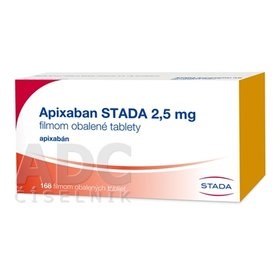



How to use APIXABAN STADA 2.5 mg FILM-COATED TABLETS
Translated with AI
This page provides general information and does not replace a doctor’s consultation. Always consult a doctor before taking any medication. Seek urgent medical care if symptoms are severe.
Show originalContents of the leaflet
Introduction
Patient Information Leaflet: Information for the User
Apixaban Stada 2.5 mg film-coated tablets EFG
Read all of this leaflet carefully before you start taking this medicine because it contains important information for you.
- Keep this leaflet, you may need to read it again.
- If you have any further questions, ask your doctor, pharmacist, or nurse.
- This medicine has been prescribed for you only. Do not pass it on to others. It may harm them, even if their signs of illness are the same as yours.
- If you get any side effects, talk to your doctor, pharmacist, or nurse. This includes any possible side effects not listed in this leaflet. See section 4.
Contents of the pack:
- What is Apixaban Stada and what is it used for
- What you need to know before you take Apixaban Stada
- How to take Apixaban Stada
- Possible side effects
- Storage of Apixaban Stada
- Contents of the pack and further information

1. What is Apixaban Stada and what is it used for
Apixaban Stada contains the active substance apixaban and belongs to a group of medicines called anticoagulants. This medicine helps to prevent the formation of blood clots by blocking Factor Xa, an important element in the blood clotting process.
This medicine is used in adults:
- to prevent the formation of blood clots (deep vein thrombosis [DVT]) after hip or knee replacement surgery. After hip or knee replacement surgery, you may have a higher risk of forming blood clots in the veins of your legs. This can cause swelling in your legs, with or without pain. If a blood clot travels from your leg to your lungs, it can block the flow of blood, causing difficulty breathing, with or without chest pain. This medical condition (pulmonary embolism) can be life-threatening and requires immediate medical attention.
- to prevent the formation of a blood clot in the heart in patients with an irregular heartbeat (atrial fibrillation) and at least one additional risk factor. Blood clots can break loose, move to the brain, and cause a stroke, or move to other organs, preventing proper irrigation (also known as systemic embolism). A stroke can be life-threatening and requires immediate medical attention.
- to treat blood clots in the veins of the legs (deep vein thrombosis) and in the blood vessels of the lungs (pulmonary embolism), and to prevent these blood clots from recurring in the blood vessels of the legs and/or lungs.
2. What you need to know before you take Apixaban Stada
Do not take Apixaban Stada
- if you are allergicto apixaban or any of the other ingredients of this medicine (listed in section 6)
- if you bleed excessively
- if you have a disease in an organof the body that increases the risk of severe bleeding (such as an active or recent ulcerof the stomach or intestine or recent cerebral hemorrhage)
- if you have a liver diseasethat increases the risk of bleeding (hepatic coagulopathy)
- if you are taking medicines to prevent blood clotting(e.g., warfarin, rivaroxaban, dabigatran, or heparin), except when switching treatment, while having an arterial or venous line and being treated with heparin to keep the line open, or when a tube is inserted into a blood vessel (catheter ablation) to treat an irregular heartbeat (arrhythmia).
Warnings and precautions
Tell your doctor, pharmacist, or nurse before taking this medicine if you have any of these conditions:
- a higher risk of bleeding, such as:
- bleeding disorders, including situations that result in a decrease in platelet activity
- very high blood pressure, not controlled by medical treatment
- you are over 75 years old
- you weigh 60 kg or less
- severe kidney disease or if you are on dialysis
- a liver problem or history of liver problems
- this medicine will be used with caution in patients with signs of altered liver function
- you have had a catheter or received an injection in the spine(for anesthesia or pain relief), your doctor will tell you to wait at least 5 hours after removing the catheter before taking this medicine
- you have a heart valve prosthesis
- if your doctor determines that your blood pressure is unstable or you are scheduled to receive another treatment or undergo surgery to remove the blood clot from your lungs
Be careful with apixaban
- if you know you have a disease called antiphospholipid syndrome(a disorder of the immune system that increases the risk of forming blood clots), inform your doctor to decide if it may be necessary to modify the treatment.
If you need surgery or a procedure that may cause bleeding, your doctor will tell you to temporarily stop taking this medicine for a while. If you are not sure if a procedure may cause bleeding, consult your doctor.
Children and adolescents
This medicine is not recommended for use in children and adolescents under 18 years of age.
Other medicines and Apixaban Stada
Tell your doctor, pharmacist, or nurse if you are using, have recently used, or might use any other medicines.
Some medicines may increase the effects of apixaban and some medicines may decrease its effects. Your doctor will decide if you should be treated with apixaban if you are taking these medicines and if you should be kept under closer observation.
The following medicines may increase the effects of apixaban and increase the possibility of unwanted bleeding:
- some medicines for fungal infections(e.g., ketoconazole, etc.);
- some antiviral medicines for HIV/AIDS(e.g., ritonavir);
- other medicines to reduce blood clotting(e.g., enoxaparin, etc.);
- anti-inflammatoryor pain-relieving medicines(e.g., acetylsalicylic acid or naproxen). Especially if you are over 75 years old and taking acetylsalicylic acid, there is a higher probability of bleeding;
- medicines for high blood pressure or heart problems(e.g., diltiazem);
- antidepressants called selective serotonin reuptake inhibitors or serotonin-norepinephrine reuptake inhibitors.
The following medicines may reduce the ability of apixaban to prevent the formation of blood clots.
- medicines for the treatment of epilepsy or convulsions(e.g., phenytoin, etc.);
- St. John's Wort(a herbal medicine for the treatment of depression);
- medicines for the treatment of tuberculosisor other infections(e.g., rifampicin).
Pregnancy and breastfeeding
If you are pregnant or breastfeeding, think you may be pregnant, or are planning to have a baby, ask your doctor or pharmacist for advice before taking this medicine.
Pregnancy
The effects of apixaban on pregnancy and the fetus are not known. You should not take this medicine if you are pregnant. Tell your doctor immediatelyif you become pregnant while taking this medicine.
Breastfeeding
It is not known if apixaban is excreted in human milk. Ask your doctor or pharmacist for advice before taking this medicine during breastfeeding. They will tell you whether to stop breastfeeding or whether to stop or not start taking this medicine.
Driving and using machines
Apixaban has no influence on the ability to drive or use machines.
Apixaban Stada contains lactose and sodium.
This medicine contains lactose. If your doctor has told you that you have an intolerance to some sugars, consult them before taking this medicine.
This medicine contains less than 23 mg of sodium (1 mmol) per tablet; this is, essentially “sodium-free”.

3. How to take Apixaban Stada
Follow exactly the administration instructions of this medicine given by your doctor or pharmacist. If you are in doubt, consult your doctor, pharmacist, or nurse.
Dosage
Take the tablet with water. Apixaban can be taken with or without food.
Try to take the tablets at the same time each day to achieve a better effect of the treatment.
If you have difficulty swallowing the whole tablet, talk to your doctor about other possible ways to take apixaban. The tablet can be crushed and mixed with water, 5% glucose in water, apple juice, or apple puree, immediately before taking it.
Instructions for crushing:
- crush the tablets with a mortar.
- transfer all the powder carefully into a suitable container, mixing the powder with a small amount, e.g., 30 ml (2 tablespoons), of water or any of the other liquids mentioned to make the mixture.
- take the mixture.
- rinse the mortar and the mortar's hand that have been used to crush the tablet and the container with a small amount of water or one of the other liquids (e.g., 30 ml), and take that liquid.
If necessary, your doctor may also administer the crushed apixaban tablet mixed in 60 ml of water or 5% glucose in water through a nasogastric tube.
Take apixaban according to the following recommendations:
To prevent the formation of blood clots in hip or knee replacement surgery.
The recommended dose is one apixaban 2.5 mgtablet twice a day. For example, take one tablet in the morning and one in the evening.
You should take the first tablet between 12 to 24 hours after surgery.
If you have had hipsurgery, you will usually take the tablets for a period of 32 to 38 days.
If you have had kneesurgery, you will usually take the tablets for a period of 10 to 14 days.
To prevent the formation of a blood clot in the heart in patients with an irregular heartbeat and at least one additional risk factor.
The recommended dose is one apixaban 5 mgtablet twice a day.
The recommended dose is one apixaban 2.5 mg tablet twice a day if:
- you have severely reduced kidney function
- you have two or more of the following factors
- your blood test results suggest poor kidney function (the serum creatinine value is 1.5 mg/dl (133 micromoles/l) or higher)
- you are 80 years old or older
- your weight is 60 kg or less
The recommended dose is one tablet twice a day, for example, take one tablet in the morning and one in the evening. Your doctor will tell you how long you should continue the treatment.
To treat blood clots in the veins of the legs and in the blood vessels of the lungs
The recommended dose is twoapixaban 5 mgtablets twice a day for the first 7 days, for example, two tablets in the morning and two tablets in the evening.
After 7 days, the recommended dose is oneapixaban 5 mgtablet twice a day, for example, one tablet in the morning and one in the evening.
To prevent blood clots from recurring after 6 months of treatment
The recommended dose is oneapixaban 2.5 mgtablet twice a day, for example, one tablet in the morning and one in the evening.
Your doctor will tell you how long you should continue the treatment.
Your doctor may change your anticoagulant treatment as follows:
- Switching from apixaban to other anticoagulant medicines
Stop taking apixaban. Start treatment with other anticoagulant medicines (e.g., heparin) at the time you would take the next apixaban tablet.
- Switching from other anticoagulant medicines to apixaban
Stop taking other anticoagulant medicines. Start treatment with apixaban at the time you would take the next dose of the other anticoagulant medicine, and then continue as usual.
- Switching from treatment with anticoagulants that contain Vitamin K antagonists (e.g., warfarin) to apixaban
Stop taking the medicine that contains a Vitamin K antagonist. Your doctor will need to perform blood tests and tell you when to start taking apixaban.
- Switching from treatment with apixaban to treatment with anticoagulants that contain Vitamin K antagonists (e.g., warfarin).
If your doctor tells you to start taking a medicine that contains a Vitamin K antagonist, continue taking apixaban for at least 2 days after your first dose of the medicine that contains a Vitamin K antagonist. Your doctor will need to perform blood tests and tell you when to stop taking apixaban.
Patients undergoing cardioversion
If your heartbeat needs to be restored through a process called cardioversion, take this medicine at the times your doctor tells you to prevent blood clots in the blood vessels of the brain and other blood vessels in the body.
If you take more Apixaban Stada than you should
Tell your doctor immediatelyif you have taken a higher dose of this medicine than prescribed. Take the medicine pack to your doctor, even if there are no tablets left.
If you take more apixaban than the recommended dose, you may increase the risk of bleeding. If bleeding occurs, surgery, blood transfusions, or other treatments that can reverse the anti-factor Xa activity may be necessary.
In case of overdose or accidental ingestion, consult your doctor or pharmacist immediately or call the Toxicology Information Service, phone: 91562 04 20, indicating the medicine and the amount taken.
If you forget to take Apixaban Stada
- Take the dose as soon as you remember and
- take the next dose of apixaban at the usual time
- then continue taking the medicine as usual
If you are in doubt about what to do or if you forget to take more than one dose,ask your doctor, pharmacist, or nurse.
If you stop taking Apixaban Stada
Do not stop taking this medicine without talking to your doctor first, because the risk of developing a blood clot may be higher if you stop the treatment too soon.
If you have any further questions on the use of this medicine, ask your doctor, pharmacist, or nurse.
4. Possible Adverse Effects
Like all medicines, this medicine can cause adverse effects, although not all people suffer from them.
Apixaban can be administered for three different diseases. The known adverse effects and the frequency at which they occur may be different, and therefore, they are indicated separately below. For those conditions, the most frequent adverse effect of this medicine is bleeding, which can put the patient's life at risk and requires immediate medical attention.
The following adverse effects have been reported when taking apixaban for theprevention of blood clot formationinhip or knee replacement surgery.
Frequent Adverse Effects(may affect up to 1 in 10 people):
- Anemia, which can cause fatigue or paleness
- Bleeding, including hematoma and swelling
- Nausea (general discomfort)
Uncommon Adverse Effects(may affect up to 1 in 100 people)
- Decrease in the number of platelets in the blood (which can affect coagulation)
- Bleeding:
- after your operation, including hematoma and swelling, bleeding or fluid discharge from the wound/surgical incision (suppuration), or at the injection site
- from the stomach, intestine, or bright red blood in the stool
- blood in the urine
- from the nose
- vaginal
- Low blood pressure, which can cause fainting or a faster heart rate
- Blood tests may show:
- abnormal liver function
- increased liver enzymes
- increased bilirubin, a byproduct of red blood cells, which can cause yellowing of the skin and eyes
- Itching
Rare Adverse Effects(may affect up to 1 in 1,000 people)
- Allergic reactions (hypersensitivity) that can cause: swelling of the face, lips, mouth, tongue, and/or throat, and difficulty breathing. Inform your doctor immediatelyif you experience any of these symptoms
- Bleeding:
- in a muscle
- in the eyes
- from the gums and coughing up blood
- from the rectum
- Hair loss
Unknown Frequency(cannot be estimated from the available data)
- Bleeding:
- in the brain or spinal cord
- in the lungs or throat
- in the mouth
- in the abdomen or the space behind the abdominal cavity
- hemorrhoidal
- tests showing blood in the stool or urine
- Skin rash that can form blisters and resemble small targets (dark spots in the center surrounded by a paler area, with a dark ring around) (erythema multiforme).
- Inflammation of the blood vessels (vasculitis) that can cause skin rash, appearance of round, smooth red spots under the skin surface, or hematomas.
The following adverse effects have been reported when taking apixaban toprevent blood clot formationin theheart in patients with irregular heart rhythm and at least one additional risk factor.
Frequent Adverse Effects(may affect up to 1 in 10 people)
- Bleeding, including:
- in the eyes
- in the stomach or intestine
- from the rectum
- blood in the urine
- from the nose
- from the gums
- hematoma and swelling
- Anemia, which can cause fatigue or paleness
- Low blood pressure, which can cause fainting or a faster heart rate
- Nausea (general discomfort)
- Blood tests may show:
- an increase in gamma glutamyl transferase (GGT)
Uncommon Adverse Effects(may affect up to 1 in 100 people)
- Bleeding:
- in the brain or spinal cord
- in the mouth or coughing up blood
- in the abdomen or vagina
- bright red blood in the stool
- bleeding after your operation, including hematoma and swelling, bleeding or fluid discharge from the wound/surgical incision (suppuration), or at the injection site
- hemorrhoidal
- tests showing blood in the stool or urine
- Decrease in the number of platelets in the blood (which can affect coagulation)
- Blood tests may show:
- abnormal liver function
- increased liver enzymes
- increased bilirubin, a byproduct of red blood cells, which can cause yellowing of the skin and eyes
- Skin rash
- Itching
- Hair loss
- Allergic reactions (hypersensitivity) that can cause: swelling of the face, lips, mouth, tongue, and/or throat, and difficulty breathing. Inform your doctor immediatelyif you experience any of these symptoms
Rare Adverse Effects(may affect up to 1 in 1,000 people)
- Bleeding:
- in the lungs or throat
- within the space behind the abdominal cavity
- in a muscle
Very Rare Adverse Effects(may affect up to 1 in 10,000 people)
- Skin rash that can form blisters and resemble small targets (dark spots in the center surrounded by a paler area, with a dark ring around) (erythema multiforme).
Unknown Frequency(cannot be estimated from the available data)
- Inflammation of the blood vessels (vasculitis) that can cause skin rash, appearance of round, smooth red spots under the skin surface, or hematomas.
The following adverse effects have been reported when taking apixaban totreat or prevent blood clots from recurringin theveins of the legsand in theblood vessels of the lungs.
Frequent Adverse Effects(may affect up to 1 in 10 people)
- Bleeding, including:
- from the nose
- from the gums
- blood in the urine
- hematoma and swelling
- from the stomach or intestine
- from the rectum
- in the mouth
- vaginal
- Anemia, which can cause fatigue or paleness
- Decrease in the number of platelets in the blood (which can affect coagulation)
- Nausea (general discomfort)
- Skin rash
- Blood tests may show:
- an increase in gamma glutamyl transferase (GGT) or alanine aminotransferase (GPT)
Uncommon Adverse Effects(may affect up to 1 in 100 people)
- Low blood pressure, which can cause fainting or a faster heart rate
- Bleeding:
- in the eyes
- in the mouth or coughing up blood
- bright red blood in the stool
- tests showing blood in the stool or urine
- bleeding after your operation, including hematoma and swelling, bleeding or fluid discharge from the wound/surgical incision (suppuration), or at the injection site
- hemorrhoidal
- in a muscle
- Itching
- Hair loss
- Allergic reactions (hypersensitivity) that can cause: swelling of the face, lips, mouth, tongue, and/or throat, and difficulty breathing. Contact your doctor immediately if you experience any of these symptoms
- Blood tests may show:
- abnormal liver function
- increased liver enzymes
- increased bilirubin, a byproduct of red blood cells, which can cause yellowing of the skin and eyes
Rare Adverse Effects(may affect up to 1 in 1,000 people)
- Bleeding:
- in the brain or spinal cord
- in the lungs
Unknown Frequency(cannot be estimated from the available data)
- Bleeding:
- in the abdomen or the space behind the abdominal cavity
- Skin rash that can form blisters and resemble small targets (dark spots in the center surrounded by a paler area, with a dark ring around) (erythema multiforme).
- Inflammation of the blood vessels (vasculitis) that can cause skin rash, appearance of round, smooth red spots under the skin surface, or hematomas.
Reporting of Adverse Effects
If you experience any type of adverse effect, consult your doctor, pharmacist, or nurse, even if it is a possible adverse effect that is not listed in this leaflet. You can also report them directly through the Spanish Pharmacovigilance System for Human Use Medicines: www.notificaRAM.es. By reporting adverse effects, you can contribute to providing more information on the safety of this medicine.
5. Storage of Apixaban Stada
Keep this medicine out of the sight and reach of children.
Do not use this medicine after the expiration date stated on the carton and on each blister, after "EXP". The expiration date is the last day of the month indicated.
This medicine does not require special storage conditions.
Medicines should not be disposed of via wastewater or household waste. Deposit the packaging and medicines you no longer need at the SIGRE collection point in the pharmacy. Ask your pharmacist how to dispose of the packaging and medicines you no longer need. This will help protect the environment.
6. Package Contents and Additional Information
Composition of Apixaban Stada
- The active ingredient is apixaban. Each tablet contains 2.5 mg of apixaban.
- The other ingredients are:
Core of the tablet: microcrystalline cellulose, sodium croscarmellose, sodium docusate, polyvinyl caprolactam-polyvinyl acetate-polyethylene glycol graft copolymer, magnesium stearate.
Coating (Opadry II yellow): hypromellose (2910, 15 mPa·s), lactose monohydrate, titanium dioxide (E171), macrogol (3350), yellow iron oxide (E172).
Appearance of the Product and Package Contents
The film-coated tablets are round, yellow, and biconvex.
They are available in blisters within cartons containing 10, 20, 30, 60, 100 (clinical packaging), 168, and 200 film-coated tablets.
Single-dose blisters are also available within cartons containing 10 x 1, 20 x 1, 30 x 1, 60 x 1, 100 x 1 (clinical packaging), 168 x 1, and 200 x 1 film-coated tablets.
Not all pack sizes may be marketed.
Patient Information Card: information management
Inside the Apixaban Stada package, along with the leaflet, you will find a Patient Information Card, or your doctor may give you a similar card.
This Patient Information Card includes useful information for you and will alert other doctors that you are being treated with apixaban. You should keep this card with you at all times.
- Take the card.
- Separate the language you need (this is facilitated through the perforated ends).
- Complete the following sections or ask your doctor to complete them:
- Name:
- Date of birth:
- Indication:
- Dose: mg twice a day
- Doctor's name:
- Doctor's phone number:
- Fold the card and carry it with you at all times
Marketing Authorization Holder and Manufacturer
Marketing Authorization Holder
Laboratorio STADA, S.L.
Frederic Mompou, 5
08960 Sant Just Desvern (Barcelona)
Spain
Manufacturer
STADA Arzneimittel AG
Stadastrasse 2-18
61118 Bad Vilbel
Germany
or
STADA Arzneimittel GmbH
Muthgasse 36/2
1190 Wien
Austria
or
Clonmel Healthcare Ltd.
Waterford Road
E91 D768 Clonmel, Co. Tipperary
Ireland
or
Centrafarm Services B.V.
Van de Reijtstraat 31 E
4814NE Breda
Netherlands
This medicine is authorized in the Member States of the European Economic Area under the following names:
Germany | Apixaban STADA 2.5 mg film-coated tablets |
Austria | Apixaban STADA 2.5 mg film-coated tablets |
Belgium | Apixaban EG 2.5 mg film-coated tablets |
Czech Republic | Apixaban STADA |
Denmark | Apixaban STADA |
Spain | Apixaban STADA 2.5 mg film-coated tablets EFG |
Finland | Apixaban STADA 2.5 mg film-coated tablets |
France | APIXABAN EG 2.5 mg, film-coated tablet |
Hungary | Apixaban Stada 2.5mg film-coated tablet |
Ireland | Apixaban Clonmel 2.5 mg film-coated tablets |
Iceland | Apixaban STADA 2.5 mg film-coated tablets |
Luxembourg | Apixaban 2.5 mg EG film-coated tablets |
Netherlands | Apixaban CF 2.5 mg, film-coated tablets |
Portugal | Apixabano Ciclum |
Romania | Apixaban STADA 2.5 mg film-coated tablets |
Sweden | Apixaban STADA 2.5 mg film-coated tablets |
Slovenia | Apiksaban STADA 2.5 mg film-coated tablets |
Slovakia | Apixaban STADA 2.5 mg |
Date of the last revision of this leaflet:May 2022
Detailed information on this medicine is available on the website of the Spanish Agency for Medicines and Health Products (AEMPS) (http://www.aemps.gob.es/)
- Country of registration
- Dosage formTABLET, 2.5 mg
- ATC codeB01AF02
- Active substance
- Prescription requiredYes
- Manufacturer
- This information is for reference only and does not constitute medical advice. Always consult a doctor before taking any medication. Oladoctor is not responsible for medical decisions based on this content.
- Alternatives to APIXABAN STADA 2.5 mg FILM-COATED TABLETSDosage form: TABLET, 2.5 mgActive substance: apixabanManufacturer: Viatris LimitedPrescription requiredDosage form: TABLET, 5 mgActive substance: apixabanManufacturer: Viatris LimitedPrescription requiredDosage form: TABLET, 2.5 mgActive substance: apixabanManufacturer: Accord Healthcare S.L.U.Prescription required
Online doctors for APIXABAN STADA 2.5 mg FILM-COATED TABLETS
Discuss questions about APIXABAN STADA 2.5 mg FILM-COATED TABLETS, including use, safety considerations and prescription review, subject to medical assessment and local regulations.











Frequently Asked Questions
