


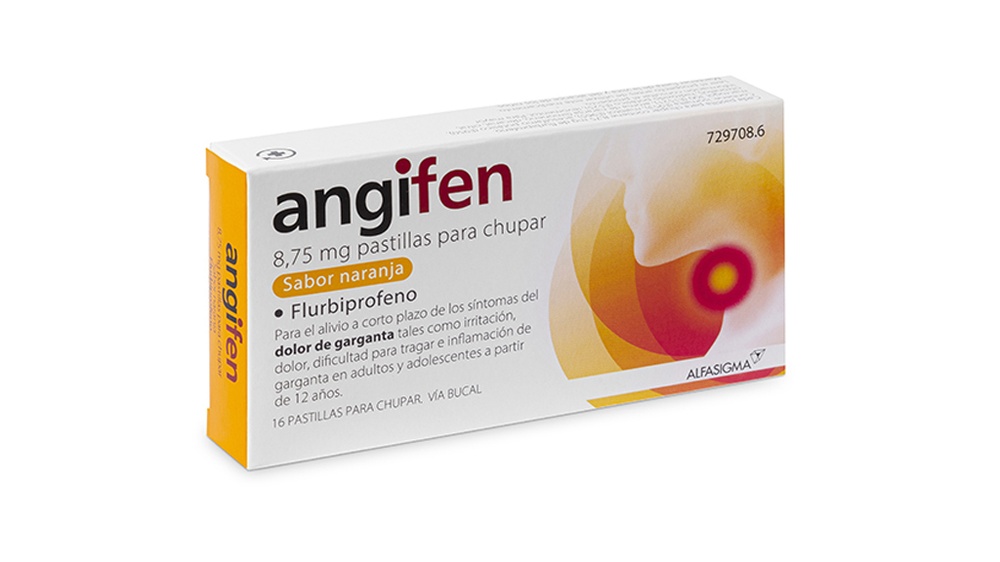
Angifen 8,75 mg lozenges orange flavored

Prescription review online
A doctor will review your case and decide whether a prescription is medically appropriate.

Talk to a doctor about this medicine
Discuss your symptoms and possible next steps in a quick online consultation.



How to use ANGIFEN 8.75 mg LOZENGES ORANGE FLAVORED
Contents of the leaflet
- Introduction
- What is Angifen and what is it used for
- What you need to know before taking Angifen
- How to take Angifen
- Possible side effects
- Storage of Angifen
- Package contents and additional information
Introduction
Leaflet: Information for the user
Angifen 8.75 mg orange-flavored lozenges
Flurbiprofen
Read this leaflet carefully before starting to take this medication, as it contains important information for you.
Follow the administration instructions for the medication contained in this leaflet or as indicated by your doctor, pharmacist, or nurse.
- Keep this leaflet, as you may need to read it again.
- If you need advice or more information, consult your pharmacist.
- If you experience side effects, consult your doctor, pharmacist, or nurse, even if they are possible side effects not listed in this leaflet. See section 4.
- You should consult a doctor if your symptoms worsen or do not improve after 3 days of treatment.
Contents of the leaflet
- What is Angifen and what is it used for
- What you need to know before taking Angifen
- How to take Angifen
- Possible side effects
- Storage of Angifen
- Package contents and additional information
1. What is Angifen and what is it used for
Angifen contains flurbiprofen. Flurbiprofen belongs to a group of medications called non-steroidal anti-inflammatory drugs (NSAIDs) that have analgesic and anti-inflammatory properties for the treatment of sore throat. These medications work by modifying the body's response to pain, inflammation, and fever.
Angifen is used for the short-term relief of sore throat symptoms such as irritation, pain, and inflammation, and difficulty swallowing in adults and children over 12 years old.
You should consult a doctor if your symptoms worsen or do not improve after 3 days of treatment.

Not sure if this medicine is right for you?
Discuss your symptoms and treatment with a doctor online.
2. What you need to know before taking Angifen
Do not take Angifen
- if you are allergic to flurbiprofen or any of the other components of this medication (listed in section 6)
- if you have ever had asthma, sudden wheezing, or difficulty breathing, nasal secretion, facial swelling, or itchy rash (urticaria) after taking acetylsalicylic acid or any other non-steroidal anti-inflammatory medication (NSAID).
- if you have or have had a stomach or intestinal ulcer (two or more episodes of stomach or duodenal ulcer).
- if you have had gastrointestinal bleeding or perforation, severe colitis, or blood disorders after taking any other NSAID.
- if you are in the last trimester of pregnancy.
- if you have or have had severe heart, kidney, or liver failure.
Warnings and precautions
Consult your doctor or pharmacist before starting to take Angifen:
- if you have ever had asthma or allergies
- if you have tonsillitis (inflammation of the tonsils) or think you may have a bacterial throat infection (as you may need antibiotics)
- if you have an infection - see the "Infections" section below.
- if you have heart, kidney, or liver problems
- if you have had a stroke
- if you have a history of intestinal disease (ulcerative colitis, Crohn's disease)
- if you have high blood pressure.
- if you have a chronic autoimmune disease (such as systemic lupus erythematosus or mixed connective tissue disease).
- if you are an elderly patient, as you are more likely to experience the side effects described in this leaflet.
- if you are in the first 6 months of pregnancy or are breastfeeding.
- if you have analgesic-induced headaches
Avoid concomitant use of two or more NSAIDs or corticosteroids (such as celecoxib, ibuprofen, diclofenac sodium, or prednisolone), as they may increase the risk of side effects, particularly gastrointestinal ones such as ulcers and bleeding (see the "Taking Angifen with other medications" section below).
Infections
Non-steroidal anti-inflammatory medications (NSAIDs) may hide signs of infection such as fever and pain. This may delay the start of appropriate treatment for the infection, which may lead to a higher risk of complications. If you take this medication while having an infection and your symptoms persist or worsen, consult your doctor or pharmacist without delay.
While taking Angifen
- At the first sign of a skin reaction (rash, exfoliation) or other sign of allergic reaction, stop taking this medication and consult a doctor immediately.
- Inform your doctor of any unusual abdominal symptoms that may occur (especially bleeding). Consult your doctor if it does not improve, worsens, or if new symptoms appear.
- The use of medications containing flurbiprofen may be associated with a small increase in the risk of suffering a heart attack (myocardial infarction) or stroke. Any risk is more likely at high doses and with prolonged treatments. Do not exceed the recommended dose or treatment duration (3 days).
Children and adolescents
This medication should not be used by children and adolescents under 12 years old.
Other medications and Angifen
Inform your doctor or pharmacist if you are taking, have recently taken, or may need to take another medication, including medications without a prescription. In particular, if you are taking:
- low-dose acetylsalicylic acid (up to 75 mg per day).
- medications for hypertension or heart failure (antihypertensives, cardiac glycosides).
- diuretics (including potassium-sparing diuretics)
- medications to thin the blood (anticoagulants, antiplatelet agents).
- medications for gout (probenecid, sulfinpyrazone)
- other NSAIDs or corticosteroids (such as celecoxib, ibuprofen, diclofenac sodium, or prednisolone) (see the "Warnings and precautions" section).
- mifepristone (a medication used for abortion).
- quinolone antibiotics (such as ciprofloxacin).
- cyclosporine or tacrolimus (medications used to inhibit the immune system).
- phenytoin (a medication used to treat epilepsy).
- methotrexate (a medication used to treat autoimmune diseases or cancer).
- lithium or selective serotonin reuptake inhibitors (medications for depression).
- oral antidiabetics (for diabetes treatment).
- zidovudine (for HIV treatment).
Taking Angifen with food, drinks, and alcohol
Alcohol consumption should be avoided during treatment with Angifen, as it may increase the risk of stomach or intestinal bleeding.
Pregnancy, breastfeeding, and fertility
Oral forms (e.g., tablets) of flurbiprofen may cause adverse effects in unborn babies. It is unknown if there is the same risk with Angifen.
If you are pregnant or breastfeeding, think you may be pregnant, or are planning to have a baby, consult your doctor or pharmacist before taking this medication. Do not use Angifen if you are in the last trimester of pregnancy. You should not take Angifen during the first six months of pregnancy unless it is clearly necessary and advised by your doctor. If you need treatment during this period, you should use the lowest possible dose and for the shortest possible time.
Flurbiprofen belongs to a group of medications that may affect fertility in women. This effect is reversible when the medication is stopped. It is unlikely that occasional use of this medication can affect your chances of getting pregnant; however, inform your doctor before taking this medication if you have problems conceiving.
Driving and using machines
This medication should not affect your ability to drive and use machines. However, if you experience adverse reactions such as dizziness and/or visual disturbances, do not drive or use machines.
Angifen contains isomalt and maltitol
If your doctor has told you that you have an intolerance to certain sugars, consult your doctor before taking this medication.
3. How to take Angifen
Follow the administration instructions for the medication contained in this leaflet or as indicated by your doctor or pharmacist. In case of doubt, consult your doctor or pharmacist again.
Use the lowest effective dose for the shortest necessary time to relieve symptoms. If you have an infection, consult a doctor or pharmacist without delay if symptoms (such as fever and pain) persist or worsen (see section 2).
The recommended dose is:
Adults and children over 12 years old:
- 1 lozenge every 3-6 hours, as needed.
- Do not take more than 5 lozenges in 24 hours.
Method of administration:
Oral
Dissolve the lozenge slowly in the mouth, do not swallow it, and do not chew it.
Always move the lozenge around in the mouth while it dissolves.
Use in children:
Children under 12 years old should not take this medication.
These lozenges are for short-term treatment only.
Take the minimum number of lozenges you need for the shortest possible time to relieve your symptoms. If mouth irritation occurs, you should stop treatment with the medication.
Do not take Angifen for more than 3 days.If you do not improve, if your symptoms worsen, or if new symptoms appear, consult your doctor or pharmacist.
If you take more Angifen than you should
Call a doctor or pharmacist or go to the nearest hospital immediately. Symptoms of overdose may include: nausea or vomiting, stomach pain, or, more rarely, diarrhea. You may also experience ringing in the ears, headache, and gastrointestinal bleeding.
In case of overdose or accidental ingestion, consult your doctor or pharmacist immediately or call the Toxicology Information Service, phone: 91 562 04 20, indicating the medication and the amount taken.
If you have any other questions about the use of this product, ask your doctor or pharmacist.

Started taking the medicine and have questions?
Discuss your symptoms and treatment with a doctor online.
4. Possible side effects
Like all medications, this medication can cause side effects, although not everyone may experience them.
STOP TAKINGthis medication and consult your doctor immediately if you develop:
- signs of an allergic reaction such as asthma, wheezing, or unexplained shortness of breath, itching, nasal secretion, skin rash, etc.
- swelling of the face, tongue, or throat that causes difficulty breathing, palpitations, decreased blood pressure that causes shock (all these effects can occur even when using the medication for the first time).
- severe skin reactions such as exfoliation, blisters, or skin peeling.
Inform your doctor or pharmacist if you notice any of the following effects or any effect not described in this leaflet:
The following side effects may occur:
Frequent(may affect up to 1 in 10 people)
- dizziness, headache
- throat irritation
- mouth ulcers or mouth pain
- sore throat
- unusual sensations in the mouth (feeling of heat, burning, itching, tingling, etc.)
- nausea and diarrhea
- itching and pruritus of the skin
Uncommon(may affect up to 1 in 100 people):
- numbness
- drowsiness or difficulty sleeping
- worsening of asthma, wheezing, shortness of breath
- blisters in the mouth or throat, numbness in the throat
- dry mouth
- burning sensation in the mouth, altered taste, abdominal distension
- abdominal pain, gas, constipation, indigestion, vomiting
- reduced sensitivity in the throat
- fever, pain
- skin rash, itching
Rare(may affect up to 1 in 1,000 people)
- anaphylactic reaction
Frequency not known(cannot be estimated from the available data)
- anemia, thrombocytopenia (low platelet count in the blood that can lead to bruising and bleeding)
- edema, high blood pressure, heart failure, or heart attack
- severe skin reactions such as blistering reactions, including Stevens-Johnson syndrome, Lyell's syndrome, and toxic epidermal necrolysis
- hepatitis (inflammation of the liver).
Reporting side effects
If you experience any type of side effect, consult your doctor or pharmacist, even if it is a side effect not listed in this leaflet. You can also report them directly through the Spanish Medication Surveillance System for Human Use (www.notificaram.es). By reporting side effects, you can contribute to providing more information on the safety of this medication.
5. Storage of Angifen
Keep out of sight and reach of children.
Do not use this medication after the expiration date shown on the packaging and on the blister after CAD. The expiration date is the last day of the month indicated.
This medication does not require special storage conditions.
Medications should not be disposed of through wastewater or household waste. Deposit the packaging and medications you no longer need at the SIGRE collection point in the pharmacy. If in doubt, ask your pharmacist how to dispose of the packaging and medications you no longer need. This will help protect the environment.
6. Package contents and additional information
Composition of Angifen
The active ingredient is flurbiprofen. Each lozenge contains 8.75 mg of flurbiprofen.
The other components are:
Isomalt (E 953)
Maltitol (E 965)
Potassium acesulfame (E 950)
Macrogol 300 (E 1521)
Orange flavor (Limonene (50.0%-100%), decanal (0.0%-10%) citral, citronellol (0.1%-1.0%))
Potassium hydroxide (E 525)
Levomenthol
Appearance of the product and package contents
Angifen 8.75 mg orange-flavored lozenges are presented as round lozenges, light yellow to yellowish in color, with a diameter of 19±1 mm, with an orange flavor.
The lozenges are available in PVC-PVDC/Aluminum blisters in printed cardboard boxes or child-resistant PVC-PVDC/Aluminum blisters in printed cardboard boxes.
Package size: 8, 12, 16, 20, or 24 lozenges.
Only some package sizes may be marketed.
Marketing authorization holder
Alfasigma España, S.L.
Avda. Diagonal, 490
08006 Barcelona, SPAIN
Manufacturer
Lozy’s Pharmaceuticals, S.L.
Campus Empresarial s/n
31795 Lekaroz, Navarra
SPAIN
Date of the last revision of this leaflet:October 2023
Detailed and updated information on this medication is available on the website of the Spanish Agency for Medicines and Health Products (AEMPS) http://www.aemps.es
- Country of registration
- Dosage formBUCCAL/SUCKING TABLET, 8.75 mg
- ATC codeR02AX01
- Active substance
- Prescription requiredNo
- Manufacturer
- CompositionISOMALTA (E 953) (2034 mg mg), MALTITOL (E965) (427,5 mg mg), ACESULFAMO POTASICO (10 mg mg), POTASIO, HIDROXIDO DE (E-525) (2,19 mg mg)
- This information is for reference only and does not constitute medical advice. Always consult a doctor before taking any medication. Oladoctor is not responsible for medical decisions based on this content.
- Alternatives to ANGIFEN 8.75 mg LOZENGES ORANGE FLAVOREDDosage form: BUCCAL/SUCKING TABLET, 8.75 mgActive substance: flurbiprofenManufacturer: Alfasigma España, S.L.Prescription not requiredDosage form: BUCCAL/SUCKING TABLET, 8.75 mgActive substance: flurbiprofenManufacturer: Laboratorios Cinfa S.A.Prescription not requiredDosage form: ORAL SPRAY, 8.75 mg/doseActive substance: flurbiprofenManufacturer: Laboratorios Cinfa S.A.Prescription not required
Online doctors for ANGIFEN 8.75 mg LOZENGES ORANGE FLAVORED
Discuss questions about ANGIFEN 8.75 mg LOZENGES ORANGE FLAVORED, including use, safety considerations and prescription review, subject to medical assessment and local regulations.
Frequently Asked Questions
ANGIFEN 8.75 mg LOZENGES ORANGE FLAVORED does not require a prescription in Spain. You can check with a doctor online whether this medicine may be appropriate for your situation.
The active ingredient in ANGIFEN 8.75 mg LOZENGES ORANGE FLAVORED is flurbiprofen. This information helps identify medicines with the same composition but different brand names.
ANGIFEN 8.75 mg LOZENGES ORANGE FLAVORED is manufactured by Alfasigma España, S.L.. Pharmacy brands and packaging may differ depending on the distributor.
Doctors such as Family doctors, Psychiatrists, Dermatologists, Cardiologists, Endocrinologists, Gastroenterologists, Pulmonologists, Nephrologists, Rheumatologists, Hematologists, Infectious disease physicians, Allergists, Geriatricians, Paediatricians, Oncologists may assess whether ANGIFEN 8.75 mg LOZENGES ORANGE FLAVORED is appropriate, depending on your situation and local regulations. You can book an online consultation to discuss your symptoms and possible next steps.
The prescription is issued by a doctor after assessing your health. In Spain, ANGIFEN 8.75 mg LOZENGES ORANGE FLAVORED is then dispensed in pharmacies with that prescription. An online consultation does not guarantee that a prescription will be issued: the decision always rests with the doctor.
To request a review, you can use Oladoctor:
Other medicines with the same active substance (flurbiprofen) include ANGIFEN 8.75 mg LOZENGES MINT FLAVOR, BUCOPRO 8.75 mg LOZENGES ORANGE FLAVORED, BUCOPRO SPRAY 8.75 mg/dose ORAL SPRAY SOLUTION. These may have different brand names or formulations but contain the same therapeutic ingredient. Always consult a doctor before switching or starting a new medicine.
