


AMOXICILLIN/CLAVULANIC ACID VIATRIS 125 mg/5 mg + 31.25 mg/5 ml ORAL SUSPENSION POWDER
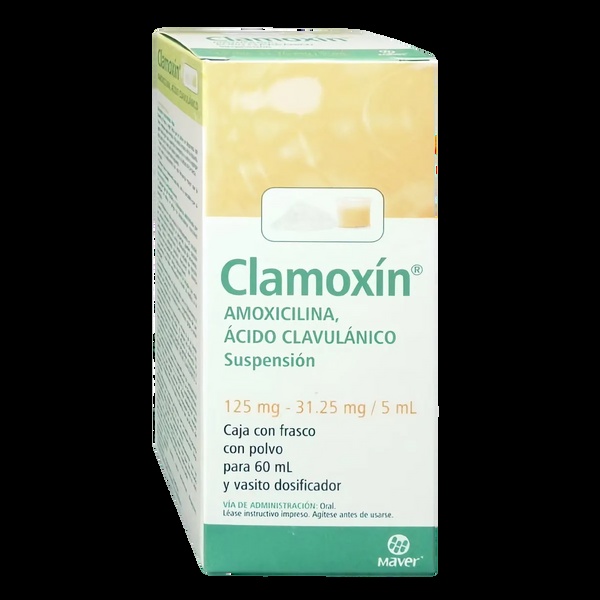



How to use AMOXICILLIN/CLAVULANIC ACID VIATRIS 125 mg/5 mg + 31.25 mg/5 ml ORAL SUSPENSION POWDER
Translated with AI
This page provides general information and does not replace a doctor’s consultation. Always consult a doctor before taking any medication. Seek urgent medical care if symptoms are severe.
Show originalContents of the leaflet
- Introduction
- What is Amoxicillin/Clavulanic Acid Viatris and what is it used for
- What you need to know before starting to take Amoxicillin/Clavulanic Acid Viatris
- How to administer Amoxicillin/Clavulanic Acid Viatris
- Possible adverse effects
- Storage of Amoxicillin/Clavulanic Acid Viatris
- Package Contents and Additional Information
Introduction
Prospect: information for parents or caregivers of children
Amoxicillin/Clavulanic Acid Viatris 125 mg/5 ml + 31.25 mg/5 ml powder for oral suspension EFG
Read the entire prospectus carefully before starting to take the medication, as it contains important information for you.
- Keep this prospectus, as you may need to read it again.
- If you have any doubts, consult your doctor, pharmacist, or nurse.
- This medication is normally only prescribed to babies or children and should not be given to others, even if they have the same symptoms as your child, as it may harm them.
- If your child experiences any adverse effect, consult your doctor, pharmacist, or nurse, even if it is an adverse effect that does not appear in this prospectus. See section 4.
Contents of the prospectus
- What is Amoxicillin/Clavulanic Acid Viatris and what is it used for
- What you need to know before starting to take Amoxicillin/Clavulanic Acid Viatris
- How to administer Amoxicillin/Clavulanic Acid Viatris
- Possible adverse effects
- Storage of Amoxicillin/Clavulanic Acid Viatris
- Package contents and additional information
1. What is Amoxicillin/Clavulanic Acid Viatris and what is it used for
Amoxicillin/Clavulanic Acid Viatris is an antibiotic that eliminates the bacteria that cause infections. It contains two different active principles called amoxicillin and clavulanic acid. Amoxicillin belongs to the group of medications known as "penicillins" that can sometimes lose their effectiveness (become inactive). The other component (clavulanic acid) prevents this from happening.
Antibiotics are used to treat bacterial infections and are not effective in treating viral infections, such as the flu or a cold.
It is essential to follow the instructions regarding dosage, administration interval, and treatment duration indicated by your doctor.
Do not store or reuse this medication. If you have any leftover antibiotic after finishing the treatment, return it to the pharmacy for proper disposal. Do not throw medications down the drain or in the trash.
Amoxicillin/clavulanic acid is used in babies and children to treat the following infections:
- Middle ear and paranasal sinus infections.
- Respiratory tract infections.
- Urinary tract infections.
- Skin and soft tissue infections, including dental infections.
- Bone and joint infections.

2. What you need to know before starting to take Amoxicillin/Clavulanic Acid Viatris
Do not administer Amoxicillin/Clavulanic Acid Viatris to your child:
- If they are allergic to amoxicillin, clavulanic acid, penicillin, or any of the other components of this medication (see section 6).
- If they have ever had a severe allergic reaction to any other antibiotic. This could include a skin rash or rapid swelling of the face, lips, mouth, tongue, or throat.
- If they have ever had liver problems or jaundice (yellowing of the skin) when taking this antibiotic.
→ Do not give amoxicillin/clavulanic acid to your child if any of the above points apply to them.If you are unsure, consult your doctor or pharmacist before starting treatment.
Warnings and precautions
Inform your doctor, pharmacist, or nurse before starting to administer this medication to your child if:
- They have infectious mononucleosis.
- They are receiving treatment for liver or kidney problems.
- They do not urinate regularly.
If you are unsure whether any of the above symptoms affect your child, inform your doctor or pharmacist before taking amoxicillin/clavulanic acid.
In some cases, your doctor may investigate the type of bacteria that causes your child's infection. Depending on the results, your child may receive a different formulation of amoxicillin/clavulanic acid or another medication.
Symptoms to be aware of
Amoxicillin/Clavulanic Acid Viatris may worsen certain existing conditions or cause serious adverse effects. These include allergic reactions, seizures, and inflammation of the large intestine. You should be aware of certain symptoms while your child is taking amoxicillin/clavulanic acid to reduce the risk of problems. See section 4.
Blood and urine tests
If your child is undergoing blood tests (such as red blood cell status or liver function tests) or urine tests (to check glucose levels), inform your doctor or nurse that they are taking amoxicillin/clavulanic acid. This is because amoxicillin/clavulanic acid may alter the results of these types of tests.
Other medications and Amoxicillin/Clavulanic Acid Viatris
Inform your doctor or pharmacist if your child is taking, has recently taken, or may need to take other medications, including those purchased without a prescription and herbal medicines.
If your child is taking allopurinol (used for gout) with amoxicillin/clavulanic acid, they may be more likely to have a skin allergic reaction.
If your child is taking probenecid (used for gout), your doctor may adjust the dose of amoxicillin/clavulanic acid. Concomitant use of probenecid may reduce the excretion of amoxicillin and is not recommended.
If your child is taking anticoagulants (such as warfarin) with amoxicillin/clavulanic acid, more blood tests will be needed.
Amoxicillin/Clavulanic Acid Viatris may affect the mechanism of action of methotrexate (a medication used to treat cancer, severe psoriasis, or rheumatic diseases). Penicillins may reduce the excretion of methotrexate and cause a potential increase in adverse effects.
Amoxicillin/Clavulanic Acid Viatris may affect the functioning of mycophenolate mofetil (a medication used to prevent organ rejection after transplantation).
Pregnancy and breastfeeding
If your daughter is going to take this medication and is pregnant or breastfeeding, thinks she may be pregnant, or plans to become pregnant, consult her doctor or pharmacist before using this medication.
Driving and using machines
Amoxicillin/Clavulanic Acid Viatris may cause adverse effects such as allergic reactions, dizziness, and seizures. If this happens to your child, they should not drive or ride a bicycle and should not use tools or machines.
Amoxicillin/Clavulanic Acid Viatris contains aspartame (E-951), glucose (dextrose), corn maltodextrin, sorbitol (E-420), benzyl alcohol, sulfur dioxide (E-220), benzyl benzoate, and sodium
For every 5 ml dose, this medication contains 8.5 mg of aspartame, 1.8 mg of lemon flavor (which contains glucose (dextrose), sorbitol, benzyl alcohol, and sulfur dioxide), 4.3 mg of peach-apricot flavor (which contains sorbitol, benzyl benzoate, sulfur dioxide, and benzyl alcohol), and 20 mg of orange flavor (which contains corn maltodextrin).
Aspartame is a source of phenylalanine. This may be harmful if your child has phenylketonuria (PKU), a rare genetic disorder in which phenylalanine accumulates because the body cannot eliminate it properly.
If your doctor has told you that your child has an intolerance to certain sugars (such as glucose, dextrose, and maltodextrin), consult with them before taking this medication.
Benzyl alcohol may cause allergic reactions. Benzyl alcohol has been associated with the risk of serious side effects, including respiratory problems (called "gasping syndrome") in young children. Do not give it to your newborn baby (up to 4 weeks old) unless your doctor recommends it. Do not use it for more than one week in young children (under 3 years old) unless your doctor or pharmacist recommends it. Ask your doctor or pharmacist for advice if you are pregnant, breastfeeding, have liver or kidney disease. This is because large amounts of benzyl alcohol can accumulate in the body and cause side effects (called "metabolic acidosis").
In rare cases, sulfur dioxide may cause severe hypersensitivity reactions and bronchospasm.
Benzyl benzoate may increase jaundice (yellowing of the skin and eyes) in newborns (up to 4 weeks old).
This medication contains less than 23 mg of sodium (1 mmol) per tablet, which means it is essentially "sodium-free".
3. How to administer Amoxicillin/Clavulanic Acid Viatris
Follow the administration instructions for this medication exactly as indicated by your doctor or pharmacist. Consult your doctor or pharmacist if you have any doubts.
Use in adults and children over 40 kg
- This medication is not normally recommended for adults and children who weigh more than 40 kg.
Consult your doctor or pharmacist.
Use in children who weigh less than 40 kg
All doses are expressed based on the child's body weight in kilograms.
- Your doctor will advise you on how much Amoxicillin/Clavulanic Acid Viatris to give to your baby or child.
- You will be provided with a plastic dosing spoon. You must use it to give the correct dose to your baby or child.
- Recommended dose - 20 mg/5 mg to 60 mg/15 mg per kilogram of body weight and day, administered in three divided doses.
Patients with kidney and liver problems
- If your child has kidney problems, the dose may be reduced. Your doctor may choose a different formulation or another medication.
- If your child has liver problems, they will have more frequent blood tests to check how their liver is functioning.
How to administer Amoxicillin/Clavulanic Acid Viatris
- Always shake the bottle well before each dose.
- Administer with meals.
- Space out the doses throughout the day, at least 4 hours apart. Do not take 2 doses in 1 hour.
- Do not administer Amoxicillin/Clavulanic Acid Viatris to your child for more than two weeks. If your child is still feeling unwell, they should see a doctor again.
If you administer more Amoxicillin/Clavulanic Acid Viatris than you should
If you give your child too much amoxicillin/clavulanic acid, they may experience symptoms such as stomach upset (nausea, vomiting, or diarrhea), fluid and electrolyte imbalance (muscle tremors or spasms, numbness, or irregular heartbeats or seizures), or crystalluria due to amoxicillin (crystals found in the urine during urine tests). Consult your doctor as soon as possible. Take the bottle to show the doctor. You can also call the Toxicology Information Service, phone 915620420, indicating the medication and the amount taken.
If you forget to administer Amoxicillin/Clavulanic Acid Viatris
If you forget to give your child a dose, give it to them as soon as you remember. Do not give the next dose too soon, wait at least 4 hours before giving the next dose.
Do not give a double dose to make up for forgotten doses.
If your child stops taking Amoxicillin/Clavulanic Acid Viatris
Continue to administer amoxicillin/clavulanic acid to your child until the treatment is finished, even if they are feeling better.
Your child needs to complete the full treatment to help combat the infection. If bacteria survive, the infection will return.
If you have any other doubts about the use of this medication, consult your doctor, pharmacist, or nurse.

4. Possible adverse effects
Like all medications, this medication can cause adverse effects, although not everyone will experience them. The effects described below may occur with this medication.
Contact a doctor immediately if your child experiences any of these symptoms. Stop giving amoxicillin/clavulanic acid:
Allergic reactions:
- Skin rash.
- Inflammation of blood vessels (vasculitis), which can appear as red or purple spots on the skin but can affect other parts of the body.
- Fever, joint pain, swollen glands in the neck, armpits, or groin.
- Rapid swelling of the face, lips, mouth, tongue, or throat, which can cause difficulty swallowing or breathing (angioedema).
- Collapse.
- Chest pain in the context of allergic reactions, which can be a symptom of allergy-induced heart attack (Kounis syndrome).
Severe skin reactions
- Widespread rash with blisters and peeling of the skin, particularly around the mouth, nose, eyes, and genitals (Stevens-Johnson syndrome), and in its most severe form, causing widespread peeling of the skin (more than 30% of the body surface - toxic epidermal necrolysis).
- Widespread rash with small blisters and pus (bullous exfoliative dermatitis).
- Red rash with bumps under the skin and blisters (pustular exanthematous eruption).
- Flu-like symptoms with skin rash, fever, gland inflammation, and abnormal blood test results (including an increase in white blood cells (eosinophilia) and elevated liver enzymes (drug reaction with eosinophilia and systemic symptoms (DRESS))).
Other possible serious adverse effects
- Inflammation of the large intestine, which causes watery diarrhea, usually with blood and mucus, stomach pain, and/or fever.
-Acute pancreatitis:
If your child has severe and persistent stomach pain, this could be a sign of acute pancreatitis.
-Drug-induced enterocolitis syndrome (DIES):
- DIES has been reported mainly in children who receive amoxicillin/clavulanic acid. It is a certain type of allergic reaction with the main symptom of repeated vomiting (1-4 hours after taking the medication). Other symptoms may include abdominal pain, lethargy, diarrhea, and low blood pressure.
- Inflammation of the liver (hepatitis).
- Jaundice, caused by an increase in bilirubin in the blood (a substance produced by the liver), which can cause the skin and whites of the eyes to turn yellow.
- Seizures (in patients taking high doses of amoxicillin/clavulanic acid or with kidney problems).
- Severe headache, stiff neck, with abnormal sensitivity to light, feeling and being sick, which can be caused by inflammation of the protective covering of the brain and spinal cord (aseptic meningitis).
- Feeling tired and short of breath with pale skin, which can be caused by a low number of red blood cells (hemolytic anemia).
- Inflammation of the kidney ducts.
- Increased risk of infections, such as sore throat, mouth ulcers, fever, which can be caused by a severe reduction in the number of white blood cells in the blood.
Contact your doctor as soon as possiblefor advice if your child has these symptoms.
Other possible adverse effects
Very common(may affect more than 1 in 10 people)
- Diarrhea (in adults).
Common(may affect up to 1 in 10 people)
- Thrush (Candida - fungal infection in the vagina, mouth, or mucous membranes).
- Nausea, especially when taking high doses.
→ if this happens, take amoxicillin/clavulanic acid with meals
- Vomiting.
- Diarrhea (in children).
Uncommon(may affect up to 1 in 100 people)
- Skin rash, itching.
- Increased itching (urticarial rash).
- Indigestion.
- Dizziness.
- Headache.
Uncommon adverse effects that may appear in blood tests:
- Increased levels of certain substances (enzymes) produced by the liver.
Rare(may affect up to 1 in 1,000 people)
- Skin rash that forms blisters that look like small targets (central dark spot surrounded by a paler area, with a dark ring around the edge - erythema multiforme).
Rare adverse effects that may appear in blood tests:
- Low count of cells involved in blood clotting.
Frequency not known(cannot be estimated from available data)
Other adverse effects that have occurred in a very small number of patients and whose exact frequency is unknown.
- Delayed blood clotting.
- Hyperactivity.
- Black hairy tongue.
- Stained teeth (in children), which usually disappears with brushing.
-Rash with blisters arranged in a circle with a central crust or like a string of pearls (linear IgA disease).
Adverse effects that may appear in blood or urine tests:
- Crystals in the urine that cause acute kidney injury.
Reporting adverse effects:
If you experience any type of adverse effect, consult your doctor or pharmacist, even if it is a possible adverse effect that does not appear in this prospectus. You can also report them directly through the Spanish Pharmacovigilance System for Human Use Medicines: https://www.notificaram.es. By reporting adverse effects, you can contribute to providing more information on the safety of this medication.
5. Storage of Amoxicillin/Clavulanic Acid Viatris
Keep this medicine out of the sight and reach of children.
Before reconstitution: Do not store above 25°C.
After reconstitution: Store in the refrigerator (between 2°C and 8°C). Use within 7 days of reconstitution. Indicate the reconstitution date on the box and the label of the bottle.
Do not use this medicine after the expiration date stated on the box after CAD or EXP. The expiration date is the last day of the indicated month.
Medicines should not be disposed of via wastewater or household waste. Deposit the packaging and any unused medicines at the pharmacy's SIGRE Point. If in doubt, ask your pharmacist how to dispose of the packaging and any unused medicines. This will help protect the environment.
6. Package Contents and Additional Information
Composition ofAmoxicillin/Clavulanic Acid Viatris
The active ingredients are amoxicillin and clavulanic acid
- 5 ml contain 125 mg of amoxicillin, equivalent to 143.5 mg of amoxicillin trihydrate, and 31.25 mg of clavulanic acid, equivalent to 37.23 mg of potassium clavulanate.
- The other ingredients are: anhydrous citric acid, anhydrous trisodium citrate, aspartame (E-951), talc, guar gum, anhydrous silicon dioxide, lemon flavor (contains glucose (dextrose), sorbitol (E-420), benzyl alcohol, sulfur dioxide (E-220), and sodium), peach-apricot flavor (contains sorbitol (E-420), benzyl benzoate, sulfur dioxide (E-220), benzyl alcohol, and sodium), and orange flavor (contains corn maltodextrin).
See section 2, "Amoxicillin/Clavulanic Acid Viatris contains aspartame (E-951), glucose (dextrose), corn maltodextrin, sorbitol (E-420), benzyl alcohol, sulfur dioxide (E-220), benzyl benzoate, and sodium".
Appearance and Package Contents of the Product
Colorless oral suspension powder.
Bottle with powder for preparing 60 ml of oral suspension.
2 bottles with powder for preparing 2 x 60 ml of oral suspension.
Bottle with powder for preparing 100 ml of oral suspension.
Bottle with powder for preparing 120 ml of oral suspension.
Only certain package sizes may be marketed.
Marketing Authorization Holder and Manufacturer
Marketing Authorization Holder:
Viatris Limited
Damastown Industrial Park
Mulhuddart, Dublin 15
Dublin
Ireland
Manufacturer:
Sandoz GmbH,
Biochemiestrasse 10,
A-6250 Kundl,
Austria.
or
McDermott Laboratories Ltd, t/a Gerard Laboratories,
35/36 Baldoyle Industrial Estate,
Grange Road,
Dublin – 13,
Ireland.
You can request more information about this medicine by contacting the local representative of the marketing authorization holder:
Viatris Pharmaceuticals, S.L.U.
C/ General Aranaz, 86
28027 - Madrid
Spain
This medicine is authorized in the EEA Member States under the following names:
Germany Amoxidura Plus Saft 125/31.25mg
Belgium Amoxiclav Mylan 125 mg/ 5 ml, poeder voor orale suspensie
Spain Amoxicillin/Clavulanic Acid Viatris 125 mg/5 ml + 31.25 mg/5 ml powder for oral suspension EFG
Netherlands Amoxicilline/Clavulaanzuur Mylan (poeder ter bereiding van) 125 mg/31,25 mg per 5 ml
Date of the last revision of this leaflet:December 2023
Detailed and updated information on this medicine is available on the website of the Spanish Agency for Medicines and Health Products (AEMPS) https://www.aemps.gob.es/
Reconstitution Instructions
After opening the screw cap, ensure that the seal of the bottle cap is intact and firmly attached to the edge of the bottle. Do not use it if it is not intact. Shake the bottle to loosen the adhered powder. Add the volume of water (as indicated below), invert the contents, and shake well. Do not use the reconstituted suspension if the color is not off-white.
Another possibility is to shake the bottle to loosen the adhered powder and then fill it with water up to just below the line on the bottle or label. Invert the contents and shake well, then add water to exactly the line. Invert the contents and shake well again.
Concentration | Volume of water to be added for reconstitution (ml) | Final volume of the reconstituted oral suspension (ml) |
125 mg/31.25 mg per 5 ml | 57 | 60 |
95 | 100 | |
114 | 120 |
Shake the bottle well before administering each dose.
- Country of registration
- Dosage formORAL SOLUTION/SUSPENSION, 25 mg of amoxicillin/6.25 mg of clavulanic acid
- ATC codeJ01CR02
- Average pharmacy price3.5 EUR
- Active substance
- Prescription requiredYes
- Manufacturer
- This information is for reference only and does not constitute medical advice. Always consult a doctor before taking any medication. Oladoctor is not responsible for medical decisions based on this content.
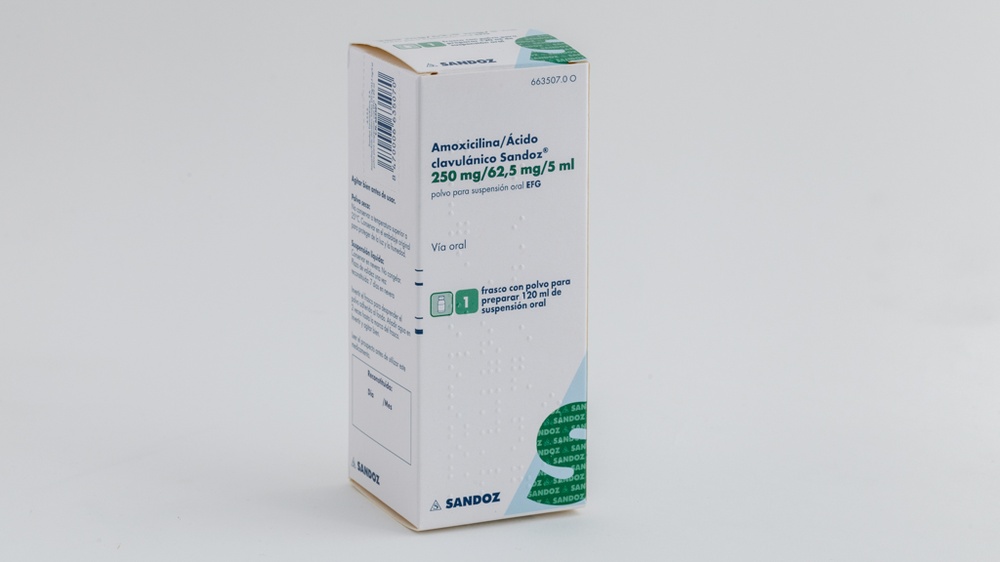
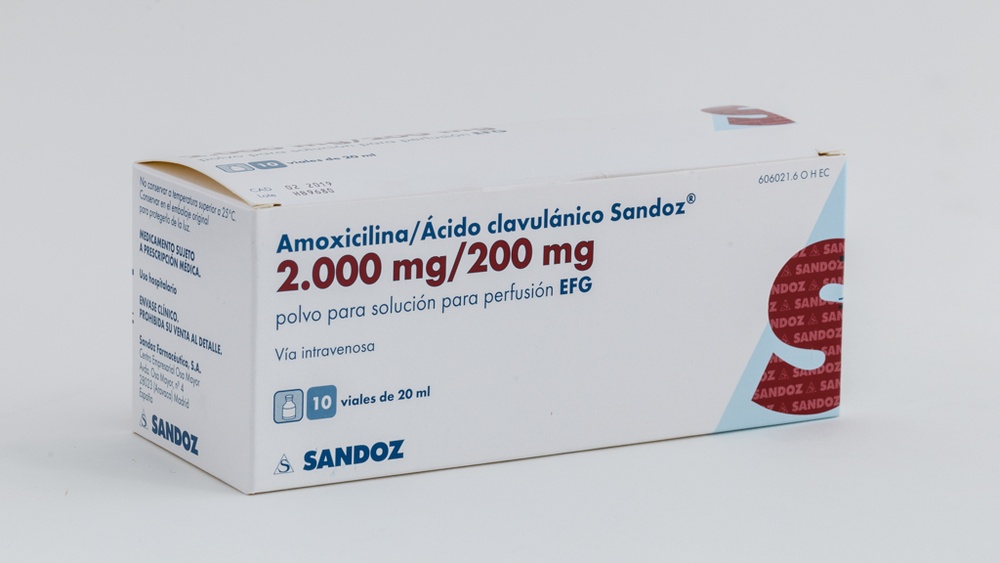
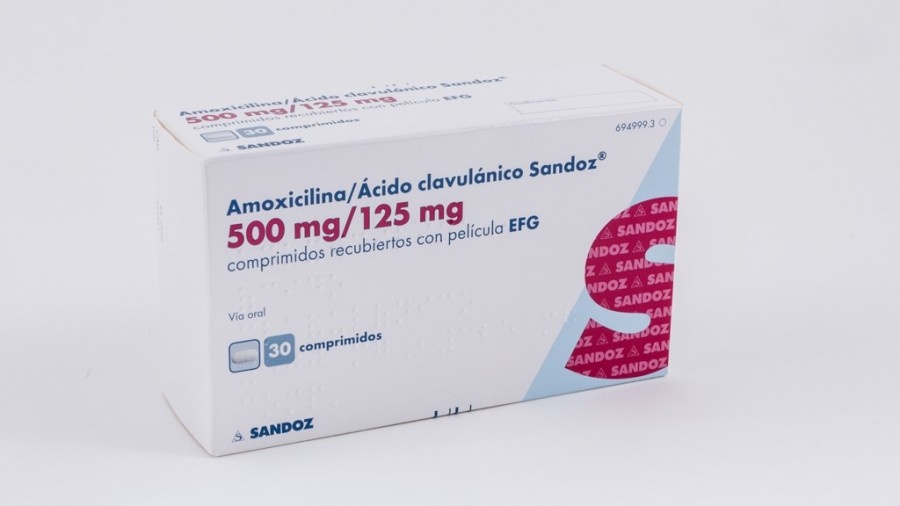
- Alternatives to AMOXICILLIN/CLAVULANIC ACID VIATRIS 125 mg/5 mg + 31.25 mg/5 ml ORAL SUSPENSION POWDERDosage form: ORAL SOLUTION/SUSPENSION, 250 mg amoxicillin/62.5 mg clavulanic acidActive substance: amoxicillin and beta-lactamase inhibitorManufacturer: Sandoz Farmaceutica S.A.Prescription requiredDosage form: INJECTABLE PERFUSION, 2 g / 200 mgActive substance: amoxicillin and beta-lactamase inhibitorManufacturer: Laboratorio Reig Jofre, S.A.Prescription requiredDosage form: TABLET, 500 mg amoxicillin/125 mg clavulanic acidActive substance: amoxicillin and beta-lactamase inhibitorManufacturer: Sun Pharmaceutical Industries (Europe) B.V.Prescription required
Online doctors for AMOXICILLIN/CLAVULANIC ACID VIATRIS 125 mg/5 mg + 31.25 mg/5 ml ORAL SUSPENSION POWDER
Discuss questions about AMOXICILLIN/CLAVULANIC ACID VIATRIS 125 mg/5 mg + 31.25 mg/5 ml ORAL SUSPENSION POWDER, including use, safety considerations and prescription review, subject to medical assessment and local regulations.








.jpg)


Frequently Asked Questions
