






How to use ALMAX 500 mg CHEWABLE TABLETS
Translated with AI
This page provides general information and does not replace a doctor’s consultation. Always consult a doctor before taking any medication. Seek urgent medical care if symptoms are severe.
Show originalContents of the leaflet
Introduction
Package Leaflet: Information for the User
Almax 500 mg Chewable Tablets
Almagate
Read the entire package leaflet carefully before starting to take this medication, as it contains important information for you.
Follow the administration instructions for the medication contained in this package leaflet or as indicated by your doctor, pharmacist, or nurse.
- Keep this package leaflet, as you may need to read it again.
- If you need advice or more information, consult your pharmacist.
- If you experience side effects, consult your doctor, pharmacist, or nurse, even if they are side effects not listed in this package leaflet. See section 4.
- You should consult a doctor if your symptoms worsen or do not improve after 14 days.
Contents of the Package Leaflet:
- What Almax is and what it is used for
- What you need to know before taking Almax
- How to take Almax
- Possible side effects
- Storage of Almax
- Package Contents and Additional Information
1. What Almax is and what it is used for
Almax belongs to a group of medications called antacids, which are compounds that act by neutralizing excess stomach acid.
It is indicated for the relief and symptomatic treatment of heartburn and stomach acid in adults and children over 12 years old.
You should consult a doctor if your symptoms worsen or do not improve after 14 days.

2. What you need to know before taking Almax
Do not take Almax
- If you are allergic to almagate or any of the other components of this medication (listed in section 6).
- If you have Alzheimer's disease.
- If you have undiagnosed digestive tract bleeding, hemorrhoids, fluid retention (edema), liver complications during pregnancy (toxemia of pregnancy), or diarrhea.
Warnings and Precautions
Consult your doctor, pharmacist, or nurse before starting to take Almax:
- If you have mild or moderate kidney disease, as aluminum and magnesium ions can accumulate in the body over time. In this case, your doctor may recommend lower doses. Almax is not recommended in severe kidney failure.
- If you are on a low-phosphorus diet, have diarrhea, malabsorption, or are severely debilitated, as aluminum salts reduce phosphorus absorption, which can cause, especially with prolonged treatment, a decrease in blood phosphate levels (loss of appetite, muscle weakness, general malaise, etc.) and insufficient bone mineralization (osteomalacia).
- If you are an elderly patient, as the continued use of antacids containing aluminum can worsen existing bone disease (osteoporosis and osteomalacia) due to reduced phosphorus and calcium levels.
Inform your doctor if you experience any symptoms that may indicate digestive tract bleeding, such as vomiting blood or black stools.
Children and Adolescents
Antacids should not be given to children under 12 years old, as they may mask other existing conditions (e.g., appendicitis). In younger children, there is a risk of increased magnesium levels in the blood or aluminum toxicity, especially if they are dehydrated or have kidney disease.
Use of Other Medications
Inform your doctor or pharmacist if you are using, have recently used, or may need to use any other medication.
Antacids can alter the absorption of many medications, so, in general, Almax should be taken 2-3 hours apart from the administration of any other medication.
It is especially important to inform your doctor if you are taking any of the following medications:
- Non-steroidal anti-inflammatory drugs (medications used to treat pain and inflammation, e.g., flufenamic acid or mefenamic acid, indomethacin)
- Anti-ulcer medications (medications for treating stomach ulcers or duodenal ulcers and heartburn, e.g., cimetidine, famotidine, ranitidine)
- Digitalis (medications for treating heart rhythm disorders, e.g., digoxin, digitoxin)
- Antipsychotics (medications for treating behavioral disorders and psychiatric symptoms, e.g., chlorpromazine)
- Lansoprazole (medication for treating stomach ulcers)
- Corticosteroids (prednisone)
- Gabapentin (medication for treating epilepsy)
- Ketoconazole (medication for treating fungal infections)
- Medications for treating infections, such as penicillamine, quinolones (ciprofloxacin), tetracyclines (chloretracycline, demeclocycline, doxycycline)
- Iron salts (iron sulfate)
as Almax may reduce the absorption of the above-mentioned medications due to changes in stomach conditions or the formation of poorly soluble complexes.
- Quinidine (medication for treating heart rhythm disorders), as Almax may increase its toxicity by reducing its elimination due to increased urine pH.
- Salicylates (medications for relieving pain and reducing fever and inflammation, e.g., acetylsalicylic acid), as Almax may reduce their concentrations due to increased elimination caused by increased urine pH, especially with high doses of salicylate.
Consult your doctor if you are going to have a stomach composition analysis, as Almax may alter the test results.
Pregnancy, Breastfeeding, and Fertility
If you are pregnant or breastfeeding, think you may be pregnant, or plan to become pregnant, consult your doctor or pharmacist before using this medication.
Pregnancy
Chronic or excessive use of Almax should be avoided during pregnancy due to the risk of fetal/newborn alterations.
If you need prolonged treatment, consult your doctor, who will indicate the appropriate treatment.
If you are pregnant or think you may be pregnant, consult your doctor or pharmacist before taking any medication. Medication use during pregnancy can be hazardous to the embryo or fetus and should be monitored by your doctor. |
Breastfeeding
Chronic or excessive use of Almax should be avoided.
Although small amounts of aluminum and magnesium can be eliminated through breast milk in mothers treated with Almax, their concentration is not high enough to cause adverse effects in the infant.
Driving and Using Machines
Almax does not affect your ability to drive or operate machinery.
3. How to Take Almax
Follow the administration instructions for the medication contained in this package leaflet or as indicated by your doctor, pharmacist, or nurse. If in doubt, ask your doctor, pharmacist, or nurse.
Use in Adults and Children Over 12 Years Old:The recommended dose is 2 tablets (1 gram of almagate) three times a day, preferably 30 minutes to 1 hour after meals. If symptoms recur, an additional dose can be taken before bedtime.
Do not exceed 8 grams per day (16 tablets).
Use in Elderly Patients:No dose adjustment is necessary (see "Warnings and Precautions" section).
Use in Patients with Kidney Disease:If you have severe kidney failure, Almax is not recommended (see "Warnings and Precautions" section).
If you have mild or moderate kidney disease, your doctor may recommend lower doses (see "Warnings and Precautions" section).
Almax should be taken orally.
The tablets can be chewed or dissolved in the mouth.
If You Take More Almax Than You Should
At the recommended doses, no intoxication with this medication is expected. In patients with a low-phosphorus diet and/or prolonged treatment with high doses, a decrease in blood phosphate levels and insufficient bone mineralization may occur.
If you have taken more Almax than you should, consult your doctor or pharmacist immediately, or call the Toxicology Information Service, phone 915 620 420, indicating the medication and the amount taken.
If You Forget to Take Almax
Do not take a double dose to make up for forgotten doses. Take the forgotten dose when you can if the time elapsed is short, or wait for the next dose if there are no symptoms, in which case you can take it before. Take the following doses with the indicated time interval between doses.
If you have any other questions about the use of this medication, ask your doctor, pharmacist, or nurse.

4. Possible Side Effects
Like all medications, Almax can cause side effects, although not everyone will experience them.
Due to the low intestinal absorption, the side effects of almagate are rare. Occasionally (no data are available to estimate the frequency), diarrhea has been reported, which usually disappears after treatment is discontinued.
Reporting Side Effects
If you experience any type of side effect, consult your doctor, pharmacist, or nurse, even if it is a side effect not listed in this package leaflet. You can also report them directly through the Spanish Medication Surveillance System for Human Use, Website: www.notificaram.es. By reporting side effects, you can contribute to providing more information on the safety of this medication.
5. Storage of Almax
Keep this medication out of the sight and reach of children.
No special storage conditions are required.
Do not use this medication after the expiration date shown on the package after CAD. The expiration date is the last day of the month indicated.
Medications should not be disposed of through wastewater or household waste. Deposit the packaging and any unused medication in the pharmacy's SIGRE collection point. If in doubt, ask your pharmacist how to dispose of the packaging and any unused medication. This will help protect the environment.
6. Package Contents and Additional Information
Composition of Almax 500 mg Chewable Tablets
- The active ingredient is almagate. Each tablet contains 500 mg of almagate.
- The other ingredients are: mannitol (E-421), povidone (E-1201), potato starch, calcium saccharin, ammonium glycyrrhizate, magnesium stearate, and peppermint flavor.
Appearance of the Product and Package Contents
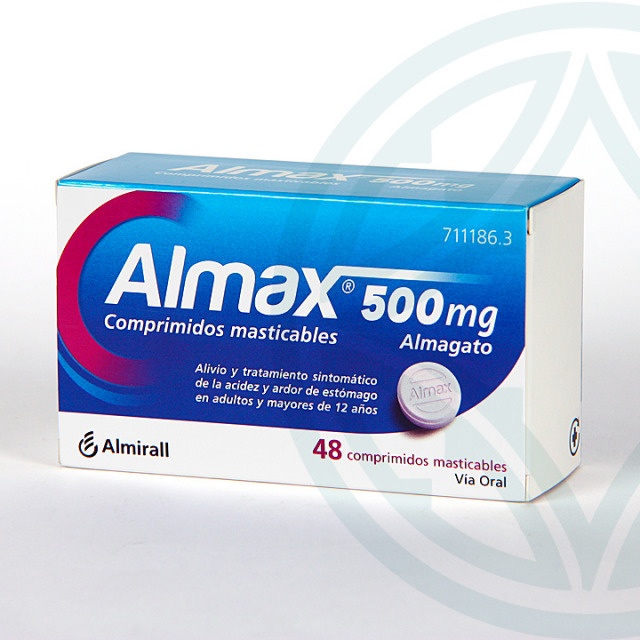
Almax is presented in the form of round, flat tablets identified on one side with "almax", white-yellowish in color, with a mint flavor and odor. Each box contains 18, 24, 48, or 54 tablets, arranged in plates of 2 or 8 units.
Marketing Authorization Holder and Manufacturer
Marketing Authorization Holder
Almirall, S.A.
General Mitre, 151
08022 – Barcelona (Spain).
Manufacturer
Industrias Farmacéuticas Almirall, S.A.
Ctra. de Martorell, 41-61
08740 Sant Andreu de la Barca – Barcelona (Spain).
This package leaflet was approved in October 2019
Detailed and updated information on this medication is available on the website of the Spanish Agency for Medicines and Health Products (AEMPS) http://www.aemps.gob.es/
-

- Country of registration
- Dosage formCHEWABLE TABLET, 500 mg
- ATC codeA02AD03
- Active substance
- Prescription requiredNo
- Manufacturer
- This information is for reference only and does not constitute medical advice. Always consult a doctor before taking any medication. Oladoctor is not responsible for medical decisions based on this content.
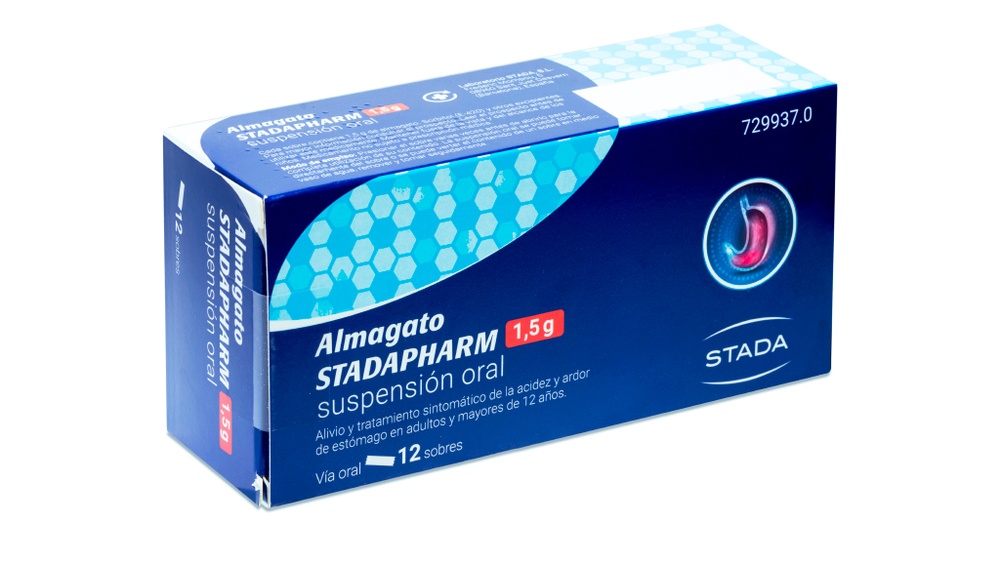
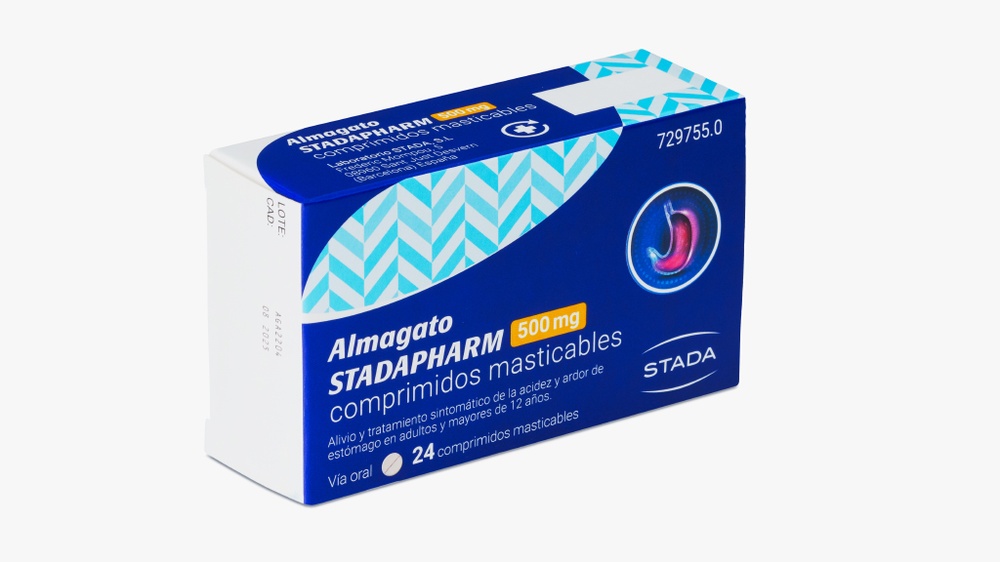
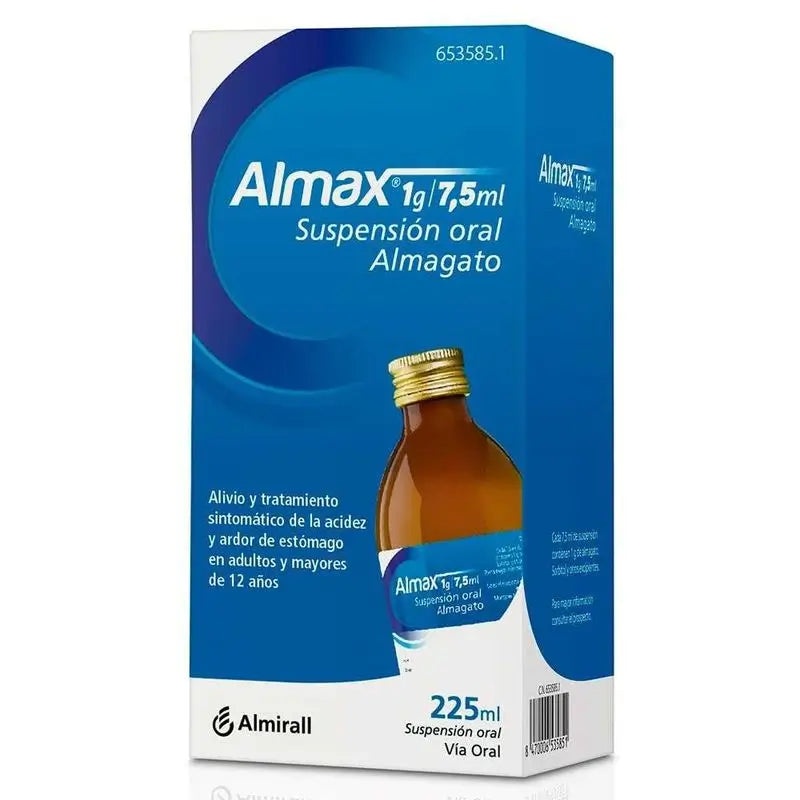
- Alternatives to ALMAX 500 mg CHEWABLE TABLETSDosage form: ORAL SOLUTION/SUSPENSION, 1.5 gActive substance: almagateManufacturer: Laboratorio Stada S.L.Prescription not requiredDosage form: CHEWABLE TABLET, 500 mgActive substance: almagateManufacturer: Laboratorio Stada S.L.Prescription not requiredDosage form: ORAL SOLUTION/SUSPENSION, 13.3 g almagate/100 mlActive substance: almagateManufacturer: Almirall S.A.Prescription not required
Online doctors for ALMAX 500 mg CHEWABLE TABLETS
Discuss questions about ALMAX 500 mg CHEWABLE TABLETS, including use, safety considerations and prescription review, subject to medical assessment and local regulations.









Get ALMAX 500 mg CHEWABLE TABLETS Prescription Online
Fill in a 2-min form
Tell us your symptoms, history, and what medicine you're requesting.
Pick a doctor or let us assign
Choose a specialist or we'll match you with the next available doctor.
Doctor reviews your case
Usually within 30 minutes. They may ask follow-up questions via chat.
Collect from any pharmacy
Electronic prescription sent to your email — valid across Spain.
Frequently Asked Questions
ALMAX 500 mg CHEWABLE TABLETS does not require a prescription in Spain. You can check with a doctor online whether this medicine may be appropriate for your situation.
The active ingredient in ALMAX 500 mg CHEWABLE TABLETS is almagate. This information helps identify medicines with the same composition but different brand names.
ALMAX 500 mg CHEWABLE TABLETS is manufactured by Almirall S.A.. Pharmacy brands and packaging may differ depending on the distributor.
Doctors such as Family doctors, Psychiatrists, Dermatologists, Cardiologists, Endocrinologists, Gastroenterologists, Pulmonologists, Nephrologists, Rheumatologists, Hematologists, Infectious disease physicians, Allergists, Geriatricians, Paediatricians, Oncologists may assess whether ALMAX 500 mg CHEWABLE TABLETS is appropriate, depending on your situation and local regulations. You can book an online consultation to discuss your symptoms and possible next steps.
Spain has a well-developed healthcare infrastructure across major cities such as Madrid, Barcelona, Valencia, and Seville. Pharmacies are widely available and operate under strict regulations, ensuring access to prescribed medications.
You can buy ALMAX 500 mg CHEWABLE TABLETS in Madrid, Barcelona, Seville, or Valencia at any local pharmacy with a valid prescription.
To obtain a prescription, you can use Oladoctor:
Other medicines with the same active substance (almagate) include ALMAGATO STADAPHARM 1.5 G ORAL SUSPENSION, ALMAGATO STADAPHARM 500 MG CHEWABLE TABLETS, ALMAX 1g/7.5ml ORAL SUSPENSION. These may have different brand names or formulations but contain the same therapeutic ingredient. Always consult a doctor before switching or starting a new medicine.
