


Acido 4 mg/5 ml injectable perfusión

Prescription review online
A doctor will review your case and decide whether a prescription is medically appropriate.

Talk to a doctor about this medicine
Discuss your symptoms and possible next steps in a quick online consultation.



How to use ZOLEDRONIC ACID TILLOMED 4 mg/5 ml CONCENTRATE FOR INFUSION SOLUTION
Contents of the leaflet
- Introduction
- What is Zoledronic Acid Tillomed and what is it used for
- What you need to know before you are given Zoledronic Acid Tillomed
- How Zoledronic Acid Tillomed is used
- Possible side effects
- Storage of Zoledronic Acid Tillomed
- Container contents and additional information
Introduction
Package Leaflet: Information for the Patient
Zoledronic Acid Tillomed 4 mg/5 ml Concentrate for Solution for Infusion EFG
Zoledronic Acid
Read all of this leaflet carefully before you are given this medicine because it contains important information for you.
???????Keep this leaflet, you may need to read it again.
? If you have any further questions, ask your doctor, pharmacist, or nurse.
? If you experience any side effects, talk to your doctor, pharmacist, or nurse, even if it is not listed in this leaflet. See section 4.
Contents of the pack
- What is Zoledronic Acid Tillomed and what is it used for
- What you need to know before you are given Zoledronic Acid Tillomed
- How Zoledronic Acid Tillomed is used
- Possible side effects
- Storage of Zoledronic Acid Tillomed
- Contents of the pack and further information
1. What is Zoledronic Acid Tillomed and what is it used for
The active substance of Zoledronic Acid Tillomed is zoledronic acid, which belongs to a group of substances called bisphosphonates. Zoledronic acid works by binding to bone and reducing the rate of bone turnover. It is used to:
- Prevent bone complications, e.g. fractures, in adult patients with bone metastases (spread of cancer from the original site to the bone)
- Reduce the amount of calciumin the blood in adult patients where it is too high due to the presence of a tumor. Tumors can accelerate normal bone turnover, resulting in increased release of calcium from the bone. This condition is known as tumor-induced hypercalcemia (TIH).

Not sure if this medicine is right for you?
Discuss your symptoms and treatment with a doctor online.
2. What you need to know before you are given Zoledronic Acid Tillomed
Follow carefully all instructions given to you by your doctor.
Your doctor will perform blood tests before you start treatment with Zoledronic Acid Tillomed and will monitor your response to treatment at regular intervals.
Zoledronic Acid Tillomed should not be given to you:
???????if you are breast-feeding.
? if you are allergic to zoledronic acid, other bisphosphonates (the group of substances to which Zoledronic Acid Tillomed belongs), or any of the other ingredients of this medicine (listed in section 6).
Warnings and precautions
Tell your doctor before Zoledronic Acid Tillomed is given to you:
??????if you have or have had a kidney problem.
? if you have or have had pain, swelling, or numbnessof the jaw, or a feeling of heaviness in the jaw or a tooth becomes loose. Your doctor may recommend that you have a dental check-up before starting treatment with Zoledronic Acid Tillomed.
? if you are receiving dental treatmentor are going to undergo dental surgery, inform your dentist that you are being treated with Zoledronic Acid Tillomed and inform your doctor about your dental treatment.
While being treated with Zoledronic Acid Tillomed, you should maintain good oral hygiene (including regular tooth brushing) and undergo routine dental check-ups.
Contact your doctor and dentist immediately if you experience any problems with your mouth or teeth, such as tooth loss, pain, or swelling, or difficulty healing of mouth or jaw ulcers, or discharge, as these may be signs of a condition called osteonecrosis of the jaw.
Patients who are receiving chemotherapy and/or radiotherapy, who are taking corticosteroids, who are undergoing dental surgery, who do not receive routine dental care, who have gum disease, who are smokers, or who have received previous treatment with a bisphosphonate (used to treat or prevent bone disorders) may be at higher risk of developing osteonecrosis of the jaw.
Reduced levels of calcium in the blood (hypocalcemia) have been described, sometimes presenting with muscle cramps, dry skin, and a burning sensation, in patients who have received Zoledronic Acid Tillomed. Irregular heart rhythm (cardiac arrhythmia), seizures, spasms, and involuntary muscle contractions (tetany) secondary to severe hypocalcemia have been described. In some cases, hypocalcemia can be potentially life-threatening. If you have any of these conditions, inform your doctor immediately. If you have pre-existing hypocalcemia, it should be corrected before you receive the first dose of Zoledronic Acid Tillomed. You will be given adequate calcium and vitamin D supplements.
Patients aged 65 and over
Zoledronic Acid Tillomed can be given to people aged 65 and over. There is no evidence to suggest that special precautions are needed.
Children and adolescents
Zoledronic Acid Tillomed is not recommended for use in adolescents and children under 18 years.
Using Zoledronic Acid Tillomed with other medicines
Tell your doctor if you are using, have recently used, or might use any other medicines. It is especially important that you tell your doctor if you are also taking:
? Aminoglycosides (medicines used to treat severe infections), calcitonin (a type of medicine used to treat postmenopausal osteoporosis and hypercalcemia), loop diuretics (a type of medicine used to treat high blood pressure or edema), or other medicines that lower calcium levels, as the combination of these with bisphosphonates may significantly lower blood calcium levels.
? Thalidomide (a medicine used to treat a type of blood cancer that affects the bone) or any other medicine that may harm the kidneys.
? Aclasta (a medicine that also contains zoledronic acid and is used to treat osteoporosis and other non-cancerous bone diseases), or any other bisphosphonate, as the combined effects of these medicines given with Zoledronic Acid Tillomed are unknown.
? Anti-angiogenic medicines (used to treat cancer), as the combination of these medicines with Zoledronic Acid Tillomed has been associated with a higher risk of osteonecrosis of the jaw (ONJ).
Pregnancy and breast-feeding
Zoledronic Acid Tillomed should not be given to you if you are pregnant or breast-feeding. If you are pregnant or breast-feeding, think you may be pregnant, or plan to become pregnant, ask your doctor for advice before being given this medicine.
Driving and using machines
In rare cases, drowsiness and fatigue have been observed with the use of Zoledronic Acid Tillomed. Therefore, you should be careful when driving, using machines, or performing other activities that require a lot of attention.
Zoledronic Acid Tillomed contains sodium
This medicine contains less than 1 mmol of sodium (23 mg) per 5 ml of Zoledronic Acid Tillomed, i.e., essentially "sodium-free". If your doctor uses a saline solution to dilute Zoledronic Acid Tillomed, the amount of sodium you receive would be higher.
3. How Zoledronic Acid Tillomed is used
Zoledronic Acid Tillomed should only be administered by healthcare professionals experienced in the administration of intravenous bisphosphonates.
? Your doctor will recommend that you drink a sufficient amount of water before each treatment to help prevent dehydration.
? Follow carefully all other instructions given to you by your doctor, pharmacist, or nurse.
How much Zoledronic Acid Tillomed is given
?? The usual single dose given is 4 mg.
? If you have a kidney problem, your doctor will give you a lower dose depending on the severity of your kidney problem.
How often Zoledronic Acid Tillomed is given
?? If you are being treated to prevent bone complications due to bone metastases, you will be given a Zoledronic Acid Tillomed infusion every 3 to 4 weeks.
? If you are being treated to reduce the amount of calcium in the blood, you will usually only be given a single Zoledronic Acid Tillomed infusion.
How Zoledronic Acid Tillomed is given
?? Zoledronic Acid Tillomed is given as an intravenous infusion (drip) that should last at least 15 minutes and should be given as a single intravenous solution in a separate infusion line.
Patients who do not have high levels of calcium in the blood will also be prescribed calcium and vitamin D supplements to take every day.
If you are given too much Zoledronic Acid Tillomed
If you have received doses higher than recommended, you should be closely monitored by your doctor. This is because you may develop changes in blood electrolyte levels (e.g., abnormal calcium, phosphorus, and magnesium levels) and/or changes in kidney function, including severe kidney failure. If your calcium level becomes too low, you may need to be given a calcium supplement by infusion.
In case of overdose or accidental ingestion, contact the Poison Control Service, phone: (91) 5620420, indicating the medicine and the amount ingested.
Bring the medicine packaging with you.
If you have any further questions on the use of this medicine, ask your doctor, pharmacist, or nurse.

Started taking the medicine and have questions?
Discuss your symptoms and treatment with a doctor online.
4. Possible side effects
Like all medicines, this medicine can cause side effects, although not everybody gets them. The most common are usually mild and will probably disappear after a short period of time.
Tell your doctor immediately if you experience any of the following side effects:
Common (may affect up to 1 in 10 people):
? Severe kidney impairment (usually determined by your doctor with a specific blood test).
? Low calcium levels in the blood.
Uncommon (may affect up to 1 in 100 people):
? Pain in the mouth, teeth, and/or jaw, swelling, or difficulty healing of ulcers in the mouth or jaw, discharge, numbness, or a feeling of heaviness in the jaw, or tooth loss. These may be signs of bone damage in the jaw (osteonecrosis). Tell your doctor and dentist immediately if you experience these symptoms while being treated with Zoledronic Acid Tillomed or after stopping treatment.
? Irregular heart rhythm (atrial fibrillation) has been observed in patients treated with zoledronic acid for postmenopausal osteoporosis. It is currently unknown whether zoledronic acid causes this irregular heart rhythm, but you should inform your doctor if you experience these symptoms after receiving zoledronic acid.
? Severe allergic reaction: difficulty breathing, swelling, especially of the face and throat.
Rare (may affect up to 1 in 1,000 people):
? As a result of low calcium levels: irregular heart rhythm (cardiac arrhythmia; secondary to hypocalcemia).
? A kidney function disorder called Fanconi syndrome (usually detected by your doctor with a urine test).
Very rare (may affect up to 1 in 10,000 people):
? As a result of low calcium levels: seizures, numbness, and tetany (secondary to hypocalcemia).
? Ask your doctor if you have ear pain, discharge from the ear, or an ear infection. These could be symptoms of damage to the bones of the ear.
?? Osteonecrosis has also been rarely observed in other bones, especially in the hip or thigh. Inform your doctor immediately if you have symptoms such as pain, weakness, or stiffness while receiving treatment with zoledronic acid or after stopping treatment.
Frequency not known: cannot be estimated from the available data
- Kidney inflammation (tubulointerstitial nephritis): signs and symptoms may include reduced urine output, blood in the urine, nausea, feeling unwell.
Tell your doctor as soon as possible about any of the following side effects:
Very common (may affect more than 1 in 10 people):
? Low phosphate levels in the blood.
Common (may affect up to 1 in 10 people):
? Headache and flu-like symptoms that include fever, fatigue, weakness, drowsiness, chills, and pain in bones, joints, and/or muscles. In most cases, no specific treatment is required, and the symptoms disappear after a short period (a few hours or days).
? Gastrointestinal reactions such as nausea and vomiting, as well as loss of appetite.
? Conjunctivitis.
? Low red blood cell count (anemia).
Uncommon (may affect up to 1 in 100 people):
? Hypersensitivity reactions.
? Low blood pressure.
? Chest pain.
? Skin reactions (redness and swelling) at the infusion site, rash, itching.
? High blood pressure, difficulty breathing, dizziness, anxiety, sleep disorders, taste disturbances, tremors, tingling or numbness of the hands or feet, diarrhea, constipation, abdominal pain, dry mouth.
? Decreased white blood cell and platelet count.
? Low magnesium and potassium levels in the blood. Your doctor will monitor and take any necessary measures.
? Weight gain.
? Increased sweating.
? Numbness.
? Blurred vision, tearing, sensitivity of the eyes to light.
? Sudden cooling with fainting, weakness, or collapse.
? Difficulty breathing with wheezing or coughing.
? Hives.
Rare (may affect up to 1 in 1,000 people):
? Decreased heart rate.
? Confusion.
? Atypical fractures of the thigh bone (femur) that can occur rarely, especially in patients on long-term treatment for osteoporosis. Inform your doctor if you notice pain, weakness, or discomfort in the thigh, hip, or groin, as these may be early signs of a possible fracture of the femur.
? Interstitial lung disease (inflammation of the tissue surrounding the air sacs in the lungs).
? Flu-like symptoms that include arthritis and joint swelling.
? Painful redness of the eye and/or swelling.
Very rare (may affect up to 1 in 10,000 people):
? Fainting due to low blood pressure.
? Severe pain in bones, joints, and/or muscles, occasionally incapacitating.
Reporting of side effects:
If you experience any side effects, talk to your doctor, pharmacist, or nurse, even if it is not listed in this leaflet. You can also report side effects directly to the Spanish Medicines Agency: https://www.notificaram.es.
By reporting side effects, you can help provide more information on the safety of this medicine.
5. Storage of Zoledronic Acid Tillomed
Your doctor, pharmacist, or nurse knows how to store Zoledronic Acid Tillomed properly (see section 6). Keep this medicine out of the sight and reach of children. Do not use this medicine after the expiry date which is stated on the carton/bottle after "EXP". The expiry date refers to the last day of that month.
After dilution: chemical and physical stability has been demonstrated for 24 hours at 2°C - 8°C and at room temperature (20-25°C). From a microbiological point of view, the diluted solution for infusion should be used immediately. If not used immediately, the storage times and conditions before use are the responsibility of the user and should not exceed 24 hours at 2°C - 8°C. The refrigerated solution should reach room temperature before administration.
6. Container contents and additional information
Composition of Zoledronic Acid Tillomed
- The active ingredient is zoledronic acid. One vial contains 4 mg of zoledronic acid, equivalent to 4.264 mg of zoledronic acid monohydrate. One ml of concentrate contains zoledronic acid (as zoledronic acid monohydrate 0.8 mg (anhydrous))
- The other components are: mannitol (E421), sodium citrate (E331), water for injectable preparations.
Appearance of the product and container contents
Zoledronic Acid Tillomed is supplied as a liquid concentrate in a vial. One vial contains 4 mg of zoledronic acid.
Each container contains the ampoule with the concentrate. Zoledronic acid is supplied in containers that contain 1, 4, or 10 vials. Not all containers may be marketed.
Marketing authorization holder and manufacturer
Marketing authorization holder
Tillomed Spain S.L.U. Laboratories C/ Cardenal Marcelo Spínola 8, 1st floor, door F 28016 Madrid Spain |
Manufacturer1
MIAS Pharma Limited
Suite 2, Stafford House, Strand Road
Portmarnock, Co. Dublin
Ireland
SGS Pharma Magyarorszag Kft.
Derkovits Gyula Utca 53,
Budapest XIX, 1193,
Hungary
Tillomed Malta Limited
Malta Life Sciences Park
LS2.01.06 Industrial Estate,
San Gwann, SGN 3000, Malta
[1] In the marketed product, only the center that actually performs the release will be indicated.
This medicinal product is authorized in the Member States of the European Economic Area under the following names:
Germany | Zoledronsäure Tillomed 4 mg/5 ml Konzentrat zur Herstellung einer Infusionslösung |
Spain | Zoledronic Acid Tillomed 4 mg/5 ml concentrate for solution for perfusion EFG |
Italy | Acido zoledronico Tillomed |
France | Acide zoledronique Tillomed 4 mg/5 ml, solution à diluer pour perfusion |
Date of the last revision of this prospectus: October 2024
INFORMATION FOR THE HEALTHCARE PROFESSIONAL
The information is intended only for doctors or healthcare professionals (see section 3):
How to prepare and administer Zoledronic Acid Tillomed
?? To prepare the perfusion solution containing 4 mg of zoledronic acid, Zoledronic Acid Tillomed concentrate (5.0 ml) should be diluted with 100 ml of calcium-free perfusion solution or other divalent cation. If a lower dose of Zoledronic Acid Tillomed is required, the appropriate volume should be withdrawn first as indicated below and then diluted with 100 ml of perfusion solution. To avoid possible incompatibilities, the perfusion solution used for dilution should be 0.9% w/v sodium chloride or 5% w/v glucose solution.
Do not mix Zoledronic Acid Tillomed concentrate with solutions that contain calcium or other divalent cations, such as lactated Ringer's solution.
Instructions for preparing lower doses of Zoledronic Acid Tillomed:
Withdraw the appropriate volume of the liquid concentrate as indicated below:
- 4.4 ml for a dose of 3.5 mg
- 4.1 ml for a dose of 3.3 mg
- 3.8 ml for a dose of 3.0 mg
- For single use. Any unused portion of the solution should be discarded. Only clear solutions free of particles and discoloration should be used. Aseptic techniques should be used during perfusion preparation.
- After dilution: chemical and physical stability has been demonstrated for 24 hours between 2°C - 8°C and at room temperature (20 -25°C).
- From a microbiological point of view, the diluted perfusion solution should be used immediately. If not used immediately, the time and storage conditions during use before administration are the responsibility of the user and should not exceed 24 hours at 2°C – 8°C under normal conditions. The refrigerated solution should reach room temperature before administration.
- The solution containing zoledronic acid is administered as a single intravenous perfusion over 15 minutes in a separate perfusion line. Before and after the administration of Zoledronic Acid Tillomed, the patient's hydration status should be assessed to ensure they are adequately hydrated.
- Since there are no data available on the compatibility of Zoledronic Acid Tillomed with other substances administered intravenously, Zoledronic Acid Tillomed should not be mixed with other medicines/substances and should always be administered through a separate perfusion line.
How to store Zoledronic Acid Tillomed
- Keep Zoledronic Acid Tillomed out of the reach and sight of children.
- Do not use Zoledronic Acid Tillomed after the expiration date stated on the container.
- The unopened vial does not require special storage conditions.
The diluted perfusion solution of Zoledronic Acid Tillomed should be used immediately to avoid microbial contamination.
- Country of registration
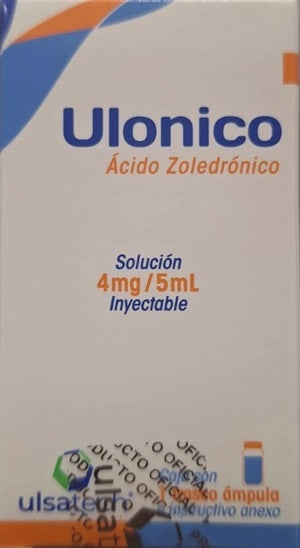
- Dosage formINJECTABLE PERFUSION, 4 mg/5 ml
- ATC codeM05BA08
- Active substance
- Prescription requiredYes
- Manufacturer
- CompositionMANITOL (E-421) (44 mg mg), CITRATO DE SODIO (E-331) (4,8 mg mg)
- This information is for reference only and does not constitute medical advice. Always consult a doctor before taking any medication. Oladoctor is not responsible for medical decisions based on this content.
- Alternatives to ZOLEDRONIC ACID TILLOMED 4 mg/5 ml CONCENTRATE FOR INFUSION SOLUTIONDosage form: INJECTABLE PERFUSION, 4 mg/5 mlActive substance: zoledronic acidManufacturer: Actavis Group Ptc Ehf.Prescription requiredDosage form: INJECTABLE PERFUSION, 4 mg/5 mlActive substance: zoledronic acidManufacturer: Altan Pharmaceuticals SaPrescription requiredDosage form: INJECTABLE PERFUSION, 4 mg/100 mlActive substance: zoledronic acidManufacturer: Altan Pharmaceuticals SaPrescription required
Online doctors for ZOLEDRONIC ACID TILLOMED 4 mg/5 ml CONCENTRATE FOR INFUSION SOLUTION
Discuss questions about ZOLEDRONIC ACID TILLOMED 4 mg/5 ml CONCENTRATE FOR INFUSION SOLUTION, including use, safety considerations and prescription review, subject to medical assessment and local regulations.


Frequently Asked Questions
ZOLEDRONIC ACID TILLOMED 4 mg/5 ml CONCENTRATE FOR INFUSION SOLUTION requires a prescription in Spain. You can check with a doctor online whether this medicine may be appropriate for your situation.
The active ingredient in ZOLEDRONIC ACID TILLOMED 4 mg/5 ml CONCENTRATE FOR INFUSION SOLUTION is zoledronic acid. This information helps identify medicines with the same composition but different brand names.
ZOLEDRONIC ACID TILLOMED 4 mg/5 ml CONCENTRATE FOR INFUSION SOLUTION is manufactured by Laboratorios Tillomed Spain S.L.. Pharmacy brands and packaging may differ depending on the distributor.
Doctors such as Family doctors, Psychiatrists, Dermatologists, Cardiologists, Endocrinologists, Gastroenterologists, Pulmonologists, Nephrologists, Rheumatologists, Hematologists, Infectious disease physicians, Allergists, Geriatricians, Paediatricians, Oncologists may assess whether ZOLEDRONIC ACID TILLOMED 4 mg/5 ml CONCENTRATE FOR INFUSION SOLUTION is appropriate, depending on your situation and local regulations. You can book an online consultation to discuss your symptoms and possible next steps.
The prescription is issued by a doctor after assessing your health. In Spain, ZOLEDRONIC ACID TILLOMED 4 mg/5 ml CONCENTRATE FOR INFUSION SOLUTION is then dispensed in pharmacies with that prescription. An online consultation does not guarantee that a prescription will be issued: the decision always rests with the doctor.
To request a review, you can use Oladoctor:
Other medicines with the same active substance (zoledronic acid) include Zoledronic Acid Actavis 4 mg/5 ml concentrate for infusion solution, ZOLEDRONIC ACID ALTAN 4 mg/5ml CONCENTRATE FOR INFUSION SOLUTION, Zoledronic Acid Altan 4 mg/100 ml Solution for Infusion. These may have different brand names or formulations but contain the same therapeutic ingredient. Always consult a doctor before switching or starting a new medicine.
