



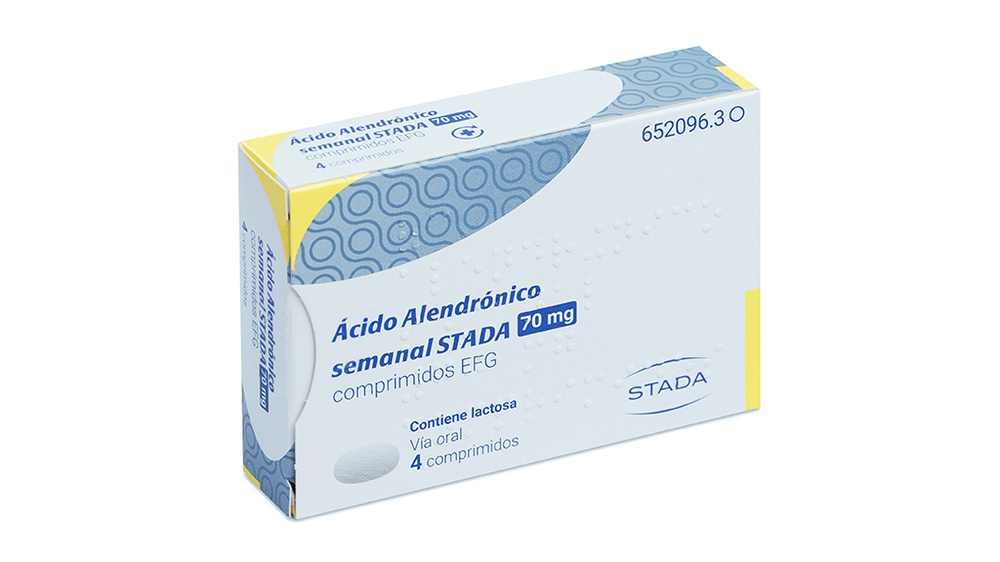
ACIDO 70 mg Tablets

Prescription review online
A doctor will review your case and decide whether a prescription is medically appropriate.

Talk to a doctor about this medicine
Discuss your symptoms and possible next steps in a quick online consultation.



How to use ALENDRONIC ACID WEEKLY STADA 70 mg TABLETS
Contents of the leaflet
- Introduction
- What is Alendronic Acid STADA and what is it used for
- What you need to know before you take Alendronic Acid STADA
- How to take Alendronic Acid STADA
- Possible side effects
- Storing Alendronic Acid STADA
- Container contents and additional information
Introduction
Package Leaflet: Information for the User
Alendronic Acid STADA 70 mg Weekly Tablets EFG
Read all of this leaflet carefully before you start taking this medicine because it contains important information for you.
- Keep this leaflet, you may need to read it again.
- If you have any further questions, ask your doctor or pharmacist.
- This medicine has been prescribed for you only. Do not pass it on to others. It may harm them, even if their signs of illness are the same as yours.
- If you get any side effects, talk to your doctor or pharmacist. This includes any possible side effects not listed in this leaflet. See section 4.
Contents of the pack and other information
- What is Alendronic Acid STADA and what is it used for
- What you need to know before you take Alendronic Acid STADA
- How to take Alendronic Acid STADA
- Possible side effects
- Storing Alendronic Acid STADA
- Contents of the pack and other information
1. What is Alendronic Acid STADA and what is it used for
Alendronate belongs to a group of medicines called bisphosphonates. Alendronate stops bone loss and reduces the risk of vertebral and hip fractures.
Alendronic Acid STADA is used:
- to treat osteoporosis. Alendronic Acid STADA has been shown to reduce the risk of vertebral and hip fractures in women.
Alendronic Acid STADA is a weekly treatment.
Osteoporosis is a thinning and weakening of the bones. At first, osteoporosis usually has no symptoms, however, if left untreated it can result in bone fractures. Although these usually hurt, fractures in the spine may go unnoticed until a loss of height occurs. Fractures can occur during everyday activity, such as getting up, or from minor injuries that would not harm a normal bone. Fractures usually occur in the hip, spine, or wrist and can cause not only pain but also considerable problems such as a stooped posture (“dowager's hump”) and loss of mobility.
As well as your treatment with Alendronic Acid STADA, your doctor may suggest that you make changes to your lifestyle (e.g. exercise and dietary recommendations, stopping smoking) to help your condition. Consult your doctor for more information on lifestyle changes.

Not sure if this medicine is right for you?
Discuss your symptoms and treatment with a doctor online.
2. What you need to know before you take Alendronic Acid STADA
Do not take Alendronic Acid STADAif you
- are allergicto alendronate, other bisphosphonates or any of the other ingredients of this medicine (listed in section 6)
- have certain problems with your oesophagus(the tube that connects your mouth to your stomach) such as narrowing or if your oesophagus is not working properly and you have difficulty swallowing (a condition called achalasia)
- cannot stay upright or stand for at least 30 minutes
- have low blood calcium levels
If you think any of these apply to you, do not take the tablets. Consult your doctor and follow their advice. (See also section 3 “How to take Alendronic Acid STADA”)
Warnings and precautions
Consult your doctor or pharmacist before starting treatment with Alendronic Acid STADA:
- if you have kidney problems
- if you have any allergies
- if you have any swallowing or digestive problemssuch as inflammation of the stomach or duodenum (the first part of the small intestine), or if you have had severe stomach or intestinal problems such as ulcers, stomach or intestinal bleeding, or surgery in the stomach or oesophagus in the last year.
- if your doctor has told you that you have Barrett's oesophagus(a condition associated with changes in the cells that line the lower oesophagus)
- if you have problems with calcium absorption or other problemswhich may lead to low blood calcium levelssuch as low vitamin D levels or if your parathyroid gland is not working properly (a condition called hypoparathyroidism). Your doctor may prescribe a calcium or vitamin D supplement to prevent low blood calcium levels.
- if you have cancer.
- if you are taking corticosteroids(medicines that can be used to treat inflammation).
- if you are receiving chemotherapy or radiotherapy.
- if you are being treated with angiogenesis inhibitors(such as bevacizumab or thalidomide),
- if you smoke.
- if you have poor dental hygiene, gum disease, or a planned dental extraction
You may be advised to have a dental check-up before starting treatment with Alendronic Acid STADA.
It is important to maintain good oral hygiene when you are taking Alendronic Acid STADA. You should have regular dental check-ups throughout your treatment and you should contact your doctor or dentist if you experience any problems with your mouth or teeth, such as tooth loss, pain or swelling.
If you are being treated by a dentistor if you are going to have dental surgery or a tooth extracted, inform your dentist that you are taking Alendronic Acid STADA.
Irritation, inflammation or ulceration of the oesophagusmay occur, often with symptoms of chest pain, heartburn, difficulty or pain when swallowing, especially if you do not follow the dosing instructions or your doctor's instructions (see also section 3 "How to take Alendronic Acid STADA"). If you have any of these symptoms, stop takingAlendronic Acid STADA and consult your doctor immediately. See also section 4 "Possible side effects". If you ignore these symptoms and continue taking the tablets, it is likely that these throat reactions can get worse.
This medicine may affect your blood calcium and phosphate levels. It is important that you inform your doctor that you are taking Alendronic Acid STADA if you are going to have a blood test.
Children and adolescents
Alendronic Acid STADA should not be given to children or adolescents.
Other medicines and Alendronic Acid STADA
Tell your doctor or pharmacist if you are taking, have recently taken or might take any other medicines.
Tell your doctor if you are taking corticosteroids(medicines that can be used to treat inflammation). You may need to have some tests before you start treatment with Alendronic Acid STADA (e.g. dental examination).
You may get stomach irritation if you are taking painkillers (e.g. acetylsalicylic acid, ibuprofen) with Alendronic Acid STADA.
It is likely that the following medicines will interfere with the absorption of Alendronic Acid STADA if taken at the same time:
- calcium supplements
- antacids(medicines used to relieve heartburn),
- certain other oral medicines
Therefore, you should wait at least 30 minutesafter taking Alendronic Acid STADA before taking any other medicine (see also section 3 "How to take Alendronic Acid STADA").
Taking Alendronic Acid STADA with food and drinks
It is likely that food and drinks (including mineral water) will make Alendronic Acid STADA less effective if taken at the same time. Therefore, it is important that you follow the advice given in section 3 "How to take Alendronic Acid STADA".
Pregnancy and breast-feeding
If you are pregnant or breast-feeding, think you may be pregnant or are planning to have a baby, ask your doctor or pharmacist for advice before taking this medicine.
Pregnancy
You should not take Alendronic Acid STADA if you are pregnant or think you may be pregnant.
Breast-feeding
You should not take Alendronic Acid STADA if you are breast-feeding.
Driving and using machines
Alendronic Acid STADA may cause side effects (including blurred vision, dizziness and severe bone, muscle or joint pain) that may affect your ability to drive or use machines. Individual responses to Alendronic Acid STADA may vary (see section 4 "Possible side effects").
Alendronic Acid STADA contains lactose
If your doctor has told you that you have an intolerance to some sugars, consult them before taking this medicine.
Alendronic Acid STADA contains sodium
This medicine contains less than 1 mmol sodium (23 mg) per tablet, i.e. it is essentially “sodium-free”.
3. How to take Alendronic Acid STADA
Follow exactly the instructions for administration of this medicine given by your doctor. If you are unsure, consult your doctor or pharmacist.
The recommended dose of Alendronic Acid STADA is one tabletonce a week(choose a day of the week that suits you and try to take your tablet on the same day every week).
It is very important that you follow the instructions carefully to get the maximum benefit from your medicine and to avoid problems with your oesophagus.
- After getting up in the morning and before taking any food, drink or other medicines, swallow your Alendronic Acid STADA tablet with a full glass of tap water(NOT mineral water; at least 200 ml or 7 fl.oz).
- DO NOT take it with mineral water (with or without gas).
- DO NOT take it with coffee or tea.
- DO NOT take it with juices or milk.
- DO NOT chew or suck the tablet or let it dissolve in your mouth.
- DO NOT lie down - stay upright (sitting, standing or walking) - for at least 30 minutesafter swallowing the tablet. DO NOT lie down until after your first food of the day.
- After swallowing your Alendronic Acid STADA tablet, wait at least 30 minutes before taking your first food, drink or other medicines of the day, including antacids, calcium supplements and vitamins. Alendronic Acid STADA is only effective if it is taken on an empty stomach.
- DO NOT take Alendronic Acid STADA at bedtime or before getting up in the morning.
- If you have difficulty or pain when swallowing, chest pain, or new or worsening heartburn, stop taking Alendronic Acid STADA and contact your doctor.
- It is important that you continue to take Alendronic Acid STADA for as long as your doctor prescribes it. Alendronic Acid STADA can only treat your osteoporosis if you continue to take the tablets.
If you take more Alendronic Acid STADA than you should
If you take too many tablets by mistake, drink a full glass of milk and consult your doctor or pharmacist immediately or call the Poisons Information Centre, telephone: 91 562 04 20, quoting the medicine and the amount taken. Do not induce vomiting and do not lie down.
Symptoms of an overdose of alendronate may include
- low blood calcium levels, with symptoms such as skin sensations, e.g. numbness, tingling, itching, or a feeling of pins and needles (paraesthesia) or muscle cramps
- low blood phosphate levels, with symptoms such as muscle weakness or dysfunction
- stomach upset or heartburn
- inflammation of the throat or stomach lining and ulcers.
If you forget to take Alendronic Acid STADA
If you forget to take a dose, take a single tablet the next morning. Do not take a double dose to make up for a forgotten dose. Do not take two tablets on the same day. After that, go back to taking one tablet once a week on the day you originally chose. If you are not sure, consult your doctor.
If you stop taking Alendronic Acid STADA
Always consult your doctor, if you want to stop taking Alendronic Acid STADA or if you want to change the prescribed dose regimen. Do not stop or interrupt treatment without consulting your doctor.
If you have any further questions on the use of this medicine, ask your doctor or pharmacist.

Started taking the medicine and have questions?
Discuss your symptoms and treatment with a doctor online.
4. Possible side effects
Like all medicines, this medicine can cause side effects, although not everybody gets them.
Stop takingAlendronic Acid STADA and consult your doctor immediatelyif you have any of the following symptoms:
- symptoms of a severe allergic reaction (angioedema, occurs rarely [may affect up to 1 in 1,000 people]) such as
- swelling of the face, tongue or throat and/or
- difficulty swallowing and difficulty breathing and/or
- hives
- severe skin reactions (occur very rarely [may affect up to 1 in 10,000 people]) such as rash, blisters or other skin problems, or eye, mouth or genital problems, itching or burning (symptoms of a skin reaction called Stevens-Johnson syndrome or toxic epidermal necrolysis)
- chest pain, new or worsening heartburn, difficulty or pain when swallowing (this may indicate irritation, inflammation or ulceration of the oesophagus; occurs frequently [may affect up to 1 in 10 people]). If you ignore these symptoms and continue taking the tablets, it is likely that these throat reactions can get worse.
Other side effects include
Very common: (may affect more than 1 in 10 people):
- bone, muscle and/or joint pain, which can be severe.
Common (may affect up to 1 in 10 people):
- headache
- dizziness
- abdominal pain, feeling of discomfort in the stomach or belching after eating, constipation, feeling of fullness or bloating of the stomach, diarrhoea, flatulence
- hair loss (alopecia)
- itching
- swelling of the joints
- fatigue
- swelling of the hands or feet
- vertigo
Uncommon (may affect up to 1 in 100 people):
- feeling dizzy, vomiting
- irritation or inflammation of the oesophagus or stomach, damage to the oesophageal mucosa (oesophageal erosion)
- black or tarry stools
- skin rash, redness of the skin
- altered sense of taste
- inflammation of the eye with blurred vision, pain or redness of the eye
- transient symptoms similar to flu, such as muscle pain, general feeling of being unwell and, sometimes, fever which usually occur at the start of treatment
Rare (may affect up to 1 in 1,000 people):
- stricture of the oesophagus
- ulcers in the mouth or throat when the tablets have been chewed or sucked
- ulcers in the stomach or intestine (sometimes severe or with bleeding)
- skin rash that gets worse with sunlight
- symptoms of low blood calcium levels that include muscle cramps or spasms and/or a feeling of pins and needles in the fingers or around the mouth
- pain in the mouth, and/or jaw, swelling or ulcers inside the mouth, numbness or a feeling of heaviness of the jaw, or tooth loss. These may be signs of damage to the bone in the jaw (osteonecrosis) usually associated with delayed healing and infection, often after a tooth extraction. Contact your doctor and dentist if you experience these symptoms.
- atypical fractures of the thigh. Tell your doctor if you notice pain, weakness or discomfort in the thigh, hip or groin, as these may be early signs of a possible fracture of the thigh.
Very rare (may affect up to 1 in 10,000 people)
- consult your doctor if you have ear pain, your ear is discharge or you have an ear infection. These could be symptoms of damage to the bones of the ear.
Reporting of side effects:
If you get any side effects, talk to your doctor or pharmacist. This includes any possible side effects not listed in this leaflet. You can also report side effects directly via the Spanish Medicines Monitoring Centre for Human Use: https://www.notificaram.es. By reporting side effects, you can help provide more information on the safety of this medicine.
5. Storing Alendronic Acid STADA
Keep this medicine out of the sight and reach of children.
Do not use this medicine after the expiry date which is stated on the carton after EXP. The expiry date refers to the last day of that month.
Do not store above 25°C. Store in the original package to protect from moisture.
Medicines should not be disposed of via wastewater or household waste. Return any unused medicine to your pharmacist. Ask your pharmacist how to dispose of medicines no longer required. This will help to protect the environment.
6. Container contents and additional information
Composition of Alendronic Acid Weekly STADA
The active ingredient is sodium alendronate trihydrate. Each tablet contains 70 mg of alendronic acid as sodium alendronate trihydrate.
The other components are: microcrystalline cellulose, lactose monohydrate, sodium croscarmellose, and magnesium stearate.
Appearance of the product and container contents
Alendronic Acid Weekly STADA tablets are presented in the form of oval, white or almost white tablets.
The tablets are presented in triplex blisters, containing 2, 4, 8, 12, 14, 24, and 40 tablets, or in aluminum sachets, containing 2, 4, 8, 12, 14, 24, 40, and 100 tablets.
Only some pack sizes may be marketed.
Marketing authorization holder and manufacturer
Marketing authorization holder
STADA S.L. Laboratory
Frederic Mompou 5
08960 Sant Just Desvern
(Barcelona)
Manufacturer
STADA Arzneimittel AG, Stadastr. 2-18, 61118 Bad Vilbel, Germany
or
STADA Arzneimittel Ges.m.b.H, Muthgasse 36/2, 1190 Vienna
or
Lab.Medicamentos Internacionales (Medinsa), La Solana, 26, Torrejon de Ardoz (Madrid) Spain
or
Sanico N.V., Veedijk 59, Industriezone IV, 2300 Turnhout, Belgium
or
Centrafarm Services B.V., Van de Reijtstraat 31-E, 4814 NE Breda, Netherlands
or
Clonmel Healthcare Ltd., Waterford Road, Clonmel, Co. Tipperary, Ireland
or
Qualiti (Burnley) Limited, Talbot Street, Briercliffe, Burnley BB10 2JY, United Kingdom
or
Juta Pharma GmbH, Gutenbergstrasse 13, 24941 Flensburg, Germany
or
STADA M&D SRL, Str. Trascaului, nr 10, Municipiul Turda, Judet Cluj 401135, Romania
This medicinal product is authorized in the Member States of the European Economic Area under the following names:
Germany Alendronsäure AL 70 mg Tabletten
Austria Alendronstad 70 mg einmal wöchentlich - Tabletten
Belgium Alendronat EG 70 mg tabletten
Denmark Alendronat STADA
Spain Ácido Alendrónico Semanal STADA 70 mg comprimidos EFG
France Alendronate EG 70mg, comprimé
Netherlands Alendroninezuur CF 70 mg, tabletten
Ireland Osteomel Once Weekly 70 mg tablets
Italy Alendronato EG 70 mg compresse
Luxembourg Alendronat EG 70 mg comprimés
Malta Osteomel Once Weekly 70 mg tablets
Portugal Ácido Alendrónico Ciclum 70mg comprimidos
Sweden Alendronat STADA Veckotablett 70 mg tabletter
Date of the last revision of this leaflet:February 2022
Detailed and updated information on this medicinal product is available on the website of the Spanish Agency for Medicines and Health Products (AEMPS) http://www.aemps.gob.es/
- Country of registration
- Dosage formTABLET, 70 mg
- ATC codeM05BA04
- Average pharmacy price9.99 EUR
- Active substance
- Prescription requiredYes
- Manufacturer
- CompositionCROSCARMELOSA SODICA (4.00 mg mg), LACTOSA HIDRATADA (142.64 mg mg)
- This information is for reference only and does not constitute medical advice. Always consult a doctor before taking any medication. Oladoctor is not responsible for medical decisions based on this content.
- Alternatives to ALENDRONIC ACID WEEKLY STADA 70 mg TABLETSDosage form: TABLET, 70 mgActive substance: alendronic acidManufacturer: Ababor Pharmaceuticals S.L.Prescription requiredDosage form: TABLET, 70 mgActive substance: alendronic acidManufacturer: Almus Farmaceutica S.A.U.Prescription requiredDosage form: TABLET, 70 mgActive substance: alendronic acidManufacturer: Aristo Pharma Iberia S.L.Prescription required
Online doctors for ALENDRONIC ACID WEEKLY STADA 70 mg TABLETS
Discuss questions about ALENDRONIC ACID WEEKLY STADA 70 mg TABLETS, including use, safety considerations and prescription review, subject to medical assessment and local regulations.


Get ALENDRONIC ACID WEEKLY STADA 70 mg TABLETS Prescription Online
Fill in a 2-min form
Tell us your symptoms, history, and what medicine you're requesting.
Pick a doctor or let us assign
Choose a specialist or we'll match you with the next available doctor.
Doctor reviews your case
Usually within 30 minutes. They may ask follow-up questions via chat.
Collect from any pharmacy
Electronic prescription sent to your email — valid across Spain.
Frequently Asked Questions
ALENDRONIC ACID WEEKLY STADA 70 mg TABLETS requires a prescription in Spain. You can check with a doctor online whether this medicine may be appropriate for your situation.
The active ingredient in ALENDRONIC ACID WEEKLY STADA 70 mg TABLETS is alendronic acid. This information helps identify medicines with the same composition but different brand names.
The average pharmacy price for ALENDRONIC ACID WEEKLY STADA 70 mg TABLETS is around 9.99 EUR. Prices may vary depending on the manufacturer and dosage form.
ALENDRONIC ACID WEEKLY STADA 70 mg TABLETS is manufactured by Laboratorio Stada S.L.. Pharmacy brands and packaging may differ depending on the distributor.
Doctors such as Family doctors, Psychiatrists, Dermatologists, Cardiologists, Endocrinologists, Gastroenterologists, Pulmonologists, Nephrologists, Rheumatologists, Hematologists, Infectious disease physicians, Allergists, Geriatricians, Paediatricians, Oncologists may assess whether ALENDRONIC ACID WEEKLY STADA 70 mg TABLETS is appropriate, depending on your situation and local regulations. You can book an online consultation to discuss your symptoms and possible next steps.
Spain has a well-developed healthcare infrastructure across major cities such as Madrid, Barcelona, Valencia, and Seville. Pharmacies are widely available and operate under strict regulations, ensuring access to prescribed medications.
You can buy ALENDRONIC ACID WEEKLY STADA 70 mg TABLETS in Madrid, Barcelona, Seville, or Valencia at any local pharmacy with a valid prescription.
To obtain a prescription, you can use Oladoctor:
Other medicines with the same active substance (alendronic acid) include ALENDRONIC ACID WEEKLY ABABOR 70 mg TABLETS, ALENDRONIC ACID WEEKLY ALMUS 70 mg FILM-COATED TABLETS, ALENDRONIC ACID WEEKLY ARISTO 70 mg TABLETS. These may have different brand names or formulations but contain the same therapeutic ingredient. Always consult a doctor before switching or starting a new medicine.
