



ABIRATERONA 500 mg Film-Coated Tablets

Prescription review online
A doctor will review your case and decide whether a prescription is medically appropriate.

Talk to a doctor about this medicine
Discuss your symptoms and possible next steps in a quick online consultation.



How to use ABIRATERONE TARBIS 500 mg FILM-COATED TABLETS
Contents of the leaflet
- Introduction
- What is Abiraterone Tarbis and what is it used for
- What you need to know before you take Abiraterone Tarbis
- How to take Abiraterone Tarbis
- Possible side effects
- Storage of Abiraterone Tarbis
- Package contents and further information
Introduction
Package Leaflet: Information for the User
Abiraterone Tarbis 500 mg film-coated tablets EFG
abiraterone acetate
Read all of this leaflet carefully before you start taking this medicine because it contains important information for you.
- Keep this leaflet, you may need to read it again.
- If you have any further questions, ask your doctor or pharmacist.
- This medicine has been prescribed for you only. Do not pass it on to others. It may harm them, even if their symptoms are the same as yours.
- If you experience any side effects, talk to your doctor or pharmacist. This includes any possible side effects not listed in this leaflet. See section 4.
Contents of the package leaflet
- What is Abiraterone Tarbis and what is it used for
- What you need to know before you take Abiraterone Tarbis
- How to take Abiraterone Tarbis
- Possible side effects
- Storage of Abiraterone Tarbis
- Package contents and further information
1. What is Abiraterone Tarbis and what is it used for
Abiraterone contains the active substance abiraterone acetate. It is used for the treatment of prostate cancer in adult men that has spread to other parts of the body. Abiraterone works by stopping your body from making testosterone; this can slow down the growth of your prostate cancer.
When Abiraterone is prescribed in the early stages of the disease and there is still response to hormonal treatment, it is used together with treatment to lower testosterone levels (androgen deprivation therapy).
When you take this medicine, your doctor will also prescribe another medicine called prednisone or prednisolone to reduce the risk of high blood pressure, fluid retention, or low potassium levels in your blood.

Not sure if this medicine is right for you?
Discuss your symptoms and treatment with a doctor online.
2. What you need to know before you take Abiraterone Tarbis
Do not take Abiraterone Tarbis
- if you are allergic to abiraterone acetate or any of the other ingredients of this medicine (listed in section 6).
- if you are a woman, especially if you are pregnant. Abiraterone should only be used in male patients.
- if you have severe liver disease.
- in combination with Ra-223 (used for the treatment of prostate cancer).
Do not take this medicine if any of the above applies to you. If you are unsure, consult your doctor or pharmacist before taking this medicine.
Warnings and precautions
Consult your doctor or pharmacist before starting treatment with this medicine:
- if you have liver problems,
- if you have been told you have high blood pressure or heart failure or low potassium levels in your blood (low potassium levels in your blood may increase your risk of heart rhythm problems),
- if you have had other heart or blood vessel problems,
- if you have a fast or irregular heart rhythm,
- if you have difficulty breathing,
- if you have gained weight quickly,
- if you have swelling in your feet, ankles, or legs,
- if you have taken a medicine called ketoconazole in the past for prostate cancer,
- about the need to take this medicine with prednisone or prednisolone,
- about possible side effects on your bones,
- if you have high blood sugar levels.
Tell your doctor if you have been told you have any heart or blood vessel disorder, including heart rhythm problems (arrhythmia), or if you are being treated with medicines for these disorders.
Tell your doctor if you have yellowing of the skin or eyes, dark urine, or severe nausea or vomiting, as these can be signs or symptoms of liver problems. Rarely, liver failure (acute hepatic failure) may occur, which can be life-threatening.
A decrease in the number of red blood cells, reduced sexual desire, and cases of muscle weakness and/or muscle pain may occur.
Abiraterone should not be given in combination with Ra-223 due to a possible increased risk of bone fractures or death.
If you plan to take Ra-223 after treatment with abiraterone and prednisone/prednisolone, you should wait 5 days before starting Ra-223 treatment.
If you are unsure if any of the above applies to you, consult your doctor or pharmacist before taking this medicine.
Blood tests
Abiraterone may affect your liver even if you have no symptoms. While you are taking this medicine, your doctor will perform regular blood tests to check for any effects on your liver.
Children and adolescents
This medicine should not be used in children or adolescents. If a child or adolescent accidentally ingests abiraterone, they should go to the hospital immediately and bring this leaflet with them to show to the emergency doctor.
Other medicines and Abiraterone Tarbis
Consult your doctor or pharmacist before taking any medicine.
Tell your doctor or pharmacist if you are taking, have recently taken, or might take any other medicines. This is important because abiraterone can increase the effects of certain medicines, including heart medicines, sedatives, some diabetes medicines, herbal medicines (e.g., St. John's Wort), and others. Your doctor may consider changing the dose of these medicines. Additionally, some medicines may increase or decrease the effects of abiraterone, which can lead to side effects or reduced effectiveness.
Treatment with androgen deprivation therapy may increase the risk of heart rhythm problems. Tell your doctor if you are being treated with medicines
- used to treat heart rhythm problems (e.g., quinidine, procainamide, amiodarone, and sotalol);
- that increase the risk of heart rhythm problems [e.g., methadone (used for pain relief and as part of drug addiction detoxification), moxifloxacin (an antibiotic), antipsychotics (used for severe mental illnesses)].
Consult your doctor if you are taking any of the above medicines.
Abiraterone Tarbis with food
- This medicine should not be taken with food (see section 3, "How to take Abiraterone Tarbis").
- Taking abiraterone with food may cause side effects.
Pregnancy and breastfeeding
Abiraterone is not indicated in women.
- This medicine may harm the fetus if taken by a pregnant woman.
- If you have sex with a woman of childbearing age, you should use a condom and another effective contraceptive method.
- If you have sex with a pregnant woman, you should use a condom to protect the fetus.
Driving and using machines
It is unlikely that this medicine will affect your ability to drive or use tools or machines.
Abiraterone Tarbis contains lactose
Abiraterone contains lactose (a type of sugar). If your doctor has told you that you have an intolerance to certain sugars, consult them before taking this medicine.
Abiraterone Tarbis contains sodium
This medicine contains less than 1 mmol of sodium (23 mg) per film-coated tablet; this is essentially "sodium-free".
3. How to take Abiraterone Tarbis

Started taking the medicine and have questions?
Discuss your symptoms and treatment with a doctor online.
Follow the instructions for administration of this medicine exactly as prescribed by your doctor. If you are unsure, consult your doctor or pharmacist again.
How much to take
The recommended dose is 1,000 mg (two 500 mg tablets) once a day.
How to take this medicine
- Take this medicine orally.
- Do not take this medicine with food. Taking abiraterone with food may cause your body to absorb more medicine than necessary, which can cause side effects.
- Take the abiraterone tablets as a single dose once a day on an empty stomach. Abiraterone should be taken at least 2 hours after eating and no food should be consumed for at least 1 hour after taking abiraterone (see section 2, "Abiraterone Tarbis with food").
- Swallow the tablets whole with water. Do not break the tablets.
- Abiraterone is given together with a medicine called prednisone or prednisolone. Take prednisone or prednisolone exactly as prescribed by your doctor.
- You will need to take prednisone or prednisolone every day while you are taking abiraterone.
- If you have a medical emergency, you may need to adjust the amount of prednisone or prednisolone you take. Your doctor will tell you if you need to change the dose of prednisone or prednisolone. Do not stop taking prednisone or prednisolone unless your doctor tells you to.
You may also be prescribed other medicines while you are taking abiraterone and prednisone or prednisolone.
If you take more Abiraterone Tarbis than you should
If you take more than you should, consult your doctor or go to the hospital immediately.
In case of overdose or accidental ingestion, consult your doctor or pharmacist immediately or call the Toxicology Information Service, phone: 91 562 04 20, indicating the medicine and the amount taken.
If you forget to take Abiraterone Tarbis
- If you forget to take abiraterone or prednisone or prednisolone, take your normal dose the next day.
- If you forget to take abiraterone or prednisone or prednisolone for more than a day, consult your doctor immediately.
If you stop taking Abiraterone Tarbis
Do not stop taking abiraterone or prednisone or prednisolone unless your doctor tells you to.
If you have any further questions on the use of this medicine, ask your doctor or pharmacist.
4. Possible side effects
Like all medicines, this medicine can cause side effects, although not everybody gets them.
Stop taking Abiraterone Tarbis and contact your doctor immediately if you experience any of the following:
- Muscle weakness, muscle contractions, or rapid heartbeat (palpitations). These can be signs of low potassium levels in your blood.
Other side effects are:
Very common(may affect more than 1 in 10 people):
Fluid retention in the legs or feet, low potassium levels in the blood, elevated liver function tests, high blood pressure, urinary tract infection, diarrhea.
Common(may affect up to 1 in 10 people):
High levels of fats in the blood, chest pain, irregular heartbeat (atrial fibrillation), heart failure, fast heartbeat, severe infections (sepsis), bone fractures, indigestion, blood in the urine, skin rash.
Uncommon(may affect up to 1 in 100 people):
Adrenal gland problems (related to problems with salt and water), abnormal heart rhythm (arrhythmia), muscle weakness and/or muscle pain.
Rare(may affect up to 1 in 1,000 people):
Lung irritation (also called allergic alveolitis).
Liver failure (also called acute hepatic failure).
Frequency not known(cannot be estimated from the available data):
Heart attack, changes in the electrocardiogram (ECG) (prolonged QT), and severe allergic reactions with difficulty swallowing or breathing, face, lips, tongue, or throat swelling, or itchy rash.
Bone density loss may occur in men receiving treatment for prostate cancer. Abiraterone in combination with prednisone or prednisolone may increase this bone density loss.
Reporting of side effects
If you experience any side effects, talk to your doctor, pharmacist, or nurse. This includes any possible side effects not listed in this leaflet. You can also report side effects directly via the Spanish Medicines Monitoring System: www.notificaRAM.es.
By reporting side effects, you can help provide more information on the safety of this medicine.
5. Storage of Abiraterone Tarbis
Keep this medicine out of the sight and reach of children.
Do not use this medicine after the expiry date which is stated on the carton and blister or bottle. The expiry date is the last day of the month stated.
This medicine does not require any special storage conditions.
HDPE bottle (after opening): Use within 60 days.
Medicines should not be disposed of via wastewater or household waste. Return any unused medicine to a pharmacy for disposal. Ask your pharmacist how to dispose of medicines no longer required. This will help protect the environment.
6. Package contents and further information
Composition of Abiraterone Tarbis
The active substance is abiraterone acetate.
Each film-coated tablet contains 500 mg of abiraterone acetate.
Core of the tablet: lactose monohydrate, croscarmellose sodium, hypromellose 2910 (E464), sodium lauryl sulfate, silicified microcrystalline cellulose (anhydrous colloidal silica and microcrystalline cellulose), anhydrous colloidal silica, magnesium stearate
Coating material: partially hydrolyzed polyvinyl alcohol (E1203), titanium dioxide (E171), macrogol (E1521), and talc (E553b)
Appearance and package contents
White, oval-shaped, film-coated tablets with "H" engraved on one side and "A65" on the other side, free from physical defects. (Dimensions: 19.90 mm x 10.00 mm).
Al-Al blister packs containing 56 and 60 film-coated tablets in a blister with perforated units of 56 x 1 and/or 60 x 1 film-coated tablets.
HDPE bottle:
60 film-coated tablets.
Not all pack sizes may be marketed.
Marketing authorization holder
Tarbis Farma S.L.
Gran Vía Carlos III, 94
08028 Barcelona
Spain
Manufacturer
Amarox Pharma B.V.
Rouboslaan 32
Voorschoten, 2252TR
Netherlands
This medicine is authorized in the Member States of the European Economic Area under the following names:
Germany: Abirateron Amarox 500 mg film-coated tablets
Netherlands: Abirateron Amarox 500 mg filmomhulde tabletten
Spain: Abiraterona Tarbis 500 mg film-coated tablets EFG
Date of last revision of this leaflet: December 2022
Detailed information on this medicine is available on the website of the Spanish Agency for Medicines and Health Products (AEMPS) http://www.aemps.gob.es/
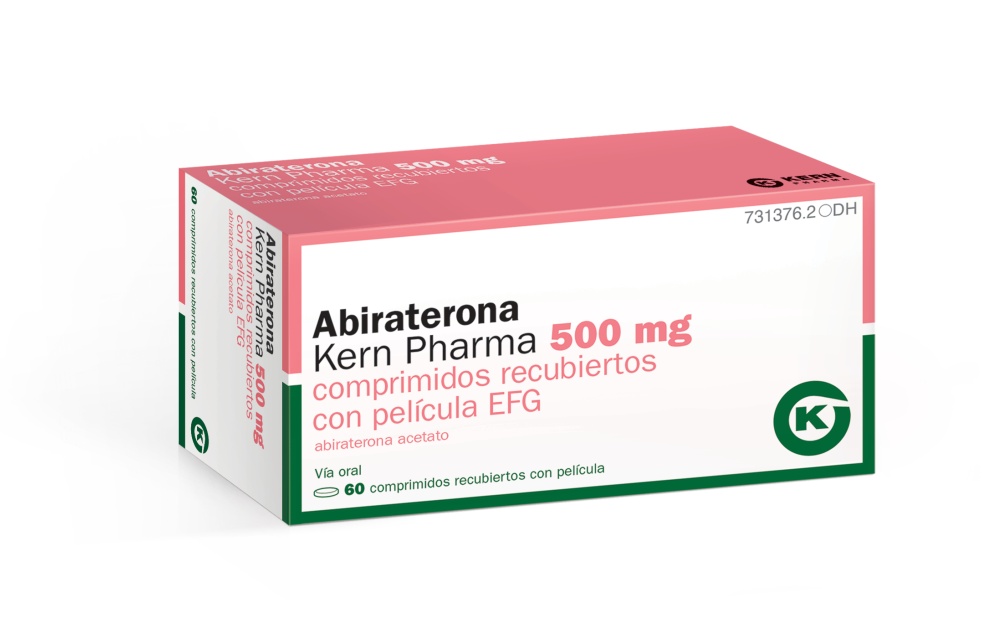
- Country of registration
- Dosage formTABLET, 500 mg
- ATC codeL02BX03
- Active substance
- Prescription requiredYes
- Manufacturer
- CompositionLACTOSA MONOHIDRATO (253,2 mg mg), CROSCARMELOSA SODICA (90 mg mg), LAURILSULFATO DE SODIO (48 mg mg)
- This information is for reference only and does not constitute medical advice. Always consult a doctor before taking any medication. Oladoctor is not responsible for medical decisions based on this content.
- Alternatives to ABIRATERONE TARBIS 500 mg FILM-COATED TABLETSDosage form: TABLET, 250 mgActive substance: abirateroneManufacturer: Accord Healthcare S.L.U.Prescription requiredDosage form: TABLET, 500 mgActive substance: abirateroneManufacturer: Accord Healthcare S.L.U.Prescription requiredDosage form: TABLET, 500 mgActive substance: abirateroneManufacturer: Cipla EuropePrescription required
Online doctors for ABIRATERONE TARBIS 500 mg FILM-COATED TABLETS
Discuss questions about ABIRATERONE TARBIS 500 mg FILM-COATED TABLETS, including use, safety considerations and prescription review, subject to medical assessment and local regulations.


Get ABIRATERONE TARBIS 500 mg FILM-COATED TABLETS Prescription Online
Fill in a 2-min form
Tell us your symptoms, history, and what medicine you're requesting.
Pick a doctor or let us assign
Choose a specialist or we'll match you with the next available doctor.
Doctor reviews your case
Usually within 30 minutes. They may ask follow-up questions via chat.
Collect from any pharmacy
Electronic prescription sent to your email — valid across Spain.
Frequently Asked Questions
ABIRATERONE TARBIS 500 mg FILM-COATED TABLETS requires a prescription in Spain. You can check with a doctor online whether this medicine may be appropriate for your situation.
The active ingredient in ABIRATERONE TARBIS 500 mg FILM-COATED TABLETS is abiraterone. This information helps identify medicines with the same composition but different brand names.
ABIRATERONE TARBIS 500 mg FILM-COATED TABLETS is manufactured by Tarbis Farma S.L.. Pharmacy brands and packaging may differ depending on the distributor.
Doctors such as Family doctors, Psychiatrists, Dermatologists, Cardiologists, Endocrinologists, Gastroenterologists, Pulmonologists, Nephrologists, Rheumatologists, Hematologists, Infectious disease physicians, Allergists, Geriatricians, Paediatricians, Oncologists may assess whether ABIRATERONE TARBIS 500 mg FILM-COATED TABLETS is appropriate, depending on your situation and local regulations. You can book an online consultation to discuss your symptoms and possible next steps.
Spain has a well-developed healthcare infrastructure across major cities such as Madrid, Barcelona, Valencia, and Seville. Pharmacies are widely available and operate under strict regulations, ensuring access to prescribed medications.
You can buy ABIRATERONE TARBIS 500 mg FILM-COATED TABLETS in Madrid, Barcelona, Seville, or Valencia at any local pharmacy with a valid prescription.
To obtain a prescription, you can use Oladoctor:
Other medicines with the same active substance (abiraterone) include ABIRATERONE ACCORD 250 mg TABLETS, ABIRATERONE ACCORD 500 mg FILM-COATED TABLETS, ABIRATERONE CIPLA 500 mg FILM-COATED TABLETS. These may have different brand names or formulations but contain the same therapeutic ingredient. Always consult a doctor before switching or starting a new medicine.
