



ABELCET 5 mg /Ml Injectable Perfusion

Prescription review online
A doctor will review your case and decide whether a prescription is medically appropriate.

Talk to a doctor about this medicine
Discuss your symptoms and possible next steps in a quick online consultation.



How to use ABELCET LIPID COMPLEX 5 mg/ml CONCENTRATE FOR DISPERSION FOR INFUSION
Contents of the leaflet
- Introduction
- What Abelcet lipid complex is and what it is used for
- What you need to know before you use Abelcet lipid complex
- How to use Abelcet lipid complex
- Possible side effects
- Storage of Abelcet lipid complex
- Container Contents and Additional Information
Introduction
PACKAGE LEAFLET: INFORMATION FOR THE USER
Abelcet lipid complex5 mg/ml, concentrate for dispersion for infusion
Amphotericin B in lipid complex
Read all of this leaflet carefully before you start using this medicine because it contains important information for you.
- Keep this leaflet, you may need to read it again.
- If you have any further questions, ask your doctor or pharmacist.
- If you get any side effects, talk to your doctor or pharmacist. This includes any possible side effects not listed in this leaflet. See section 4.
Contents of the pack and other information:
- What Abelcet lipid complex is and what it is used for
- What you need to know before you use Abelcet lipid complex
- How to use Abelcet lipid complex
- Possible side effects
- Storage of Abelcet lipid complex
- Contents of the pack and further information
1. What Abelcet lipid complex is and what it is used for
Abelcet lipid complex belongs to a group of medicines called systemic antifungals.
Abelcet lipid complex contains amphotericin B in lipid complex, a medicine used to treat serious systemic infections caused by fungi (fungal infections) or by a parasite called Leishmania(visceral leishmaniasis).
It is also indicated for the prevention of visceral leishmaniasis in patients with AIDS.

Not sure if this medicine is right for you?
Discuss your symptoms and treatment with a doctor online.
2. What you need to know before you use Abelcet lipid complex
Treatment with Abelcet lipid complex requires hospitalization and its administration must be supervised by a doctor specialized in the management of this type of infection.
Do not useAbelcet lipid complex
- If you are allergic (hypersensitive) to amphotericin B or to any of the other components
of Abelcet lipid complex.
Warnings and precautions
Consult your doctor or pharmacist before starting treatment with Abelcet lipid complex.
- If you are taking other medicines that may cause kidney damage, see the section Use of Abelcet lipid complex with other medicines. Abelcet may damage the kidneys. Your doctor or nurse will take blood samples to measure your creatinine (a chemical substance in the blood that reflects kidney function) and electrolyte levels (especially potassium and magnesium) before and during treatment with Abelcet, as both may be abnormal if you have changes in kidney function. This is especially important if you have had previous kidney damage or if you are taking other medicines that may affect kidney function. Blood samples will also be analyzed to detect changes in liver function and your body's ability to produce new blood cells and platelets. If blood tests show a change in kidney function, or other significant changes, your doctor may administer a lower dose of Abelcet or interrupt treatment.
- If blood tests show that your potassium levels are low.If this happens, your doctor may prescribe a potassium supplement for you to take while being treated with Abelcet.
- If blood tests show that your potassium levels are high,you may experience irregular heartbeats, sometimes severe.
- The first doses of Abelcet lipid complex are often associated with the onset of fever, nausea, and vomiting.
Occasionally, measures are necessary to prevent or treat such reactions using standard doses of acetylsalicylic acid, paracetamol, antihistamines, and antiemetics.
- Before starting treatment with Abelcet lipid complex, you may be given a test dose to detect any signs of an allergic reaction, which will consist of a small administration of the medicine followed by observation for 30 minutes before proceeding with the infusion.
Use ofAbelcet lipid complexwith other medicines
Tell your doctor or pharmacist if you are using or have recently used other medicines, including those obtained without a prescription.
Some medicines may interfere with the action of Abelcet lipid complex, enhancing or diminishing its effects, and Abelcet lipid complex may interfere with the action of other medicines. It is particularly important that you inform your doctor if you are using any other medicine, especially:
? Nephrotoxic medicines (which cause kidney damage)
? Zidovudine (a medicine for the treatment of HIV infection)
? Cyclosporin (a medicine for the prevention of rejection in transplants)
? Corticosteroids (anti-inflammatory and immunosuppressive medicines)
? Corticotropin (for the diagnosis of adrenal function)
? Antineoplastic agents (medicines for the treatment of cancer)
? Digitalis glycosides (medicines for heart conditions, such as digoxin)
? Flucytosine (an antifungal medicine)
? Muscle relaxants (medicines for the treatment of muscle spasms)
Pregnancy and breastfeeding
Consult your doctor or pharmacist before using any medicine.
Abelcet lipid complex should only be administered to pregnant women in very severe cases, when the beneficial effect of treatment outweighs the potential risks to the mother and fetus.
There are no data to determine if amphotericin B passes into breast milk. As a precaution, breastfeeding should be discontinued during treatment with Abelcet lipid complex.
Driving and using machines
Do not drive or operate machinery while being treated, as some of the side effects of Abelcet lipid complex may affect your ability to perform such tasks.
Abelcet lipid complexcontains sodium
This medicine contains 71.8 mg of sodium (the main component of table salt) in each 20 ml vial. This is equivalent to 3.59% of the maximum recommended daily intake of sodium for an adult.
3. How to use Abelcet lipid complex
Consult your doctor or pharmacist if you have any doubts.
Abelcet lipid complex will be administered exclusively by qualified healthcare professionals.
It will always be used by the intravenous route. Abelcet lipid complex, once prepared and diluted to the appropriate concentration in an infusion bag, will be administered once a day by slow intravenous infusion, through a needle or catheter placed in a vein, over approximately 1-2 hours.
Before the first full dose is administered, your doctor will assess, through the administration of a small test dose, whether you are allergic to this medicine. You should be aware that the results of this test are not always conclusive.
Your doctor will determine the dose to be administered and the duration of treatment based on your body weight and the type of infection. Your doctor will also monitor your response and, if necessary, make the appropriate adjustments.
The recommended dose is as follows:
Indication | Dose | Treatment duration |
Severe systemic fungal infection | 5 mg/kg/day | At least 14 days |
Visceral leishmaniasis treatment | 3 mg/kg/day | 5 consecutive days or every other day for 9 days |
Visceral leishmaniasis treatment in patients with AIDS | 3 mg/kg/day | 5-10 consecutive days |
Secondary prevention of visceral leishmaniasis in patients with AIDS | 3 mg/kg/day | Every 21 days. Discontinuation will follow national recommendations for the prevention of opportunistic infections in these patients |
Treatment in children is carried out at doses comparable to those recommended in adults and should also be adjusted according to the patient's body weight.
Treatment in elderly patients does not require dose adjustment.
If you use moreAbelcet lipid complexthan you should
Your doctor will determine the treatment to be administered and monitor your response to make the necessary adjustments if necessary. However, if you have doubts about whether the dose administered is higher than it should be, consult your doctor immediately.
If you forget to useAbelcet lipid complex
Your doctor will determine the treatment to be administered and monitor your response to make the necessary adjustments if necessary. However, if you have doubts about whether the dose administered is lower than it should be, consult your doctor immediately.
If you stop treatment withAbelcet lipid complex
Your doctor will determine the treatment to be administered and monitor your response to make the necessary adjustments if necessary. However, if you have any other doubts about the use of this product, ask your doctor.

Started taking the medicine and have questions?
Discuss your symptoms and treatment with a doctor online.
4. Possible side effects
Like all medicines, this medicine can cause side effects, although not everybody gets them.
The following side effects have been reported with the use of Abelcet lipid complex, detailing the frequency in which they have been observed. The description of the frequency of occurrence is as follows:
Very common: affecting more than 1 in 10 patients
Common: affecting between 1 and 10 in 100 patients
Uncommon: affecting between 1 and 10 in 1,000 patients
Rare: affecting between 1 and 10 in 10,000 patients
Very rare: affecting less than 1 in 10,000 patients
Frequency not known: cannot be estimated from the available data.
Very common
- Increased creatinine in blood (waste product that accumulates in case of kidney function impairment).
- Chills, fever.
Common
- Increased alkaline phosphatase in blood, increased urea in blood (signs of liver and kidney function impairment).
- Accelerated heart rate, arrhythmias including severe palpitations, decreased heart rate, arrhythmia with intermittent pulse, syncope, severe arrhythmias.
- Decrease in red, white, and platelet blood cells.
- Headache, tremors, drowsiness, mental confusion.
- Asthma, difficulty breathing, shortness of breath, respiratory disorder, chest pain, decreased oxygen supply in breathing.
- Diarrhea, nausea, vomiting, gastrointestinal bleeding including rectal and gum bleeding, abdominal pain
Uncommon
- Elevation of liver values in blood (ALT, AST, CPK, LDH), decreased renal clearance of creatinine, electrocardiogram abnormalities, decreased lung function tests, weight gain.
- Heart failure, bluish discoloration of skin and mucous membranes, palpitations.
- Blood coagulation disorders, hemolytic anemia, bleeding tendency, decrease in all blood cells (coagulopathy, eosinophilia, hemolytic anemia, leukemoid reaction, pancytopenia).
- Agitation, involuntary movements of the limbs, tingling, cramps, convulsions, disorientation, stupor, confused speech, vertigo, neck stiffness, difficulty thinking, difficulty walking.
- Deafness, tinnitus.
- Cough, fluid accumulation in the lungs, respiratory failure, rhinitis.
- Abnormal stools, constipation, dry mouth, altered taste, indigestion, heartburn, difficulty swallowing, flatulence, pancreatitis, mouth sores, changes in tongue color.
Rare
- Anuria, kidney damage, urine abnormalities.
- Red spots on the skin, excessive sweating, small red spots on the skin, itching, skin allergy with swelling, skin discoloration, skin ulcers, urticaria.
- Joint pain, bone pain, muscle spasms, muscle pain.
- Decreased blood acidity (alkalosis), increased blood lipids, increased sodium levels, accumulation of uric acid.
Very rare
- Vascular disorders, pallor, phlebitis, pulmonary artery obstruction, fainting, vasodilation, hepatic disease due to venous occlusion.
- Back pain, allergic reaction at the injection site, discomfort, multiple organ failure.
- Generalized reaction, allergic phenomena, rejection reactions to transplanted tissues.
- Biliary calculi, hepatitis, liver damage, liver and kidney damage, yellowing of skin and eyes (jaundice).
- Anxiety, nervousness.
Frequency not known
- Bronchospasm.
- Increased urine volume and thirst (nephrogenic diabetes insipidus).
The side effects of conventional amphotericin B may also occur with Abelcet lipid complex. Your doctor should monitor this possibility.
If you experience any side effect, talk to your doctor or pharmacist, even if it is not mentioned in this leaflet.
The side effects observed in children are similar to those observed in adults, with chills and fever being the most frequent.
In patients over 65 years of age, although the side effect profile is similar to that of younger adults, increased creatinine in blood and respiratory difficulty occur with a higher frequency.
Reporting of side effects
If you experience any side effect, talk to your doctor, pharmacist, or nurse, even if it is a possible side effect not listed in this leaflet. You can also report them directly through the Spanish Pharmacovigilance System for Human Use Medicines: https://www.notificaram.es. By reporting side effects, you can help provide more information on the safety of this medicine.
5. Storage of Abelcet lipid complex
Keep this medicine out of the sight and reach of children.
Do not use this medicine after the expiry date which is stated on the carton after EXP. The expiry date refers to the last day of the month shown.
Store in a refrigerator (between 2°C and 8°C). Do not freeze.
Keep the vial in the outer packaging to protect it from light.
Once diluted for use, the suspension remains stable for 24 hours between 2-8°C. Each vial is for single use. Discard the unused portion of the vial. Do not store it for future use.
Chemical and physical stability after reconstitution has been demonstrated for 48 hours in a refrigerator (+2°C to +8°C) and for 6 hours at room temperature (+15°C to +25°C).
From a microbiological point of view, Abelcet lipid complex should be used immediately, as it does not contain preservatives to prevent possible contamination. If it is not used immediately, the storage times and conditions before administration are the responsibility of the user and should not, as a rule, exceed 24 hours between 2°C and 8°C, unless the reconstitution and dilution have been carried out under controlled and validated aseptic conditions.
Medicines should not be disposed of via wastewater or household waste. Place the packaging and medicines you no longer need in the SIGRE collection point at the pharmacy. If in doubt, ask your pharmacist how to dispose of the packaging and medicines you no longer need. This will help protect the environment.
6. Container Contents and Additional Information
Composition ofAbelcet Lipid Complex
- The active ingredient is: amphotericin B
- The other components are:
L-α-dimyristoylphosphatidylcholine (DMPC)
L-α-dimyristoylphosphatidylglycerol (DMPG) (in the form of sodium and ammonium salts)
Sodium chloride
Water for injectable preparations
Abelcet lipid complex is presented as a concentrate for infusion containing 5 mg of amphotericin B per ml.
Appearance of the Product and Container Contents
Abelcet lipid complex is a sterile, apyrogenic yellow suspension presented in single-dose glass vials of type I, containing 10 ml or 20 ml. The vials are sealed with a silicone stopper and an aluminum cap.
It is supplied in boxes of 10 vials of 10 ml and in boxes of 10 vials of 20 ml. Not all presentations may be marketed.
Marketing Authorization Holder
Teva Pharma, S.L.U.
C/ Anabel Segura 11, Edificio Albatros B, 1st Floor,
Alcobendas 28108 Madrid
Manufacturer
Merckle GmbH
Graf-Arco-Str. 3
89079 Ulm
Germany
For further information on this medicinal product, please contact the marketing authorization holder:
Teva Pharma, S.L.U.
C/ Anabel Segura 11, Edificio Albatros B, 1st Floor,
Alcobendas 28108 Madrid
Date of Last Revision of this Leaflet: June 2022
Detailed and updated information on this medicinal product is available on the website of the Spanish Agency for Medicines and Health Products (AEMPS) http://www.aemps.gob.es/
This information is intended exclusively for healthcare professionals:
Preparation ofAbelcet Lipid Complex
Abelcet is a sterile and apyrogenic concentrate that must be diluted and administered only by intravenous infusion.
Intravenous infusion should be administered at a rate of 2.5 mg/kg/hour. It is especially recommended to administer it through an infusion pump. The total duration of treatment will depend on the patient's weight and the disease for which it has been indicated (fungal infection or leishmaniasis), ranging from 1-2 hours.
The disposal of unused medicinal products and all materials that have come into contact with them should be carried out in accordance with local regulations.
STRICT ASEPTIC TECHNIQUE MUST BE FOLLOWED DURING THE HANDLING OF ABELCET LIPID COMPLEX, AS IT DOES NOT CONTAIN BACTERIOSTATICS OR PRESERVATIVES.
When starting treatment with Abelcet lipid complex for the first time, it is recommended to administer a test dose immediately before the first infusion. The infusion suspension should be prepared according to the instructions indicated in this section. Once prepared, approximately 1 mg of the infusion should be administered to the patient over a period of 15 minutes. After administering this amount, the infusion should be interrupted and the patient should be carefully observed for 30 minutes. If the patient does not show signs of hypersensitivity, the infusion can continue. The results of this test are not always definitive.
To prepare the infusion suspension, the following instructions must be taken into account
- Remove the vial from the refrigerator and let it sit for a few minutes until it reaches room temperature, gently shaking until no yellow sediment is observed at the bottom of the vial.
- Extract the appropriate dose of Abelcet lipid complex from the necessary vials with one or more sterile 20 ml syringes provided with a 17 to 19G needle.
- Remove the needles from each syringe filled with Abelcet lipid complex and replace them with the filter needle with a 5-micron filter that comes with each vial.
- Insert the filter needle into a 5% glucose bag and empty the contents of the syringe into the bag. Each filter needle should be used only to filter the contents of one vial, and a new filter should be used for each subsequent vial.
The final infusion concentration should be 1 mg/ml. For children or patients with cardiovascular diseases, the medicinal product should be diluted with 5% glucose to achieve a final infusion concentration of 2 mg/ml.
The intravenous infusion should be administered at a rate of 2.5 mg/kg/hour. It is especially recommended to administer it through an infusion pump.
If Abelcet lipid complex treatment is applied through a previously placed intravenous line, it should be flushed beforehand with 5% glucose or a dedicated line should be used for the infusion.
The prepared solution should not be used after dilution with 5% glucose if there is evidence of contamination.
The vials are for single use. Discard the unused contents of the vial. Do not store for later use.
ABELCET LIPID COMPLEX SHOULD ONLY BE DILUTED IN 5% GLUCOSE SOLUTION AND NOT IN SALINE SOLUTIONS OR MIXED WITH OTHER MEDICINES OR ELECTROLYTES.
After storage in use of the diluted suspension prepared for use, it should be shaken vigorously before being used.
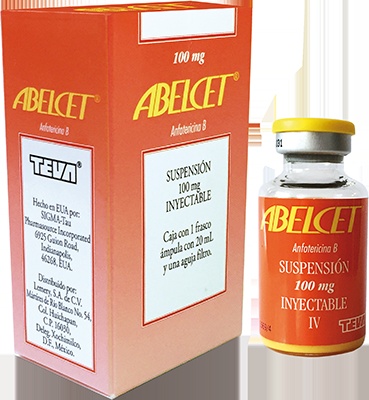
- Country of registration
- Dosage formINJECTABLE PERFUSION, 5 mg amphotericin B/ml
- ATC codeJ02AA01
- Availability in pharmaciesSupply issue reported
- Active substance
- Prescription requiredYes
- Manufacturer
- CompositionDMPG (DIMIRISTOIL FOSFATIDIL GLICEROL) (1,5 mg mg), CLORURO DE SODIO (9,0 mg mg)
- This information is for reference only and does not constitute medical advice. Always consult a doctor before taking any medication. Oladoctor is not responsible for medical decisions based on this content.
- Alternatives to ABELCET LIPID COMPLEX 5 mg/ml CONCENTRATE FOR DISPERSION FOR INFUSIONDosage form: INJECTABLE PERFUSION, 50 mg of Amphotericin BActive substance: amphotericin BManufacturer: Gilead Sciences S.L.Prescription requiredDosage form: INJECTABLE PERFUSION, 100 mgActive substance: anidulafunginManufacturer: Accord Healthcare S.L.U.Prescription requiredDosage form: INJECTABLE PERFUSION, 100 mgActive substance: anidulafunginManufacturer: Laboratorios Normon S.A.Prescription required
Online doctors for ABELCET LIPID COMPLEX 5 mg/ml CONCENTRATE FOR DISPERSION FOR INFUSION
Discuss questions about ABELCET LIPID COMPLEX 5 mg/ml CONCENTRATE FOR DISPERSION FOR INFUSION, including use, safety considerations and prescription review, subject to medical assessment and local regulations.









Get ABELCET LIPID COMPLEX 5 mg/ml CONCENTRATE FOR DISPERSION FOR INFUSION Prescription Online
Fill in a 2-min form
Tell us your symptoms, history, and what medicine you're requesting.
Pick a doctor or let us assign
Choose a specialist or we'll match you with the next available doctor.
Doctor reviews your case
Usually within 30 minutes. They may ask follow-up questions via chat.
Collect from any pharmacy
Electronic prescription sent to your email — valid across Spain.
Frequently Asked Questions
ABELCET LIPID COMPLEX 5 mg/ml CONCENTRATE FOR DISPERSION FOR INFUSION requires a prescription in Spain. You can check with a doctor online whether this medicine may be appropriate for your situation.
The active ingredient in ABELCET LIPID COMPLEX 5 mg/ml CONCENTRATE FOR DISPERSION FOR INFUSION is amphotericin B. This information helps identify medicines with the same composition but different brand names.
ABELCET LIPID COMPLEX 5 mg/ml CONCENTRATE FOR DISPERSION FOR INFUSION is manufactured by Teva Pharma S.L.U.. Pharmacy brands and packaging may differ depending on the distributor.
Doctors such as Family doctors, Psychiatrists, Dermatologists, Cardiologists, Endocrinologists, Gastroenterologists, Pulmonologists, Nephrologists, Rheumatologists, Hematologists, Infectious disease physicians, Allergists, Geriatricians, Paediatricians, Oncologists may assess whether ABELCET LIPID COMPLEX 5 mg/ml CONCENTRATE FOR DISPERSION FOR INFUSION is appropriate, depending on your situation and local regulations. You can book an online consultation to discuss your symptoms and possible next steps.
Spain has a well-developed healthcare infrastructure across major cities such as Madrid, Barcelona, Valencia, and Seville. Pharmacies are widely available and operate under strict regulations, ensuring access to prescribed medications.
You can buy ABELCET LIPID COMPLEX 5 mg/ml CONCENTRATE FOR DISPERSION FOR INFUSION in Madrid, Barcelona, Seville, or Valencia at any local pharmacy with a valid prescription.
To obtain a prescription, you can use Oladoctor:
Other medicines with the same active substance (amphotericin B) include AMBISOME LIPOSOMAL 50 mg POWDER FOR DISPERSION FOR INFUSION, ANIDULAFUNGINA ACCORD 100 mg POWDER FOR CONCENTRATE FOR INFUSION SOLUTION, ANIDULAFUNGINA NORMON 100 mg POWDER FOR CONCENTRATE FOR INFUSION SOLUTION. These may have different brand names or formulations but contain the same therapeutic ingredient. Always consult a doctor before switching or starting a new medicine.
