

Brain aneurysm
An aneurysm is a bulge on the wall of an artery in the brain, shaped rather like a berry on a thin stalk. The wall there is weaker and thinner than normal.

Prescription request online
A doctor will review your case and issue a prescription if medically appropriate.
Talk to a doctor online
Discuss your symptoms and possible next steps with a doctor online.


On this page
Medicines commonly prescribed for Brain aneurysm
For informational purposes only. Always consult a doctor before using any medicine.
 ATORVASTATIN TEVA-RATIO 40 mg FILM-COATED TABLETSIllustrative imageDosage form: TABLET, 40 mgActive substance: atorvastatinManufacturer: Teva B.V.Prescription required
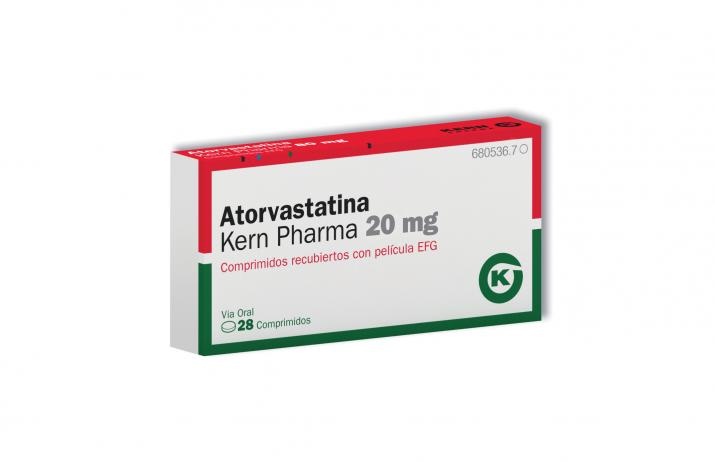 ATORVASTATIN KERN PHARMA 20 mg FILM-COATED TABLETSIllustrative imageDosage form: TABLET, 20 mgActive substance: atorvastatinManufacturer: Kern Pharma S.L.Prescription requiredATORVASTATIN SUN 20 mg FILM-COATED TABLETSIllustrative imageDosage form: TABLET, 20 mgActive substance: atorvastatinManufacturer: Sun Pharmaceutical Industries (Europe) B.V.Prescription required
An aneurysm is a bulge on the wall of an artery in the brain, shaped rather like a berry on a thin stalk. The wall there is weaker and thinner than normal. Most of these bulges give no sign at all and are found by chance, when the head is scanned for something else entirely. They carry a single danger, but a serious one: an aneurysm can rupture, and blood then spills beneath the membranes covering the brain. Only a minority ever rupture, and much of what raises that risk can be changed.
Why an artery wall bulges
The arteries of the brain branch at sharp angles, and at those forks the stream of blood strikes the wall hardest. If the wall there is weaker to begin with, or something is steadily wearing it down, it starts to give.
- Smoking. The heaviest factor among those a person controls: it raises both the chance of an aneurysm forming and the chance of it rupturing.
- High blood pressure. Especially when untreated, or treated only now and then.
- Family history. Close relatives are what count: parents, brothers and sisters, children. Two or more affected relatives put the risk on a different footing.
- Connective tissue and kidney conditions. Polycystic kidney disease, the vascular form of Ehlers-Danlos syndrome, fibromuscular dysplasia.
- Cocaine and amphetamines. A sharp surge of pressure against an already weak wall is a common cause of rupture in young people.
- Injury or infection of the vessel wall. Rare, but real.
Age and female sex also shift the odds upwards, but nothing can be done about them, whereas smoking and blood pressure can be addressed.
Why an aneurysm is usually silent
While the bulge is small it presses on nothing and gives itself away in no manner at all. Headaches, tiredness and ringing in the ears do not by themselves point to an aneurysm. That is precisely why most are found by accident.
A large aneurysm can press on neighbouring structures, and then there may be pain around or behind the eye, double vision, altered sensation over the face and, less often, a narrowed field of view.
Two signals that must not be missed
This is the most valuable part of the subject, because both signals run ahead of the catastrophe and both are routinely dismissed as trivial.
A drooping eyelid and a widened pupil on one side. If the eyelid suddenly falls, the pupil becomes larger than the other one, double vision appears and the eye socket aches alongside, it can mean the aneurysm has grown and is pressing on the nerve that moves the eye. That situation is treated as threatening and must be sorted out the same day, not the following week. The difference from an ordinary migraine is simple: in migraine the pupil stays normal.
A sentinel headache. In the days or weeks before a rupture, some people go through a sudden severe headache that settles on its own within hours or days. It may be a small leak of blood, the warning of the real rupture to come. A sudden headache unlike anything experienced before needs investigating even if it has fully passed by the time of the appointment.
What a rupture looks like
A rupture is recognisable by one feature that does not mislead: speed. The pain reaches its peak within seconds, like a blow; people describe it as the worst of their lives. Vomiting, a stiff neck and severe discomfort in light follow, sometimes loss of consciousness or a seizure.
Call an ambulance (112 across much of Europe, or your local emergency number) if someone suddenly has:
- an unbearable headache that came on within seconds;
- one side of the face dropping, with difficulty smiling;
- weakness or numbness in an arm or down one whole side;
- slurred speech or an inability to find words;
- blurred vision or loss of sight;
- loss of consciousness or jerking movements.
Do not drive yourself and do not take the person to hospital by car: consciousness may be lost again on the way, whereas the ambulance crew begins treatment in the vehicle and heads for a hospital with neurosurgery. Until they arrive, lie the person down, loosen tight clothing, and give nothing to eat or drink.
In hospital a CT scan comes first. If the scan is clean but the story remains convincing, spinal fluid is sampled: blood beneath the membranes shows up there even once the scanner no longer reveals it. The vessels themselves are examined by angiography.
Watch or seal
A small aneurysm without symptoms usually needs nothing beyond repeat imaging at agreed intervals; it may go years without changing. The decision turns on size, location, shape, the person's age, and whether the bulge is growing from one scan to the next. Intervening carries its own risk, and the doctor weighs one against the other together with the patient.
If the risk of rupture is high, or a rupture has already happened, the aneurysm is shut off from the circulation. There are two ways. In clipping, the skull is opened and a small metal clip is placed across the neck of the bulge. In the endovascular route, the aneurysm is reached through an artery in the thigh or wrist and packed with fine platinum coils, or its entrance is covered with a mesh; the blood inside clots and the cavity is taken out of circulation. Both are done under general anaesthetic, and which one suits depends on where the aneurysm sits and how its neck is shaped.
What is in your hands
If an aneurysm has been found and the plan is to watch it, its course really can be influenced.
- stop smoking: no single action gives a larger return;
- keep blood pressure at target and measure it at home, not only at appointments;
- avoid cocaine and stimulants, and be careful with alcohol;
- move regularly and without chasing records; straining against a closed breath and lifting maximal weights are worth discussing with the doctor;
- attend follow-up scans on the date set, even when nothing is troubling you.
A separate word about relatives. If two close relatives have had a rupture, or the person has polycystic kidney disease, other adults in the family should discuss having the brain vessels examined. One affected relative is usually not enough on its own.
Driving is settled individually: after a rupture or an operation it is off limits for a period, and the rules and timescales differ between countries. Check them with the doctor looking after you.
Online consultation
A sudden severe headache calls for an ambulance, not an online appointment. A doctor at a distance is useful in the calm situation: going through the scan report in which an aneurysm turned up by chance, explaining what its size and position mean, helping to set up monitoring and blood pressure control, judging whether there is reason to screen relatives, and suggesting what to ask the neurosurgeon before any decision about surgery.
This material is for information only and does not replace medical advice.
Consult with a doctor about Brain aneurysm
Discuss your symptoms and possible next steps with a doctor online.
Online doctors for Brain aneurysm
Discuss your symptoms and possible next steps for Brain aneurysm with a doctor online.