


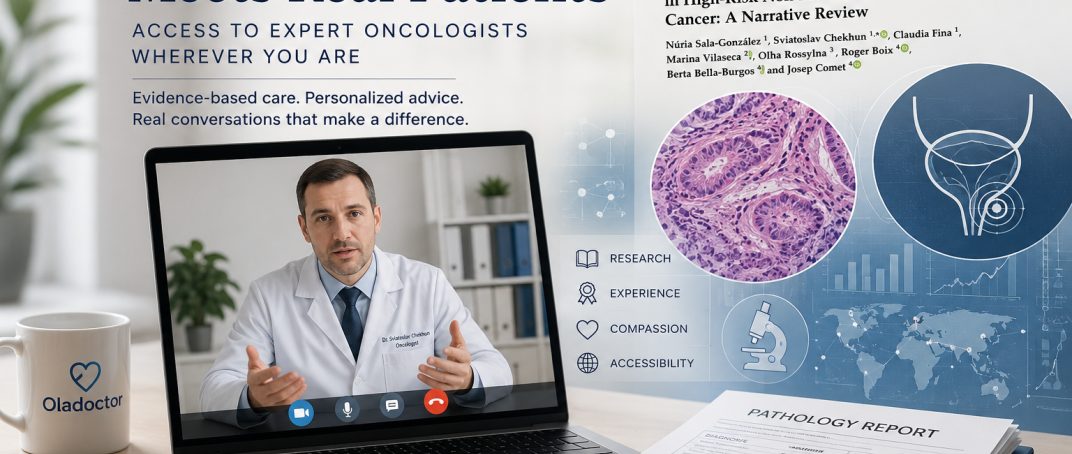
Every year thousands of people receive a cancer diagnosis and face the same difficulty. Not understanding the diagnosis itself — understanding what it means for them. Two patients can hold the same pathology report and still need completely different treatment strategies.
Pathology answers more questions than it used to
For a long time a pathology report mainly answered one: is cancer present.
Today it answers considerably more. Modern pathology helps a clinician estimate the likelihood of recurrence, the probability of progression, the expected response to treatment and how intensive follow-up ought to be.
That matters most where the margin between options is narrow. In high-risk non-muscle-invasive bladder cancer, for instance, the choice of surveillance and treatment strategy meaningfully influences long-term outcomes. Current research keeps looking for pathology-based markers that improve risk stratification while staying affordable enough for real health systems to use.
Oncology as a whole has been moving the same way: away from one-size-fits-all, towards risk assessment that combines pathology, molecular biology and clinical evidence.
Research that connects the laboratory to the clinic
A recent narrative review in the peer-reviewed journal *Cancers* examines low-cost pathological signals that may improve risk stratification in patients with high-risk non-muscle-invasive bladder cancer.
Among its authors is Dr Sviatoslav Chekhun, an oncologist licensed in Spain, working with an international team of researchers from institutions in Spain and Ukraine.
The review looks at whether routinely available pathological features — rather than only expensive molecular testing — can help clinicians identify which patients are more likely to benefit from closer monitoring or a different therapeutic approach. The authors are explicit that these approaches complement established clinical guidelines and multidisciplinary decision-making; they do not replace them.
That distinction is worth noticing. Useful research usually makes an existing decision better informed rather than announcing a revolution.
Why it matters whether your doctor is research-active
Medical knowledge moves quickly. New evidence appears every week, and guidelines are revised to reflect it.
For a patient that creates a fair question: is my treatment based on yesterday's knowledge or today's?
Clinicians who contribute to the scientific literature are continuously reading evidence, evaluating new data critically and taking part in the discussions that shape future practice.
This does not mean every patient needs experimental therapy. Far more often it means being able to have an informed conversation about the options that already exist — understanding why a particular recommendation was made, and knowing which questions are worth asking.
What an online consultation can realistically do
For many patients — expatriates, international residents, or anyone living far from a major cancer centre — getting an expert opinion is genuinely difficult.
Telemedicine does not replace cancer care, and is not meant to. Diagnostic procedures, imaging, surgery, chemotherapy and most treatment require in-person care with a local team.
What a remote consultation can do is narrower and still useful:
go through a pathology report and what its findings mean;
understand treatment options proposed by another physician;
review recent evidence relevant to a specific diagnosis;
prepare questions before an appointment at an oncology centre;
obtain a second medical opinion where that is appropriate.
None of that competes with your treating team. It changes how well prepared you are when you sit down with them — and, for anyone who has left an appointment realising three good questions half an hour too late, that is not a small thing.
If a second opinion is what you are looking for, consultations with an oncologist can be arranged online.
This article is informational. It does not replace emergency care or ongoing treatment with your local oncology team.

Comments
Be the first to comment on this article.
Sign in to leave a comment
Your comment will be visible to other readers after moderation.