


FORTECORTIN 1 mg TABLETS



How to use FORTECORTIN 1 mg TABLETS
Translated with AI
This page provides general information and does not replace a doctor’s consultation. Always consult a doctor before taking any medication. Seek urgent medical care if symptoms are severe.
Show originalContents of the leaflet
Introduction
Package Leaflet: Information for the User
Fortecortin 1 mg Tablets
Dexamethasone
Read all of this leaflet carefully before you start taking this medicine because it contains important information for you.
- Keep this leaflet, you may need to read it again.
- If you have any further questions, ask your doctor or pharmacist.
- This medicine has been prescribed for you only. Do not pass it on to others. It may harm them, even if their signs of illness are the same as yours.
- If you get any side effects, talk to your doctor or pharmacist. This includes any possible side effects not listed in this leaflet. See section 4.
Contents of the pack:
- What is Fortecortin 1 mg and what is it used for
- What you need to know before you take Fortecortin 1 mg
- How to take Fortecortin 1 mg
- Possible side effects
- Storage of Fortecortin 1 mg
- Contents of the pack and other information
1. What is Fortecortin 1 mg and what is it used for
Dexamethasone is a synthetic glucocorticoid (adrenocortical hormone) derived from cortisone, which regulates many of the body's metabolic processes.
Fortecortin 1 mg is used to treat:
- Inflammatory processes secondary to tumors and brain abscesses and neurosurgery.
- Severe acute asthma.
- Severe skin diseases.
- Certain autoimmune diseases (lupus erythematosus).
- Active rheumatoid arthritis.
- Prevention and treatment of nausea and vomiting that occur during treatment with anticancer agents.
Fortecortin 1 mg tablets are used to treat coronavirus disease 2019 (COVID-19) in adult and adolescent patients (from 12 years of age with a body weight of at least 40 kg) with difficulty breathing and who require oxygen therapy.

2. What you need to know before you take Fortecortin 1 mg
Do not take Fortecortin 1 mg
- If you are allergic to dexamethasone or any of the other ingredients of this medicine (listed in section 6).
Warnings and precautions
Consult your doctor or pharmacist before starting treatment with this medicine.
Depending on the dose and duration of treatment, glucocorticoid-induced adrenal insufficiency may persist for months and in individual cases up to one year after treatment is discontinued. Acute adrenal insufficiency induced by therapy can be minimized by gradual dose reduction if withdrawal is planned.
Treatment with this medicine may increase the risk of infections, and diagnosis of these may be more difficult. Latent infections (infections that do not show symptoms) such as tuberculosis or hepatitis B may be reactivated.
Long-term treatment with dexamethasone should only be established when strictly necessary and should be associated with specific treatment corresponding to each case.
In some cases, strict control of treatment by your doctor will be necessary. You should inform your doctor if you have any of the following symptoms:
- Patients suffering from acute and chronic bacterial infections should receive treatment with specific antibiotics, such as patients with a history of tuberculosis (infectious disease), who can only receive treatment with Fortecortin under the protection of antitubercular drugs.
- Generally, in patients who have received or will receive any vaccine, particularly if lymph node inflammation (glands that help defend the body) is observed after receiving the tuberculosis vaccine.
- In viral infections: hepatitis B, chickenpox, herpes, measles, poliomyelitis, herpetic keratitis. Special precautions are recommended if you are immunosuppressed or if you have not had measles or chickenpox and are in contact with people with measles or chickenpox.
- Infections caused by fungi or parasites.
- In patients with chronic hepatitis (liver inflammation).
- Difficult-to-control diabetes mellitus (increased blood sugar).
- Osteoporosis (loss of calcium in the bones).
- Severe heart failure.
- Difficult-to-control high blood pressure.
- Peptic ulcer.
- Inflammatory diseases of the digestive system.
- If you suffer from psychiatric disorders.
- If you have lymph node inflammation (glands that help defend the body) after being administered the tuberculosis vaccine.
- If you have glaucoma (increased pressure inside the eye) or eye ulcers.
- Symptoms of tumor lysis syndrome such as: muscle cramps, muscle weakness, confusion, vision loss or alteration, and difficulty breathing, in case you suffer from a malignant hematological process.
Long-term treatment with this medicine requires periodic medical monitoring, including vision checks every 3 months.
Contact your doctor if you experience blurred vision or other visual disturbances.
Signs of peritoneal irritation due to gastrointestinal perforation may not appear if you are taking high doses of this medicine.
If you take fluoroquinolones (substances with antibiotic activity) and corticosteroids (substances with anti-inflammatory properties), the risk of tendon alterations increases.
In cases of fever, accidents, surgery, or childbirth, a temporary increase in the daily dose of this medicine may be necessary.
Severe allergic reactions may occur.
Treatment with this medicine can worsen existing myasthenia gravis (a neuromuscular disease).
High doses of dexamethasone require adequate potassium supplements and sodium restrictions in the diet; and plasma potassium levels should be monitored.
Administration of high doses of dexamethasone can cause a slower heart rate.
Children and adolescents
Fortecortin should not be used routinely in premature children with respiratory problems.
The growth of children should be regularly monitored (see section 4).
Elderly patients
In elderly patients, the doctor should assess the benefits and risks of treatment.
Other medicines and Fortecortin 1 mg
Tell your doctor or pharmacist if you are taking, have recently taken, or might take any other medicines.
Some medicines may increase the effects of Fortecortin, so your doctor will perform thorough checks if you are taking these medicines (including some for HIV: ritonavir, cobicistat).
Taking dexamethasone with some of the following medicines may modify the effect of both dexamethasone and the medicine in question:
- Estrogens (e.g., birth control pills),
- Enzyme inhibitors such as antifungal medications (itraconazole, ketoconazole, and amphotericin B),
- Antacids (e.g., aluminum hydroxide, magnesium hydroxide), the intake of these medicines should be spaced two hours apart,
- Enzyme inducers such as tuberculosis medications (rifampicin), epilepsy medications (phenytoin, carbamazepine, and primidone),
- Sedatives (barbiturics),
- Central nervous system stimulants (ephedrine),
- Heart medications (digitalis),
- Medications for high blood pressure or to promote urine elimination (diuretics),
- Laxatives,
- Medications for diabetes treatment (oral antidiabetics and insulin),
- Medications to control blood coagulation (oral anticoagulants). The dose of the anticoagulant may need to be adjusted,
- NSAIDs: anti-inflammatory or anti-rheumatic medications (e.g., indomethacin or salicylates) increase the risk of ulcers and gastrointestinal bleeding,
- Medications that relax muscles used for relief of spasms or contractions of the stomach, intestine, and bladder (rocuronium, vecuronium, atropine, or other anticholinergic medications),
- Antiparasitic medication (praziquantel),
- Malaria medications (chloroquine, hydroxychloroquine, mefloquine), as they may increase the risk of myopathy and cardiomyopathy (muscle or cardiac muscle disease, respectively),
- Growth hormone (somatotropin),
- Medications for thyroid gland problem diagnosis (prolactin),
- Immunosuppressive substances and cyclosporin (medications to prevent organ transplant rejection),
- Some antibiotics (fluoroquinolones), which may increase the risk of tendon alterations.
Interference with laboratory tests
Skin tests for allergy tests may give false results.
Do not stop taking any other steroid medication unless your doctor has told you to.
Talk to your doctor, pharmacist, or nurse before this medicine is administered to you.
Pregnancy, breastfeeding, and fertility
If you are pregnant or breastfeeding, think you may be pregnant, or are planning to have a baby, ask your doctor or pharmacist for advice before taking this medicine.
This medicine should not be taken during pregnancy and breastfeeding unless your doctor prescribes it. He will indicate whether you should stop breastfeeding or discontinue the administration of this medicine.
Driving and using machines
No studies on the ability to drive and use machines have been performed.
Use in athletes
Athletes are informed that this medicine contains a component that can produce a positive result in doping tests.
Fortecortin 1 mg contains lactose
This medicine contains lactose. If your doctor has told you that you have an intolerance to some sugars, consult with him before taking this medicine.
3. How to take Fortecortin 1 mg
Take Fortecortin 1 mg only as your doctor has told you. Your doctor will decide how long you should take dexamethasone. If you are unsure, consult your doctor or pharmacist again.
The tablets should be taken whole, during or after meals, with sufficient liquid.
Generally, the total daily dose will be taken in one intake, preferably in the morning, during or after breakfast, although it may be necessary to divide the dose into several intakes a day in patients who require high doses to achieve the maximum effect.
The treatment dose will depend on the type and severity of the disease and the individual patient's response. Your doctor will indicate the dose you should take, adjusting it to your needs, as well as the duration of treatment.
The dose should be high enough and the duration of treatment long enough, but on the other hand, the minimum effective dose should be maintained for the shortest possible time.
If you think the action of this medicine is too strong or too weak, tell your doctor or pharmacist.
For the treatment of Covid-19
In adult patients, it is recommended to take 6 mg orally once a day, up to a maximum of 10 days.
Use in adolescents
It is recommended to administer 6 mg orally once a day to pediatric patients (adolescents from 12 years of age), up to a maximum of 10 days.
If you take more Fortecortin 1 mg than you should
In case of overdose or accidental ingestion, consult your doctor or pharmacist immediately or call the Toxicology Information Service, phone: 91 562 04 20, indicating the medicine and the amount used.
No acute intoxications with dexamethasone are known. In the event of an overdose, it is expected that the adverse reactions described in this leaflet will occur to a greater extent.
No antidote for dexamethasone is known.
If you forget to take Fortecortin 1 mg
Do not take a double dose to make up for forgotten doses.
If you forget to take your corresponding dose, take it as soon as you remember. However, if the time for the next dose is very close, skip the forgotten dose and take the next dose at the usual time.
If you stop taking Fortecortin 1 mg
Do not stop treatment before your doctor indicates it, or abruptly, as it may worsen your disease.
Dose reduction should be done progressively. Similarly, treatment suspension should always be done progressively.
Excessive rapid reduction of the dose after long-term treatment can cause muscle and joint pain. Your doctor will gradually reduce the dose you should take.
If you interrupt long-term treatment, an increase in disease symptoms or a relapse may occur, acute adrenal insufficiency (alteration of the production of certain hormones), and cortisone withdrawal syndrome characterized by general discomfort, weakness, and muscle pain, difficulty breathing, loss of appetite, nausea, vomiting, fever, decreased blood pressure, and decreased blood glucose levels, among other symptoms.
If you have any other questions about the use of this medicine, ask your doctor or pharmacist.

4. Possible side effects
Like all medicines, this medicine can cause side effects, although not everybody gets them.
During the period of use of this medicine, the following side effects have been observed, whose frequency could not be established with precision:
- Alteration of blood cells (white blood cells and lymphocytes, among others).
- Localized obesity in the abdomen and face (Cushing's syndrome).
- Glaucoma, cataracts, worsening of corneal ulcers, and infections.
- Peptic ulcer, gastrointestinal bleeding, pancreatitis, stomach discomfort.
- Wounds take longer to heal.
- Hypersensitivity reactions, severe allergic reactions such as: heart rhythm problems, bronchospasm, blood pressure changes, circulatory failure, cardiac arrest.
- Existing infections may worsen, and new infections may appear, difficult to diagnose.
- Fluid retention (edema), potassium loss (which can cause heart rhythm changes), weight gain, increased blood sugar, diabetes mellitus, increased cholesterol and triglyceride levels in the blood, increased appetite, delayed growth in children.
- Muscle diseases and muscle weakness, tendon alterations, tendinitis, tendon ruptures, loss of calcium in the bones, osteoporosis, delayed growth in children.
- Rapid reduction of the dose after long-term treatment can cause muscle and joint pain.
- Increased intracranial pressure (especially in children), increased spasms in epileptic patients, or onset of epilepsy.
- Depression, hallucinations, emotional instability, irritability, increased activity, psychosis, mania, euphoria, anxiety, sleep disturbances, suicidal thoughts.
- Irregular or absent menstruation, sexual impotence, excessive hair growth.
- Acne or other skin problems (allergy, bruising, stretch marks), edema, skin color changes, dermatitis around the mouth.
- Hypertension, increased risk of arteriosclerosis (narrowing and hardening of the arteries) and thrombosis (blood clot formation), vasculitis, capillary fragility.
- Visual disturbances, vision loss, blurred vision.
- Hiccups.
Reporting of side effects
If you experience any side effects, talk to your doctor or pharmacist, even if it is possible side effects not listed in this leaflet. You can also report them directly through the Spanish Pharmacovigilance System for Human Use Medicines: www.notificaram.es.
By reporting side effects, you can help provide more information on the safety of this medicine.
5. Storage of Fortecortin 1 mg
Keep this medicine out of the sight and reach of children.
Do not use this medicine after the expiration date stated on the packaging after EXP. The expiration date is the last day of the month indicated.
Store below 30 °C.
Medicines should not be disposed of via wastewater or household waste. Place the packaging and any unused medicine in the SIGRE collection point at the pharmacy. If in doubt, ask your pharmacist how to dispose of the packaging and any unused medicine. This will help protect the environment.
6. Contents of the pack and other information
Composition of Fortecortin 1 mg
- The active ingredient is dexamethasone. Each tablet contains 1 mg of dexamethasone.
- The other ingredients are lactose monohydrate, cornstarch, talc, and magnesium stearate.
Appearance of the product and packaging content
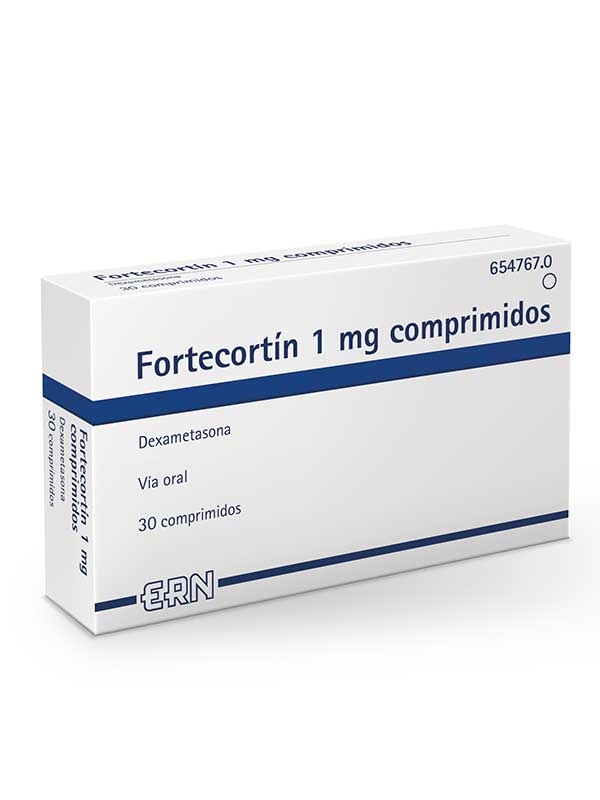
Fortecortin 1 mg is presented in the form of white, round, biconvex tablets with a line crossing one face and smooth on the other.
Marketing authorization holder
Laboratorios ERN, S.A.
Perú, 228
08020 Barcelona, Spain
Manufacturer
Merck, S.L.
Merck Industrial Park
08100 Mollet del Vallés (Barcelona)
or
Laboratorios ERN, S.A.
Gorgs Lladó, 188
08210 Barberá del Vallés, Barcelona, Spain.
or
CYNDEA PHARMA, S.L.
Emiliano Revilla Sanz Industrial Estate.
Ágreda Avenue, 31 – 42110 Ólvega (Soria)
Date of the last revision of this leaflet: July 2023.
Detailed and updated information on this medicine is available on the website of the Spanish Agency for Medicines and Health Products (AEMPS) http://www.aemps.gob.es/.
- Country of registration
- Average pharmacy price4.34 EUR
- Active substance
- Prescription requiredYes
- Manufacturer
- This information is for reference only and does not constitute medical advice. Always consult a doctor before taking any medication. Oladoctor is not responsible for medical decisions based on this content.
- Alternatives to FORTECORTIN 1 mg TABLETSDosage form: TABLET, 20 mgActive substance: dexamethasoneManufacturer: Mabo Farma S.A.Prescription requiredDosage form: TABLET, 4 mgActive substance: dexamethasoneManufacturer: Mabo Farma S.A.Prescription requiredDosage form: TABLET, 8 mgActive substance: dexamethasoneManufacturer: Mabo Farma S.A.Prescription required
Online doctors for FORTECORTIN 1 mg TABLETS
Discuss questions about FORTECORTIN 1 mg TABLETS, including use, safety considerations and prescription review, subject to medical assessment and local regulations.







Frequently Asked Questions
