


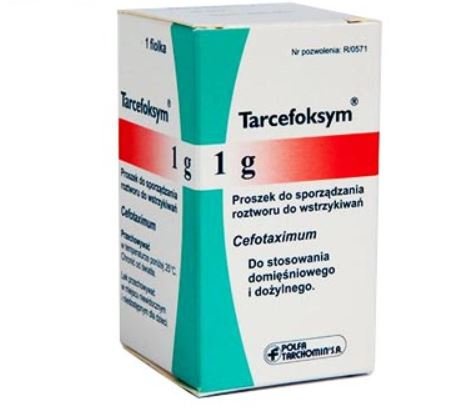
Tarcefoksim
Ask a doctor about a prescription for Tarcefoksim




How to use Tarcefoksim
CHARACTERISTICS OF THE MEDICINAL PRODUCT
1. NAME OF THE MEDICINAL PRODUCT
Tarcefoksym, 1 g, powder for solution for injection
2. QUALITATIVE AND QUANTITATIVE COMPOSITION
One vial contains 1 g of cefotaxime (Cefotaximum) in the form of cefotaxime sodium salt.
The medicinal product contains: sodium. 1 g of powder contains 48 mg of sodium (2.1 mmol).
3. PHARMACEUTICAL FORM
Powder for solution for injection.
White or light yellow powder.
4. CLINICAL PARTICULARS
4.1 Therapeutic Indications
Cefotaxime is indicated for the treatment of severe infections caused by bacteria sensitive to this antibiotic.
Lower respiratory tract infections: especially acute and chronic bronchitis, bacterial pneumonia, lung abscess.
Urinary tract infections: e.g. acute and chronic pyelonephritis, cystitis, asymptomatic bacteriuria.
Uncomplicated gonorrhea in case of allergy to penicillins or resistance (Neisseria gonorrhoeae strains producing penicillinase).
Infections in obstetrics and gynecology.
Infections of the abdominal cavity: e.g. peritonitis.
Infections of the skin and soft tissues: e.g. cellulitis, wound infection.
Infections of bones and joints: e.g. osteomyelitis, septic arthritis.
Meningitis.
Prophylactically before surgical procedures, especially in the abdominal cavity, gastrointestinal tract, genitourinary tract, during cesarean section, if there is a risk of bacterial infection.
When administering cefotaxime, official guidelines for the proper use of antibacterial agents should be taken into account.
4.2 Posology and Method of Administration
The dose depends on the severity of the infection, the sensitivity of the microorganism causing the infection, the patient's condition, age, and weight.
Tarcefoksym is also available in a 2 g powder for solution for injection.
Dosage
Adults
- uncomplicated infections: 1 g every 12 hours;
- moderately severe infections: 2 g every 12 hours;
- severe infections (e.g. sepsis): 2 g every 6 to 8 hours;
- life-threatening infections: doses may be increased to 2 g every 4 hours (maximum 12 g per day);
- uncomplicated gonorrhea: 1 g once.
Prophylactically:
- before surgery: 1 g iv or im 90 to 30 minutes before surgery;
- cesarean section: the first dose of 1 g should be given as soon as possible after umbilical cord clamping, and the same dose should be given iv or im after 6 and 12 hours.
Children
The following are the usual doses used.
Newborns: 50 mg/kg body weight per day im or iv in 2 to 4 divided doses. In severe infections, 150 to 200 mg/kg body weight per day can be given in divided doses.
Infants and children: 100 to 150 mg/kg body weight per day im or iv in 2 to 4 divided doses. In severe infections, the daily dose of the drug can be increased to 200 mg/kg body weight.
Children over 12 years old (with a body weight over 50 kg): the dosage is the same as for adults.
Elderly patients
Treatment should be carried out according to a strictly established dosage. In elderly patients with impaired renal function, dose modification is necessary (see: Dosage in patients with renal impairment).
Patients with renal impairment
Due to the slowing down of the elimination process and the risk of increased serum concentration, in patients with renal impairment, the dosage of cefotaxime should be adjusted according to creatinine clearance. No dose modification is necessary if creatinine clearance is greater than 20 ml/min/1.73 m. If creatinine clearance is lower, the dose should be reduced by half. It is not necessary to prolong the intervals between individual doses.
Duration of treatment
The duration of treatment depends on the severity and type of infection.
After the disappearance of clinical symptoms, the drug should be administered for another 2 to 3 days. In the case of infections caused by beta-hemolytic group A streptococci, treatment should not last less than 10 days (to prevent streptococcal glomerulonephritis and rheumatic fever).
Method of administration
Intramuscular administration
Doses exceeding 1 g are recommended to be injected into two different sites. To reduce pain, the drug should be injected into large muscle groups.
Intravenous administration
It is recommended in severe infections (sepsis, meningitis) and in patients in life-threatening conditions.
The drug should be administered intravenously slowly over 3 to 5 minutes or infused over 20 to 60 minutes.
Instructions for preparing the solution for administration, see section 6.6.
4.3 Contraindications
Hypersensitivity to cefotaxime, penicillins, or cephalosporins.
4.4 Special Warnings and Precautions for Use
Anaphylactic reactions
Before starting treatment with cefotaxime, it is necessary to collect a detailed medical history regarding previously occurring hypersensitivity reactions to penicillins or cephalosporins or other beta-lactam antibiotics (see sections 4.3 and 4.8).
During treatment with cefotaxime, severe hypersensitivity symptoms in the form of anaphylactic reactions may rarely occur. The likelihood of such a reaction is higher after parenteral administration of the antibiotic. The likelihood of a hypersensitivity reaction is higher in people with a tendency to allergic reactions to many different substances. If anaphylactic shock or angioedema occurs, epinephrine should be administered first, followed by an antihistamine, and finally a corticosteroid. Basic life functions (breathing, pulse, blood pressure) should also be monitored.
Severe skin reactions
After the marketing authorization of the medicinal product, severe undesirable skin reactions (SCAR) have been reported in connection with the use of cefotaxime, including acute generalized exanthematous pustulosis (AGEP), Stevens-Johnson syndrome, toxic epidermal necrolysis, drug reaction with eosinophilia and systemic symptoms (DRESS), which can be life-threatening or fatal.
When prescribing the drug, patients should be informed about the objective and subjective symptoms related to skin reactions.
If objective and subjective symptoms indicating the occurrence of these reactions appear, cefotaxime should be discontinued immediately. If a patient develops AGEP, Stevens-Johnson syndrome, toxic epidermal necrolysis, or DRESS while taking cefotaxime, the treatment should not be restarted, and it should be permanently discontinued.
In children, the appearance of a rash may be mistaken for a primary infection or an alternative infectious process, and doctors should consider the possibility of a reaction to cefotaxime in children who develop symptoms of rash and fever during treatment with cefotaxime.
Administration rate
Too rapid intravenous administration of the drug (less than 60 seconds), especially into central veins, may cause life-threatening cardiac rhythm disturbances.
Gastrointestinal warnings
Cefotaxime should be administered with caution to patients with a history of gastrointestinal diseases, especially colitis.
Particular caution should be exercised if a patient develops severe, persistent diarrhea during treatment with the drug. It may be a symptom of pseudomembranous colitis (in most cases caused by toxins of excessively multiplying Clostridioides difficile bacteria in the intestines). In such cases, the use of cefotaxime should be discontinued, and appropriate treatment should be initiated. In milder cases, it is usually sufficient to discontinue the drug, while in more severe cases, metronidazole or vancomycin is administered orally. The use of agents that inhibit peristalsis is contraindicated.
Patients with renal impairment
Cephalosporins administered in high doses, especially to patients with renal impairment, may cause central nervous system disorders (seizures). These symptoms occur rarely, most often after the administration of first-generation cephalosporins, although they can occasionally occur after the administration of second- or third-generation cephalosporins.
The drug should be administered with caution to patients with renal impairment. If the doctor only has the serum creatinine concentration, clearance can be calculated using the formula:
body weight [kg] × (140 – age [years])
72 × serum creatinine concentration [mg/100 ml]
For women, the above value should be multiplied by 0.85.
Hematologic reactions
Cefotaxime, like other cephalosporin antibiotics, may cause neutropenia, rarely agranulocytosis, eosinophilia, thrombocytopenia, hemolytic anemia when used for a long time. In therapy lasting more than 10 days, it is recommended to monitor the peripheral blood morphology.
Lidocaine solutions
Cefotaxime dissolved in a lidocaine solution should not be administered:
- intravenously,
- to children under 30 months of age,
- to patients allergic to lidocaine,
- to patients with atrioventricular conduction disorders (does not apply to patients with a pacemaker),
to patients with severe circulatory failure.
Important information about excipients
The medicinal product contains 48 mg of sodium per vial, which corresponds to 2.4% of the maximum daily dose of sodium recommended by the WHO for adults. Taking into account the dosage regimen presented in section 4.2, the maximum amount of sodium that can be administered to a patient in the maximum daily dose is 576 mg, which corresponds to 28.8% of the maximum daily dose of sodium recommended by the WHO for adults. This should be taken into account in patients with reduced renal function and in patients controlling their sodium intake.
4.5 Interaction with Other Medicinal Products and Other Forms of Interaction
Patients allergic to penicillins may be allergic to cephalosporins (so-called cross-allergy).
Bacteriostatic antibiotics, such as tetracyclines, erythromycin, chloramphenicol, or sulfonamides, may inhibit the bactericidal effect of cephalosporins, which is particularly important during the treatment of severe infections.
Concomitant administration of cefotaxime with aminoglycosides, colistin, polymyxins, vancomycin, furosemide, or ethacrynic acid in high doses increases the risk of nephrotoxicity.
In patients treated with cefotaxime, false-positive results of reduction tests for glucose in urine may occur. If such a test is necessary, it is recommended to use enzymatic tests.
Probenecid administered concomitantly with cefotaxime increases the concentration of cefotaxime and deacetylcefotaxime and prolongs their presence in the serum.
In some patients receiving cefotaxime, a false-positive Coombs test may be observed.
4.6 Fertility, Pregnancy, and Lactation
Pregnancy
Studies conducted on animals have not shown any harmful effects of cefotaxime on the fetus.
Due to the lack of studies on the use of cefotaxime in pregnant women, it may be used during pregnancy, especially in the first trimester, only after careful consideration by the attending physician of the benefits and risks associated with the use of the drug.
Breast-feeding
Small amounts of cefotaxime pass into the milk of breast-feeding women. If a patient is breast-feeding, she should exercise great caution. The breast-fed child should be monitored.
4.7 Effects on Ability to Drive and Use Machines
There are no data on the effects of cefotaxime on psychophysical fitness. However, if side effects occur that reduce concentration (e.g., pain, dizziness; see section 4.8), driving vehicles or operating machines is not recommended.
4.8 Undesirable Effects
Undesirable effects after the administration of cefotaxime occur rarely and are usually mild and transient.
Possible undesirable effects are presented below.
Infections and infestations: infections (e.g., vaginal) with Candida fungi occur very rarely.
Blood and lymphatic system disorders: anemia, leukopenia, neutropenia, transient eosinophilia, thrombocytopenia, granulocytopenia, and agranulocytosis.
Hypersensitivity reactions:
Immune system disorders: fever, angioedema, bronchospasm, anaphylactic reactions are very rarely reported.
Skin and subcutaneous tissue disorders: rash, urticaria, erythema, drug reaction with eosinophilia and systemic symptoms (DRESS, with an unknown frequency) (see section 4.4). Additionally, in individual cases, and most often in patients with a history of asthma, hay fever, or urticaria, Stevens-Johnson syndrome, erythema multiforme, and toxic epidermal necrolysis have been observed.
If any of the above hypersensitivity reactions occur, the drug should be discontinued immediately.
Nervous system disorders: headache; cefotaxime used in high doses, especially in patients with renal impairment, may cause central nervous system disorders (e.g., changes in consciousness, seizures).
Cardiac disorders: rare cases of ventricular arrhythmia have been observed due to too rapid intravenous infusion.
Gastrointestinal disorders: abdominal pain, nausea, vomiting, diarrhea, very rarely pseudomembranous colitis.
Hepatobiliary disorders: transient increase in bilirubin and alkaline phosphatase and aminotransferase activity, transient hepatitis, and cholestatic jaundice.
Renal and urinary disorders: transient increase in urea and creatinine, rarely interstitial nephritis.
General disorders and administration site conditions: pain, irritation, phlebitis at the injection site - very rarely are a reason to discontinue cefotaxime administration.
Reporting of suspected adverse reactions
After the marketing authorization of the medicinal product, it is important to report any suspected adverse reactions. This allows for the continuous monitoring of the benefit-risk ratio of the medicinal product. Healthcare professionals should report any suspected adverse reactions via the Department of Adverse Reaction Monitoring of Medicinal Products, Medical Devices, and Biocides
Al. Jerozolimskie 181C; 02-222 Warsaw
Phone: +48 22 49 21 301
Fax: +48 22 49 21 309
Website: https://smz.ezdrowie.gov.pl
Adverse reactions can also be reported to the marketing authorization holder.
4.9 Overdose
In the event of an overdose of the drug, intensified adverse reactions may occur. In patients with renal impairment, the risk of transient encephalopathy increases. In case of an overdose, the administration of the drug should be discontinued, basic life functions should be monitored, and appropriate symptomatic treatment should be initiated if necessary.
The drug can be removed from the body by hemodialysis or peritoneal dialysis.
5. PHARMACOLOGICAL PROPERTIES
5.1 Pharmacodynamic Properties
Pharmacotherapeutic group:antibacterial agents for systemic use; beta-lactam antibiotics; cephalosporins.
ATC code: J01DD01
Cefotaxime has a bactericidal effect, which consists in inhibiting the biosynthesis of the bacterial cell wall. As a result of blocking the activity of transpeptidase, cefotaxime inhibits the formation of bonds between the pentapeptides of the bacterial cell wall mucopolysaccharide. In the further stage, due to the activation of cellular hydrolases, the bacterial cell undergoes lysis.
Below are the spectrum of antibacterial activity of cefotaxime in vitro.
Gram-positive bacteria
Staphylococcus aureus(strains producing and not producing ß-lactamases), Staphylococcus epidermidis, Enterococcus spp., Streptococcus pyogenes(group A, ß-hemolytic), Streptococcus agalactiae(group B), Streptococcus pneumoniae.
Gram-negative bacteria
Citrobacter spp., Enterobacter spp., Escherichia coli, Haemophilus influenzae(including ampicillin-resistant strains), Haemophilus parainfluenzae, Klebsiella spp.(including Klebsiella pneumoniae), Neisseria gonorrhoeae(strains producing and not producing penicillinases), Neisseria meningitidis, Proteus mirabilis, Proteus vulgaris, Proteus inconstans, Morganella morganii*, Providencia rettgeri*, Serratia spp.*, Acinetobacter spp.*
* many strains with multiple resistance are sensitive to cefotaxime.
Anaerobic bacteria
Bacteroides spp.,(including some B. fragilisstrains) , Clostridium spp.(most C. difficilestrains are resistant), Peptococcus spp., Peptostreptococcus spp., Fusobacterium spp.(including F. nucleatum)
5.2 Pharmacokinetic Properties
Absorption and distribution
Cefotaxime is not absorbed after oral administration. After intramuscular and intravenous administration, it very quickly reaches therapeutic concentrations in the blood serum. After intramuscular administration of the drug in a dose of 500 mg or 1 g, the maximum concentration of cefotaxime in the blood serum was observed after about 30 minutes and was 11.7 µg/ml and 20.5 µg/ml, respectively. After intravenous administration of cefotaxime in a dose of 500 mg, 1 g, or 2 g, the concentration of the antibiotic increased proportionally to the dose, reaching a maximum concentration of 38.9 µg/ml, 101.7 µg/ml, and 214.4 µg/ml, respectively. No accumulation of the drug in the body was found. In patients with normal renal function, the half-life of cefotaxime is 1.2 hours, and that of deacetylcefotaxime is 1.6 hours. In patients with renal impairment, preterm infants, and newborns with low birth weight, the half-life of both cefotaxime and its metabolite, deacetylcefotaxime, is prolonged. In patients with severe renal impairment (creatinine clearance 3–10 ml/min), the half-life of cefotaxime increases to 2.6 hours, and that of deacetylcefotaxime to 10 hours.
About 40% of the administered cefotaxime binds to blood proteins.
Metabolism
Cefotaxime is metabolized in the liver. 1/3 of the administered dose of the antibiotic is converted into biologically active deacetylcefotaxime and inactive lactone. Deacetylcefotaxime, as the only one among the metabolites of third-generation cephalosporins, acts synergistically with the parent compound. Deacetylcefotaxime has lower biological activity but is more resistant to the hydrolytic action of ß-lactamases produced by resistant strains, including anaerobes. Cefotaxime, when used in usual doses, reaches concentrations that inhibit the growth of most susceptible microorganisms in many tissues, organs, and body fluids. Cefotaxime penetrates well into bone, bronchial secretions, pleura, gallbladder wall, peritoneum, pericardium, bones, and also into genital organs and the middle ear. Cefotaxime and its metabolite, deacetylcefotaxime, reach high concentrations in bile. In inflammatory conditions, it also penetrates well into cerebrospinal fluid, reaching concentrations that exceed the MIC value for microorganisms causing the infection.
Cefotaxime passes through the placenta and is excreted into breast milk. Deacetylcefotaxime also reaches sufficient concentrations in tissues and body fluids to inhibit bacterial growth.
Elimination
About 80% of the administered dose of cefotaxime is excreted by the kidneys (50–60% in unchanged form), and the rest of the drug is excreted in the feces. Cefotaxime and deacetylcefotaxime can be eliminated from the body by hemodialysis or peritoneal dialysis.
5.3 Preclinical Safety Data
Studies conducted on animals that received multiple times higher doses of cefotaxime than the average doses used in humans did not show any teratogenic effects of the drug. Cefotaxime also did not show any mutagenic properties in the Ames test and the micronucleus test.
6. PHARMACEUTICAL PARTICULARS
6.1 List of Excipients
None.
6.2 Incompatibilities
Cefotaxime should not be combined in a syringe with aminoglycosides. Cefotaxime is most effective against bacteria in solutions with a pH of 5 to 7. The solution of cefotaxime should not be diluted with solvents with a pH above 7.5 or with sodium bicarbonate solution.
6.3 Shelf Life
Before opening the vial
2 years
After opening the vial and preparing the solution
In accordance with the principles of proper procedure, the solution should be administered immediately after preparation.
Solutions of cefotaxime for intravenous administration prepared in 0.9% sodium chloride solution remain stable at a temperature of 2°C to 8°C (in the refrigerator) for 24 hours, while in 5% glucose solution, they remain stable for 12 hours at a temperature of 2°C to 8°C (refrigerator).
The discoloration of the solutions from light yellow to dark yellow does not affect the activity or properties of the preparation.
6.4 Special Precautions for Storage
Store at a temperature below 25°C. Protect from light.
Storage conditions for the medicinal product after preparation of the solution, see section 6.3.
6.5 Nature and Contents of Container
A vial made of colorless glass, with a capacity of 20 ml, sealed with a rubber stopper and an aluminum cap, containing 1 g of powder, is packaged together with a leaflet in a cardboard box.
6.6 Special Precautions for Disposal and Preparation of the Medicinal Product for Administration
Administration
Preparation of solutions
Intramuscular injection
The contents of the 1 g vial should be dissolved in 4 ml of water for injections or 1% lidocaine solution (see section 4.4.).
The solution of cefotaxime in 1% lidocaine solution should be administered immediately after preparation.
Lidocaine solution should only be used for intramuscular injections.
Intravenous injection
The contents of the 1 g vial should be dissolved in 10 ml of water for injections, 0.9% sodium chloride solution, or 5% glucose solution.
Cefotaxime should not be mixed in the same syringe with an aminoglycoside.
A solution of 1 g of cefotaxime in 14 ml of water for injections is an isotonic solution.
Intravenous infusion
Cefotaxime can be administered as an intravenous infusion. To prepare the infusion solution, the contents of the 1 g vial should be dissolved in 50 ml to 100 ml of 0.9% sodium chloride solution or 5% glucose solution. The infusion should be administered over 20 to 60 minutes.
Any unused remainder of the medicinal product or its waste should be disposed of in accordance with local regulations.
7. MARKETING AUTHORIZATION HOLDER
RESPONSIBLE FOR BATCH RELEASE
Tarchomińskie Zakłady Farmaceutyczne „Polfa” Spółka Akcyjna
ul. A. Fleminga 2
03-176 Warszawa
8. MARKETING AUTHORIZATION NUMBER
Marketing authorization number: R/0571
9. DATE OF FIRST MARKETING AUTHORIZATION
AND DATE OF LAST RENEWAL
Date of first marketing authorization: 19.09.1989
Date of last renewal: 12.12.2012
10. DATE OF REVISION OF THE TEXT
OF THE SUMMARY OF PRODUCT CHARACTERISTICS
- Country of registration
- Active substance
- Prescription requiredNo
- Manufacturer
- ImporterTarchomińskie Zakłady Farmaceutyczne "Polfa" S.A.
- This information is for reference only and does not constitute medical advice. Always consult a licensed doctor before taking any medication. Oladoctor is not responsible for medical decisions based on this content.
- Alternatives to TarcefoksimDosage form: Powder, 1 gActive substance: cefotaximeManufacturer: Zakłady Farmaceutyczne POLPHARMA S.A. Zakłady Farmaceutyczne POLPHARMA S.A. Oddział Produkcyjny w DuchnicachPrescription not requiredDosage form: Powder, 2 gActive substance: cefotaximeManufacturer: Zakłady Farmaceutyczne POLPHARMA S.A. Zakłady Farmaceutyczne POLPHARMA S.A. Oddział Produkcyjny w DuchnicachPrescription not requiredDosage form: Powder, 1 gActive substance: cefotaximePrescription not required
Alternatives to Tarcefoksim in other countries
The best alternatives with the same active ingredient and therapeutic effect.
Alternative to Tarcefoksim in Ukraina
Alternative to Tarcefoksim in Hiszpania
Online doctors for Tarcefoksim
Discuss dosage, side effects, interactions, contraindications, and prescription renewal for Tarcefoksim – subject to medical assessment and local rules.






Get updates and exclusive offers
Be the first to know about new services, marketplace updates, and subscriber-only promos.

