



SULPIRYD 100 mg Tablets

Prescription review online
A doctor will review your case and decide whether a prescription is medically appropriate.

Talk to a doctor about this medicine
Discuss your symptoms and possible next steps in a quick online consultation.



How to use Sulpirid Hasco
Contents of the leaflet
- Leaflet attached to the packaging: patient information
- Sulpiryd Hasco
- 50 mg, tablets
- Sulpiryd Hasco
- 100 mg, tablets
- Sulpiryd Hasco
- 200 mg, tablets
- What is Sulpiryd Hasco and what is it used for
- Important information before taking Sulpiryd Hasco
- When not to take Sulpiryd Hasco
- Warnings and precautions
- Children and adolescents
- Sulpiryd Hasco and other medicines
- It is not recommended to take Sulpiryd Hasco with the following medicines:
- Sulpiryd Hasco should be used with caution with the following medicines, which have a sedating effect on the central nervous system, as this may enhance the effects of these medicines. These include:
- Sulpiryd Hasco with food, drink, and alcohol
- Pregnancy and breastfeeding
- Driving and operating machines
- Sulpiryd Hasco contains lactose
- How to take Sulpiryd Hasco
- Possible side effects
- How to store Sulpiryd Hasco
- Package contents and other information
Leaflet attached to the packaging: patient information
Sulpiryd Hasco

Not sure if this medicine is right for you?
Discuss your symptoms and treatment with a doctor online.
50 mg, tablets
Sulpiryd Hasco

Started taking the medicine and have questions?
Discuss your symptoms and treatment with a doctor online.
100 mg, tablets
Sulpiryd Hasco
200 mg, tablets
Sulpiridum
Read the leaflet carefully before taking the medicine, as it contains important information for the patient.
- Keep this leaflet, so you can read it again if you need to.
- If you have any doubts, consult your doctor or pharmacist.
- This medicine has been prescribed specifically for you. Do not pass it on to others. The medicine may harm another person, even if their symptoms are the same.
- If the patient experiences any side effects, including any side effects not listed in this leaflet, they should tell their doctor or pharmacist. See section 4.
Table of contents of the leaflet
- 1. What is Sulpiryd Hasco and what is it used for
- 2. Important information before taking Sulpiryd Hasco
- 3. How to take Sulpiryd Hasco
- 4. Possible side effects
- 5. How to store Sulpiryd Hasco
- 6. Package contents and other information
1. What is Sulpiryd Hasco and what is it used for
Sulpiryd Hasco tablets are intended for the treatment of severe mental disorders. The medicine prevents the action of certain substances in the brain, leading to the alleviation of disease symptoms. The active substance of the medicine, sulpiride, has antipsychotic and antidepressant effects and belongs to the group of so-called neuroleptics, benzamide derivatives. Sulpiryd Hasco is used in the treatment of:
- acute and chronic psychoses occurring in schizophrenia, especially those with impaired activity;
- depressive disorders, if treatment with other antidepressant medicines is ineffective or impossible to administer.
2. Important information before taking Sulpiryd Hasco
When not to take Sulpiryd Hasco
- If the patient is allergic to the active substance, sulpiride, or to other benzamide derivatives or to any of the other ingredients of this medicine (listed in section 6).
- If it is suspected or confirmed that the patient has a so-called chromaffin tumor (usually a benign adrenal gland tumor, which is a common cause of secondary hypertension).
1/8
- In the case of acute porphyria (a congenital or acquired disease characterized by a disorder of the enzyme system responsible for the synthesis of the blood pigment, hemin, a substance belonging to the chemical group of porphyrins).
- If the patient has tumors associated with excessive prolactin secretion (e.g., pituitary adenoma, breast cancer).
- In the case of concomitant administration of medicines containing levodopa.
- In breastfeeding women.
- In children and adolescents under 14 years of age.
Warnings and precautions
Before starting treatment with Sulpiryd Hasco, discuss it with your doctor or pharmacist. In some patients, sulpiride administered in high doses has caused motor agitation. In the phase of aggression or agitation, small doses of the medicine may exacerbate such symptoms. Caution should be exercised in case of so-called hypomania (a state of elevated mood, characterized by increased energy, reduced need for sleep, increased physical and mental efficiency). In aggressive or agitated patients who also exhibit impulsivity, sulpiride-containing medicines can be administered together with an appropriately selected sedative by the doctor. Particular caution should be exercised when administering sulpiride to patients with Parkinson's disease, for whom neuroleptic treatment is necessary. In a small number of patients, extrapyramidal symptoms (e.g., hand tremors, head, sudden muscle contractions, inability to sit or stay in one place, strange, rhythmic uncontrolled movements, most often in the face) and restlessness (akathisia) may occur, and the doctor may recommend reducing the dose of the medicine or using anti-Parkinson's disease medicines. Similarly, as with other so-called neuroleptic medicines, the possibility of a severe side effect, namely malignant neuroleptic syndrome (characterized by, among other things, increased body temperature, muscle stiffness, instability of the autonomic nervous system, impaired consciousness, increased activity of certain enzymes in the blood, such as creatine kinase - CPK), which can be life-threatening, should be taken into account. In case of such symptoms, the use of all antipsychotic medicines, including sulpiride, should be discontinued. After sudden discontinuation of antipsychotic medicines, acute symptoms may occur, including nausea, vomiting, increased sweating, and insomnia. There may also be a recurrence of the disease and the occurrence of involuntary movements (akathisia, dystonia, dyskinesia). Therefore, it is recommended to gradually discontinue the medicine. Neuroleptics can lower the seizure threshold. After administering sulpiride, cases of seizures have been reported in patients who had not previously experienced them. During sulpiride administration, caution should be exercised in patients with unstable epilepsy, and patients with a history of seizures should be closely monitored. The dosage of antiepileptic medicines should not be changed in patients who require concomitant administration of sulpiride. As with other medicines that are mainly excreted by the kidneys, caution should be exercised when administering sulpiride to patients with renal failure. The dose of sulpiride should be reduced and adjusted gradually. Sulpiride may increase the risk of severe heart rhythm disorders - so-called ventricular arrhythmias. Caution should be exercised when administering sulpiride to patients with heart rhythm disorders and cardiovascular disorders. Sulpiride should be avoided in combination with other neuroleptics. 2/8 Caution should be exercised when administering the medicine, especially if the patient or their family members have a history of venous thrombosis. The use of this type of medicine is associated with the risk of venous thrombosis. Sulpiride should be used with caution in patients at risk of stroke. Elderly patients Usually, the same doses are used as in younger adults, but elderly patients may be more prone to certain side effects of sulpiride, such as orthostatic hypotension, excessive sedation, and extrapyramidal symptoms. Therefore, in these patients, sulpiride, like other neuroleptic medicines, should be used with caution. In elderly patients with impaired renal function, the doctor will recommend an appropriate dose reduction, depending on the patient's condition. Patients with renal and/or hepatic impairment In patients with impaired renal and/or hepatic function, the doctor will recommend an appropriate dose reduction, depending on the patient's condition.
Children and adolescents
Due to the lack of sufficient clinical data, sulpiride should not be used in children and adolescents under 14 years of age.
Sulpiryd Hasco and other medicines
Tell your doctor about all medicines you are currently taking or have recently taken, as well as any medicines you plan to take. Sulpiryd Hasco should not be taken with medicines containing levodopa. During treatment with Sulpiryd Hasco, avoid taking any alcoholic beverages and medicines containing alcohol.
It is not recommended to take Sulpiryd Hasco with the following medicines:
- those that cause a decrease in heart rate - so-called bradycardia, such as beta-blockers, calcium channel blockers (e.g., diltiazem and verapamil), clonidine, guanfacine, and medicines with similar effects to digitalis;
- those that cause electrolyte imbalance, especially those that lead to a decrease in potassium levels in the blood - so-called hypokalemia (diuretics, medicines that stimulate gastrointestinal motility, intravenously administered amphotericin B, glucocorticoids, tetracosactide); in such cases, the doctor will recommend appropriate potassium supplements;
- so-called antiarrhythmic medicines (belonging to class Ia, such as quinidine, disopyramide, class III, such as amiodarone, sotalol);
- other medicines, such as pimozide, sultopride, haloperidol, methadone, tricyclic antidepressants derived from imipramine, halofantrine, lithium, cyzapride, bepridil, tiorydazine, intravenously administered vincamine, ethamidine, erythromycin, sparfloxacin.
Sulpiryd Hasco should be used with caution with the following medicines, which have a sedating effect on the central nervous system, as this may enhance the effects of these medicines. These include:
- analgesics, antitussives, and medicines used in substitution therapy, belonging to the group of opioid derivatives;
- neuroleptics;
- sedatives and hypnotics belonging to the group of barbiturates and medicines with similar effects to barbiturates;
- sedatives and hypnotics belonging to the group of benzodiazepines;
- anxiolytics and hypnotics other than benzodiazepines;
3/8
- antidepressants with a sedating effect (such as amitriptyline, doxepin, mianserin, mirtazapine, trimipramine);
- antihistamines with a sedating effect (sedating antihistamines belonging to the group of H receptor antagonists);
- antihypertensive medicines with a central effect (such as baclofen, thalidomide, pizotifen);
- medicines that reduce gastric acid and sucralfate (which reduce the absorption of sulpiride), so sulpiride should always be taken 2 hours before the administration of such medicines;
- in combination with ropinirole;
- in combination with lithium (increased risk of extrapyramidal symptoms);
- in combination with clonidine and clonidine derivatives.
Sulpiryd Hasco with food, drink, and alcohol
Sulpiryd Hasco should be taken at least 1 hour before a meal or 2 hours after a meal, as the presence of food reduces the absorption of the medicine. During treatment with Sulpiryd Hasco, avoid taking any alcoholic beverages and medicines containing alcohol.
Pregnancy and breastfeeding
If you are pregnant or breastfeeding, think you may be pregnant, or plan to have a child, consult your doctor before taking this medicine. Pregnancy Do not take sulpiride during pregnancy. Newborns exposed to antipsychotic medicines (including amisulpride, similar to sulpiride) during the third trimester of pregnancy are at risk of side effects, including extrapyramidal symptoms and/or withdrawal symptoms. The severity of these symptoms may vary depending on the severity of the disease and the duration of labor. Observed symptoms include agitation, increased or decreased muscle tone, tremors, drowsiness, respiratory distress syndrome, or feeding disorders. Newborns should be closely monitored. Breastfeeding Do not take sulpiride while breastfeeding. Sulpiride passes into breast milk in sufficient quantities to cause a pharmacological effect in the child.
Driving and operating machines
Patients, especially those who drive vehicles and operate machinery, should be warned about the possibility of drowsiness associated with the use of this medicine.
Sulpiryd Hasco contains lactose
If you have previously been diagnosed with intolerance to some sugars, consult your doctor before taking this medicine. Each Sulpiryd Hasco 50 mg film-coated tablet contains 20 mg of lactose. Each Sulpiryd Hasco 100 mg film-coated tablet contains 40 mg of lactose. Each Sulpiryd Hasco 200 mg film-coated tablet contains 80 mg of lactose.
3. How to take Sulpiryd Hasco
This medicine should always be taken according to the doctor's recommendations. If you have any doubts, consult your doctor or pharmacist.
The doctor will determine the dose of the medicine, depending on the patient's condition and the course of treatment.
4/8 If you feel that the effect of Sulpiryd Hasco is too strong or too weak, consult your doctor or pharmacist. Schizophrenia The usual initial dose is 400 mg to 800 mg per day, given in two divided doses (morning and early evening), depending on the severity of symptoms. The maximum daily dose is 1200 mg. Only in cases of treatment-resistant disorders, the psychiatrist may increase the daily dose to 1600 mg, given in divided doses. Depressive disorders The usual initial dose is 50 mg to 150 mg per day. Then, the dose is increased to 150 mg - 300 mg per day. Elderly patients The same doses are usually used as in younger adults. In elderly patients with impaired renal function, the dose of the medicine should be reduced. Patients with renal impairment The dose of sulpiride should be adjusted accordingly; depending on the degree of renal function, the dose should be reduced or the interval between doses extended. Sulpiryd Hasco tablets are best taken with water. Sulpiride should not be taken in the late evening hours (after 4 pm), due to the possibility of sleep disturbances. Sulpiride should not be taken simultaneously or within 2 hours of taking antacids or sucralfate.
Taking a higher dose of Sulpiryd Hasco than recommended
In case of taking a higher dose of Sulpiryd Hasco than recommended or accidental ingestion of the medicine by another person, immediately consult a doctor, pharmacist, or the nearest hospital. Take the remaining tablets and the patient information leaflet with you to show the doctor, who will decide on further action, depending on the dose taken and the symptoms of overdose. Symptoms of overdose include excessive sedation, restlessness, confusion (disorientation), impaired consciousness, agitation, extrapyramidal symptoms (e.g., hand tremors, head, sudden muscle contractions, inability to sit or stay in one place, strange, rhythmic uncontrolled movements, most often in the face), and decreased blood pressure. Coma may occur. As with poisoning with other oral medicines, activated charcoal can be administered shortly after ingestion to reduce absorption, and the doctor may perform gastric lavage. If necessary, the patient will be monitored and treated symptomatically in a hospital setting. If necessary, the doctor will recommend appropriate symptomatic treatment (e.g., administer anti-Parkinson's disease medicines).
Missing a dose of Sulpiryd Hasco
Do not take a double dose to make up for a missed dose. If you miss a dose, take it as soon as possible. If it is almost time for the next dose, do not take the missed dose.
Stopping treatment with Sulpiryd Hasco
Do not stop taking this medicine without first consulting your doctor. If you have any further doubts about taking this medicine, consult your doctor or pharmacist. 5/8 If necessary, the doctor will determine the appropriate course of action to stop treatment, depending on the individual patient's response to sulpiride treatment. Sulpiride administration should be discontinued immediately only in case of malignant neuroleptic syndrome (see "Warnings and precautions") or hypersensitivity (see "When not to take Sulpiryd Hasco").
4. Possible side effects
Like all medicines, Sulpiryd Hasco can cause side effects, although not everybody gets them. Blood clots in the veins, especially in the legs (symptoms include swelling, pain, redness of the legs) can travel through the bloodstream to the lungs, causing chest pain and difficulty breathing. If you experience such symptoms, seek medical attention immediately. If you experience fever without a clear cause, stop taking Sulpiryd Hasco and consult your doctor. The side effects of sulpiride are listed below by system and organ, and by frequency, if available: Very common - occur in more than 1 in 10 patients Common - occur in less than 1 in 10 patients Uncommon - occur in less than 1 in 100 patients Rare - occur in less than 1 in 1000 patients Very rare - occur in less than 1 in 10,000 patients Frequency not known - frequency cannot be estimated from available data.
The following side effects have been reported in patients treated with sulpiride:
Cardiac disorders Single cases: torsades de pointes (a type of ventricular tachycardia). Endocrine disorders Frequency not known: hyperprolactinemia (elevated prolactin levels in the blood), amenorrhea, gynecomastia (breast enlargement in men), sexual indifference, and impotence. Hepatobiliary disorders Very rare: increased liver enzyme activity. Nervous system disorders Common: sedation, drowsiness. Rare: extrapyramidal symptoms and acute dyskinesia, late dyskinesia (rhythmic involuntary movements, mainly of the tongue and/or facial muscles) observed, as with other neuroleptics, after long-term treatment. Anticholinergic anti-Parkinson's disease medicines are ineffective in such cases and may even exacerbate symptoms, malignant neuroleptic syndrome (see "Warnings and precautions"). Reproductive system and breast disorders Frequency not known: galactorrhea (any milk secretion in men or women, unrelated to childbirth), amenorrhea, gynecomastia. Eye disorders Rare: rotational eye movements. 6/8 Vascular disorders Frequency not known: orthostatic hypotension. During treatment with antipsychotic medicines, cases of venous thrombosis have been reported, including deep vein thrombosis. Gastrointestinal disorders Frequency not known: excessive salivation. Musculoskeletal and connective tissue disorders Rare: spastic neck torsion, jaw tension. Pregnancy, puerperium, and perinatal period Neonatal withdrawal syndrome (see "Pregnancy and breastfeeding"). Diagnostic tests Single cases: prolonged QT interval on the ECG. General disorders and administration site conditions Frequency not known: malignant neuroleptic syndrome, which can be life-threatening (as with all neuroleptics), weight gain. Skin and subcutaneous tissue disorders Very rare: papular rash. In elderly patients with dementia, taking antipsychotic medicines, there is a small increase in the number of deaths compared to those not taking such medicines.
Reporting side effects
If you experience any side effects, including any side effects not listed in this leaflet, tell your doctor or pharmacist. Side effects can be reported directly to the Department of Drug Safety Monitoring, Office for Registration of Medicinal Products, Medical Devices, and Biocidal Products: Al. Jerozolimskie 181C, 02-222 Warsaw tel.: 22 49 21 301, fax: 22 49 21 309 Website: https://smz.ezdrowie.gov.pl Side effects can also be reported to the marketing authorization holder. By reporting side effects, you can help provide more information on the safety of this medicine.
5. How to store Sulpiryd Hasco
Keep the medicine out of the sight and reach of children. Do not use this medicine after the expiry date stated on the packaging. The expiry date refers to the last day of the month. Store in a temperature below 25°C. Medicines should not be disposed of via wastewater or household waste. Ask your pharmacist how to dispose of medicines that are no longer needed. This will help protect the environment.
6. Package contents and other information
What Sulpiryd Hasco contains
7/8
- The active substance of the medicine is sulpiride. One Sulpiryd Hasco 50 mg tablet contains 50 mg of sulpiride. One Sulpiryd Hasco 100 mg tablet contains 100 mg of sulpiride. One Sulpiryd Hasco 200 mg tablet contains 200 mg of sulpiride.
- The other ingredients (excipients) are: cornstarch, lactose monohydrate, povidone K30, microcrystalline cellulose, magnesium stearate.
What Sulpiryd Hasco looks like and contents of the pack
Sulpiryd Hasco 50 mg are round, biconvex tablets with beveled edges, smooth, white. One pack of Sulpiryd Hasco 50 mg contains 24, 30, 60, or 120 tablets in a cardboard box. Sulpiryd Hasco 100 mg are oval, biconvex tablets, smooth, white. One pack of Sulpiryd Hasco 100 mg contains 24, 30, 60, or 120 tablets in a cardboard box. Sulpiryd Hasco 200 mg are oval, biconvex tablets, with one side smooth and the other side with a notch, smooth, white. One pack of Sulpiryd Hasco 200 mg contains 12, 30, 60, or 120 tablets in a cardboard box.
Marketing authorization holder and manufacturer
Hasco-Lek S.A. 51-131 Wrocław, ul. Żmigrodzka 242 E Information about the medicine tel.: 22 742 00 22 e-mail: [email protected]
Date of last revision of the leaflet:
8/8
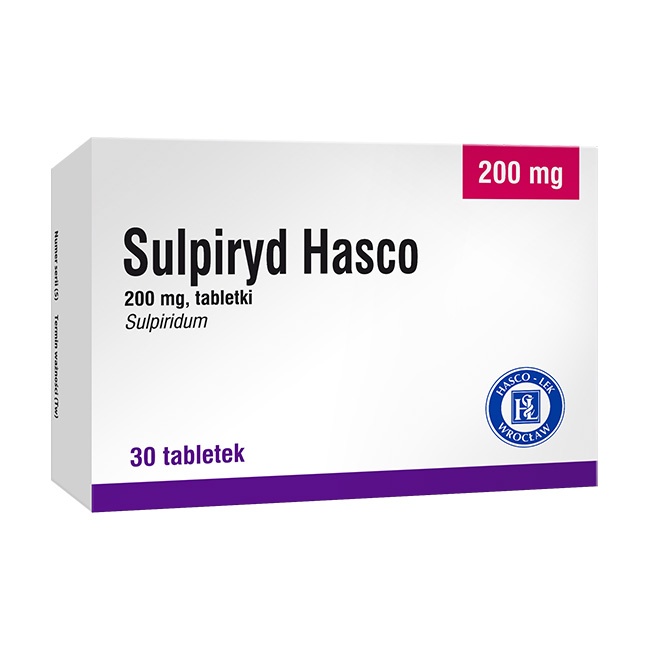
- Country of registration
- Dosage formTablets, 100 mg
- ATC codeN05AL01
- Active substance
- Prescription requiredYes
- Manufacturer
- ImporterPrzedsiębiorstwo Produkcji Farmaceutycznej HASCO-LEK S.A.
- This information is for reference only and does not constitute medical advice. Always consult a doctor before taking any medication. Oladoctor is not responsible for medical decisions based on this content.
- Alternatives to Sulpirid HascoDosage form: Tablets, 50 mgActive substance: sulpiridePrescription requiredDosage form: Tablets, 200 mgActive substance: sulpiridePrescription requiredDosage form: Capsules, 50 mgActive substance: sulpirideManufacturer: Teva Operations Polska Sp. z o.o.Prescription required
Online doctors for Sulpirid Hasco
Discuss questions about Sulpirid Hasco, including use, safety considerations and prescription review, subject to medical assessment and local regulations.







Get Sulpirid Hasco Prescription Online
Fill in a 2-min form
Tell us your symptoms, history, and what medicine you're requesting.
Pick a doctor or let us assign
Choose a specialist or we'll match you with the next available doctor.
Doctor reviews your case
Usually within 30 minutes. They may ask follow-up questions via chat.
Collect from any pharmacy
Electronic prescription sent to your email — valid across Spain.
Frequently Asked Questions
Sulpirid Hasco requires a prescription in Poland. You can check with a doctor online whether this medicine may be appropriate for your situation.
The active ingredient in Sulpirid Hasco is sulpiride. This information helps identify medicines with the same composition but different brand names.
Sulpirid Hasco is manufactured by Przedsiębiorstwo Produkcji Farmaceutycznej HASCO-LEK S.A.. Pharmacy brands and packaging may differ depending on the distributor.
Doctors such as Family doctors, Psychiatrists, Dermatologists, Cardiologists, Endocrinologists, Gastroenterologists, Pulmonologists, Nephrologists, Rheumatologists, Hematologists, Infectious disease physicians, Allergists, Geriatricians, Paediatricians, Oncologists may assess whether Sulpirid Hasco is appropriate, depending on your situation and local regulations. You can book an online consultation to discuss your symptoms and possible next steps.
Spain has a well-developed healthcare infrastructure across major cities such as Madrid, Barcelona, Valencia, and Seville. Pharmacies are widely available and operate under strict regulations, ensuring access to prescribed medications.
You can buy Sulpirid Hasco in Madrid, Barcelona, Seville, or Valencia at any local pharmacy with a valid prescription.
To obtain a prescription, you can use Oladoctor:
Other medicines with the same active substance (sulpiride) include Sulpirid Hasco, Sulpirid Hasco, Sulpirid Teva. These may have different brand names or formulations but contain the same therapeutic ingredient. Always consult a doctor before switching or starting a new medicine.
