


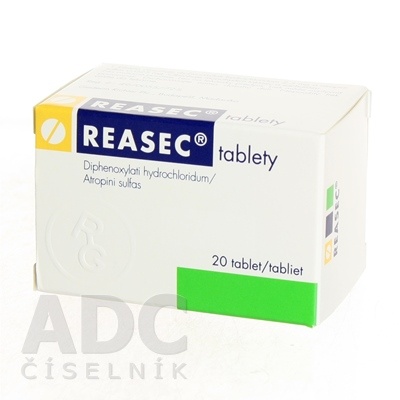
Reasec
Ask a doctor about a prescription for Reasec




How to use Reasec
Package Leaflet: Information for the Patient
Reasec, 2.5 mg + 0.025 mg, tablets
Diphenoxylate hydrochloride + Atropine sulfate
Read the package leaflet carefully before taking the medicine, as it contains important information for the patient.
- Keep this leaflet, you may need to read it again.
- If you have any further questions, ask your doctor or pharmacist.
- This medicine has been prescribed for you. Do not pass it on to others. It may harm them, even if their symptoms are the same as yours.
- If you experience any side effects, including those not listed in this leaflet, tell your doctor or pharmacist. See section 4.
Table of Contents of the Leaflet
- 1. What is Reasec and what is it used for
- 2. Important information before taking Reasec
- 3. How to take Reasec
- 4. Possible side effects
- 5. How to store Reasec
- 6. Contents of the pack and other information
1. What is Reasec and what is it used for
The active substances of Reasec are: diphenoxylate (in the form of diphenoxylate hydrochloride) and atropine (in the form of atropine sulfate). The medicine reduces intestinal motility and has a strong constipating effect.
Indications for use:
- symptomatic treatment of acute and chronic diarrhea of various origins,
- reduction of fluid stool after ileostomy (surgical diversion of a portion of the small intestine to the abdominal surface allowing for the elimination of intestinal contents) and colostomy (surgical diversion of a portion of the large intestine to the abdominal surface allowing for the elimination of intestinal contents).
2. Important information before taking Reasec
When not to take Reasec:
- when it is possible to treat the cause of diarrhea, it should be done. Reasec is intended only for symptomatic treatment of diarrhea;
- if the patient is allergic to diphenoxylate hydrochloride and/or atropine sulfate or any of the other ingredients of this medicine (listed in section 6);
- in children under 4 years of age;
- in the treatment of diarrhea caused by bacteria that produce enterotoxins (e.g. toxigenic Escherichia coli, Salmonella and Shigella), which may be accompanied by high fever and blood in the stool;
- in the treatment of the acute phase of ulcerative colitis or pseudomembranous colitis caused by antibiotics;
- in cases of severe liver cirrhosis;
- in cases of acute and cholestatic hepatitis with jaundice (yellowing of the skin and eyes), itching of the skin;
- in the treatment of mechanical jaundice;
- if the patient has glaucoma with a narrow angle of vision;
- if the patient has prostate disease;
- in cases of myasthenia (a disease characterized by weakness and fatigue of skeletal muscles);
- in patients with accelerated heart rate;
- in children with asthma;
- in patients with megacolon (a disease that causes hypertrophy and dilation of the colon due to the accumulation of intestinal contents);
- in patients with pyloric stenosis;
- if the patient has intestinal obstruction or constipation;
- if the patient is taking other medicines that reduce intestinal motility.
Warnings and precautions
Before starting to take Reasec, discuss it with your doctor or pharmacist.
In every case where possible, the cause of diarrhea should be treated. This medicine does not remove the cause of diarrhea and is intended only for symptomatic treatment of diarrhea.
In patients with diarrhea, especially in children, there may be a loss of fluids and electrolytes. In such cases, the most important thing is to replenish fluids and electrolytes.
In cases of severe dehydration or electrolyte imbalance, the administration of Reasec should be discontinued until proper fluid and electrolyte replenishment is started, as the reduction of intestinal motility may cause fluid retention in the intestines, exacerbating dehydration and electrolyte imbalance.
If there is no improvement in acute diarrhea within 48 hours, the use of the medicine should be discontinued.
The use of Reasec should be discontinued immediately if abdominal distension or constipation occurs.
In cases of liver function disorders, patients should be under medical supervision, due to the possible toxic effect of Reasec on the nervous system, caused by slowed metabolism of the medicine.
During the use of the recommended doses of Reasec, side effects of atropine may occur. These include: accelerated heart rate, dryness of the mouth, dryness of the skin, and nausea. This is especially true for children. The doctor or pharmacist should be informed about this (see section 4).
Diphenoxylate belongs to the group of opioids. Cases of dependence on Reasec have been reported (with the use of very high doses, over 125 tablets per day). Therefore, special caution should be exercised when using Reasec in patients with a history of drug dependence. The addition of atropine is intended to prevent cases of drug abuse.
Children and adolescents
The most effective way to treat diarrhea in children is to replenish fluids and electrolytes.
Reasec can only be used in children over 4 years of age, under medical supervision.
The dosage prescribed by the doctor should be strictly followed, and until the symptoms disappear (e.g. based on stool assessment), constant medical supervision is necessary.
Young children may be particularly sensitive to the active substances of the medicine. Administering doses higher than those prescribed by the doctor can be dangerous, especially in children.
Reasec and other medicines
Tell your doctor or pharmacist about all medicines you are taking, or have recently taken, and about medicines you plan to take.
Do not take alcohol and other medicines that affect the central nervous system (anxiolytics, sedatives, and narcotics) while taking Reasec, as they may enhance each other's effects, drowsiness, and respiratory depression may occur.
Reasec tablets may cause slower breakdown of some other medicines in the liver, resulting in prolonged or enhanced effects.
The above interactions apply to medicines taken previously, as well as those that will be taken in the near future. In case of doubt, whether any of the above situations apply to you, consult your doctor or pharmacist before taking Reasec.
Taking Reasec with food, drink, and alcohol
See section 3. While taking Reasec, you should avoid drinking alcohol.
Pregnancy, breastfeeding, and fertility
If you are pregnant or breastfeeding, think you may be pregnant, or plan to have a child, ask your doctor or pharmacist for advice before taking this medicine.
Pregnancy
Reasec can be used during pregnancy only after a thorough assessment by the doctor, individually for each case.
Breastfeeding
Do not take Reasec while breastfeeding.
Driving and using machines
Reasec may negatively affect your ability to perform tasks and drive vehicles, so your doctor will determine individually for each case at what dose and dosing schedule you will be able to drive vehicles.
Reasec contains 85 mg of lactose monohydrate and 7 mg of sucrose in 1 tablet.
If you have been diagnosed with an intolerance to some sugars, consult your doctor before taking this medicine.
3. How to take Reasec
Always take this medicine exactly as your doctor or pharmacist has told you. If you are not sure, ask your doctor or pharmacist.
The tablets are for oral use.
In case of sudden (acute) diarrhea in adults, take 1 to 2 tablets three times a day.
As soon as the severity of diarrhea decreases, stop taking the medicine or reduce the dose (e.g. to 1 to 2 tablets per day).
If there is no improvement within 2 days, consult your doctor.
In case of chronic diarrhea, the dosage is determined by the attending physician.
Usually, in adults, 1 tablet is taken twice a day, before meals.
If there is no improvement within 10 days, consult your doctor, as further use of the medicine is likely to be ineffective.
Use in children and adolescents
Do not give Reasec to children under 4 years of age. Reasec should only be used in children over 4 years of age, if prescribed by a doctor. The dosage is determined solely by the attending physician. Do not change the dosage prescribed by your doctor without prior agreement with your doctor.
Recommended dosage:
Under 4 years: not recommended.
From 4 to 8 years: 1 tablet three times a day.
From 9 to 12 years: 1 tablet four times a day.
From 13 to 16 years: 2 tablets three times a day.
Overdose of Reasec
In case of accidental ingestion of a larger dose than recommended, the following symptoms may occur: dryness of the skin and mucous membranes, blurred vision, urinary retention, constipation, abdominal pain, vomiting, hot flashes, elevated or decreased body temperature, drowsiness, respiratory disorders, pupil constriction or dilation, and agitation or restlessness, coma. Ingestion of a larger amount of tablets than prescribed may be particularly dangerous for children.
Respiratory disorders may occur even 12-30 hours after ingestion of the medicine and may recur despite initial response to antidote.
Therefore, in case of accidental overdose, seek medical attention immediately.
Missed dose of Reasec
Do not take a double dose to make up for a missed tablet. Take the next dose at the usual time.
If you have any further questions about the use of this medicine, ask your doctor or pharmacist.
4. Possible side effects
Like all medicines, Reasec can cause side effects, although not everybody gets them.
The frequency of occurrence of individual side effects cannot be determined based on available data.
Immune system disorders: allergic reaction with rash, swelling of the lips, face, or tongue, difficulty breathing and swallowing.
In case of the above-mentioned symptoms of an allergic reaction, seek medical attention immediately.
Psychiatric disorders: anxiety.
Eye disorders: vision disturbances.
Gastrointestinal disorders: in some cases, abdominal pain, abdominal distension, constipation, nausea, and vomiting, dry mouth may occur.
If you experience constipation or abdominal distension, discontinue treatment.
Nervous system disorders: headache, insomnia or anxiety, dizziness, blurred vision.
Cardiac disorders: accelerated heart rate.
Skin and subcutaneous tissue disorders: rash, dry skin.
Reporting side effects
If you experience any side effects, including those not listed in this leaflet, tell your doctor or pharmacist. Side effects can be reported directly to the Department of Drug Safety Monitoring of the Office for Registration of Medicinal Products, Medical Devices, and Biocidal Products
Al. Jerozolimskie 181C
02-222 Warsaw
Phone: +48 22 49 21 301
Fax: +48 22 49 21 309
Website: https://smz.ezdrowie.gov.pl
Side effects can also be reported to the marketing authorization holder.
Reporting side effects will help to gather more information on the safety of the medicine.
5. How to store Reasec
Store in a temperature below 25°C.
Keep this medicine out of the sight and reach of children.
Do not use this medicine after the expiry date stated on the packaging after (EXP).
The expiry date refers to the last day of the month.
Medicines should not be disposed of via wastewater or household waste. Ask your pharmacist how to dispose of medicines no longer required. This will help protect the environment.
6. Contents of the pack and other information
What Reasec contains
- The active substances are: diphenoxylate hydrochloride and atropine sulfate. Each tablet contains 2.5 mg of diphenoxylate hydrochloride and 0.025 mg of atropine sulfate.
- The other ingredients are: magnesium stearate, talc, sucrose (7 mg), corn starch, lactose monohydrate (85 mg).
What Reasec looks like and contents of the pack
Almost white, round, flat-edged tablets, approximately 7 mm in diameter, with the inscription "REASEC" on one side and a dividing line on the other side.
20 tablets in a polypropylene bottle.
Marketing authorization holder and manufacturer
Gedeon Richter Plc.
Gyömrői út 19-21
1103 Budapest
Hungary
For more detailed information on this medicine, contact the local representative of the marketing authorization holder:
GEDEON RICHTER POLSKA Sp. z o.o.
Medical Department
ul. Ks. J. Poniatowskiego 5
05-825 Grodzisk Mazowiecki
Phone: +48 (22) 755 96 48
[email protected]
Fax: +48 (22) 755 96 24
Date of last revision of the leaflet:
- Country of registration
- Active substance
- Prescription requiredYes
- Manufacturer
- ImporterGedeon Richter Plc.
- This information is for reference only and does not constitute medical advice. Always consult a licensed doctor before taking any medication. Oladoctor is not responsible for medical decisions based on this content.
- Alternatives to ReasecDosage form: Tablets, 2 mgActive substance: loperamideManufacturer: Tiofarma B.V.Prescription not requiredDosage form: Capsules, 2 mgActive substance: loperamidePrescription requiredDosage form: Tablets, 2 mgActive substance: loperamideManufacturer: Doppel Farmaceutici S.r.l.Prescription required
Alternatives to Reasec in other countries
The best alternatives with the same active ingredient and therapeutic effect.
Alternative to Reasec in Hiszpania
Online doctors for Reasec
Discuss dosage, side effects, interactions, contraindications, and prescription renewal for Reasec – subject to medical assessment and local rules.


Get updates and exclusive offers
Be the first to know about new services, marketplace updates, and subscriber-only promos.

