



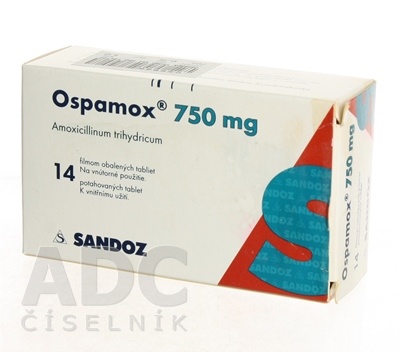
OSPAMOX 750 mg Tablets

Prescription review online
A doctor will review your case and decide whether a prescription is medically appropriate.

Talk to a doctor about this medicine
Discuss your symptoms and possible next steps in a quick online consultation.



How to use Ospamox 750 mg
Contents of the leaflet
- Leaflet attached to the packaging: patient information
- Ospamox 500 mg, 500 mg, coated tablets
- Ospamox 750 mg, 750 mg, coated tablets
- Ospamox 1000 mg, 1000 mg, coated tablets
- What Ospamox is and what it is used for
- Important information before taking Ospamox
- How to take Ospamox
- Possible side effects
- If the patient experiences any of the following serious side effects, they should stop taking Ospamox and contact their doctor immediately, as they may need urgent medical attention.
- If the patient experiences any of these symptoms, they should stop taking the medicine and consult their doctor immediately.
- Sometimes, less severe skin reactions may occur, such as:
- If the patient experiences any of these symptoms, they should contact their doctor, as they may need to stop taking the medicine.
- Reporting side effects
- How to store Ospamox
- Contents of the packaging and other information
- What Ospamox contains
- What Ospamox looks like and contents of the pack
- Marketing authorization holder and manufacturer
- For more information about this medicine, the patient should contact their local representative of the marketing authorization holder:
- This medicinal product is authorized in the Member States of the European Economic Area under the following names:
- General advice on the use of antibiotics
Leaflet attached to the packaging: patient information
Ospamox 500 mg, 500 mg, coated tablets

Not sure if this medicine is right for you?
Discuss your symptoms and treatment with a doctor online.
Ospamox 750 mg, 750 mg, coated tablets
Ospamox 1000 mg, 1000 mg, coated tablets
Amoxicillin
You should read the contents of the leaflet before taking the medicine, as it contains important information for the patient.
- You should keep this leaflet, so that you can read it again if you need to.
- If you have any doubts, you should consult a doctor or pharmacist.
- This medicine has been prescribed specifically for you. Do not pass it on to others. The medicine may harm another person, even if their symptoms are the same as yours.
- If the patient experiences any side effects, including any not listed in this leaflet, they should tell their doctor or pharmacist. See section 4.
Table of contents of the leaflet:
- 1. What Ospamox is and what it is used for
- 2. Important information before taking Ospamox
- 3. How to take Ospamox
- 4. Possible side effects
- 5. How to store Ospamox
- 6. Contents of the packaging and other information

Started taking the medicine and have questions?
Discuss your symptoms and treatment with a doctor online.
1. What Ospamox is and what it is used for
What Ospamox is
Ospamox is an antibiotic. The active substance of the medicine is amoxicillin. Amoxicillin belongs to a group of medicines called "penicillins".
What Ospamox is used for
Ospamoxis used to treat infections of various parts of the body caused by bacteria sensitive to amoxicillin. Ospamoxis used in adults and children to treat the following infections:
- acute bacterial tonsillitis and pharyngitis
- acute bacterial otitis media and acute bacterial sinusitis
- lower respiratory tract infections: exacerbations of chronic bronchitis, pneumonia
- upper and lower urinary tract infections: urinary tract infection (acute cystitis), kidney infection (acute pyelonephritis), asymptomatic bacteriuria during pregnancy
- peritonsillar abscess with spreading cellulitis
- infections related to joint prosthetics
- Lyme disease (Lyme borreliosis; infection transmitted by ticks)
- systemic bacterial infections: typhoid and paratyphoid fever
- prevention of bacterial endocarditis
- Ospamoxmay also be used in combination with other medicines to treat gastric ulcer disease caused by Helicobacter pyloribacteria.
2. Important information before taking Ospamox
When not to take Ospamox
if the patient is allergic to amoxicillin, penicillin, or any of the other ingredients of the medicine (listed in section 6);
if the patient has ever been allergic to any other antibiotic. This may include a skin rash or swelling of the face or throat.
If any of these conditions apply to the patient, they should not take Ospamox. In case of doubt, the patient should consult their doctor or pharmacist before taking the medicine.
Warnings and precautions
Before taking Ospamox, the patient should discuss it with their doctor or pharmacist if they:
suffer from infectious mononucleosis (fever, sore throat, swollen lymph nodes, and extreme fatigue)
have kidney disease
have irregular urination.
In case of doubt whether these conditions apply to the patient, they should consult their doctor or pharmacist before taking Ospamox.
Blood and urine tests
If the patient is to undergo:
urine tests (to detect glucose) or blood tests (to assess liver function)
estriol tests (performed during pregnancy to check if the baby is developing properly),
they should inform their doctor or pharmacist about taking Ospamox, as it may affect the results of these tests.
Ospamox and other medicines
The patient should tell their doctor or pharmacist about all medicines they are taking, have recently taken, or plan to take.
If the patient is taking allopurinol (used to treat gout), they may be more likely to experience skin allergic reactions.
If the patient is taking probenecid (used to treat gout), taking it at the same time as Ospamox may reduce the excretion of amoxicillin and is not recommended. The doctor may decide to adjust the dose of Ospamox.
If the patient is taking blood-thinning medicines (such as warfarin), they may need to have additional blood tests.
If the patient is taking other antibiotics (such as tetracycline), Ospamox may be less effective.
If the patient is taking methotrexate (a medicine used to treat cancer and severe psoriasis), penicillins may reduce the excretion of methotrexate, which may increase the risk of side effects.
Pregnancy, breastfeeding, and fertility
If the patient is pregnant, breastfeeding, thinks they may be pregnant, or plans to have a baby, they should consult their doctor or pharmacist before taking this medicine.
Driving and using machines
Ospamox may cause side effects such as allergic reactions, dizziness, and seizures that can affect the ability to drive or operate machinery.
The patient should not drive or operate machinery unless they feel well.
Ospamox contains sodium
This medicine contains less than 1 mmol (23 mg) of sodium per tablet, which means it is essentially "sodium-free".
3. How to take Ospamox
This medicine should always be taken exactly as prescribed by the doctor or pharmacist. In case of doubt, the patient should consult their doctor or pharmacist.
The tablets should be swallowed with water. The tablets should not be crushed or chewed.
Doses of the medicine should be taken at equal intervals throughout the day, with at least 4-hour intervals between them.
The usual dose is
Children with a body weight of less than 40 kg
All doses are determined based on the child's body weight (in kilograms).
The doctor will prescribe the dose of the medicine for the child.
The usual dose is 40 mg to 90 mg per kilogram of body weight per day, given in two or three divided doses.
The maximum recommended dose is 100 mg per kilogram of body weight per day.
Adults, elderly patients, and children with a body weight of 40 kg or more
The usual dose of Ospamox is 250 mg to 500 mg three times a day or 750 mg to 1 g every 12 hours, depending on the severity and type of infection.
Severe infections: 750 mg to 1 g three times a day.
Urinary tract infections: 3 g twice a day for one day.
Lyme disease (Lyme borreliosis - tick-borne infection): single migrating erythema (early stage - a pink-red rash): 4 g per day.
Symptomatic (late stage - more serious symptoms or when the disease affects multiple organs): up to 6 g per day.
Gastric ulcer disease: 750 mg or 1 g twice a day for 7 days in combination with other antibiotics and medicines used to treat gastric ulcers.
Prevention of endocarditis during surgical procedures: the dose may vary depending on the type of surgical procedure. Other medicines may be given at the same time.
For more detailed information, the patient should consult their doctor, pharmacist, or nurse.
The maximum recommended dose is 6 g per day.
Kidney disease
If the patient has kidney disease, the dose of the medicine may be lower than usual.
Taking more Ospamox than prescribed
If the patient takes more Ospamox than prescribed, they may experience gastrointestinal disturbances (nausea, vomiting, or diarrhea) or the presence of amoxicillin crystals in the urine (visible as cloudy urine or difficulty urinating). The patient should consult their doctor as soon as possible. They should take the medicine with them to show it to the doctor.
Missing a dose of Ospamox
If the patient forgets to take a dose, they should take it as soon as they remember.
The patient should not take the next dose too early, but wait about 4 hours before taking it.
The patient should not take a double dose to make up for the missed dose.
How long to take Ospamox
The patient should take the medicine for as long as prescribed by their doctor, even if they feel better.
All doses of the medicine are needed to fight the infection. If some bacteria survive, they may cause the infection to recur.
If the patient still does not feel better after finishing the treatment, they should consult their doctor again.
If the patient takes Ospamox for a longer period, they may experience thrush (candidiasis - a fungal infection of the mucous membranes, causing local pain, itching, and white discharge).
In this case, the patient should consult their doctor.
If the patient takes Ospamox for a longer period, their doctor may recommend additional tests to assess kidney, liver, and blood function.
In case of any further doubts about taking this medicine, the patient should consult their doctor or pharmacist.
4. Possible side effects
Like all medicines, Ospamox can cause side effects, although not everybody gets them.
If the patient experiences any of the following serious side effects, they should stop taking Ospamox and contact their doctor immediately, as they may need urgent medical attention.
Very rare side effects (may occur less frequently than 1 in 10,000 patients):
allergic reactions, including skin itching or rash, face, lip, tongue, or body swelling, or difficulty breathing; these may be severe symptoms, occasionally leading to death;
rash or flat, round, red spots under the skin surface or bruising, which may be a sign of vasculitis due to an allergic reaction;
these may occur with joint pain (arthritis) and kidney function disorders;
late allergic reaction, usually occurring 7 to 12 days after taking Ospamox; symptoms include rash, fever, joint pain, and swollen lymph nodes, especially in the armpits;
skin reaction called erythema multiforme, characterized by itchy, red-purple patches on the skin, especially on the palms or soles;
swelling of the skin (like hives), sensitive areas in the mouth, eyes, and genitals; fever and a feeling of extreme fatigue may occur;
other severe skin reactions, such as skin discoloration, lumps under the skin, blistering, peeling, redness, pain, itching, or skin shedding; these may occur with fever, headache, and body aches;
symptoms similar to flu, with rash, fever, swollen lymph nodes, and abnormal blood test results [including increased white blood cell count (eosinophilia) and increased liver enzyme activity]; drug reaction with eosinophilia and systemic symptoms (DRESS);
fever, chills, sore throat, or other signs of infection, or easy bruising; these may be signs of blood disorders;
Jarisch-Herxheimer reaction, which occurs during treatment of Lyme disease with amoxicillin and is characterized by fever, chills, headache, muscle pain, and skin rash;
colitis (inflammation of the colon), which can cause diarrhea (sometimes with blood), abdominal pain, and fever;
severe liver reactions; these usually occur in patients treated for a long time, men, and the elderly.
The patient should tell their doctor immediately if they experience:
severe diarrhea with blood
blisters on the skin, redness, or bruising
dark urine or pale stools
yellowing of the skin or whites of the eyes (jaundice). The patient should also read the information below about anemia, which can cause jaundice.
These symptoms may occur during or up to a few weeks after treatment with Ospamox.
chest pain associated with an allergic reaction, which may be a sign of an allergy leading to a heart attack (Kounis syndrome). The frequency of this side effect is unknown.
drug-induced enterocolitis syndrome (DIES): drug-induced enterocolitis occurred mainly in children receiving amoxicillin. This is a type of allergic reaction, characterized by recurrent vomiting (1-4 hours after taking the medicine). Further symptoms may include abdominal pain, lethargy, diarrhea, and low blood pressure. The frequency of this side effect is unknown.
rash with blisters arranged in a ring shape with crusts in the center or like a string of pearls (linear IgA dermatosis). The frequency of this side effect is unknown.
inflammation of the membranes surrounding the brain and spinal cord (aseptic meningitis). The frequency of this side effect is unknown.
If the patient experiences any of these symptoms, they should stop taking the medicine and consult their doctor immediately.
Sometimes, less severe skin reactions may occur, such as:
mildly itchy rash (round, pink-red patches), like hives
swelling on the forearms, legs, hands, arms, or feet.
These occur uncommonly (may occur less frequently than 1 in 100 patients).
If the patient experiences any of these symptoms, they should contact their doctor, as they may need to stop taking the medicine.
Other possible side effects:
Common side effects(may occur less frequently than 1 in 10 patients):
rash
nausea
diarrhea
Uncommon side effects(may occur less frequently than 1 in 100 patients):
vomiting
Very rare side effects(may occur less frequently than 1 in 10,000 patients):
thrush (fungal infection of the vagina, mouth, or skin folds) - the doctor or pharmacist will advise on treatment
kidney function disorders
seizures (observed in patients receiving high doses or patients with kidney function disorders)
dizziness
excessive activity
change in tongue color to yellow, brown, or black (the tongue may look hairy)
excessive breakdown of red blood cells, which can cause anemia; symptoms include:
feeling tired, headaches, shortness of breath, dizziness, pallor, and yellowing of the skin and whites of the eyes
decreased white blood cell count
decreased platelet count
prolonged blood clotting time (may be visible in case of nosebleeds or cuts).
Frequency not known(frequency cannot be estimated from the available data):
crystals in the urine leading to acute kidney damage
Reporting side effects
If the patient experiences any side effects, including any not listed in this leaflet, they should tell their doctor, pharmacist, or nurse. Side effects can be reported directly to the Department of Drug Safety Monitoring of the Office for Registration of Medicinal Products, Medical Devices, and Biocidal Products: Al. Jerozolimskie 181C, 02-222 Warsaw
phone: +48 22 49 21 301
fax: +48 22 49 21 309
website: https://smz.ezdrowie.gov.pl
Side effects can also be reported to the marketing authorization holder.
Reporting side effects can help gather more information on the safety of the medicine.
5. How to store Ospamox
The medicine should be stored out of sight and reach of children.
Do not use this medicine after the expiry date stated on the carton and blister after EXP. The expiry date refers to the last day of the month.
Do not store above 25°C.
Store in the original packaging to protect from moisture.
Medicines should not be disposed of via wastewater or household waste. The patient should ask their pharmacist how to dispose of medicines they no longer use. This will help protect the environment.
6. Contents of the packaging and other information
What Ospamox contains
The active substance is amoxicillin.
Each Ospamox 500 mg coated tablet contains 500 mg of amoxicillin (as amoxicillin trihydrate).
Each Ospamox 750 mg coated tablet contains 750 mg of amoxicillin (as amoxicillin trihydrate).
Each Ospamox 1000 mg coated tablet contains 1000 mg of amoxicillin (as amoxicillin trihydrate).
The other ingredients are: magnesium stearate, povidone (K25), sodium carboxymethylcellulose (type A), microcrystalline cellulose.
Coating:titanium dioxide (E 171), talc, hypromellose.
See section 2 "Ospamox contains sodium".
What Ospamox looks like and contents of the pack
Ospamox 500 mg
The coated tablets are white or cream-colored, oblong, and biconvex, with a dividing line on both sides.
The tablets can be divided into equal halves.
Ospamox 750 mg
The coated tablets are white or cream-colored, oval, and biconvex, with a dividing line on both sides.
The tablets can be divided into equal halves.
Ospamox 1000 mg
The coated tablets are white or cream-colored, oval, and biconvex, with a dividing line on both sides.
The tablets can be divided into equal halves.
The coated tablets are packaged in PVC/PVDC/Aluminum blisters and placed in a cardboard box.
Pack sizes: 16, 20, or 28 coated tablets.
Marketing authorization holder and manufacturer
Marketing authorization holder
Sandoz GmbH
Biochemiestrasse 10
6250 Kundl, Austria
Manufacturer
Sandoz GmbH
Biochemiestrasse 10
6250 Kundl, Austria
For more information about this medicine, the patient should contact their local representative of the marketing authorization holder:
Sandoz Polska Sp. z o.o.
ul. Domaniewska 50 C
02-672 Warsaw
phone: 22 209 70 00
This medicinal product is authorized in the Member States of the European Economic Area under the following names:
Germany
AmoxiHEXAL 500 Filmtabletten
Italy
Amoxicillina Hexal AG
Poland
OSPAMOX 500 mg; COATED TABLETS
OSPAMOX 750 mg; COATED TABLETS
OSPAMOX 1000 mg; COATED TABLETS
(logo of the marketing authorization holder)
Date of last revision of the leaflet: 09/2023
General advice on the use of antibiotics
Antibiotics are used to treat bacterial infections. They are ineffective in treating viral infections.
Sometimes, bacterial infections do not respond to antibiotic treatment. One of the most common reasons for this is the resistance of bacteria to the prescribed antibiotic. This means that the bacteria can survive and even multiply despite the use of the antibiotic.
Bacteria can become resistant to antibiotics for many reasons. Careful use of antibiotics can help reduce the risk of bacterial resistance.
The antibiotic prescribed by the doctor is intended only to treat the patient's current illness. Paying attention to the following advice can help prevent the development of resistant bacteria, which could render the antibiotic ineffective.
1 It is very important to take the antibiotic in the correct dose, at the right time, and for the right number of days. The patient should read the instructions in the leaflet and, if they do not understand any of them, ask their doctor or pharmacist to explain.
2 The patient should not take an antibiotic that was not prescribed specifically for them and should only use it to treat the infection for which it was prescribed.
3 The patient should not take an antibiotic prescribed for someone else, even if they had a similar infection.
4 The patient should not give their antibiotics to others.
5 If the patient has any leftover antibiotic after completing the treatment as prescribed by their doctor, they should return it to the pharmacy for proper disposal.
- Country of registration
- Dosage formTablets, 750 mg
- ATC codeJ01CA04
- Active substance
- Prescription requiredYes
- Manufacturer
- ImporterSandoz GmbH
- This information is for reference only and does not constitute medical advice. Always consult a doctor before taking any medication. Oladoctor is not responsible for medical decisions based on this content.
- Alternatives to Ospamox 750 mgDosage form: Tablets, 500 mgActive substance: amoxicillinManufacturer: Tarchomińskie Zakłady Farmaceutyczne "Polfa" S.A.Prescription requiredDosage form: Tablets, 750 mgActive substance: amoxicillinManufacturer: Tarchomińskie Zakłady Farmaceutyczne "Polfa" S.A.Prescription requiredDosage form: Tablets, 1 gActive substance: amoxicillinManufacturer: Tarchomińskie Zakłady Farmaceutyczne "Polfa" S.A.Prescription required
Online doctors for Ospamox 750 mg
Discuss questions about Ospamox 750 mg, including use, safety considerations and prescription review, subject to medical assessment and local regulations.









Get Ospamox 750 mg Prescription Online
Fill in a 2-min form
Tell us your symptoms, history, and what medicine you're requesting.
Pick a doctor or let us assign
Choose a specialist or we'll match you with the next available doctor.
Doctor reviews your case
Usually within 30 minutes. They may ask follow-up questions via chat.
Collect from any pharmacy
Electronic prescription sent to your email — valid across Spain.
Frequently Asked Questions
Ospamox 750 mg requires a prescription in Poland. You can check with a doctor online whether this medicine may be appropriate for your situation.
The active ingredient in Ospamox 750 mg is amoxicillin. This information helps identify medicines with the same composition but different brand names.
Ospamox 750 mg is manufactured by Sandoz GmbH. Pharmacy brands and packaging may differ depending on the distributor.
Doctors such as Family doctors, Psychiatrists, Dermatologists, Cardiologists, Endocrinologists, Gastroenterologists, Pulmonologists, Nephrologists, Rheumatologists, Hematologists, Infectious disease physicians, Allergists, Geriatricians, Paediatricians, Oncologists may assess whether Ospamox 750 mg is appropriate, depending on your situation and local regulations. You can book an online consultation to discuss your symptoms and possible next steps.
Spain has a well-developed healthcare infrastructure across major cities such as Madrid, Barcelona, Valencia, and Seville. Pharmacies are widely available and operate under strict regulations, ensuring access to prescribed medications.
You can buy Ospamox 750 mg in Madrid, Barcelona, Seville, or Valencia at any local pharmacy with a valid prescription.
To obtain a prescription, you can use Oladoctor:
Other medicines with the same active substance (amoxicillin) include Amotaks Dis, Amotaks Dis, Amotaks Dis. These may have different brand names or formulations but contain the same therapeutic ingredient. Always consult a doctor before switching or starting a new medicine.
