



NORADRENALINE 0.08 mg/ml Solution

Prescription review online
A doctor will review your case and decide whether a prescription is medically appropriate.

Talk to a doctor about this medicine
Discuss your symptoms and possible next steps in a quick online consultation.



How to use Noradrenaline Aguettant
Contents of the leaflet
- Package Leaflet: Information for the User
- Noradrenaline Aguettant, 0.08 mg/ml, Solution for Infusion
- What is Noradrenaline Aguettant and what is it used for
- Important information before using Noradrenaline Aguettant
- How to use Noradrenaline Aguettant
- Possible side effects
- How to store Noradrenaline Aguettant
- Contents of the pack and other information
Package Leaflet: Information for the User
Noradrenaline Aguettant, 0.08 mg/ml, Solution for Infusion
Noradrenaline
Read the package leaflet carefully before using the medicine, as it contains important information for the patient.
- Keep this package leaflet, you may need to read it again.
- If you have any further questions, ask your doctor or nurse.
- This medicine has been prescribed for you only. Do not pass it on to others. It may harm them, even if their symptoms are the same as yours.
- If you experience any side effects, including any not listed in this leaflet, please tell your doctor or nurse. See section 4.
Table of Contents of the Package Leaflet
- 1. What is Noradrenaline Aguettant and what is it used for
- 2. Important information before using Noradrenaline Aguettant
- 3. How to use Noradrenaline Aguettant
- 4. Possible side effects
- 5. How to store Noradrenaline Aguettant
- 6. Contents of the pack and other information

Not sure if this medicine is right for you?
Discuss your symptoms and treatment with a doctor online.
1. What is Noradrenaline Aguettant and what is it used for
Noradrenaline Aguettant contains the active substance noradrenaline, which causes blood vessels to constrict.
This medicine is for use in adults only.
This medicine is indicated for use in adults with a body weight over 50 kg for the treatment of acute hypotension, requiring immediate increase in blood pressure to normal values.
2. Important information before using Noradrenaline Aguettant
When not to use Noradrenaline Aguettant:
- by peripheral venous or arterial administration;
- if the patient is allergic to noradrenaline or any of the other ingredients of this medicine (listed in section 6).
Warnings and precautions
Before starting treatment with Noradrenaline Aguettant, discuss it with your doctor or nurse:
- if the patient has severe left ventricular dysfunction (heart disease);
- if the patient has recently had a myocardial infarction;
- if the patient has arrhythmias (rapid, slow, or irregular heart rate);
- if the patient has hyperthyroidism (excessive production of thyroid hormones)
- if the patient has diabetes;
- if the patient has hypotension (low blood pressure) caused by hypovolemia (decreased blood volume),
- if the patient has angina pectoris or any obstruction of blood vessels in the limbs or abdomen (impairment of normal blood flow).
During noradrenaline infusion, the doctor will monitor blood pressure, heart rate, and the infusion site.
If blood transfusion or plasma transfusion is necessary at the same time, blood or plasma will be transfused through a separate infusion line.
Children and adolescents
This medicine is indicated for use in adults only.
Noradrenaline Aguettant and other medicines
Tell your doctor or pharmacist about all medicines you are taking, or have recently taken, and about any medicines you plan to take, such as:
- certain inhalational anesthetics (halogenated);
- certain antidepressants (imipramine, serotoninergic and adrenergic agents, such as venlafaxine or duloxetine, monoamine oxidase inhibitors such as moclobemide or phenelzine);
- linezolid (an antibiotic);
- methylene blue (used to treat methemoglobinemia).
Pregnancy and breastfeeding
If you are pregnant or breastfeeding, consult your doctor or nurse before using this medicine.
If you are pregnant, your doctor will decide whether you can be given Noradrenaline Aguettant, as noradrenaline may harm the unborn child.
There is no data on the use of noradrenaline in breastfeeding women.
Noradrenaline Aguettant contains sodium
The medicine contains 177.3 mg of sodium (the main component of common salt) in each 50 ml vial, which corresponds to 8.9% of the maximum recommended daily intake of sodium in the diet for adults.

Started taking the medicine and have questions?
Discuss your symptoms and treatment with a doctor online.
3. How to use Noradrenaline Aguettant
Noradrenaline Aguettant will be administered by a doctor or nurse in a hospital.
This medicine is administered by intravenous infusion, exclusively through a catheter inserted into a central vein.
The dose of the medicine depends on the patient's condition. The doctor will determine the dose suitable for the patient.
Using a higher dose of Noradrenaline Aguettant than recommended
In case of overdose, the following symptoms may occur: constriction of skin blood vessels, pressure sores, circulatory collapse, and hypertension.
In case of adverse reactions related to the administration of too high a dose of the medicine, it is recommended to reduce the dose, if possible.
In case of any further doubts about the use of this medicine, consult your doctor or nurse.
4. Possible side effects
Like all medicines, this medicine can cause side effects, although not everybody gets them.
The following side effects have been reported:
- anxiety;
- headache, tremor;
- acute glaucoma;
- tachycardia (rapid heart rate), bradycardia (slow heart rate), arrhythmias (irregular heart rate), palpitations, increased contractility of the heart muscle, acute heart failure;
- hypertension (high blood pressure) and tissue hypoxia (reduced oxygen supply to organs), cold and pale limbs and face, painful and cold limbs (gangrene):
- respiratory failure or difficulty breathing, shortness of breath;
- vomiting;
- urinary retention;
- local side effects: possibility of irritation and necrosis (cell damage leading to cell death in tissues) at the injection site.
Continuous administration of a vasoconstrictor to maintain blood pressure, without replenishing intravascular volume, may cause the following symptoms:
- severe constriction of peripheral and visceral blood vessels,
- reduced blood flow through the kidneys,
- reduced urine production,
- hypoxia,
- increased lactate levels in the blood.
In case of hypersensitivity or overdose, the following side effects may occur more frequently: hypertension (high blood pressure), photophobia (visual perception disorders in the form of light intolerance), chest pain, sore throat, pallor, excessive sweating, and vomiting.
Reporting side effects
If you experience any side effects, including any not listed in this leaflet, please tell your doctor or nurse. Side effects can be reported directly to the Department of Post-Marketing Surveillance of Adverse Reactions to Medicinal Products, Office for Registration of Medicinal Products, Medical Devices, and Biocidal Products, Al. Jerozolimskie 181 C, 02-222 Warsaw, tel.: +48 22 49 21 301, fax: +48 22 49 21 309, website: https://smz.ezdrowie.gov.pl. Side effects can also be reported to the marketing authorization holder. By reporting side effects, you can help provide more information on the safety of this medicine.
5. How to store Noradrenaline Aguettant
Store the medicine out of sight and reach of children.
Do not use this medicine after the expiry date stated on the label and carton after EXP. The expiry date refers to the last day of the month.
After first opening, the medicine should be used immediately.
Do not store above 25°C. Store the vial in the outer carton to protect from light.
- in a cardboard box, to protect from light.
Do not use the medicine if the solution is darker than slightly yellow or pink, or if it contains sediment.
Do not use the medicine if it is not clear, contains particles, or if the vial's protective cap has been damaged.
Do not mix the medicine with other medicines.
For single use only.
The medicine is a diluted solution for infusion, ready for use. Do not dilute before use.
Infuse the medicine using an appropriate infusion pump or syringe pump, which will precisely and systematically deliver the minimum specified volume within a strictly monitored infusion rate, according to the instructions for gradual dose increase.
Dispose of any unused medicine or waste material in accordance with local requirements.
6. Contents of the pack and other information
What Noradrenaline Aguettant contains:
- The active substance is noradrenaline (Noradrenaline). Each ml of solution contains 0.16 mg of noradrenaline bitartrate, equivalent to 0.08 mg of noradrenaline. Each 50 ml vial contains 8 mg of noradrenaline bitartrate, equivalent to 4 mg of noradrenaline.
- The other ingredients are: sodium chloride, disodium edetate, hydrochloric acid or sodium hydroxide (for pH adjustment), and water for injections.
What Noradrenaline Aguettant looks like and contents of the pack:
A clear, colorless, slightly yellow solution for infusion, in a clear glass vial with a capacity of 50 ml.
Pack of 10 vials, in a cardboard box.
Marketing authorization holder and manufacturer
Laboratoire Aguettant
1 rue Alexander Fleming
69007 Lyon
France
Date of last revision of the package leaflet: 10.2022
The following information is intended for healthcare professionals only
The following information is an excerpt from the Summary of Product Characteristics, to be used when administering Noradrenaline Aguettant 0.08 mg/ml, solution for infusion. The prescriber should consult the Summary of Product Characteristics to determine whether the medicine is suitable for the patient.
Indications
The medicine is indicated for the treatment of acute hypotension in adults with a body weight over 50 kg.
Dosage and administration
Noradrenaline should be administered exclusively by intravenous infusion, through a catheter inserted into a central vein. The medicine should be administered at a controlled rate using an infusion pump or syringe pump, without dilution: it is supplied ready for use.
During treatment, blood pressure should be closely monitored.
Dosage
Initial dose:
The initial dose of noradrenaline is usually 0.05 to 0.15 micrograms/kg/min.
Recommended maintenance dose:
The recommended maintenance dose of noradrenaline is 0.05 to 1.5 micrograms/kg/min.
Gradual dose increase:
After starting the infusion, the dose of noradrenaline should be gradually increased by 0.05-0.1 micrograms/kg/min, according to the observed pressor effect. The goal of treatment should be to achieve a low normal systolic blood pressure (100-120 mmHg) or an appropriate mean arterial pressure (above 65 mmHg, depending on the patient's condition).
Duration of treatment
Treatment should be continued until there is no longer a need for high doses of vasoactive medication. From this point on, the infusion should be gradually decreased, and then a lower concentration of noradrenaline should be administered. Abrupt discontinuation of the medicine may cause acute hypotension.
Overdose
In case of overdose, the following symptoms may occur: constriction of skin blood vessels, pressure sores, circulatory collapse, and hypertension.
In case of adverse reactions related to the administration of too high a dose of the medicine, it is recommended to reduce the dose, if possible.
Instructions for use and disposal
Do not use the medicine if the solution is darker than slightly yellow or pink, or if it contains sediment.
Do not use the medicine if it is not clear, contains particles, or if the vial's protective cap has been damaged.
Do not mix the medicine with other medicines.
For single use only.
The medicine is a diluted solution for infusion, ready for use. Do not dilute before use.
Infuse the medicine using an appropriate infusion pump or syringe pump, which will precisely and systematically deliver the minimum specified volume within a strictly monitored infusion rate, according to the instructions for gradual dose increase.
Dispose of any unused medicine or waste material in accordance with local requirements.
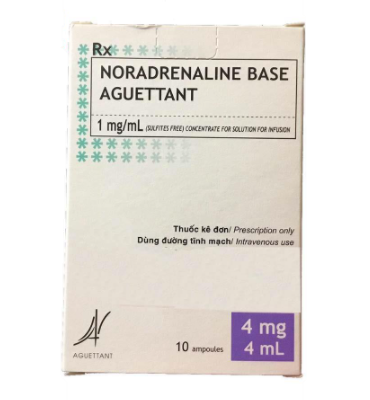
- Country of registration
- Dosage formSolution, 0.08 mg/ml
- ATC codeC01CA26
- Active substance
- Prescription requiredNo
- Manufacturer
- ImporterLaboratoire Aguettant
- This information is for reference only and does not constitute medical advice. Always consult a doctor before taking any medication. Oladoctor is not responsible for medical decisions based on this content.
- Alternatives to Noradrenaline Aguettant
Online doctors for Noradrenaline Aguettant
Discuss questions about Noradrenaline Aguettant, including use, safety considerations and prescription review, subject to medical assessment and local regulations.
Get Noradrenaline Aguettant Prescription Online
Fill in a 2-min form
Tell us your symptoms, history, and what medicine you're requesting.
Pick a doctor or let us assign
Choose a specialist or we'll match you with the next available doctor.
Doctor reviews your case
Usually within 30 minutes. They may ask follow-up questions via chat.
Collect from any pharmacy
Electronic prescription sent to your email — valid across Spain.
Frequently Asked Questions
Noradrenaline Aguettant does not require a prescription in Poland. You can check with a doctor online whether this medicine may be appropriate for your situation.
The active ingredient in Noradrenaline Aguettant is ephedrine. This information helps identify medicines with the same composition but different brand names.
Noradrenaline Aguettant is manufactured by Laboratoire Aguettant. Pharmacy brands and packaging may differ depending on the distributor.
Doctors such as Family doctors, Psychiatrists, Dermatologists, Cardiologists, Endocrinologists, Gastroenterologists, Pulmonologists, Nephrologists, Rheumatologists, Hematologists, Infectious disease physicians, Allergists, Geriatricians, Paediatricians, Oncologists may assess whether Noradrenaline Aguettant is appropriate, depending on your situation and local regulations. You can book an online consultation to discuss your symptoms and possible next steps.
Spain has a well-developed healthcare infrastructure across major cities such as Madrid, Barcelona, Valencia, and Seville. Pharmacies are widely available and operate under strict regulations, ensuring access to prescribed medications.
You can buy Noradrenaline Aguettant in Madrid, Barcelona, Seville, or Valencia at any local pharmacy with a valid prescription.
To obtain a prescription, you can use Oladoctor:
Other medicines with the same active substance (ephedrine) include Ephedrine Kabi, Ephedrine Kabi, Ephedrine Kabi. These may have different brand names or formulations but contain the same therapeutic ingredient. Always consult a doctor before switching or starting a new medicine.
