


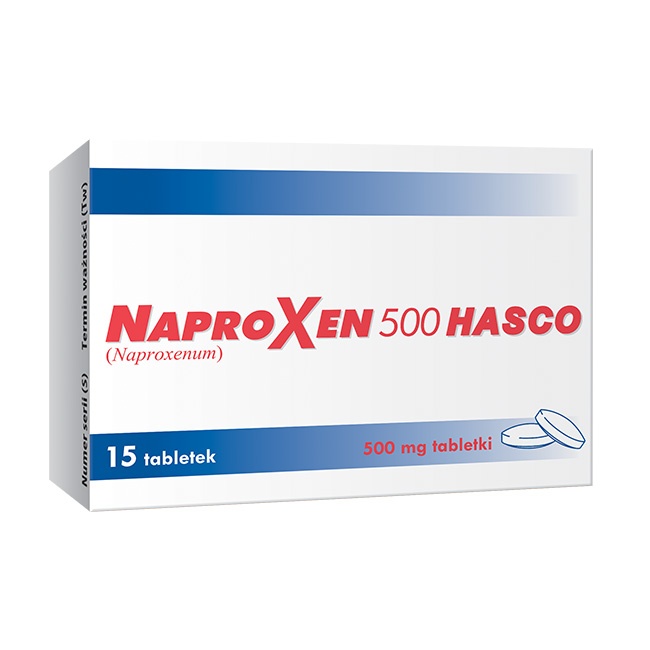
Naproxen 500 Hasco
Ask a doctor about a prescription for Naproxen 500 Hasco




How to use Naproxen 500 Hasco
Leaflet attached to the packaging: patient information
NAPROXEN 250 HASCO
250 mg, tablets
Naproxen
NAPROXEN 500 HASCO
500 mg, tablets
Naproxen
You should carefully read the contents of the leaflet before using the medicine, as it contains important information for the patient.
- You should keep this leaflet, so that you can read it again if necessary.
- In case of any doubts, you should consult a doctor or pharmacist.
- This medicine has been prescribed specifically for you. Do not pass it on to others. The medicine may harm another person, even if the symptoms of their illness are the same.
- If the patient experiences any side effects, including any side effects not listed in this leaflet, they should inform their doctor or pharmacist. See section 4.
Table of contents of the leaflet
- 1. What is Naproxen 250 H or Naproxen 500 H and what is it used for
- 2. Important information before using Naproxen 250 H or Naproxen 500 H
- 3. How to use Naproxen 250 H or Naproxen 500 H
- 4. Possible side effects
- 5. How to store Naproxen 250 H or Naproxen 500 H
- 6. Contents of the packaging and other information
1. What is Naproxen 250 H or Naproxen 500 H and what is it used for
used for
The medicine contains the active substance - naproxen, belonging to the group of non-steroidal anti-inflammatory drugs (NSAIDs), which has anti-inflammatory, analgesic and antipyretic effects.
Indications for use of the medicine are:
- rheumatoid arthritis;
- juvenile rheumatoid arthritis;
- degenerative joint disease;
- ankylosing spondylitis;
- acute attack of gout;
- acute muscle and joint pain;
- pain of moderate severity of various origins, including menstrual pain, headache, toothache, post-operative pain;
- febrile conditions.
2. Important information before using Naproxen 250 H or Naproxen 500 H
H
When not to use Naproxen 250 H or Naproxen 500 H
- if the patient is hypersensitive to naproxen or any of the other ingredients of this medicine (listed in section 6) and to other non-steroidal anti-inflammatory drugs (NSAIDs);
- in patients who have ever had symptoms of allergy in the form of rhinitis, urticaria or bronchial asthma during treatment with acetylsalicylic acid or other non-steroidal anti-inflammatory drugs;
- in patients with severe liver failure, severe kidney failure or severe heart failure;
- in patients with active or recurrent peptic ulcer or gastrointestinal bleeding, also occurring after the use of NSAIDs;
- in the third trimester of pregnancy;
- in patients with bleeding disorders.
Warnings and precautions
- Taking the medicine in the smallest effective dose and for the shortest possible time necessary to relieve symptoms reduces the risk of side effects. Patients who are long-term treated with NSAIDs should undergo regular medical check-ups to detect any potential side effects of treatment.
- Taking medicines such as naproxen may be associated with a small increased risk of heart attack or stroke. This risk increases with long-term use of high doses of the medicine. Do not use higher doses and longer treatment than recommended.
- In case of heart disorders, previous stroke or suspected risk of these disorders (e.g. high blood pressure, diabetes, increased cholesterol levels, smoking), you should discuss treatment with your doctor or pharmacist.
- There is a risk of gastrointestinal bleeding, ulceration or perforation, which can be fatal and which does not necessarily have to be preceded by warning symptoms, or may occur in patients who have had such warning symptoms. In case of gastrointestinal bleeding or ulceration, you should stop using the medicine. Patients with a history of gastrointestinal diseases, especially the elderly, should inform their doctor about any unusual gastrointestinal symptoms (especially bleeding), especially during the initial treatment period.
- Concomitant use of naproxen and other non-steroidal anti-inflammatory drugs is not recommended due to the increased risk of serious side effects characteristic of this group of medicines.
- Naproxen belongs to a group of medicines (NSAIDs) that may adversely affect female fertility. This effect is transient and disappears after the end of treatment.
- Naproxen inhibits platelet aggregation and prolongs bleeding time, especially in people who have previously had coagulation disorders or are taking anticoagulant medications.
- Caution should be exercised when using naproxen in patients with bronchial asthma or allergic diseases, as the medicine may contribute to the occurrence of bronchospasm.
- Severe skin reactions, some of which are fatal, including exfoliative dermatitis, Stevens-Johnson syndrome, toxic epidermal necrolysis, and drug reaction with eosinophilia and systemic symptoms (DRESS syndrome), have been reported in association with the use of NSAIDs. The greatest risk of these severe reactions occurs at the beginning of treatment, in most cases within the first month of using the medicine. You should stop using the medicine after the first symptoms of skin rash, mucosal damage, other symptoms of hypersensitivity or DRESS syndrome.
- Due to its anti-inflammatory and antipyretic effects, naproxen may mask the symptoms of another disease, making its diagnosis more difficult.
Patient with heart failure
Naproxen should be used with caution, using the smallest effective dose, in patients with heart failure (as it may exacerbate peripheral edema).
Patient with renal and/or hepatic impairment
Naproxen should be used with caution, using the smallest effective dose, in patients with liver and/or kidney function disorders.
In alcoholic liver disease and other forms of liver cirrhosis, there is a decrease in naproxen plasma concentration, with a simultaneous increase in the amount of unbound naproxen.
In patients with renal impairment, serum creatinine and/or creatinine clearance should be periodically monitored. The medicine is not recommended for patients with creatinine clearance below 20 ml/minute.
Elderly patient
Naproxen should be used with caution, using the smallest effective dose, in elderly patients, due to the increased risk of gastrointestinal complications.
You should talk to your doctor, even if the above warnings refer to situations that occurred in the past.
Naproxen 250 H or Naproxen 500 H and other medicines
You should tell your doctor or pharmacist about all medicines you are currently taking or have recently taken, as well as about medicines you plan to take.
- Before starting to take this medicine, you should talk to your doctor or pharmacist if you are taking any of the following medicines:
- Acetylsalicylic acid used to prevent blood clots.
- Concomitant administration of antacids or cholestyramine with naproxen may delay its absorption.
- Non-steroidal anti-inflammatory drugs may increase the effect of anticoagulant medications, such as warfarin.
- Naproxen may inhibit the diuretic effect of furosemide.
- Naproxen inhibits the excretion of lithium, increasing its plasma concentration.
- Probenecid increases the plasma concentration of naproxen.
- Naproxen inhibits the excretion of methotrexate, increasing its toxicity.
- Concomitant use of naproxen and digitalis glycosides may decrease their renal excretion, leading to increased plasma concentration.
- Naproxen may weaken the antihypertensive effect of propranolol and other beta-blockers, and increase the risk of renal impairment associated with the use of acetylcholinesterase inhibitors.
- Caution should be exercised when administering naproxen and cyclosporine concomitantly due to the increased risk of nephrotoxicity.
- Naproxen used concomitantly with hydantoin, oral anticoagulants, and sulfonamides enhances their effect.
- Caution should be exercised when using naproxen concomitantly with corticosteroids due to the increased risk of gastrointestinal bleeding.
- Non-steroidal anti-inflammatory drugs reduce the effect of mifepristone. Naproxen administration can be started 8 to 12 days after the last dose of mifepristone.
- Concomitant use of naproxen and fluoroquinolones increases the risk of seizures.
- It is recommended to discontinue naproxen administration 48 hours before assessing adrenal cortex function, due to the potential for falsifying the results of 17-ketosteroid and 5-hydroxyindoleacetic acid measurements in urine.
Naproxen 250 H or Naproxen 500 H with food and drink
Food intake does not significantly affect the degree of naproxen absorption.
Pregnancy, breastfeeding, and fertility
If you are pregnant or breastfeeding, think you may be pregnant, or plan to have a child, you should consult your doctor or pharmacist before using this medicine.
Pregnancy
You should not use Naproxen 250 H or Naproxen 500 H if you are in the last 3 months of pregnancy, as it may harm the unborn child or cause complications during delivery. It may cause kidney and heart disorders in the unborn child. It may increase the risk of bleeding in you and your child and cause prolonged or delayed delivery. During the first 6 months of pregnancy, you should not use the medicine unless it is absolutely necessary and recommended by your doctor. If treatment is necessary during this period or when trying to conceive, you should use the smallest dose for the shortest possible time. From the 20th week of pregnancy, Naproxen 250 H or Naproxen 500 H may cause kidney disorders in the unborn child if used for more than a few days - this may lead to a decrease in the amount of amniotic fluid surrounding the child (oligohydramnios) or narrowing of the blood vessel (ductus arteriosus) in the child's heart. If treatment is necessary for a longer period, your doctor may recommend additional monitoring.
Breastfeeding
Naproxen passes into breast milk, so you should not use it during breastfeeding.
Fertility
Naproxen may make it harder to conceive. If you are planning to conceive or are having trouble conceiving, you should inform your doctor.
Driving and using machines
The medicine may cause drowsiness, dizziness, insomnia, depression in some patients. You should ask your doctor about the possibility of using naproxen while driving vehicles and operating machines.
Sodium
The medicine contains less than 1 mmol (23 mg) of sodium per tablet, which means the medicine is considered "sodium-free".
3. How to use Naproxen 250 Hasco or Naproxen 500 Hasco
This medicine should always be used as directed by your doctor. In case of doubts, you should consult your doctor or pharmacist.
The medicine is for oral use.
Dosage for adults
Rheumatoid arthritis, degenerative joint disease, ankylosing spondylitis:
250 mg to 500 mg twice a day (every 12 hours).
In the acute phase of the disease, it is recommended to increase the dose to 750 mg or 1000 mg:
- in patients reporting night pain or severe stiffness;
- in patients who have replaced other NSAIDs with naproxen, taken in high doses;
- in degenerative joint disease with painful symptoms.
Acute attack of gout:
750 mg once, then 250 mg every 8 hours, until the pain subsides.
Acute muscle and joint pain, menstrual pain, pain of various origins, febrile conditions:
The initial dose is 500 mg, then 250 mg every 6 to 8 hours.
The maximum daily dose is 1250 mg.
Use in children
Dosage for children over 5 years old
Juvenile rheumatoid arthritis:
The recommended dose is 10 mg/kg body weight twice a day, every 12 hours.
The medicine is not recommended for use in any other indication in children under 16 years old.
Using a higher dose of Naproxen 250 H or Naproxen 500 H than recommended
H
Heartburn, indigestion, nausea, vomiting may occur.
In case of taking a higher dose of the medicine than recommended, you should immediately consult your doctor or pharmacist.
Procedure in case of overdose
Symptomatic treatment should be used; if necessary, gastric lavage should be performed and a doctor should be informed immediately.
Missing a dose of Naproxen 250 H or Naproxen 500 H
You should take the missed dose as soon as possible.
You should not take a double dose to make up for the missed dose.
4. Possible side effects
Like all medicines, this medicine can cause side effects, although not everybody gets them.
If you experience any of the following side effects, you should stop using Naproxen 250 H or Naproxen 500 H and contact your doctor immediately:
Frequency not known (frequency cannot be estimated from the available data):
- widespread rash, high fever, elevated liver enzyme activity, blood disorders (eosinophilia), lymphadenopathy and involvement of other organs (drug reaction with eosinophilia and systemic symptoms, also known as DRESS syndrome). See also section 2;
- characteristic skin allergic reaction, called fixed drug eruption, which usually recurs in the same place (places) as a result of re-administration of the medicine and may take the form of round or oval red spots and skin swelling, blisters (hives), itching.
Common (in no more than 1 in 10 patients using the medicine):
- indigestion, heartburn, nausea, abdominal pain, dizziness, headache, feeling of emptiness in the head.
Uncommon (in no more than 1 in 100 patients using the medicine):
- diarrhea, constipation, vomiting, rash, urticaria, itching, drowsiness, insomnia, sleepiness.
Rare (in no more than 1 in 1,000 patients using the medicine):
- gastrointestinal bleeding, black stools, bloody vomiting, angioedema, impaired renal function.
Very rare (in no more than 1 in 10,000 patients using the medicine):
- ulcers of the oral mucosa, esophagitis, acute pancreatitis, colitis, gastric and intestinal ulcers;
- hepatitis (including fatal cases), jaundice;
- alopecia, erythema multiforme, exfoliative dermatitis: Stevens-Johnson syndrome, lichen planus, toxic epidermal necrolysis, and hypersensitivity to light (including cases resembling porphyria cutanea tarda), blistering detachment of the epidermis;
- glomerulonephritis, interstitial nephritis, nephrotic syndrome, hematuria, proteinuria, hyperkalemia, elevated serum creatinine, renal papillary necrosis, renal failure;
- seizures, concentration disorders, meningitis;
- dyspnea, edema, palpitations, congestive heart failure, hypertension.
Taking such medicines as naproxen may be associated with a small increased risk of heart attack or stroke.
- thrombocytopenia, granulocytopenia including agranulocytosis, eosinophilia, leukopenia, vasculitis, aplastic and hemolytic anemia;
- eosinophilic pneumonia, asthma, pulmonary edema;
- tinnitus, hearing disorders;
- visual disturbances, corneal opacity, optic neuritis, papillitis, retinal edema;
- anaphylactoid reactions (fever, mild peripheral edema, malaise, muscle pain, muscle weakness);
- elevated creatinine levels, abnormal liver function tests, hyperkalemia.
Reporting side effects
If you experience any side effects, including any side effects not listed in this leaflet, you should tell your doctor or pharmacist. Side effects can be reported directly to the Department of Monitoring of Adverse Reactions to Medicinal Products of the Office for Registration of Medicinal Products, Medical Devices, and Biocidal Products:
Aleje Jerozolimskie 181C, 02-222 Warsaw
tel.: +48 22 49 21 301, fax: +48 22 49 21 309
Website: https://smz.ezdrowie.gov.pl
Side effects can also be reported to the marketing authorization holder.
Reporting side effects will help to gather more information on the safety of the medicine.
5. How to store Naproxen 250 Hasco or Naproxen 500 Hasco
Store in the original packaging, at a temperature below 25°C.
The medicine should be stored out of sight and reach of children.
Do not use this medicine after the expiry date stated on the carton. The expiry date refers to the last day of the month.
Medicines should not be disposed of via wastewater or household waste. You should ask your pharmacist how to dispose of medicines that are no longer needed. This will help protect the environment.
6. Contents of the packaging and other information
What Naproxen 250 H or Naproxen 500 H contains
- -The active substance of the medicine is naproxen. One tablet contains 250 or 500 mg of naproxen.
- -The other ingredients are: povidone (K-90), sodium croscarmellose, magnesium stearate.
What Naproxen 250 H or Naproxen 500 H looks like and what the packaging contains
N 250 H
White, round, biconvex, smooth tablets.
The packaging contains 10, 30, 50, or 100 tablets.
N 500 H
White, oval, biconvex, smooth tablets.
The packaging contains 15, 30, or 45 tablets.
Marketing authorization holder and manufacturer
Hasco-Lek S.A.
51-131 Wrocław, ul. Żmigrodzka 242 E
Information about the medicine
tel.: 22 742 00 22
e-mail: [email protected]
Date of last revision of the leaflet: 08/2024
- Country of registration
- Active substance
- Prescription requiredYes
- Manufacturer
- ImporterPrzedsiębiorstwo Produkcji Farmaceutycznej HASCO-LEK S.A.
- This information is for reference only and does not constitute medical advice. Always consult a licensed doctor before taking any medication. Oladoctor is not responsible for medical decisions based on this content.
- Alternatives to Naproxen 500 Hasco

Alternatives to Naproxen 500 Hasco in other countries
The best alternatives with the same active ingredient and therapeutic effect.
Alternative to Naproxen 500 Hasco in Espanha
Alternative to Naproxen 500 Hasco in Ukraine
Online doctors for Naproxen 500 Hasco
Discuss dosage, side effects, interactions, contraindications, and prescription renewal for Naproxen 500 Hasco – subject to medical assessment and local rules.

Get updates and exclusive offers
Be the first to know about new services, marketplace updates, and subscriber-only promos.

