



MEDITHYROX 13 mcg Tablets

Prescription review online
A doctor will review your case and decide whether a prescription is medically appropriate.

Talk to a doctor about this medicine
Discuss your symptoms and possible next steps in a quick online consultation.



How to use Medithirox
Contents of the leaflet
- Package Leaflet: Information for the User
- Medithyrox, 13 micrograms, tablets
- Medithyrox, 25 micrograms, tablets
- Medithyrox, 50 micrograms, tablets
- Medithyrox, 62 micrograms, tablets
- Medithyrox, 75 micrograms, tablets
- Medithyrox, 88 micrograms, tablets
- Medithyrox, 100 micrograms, tablets
- Medithyrox, 112 micrograms, tablets
- Medithyrox, 125 micrograms, tablets
- Medithyrox, 137 micrograms, tablets
- Medithyrox, 150 micrograms, tablets
- Medithyrox, 175 micrograms, tablets
- Medithyrox, 200 micrograms, tablets
- What Medithyrox is and what it is used for
- Before you take Medithyrox
- How to take Medithyrox
- Possible side effects
- How to store Medithyrox
- Contents of the pack and other information
Package Leaflet: Information for the User
Medithyrox, 13 micrograms, tablets

Not sure if this medicine is right for you?
Discuss your symptoms and treatment with a doctor online.
Medithyrox, 25 micrograms, tablets
Medithyrox, 50 micrograms, tablets

Started taking the medicine and have questions?
Discuss your symptoms and treatment with a doctor online.
Medithyrox, 62 micrograms, tablets
Medithyrox, 75 micrograms, tablets
Medithyrox, 88 micrograms, tablets
Medithyrox, 100 micrograms, tablets
Medithyrox, 112 micrograms, tablets
Medithyrox, 125 micrograms, tablets
Medithyrox, 137 micrograms, tablets
Medithyrox, 150 micrograms, tablets
Medithyrox, 175 micrograms, tablets
Medithyrox, 200 micrograms, tablets
Sodium levothyroxine
Read this leaflet carefully before you start taking this medicine because it contains important information for you.
- You should keep this leaflet. You may need to read it again.
- If you have any further questions, ask your doctor or pharmacist.
- This medicine has been prescribed for you only. Do not pass it on to others. It may harm them, even if their signs of illness are the same as yours.
- If you get any side effects, talk to your doctor or pharmacist. This includes any possible side effects not listed in this leaflet. See section 4.
Contents of the pack
- 1. What Medithyrox is and what it is used for
- 2. Before you take Medithyrox
- 3. How to take Medithyrox
- 4. Possible side effects
- 5. How to store Medithyrox
- 6. Contents of the pack and other information
1. What Medithyrox is and what it is used for
Sodium levothyroxine, the active substance of Medithyrox, is a synthetic thyroid hormone used to treat thyroid gland disorders. It has the same effect as the thyroid hormones naturally produced by the body.
Medithyrox is used:
- to treat non-toxic goiter (mainly in adults) with normal thyroid function,
- to prevent goiter recurrence after its surgical removal,
- as replacement therapy for natural thyroid hormones when the patient's thyroid gland does not produce enough hormones,
- to inhibit tumor growth in patients with thyroid cancer.
Medithyrox 13 micrograms, 25 micrograms, 50 micrograms, 62 micrograms, 75 micrograms, 88 micrograms, and 100 micrograms are also used to adjust thyroid hormone levels when excessive hormone secretion is being treated with antithyroid drugs.
Medithyrox 75 micrograms, 100 micrograms, 150 micrograms, and 200 micrograms may also be used for thyroid function testing.
2. Before you take Medithyrox
When not to take Medithyrox
- if you are allergic (hypersensitive) to the active substance or any of the other ingredients of Medithyrox (listed in section 6),
- if you have untreated adrenal gland disorders, pituitary gland disorders, or uncontrolled overproduction of thyroid hormones (hyperthyroidism),
- if you have recently had a heart attack, myocarditis, or acute pancarditis,
Do not take Medithyrox with antithyroid drugs during pregnancy (see "Pregnancy and breastfeeding" below).
Warnings and precautions
Before starting Medithyrox, discuss with your doctor or pharmacist if you have any of the following heart conditions:
- insufficient blood flow in the coronary arteries (angina pectoris),
- heart failure,
- rapid and irregular heartbeat,
- high blood pressure,
- fatty deposits in the arteries (arteriosclerosis).
These conditions must be under medical control before starting Medithyrox or before performing a thyroid suppression test. During Medithyrox treatment, frequent monitoring of thyroid hormone levels is necessary. If there is any uncertainty about these disorders or if they are untreated, consult your doctor.
Your doctor will check for adrenal gland disorders, pituitary gland disorders, or uncontrolled overproduction of thyroid hormones (autonomous thyroid function), as these disorders must be under medical control before starting Medithyrox or before performing a thyroid suppression test.
Discuss with your doctor:
- if you are in menopause or postmenopause; regular monitoring of thyroid function by your doctor may be necessary due to the risk of osteoporosis.
- certain heart disorders must be treated before starting Medithyrox; carefully read the information in "Warnings and precautions".
- if you have blood sugar disorders (diabetes) or are taking certain blood-thinning medications, carefully read the information in "Medithyrox with other medicines".
- if you switch from one levothyroxine-containing medicine to another. The effect may be slightly different, and closer monitoring and dose adjustment may be necessary.
- if you have epilepsy (seizures), inform your doctor. Rarely, seizures have been observed after starting levothyroxine treatment, especially with rapid dose increases.
- Do not use Medithyrox to lose weight.If your thyroid hormone levels are normal, taking extra thyroid hormones will not lead to weight loss. Taking extra thyroid hormones can cause serious, even life-threatening side effects, especially when used in combination with certain weight-loss medications.
- before starting or stopping orlistat or changing orlistat treatment (a weight-loss medication), closer monitoring and dose adjustment may be necessary.
- if you experience symptoms of psychotic disorders (closer monitoring and dose adjustment may be necessary).
- if you are to undergo laboratory tests to check your thyroid hormone levels, inform your doctor or laboratory staff if you are taking or have recently taken biotin (also known as vitamin H, vitamin B7, or vitamin B8). Biotin may affect laboratory test results. Depending on the type of test, the results may be falsely elevated or falsely decreased due to biotin intake. Your doctor may advise you to stop taking biotin before laboratory tests. Also, remember that other products you take, such as multivitamins or supplements for hair, skin, and nails, may also contain biotin, which can affect laboratory test results. If you take such products, inform your doctor or laboratory staff (see "Medithyrox with other medicines").
Children and adolescents
Partial hair loss may occur in children during the first few months of treatment, but this is usually temporary and followed by hair regrowth.
When starting levothyroxine treatment in premature infants with very low birth weight, regularly monitor blood pressure, as a sudden drop in blood pressure (cardiovascular collapse) may occur.
Elderly patients
Accurate dosing and frequent monitoring are required in elderly patients.
Medithyrox with other medicines
Tell your doctor or pharmacist about any of the following medicines you are taking or have recently taken, as well as any medicines you plan to take, because Medithyrox may affect their action:
- antidiabetic medicines (medicines that lower blood sugar levels): Medithyrox may weakenthe effect of antidiabetic medicines, so additional blood sugar tests may be necessary, especially when starting Medithyrox treatment. During Medithyrox treatment, the dose of antidiabetic medicines may need to be adjusted.
- coumarin derivatives (medicines that prevent blood clotting): Medithyrox may increasethe effect of these medicines, which may increase the risk of bleeding, especially in elderly patients. Regular monitoring of blood clotting parameters may be necessary at the start and during Medithyrox treatment. During Medithyrox treatment, the dose of coumarin derivatives may need to be adjusted.
- proton pump inhibitors: Proton pump inhibitors (such as omeprazole, esomeprazole, pantoprazole, rabeprazole, and lansoprazole) are used to reduce stomach acid production, which may weaken the absorption of levothyroxine from the intestine and make it less effective. If you are taking levothyroxine while being treated with proton pump inhibitors, your doctor should monitor your thyroid function and adjust the Medithyrox dose if necessary.
Remember to maintain recommended time intervalsbetween taking medicines if you need to take any of the following medicines:
- bile acid sequestrants and cholesterol-lowering medicines (such as cholestyramine or colestipol). Take Medithyrox 4-5 hours beforethese medicines, as they may inhibit its absorption from the intestine.
- antacids (medicines used to relieve indigestion), sucralfate (used to treat stomach or intestinal ulcers), other medicines containing aluminum, or medicines containing iron. Take Medithyrox at least 2 hours beforethese medicines, as they may reduce the effect of Medithyrox.
Tell your doctor or pharmacist about any of the following medicines you are taking or have recently taken, as well as any medicines you plan to take, because they may decreasethe effect of Medithyrox:
- propylthiouracil (an antithyroid medicine),
- glucocorticoids (anti-allergic and anti-inflammatory medicines),
- beta-adrenergic blockers (medicines that lower blood pressure and are also used to treat heart conditions),
- sertraline (an antidepressant),
- chloroquine or proguanil (medicines used to treat or prevent malaria),
- medicines that stimulate certain liver enzymes, such as barbiturates (sedatives, sleep aids), carbamazepine (an antiepileptic medicine also used to relieve certain types of pain and control mood disorders), and herbal medicines containing St. John's Wort,
- estrogen-containing medicines used for hormone replacement therapy during menopause and postmenopause, or for contraception,
- sevelamer (a phosphate binder used to treat patients with kidney failure),
- orlistat (a weight-loss medicine)
- tyrosine kinase inhibitors (e.g., imatinib and sunitinib) used to treat cancer
- tricyclic antidepressants (e.g., amitriptyline, imipramine) used to treat depression
Tell your doctor or pharmacist about any of the following medicines you are taking or have recently taken, as well as any medicines you plan to take, because they may increasethe effect of Medithyrox:
- salicylates (medicines used to relieve pain and reduce fever),
- dicumarol (a medicine used to prevent blood clots),
- high-dose furosemide (250 mg) (a medicine used to increase urine production),
- clofibrate (a medicine that lowers blood lipid levels).
Tell your doctor or pharmacist about any of the following medicines you are taking or have recently taken, as well as any medicines you plan to take, because they may affectthe action of Medithyrox:
- ritonavir, indinavir, lopinavir (protease inhibitors used to treat HIV infections),
- phenytoin (an antiepileptic medicine). Regular monitoring of thyroid hormone levels may be necessary. The dose of Medithyrox may need to be adjusted.
Inform your doctor if you are taking amiodarone (an antiarrhythmic medicine), as it may affect thyroid function and the action of the thyroid gland.
If you need to undergo a diagnostic test or imaging study using a contrast agent containing iodine, inform your doctor about taking Medithyrox, as you may be given an injection that will affect thyroid function.
If you are taking or have recently taken biotin, you must inform your doctor or laboratory staff if you are to undergo thyroid hormone laboratory tests. Biotin may affect laboratory test results (see "Warnings and precautions").
Tell your doctor or pharmacist about any other medicines you are taking or have recently taken, including those available without a prescription.
Do not take thyroid hormones to lose weight. Taking thyroid hormones will not lead to weight loss if your thyroid hormone levels are normal. Increasing the dose without your doctor's advice may lead to serious, even life-threatening side effects. Do not take high doses of thyroid hormones with certain weight-loss medications, such as amfepramone, clobenzorex, and phentermine, as the risk of serious, even life-threatening side effects may increase.
Medithyrox with food and drink
Tell your doctor if you consume soy products, especially if you change the amount of soy products you eat. Soy products may decrease the absorption of Medithyrox from the intestine, and a dose change may be necessary.
Pregnancy and breastfeeding
Continue taking Medithyrox during pregnancy. Discuss with your doctor, as a dose change may be necessary.
If you are taking Medithyrox with an antithyroid medicine to treat overproduction of thyroid hormones, your doctor will advise you to stop taking Medithyrox after becoming pregnant.
During breastfeeding, continue taking Medithyrox as advised by your doctor. The amount of medicine that passes into breast milk is so small that it will not affect the baby.
Driving and using machines
No studies have been conducted on the effects of Medithyrox on the ability to drive or operate machinery.
Since levothyroxine is the same as the thyroid hormone naturally produced by the body, it is not expected to affect the ability to drive or operate machinery.
Medithyrox contains sodium
This medicine contains less than 1 mmol (23 mg) of sodium per tablet, which means it is essentially "sodium-free".
3. How to take Medithyrox
Always take Medithyrox exactly as your doctor or pharmacist has told you. If you are not sure, ask your doctor or pharmacist.
Your doctor will determine your individual dose based on tests and laboratory results. Treatment usually starts with a small dose, which is gradually increased every 2-4 weeks until the full individual dose is reached. During the first few weeks of treatment, you will need to undergo laboratory tests to adjust the dose.
If a child is born with hypothyroidism, your doctor may recommend starting treatment with a higher dose, as rapid replacement therapy is important. The recommended initial dose is 10-15 micrograms per kilogram of body weight for the first three months. Then, your doctor will adjust the dose individually.
The following table shows the usual dose ranges. A smaller individual dose may be sufficient:
- if you are elderly,
- if you have heart disease,
- if you have severe or long-term hypothyroidism,
- if you have a small body mass or a large goiter.
| Medithyrox use | Recommended daily dose of Medithyrox |
|
|
|
|
- to inhibit tumor growth in patients with thyroid cancer
- 150-300 micrograms
- to adjust thyroid hormone levels when excessive hormone secretion is being treated with antithyroid drugs
- 50-100 micrograms
- for thyroid function testing, Medithyrox 100 micrograms: 200 micrograms (2 tablets) - start taking 2 weeks before the test
Medithyrox, 150 micrograms:
Start 4 weeks before the test - 75 micrograms (1 tablet of 75 micrograms) for two weeks, and then 150 micrograms (1 tablet of 150 micrograms) until the test
Medithyrox, 200 micrograms:
200 micrograms (1 tablet) - start taking 2 weeks before the test
adults
- as replacement therapy for natural thyroid hormones when the patient's thyroid gland does not produce enough hormones
initial dose 25-50 micrograms
maintenance dose
- 100-200 micrograms
children
- as replacement therapy for natural thyroid hormones when the patient's thyroid gland does not produce enough hormones
initial dose 12.5-50 micrograms
maintenance dose
- 100-150 micrograms per square meter of body surface
Newborns, infants, and children
initial dose in congenital hypothyroidism
- 10-15 micrograms per kilogram of body weight
initial dose in acquired hypothyroidism 12.5-50 micrograms
maintenance dose 100-150 micrograms per square meter of body surface
Tablets of Medithyrox 112 micrograms, 125 micrograms, 137 micrograms, 150 micrograms, 175 micrograms, or 200 micrograms are not suitable for administering the smaller doses mentioned here, but your doctor may prescribe tablets of Medithyrox with lower strength.
Administration
Take Medithyrox orally. Take a single daily dose in the morning, on an empty stomach (at least 30 minutes before breakfast), with a small amount of liquid (e.g., half a glass of water).
Infants can receive their entire daily dose of Medithyrox at least 30 minutes before their first meal of the day. Immediately before administration, crush the tablet and mix it with a small amount of water, and give the resulting suspension to the child with a small amount of liquid. Prepare the suspension freshly each time.
Duration of treatment
The duration of treatment may vary depending on the disease for which Medithyrox is being used. Therefore, your doctor will inform you how long you should take the medicine. Most patients take Medithyrox for their entire lives.
If you take more Medithyrox than you should
If you take a higher dose than recommended, you may experience symptoms such as rapid heartbeat, anxiety, agitation, insomnia, headache, increased intracranial pressure with eye swelling (especially in children), heart failure, heart attack, palpitations, arrhythmias (especially accelerated heart rate), chest pain with a feeling of constriction (angina pectoris), increased blood pressure, vomiting, diarrhea, nausea, cramps, shortness of breath, muscle weakness, and muscle cramps. If you experience any of these symptoms, contact your doctor.
If you forget to take Medithyrox
Do not take a double dose to make up for a forgotten tablet. Instead, take your normal dose the next day.
If you stop taking Medithyrox
To ensure effective treatment with Medithyrox, take it regularly in the dose prescribed by your doctor. Do not change, stop, or discontinue treatment without consulting your doctor. Stopping or temporarily discontinuing Medithyrox may cause the recurrence of symptoms.
If you have any further questions on the use of this medicine, ask your doctor or pharmacist.
4. Possible side effects
Like all medicines, Medithyrox can cause side effects, although not everybody gets them.
You should not expect side effectsif you take Medithyrox in the dose prescribed by your doctor and regularly undergo laboratory tests.
This is because levothyroxine, the active substance of Medithyrox, is the same as the thyroid hormone naturally produced by the body.
If you take a higher dose of Medithyrox than prescribed or if you are intolerant to the recommended dose (e.g., with rapid dose increases), you may experience one or more of the following side effects:
weight loss, increased appetite, tremors, anxiety, agitation, insomnia, headache, increased intracranial pressure with eye swelling (especially in children), heart failure, heart attack, palpitations, arrhythmias (especially accelerated heart rate), chest pain with a feeling of constriction (angina pectoris), increased blood pressure, vomiting, diarrhea, nausea, cramps, shortness of breath, muscle weakness, and muscle cramps. If you experience any of these side effects, contact your doctor. Your doctor will decide whether to stop treatment for a few days or reduce the dose until the side effects disappear.
Allergic reactions to any of the ingredients of Medithyrox (see section 6) are possible. Allergic reactions may include swelling of the face or throat (angioedema). If you experience such symptoms, contact your doctor immediately.
Reporting of side effects
If you experience any side effects, talk to your doctor or pharmacist. This includes any possible side effects not listed in this leaflet. You can also report side effects directly to the national reporting system via the contact details listed below. By reporting side effects, you can help provide more information on the safety of this medicine.
5. How to store Medithyrox
Keep this medicine out of the sight and reach of children.
Do not use Medithyrox after the expiry date stated on the blister and carton after EXP. The expiry date refers to the last day of that month.
There are no special storage instructions for this medicine. Store in the original package to protect from moisture.
Do not throw away any medicines via wastewater or household waste. Ask your pharmacist how to throw away medicines you no longer use. These measures will help protect the environment.
6. Contents of the pack and other information
What Medithyrox contains
- The active substance is levothyroxine. Each tablet contains 13 micrograms, 25 micrograms, 50 micrograms, 62 micrograms, 75 micrograms, 88 micrograms, 100 micrograms, 112 micrograms, 125 micrograms, 137 micrograms, 150 micrograms, 175 micrograms, or 200 micrograms of levothyroxine sodium.
- The other ingredients are cellulose, powder (E460), croscarmellose sodium (E468) (see section 2), colloidal anhydrous silica (E551), microcrystalline cellulose (E460), and magnesium stearate (E572).
What Medithyrox looks like and contents of the pack
Medithyrox 13 micrograms tablets are white, round, biconvex, uncoated tablets with a diameter of 6.5 mm and an average thickness of 3.5 mm, with the number "13" engraved on one side.
Medithyrox 25 micrograms tablets are white, round, biconvex, uncoated tablets with a diameter of 6.5 mm and an average thickness of 3.5 mm, with the number "25" engraved on one side.
Medithyrox 50 micrograms tablets are white, round, biconvex, uncoated tablets with a diameter of 6.5 mm and an average thickness of 3.5 mm, with the number "50" engraved on one side.
Medithyrox 62 micrograms tablets are white, round, biconvex, uncoated tablets with a diameter of 6.5 mm and an average thickness of 3.5 mm, with the number "62" engraved on one side.
Medithyrox 75 micrograms tablets are white, round, biconvex, uncoated tablets with a diameter of 6.5 mm and an average thickness of 3.5 mm, with the number "75" engraved on one side.
Medithyrox 88 micrograms tablets are white, round, biconvex, uncoated tablets with a diameter of 6.5 mm and an average thickness of 3.5 mm, with the number "88" engraved on one side.
Medithyrox 100 micrograms tablets are white, round, biconvex, uncoated tablets with a diameter of 6.5 mm and an average thickness of 3.5 mm, with the number "100" engraved on one side.
Medithyrox 112 micrograms tablets are white, round, biconvex, uncoated tablets with a diameter of 6.5 mm and an average thickness of 3.5 mm, with the number "112" engraved on one side.
Medithyrox 125 micrograms tablets are white, round, biconvex, uncoated tablets with a diameter of 6.5 mm and an average thickness of 3.5 mm, with the number "125" engraved on one side.
Medithyrox 137 micrograms tablets are white, round, biconvex, uncoated tablets with a diameter of 6.5 mm and an average thickness of 3.5 mm, with the number "137" engraved on one side.
Medithyrox 150 micrograms tablets are white, round, biconvex, uncoated tablets with a diameter of 6.5 mm and an average thickness of 3.5 mm, with the number "150" engraved on one side.
Medithyrox 175 micrograms tablets are white, round, biconvex, uncoated tablets with a diameter of 6.5 mm and an average thickness of 3.5 mm, with the number "175" engraved on one side.
Medithyrox 200 micrograms tablets are white, round, biconvex, uncoated tablets with a diameter of 6.5 mm and an average thickness of 3.5 mm, with the number "200" engraved on one side.
Medithyrox is packaged in blisters.
The pack contains 30, 50, 60, or 100 tablets in several blisters of 15 or 25 tablets, in a cardboard box.
Not all pack sizes may be marketed.
Marketing Authorization Holder and Manufacturer
Uni-Pharma Kleon Tsetis Pharmaceutical Laboratories S.A.
14th km National Road 1
GR-145 64 Kifissia
Greece
[email protected]
This medicine is authorized in the Member States of the European Economic Area under the following names:
Netherlands: Thyrofix 13/25/50/62/75/88/100/112/125/137/150/175/200 micrograms tablets
Denmark: Medithyrox 13/25/50/62/75/88/100/112/125/137/150/175/200 micrograms tablets
France: Thyrofix 13/25/50/62/75/88/100/112/125/137/150/175/200 micrograms tablets
Portugal: Thyrofix 13/25/50/62/75/88/100/112/125/137/150/175/200 micrograms tablets
Spain: Thyrofix 13/25/50/62/75/88/100/112/125/137/150/175/200 micrograms tablets
Cyprus: Thyrofix 13/25/50/62/75/88/100/112/125/137/150/175/200 micrograms tablets
Poland: Medithyrox 13/25/50/62/75/88/100/112/125/137/150/175/200 micrograms tablets
Finland: Medithyrox 13/25/50/62/75/88/100/112/125/137/150/175/200 micrograms tablets
Sweden: Medithyrox 13/25/50/62/75/88/100/112/125/137/150/175/200 micrograms tablets
Date of last revision of the leaflet
February 23, 2023
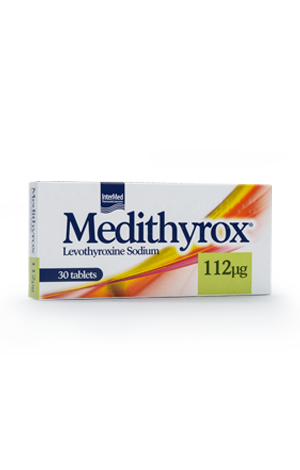
- Country of registration
- Dosage formTablets, 13 mcg
- ATC codeH03AA01
- Active substance
- Prescription requiredYes
- Manufacturer
- ImporterUni-Pharma Kleon Tsetis Pharmaceutical Laboratories S.A.
- This information is for reference only and does not constitute medical advice. Always consult a doctor before taking any medication. Oladoctor is not responsible for medical decisions based on this content.
- Alternatives to MedithiroxDosage form: Tablets, 25 mcgActive substance: levothyroxine sodiumPrescription requiredDosage form: Tablets, 50 mcgActive substance: levothyroxine sodiumPrescription requiredDosage form: Tablets, 75 mcgActive substance: levothyroxine sodiumPrescription required
Online doctors for Medithirox
Discuss questions about Medithirox, including use, safety considerations and prescription review, subject to medical assessment and local regulations.


Get Medithirox Prescription Online
Fill in a 2-min form
Tell us your symptoms, history, and what medicine you're requesting.
Pick a doctor or let us assign
Choose a specialist or we'll match you with the next available doctor.
Doctor reviews your case
Usually within 30 minutes. They may ask follow-up questions via chat.
Collect from any pharmacy
Electronic prescription sent to your email — valid across Spain.
Frequently Asked Questions
Medithirox requires a prescription in Poland. You can check with a doctor online whether this medicine may be appropriate for your situation.
The active ingredient in Medithirox is levothyroxine sodium. This information helps identify medicines with the same composition but different brand names.
Medithirox is manufactured by Uni-Pharma Kleon Tsetis Pharmaceutical Laboratories S.A.. Pharmacy brands and packaging may differ depending on the distributor.
Doctors such as Family doctors, Psychiatrists, Dermatologists, Cardiologists, Endocrinologists, Gastroenterologists, Pulmonologists, Nephrologists, Rheumatologists, Hematologists, Infectious disease physicians, Allergists, Geriatricians, Paediatricians, Oncologists may assess whether Medithirox is appropriate, depending on your situation and local regulations. You can book an online consultation to discuss your symptoms and possible next steps.
Spain has a well-developed healthcare infrastructure across major cities such as Madrid, Barcelona, Valencia, and Seville. Pharmacies are widely available and operate under strict regulations, ensuring access to prescribed medications.
You can buy Medithirox in Madrid, Barcelona, Seville, or Valencia at any local pharmacy with a valid prescription.
To obtain a prescription, you can use Oladoctor:
Other medicines with the same active substance (levothyroxine sodium) include Althixin, Althixin, Althixin. These may have different brand names or formulations but contain the same therapeutic ingredient. Always consult a doctor before switching or starting a new medicine.
