





How to use Latalux
Leaflet attached to the packaging: patient information
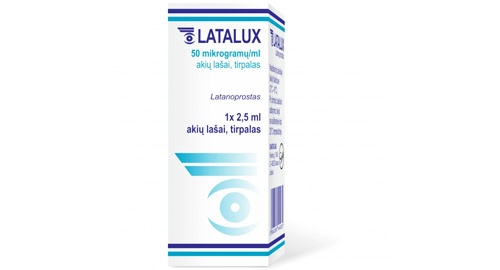
Latalux, 50 micrograms/ml, eye drops, solution
Latanoprost
Read the leaflet carefully before using the medicine, as it contains important information for the patient.
- Keep this leaflet, you may need to read it again.
- If you have any further questions, ask your doctor or pharmacist.
- This medicine has been prescribed for a specific adult or child. Do not pass it on to others. The medicine may harm them, even if their symptoms are the same.
- If the patient experiences any side effects, including those not listed in this leaflet, they should tell their doctor or pharmacist. See section 4.
Table of contents of the leaflet
- 1. What is Latalux and what is it used for
- 2. Important information before using Latalux
- 3. How to use Latalux
- 4. Possible side effects
- 5. How to store Latalux
- 6. Contents of the pack and other information
1. What is Latalux and what is it used for
Latalux belongs to a group of medicines known as prostaglandin analogues. The medicine works by increasing the natural outflow of aqueous fluid from the eye into the bloodstream.
Latalux is usedto treat a condition known as open-angle glaucoma and increased intraocular pressure in adults. Both conditions are associated with increased intraocular pressure and may eventually affect vision.
Latalux is also used to treat increased intraocular pressure and glaucoma in children of all ages, including premature infants and newborns.
2. Important information before using Latalux
Latalux can be used in adults, including the elderly, and in children from birth to 18 years. Latalux has not been studied in premature infants (born before 36 weeks of gestation).
When not to use Latalux:
- if the patient is allergic to latanoprost or any of the other ingredients of this medicine (listed in section 6).
Warnings and precautions
If any of the following apply to the adult or child, they should discuss this with their doctor or pharmacist before starting Latalux:
- if the adult or child has had eye surgery (including cataract surgery), or is scheduled to have it;
- if the adult or child has eye problems (such as eye pain, inflammation, or irritation, blurred vision);
- if the adult or child has dry eyes;
- if the adult or child has severe or uncontrolled asthma;
- if the adult or child uses contact lenses. Latalux can be used, but they should follow the instructions for contact lens wearers (see section 3);
- if the adult or child has had a viral eye infection caused by the herpes simplex virus (HSV) in the past or currently.
Latalux and other medicines
Latalux may interact with other medicines. The patient should tell their doctor or pharmacist about all medicines (including eye drops) they are taking, have recently taken, or might take, including those obtained without a prescription.
Pregnancy, breastfeeding, and fertility
If the patient is pregnant or breastfeeding, thinks they may be pregnant, or plans to have a child, they should consult their doctor or pharmacist before using this medicine. Latalux should not be used during pregnancy and breastfeeding.
Driving and using machines
After using Latalux, blurred vision may occur for a short time. In this case, the patient should not drive or operate any tools or machines until their vision returns to normal.
Latalux contains benzalkonium chloride and other phosphate buffers
This medicine contains 0.006 mg of benzalkonium chloride per drop, which corresponds to 0.2 mg/ml. Benzalkonium chloride may be absorbed by soft contact lenses and change their color. The patient should remove their contact lenses before administering Latalux and wait 15 minutes before putting them back on.
Benzalkonium chloride may also cause eye irritation, especially in people with dry eye syndrome or corneal disorders. If the patient experiences any abnormal sensations in the eye, stinging, or pain after using the medicine, they should contact their doctor.
3. How to use Latalux
This medicine should always be used exactly as the doctor has instructed. If the patient is unsure, they should ask their doctor or pharmacist.
The usual dosefor adults (including the elderly) and children is 1 drop into the affected eye(s) once daily, preferably in the evening.
Latalux should not be used more than once daily, as this may reduce the effectiveness of the treatment.
The patient should use Latalux for as long as their doctor recommends.
Using contact lenses
If the adult or child wears contact lenses, they should remove them before using Latalux. Contact lenses can be put back 15 minutes after using Latalux.
Instructions for use
- 1. Wash your hands, stand or sit comfortably.
- 2. Remove the protective cap from the bottle.
- 3. Gently pull the lower eyelid down with your index finger. Bring the tip of the bottle close to the eye without touching it.
- 4. Gently squeeze the bottle to release one drop into the eye, then release the lower eyelid.
- 5. Press the inner corner of the treated eye with your finger for 1 minute, keeping the eye closed.
- 6. If the doctor has instructed, repeat the above steps for the other eye.
- 7. Replace the protective cap on the bottle.
Using Latalux with other eye drops
The patient should wait at least 5 minutes between using Latalux and other eye drops.
Using more Latalux than recommended
The patient should carefully squeeze the bottle to release only one drop into the affected eye.
If more drops are administered to the eye, mild eye irritation may occur with redness and tearing. These symptoms should resolve, but if the patient is concerned, they should contact their doctor.
If the patient accidentally ingests Latalux, they should contact their doctor immediately.
Missing a dose of Latalux
If a dose is missed, the patient should take the next dose at the scheduled time. They should not take a double dose to make up for the missed dose. If they are unsure, they should contact their doctor or pharmacist.
Stopping Latalux
The patient should talk to their doctor or pharmacist if they want to stop using Latalux.
If they have any further questions about using this medicine, they should ask their doctor or pharmacist.
4. Possible side effects
Like all medicines, Latalux can cause side effects, although not everybody gets them.
Known side effects of Latalux:
- Very common(may affect more than 1 in 10 people):
- Gradual change in eye color due to increased amounts of brown pigment in the iris. This change is more likely to occur in patients with mixed eye color (e.g., blue-brown, grey-brown, yellow-brown, or green-brown) than in those with a single eye color (blue, grey, green, or brown). Any changes in eye color may develop over several years, but are usually observed within 8 months of treatment. The change in eye color may be permanent and more noticeable if Latalux is used in one eye only. It appears that the change in eye color does not cause any problems. The change in eye color does not progress after Latalux is stopped.
- Eye redness
- Eye irritation (burning, feeling of sand in the eyes, itching, stinging, or foreign body sensation in the eye). If the patient experiences severe eye irritation with excessive tearing, they should contact their doctor, pharmacist, or nurse (within a week). It may be necessary to verify the treatment to ensure the patient receives appropriate treatment.
- Gradual change in the appearance of the eyelashes of the treated eye or fine hairs around the treated eye, usually observed in people of Japanese descent. These changes include darkening of the color, length, thickness, and number of eyelashes.
- Common(less than 1 in 10 people):
- Eye surface damage or inflammation, eyelid inflammation (blepharitis), eye pain, and sensitivity to light (photophobia), conjunctivitis
Uncommon(less than 1 in 100 people):
- Swollen eyelids, dry eyes, inflammation or irritation of the cornea, blurred vision, inflammation of the colored part of the eye, swelling of the macula (macular edema)
- Skin rash
- Chest pain (angina), palpitations
- Asthma, shortness of breath (dyspnea)
- Chest pain
- Headache, dizziness
- Muscle pain, joint pain
- Nausea
- Vomiting
Rare(less than 1 in 1000 people):
- Inflammation of the iris, symptoms of swelling or scratching/damage to the eye surface, swelling around the eye (periorbital edema), ingrown eyelashes or an extra row of eyelashes, scars on the eye surface, formation of fluid-filled areas in the colored part of the eye (iris cyst)
- Skin reactions on the eyelids, darkening of the eyelid skin
- Worsening of asthma
- Severe itching of the skin
- Development of a viral eye infection caused by the herpes simplex virus (HSV).
Very rare(less than 1 in 10,000 people):
- Worsening of angina in patients with heart disease, sunken appearance of the eyes (deepening of the eyelid sulcus)
Side effects observed more frequently in children than in adults were runny nose and fever.
In very rare cases, in some patients with severe damage to the clear front layer of the eye (cornea), cloudy spots on the cornea due to calcium deposits during treatment have been reported.
Reporting side effects
If the patient experiences any side effects, including those not listed in this leaflet, they should tell their doctor, pharmacist, or nurse. Side effects can be reported directly to the Department of Post-Marketing Surveillance of Medicinal Products, Medical Devices, and Biocidal Products
Al. Jerozolimskie 181C, 02-222 Warsaw
Phone: +48 22 49 21 301
Fax: +48 22 49 21 309
Website: https://smz.ezdrowie.gov.pl
By reporting side effects, more information can be gathered on the safety of this medicine.
Side effects can also be reported to the marketing authorization holder.
5. How to store Latalux
Keep the medicine out of the sight and reach of children.
Unopened bottles of Latalux should be stored in the refrigerator (2°C – 8°C).
Store the medicine in the outer packaging to protect it from light. After the first opening of the bottle: do not store above 25°C.
After 4 weeks of opening the bottle, it should be discarded.
Do not throw away any medicines via wastewater or household waste. Ask your pharmacist how to throw away medicines you no longer use. This will help protect the environment.
6. Contents of the pack and other information
What Latalux contains
The active substance of Latalux is latanoprost. 1 ml of eye drop solution contains 50 micrograms of latanoprost. 2.5 ml of eye drop solution (bottle contents) contains 125 micrograms of latanoprost.
The other ingredients are: sodium dihydrogen phosphate dihydrate, disodium phosphate dodecahydrate, sodium chloride, benzalkonium chloride 0.2 mg/ml, purified water.
What Latalux looks like and contents of the pack
Latalux is a clear or pale yellow, colorless liquid. Each bottle with a dropper contains
- 2.5 ml of eye drops.
Latalux is available in the following packs:
1 bottle with a dropper containing 2.5 ml of eye drops.
3 bottles with a dropper, each containing 2.5 ml of eye drops.
6 bottles with a dropper, each containing 2.5 ml of eye drops.
Not all pack sizes may be marketed.
Marketing authorization holder
BAUSCH + LOMB IRELAND LIMITED
3013 Lake Drive
Citywest Business Campus
Dublin 24, D24PPT3
Ireland
[email protected]
Manufacturer
Dr. Gerhard Mann Chem.-pharm. Fabrik GmbH
Brunsbütteler Damm 165/173
13581 Berlin
Germany
Phone:+49 (0)30 33093-0
Fax:+49 (0)30 33093-350
This medicinal product is authorized in the Member States of the European Economic Area under the following names:
Netherlands
LATALUX 50 microgram/ml eye drops, solution
Bulgaria
LATALUX 50 микрограма/ml Капки за очи, разтвор
Czech Republic
LATALUX 50 mikrogramů/ml oční kapky, roztok
Lithuania
LATALUX 50 mikrogramų/ml akių lašai, tirpalas
Latvia
LATALUX 50 mikrogrami/ml acu pilieni, šķīdums
Poland
Latalux
Date of last revision: 06/2023
- Country of registration
- Active substance
- Prescription requiredYes
- Manufacturer
- ImporterS.C. Rompharm Company S.R.L.
- This information is for reference only and does not constitute medical advice. Always consult a licensed doctor before taking any medication. Oladoctor is not responsible for medical decisions based on this content.
- Alternatives to LataluxDosage form: Drops, 50 mcg/mlActive substance: latanoprostManufacturer: Pharmaselect International Beteiligungs GmbHPrescription requiredDosage form: Drops, 50 mcg/mlActive substance: latanoprostManufacturer: Jadran-Galenski laboratorij d.d.Prescription requiredDosage form: Drops, 50 mcg/mlActive substance: latanoprostManufacturer: RAFARM S.A.Prescription required
Alternatives to Latalux in other countries
The best alternatives with the same active ingredient and therapeutic effect.
Alternative to Latalux in Spain
Alternative to Latalux in Ukraine
Online doctors for Latalux
Discuss dosage, side effects, interactions, contraindications, and prescription renewal for Latalux – subject to medical assessment and local rules.

Get updates and exclusive offers
Be the first to know about new services, marketplace updates, and subscriber-only promos.

