


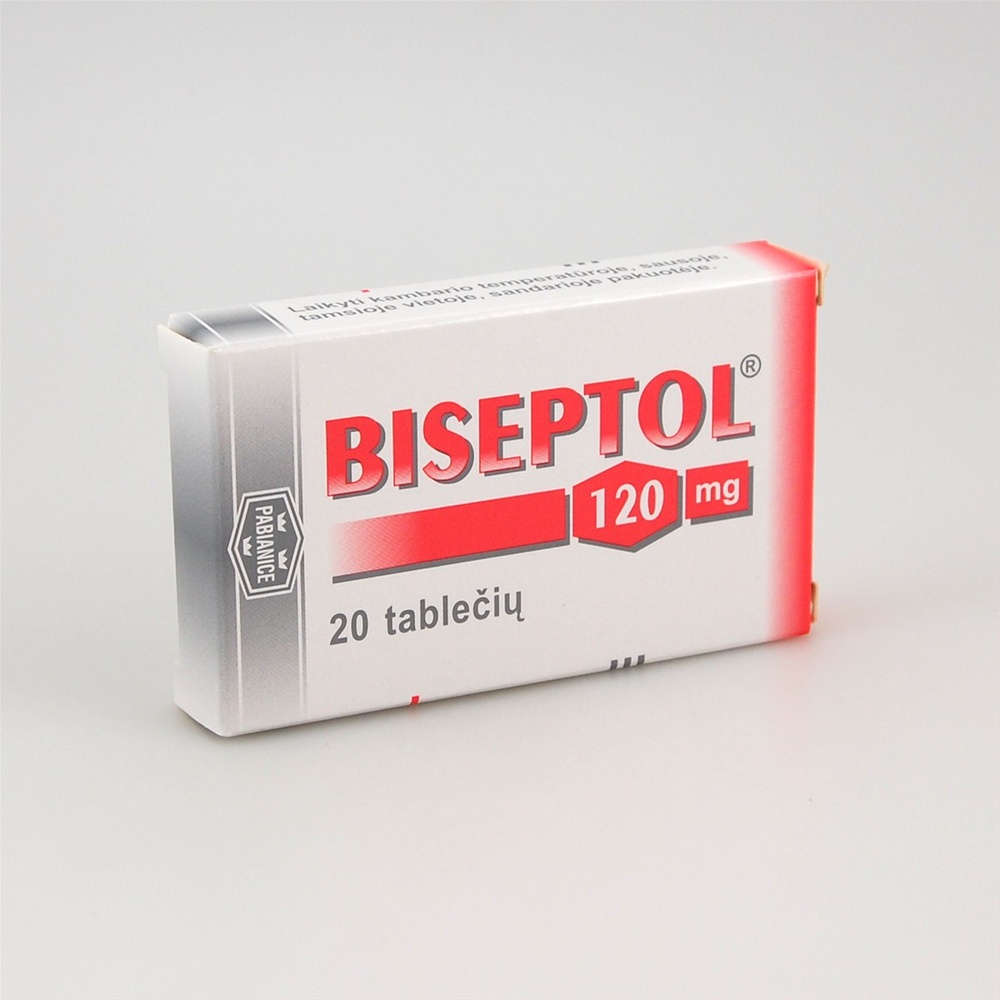
Biseptol 120
Ask a doctor about a prescription for Biseptol 120




How to use Biseptol 120
Leaflet attached to the packaging: patient information
Biseptol 120, 100 mg + 20 mg, tablets
Biseptol 480, 400 mg + 80 mg, tablets
Biseptol 960, 800 mg + 160 mg, tablets
Sulfamethoxazole + Trimethoprim
Read the leaflet carefully before taking the medicine, as it contains important information for the patient.
- Keep this leaflet, so you can read it again if you need to.
- If you have any further questions, ask your doctor, pharmacist, or nurse.
- This medicine has been prescribed specifically for you. Do not pass it on to others. The medicine may harm another person, even if their symptoms are the same as yours.
- If you experience any side effects, including those not listed in this leaflet, tell your doctor, pharmacist, or nurse. See section 4.
Table of contents of the leaflet:
- 1. What is Biseptol and what is it used for
- 2. Important information before taking Biseptol
- 3. How to take Biseptol
- 4. Possible side effects
- 5. How to store Biseptol
- 6. Contents of the packaging and other information
1. What is Biseptol and what is it used for
Biseptol is an antibacterial medicine that contains cotrimoxazole, which consists of two active substances: sulfamethoxazole (a sulfonamide with a medium duration of action) and trimethoprim, in appropriate proportions.
Both components of the medicine act on the same biochemical process, which leads to an increase in antibacterial activity and a slower development of bacterial resistance.
Before recommending the use of the medicine, the doctor will consider the sensitivity of the microorganisms causing the infection and the possibility of side effects. The therapeutic indications are limited to infections caused by microorganisms sensitive to this medicine.
Biseptol should be used for the treatment or prevention of infections, exclusively in cases where it has been confirmed or there is a justified suspicion that they were caused by bacteria or other microorganisms sensitive to the active substances of this medicine.
Both components of the medicine are rapidly absorbed from the gastrointestinal tract; the maximum concentration of both components in the blood occurs 1-4 hours after oral administration. Both compounds appear in therapeutic concentrations in many tissues and body fluids.
Biseptol is indicated for the treatment of adults, adolescents, and children over 6 years of age.
Indications for use
The medicine is used to treat the following bacterial infections:
- urinary tract infections caused by susceptible strains of bacteria E. coli, Klebsiellaspp.,Enterobacter spp.,Morganella morganii, Proteus mirabilis, and Proteus vulgaris
- acute otitis media caused by susceptible strains of bacteria Streptococcus pneumoniaeand H. influenzae
- exacerbations of chronic bronchitis caused by susceptible strains of bacteria Streptococcus pneumoniaeor H. influenzae
- gastrointestinal infections caused by Shigellarods
- microbiologically confirmed pneumonia caused by Pneumocystis jiroveciiand prevention of infections with this microorganism, particularly in patients with reduced immunity (e.g., AIDS)
- traveler's diarrhea in adults caused by pathogenic strains of E. coli
2. Important information before taking Biseptol
When not to take Biseptol:
- if the patient is allergic to the active substances (sulfamethoxazole or trimethoprim) or other sulfonamides or any of the other components of this medicine (listed in section 6)
- in patients with recognized liver tissue damage
- in patients with severe renal impairment, with creatinine clearance <15 ml min (see section 3)< li>
- in patients with megaloblastic anemia (reduced red blood cell count) caused by folic acid deficiency
- in patients taking dofetilide
- in children under 2 months of age (risk of kernicterus)
Warnings and precautions
The following situations require special caution when taking Biseptol:
- If the patient experiences a rash, sore throat, fever, joint pain, cough, shortness of breath, or jaundice or other severe side effects, the medicine should be discontinued immediately.
- If the patient has a severe allergy or bronchial asthma.
- If the patient has porphyria or thyroid dysfunction.
If the patient experiences an increase in cough and shortness of breath, they should immediately tell their doctor.
The risk of severe side effects is increased:
- in elderly patients
- in patients with other diseases, such as renal or liver dysfunction
- in patients taking other medicines
- in patients with malabsorption syndrome and malnutrition
- in patients with AIDS (see section 4)
- in individuals who abuse alcohol
During treatment with Biseptol, potentially life-threatening skin rashes (Stevens-Johnson syndrome, toxic epidermal necrolysis) have been reported, which can start with a rash on the trunk, as red, blistering, or peeling skin, often with central facial lesions and/or blisters.
Additional symptoms may include ulcers in the mouth, throat, nose, genitals, and conjunctivitis (red, swollen eyes).
Potentially life-threatening skin rashes are often accompanied by flu-like symptoms.
The rash may spread to large blisters or may cause skin peeling.
The greatest risk of severe skin reactions occurs within the first few weeks of treatment.
If a patient has experienced Stevens-Johnson syndrome or toxic epidermal necrolysis while taking Biseptol, they should never take Biseptol again.
If a patient experiences a rash or skin symptoms, they should immediately contact their doctor and inform them that they are taking Biseptol.
Hemophagocytic lymphohistiocytosis
Very rare cases of severe immune reactions have been reported, resulting from uncontrolled activation of white blood cells, leading to inflammatory conditions (hemophagocytic lymphohistiocytosis) — which can be life-threatening if not diagnosed and treated early. If multiple symptoms occur simultaneously or with a slight delay, such as fever, lymph node swelling, weakness, dizziness, shortness of breath, cyanosis, or skin rash, the patient should immediately contact their doctor.
Kidney function
Sulfonamides, including Biseptol, may cause increased urine production, especially in patients with heart failure.
The doctor should carefully monitor the potassium level in the blood serum and kidney function in patients:
- taking high doses of Biseptol, used in patients with pneumonia caused by Pneumocystis jirovecii;
- taking the usual recommended dose of Biseptol, with impaired potassium metabolism or renal impairment;
- receiving medicines that increase potassium levels in the blood (see "Biseptol and other medicines" below).
Long-term treatment
During long-term treatment with Biseptol, the doctor will recommend regular blood tests, urine tests, and kidney function tests. The patient should drink plenty of fluids during treatment.
If the patient has a folic acid deficiency, side effects related to the blood may occur. These symptoms disappear after folic acid administration.
Biseptol should not be used in patients with G6PD enzyme deficiency, except in cases of absolute necessity. In such cases, only minimal doses of the medicine should be used.
Using Biseptol in patients with renal impairment
In patients with renal impairment, the doctor will recommend a dose adjusted for the individual patient based on the results of tests (creatinine clearance), see section 3.
Using Biseptol in patients with liver impairment
The medicine should be used with caution. The doctor will recommend more frequent blood tests.
Using Biseptol in elderly patients
The medicine should be used with caution due to the increased risk of severe side effects — see section 3.
Using Biseptol in patients with folic acid deficiency
In patients with folic acid deficiency (in elderly patients, patients with pre-existing folic acid deficiency, or patients with renal impairment), side effects related to the blood occur more frequently. These symptoms disappear after folic acid administration. The doctor will recommend periodic blood tests.
Children and adolescents
Children under 6 years of age: tablets are not recommended due to the risk of choking; for younger children, under 6 years of age, suspensions are available.
In infants under 2 months of age, Biseptol is contraindicated.
Biseptol and other medicines
Tell your doctor about all medicines you are currently taking or have recently taken, as well as any medicines you plan to take. The doctor will decide on continuation, possible modification, and monitoring of treatment effects. This applies in particular to medicines containing:
- amantadine(a medicine used to treat nervous system diseases — Parkinson's disease and has antiviral effects); patients taking amantadine may be at increased risk of unwanted neurological events, such as delirium and myoclonus.
- cyclosporine(a medicine that suppresses immune system activity); transient deterioration of kidney function has been observed in patients treated with cotrimoxazole and cyclosporine after kidney transplantation.
- dapsone(an antibacterial medicine); if concomitant use is necessary, patients should be monitored for methemoglobinemia (an abnormal form of hemoglobin in the blood).
- digoxin(a medicine used to treat heart failure and certain heart rhythm disorders); the digoxin level in the blood serum should be monitored, especially in elderly patients.
- oral antidiabetic medicines; the patient should more frequently monitor their blood glucose levels. It may be necessary to change the dose of oral antidiabetic medicines during and after treatment with Biseptol.
- phenytoin(an antiepileptic medicine used to prevent and treat seizures); patients taking phenytoin should be monitored for signs of phenytoin toxicity.
- clozapine(medicines used to treat mental disorders).
- coumarins(warfarin, acenocoumarol, phenprocoumon) and other oral anticoagulants (medicines that prevent blood clotting); in patients taking coumarins, blood clotting should be monitored.
- lamivudine(a medicine with antiviral effects);
- diuretics(diuretics), especially thiazides (used, among other things, to treat hypertension, heart failure, chronic kidney disease, liver cirrhosis, and edema of various origins); in elderly patients taking diuretics, the platelet count should be regularly monitored.
- potassium-sparing medicines(e.g., ACE inhibitors, angiotensin receptor blockers, potassium-sparing diuretics, and prednisolone (a glucocorticosteroid with strong anti-inflammatory effects));
- memantine(a medicine used in psychiatric disorders); patients taking memantine may be at increased risk of unwanted neurological events, such as delirium and myoclonus.
- methotrexate(a medicine that suppresses immune system activity); Biseptol may increase the toxicity of methotrexate and cause pancytopenia (reduced red blood cell, white blood cell, and platelet count); elderly patients, those with hypoalbuminemia, impaired renal function, reduced bone marrow reserve, and patients taking high doses of methotrexate should receive folic acid or calcium folinate.
- pyrimethamine(an antiparasitic medicine); occasional cases of megaloblastic anemia have been reported in patients taking pyrimethamine for malaria prophylaxis, in doses exceeding 25 mg per week, and concomitantly taking cotrimoxazole.
- sulfonylurea derivatives(medicines used to treat diabetes) (including glibenclamide, gliclazide, glipizide, chlorpropamide, and tolbutamide); patients should be regularly monitored for hypoglycemia.
- repaglinide, rosiglitazone, or pioglitazone(oral antidiabetic medicines that lower blood glucose levels); patients taking repaglinide, rosiglitazone, or pioglitazone should be regularly monitored for hypoglycemia. If the patient is taking any of these medicines, the doctor will decide whether they can take Biseptol.
It is not recommended to take Biseptol with medicines containing:
- amiodarone(a medicine used to treat heart rhythm disorders),
- paclitaxel(an anticancer medicine). It is contraindicated to take Biseptol with medicines containing dofetilide(a medicine used to treat heart rhythm disorders). The frequency and severity of side effects such as bone marrow damage and kidney damage may increase if Biseptol is administered concomitantly with other medicines that have a proven effect on reducing bone marrow cell count or are toxic to the kidneys, such as nucleoside analogs(used in antitumor and antiviral therapy), tacrolimus(used to prevent transplant rejection), azathioprine(a medicine that suppresses immune system activity), or mercaptopurine(an anticancer and immunosuppressive medicine).
Effect on laboratory tests:
- Trimethoprim may modify the results of methotrexate serum concentration measurement by the enzymatic method.
- Cotrimoxazole may increase the results of the Jaffé test with alkaline picrate for creatinine by about 10%.
Using Biseptol with food and drink
The medicine should be taken orally during meals or immediately after meals. During treatment, the patient should drink plenty of fluids.
Pregnancy, breastfeeding, and fertility
If you are pregnant or breastfeeding, think you may be pregnant, or plan to have a child, ask your doctor or pharmacist for advice before taking this medicine.
Pregnancy:
The doctor will consider the use of Biseptol in pregnant or breastfeeding women.
There is no clear evidence of the risk of fetal malformations in women treated with cotrimoxazole in early pregnancy. However, an increased risk of spontaneous abortion has been observed in women who took trimethoprim or trimethoprim in combination with sulfamethoxazole in the first trimester of pregnancy. Animal studies indicate that very high doses of cotrimoxazole can cause fetal malformations typical of folic acid-lowering substances.
The medicine may be used during pregnancy only if, in the doctor's opinion, the expected benefits of treatment outweigh the potential risk to the fetus. In such cases, pregnant women or women planning to become pregnant during treatment with Biseptol are recommended to take folic acid at a dose of 5 mg per day. Whenever possible, the use of Biseptol should be avoided in the last period of pregnancy due to the risk of kernicterus in the newborn.
Breastfeeding:
Both trimethoprim and sulfamethoxazole pass into breast milk, so the doctor must consider the risk to the child (kernicterus, hypersensitivity) in relation to the expected therapeutic benefits for the mother.
Biseptol is not recommended during breastfeeding.
Fertility
There are no available data on the effect on fertility.
Driving and using machines
There are no data on the effect of the medicine on the ability to drive and use machines.
Biseptol 960 contains sodium.
The medicine contains less than 1 mmol (23 mg) of sodium per tablet, which means the medicine is considered "sodium-free".
3. How to take Biseptol
Always take this medicine exactly as your doctor has told you. If you are not sure, ask your doctor.
Biseptol is taken orally. It is best to take it after meals with a sufficient amount of fluid.
Tablets should not be divided.
Urinary tract infections, gastrointestinal infections caused by Shigellarods, and exacerbations of chronic bronchitis in adults and adolescents (over 12 years):
Usually, 960 mg of cotrimoxazole (8 tablets of Biseptol 120 or 2 tablets of Biseptol 480 or 1 tablet of Biseptol 960) is administered orally 2 times a day.
In urinary tract infections, the medicine is usually taken for 10-14 days, in exacerbations of chronic bronchitis — for 14 days, and in gastrointestinal infections caused by Shigellarods — for 5 days.
Urinary tract infections, gastrointestinal infections caused by Shigellarods, and acute otitis media in children:
Usually, 6 mg of trimethoprim and 30 mg of sulfamethoxazole/kg body weight per day are administered in 2 divided doses every 12 hours.
The average dose for children aged 6-12 years is 480 mg of cotrimoxazole every 12 hours.
A dose higher than that used in adults should not be administered.
In urinary tract infections and acute otitis media, the medicine is usually taken for 10 days, and in gastrointestinal infections caused by Shigellarods — for 5 days.
Pneumonia caused by Pneumocystis jiroveciiin adults and children:
The recommended dose for documented infection is 90-120 mg of cotrimoxazole/kg body weight per day in divided doses administered every 6 hours for 21 days.
Table 1. Maximum doses of Biseptol product depending on the body weight of patients with pneumonia caused by Pneumocystis jirovecii.
| Body weight [kg] | Dose administered every 6 hours [mg of cotrimoxazole] |
| 16 24 32 40 48 64 80 | 480 720 960 1200 1440 1920 2400 |
Prevention of Pneumocystis jiroveciiinfections:
Adults and adolescents: 960 mg of cotrimoxazole (8 tablets of Biseptol 120 or 2 tablets of Biseptol 480 or 1 tablet of Biseptol 960) 1 time a day, for 7 days. In case of poor tolerance to the medicine, the daily dose can be reduced to 480 mg.
Children: 900 mg of cotrimoxazole/m² body surface area per day in 2 equal doses administered every 12 hours for 3 consecutive days a week.
Table 2. Recommended doses of Biseptol product for children in the prevention of pneumonia caused by Pneumocystis jirovecii
| Body surface area [m²] | Dose administered every 12 hours [mg of cotrimoxazole] |
| 0.53 1.06 | 240 480 |
The maximum daily dose is 1920 mg (4 tablets of Biseptol 480 or 2 tablets of Biseptol 960).
Traveler's diarrhea in adults caused by pathogenic strains of E. coli:
The recommended dose is 960 mg (8 tablets of Biseptol 120 or 2 tablets of Biseptol 480 or 1 tablet of Biseptol 960) every 12 hours.
Dosing in patients with renal impairment:
Recommended dosing regimen in patients with renal impairment:
Creatinine clearance > 30 mL/min: standard dosing.
Creatinine clearance 15 – 30 mL/min: half of the standard dose.
Creatinine clearance <15 ml min: biseptol should not be used (see section 2).
Dosing in patients undergoing dialysis
Patients undergoing hemodialysis should initially receive a normal loading dose of the medicine and then an additional half dose after each hemodialysis.
Peritoneal dialysis results in minimal removal of the medicine. It is not recommended to use the medicine in patients undergoing peritoneal dialysis.
Dosing in elderly patients
In elderly patients with normal kidney function, the same doses as for adults should be used.
Using Biseptol in children
Children under 6 years of age: tablets are not recommended due to the risk of choking; for younger children, under 6 years of age, suspensions are available.
In infants under 2 months of age, Biseptol is contraindicated (see section 2).
Taking a higher dose of Biseptol than recommended
In case of taking a higher dose of the medicine than recommended, immediately consult a doctor or pharmacist or go to the hospital.
Take the medicine packaging with you.
After taking a higher dose of the medicine than recommended, the following symptoms may occur: nausea, vomiting, dizziness, and headaches, fever, sleepiness, loss of consciousness, confusion (disorders of consciousness), and the presence of blood or crystals in the urine. In severe overdose — nausea, vomiting, dizziness, headache, depression, disorders of consciousness, and inhibition of bone marrow activity. In case of prolonged overdose of trimethoprim, bone marrow suppression may develop, manifested by thrombocytopenia (low platelet count) or leukopenia (low white blood cell count), as well as other blood abnormalities resulting from folic acid deficiency.
Missing a dose of Biseptol
Take the missed dose as soon as possible.
Do not take a double dose to make up for the missed dose.
If you have any further questions about taking this medicine, ask your doctor.
4. Possible side effects
Like all medicines, Biseptol can cause side effects, although not everybody gets them.
Stop taking Biseptol and tell your doctor immediately if you experience:
- anaphylactic reactions (severe, potentially life-threatening, generalized or systemic hypersensitivity reaction)
- angioedema (swelling that may involve the face and throat, sometimes causing life-threatening shortness of breath)
- skin and subcutaneous tissue disorders: Stevens-Johnson syndrome, toxic epidermal necrolysis, and drug rash, which may be accompanied by an increased eosinophil count in the blood and systemic symptoms (see section 2 - Warnings and precautions)
- pseudomembranous colitis (see section 2 - Warnings and precautions)
- Stevens-Johnson syndrome, toxic epidermal necrolysis, and serum sickness-like reaction (skin rash, joint pain, fever, and lymphadenopathy)
- respiratory, thoracic, and mediastinal disorders: shortness of breath, cough, pulmonary infiltrates
- hepatobiliary disorders: hepatitis, sometimes with jaundice or liver necrosis
All of the above side effects are very rare.
Other side effects
Common side effects (occurring in less than 1 in 10 patients, but more than 1 in 100 patients) are:
- skin changes: rash, urticaria, itching
- gastrointestinal disorders: nausea with or without vomiting
- increased potassium levels in the blood (in case of high doses)
Uncommon side effects (occurring in less than 1 in 100 patients, but more than 1 in 1,000 patients) are:
- fungal infections, e.g., candidiasis
Rare side effects (occurring in less than 1 in 1,000 patients, but more than 1 in 10,000 patients) are:
- immune system disorders: polyarteritis nodosa;
- gastrointestinal disorders: abdominal pain, glossitis, stomatitis, diarrhea;
- skin and subcutaneous tissue disorders: photosensitivity, exfoliative dermatitis, erythema multiforme
- renal and urinary disorders: increased urine production;
- metabolic and nutritional disorders: hypoglycemia (low blood sugar).
Very rare side effects (occurring in less than 1 in 10,000 patients) are:
- blood and lymphatic system disorders: leukopenia (low white blood cell count), thrombocytopenia (low platelet count); significant decrease in white blood cell count (agranulocytosis), anemia (aplastic, hemolytic, or megaloblastic), abnormal hemoglobin structure (methemoglobinemia), decreased prothrombin level (hypoprothrombinemia), increased eosinophil count (eosinophilia), decreased neutrophil count (neutropenia)
- immune system disorders: fever, serum sickness-like reaction, chills, hypersensitivity reactions with respiratory symptoms, conjunctival and scleral injection:
- metabolic and nutritional disorders: hyperkalemia (elevated potassium levels in the blood), hyponatremia (low sodium levels in the blood), anorexia, metabolic acidosis;
- psychiatric and nervous system disorders: apathy, aseptic meningitis, ataxia, chills, depression, fatigue, hallucinations, headache, insomnia, nervousness, peripheral neuropathy, seizures, dizziness, tinnitus;
- eye disorders: uveitis;
- gastrointestinal disorders: pancreatitis, laryngitis;
- hepatobiliary disorders: increased liver enzyme activity, hyperbilirubinemia;
- musculoskeletal and connective tissue disorders: arthralgia, myalgia;
- renal and urinary disorders: crystalluria, renal failure, interstitial nephritis, toxic nephric syndrome with oliguria or anuria, increased azotemia, increased creatinine levels in the blood.
Frequency not known (cannot be estimated from the available data)
- painful, raised skin lesions in purple color, occurring on the limbs, and sometimes on the face and neck, accompanied by fever (Sweet's syndrome).
Other
Weakness, fatigue, insomnia
In some patients, other side effects may occur during treatment with Biseptol. In patients with AIDS, the frequency of side effects seems to be increased (see section 2 - Warnings and precautions).
Reporting side effects
If you experience any side effects, including those not listed in this leaflet, tell your doctor or pharmacist. Side effects can be reported directly to the Department of Drug Safety Monitoring of the Office for Registration of Medicinal Products, Medical Devices, and Biocidal Products:
Jerozolimskie Avenue 181 C,
02-222 Warsaw,
Phone: +48 22 49 21 301,
Fax: +48 22 49 21 309,
Website: https://smz.ezdrowie.gov.pl
Side effects can also be reported to the marketing authorization holder.
Reporting side effects will help to gather more information on the safety of the medicine.
5. How to store Biseptol
Keep the medicine out of the sight and reach of children.
Store in a temperature below 25°C.
Do not use Biseptol after the expiry date stated on the packaging.
Medicines should not be disposed of via wastewater or household waste. Ask your pharmacist how to dispose of medicines that are no longer needed. This will help protect the environment.
6. Contents of the packaging and other information
What Biseptol contains
The active substances of the medicine are sulfamethoxazole and trimethoprim
One tablet of Biseptol 120 contains 100 mg of sulfamethoxazole and 20 mg of trimethoprim.
The other ingredients are: potato starch, talc, magnesium stearate, polyvinyl alcohol.
One tablet of Biseptol 480 contains 400 mg of sulfamethoxazole and 80 mg of trimethoprim.
The other ingredients are: potato starch, talc, magnesium stearate, polyvinyl alcohol.
One tablet of Biseptol 960 contains 800 mg of sulfamethoxazole and 160 mg of trimethoprim.
The other ingredients are: potato starch, talc, magnesium stearate, sodium carboxymethyl cellulose, polyvinyl alcohol.
What Biseptol looks like and contents of the pack
Biseptol 120- white or yellowish-white, round, flat tablets with a notch, with a smooth surface and no rough edges, engraved with the letters "Bs" on one side.
Tablets are packaged in blisters of 20 tablets or glass bottles with a stopper. The blister or bottle is placed in a cardboard box.
Biseptol 480- white or yellowish-white, round, flat tablets with a notch, with a smooth surface and no rough edges, engraved with a dash above the letters "Bs".
Tablets are packaged in blisters of 20 tablets. The blister is placed in a cardboard box.
Biseptol 960- white or yellowish-white, round, flat tablets with a smooth surface and no rough edges, engraved with a dash.
Tablets are packaged in blisters of 10 tablets or polyethylene containers with a stopper. The blister or container is placed in a cardboard box.
Marketing authorization holder and manufacturer
Adamed Pharma S.A.
Pieńków, ul. M. Adamkiewicza 6A
05-152 Czosnów
Phone: +48 22 732 77 00
Date of last revision of the leaflet:
- Country of registration
- Active substance
- Prescription requiredYes
- Manufacturer
- ImporterAdamed Pharma S.A.
- This information is for reference only and does not constitute medical advice. Always consult a licensed doctor before taking any medication. Oladoctor is not responsible for medical decisions based on this content.
- Alternatives to Biseptol 120Dosage form: Tablets, 800 mg + 160 mgActive substance: sulfamethoxazole and trimethoprimPrescription requiredDosage form: Tablets, 800 mg + 160 mgActive substance: sulfamethoxazole and trimethoprimPrescription requiredDosage form: Tablets, 800 mg + 160 mgActive substance: sulfamethoxazole and trimethoprimPrescription required

Alternatives to Biseptol 120 in other countries
The best alternatives with the same active ingredient and therapeutic effect.
Alternative to Biseptol 120 in Ukraine
Alternative to Biseptol 120 in Espanha
Online doctors for Biseptol 120
Discuss dosage, side effects, interactions, contraindications, and prescription renewal for Biseptol 120 – subject to medical assessment and local rules.









Get updates and exclusive offers
Be the first to know about new services, marketplace updates, and subscriber-only promos.

