


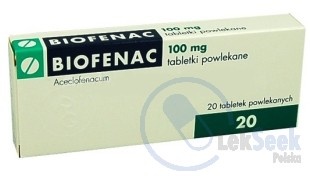
Biofenac
Ask a doctor about a prescription for Biofenac




How to use Biofenac
Package Leaflet: Information for the Patient
Biofenac, 100 mg, Powder for Oral Suspension
Aceclofenac
Read the Leaflet Carefully Before Taking the Medication, as it Contains Important Information for the Patient.
- Keep this leaflet, you may need to read it again.
- If you have any further questions, ask your doctor, pharmacist, or nurse.
- This medicine has been prescribed for you only. Do not pass it on to others. It may harm them, even if their symptoms are the same as yours.
- If you experience any side effects, including any not listed in this leaflet, please tell your doctor, pharmacist, or nurse. See section 4.
Table of Contents of the Leaflet
- 1. What is Biofenac and what is it used for
- 2. Important information before taking Biofenac
- 3. How to take Biofenac
- 4. Possible side effects
- 5. How to store Biofenac
- 6. Contents of the pack and other information
1. What is Biofenac and what is it used for
Biofenac is a pain-relieving and anti-inflammatory medication.
Biofenac is used to treat chronic joint diseases associated with chronic pain and inflammation, such as osteoarthritis, rheumatoid arthritis, and ankylosing spondylitis.
2. Important information before taking Biofenac
When not to take Biofenac
- if you are allergic to aceclofenac or any of the other ingredients of this medicine (listed in section 6),
- if you are in the last three months of pregnancy,
- if you have had asthma, acute rhinitis, skin rash, or other allergic reactions after taking acetylsalicylic acid (e.g., Aspirin) or other non-steroidal anti-inflammatory drugs,
- if you have or have had stomach or intestinal ulcers, or gastrointestinal bleeding,
- if you have active bleeding or bleeding disorders,
- if you have severe liver or kidney disease,
- if you have heart disease and (or) cerebrovascular disease, such as after a heart attack, stroke, transient ischemic attack (mini-stroke), or vascular surgery, or angioplasty,
- if you have or have had circulatory disorders (peripheral vascular disease).
Warnings and precautions
Before starting treatment with Biofenac, discuss with your doctor:
- if you have had symptoms of stomach or duodenal ulcers, bleeding, or perforation, or inflammatory bowel disease (ulcerative colitis, Crohn's disease), as they may worsen,
- if you have had a history of cerebral bleeding,
- if you have had moderate liver or kidney disease, or if you have a tendency to fluid retention for any other reason,
- if you have bleeding disorders, as they may worsen,
- if you have a specific skin and connective tissue disease, called systemic lupus erythematosus (SLE),
- if you have a specific metabolic disorder, called porphyria,
- if you have had asthma,
- if you smoke,
- if you have diabetes,
- if you have angina, blood clots, high blood pressure, high cholesterol, or high triglycerides.
Taking medicines like Biofenac may be associated with an increased risk of heart attack (myocardial infarction).
The risk of side effects can be minimized by using the lowest effective dose for the shortest duration necessary.
Do not exceed the recommended dose or prolong treatment.
Hypersensitivity reactions, including angioedema and severe skin reactions, such as Stevens-Johnson syndrome and toxic epidermal necrolysis, have been reported with the use of medicines like Biofenac. The risk of skin reactions is higher during the first month of treatment. At the first sign of a skin rash, mucosal lesions, or any other sign of hypersensitivity, treatment should be discontinued and medical attention sought immediately (see section 4).
Treatment with Biofenac should be discontinued at the first sign of a skin rash or other signs of hypersensitivity.
Biofenac should not be used in the case of chickenpox.
Biofenac may rarely cause gastrointestinal ulcers and bleeding. This can occur at any time during treatment, with or without warning symptoms.
If any abdominal symptoms are observed, especially in the elderly, medical attention should be sought.
Biofenac and other medicines
Tell your doctor or pharmacist about all medicines you are taking, or have recently taken, and about any medicines you plan to take.
Some medicines may affect the action of Biofenac. In such cases, a dose adjustment or discontinuation of these medicines may be necessary. This is especially important if you are taking:
- lithium (used to treat mental illnesses),
- digoxin (used to treat heart failure or arrhythmia),
- diuretics (water pills),
- certain medicines used to treat high blood pressure (ACE inhibitors and angiotensin II antagonists),
- anticoagulant medicines (blood thinners),
- medicines used to treat depression,
- antidiabetic medicines,
- methotrexate (used to treat tumors and rheumatism),
- tacrolimus and cyclosporin (immunosuppressive medicines used to prevent organ rejection),
- corticosteroid anti-inflammatory medicines, such as betamethasone and prednisolone,
- acetylsalicylic acid and other pain-relieving medicines (non-steroidal anti-inflammatory drugs),
- zidovudine (used to treat HIV infection).
Biofenac with food and drink
Biofenac can be taken with or without food.
Pregnancy, breastfeeding, and fertility
If you are pregnant or breastfeeding, think you may be pregnant, or are planning to have a baby, ask your doctor or pharmacist for advice before taking this medicine.
Tell your doctor if you are planning to become pregnant or if you have problems becoming pregnant.
NSAIDs may make it more difficult to become pregnant.
Do not take Biofenac if you are in the last three months of pregnancy, as it may harm the unborn baby or cause problems during delivery. Biofenac may cause problems with the baby's kidneys and heart. Biofenac may affect the mother's and baby's tendency to bleed and may cause the delivery to be delayed or prolonged. Do not take Biofenac during the first 6 months of pregnancy, unless your doctor considers it absolutely necessary. If treatment is necessary during this period or when planning to become pregnant, use the lowest possible dose for the shortest possible time. Taking Biofenac for more than a few days from the 20th week of pregnancy may cause problems with the baby's kidneys, leading to low levels of amniotic fluid or narrowing of the baby's heart blood vessels.
If you require treatment for more than a few days, your doctor may recommend additional monitoring.
Treatment with this medicine during any period of pregnancy should only be done under the supervision of a doctor.
It is not known whether Biofenac passes into breast milk. Breastfeeding is not recommended during treatment with Biofenac, unless your doctor decides otherwise.
Driving and using machines
Do not drive or operate hazardous machinery if you experience dizziness, nausea, or other central nervous system disorders while taking Biofenac.
Biofenac 100 mg, powder for oral suspension contains sorbitol, aspartame, and sodium
Each sachet contains 2.64 g of sorbitol.
Sorbitol is a source of fructose. If you have been told by your doctor that you have an intolerance to some sugars, or if you have previously been diagnosed with hereditary fructose intolerance, a rare genetic disorder in which the body does not break down fructose, you should contact your doctor before taking this medicine.
Each sachet contains 10 mg of aspartame.
Aspartame is a source of phenylalanine. It may be harmful to people with phenylketonuria. This is a rare genetic disorder in which phenylalanine accumulates in the body due to its impaired elimination.
Each sachet contains less than 1 mmol (23 mg) of sodium, which is essentially sodium-free.
3. How to take Biofenac
Always take this medicine exactly as your doctor or pharmacist has told you.
If you are not sure, ask your doctor or pharmacist.
The contents of the sachet should be dissolved in approximately 40-60 ml of water and taken immediately.
The recommended daily dose is200 mg, i.e., one sachet in the morning and one in the evening (one sachet every 12 hours).
If you feel that the effect of Biofenac is too strong or too weak, consult your doctor or pharmacist.
Use in children
The use of Biofenac is not recommended in children due to the lack of data on efficacy and safety.
Elderly patients
Dosage will be determined by your doctor. Regular check-ups will be necessary.
Kidney and heart disease
Dosage will be determined by your doctor. Regular check-ups will be necessary.
Liver disease
The recommended initial daily dose should be reduced to one sachet per day.
Long-term treatment
In the case of long-term use of Biofenac, your doctor will regularly perform laboratory tests (blood count, liver and kidney function tests).
Taking a higher dose of Biofenac than recommended
Contact your doctor or pharmacist immediately or go to the nearest hospital emergency department. Take this leaflet with you!
Missing a dose of Biofenac
Do not worry! Do not take a double dose to make up for a forgotten sachet. Take the next dose at the usual time.
Stopping treatment with Biofenac
The duration of treatment will be determined by your doctor. Do not stop treatment prematurely, even if you feel better.
If you have any further questions about the use of this medicine, ask your doctor, pharmacist, or nurse.
4. Possible side effects
Like all medicines, this medicine can cause side effects, although not everybody gets them.
Most of them are mild and disappear after stopping treatment with Biofenac.
Side effects may occur with the following frequencies, defined below:
- Very common: may affect more than 1 in 10 people
- Common: may affect up to 1 in 10 people
- Uncommon: may affect up to 1 in 100 people
- Rare: may affect up to 1 in 1,000 people
- Very rare: may affect up to 1 in 10,000 people
- Frequency not known: frequency cannot be estimated from the available data
Stop taking Biofenac and seek medical help immediately if you experience:
Allergic reactions, including anaphylactic shock and angioedema (rare) with symptoms such as:
- swelling of the face, tongue, or throat,
- difficulty swallowing,
- hives and difficulty breathing,
- low blood pressure and fever.
Ulcers and bleeding from the gastrointestinal tract (rare) with symptoms such as:
- bloody stools (very rare),
- black tarry stools (rare),
- vomiting blood or dark particles that look like coffee grounds (very rare).
Potentially life-threatening skin reactions, such as Stevens-Johnson syndrome and toxic epidermal necrolysis (very rare) with symptoms such as:
- itching, rash, redness of the skin, inflammation, pain, and blistering.
Common:dizziness, indigestion (upset stomach), abdominal pain, nausea, diarrhea, and changes in liver function tests.
Uncommon:bloating (gas), gastritis (inflammation of the stomach lining), constipation, vomiting, oral ulcers, itching, and rash.
Rare:high blood pressure, heart failure, shortness of breath (difficulty breathing or shortness of breath, usually associated with certain heart or lung conditions, also known as lack of breath), anemia (low red blood cell count or low hemoglobin level), vision disturbances.
Very rare:abnormal low white blood cell count and low platelet count, elevated potassium levels, and elevated liver enzyme activity in the blood, depression, sleep disturbances, abnormal dreams, paresthesia (tingling sensation), tremors (rhythmic, involuntary movements), headaches, taste disturbances, oral inflammation (inflammation of the mouth lining), pancreatitis, hepatitis, dizziness (feeling of spinning), tinnitus (ringing, buzzing, or other sounds in the ears without an external cause), purpura (numerous small bleeding spots in the skin), rash, edema (swelling of the legs, arms, or face), muscle cramps, kidney function disorders, kidney failure, palpitations (unpleasant sensation of irregular and (or) forceful heartbeat), vasculitis (inflammation of blood vessels), fatigue, sudden flushing of the face, hot flashes, breathing difficulties (bronchospasm), weight gain, intestinal perforation, exacerbation of inflammatory bowel diseases (Crohn's disease, ulcerative colitis).
In individual cases, severe skin infections have been observed during chickenpox.
Reporting side effects
If you experience any side effects, including any not listed in this leaflet, please tell your doctor, pharmacist, or nurse. Side effects can be reported directly to the Department of Adverse Reaction Monitoring of Medicinal Products, Medical Devices, and Biocidal Products
Al. Jerozolimskie 181C
02-222 Warsaw
Phone: +48 22 49-21-301
Fax: +48 22 49-21-309
Website: https://smz.ezdrowie.gov.pl
Side effects can also be reported to the marketing authorization holder.
Reporting side effects will help to gather more information on the safety of this medicine.
5. How to store Biofenac
Keep this medicine out of the sight and reach of children.
There are no special precautions for storage.
Do not use this medicine after the expiry date stated on the carton after "EXP". The expiry date refers to the last day of the month.
Medicines should not be disposed of via wastewater or household waste. Ask your pharmacist how to dispose of medicines no longer required. This will help protect the environment.
6. Contents of the pack and other information
What Biofenac contains
The active substance of Biofenac is aceclofenac.
Each sachet contains 100 mg of aceclofenac.
Other ingredients are:
Sorbitol (E 420),
Sodium saccharin,
Aspartame (E 951)
Colloidal anhydrous silica,
Hypromellose,
Titanium dioxide (E 171),
Milk flavor,
Caramel flavor,
Butter flavor.
What Biofenac looks like and contents of the pack
Appearance:White or cream-white powder with a characteristic odor for the used flavor compositions.
Pack:3 g of powder in a single-dose sachet Paper/Aluminum/LDPE. 20 single-dose sachets packed in a carton.
Marketing authorization holder and manufacturer
Marketing authorization holder:
GEDEON RICHTER POLSKA Sp. z o.o.
ul. Ks. J. Poniatowskiego 5
05-825 Grodzisk Mazowiecki
Manufacturer:
Gedeon Richter Plc.
Gyömrői út 19-21
1103 Budapest
Hungary
To obtain more detailed information on this medicine and its names in other EU member states, please contact:
GEDEON RICHTER POLSKA Sp. z o.o.
Medical Department
ul. Ks. J. Poniatowskiego 5
05-825 Grodzisk Mazowiecki
Phone: +48 (22)755 96 48
[email protected]
Date of last revision of the leaflet:February 2023
((logo of the marketing authorization holder))
- Country of registration
- Active substance
- Prescription requiredYes
- Manufacturer
- ImporterGedeon Richter Plc.
- This information is for reference only and does not constitute medical advice. Always consult a licensed doctor before taking any medication. Oladoctor is not responsible for medical decisions based on this content.
- Alternatives to BiofenacDosage form: Tablets, 100 mgActive substance: aceclofenacPrescription requiredDosage form: Tablets, 100 mgActive substance: aceclofenacManufacturer: Gedeon Richter Plc.Prescription requiredDosage form: Tablets, 100 mgActive substance: aceclofenacPrescription required
Alternatives to Biofenac in other countries
The best alternatives with the same active ingredient and therapeutic effect.
Alternative to Biofenac in Ukraine
Alternative to Biofenac in Spain
Online doctors for Biofenac
Discuss dosage, side effects, interactions, contraindications, and prescription renewal for Biofenac – subject to medical assessment and local rules.

Get updates and exclusive offers
Be the first to know about new services, marketplace updates, and subscriber-only promos.

