



BENODIL 0.5 mg/ml Suspension

Prescription review online
A doctor will review your case and decide whether a prescription is medically appropriate.

Talk to a doctor about this medicine
Discuss your symptoms and possible next steps in a quick online consultation.



How to use Benodil
Contents of the leaflet
- Package Leaflet: Information for the User
- Benodil, 0.125 mg/ml, Nebuliser Suspension
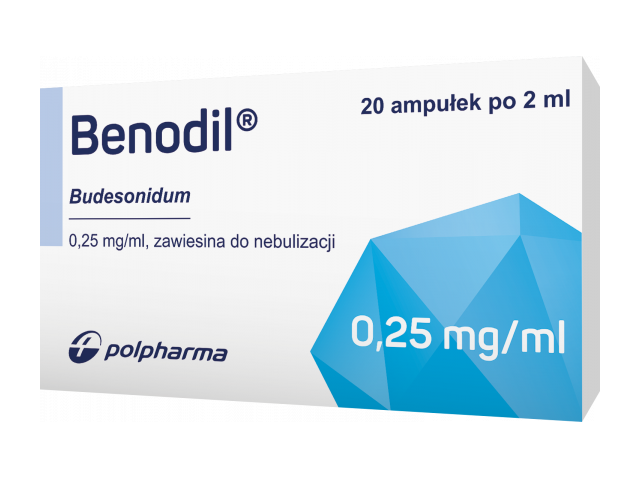
- Benodil, 0.25 mg/ml, Nebuliser Suspension
- Benodil, 0.5 mg/ml, Nebuliser Suspension
- What is Benodil and what is it used for
- Important information before using Benodil
- How to use Benodil
- Possible side effects
- If you experience any of the following side effects, stop using Benodil and contact your doctor immediately:
- Rare (occurring in less than 1 in 1,000 patients):
- Very rare (occurring in less than 1 in 10,000 patients):
- Other side effects:
- Common (occurring in less than 1 in 10 patients):
- Uncommon (occurring in less than 1 in 100 patients):
- Rare (occurring in less than 1 in 1,000 patients):
- Frequency not known (cannot be estimated from the available data):
- Reporting side effects
- How to store Benodil
- Contents of the pack and other information
Package Leaflet: Information for the User
Benodil, 0.125 mg/ml, Nebuliser Suspension

Not sure if this medicine is right for you?
Discuss your symptoms and treatment with a doctor online.
Benodil, 0.25 mg/ml, Nebuliser Suspension
Benodil, 0.5 mg/ml, Nebuliser Suspension
Budesonide
Read the package leaflet carefully before using the medicine, as it contains important information for the patient.
- Keep this leaflet, you may need to read it again.
- If you have any further questions, ask your doctor or pharmacist.
- This medicine has been prescribed for you. Do not pass it on to others. It may harm them, even if their symptoms are the same as yours.
- If you experience any side effects, including any not listed in this leaflet, please tell your doctor or pharmacist. See section 4.
Table of Contents of the Leaflet
- 1. What is Benodil and what is it used for
- 2. Important information before using Benodil
- 3. How to use Benodil
- 4. Possible side effects
- 5. How to store Benodil
- 6. Contents of the pack and other information

Started taking the medicine and have questions?
Discuss your symptoms and treatment with a doctor online.
1. What is Benodil and what is it used for
What is Benodil
Benodil is a nebuliser suspension that contains budesonide as the active substance.
This substance belongs to a group of medicines called "corticosteroids".
What is Benodil used for
Benodil is used to treat:
- asthma, when the use of a pressurised inhaler or dry powder inhaler is not appropriate.
- croup syndrome - acute laryngitis, tracheitis and bronchitis, regardless of aetiology, associated with significant narrowing of the upper airways, shortness of breath or "barking" cough and leading to respiratory disorders.
- exacerbation of chronic obstructive pulmonary disease (COPD), when the use of budesonide in the form of a nebuliser suspension is justified. COPD is a chronic lung disease that causes shortness of breath and cough.
Benodil is NOT indicated for the relief of acute bronchospasm (airway constriction) and shortness of breath (apnoea).
How Benodil works
When inhaled, Benodil directly reaches the lungs, reducing and preventing swelling
and inflammation of the lungs.
2. Important information before using Benodil
When not to use Benodil
Warnings and precautions
Before starting treatment with Benodil, discuss it with your doctor or pharmacist.
Contact your doctor immediately:
Contact your doctor as soon as possible, but continue to use Benodil:
Before using Benodil, inform your doctor or pharmacist:
Benodil and other medicines
Tell your doctor or pharmacist about all the medicines you are taking now or have recently taken, as well as any medicines you plan to take, including those available without a prescription.
In particular, inform your doctor if you are taking any of the following medicines:
- steroid medicines
- medicines used to treat fungal infections, such as ketoconazole or itraconazole
- HIV protease inhibitors, such as ritonavir and nelfinavir (used in patients with AIDS).
Some medicines may enhance the effect of Benodil, and your doctor may want to closely monitor your condition when taking such medicines (including some HIV medicines: ritonavir, cobicistat).
Pregnancy and breastfeeding
If you are pregnant or breastfeeding, think you may be pregnant or plan to have a child, consult your doctor or pharmacist before using this medicine.
If you become pregnant while using Benodil, do not stop using it, but consult your doctor immediately.
Driving and using machines
Benodil has no effect on the ability to drive or use machines.
Benodil contains sodium
The medicine contains 6.99 mg of sodium (the main component of common salt) in each ampoule (2 ml). This corresponds to 0.35% of the maximum recommended daily intake of sodium in the diet for adults.
The medicine can be diluted, see "How to use Benodil" below. The sodium content from the diluent should be taken into account when calculating the total sodium content in the prepared dilution of the medicine. For accurate information on the sodium content in the solution used for dilution, refer to the patient leaflet of the diluent used.
3. How to use Benodil
Benodil is used for inhalation.
This medicine should always be used as directed by your doctor. If you are unsure, consult your doctor or pharmacist.
Treatment of asthma
| Initial dose | Maintenance dose | Maximum daily dose | ||
| Infants (6 to 23 months) and Children (2 to 11 years) | 0.5 to 1 mg of budesonide twice a day | 0.25 to 0.5 mg of budesonide twice a day | 2 mg of budesonide | |
| Adolescents (12 to 17 years) and Adults | 1 to 2 mg of budesonide twice a day | 0.5 to 1 mg of budesonide twice a day | 4 mg of budesonide |
In case it is not possible to adjust the dose of Benodil, medicines with other strengths are available.
| Dose [mg] | Volume of Benodil, nebuliser suspension | ||
| 0.125 mg/ml | 0.25 mg/ml | 0.5 mg/ml | |
| 0.25 mg | 2 ml | ||
| 0.5 mg | 4 ml | 2 ml | |
| 0.75 mg | 6 ml | ||
| 1.0 mg | 4 ml | 2 ml | |
| 1.5 mg | 6 ml | ||
| 2.0 mg | 4 ml | ||
- Your doctor will inform you what dose of Benodil to use and how long the treatment will last. This will depend on the severity of your asthma symptoms. Improvement in your condition may occur within 2 days. However, the full therapeutic effect may only be achieved after 4 weeks. Your doctor may reduce the dose of Benodil to the smallest dose that controls your asthma symptoms, if your condition improves.
- It is important to use Benodil every day, even if you do not have any asthma symptoms at that time.
- The maximum daily dose (2 mg of budesonide) for infants and children under 12 years of age should only be given to children with severe asthma and for a limited time.
Treatment of croup
Usually, the dose used in infants and children with croup is 2 mg of budesonide per day. This dose can be given as a whole or divided into two doses of 1 mg each, administered at 30-minute intervals. This dosing regimen can be repeated every 12 hours, up to 36 hours or until the patient's condition improves.
Treatment of COPD
Patients with chronic obstructive pulmonary disease should be treated with doses of 1-2 mg of Benodil per day. The treatment should be divided into 2 single doses every 12 hours.
Patients with renal or hepatic impairment
There are no data on the difference in efficacy of budesonide in patients with renal or hepatic impairment.
Method of administration
Inhalation.
Preparation for inhalation
If you are using the treatment on your own at home, your doctor or pharmacist will show you how to inhale Benodil using a nebuliser at the first use of the inhalation. Children should only use Benodil under adult supervision.
Example of an inhalation set in the form of a PARI LC PLUS nebuliser equipped with a mouthpiece or a suitable face mask (PARI Baby bend) with an air compressor (PARI Boy SX) necessary to inhale Benodil.
WARNING!
DO NOT use Benodil with an ultrasonic nebuliser.
Read the instructions for use of the nebuliser set carefully.
Instructions for use of Benodil ampoules
- 1. Tear off the required number of ampoules from the strip. Leave the rest in the sachet.
- 2. Shake the ampoule gently for 30 seconds.
- 3. Holding the ampoule upright, open it by twisting off the top part.
- 4. Squeeze the prescribed dose of the medicine into the nebuliser chamber.
- 5. Discard the empty ampoule(s). Close the nebuliser lid.
- 6. Connect the face mask or mouthpiece to the nebuliser, according to the instructions.
- 7. Connect the nebuliser to the air compressor.
- 8. Turn on the compressor. Using the mask or mouthpiece, breathe in the "mist" calmly and deeply, sitting or standing upright. If using a mask, make sure it fits properly.
- 9. When the "mist" is no longer visible in the mouthpiece or mask, the inhalation is complete.
- 10. The duration of the nebulisation of the entire medicine depends on the type of equipment used. It also depends on the amount of medicine used.
- 11. A few drops of the medicine will remain in the nebuliser after inhalation.
- 12. After inhalation, rinse your mouth with water. Spit out the water. Do not swallow. If you used a face mask, also wash your face with water.
- 13. After each use of the inhaler, clean the nebuliser tank intended for the medicine and the mouthpiece (or face mask).
Discard any unused suspension immediately.
Read the instructions for cleaning and disinfecting the nebuliser.
Benodil can be mixed with a 9 mg/ml (0.9%) sodium chloride solution for injection. The mixture should be used within 30 minutes.
Using a higher dose of Benodil than recommended
It is important to take the dose of the medicine as stated in the leaflet or as directed by your doctor. Do not increase or decrease the dose of the medicine without consulting your doctor.
In case of a single administration of a higher dose of Benodil than recommended, you can continue the treatment as before. In case of repeated administration of a higher dose of Benodil than recommended, consult your doctor or pharmacist for advice.
Missing a dose of Benodil
If you forget to take a dose of the medicine, skip the missed dose and take the next dose as usual. Do not take a double dose to make up for the missed dose.
If you have any further questions about using this medicine, ask your doctor or pharmacist.
4. Possible side effects
Like all medicines, Benodil can cause side effects, although not everybody gets them.
If you experience any of the following side effects, stop using Benodil and contact your doctor immediately:
Rare (occurring in less than 1 in 1,000 patients):
- facial swelling, especially around the mouth (with possible swelling of the lips, tongue, eyes, ears)
- itching, skin rash or irritation (contact dermatitis), hives and bronchospasm (constriction of the airway muscles causing wheezing). This may indicate an allergic reaction.
Very rare (occurring in less than 1 in 10,000 patients):
- sudden wheezing after inhaling the medicine.
Other side effects:
Common (occurring in less than 1 in 10 patients):
- thrush (fungal infection) in the mouth. The occurrence of this side effect will be less likely if you rinse your mouth with water after using Benodil.
- mild sore throat, cough and hoarse voice
- pneumonia (lung infection) in patients with COPD. Tell your doctor if any of the following symptoms occur while using budesonide; they may be symptoms of a lung infection:
- fever or chills
- increased production of mucus, change in the colour of mucus
- increased cough or increased difficulty breathing.
Uncommon (occurring in less than 1 in 100 patients):
- cataract (clouding of the lens in the eye)
- muscle spasms
- tremors
- depression
- anxiety
- blurred vision.
Rare (occurring in less than 1 in 1,000 patients):
- facial rash after using a face mask. Washing your face after using a mask can help prevent this.
- sleep disturbances, anxiety, nervousness, overexcitement or irritability. A higher likelihood of these symptoms in children.
- bruises
- loss of voice
- slowed growth rate in children and adolescents
- effect on the adrenal glands (small gland near the kidney).
Frequency not known (cannot be estimated from the available data):
- glaucoma (increased pressure in the eye).
Inhaled corticosteroids may affect the normal production of steroid hormones in the body, especially when used in high doses for a long time. These symptoms are much less likely to occur with inhaled corticosteroids than with corticosteroid tablets.
Budesonide in the form of a nebuliser suspension should be used before meals to minimise side effects on the throat.
Reporting side effects
If you experience any side effects, including any not listed in this leaflet, please tell your doctor or pharmacist. Side effects can be reported directly to the Department of Drug Adverse Reaction Monitoring of the Office for Registration of Medicinal Products, Medical Devices and Biocidal Products
Al. Jerozolimskie 181C
02-222 Warsaw
Phone: +48 22 49 21 301
Fax: +48 22 49 21 309
Website: https://smz.ezdrowie.gov.pl
Side effects can also be reported to the marketing authorisation holder.
By reporting side effects, you can help provide more information on the safety of this medicine.
5. How to store Benodil
Store the medicine out of sight and reach of children.
Do not use this medicine after the expiry date stated on the ampoule, sachet and carton. The expiry date refers to the last day of the month.
The inscription on the packaging after the abbreviation EXP means the expiry date, and after the abbreviation Lot means the batch number.
Do not freeze.
Store in the original packaging to protect from light.
Shelf life after first opening of the sachet: 3 months.
The contents of the ampoule should be used within 12 hours of opening.
After dilution: use within 30 minutes.
Medicines should not be disposed of via wastewater or household waste. Ask your pharmacist how to dispose of medicines that are no longer needed. This will help protect the environment.
6. Contents of the pack and other information
What Benodil contains
- The active substance of the medicine is budesonide.
Benodil, 0.125 mg/ml, nebuliser suspension:
Each 2 ml ampoule contains 0.25 mg of budesonide.
Benodil, 0.25 mg/ml, nebuliser suspension:
Each 2 ml ampoule contains 0.5 mg of budesonide.
Benodil, 0.5 mg/ml, nebuliser suspension:
Each 2 ml ampoule contains 1 mg of budesonide.
- The other ingredients are: disodium edetate, sodium chloride, polysorbate 80, anhydrous citric acid, sodium citrate and water for injection.
What Benodil looks like and contents of the pack
Each ampoule contains a white or almost white nebuliser suspension. The ampoules are packed in sachets of 5.
Pack sizes: 10, 20, 40 or 60 ampoules.
Not all pack sizes may be marketed.
Marketing authorisation holder and manufacturer
Marketing authorisation holder
Zakłady Farmaceutyczne POLPHARMA S.A.
ul. Pelplińska 19, 83-200 Starogard Gdański
tel. +48 22 364 61 01
Manufacturer
Genetic S.p.A
Nucleo Industriale, Contrada Canfora
84084 Fisciano (SA)
Italy
Zakłady Farmaceutyczne POLPHARMA S.A.
ul. Pelplińska 19
83-200 Starogard Gdański
Date of last revision of the leaflet:
- Country of registration
- Dosage formSuspension, 0.5 mg/ml
- ATC codeR03BA02
- Active substance
- Prescription requiredYes
- Manufacturer
- ImporterGenetic S.p.A Zakłady Farmaceutyczne POLPHARMA SA
- This information is for reference only and does not constitute medical advice. Always consult a doctor before taking any medication. Oladoctor is not responsible for medical decisions based on this content.
- Alternatives to BenodilDosage form: Suspension, 0.125 mg/mlActive substance: budesonidePrescription requiredDosage form: Suspension, 0.25 mg/mlActive substance: budesonidePrescription requiredDosage form: Suspension, 0.5 mg/mlActive substance: budesonidePrescription required
Online doctors for Benodil
Discuss questions about Benodil, including use, safety considerations and prescription review, subject to medical assessment and local regulations.









Get Benodil Prescription Online
Fill in a 2-min form
Tell us your symptoms, history, and what medicine you're requesting.
Pick a doctor or let us assign
Choose a specialist or we'll match you with the next available doctor.
Doctor reviews your case
Usually within 30 minutes. They may ask follow-up questions via chat.
Collect from any pharmacy
Electronic prescription sent to your email — valid across Spain.
Frequently Asked Questions
Benodil requires a prescription in Poland. You can check with a doctor online whether this medicine may be appropriate for your situation.
The active ingredient in Benodil is budesonide. This information helps identify medicines with the same composition but different brand names.
Benodil is manufactured by Genetic S.p.A Zakłady Farmaceutyczne POLPHARMA S.A.. Pharmacy brands and packaging may differ depending on the distributor.
Doctors such as Family doctors, Psychiatrists, Dermatologists, Cardiologists, Endocrinologists, Gastroenterologists, Pulmonologists, Nephrologists, Rheumatologists, Hematologists, Infectious disease physicians, Allergists, Geriatricians, Paediatricians, Oncologists may assess whether Benodil is appropriate, depending on your situation and local regulations. You can book an online consultation to discuss your symptoms and possible next steps.
Spain has a well-developed healthcare infrastructure across major cities such as Madrid, Barcelona, Valencia, and Seville. Pharmacies are widely available and operate under strict regulations, ensuring access to prescribed medications.
You can buy Benodil in Madrid, Barcelona, Seville, or Valencia at any local pharmacy with a valid prescription.
To obtain a prescription, you can use Oladoctor:
Other medicines with the same active substance (budesonide) include Bds N, Bds N, Bds N. These may have different brand names or formulations but contain the same therapeutic ingredient. Always consult a doctor before switching or starting a new medicine.
