


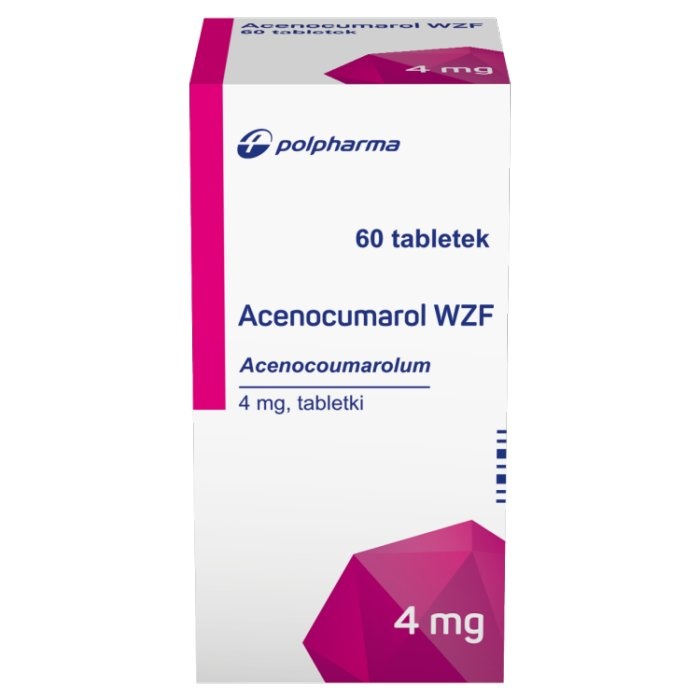
Acenocumarol Vzf
Ask a doctor about a prescription for Acenocumarol Vzf




How to use Acenocumarol Vzf
Leaflet attached to the packaging: patient information
ACENOCUMAROL WZF 4 mg, tablets
Acenocoumarol
Read the leaflet carefully before taking the medicine, as it contains important information for the patient.
- Keep this leaflet, so you can read it again if you need to.
- In case of any doubts, consult a doctor or pharmacist.
- This medicine has been prescribed specifically for you. Do not pass it on to others. The medicine may harm another person, even if their symptoms are the same.
- If the patient experiences any side effects, including any side effects not listed in this leaflet, they should tell their doctor or pharmacist. See section 4.
Table of contents of the leaflet
- 1. What is Acenocumarol WZF and what is it used for
- 2. Important information before taking Acenocumarol WZF
- 3. How to take Acenocumarol WZF
- 4. Possible side effects
- 5. How to store Acenocumarol WZF
- 6. Contents of the packaging and other information
1. What is Acenocumarol WZF and what is it used for
Acenocumarol WZF belongs to a group of anticoagulant medicines. It reduces the blood's ability to clot, thereby preventing the formation of blood clots in blood vessels. Acenocumarol WZF is used for the prevention and treatment of thromboembolic complications.
2. Important information before taking Acenocumarol WZF
When not to take Acenocumarol WZF
- if the patient is allergic to acenocoumarol or other "blood-thinning" medicines, or any of the other ingredients of this medicine (listed in section 6);
- if the patient is pregnant (see also the section "Pregnancy and breastfeeding");
- if the patient is unable to follow the doctor's instructions for taking the medicine (e.g., people with alcoholism, mental disorders, and elderly people without care and supervision);
- if the patient has a congenital or acquired bleeding disorder, such as hemophilia;
- if the patient has recently undergone surgery or is scheduled for surgery (including spinal, brain, or eye surgery);
- if the patient has stomach ulcers or bleeding in the intestines (symptoms: bloody or black tarry stools);
- if the patient has recently had a stroke (hemorrhagic stroke);
- if there is blood in the urine or sputum;
- if the patient has been diagnosed with inflammation or infection of the pericardium (the outer membrane surrounding the heart) or endocardium (the innermost layer of the heart), manifested by chest pain;
- if the patient has very high blood pressure;
- if the patient has severe liver or kidney problems (severe liver or kidney failure);
- if the patient has blood clotting disorders, unexplained bleeding, e.g., from the gums or bruising.
Warnings and precautions
Before starting treatment with Acenocumarol WZF, the patient should discuss it with their doctor:
- if the patient has cancer;
- if the patient has an infection or inflammation (pain, swelling);
- if the patient has heart failure;
- if there are kidney or liver problems;
- if the patient has hyperthyroidism;
- if the patient has blood disorders (called protein C or S deficiency) - this may cause longer-than-usual bleeding after a cut or injury.
During treatment with acenocoumarol, the patient should not take injectable medicines, as this may cause the formation of hematomas. The patient should always inform their doctor (regardless of specialty) that they are taking acenocoumarol, especially if surgery is planned (including spinal, brain, or eye surgery) or a dental procedure. Patients over 65 years of age may be more sensitive to acenocoumarol, and therefore, their doctor may recommend more frequent control tests and reduced doses of the medicine. If the patient is involved in an accident and suffers injuries while taking acenocoumarol, they may experience increased bleeding, more than usual in such cases. Therefore, it is essential to inform the doctor or medical staff about taking the medicine. It is recommended that the patient carries easily accessible information about taking Acenocumarol WZF.
Acenocumarol WZF and other medicines
The patient should tell their doctor or pharmacist about all medicines they are currently taking or have recently taken, as well as any medicines they plan to take. Acenocumarol WZF may affect the action of other medicines, and vice versa. During treatment with acenocoumarol, the patient should not take other medicines without consulting their doctor. The patient must absolutely tell their doctor about taking all medicines, especially those such as:
- allopurinol or sulfinpyrazone - used to treat gout and lower uric acid levels;
- testosterone and mesterolone (androgens), anabolic steroids used as replacement therapy, which involves supplying hormones to balance their levels in the body;
- amiodarone and quinidine - used for irregular heartbeat;
- amoxicillin, erythromycin, clarithromycin, ciprofloxacin, norfloxacin, ofloxacin, tetracyclines, neomycin, rifampicin, chloramphenicol - used to treat infections;
- fenofibrate, cholestyramine, simvastatin, atorvastatin, fluvastatin, and other statins - used to lower cholesterol levels;
- disulfiram - used to treat alcoholism;
- glucagon - used to treat low blood sugar levels;
- ranitidine, cimetidine - used to treat stomach ulcers or duodenal ulcers;
- co-trimoxazole (sulfamethoxazole and trimethoprim) and other sulfonamide medicines;
- metronidazole and topical miconazole - antifungal medicines;
- paracetamol - a pain reliever and antipyretic;
- glibenclamide and other oral antidiabetic medicines;
- dexthyroxine and other thyroid hormones;
- fluoxetine, paroxetine, citalopram - used to treat anxiety and depression;
- tamoxifen - used to treat breast cancer and fertility;
- tramadol - a strong pain reliever;
- 5-fluorouracil and its derivatives - used to treat breast, gastrointestinal, skin cancer;
- tolbutamide and chlorpropamide (sulfonylurea derivatives) - used to treat diabetes;
- ethacrynic acid - a diuretic used to treat edema;
- prednisolone, methylprednisolone (corticosteroids) - used to treat inflammatory conditions of the intestine, joints, skin - they may increase or decrease the anticoagulant effect of the medicine;
- heparin - used to "thin the blood" in the treatment of deep vein thrombosis, blood clots, after surgery;
- dipyridamole, clopidogrel (antiplatelet medicines) - used to prevent the formation of blood clots;
- salicylic acid and its derivatives, acetylsalicylic acid, para-aminosalicylic acid, diflunisal, phenylbutazone, sulfinpyrazone, and other nonsteroidal anti-inflammatory medicines;
- aminoglutethimide - used to treat cancer or Cushing's syndrome;
- azathioprine, 6-mercaptopurine - anticancer medicines;
- phenobarbital (barbiturates) - used to treat epilepsy or as sleeping pills;
- carbamazepine, phenytoin - used to treat epilepsy;
- griseofulvin - an antifungal medicine;
- oral contraceptives;
- hydrochlorothiazide and other thiazide-like diuretics;
- herbal mixtures containing St. John's Wort extract (Hypericum perforatum);
- ritonavir and indinavir and other medicines from the protease inhibitor group - used to treat HIV;
- glucosamine (used to treat joint disease) may enhance the effect of Acenocumarol WZF.
Acenocumarol WZF with food, drink, and alcohol
The sensitivity of individual patients to acenocoumarol may vary and may change in case of dietary changes, especially when foods rich in vitamin K (e.g., spinach, cabbage, cauliflower, kale, broccoli, Brussels sprouts) are included. The patient should limit the consumption of cruciferous vegetables and other products containing vitamin K to make the treatment with acenocoumarol effective. During treatment with acenocoumarol, the patient should not drink cranberry juice or products containing cranberry juice concentrate, as it may enhance the effect of the medicine and cause bleeding. Patients taking Acenocumarol WZF, especially those with liver function disorders, should limit their alcohol consumption. Alcohol may change the way acenocoumarol works.
Pregnancy and breastfeeding
If the patient is pregnant or breastfeeding, thinks they may be pregnant, or plans to have a child, they should consult their doctor or pharmacist before taking this medicine.
Medicine absolutely contraindicated in pregnancy!
Acenocoumarol may cause severe fetal damage, so the patient should tell their doctor about pregnancy or planned pregnancy. In women of childbearing age, before taking the medicine, it is recommended to perform a pregnancy test, and during treatment, use effective contraception. The potential risk and benefits of treatment should be discussed with the patient by their doctor. During breastfeeding, the patient should consult their doctor. Both the mother and the child require special medical supervision, and the child should prophylactically receive vitamin K.
Driving and using machines
Acenocumarol WZF does not affect driving or using machines. In case of an accident, the patient should necessarily tell the medical staff about taking acenocoumarol. Due to the potential risk of injury, e.g., during an accident, it is recommended that the patient carries information about taking Acenocumarol WZF.
Acenocumarol WZF contains lactose monohydrate
If the patient has been diagnosed with intolerance to some sugars, they should contact their doctor before taking the medicine.
3. How to take Acenocumarol WZF
This medicine should always be taken according to the doctor's instructions. In case of doubts, the patient should consult their doctor or pharmacist.
- The dosage of the medicine is determined individually for each patient by their doctor. Regular blood clotting tests allow the doctor to adjust the dose of Acenocumarol WZF accordingly.
- The dose of the medicine determined by the doctor should be taken orally, regularly at the same time (e.g., in the evening with a meal, with a glass of water).
- The patient should not exceed the doses of the medicine recommended by their doctor.
- During treatment with the medicine, the patient should limit the consumption of certain foods - see the section "Acenocumarol WZF with food, drink, and alcohol".
- Acenocumarol WZF 4 mg tablets can be divided into 4 equal doses, each containing 1 mg of acenocoumarol. To divide the tablet, it should be placed on a hard surface and pressed on the edges with fingers on both sides of the dividing line (see the picture).

Dosage
Adults
The usual dose is 2 mg to 4 mg on the first day of treatment, and then maintenance doses of 1 mg to 8 mg are used.
Use in children
The decision to use the medicine in children will be made by their doctor.
Using a higher than recommended dose of Acenocumarol WZF
Overdose of Acenocumarol WZF may lead to bleeding. In such a case, the patient should stop taking the medicine and immediately contact their doctor or go to the nearest hospital.
Missing a dose of Acenocumarol WZF
If the medicine is not taken at the usual time, the missed dose should be taken as soon as possible. However, if it is close to the time for the next dose, the missed dose should not be taken, and the next dose should be taken at the usual time. The patient should not take a double dose. During the next visit to the doctor, the patient should report all cases of missed doses.
Stopping treatment with Acenocumarol WZF
The patient should not suddenly stop taking this medicine. The patient should not change the dose of the medicine on their own initiative. In case of any further doubts related to the use of the medicine, the patient should consult their doctor or pharmacist.
4. Possible side effects
Like all medicines, Acenocumarol WZF can cause side effects, although not everybody gets them.
The patient should immediately consult their doctor if they experience any of the following symptoms of bleeding, which may indicate that they have taken more medicine than needed. These symptoms occur frequently (in 1 to 10 out of 100 people).
These include bleeding of varying severity, such as:
- unexplained nosebleeds or bleeding gums;
- unexplained bruising;
- excessive bleeding or oozing after a cut or injury;
- excessive menstrual bleeding;
- unexpected bleeding from the urinary or genital tract;
- blood in the urine;
- bloody or black, tarry stools;
- coughing up blood-stained sputum or vomiting blood;
- bleeding into the skin;
- bleeding into the brain;
- bleeding into the eyes.
The patient should consult their doctor as soon as possible if they experience any of the following symptoms. These symptoms occur very rarely (less than 1 in 10,000 people).
These include:
- yellowing of the eyes or skin (may be symptoms of liver damage);
- red spots that change into papular lesions on the skin, and then into blisters with bloody hemorrhages (symptoms indicating the possibility of hemorrhagic necrosis of the skin);
- vasculitis (bleeding under the skin or subcutaneous hematomas may indicate the possibility of vasculitis).
The patient should inform their doctor if they experience any of the following symptoms. These symptoms occur rarely (less than 1 in 1,000 people).
These include:
- hives, rash (symptoms of allergic reactions);
- loss of appetite, nausea, vomiting;
- hair loss.
If the patient experiences the following side effect, they should immediately tell their doctor. The frequency is unknown (cannot be estimated from the available data). Painful skin rash. Rarely, Acenocumarol WZF may cause severe skin disorders, including calciphylaxis, which may initially manifest as a painful skin rash but may lead to other serious complications. This side effect occurs more frequently in patients with chronic kidney disease.
Reporting side effects
If the patient experiences any side effects, including any side effects not listed in the leaflet, they should tell their doctor or pharmacist. Side effects can be reported directly to the Department of Monitoring of Adverse Reactions to Medicinal Products, Office for Registration of Medicinal Products, Medical Devices, and Biocidal Products, Al. Jerozolimskie 181C, 02-222 Warsaw, Tel.: +48 22 49 21 301, Fax: +48 22 49 21 309, website: https://smz.ezdrowie.gov.pl. Side effects can also be reported to the marketing authorization holder. By reporting side effects, more information can be gathered on the safety of the medicine.
5. How to store Acenocumarol WZF
The medicine should be stored out of sight and reach of children. Store in a temperature not exceeding 25°C. Do not use this medicine after the expiry date stated on the packaging. The expiry date refers to the last day of the specified month. The inscription on the packaging after the abbreviation EXP means the expiry date, and after the abbreviation Lot means the batch number. Medicines should not be disposed of via wastewater or household waste. The patient should ask their pharmacist how to dispose of medicines that are no longer used. This will help protect the environment.
6. Contents of the packaging and other information
What Acenocumarol WZF contains
- The active substance of the medicine is acenocoumarol. Each tablet contains 4 mg of acenocoumarol.
- The other ingredients are: lactose monohydrate, potato starch, copovidone, sodium lauryl sulfate, stearic acid.
What Acenocumarol WZF looks like and what the packaging contains
Acenocumarol WZF 4 mg tablets are white, cloverleaf-shaped, and biconvex; there are dividing lines on both sides of the tablet that divide it into 4 equal doses. The medicine is available in a polyethylene container containing 60 tablets, packaged in a cardboard box.
Marketing authorization holder
Zakłady Farmaceutyczne POLPHARMA S.A., ul. Pelplińska 19, 83-200 Starogard Gdański, tel. +48 22 364 61 01
Manufacturer
Zakłady Farmaceutyczne POLPHARMA S.A., Production Plant in Nowa Dęba, ul. Metalowca 2, 39-460 Nowa Dęba, Date of last update of the leaflet:December 2024
- Country of registration
- Active substance
- Prescription requiredYes
- ImporterZakłady Farmaceutyczne POLPHARMA S.A. Oddział Produkcyjny w Nowej Dębie
- This information is for reference only and does not constitute medical advice. Always consult a licensed doctor before taking any medication. Oladoctor is not responsible for medical decisions based on this content.
- Alternatives to Acenocumarol VzfDosage form: Tablets, 1 mgActive substance: acenocoumarolPrescription requiredDosage form: Tablets, 4 mgActive substance: acenocoumarolPrescription requiredDosage form: Tablets, 4 mgActive substance: acenocoumarolPrescription required
Alternatives to Acenocumarol Vzf in other countries
The best alternatives with the same active ingredient and therapeutic effect.
Alternative to Acenocumarol Vzf in Spain
Online doctors for Acenocumarol Vzf
Discuss dosage, side effects, interactions, contraindications, and prescription renewal for Acenocumarol Vzf – subject to medical assessment and local rules.


Get updates and exclusive offers
Be the first to know about new services, marketplace updates, and subscriber-only promos.

