


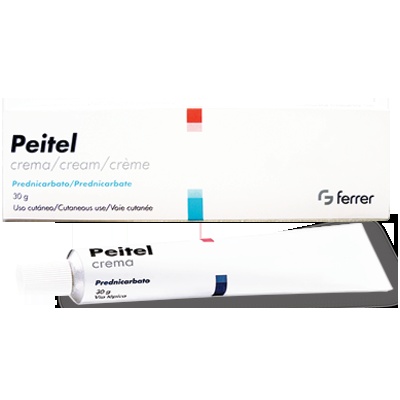
Peitel 2,5 mg/g crema

Revisión de receta online
Un médico revisará tu caso y determinará si la prescripción es médicamente apropiada.

Habla con un médico sobre este medicamento
Comenta tus síntomas y las opciones de tratamiento en una consulta online.



Cómo usar PEITEL 2,5 MG/G CREMA
Contenido del prospecto
- Introducción
- Qué es Peitel y para qué se utiliza
- Qué necesita saber antes de empezar a usar Peitel
- Cómo usar Peitel
- Posibles efectos adversos
- Conservación de Peitel
- Contenido del envase e información adicional
Introducción
Prospecto: información para el usuario
Peitel 2,5 mg/g crema
prednicarbato
Lea todo el prospecto detenidamente antes de empezar a usar este medicamento, porque contiene información importante para usted.
- Conserve este prospecto, ya que puede tener que volver a leerlo.
- Si tiene alguna duda, consulte a su médico o farmacéutico.
- Este medicamento se le ha recetado solamente a usted, y no debe dárselo a otras personas aunque tengan los mismos síntomas que usted, ya que puede perjudicarles.
- Si experimenta efectos adversos, consulte a su médico o farmacéutico, incluso si se trata de efectos adversos que no aparecen en este prospecto. Ver sección 4.
Contenido del prospecto
- Qué es Peitel y para qué se utiliza
- Qué necesita saber antes de empezar a usar Peitel
- Cómo usar Peitel
- Posibles efectos adversos
- Conservación de Peitel
- Contenido del envase e información adicional
1. Qué es Peitel y para qué se utiliza
Peitel contiene como principio activo prednicarbato, y pertenece a un grupo de medicamentos denominados corticosteroides tópicos. Este medicamento se utiliza sobre la piel para disminuir la inflamación, las reacciones alérgicas, el enrojecimiento y el exudado en la piel inflamada.
Peitel está indicado para el tratamiento de los síntomas (enrojecimiento y picor) ocasionados por ciertos trastornos inflamatorios de la piel, que responden al tratamiento tópico con corticosteriodes, como la dermatitis atópica y la psoriasis (excluyendo la psoriasis en placas extensas).

¿No estás seguro de si este medicamento es adecuado para ti?
Comenta tus síntomas y tratamiento con un médico online.
2. Qué necesita saber antes de empezar a usar Peitel
No use Peitel:
- Si es alérgico al prednicarbato o a alguno de los demás componentes de este medicamento (incluidos en la sección 6)
- En los ojos, ni en heridas abiertas profundas
- En áreas de la piel que muestren una reacción vacunal, es decir, enrojecimiento o inflamación después de la vacuna
- Si padece tuberculosis, sífilis, o infecciones por virus (por ejemplo, varicela o herpes)
- En acné rosácea, acné vulgar o enfermedades cutáneas con adelgazamiento de la piel (atrofia)
- En una inflamación alrededor de la boca (dermatitis perioral).
Advertencias y precauciones
Consulte a su médico o farmacéutico antes de empezar a usar Peitel.
- No se debe aplicar en amplias áreas del cuerpo ni durante un periodo largo de tiempo, porque esto aumenta significativamente el riesgo de efectos. Este medicamento debe usarse en las dosis más bajas posibles y sólo durante el tiempo estrictamente necesario para tratar la afección de la piel.
- Evite que Peitel entre en contacto con los ojos, heridas abiertas o mucosas.
- En caso de desarrollarse infecciones en la piel por bacterias o por hongos, consulte con su médico quien establecerá un tratamiento adicional específico.
- Si usa el medicamento en zonas de la piel con pliegues, (por ej. axilas o ingles), debe tener mucha precaución porque puede aumentar la absorción del principio activo.
- No debe emplearse este medicamento bajo materiales impermeables al aire y al agua, como vendajes, apósitos o pañales, poco transpirables.
- El empleo de corticoides tópicos en áreas extensas o a grandes dosis durante un periodo prolongado, aumenta significativamente el riesgo de efectos adversos.
- Si está siendo tratado por una psoriasis se recomienda una estricta supervisión médica.
- Debe evitarse la interrupción repentina del tratamiento. Cuando se interrumpe un tratamiento a largo plazo con un corticoide potente, se puede desarrollar un efecto de rebote que se manifiesta por una dermatitis con enrojecimiento intenso, picor y quemazón.
- El uso no profesional de corticosteroides tópicos puede enmascarar síntomas y dificultar el diagnóstico y tratamiento correctos.
- Debe evitarse el contacto entre Peitel y los preservativos de látex ya que puede causar fugas o roturas de éstos.
- Póngase en contacto con su médico si presenta visión borrosa u otras alteraciones visuales.
Niños
No se recomienda el uso de este medicamento en niños menores de 2 años, debido a la ausencia de datos clínicos en esta población.
En niños, el uso de corticoides tópicos, debe realizarse con precaución, limitándose a la dosis eficaz más baja.
Uso de Peitel con otros medicamentos
Informe a su médico o farmacéutico si está utilizando, ha utilizado recientemente o pudiera tener que utilizar cualquier otro medicamento.
No se conocen interacciones con Peitel; no obstante, no se deben aplicar otros preparados en la zona a tratar.
Embarazo,lactancia y fertilidad
Embarazo
Si está embarazada o en periodo de lactancia, cree que podría estar embarazada o tiene intención de quedarse embarazada, consulte a su médico o farmacéutico antes de utilizar este medicamento.
No existen datos suficientes sobre la utilización de Peitel en mujeres embarazadas.
En general, durante el primer trimestre de embarazo, no deben aplicarse sobre la piel medicamentos que contengan corticoides.
Lactancia
La seguridad de Peitel durante la lactancia no ha sido establecida por lo que no se recomienda su uso. Las mujeres en período de lactancia no deben aplicarse el medicamento en los pechos.
Conducción y uso de máquinas
La influencia de Peitel sobre la capacidad para conducir y utilizar máquinas es nula o insignificante.
Peitel contiene alcohol cetílico, alcohol estearílico y alcohol bencílico
Este medicamento puede producir reacciones locales en la piel (como dermatitis de contacto) porque contiene alcohol cetílico y alcohol estearílico.
Este medicamento contiene 10 mg de alcohol bencílico en cada gramo de crema. El alcohol bencílico puede provocar reacciones alérgicas e irritación local moderada.
3. Cómo usar Peitel
Siga exactamente las instrucciones de administración de este medicamento indicadas por su médico o farmacéutico. En caso de duda, consulte de nuevo a su médico o farmacéutico.
Este medicamento es para uso cutáneo exclusivamente (para aplicar sobre la piel).
La dosis recomendada es:
Adultos y niños mayores de 2 años
Aplique una fina capa de crema en el área afectada una o dos veces al día, frotando suavemente.
El tratamiento puede reducirse a una aplicación diaria, cuando se observe una mejora evidente.
La duración del tratamiento, como norma general, no debe exceder de 4 semanas.
Si utiliza el medicamento para alguna afección en la cara, la duración del tratamiento debe ser lo más corto posible y de una semana como máximo.
Después de cada aplicación deben lavarse las manos a no ser que éstas sean el lugar de tratamiento.
Uso en niños
No se recomienda el uso de Peitel en niños menores de 2 años debido a la escasez de datos sobre seguridad.
En niños, el uso de corticoides tópicos, debe realizarse con precaución, limitándose a la dosis más baja compatible con un tratamiento eficaz.
Si usa más Peitel del que debe
Si se exceden de forma significativa las dosis recomendadas no pueden descartarse efectos adversos propios de los corticoides sistémicos.
En caso de sobredosis o ingestión accidental, consulte a su médico o farmacéutico o acuda a un centro médico, o llame al Servicio de Información Toxicológica. Telf.: 91 562 04 20, indicando el medicamento y la cantidad ingerida.
Si olvidó usar Peitel
No aplique una dosis doble para compensar las dosis olvidadas.
Aplique la dosis correspondiente cuando se acuerde, o espere hasta la siguiente aplicación si falta poco para ésta.
Si tiene cualquier otra duda sobre el uso de este medicamento, pregunte a su médico o farmacéutico.

¿Has empezado a tomar el medicamento y tienes preguntas?
Comenta tus síntomas y tratamiento con un médico online.
4. Posibles efectos adversos
Al igual que todos los medicamentos, este medicamento puede producir efectos adversos, aunque no todas las personas los sufran.
Los efectos adversos de prednicarbato tópico son en general efectos locales, leves y transitorios. Al igual que con otros corticosteroides tópicos, el uso prolongado de grandes cantidades o el tratamiento de áreas extensas puede dar lugar a efectos sistémicos del corticoide debido a su absorción. Si esto ocurre el tratamiento tópico deberá discontinuarse.
Los posibles efectos adversos que pueden observarse con el uso de este medicamento se detallan a continuación de acuerdo con su frecuencia:
Efectos adversos frecuentes (pueden afectar hasta 1 de cada 10 personas)
Trastornos de la piel y del tejido subcutáneo:
- sensación de quemazón de leve a moderada en el punto de aplicación
- sensación de hormigueo (parestesia),
- picor (prurito),
- infecciones bacterianas
- forunculosis
- adelgazamiento local de la piel (atrofia cutánea local).
Efectos adversos poco frecuentes (pueden afectar hasta 1 de cada 100 personas)
Trastornos de la piel:
- estrías cutáneas
- irritación
- crecimiento de pelo en la piel (hipertricosis)
- pérdida de color en la piel (hipopigmentación)
- afección de la piel alrededor de la boca (dermatitis perioral)
- maceración de la piel
- dermatitis alérgica de contacto
- dermatitis del tipo de la rosácea papulosa (piel facial)
- reacciones acneiformes
- fragilidad capilar (equimosis)
- granos rojos o blancos en diversas partes del cuerpo (miliaria)
- sequedad de la piel
- inflamación de los folículos pilosos (foliculitis).
Infecciones:
- infección secundaria
Efectos adversos muy raros (pueden afectar hasta 1 de cada 10.000 personas)
Trastornos vasculares:
- dilatación de los vasos sanguíneos de la piel o arañas venosas (telangiectasia).
Efectos adversos con una frecuencia no conocida (no puede estimarse a partir de los datos disponibles)
Trastornos oculares:
- visión borrosa
Otros efectos adversos en niños
Los niños y adolescentes pueden demostrar una mayor susceptibilidad que los pacientes adultos a la supresión de la función del eje hipotálamo-hipofisario-suprarrenal y al síndrome de Cushing inducidos por la administración de corticosteroides por uso cutáneo, debido a la mayor relación de superficie cutánea / peso corporal. La terapia crónica con corticosteroides podría interferir con el crecimiento y el desarrollo infantil.
Se ha comunicado hipertensión intracraneal en niños tratados con corticosteroides tópicos. Las manifestaciones de hipertensión intracraneal incluyen abultamiento de las fontanelas, dolores de cabeza y papiledema bilateral.
Comunicación de efectos adversos
Si experimenta cualquier tipo de efecto adverso, consulte a su médico o farmacéutico, incluso si se trata de posibles efectos adversos que no aparecen en este prospecto. También puede comunicarlos directamente a través del Sistema Español de Farmacovigilancia de Medicamentos de Uso Humano: www.notificaram.es. Mediante la comunicación de efectos adversos usted puede contribuir a proporcionar más información sobre la seguridad de este medicamento.
5. Conservación de Peitel
Mantener este medicamento fuera de la vista y del alcance de los niños.
No utilice este medicamento después de la fecha de caducidad que aparece en el envase, después de CAD. La fecha de caducidad es el último día del mes que se indica.
Conservar por debajo de 25ºC.
Los medicamentos no se deben tirar por los desagües ni a la basura. Deposite los envases y los medicamentos que no necesita en el Punto SIGRE de la farmacia. En caso de duda pregunte a su farmacéutico cómo deshacerse de los envases y de los medicamentos que no necesita. De esta forma ayudará a proteger el medio ambiente.
6. Contenido del envase e información adicional
Composición de Peitel:
- El principio activo es prednicarbato.
Cada gramo de crema contiene 2,5 mg de prednicarbato
- Los demás componentes (excipientes) son: octildodecanol, parafina líquida, alcohol estearílico, alcohol cetílico, alcohol mirístico, estearato de sorbitán, polisorbato 60 (E-435), alcohol bencílico, edetato disódico y agua purificada.
Aspecto del producto y contenido del envase
Peitel es una crema de aspecto uniforme, consistencia cremosa y color blanco.
Se presenta en tubos de aluminio conteniendo 30 y 60 gramos de crema.
Otras presentaciones:
Peitel 2,5 mg /g pomada y Peitel 2,5 mg /g solución cutánea.
Titular de la autorización de comercialización:
Galenicum Derma, S.L.U.
Ctra N-1, Km 36
28750 San Agustin del Guadalix (Madrid)
España
Responsable de la fabricación:
Ferrer Internacional, S.A.
Joan Buscallá, 1-9
08173 - Sant Cugat del Vallés (Barcelona)
España
Fecha de la última revisión de este prospecto: Enero 2021
La información detallada de este medicamento está disponible en la página web de la Agencia Española de Medicamentos y Productos Sanitarios (AEMPS) (http://www.aemps.gob.es/).
- País de registro
- Forma farmacéuticaCREMA, 0,25 % prednicarbato
- Código ATCD07AC18
- Precio medio en farmacia5.06 EUR
- Principio activo
- Requiere recetaSí
- Fabricante
- ComposiciónESTEARILICO, ALCOHOL (5,75 g mg), CETILICO, ALCOHOL (5,75 g mg), SORBITAN MONOESTEARATO (1,5 g mg), POLISORBATO 60 (3,5 g mg), ALCOHOL BENCILICO (1,0 g mg), EDETATO DE DISODIO (0,02 g mg)
- Esta información es de carácter general y no sustituye la consulta con un profesional sanitario.
- Alternativas a PEITEL 2,5 MG/G CREMAForma farmacéutica: CREMA, 0,250 g prednicarbato/ 100 gPrincipio activo: prednicarbatoFabricante: A. Menarini Latin America S.L.Requiere recetaForma farmacéutica: POMADA, 0,25 % prednicarbatoPrincipio activo: prednicarbatoFabricante: A. Menarini Latin America S.L.Requiere recetaForma farmacéutica: POMADA, 0,25 % prednicarbatoPrincipio activo: prednicarbatoFabricante: A. Menarini Latin America S.L.Requiere receta
Médicos online para PEITEL 2,5 MG/G CREMA
Comenta la dosis, los posibles efectos secundarios, interacciones, contraindicaciones o la revisión de receta de PEITEL 2,5 MG/G CREMA, sujeto a valoración médica y a la normativa local.



Preguntas frecuentes
PEITEL 2,5 MG/G CREMA requiere receta en España. Puedes confirmarlo con un médico online según tu caso.
El principio activo de PEITEL 2,5 MG/G CREMA es prednicarbato. Esta información ayuda a identificar medicamentos con la misma composición pero con diferentes nombres comerciales.
El precio medio en farmacia de PEITEL 2,5 MG/G CREMA es de aproximadamente 5.06 EUR. Puede variar según el fabricante y la forma farmacéutica.
PEITEL 2,5 MG/G CREMA es fabricado por Galenicum Derma S.L.. La marca y el envase pueden variar según el distribuidor.
Los Médicos de familia, Psiquiatras, Dermatólogos, Cardiólogos, Endocrinólogos, Gastroenterólogos, Neumólogos, Nefrólogos, Reumatólogos, Hematólogos, Infectólogos, Alergólogos, Geriatras, Pediatras, Oncólogos pueden valorar la prescripción de PEITEL 2,5 MG/G CREMA cuando esté clínicamente indicado. Puedes reservar una videoconsulta para comentar tu caso y las opciones de tratamiento.
La receta la emite un médico tras valorar tu estado de salud. En España, PEITEL 2,5 MG/G CREMA se dispensa en las farmacias con esa receta médica. Una consulta online no garantiza su emisión: la decisión corresponde siempre al médico.
Para solicitar una valoración puedes usar Oladoctor:
Otros medicamentos con el mismo principio activo (prednicarbato) incluyen BATMEN 2,5 MG/G CREMA, BATMEN 2,5 MG/G POMADA, BATMEN 2,5 MG/G UNGÜENTO. Pueden tener diferentes nombres comerciales o formulaciones, pero contienen el mismo componente terapéutico. Consulta siempre con un médico antes de cambiar o iniciar un nuevo medicamento.
