






Cómo usar KYNTHEUM 210 MG SOLUCION INYECTABLE EN JERINGA PRECARGADA
Traducción generada por IA
Este contenido ha sido traducido automáticamente y se ofrece solo con fines informativos. No sustituye la consulta con un profesional sanitario.
Ver originalContenido del prospecto
Introducción
Prospecto: información para el paciente
Kyntheum210mg solución inyectable en jeringa precargada
brodalumab
Lea todo el prospecto detenidamente antes de empezar a usar este medicamento, porque contiene información importante para usted.
- Conserve este prospecto, ya que puede tener que volver a leerlo.
- Si tiene alguna duda, consulte a su médico, farmacéutico o enfermero.
- Este medicamento se le ha recetado solamente a usted, y no debe dárselo a otras personas aunque tengan los mismos síntomas que usted, ya que puede perjudicarles.
- Si experimenta efectos adversos, consulte a su médico, farmacéutico o enfermero, incluso si se trata de efectos adversos que no aparecen en este prospecto. Ver sección 4.
Contenido del prospecto
- Qué es Kyntheum y para qué se utiliza
- Qué necesita saber antes de empezar a usar Kyntheum
- Cómo usar Kyntheum
- Posibles efectos adversos
- Conservación de Kyntheum
- Contenido del envase e información adicional
1. Qué es Kyntheum y para qué se utiliza
Kyntheum contiene el principio activo brodalumab. Brodalumab es un anticuerpo monoclonal, un tipo diferenciado de proteína que reconoce y se une a ciertas proteínas del organismo.
Brodalumab pertenece a un grupo de medicamentos conocidos como inhibidores de la interleucina (IL). Este medicamento bloquea la actividad de las proteínas IL‑17, que están presentes en niveles elevados en enfermedades como la psoriasis.
Kyntheum se utiliza para tratar una enfermedad de la piel llamada “psoriasis en placas”, que provoca la inflamación de la piel y la formación de placas escamosas. Kyntheum está indicado en adultos con psoriasis en placas de moderada a grave con afectación de zonas extensas del cuerpo.
Usar Kyntheum le ayudará a mejorar el aclaramiento de la piel y a reducir los signos y síntomas de la psoriasis, como picor, enrojecimiento, formación de escamas, quemazón, punzadas, agrietamiento, descamación y dolor.

2. Qué necesita saber antes de empezar a usar Kyntheum
No use Kyntheum
- si es alérgico al brodalumab o a alguno de los demás componentes de este medicamento (incluidos en la sección 6). Si usted sospecha que es alérgico, consulte con su médico antes de usar Kyntheum.
- si tiene enfermedad de Crohn activa.
- si tiene una infección que su médico considera importante (por ejemplo, tuberculosis activa).
Advertencias y precauciones
Consulte a su médico, farmacéutico o enfermero antes de empezar a usar Kyntheum:
- si tiene una enfermedad inflamatoria que afecta al intestino denominada enfermedad de Crohn.
- si tiene una inflamación del intestino grueso denominada colitis ulcerosa.
- si alguna vez ha tenido o tiene ideas o pensamientos suicidas, depresión, ansiedad o inestabilidad emocional.
- si tiene alguna infección actualmente o suele tener infecciones.
- si tiene alguna infección duradera (crónica).
- si tiene tuberculosis (TB), ha dado positivo en los análisis de la TB o ha estado en contacto directo con alguien con TB. Es posible que deba tratarse con un medicamento para la TB antes de comenzar el tratamiento con Kyntheum.
- si se le ha administrado recientemente alguna vacuna o si tiene programada su administración. No se le deben administrar ciertos tipos de vacunas (vacunas elaboradas con microorganismos vivos) mientras se le esté tratando con Kyntheum.
- si ha usado Kyntheum durante los tres últimos meses de embarazo; en este caso, debe consultar a su médico antes de vacunar a su bebé.
- si está recibiendo cualquier otro tratamiento para la psoriasis, como otro inmunosupresor o fototerapia con luz ultravioleta (UV).
Tras iniciar el tratamiento con Kyntheum, informe a su médico, farmacéutico o enfermero de inmediato:
- si su médico le ha dicho que ha desarrollado la enfermedad de Crohn.
- si se siente deprimido o nervioso, si tiene pensamientos suicidas o si presenta cambios emocionales poco habituales.
- si tiene alguna infección o presenta alguno de los signos de infección que se incluyen en la sección 4, “Posibles efectos adversos”.
- si se le ha informado de que tiene tuberculosis.
Enfermedad intestinal inflamatoria (enfermedad de Crohn o colitis ulcerosa)
Deje de tomar Kyntheum, e informe a su médico o busque asistencia médica de inmediato si nota dolor y calambres abdominales, diarrea, pérdida de peso o sangre en las heces (cualquier signo de problemas intestinales).
Vigile la aparición de reacciones alérgicas
Kyntheum puede ocasionar potencialmente efectos adversos graves, incluidas reacciones alérgicas. Debe vigilar la aparición de estos signos y síntomas mientras use Kyntheum.
Interrumpa el tratamiento con Kyntheum y avise a su médico o busque asistencia médica inmediatamente si nota alguno de los signos que indican una posible reacción alérgica. Estos signos se incluyen en la sección 4 “Efectos adversos graves”.
Niños y adolescentes
Kyntheum no está recomendado para niños y adolescentes (menores de 18 años), ya que no se ha estudiado en este grupo de edad.
Otros medicamentos y Kyntheum
Informe a su médico o farmacéutico:
- si está tomando, ha tomado recientemente o pudiera tener que tomar cualquier otro medicamento.
- si se le ha administrado recientemente una vacuna o se le va a administrar alguna vacuna a usted o su bebé; consulte “Advertencias y precauciones” en la sección 2. “Qué necesita saber antes de empezar a usar Kyntheum”.
Embarazo y lactancia
Si está embarazada o en periodo de lactancia, cree que podría estar embarazada o tiene intención de quedarse embarazada, consulte a su médico o farmacéutico antes de utilizar este medicamento. Kyntheum no se ha estudiado en mujeres embarazadas y se desconoce si este medicamento podría ser perjudicial para el feto. Por lo tanto, es preferible evitar el uso de Kyntheum durante el embarazo. Si es una mujer en edad fértil, se aconseja que evite quedarse embarazada y debe utilizar un anticonceptivo adecuado mientras use Kyntheum y durante al menos 12 semanas después de la última dosis de Kyntheum.
Se desconoce si brodalumab pasa a la leche materna. Si está dando el pecho o tiene previsto dar el pecho, consulte a su médico. En tal caso, su médico le ayudará a decidir si debe dejar de dar el pecho o dejar de usar Kyntheum. Juntos sopesarán los beneficios de la lactancia para el bebé y los beneficios de Kyntheum para usted.
Conducción y uso de máquinas
Es poco probable que Kyntheum afecte a su capacidad para conducir y utilizar máquinas.
3. Cómo usar Kyntheum
Kyntheum se lo debe prescribir un médico con experiencia en el diagnóstico y el tratamiento de la psoriasis.
Siga exactamente las instrucciones de administración de este medicamento indicadas por su médico, farmacéutico o enfermero. En caso de duda, consulte de nuevo a su médico, farmacéutico o enfermero.
Qué cantidad de Kyntheum se administra
- Su médico decidirá la cantidad de Kyntheum que necesita y la duración del tratamiento. La dosis recomendada es de 210 mg (una inyección).
- Tras la primera dosis, tendrá que ponerse una inyección semanal en la semana 1 (una semana después de la primera dosis) y en la semana 2 (dos semanas después de la primera dosis). Después, tendrá que ponerse una inyección cada dos semanas.
- Kyntheum es un medicamento para tratamiento a largo plazo. Su médico le controlará la enfermedad de forma periódica para asegurarse de que el tratamiento tenga el efecto deseado. Informe a su médico si cree que los signos y síntomas de la psoriasis no mejoran tras el uso de Kyntheum.
Cómo se administra Kyntheum
Kyntheum se administra mediante una inyección debajo de la piel (denominada inyección por vía subcutánea).
Instrucciones de autoadministración
Consulte las “Instrucciones de uso” detalladasque se suministran con este medicamento para saber cómo conservar, preparar y administrar correctamente las inyecciones en casa.
- Si su médico decide que usted o un cuidador pueden administrar las inyecciones en casa, se les formará acerca de cómo preparar e inyectar Kyntheum correctamente. No trate de inyectarse Kyntheum hasta que su médico o enfermero les haya indicado a usted o a su cuidador cómo administrar las inyecciones de Kyntheum.
- No agite la jeringa precargada antes del uso.
- Usted o su cuidador podrán inyectar Kyntheum en la parte superior de sus piernas (muslos) o en el vientre (abdomen). El cuidador también podrá administrarle la inyección en la parte superior exterior del brazo.
- No inyecte el medicamento en una zona de la piel hipersensible, irritada, enrojecida, indurada ni afectada por psoriasis.
Si usa más Kyntheum del que debe
Informe a su médico si usa más medicamento del que se le ha recetado o si se ha administrado la dosis antes de lo previsto.
Si olvidó usar Kyntheum
Si olvidó inyectarse una dosis de Kyntheum, inyéctese la siguiente dosis cuanto antes después de la dosis omitida. A continuación, pregunte a su médico cuándo debe inyectarse la siguiente dosis. No se administre una dosis doble para compensar las dosis olvidadas.
Si interrumpe el tratamiento con Kyntheum
No debe dejar de usar Kyntheum sin hablarlo primero con su médico. Si interrumpe el tratamiento, los síntomas de la psoriasis pueden reaparecer.
Si tiene cualquier otra duda sobre el uso de este medicamento, pregunte a su médico, farmacéutico o enfermero.

4. Posibles efectos adversos
Al igual que todos los medicamentos, este medicamento puede producir efectos adversos, aunque no todas las personas los sufran.
Efectos adversos graves
Interrumpa el tratamiento con Kyntheum e informe a su médico o busque inmediatamente asistencia médica si nota alguno de los siguientes efectos adversos. Su médico decidirá si debe y cuándo reiniciar el tratamiento.
Reacción alérgica grave(puede afectar hasta 1 de cada 1.000 personas); los síntomas pueden incluir:
- dificultad para respirar o tragar
- tensión arterial baja, que puede causar mareo o un ligero aturdimiento
- hinchazón del rostro, labios, lengua o garganta
- picor (prurito) intenso de la piel acompañado de erupción o ampollas.
Posibles infecciones graves(pueden afectar hasta 1 de cada 100 personas); los síntomas pueden incluir:
- fiebre, síntomas gripales, sudores nocturnos
- sensación de cansancio o dificultad para respirar, tos persistente
- piel caliente, enrojecida y dolorosa, o erupción dolorosa con ampollas
Otros efectos adversos
Frecuentes (pueden afectar hasta 1de cada10personas)
- diarrea
- náuseas
- enrojecimiento, dolor, picor, irritación o hemorragia en la zona de inyección
- cansancio
- dolor de garganta o boca
- infecciones cutáneas por tiña (hongos), (incluidos pies e ingle)
- gripe (influenza)
- dolor de cabeza
- dolor articular
- dolor muscular
Poco frecuentes (pueden afectar hasta 1de cada100personas)
- infección por Candida (hongo) en la boca, garganta o genitales
- secreción ocular con picor, enrojecimiento e hinchazón (conjuntivitis)
- recuento de leucocitos bajo
La mayoría de estos efectos adversos son de leves a moderados. Si alguno de estos efectos adversos parece ser grave, informe a su médico, farmacéutico o enfermero.
También se han notificado dolor y calambres abdominales, diarrea, pérdida de peso o sangre en las heces (signos de problemas intestinales) con inhibidores de la IL‑17 como Kyntheum.
Comunicación de efectos adversos
Si experimenta cualquier tipo de efecto adverso, consulte a su médico, farmacéutico o enfermero, incluso si se trata de posibles efectos adversos que no aparecen en este prospecto. También puede comunicarlos directamente a través del sistema nacional de notificación incluido en el Apéndice V. Mediante la comunicación de efectos adversos usted puede contribuir a proporcionar más información sobre la seguridad de este medicamento.
5. Conservación de Kyntheum
Mantener este medicamento fuera de la vista y del alcance de los niños.
No utilice este medicamento después de la fecha de caducidad que aparece en el embalaje exterior y en la etiqueta de la jeringa precargada después de EXP. La fecha de caducidad es el último día del mes que se indica.
Conservar la jeringa precargada en el embalaje exterior para protegerlo de la luz.
Conservar en nevera (entre 2 °C y 8 °C). No congelar.
Kyntheum puede conservarse a temperatura ambiente hasta 25 °C en el embalaje exterior durante 14 días. Deseche Kyntheum si no lo utiliza en un plazo máximo de 14 días de conservación a temperatura ambiente.
No utilice este medicamento si observa que la solución está turbia, ha perdido color o contiene grumos, copos o partículas.
Los medicamentos no se deben tirar por los desagües ni a la basura. Pregunte a su farmacéutico cómo deshacerse de los envases y de los medicamentos que ya no necesita. De esta forma, ayudará a proteger el medio ambiente.
6. Contenido del envase e información adicional
Composición de Kyntheum
- El principio activo es brodalumab. Cada jeringa precargada contiene 210 mg de brodalumab en 1,5 ml de solución.
- Los demás componentes son prolina, glutamato, polisorbato 20 y agua para preparaciones inyectables.
Aspecto del producto y contenido del envase
Kyntheum es una solución inyectable transparente o ligeramente nacarada, incolora o ligeramente amarilla, que no contiene partículas.
Kyntheum se presenta en envases unitarios de 2 jeringas precargadas y en envases múltiples que contienen 3 cajas, cada una de ellas con 2 jeringas precargadas. Puede que no estén comercializados todos los tamaños de envase.
Titular de la autorización de comercialización
LEO Pharma A/S
Industriparken 55
DK‑2750 Ballerup
Dinamarca
Responsable de la fabricación
Laboratoires LEO
39 route de Chartres
28500 Vernouillet
Francia
LEO Pharma A/S
Industriparken 55
DK‑2750 Ballerup
Dinamarca
Puede solicitar más información respecto a este medicamento dirigiéndose al representante local del titular de la autorización de comercialización:
België/Belgique/Belgien LEO Pharma N.V./S.A Tél/Tel: +32 3 740 7868 | Lietuva LEO Pharma A/S Tel: +45 44 94 58 88 |
???????? Borola Ltd Te?.: +359 2 9156 136 | Luxembourg/Luxemburg LEO Pharma N.V./S.A Tél/Tel: +32 3 740 7868 |
Ceská republika LEO Pharma s.r.o. Tel: +420 225 992 272 | Magyarország LEO Pharma Tel: +36 1 888 0525 |
Danmark LEO Pharma AB Tlf: +45 70 22 49 11 | Malta E.J. Busuttil Ltd Tel: +356 2144 7184 |
Deutschland LEO Pharma GmbH Tel: +49 6102 2010 | Nederland LEO Pharma B.V. Tel: +31 205104141 |
Eesti LEO Pharma A/S Tel: +45 44 94 58 88 | Norge LEO Pharma AS Tlf: +47 22514900 |
Ελλ?δα LEO Pharmaceutical Hellas S.A. Τηλ: +30 210 68 34322 | Österreich LEO Pharma GmbH Tel: +43 1 503 6979 |
España Laboratorios LEO Pharma, S.A. Tel: +34 93 221 3366 | Polska LEO Pharma Sp. z o.o. Tel.: +48 22 244 18 40 |
France LEO Pharma Tél: +33 1 3014 4000 | Portugal LEO Farmacêuticos Lda. Tel: +351 21 711 0760 |
Hrvatska Remedia d.o.o Tel: +385 1 3778 770 | România LEO Pharma Romania Tel: +40 213121963 |
Ireland LEO Laboratories Ltd Tel: +353 (0) 1 490 8924 | Slovenija PHARMAGAN d.o.o. Tel: +386 4 2366 700 |
Ísland Vistor hf. Sími: +354 535 7000 | Slovenská republika LEO Pharma s.r.o. Tel: +421 2 5939 6236 |
Italia LEO Pharma S.p.A Tel: +39 06 52625500 | Suomi/Finland LEO Pharma Oy Puh/Tel: +358 20 721 8440 |
Κ?προς The Star Medicines Importers Co. Ltd. Τηλ: +357 2537 1056 | Sverige LEO Pharma AB Tel: +46 40 3522 00 |
Latvija LEO Pharma A/S Tel: +45 44 94 58 88 | United Kingdom(Northern Ireland) LEO Laboratories Ltd Tel: +44 (0) 1844 347333 |
Fecha de la última revisión de este prospecto:
Otras fuentes de información
La información detallada de este medicamento está disponible en la página web de la Agencia Europea de Medicamentos: http://www.ema.europa.eu.
Instrucciones de uso:
Kyntheum (brodalumab)
Solución inyectable en jeringa precargada
Administración por vía subcutánea
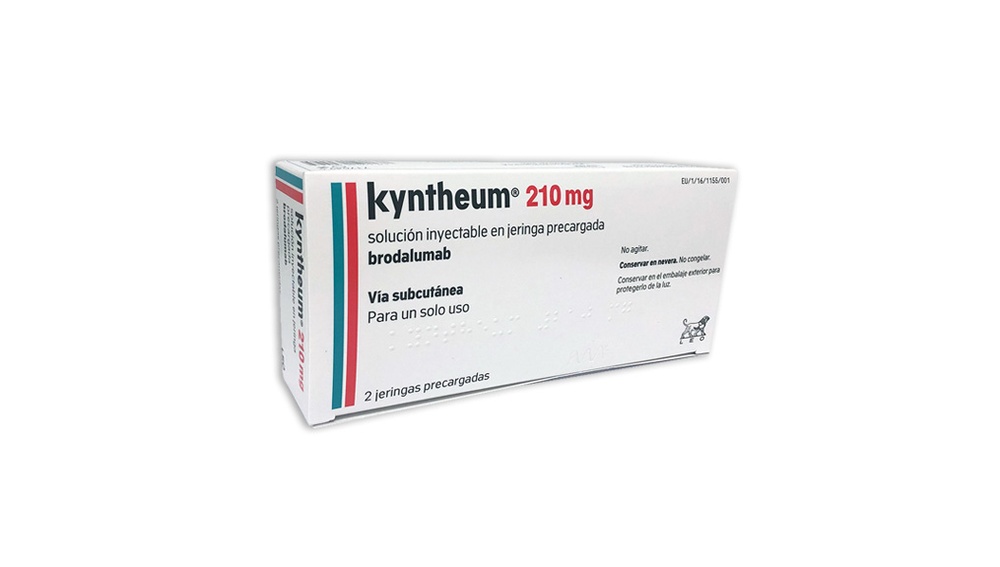
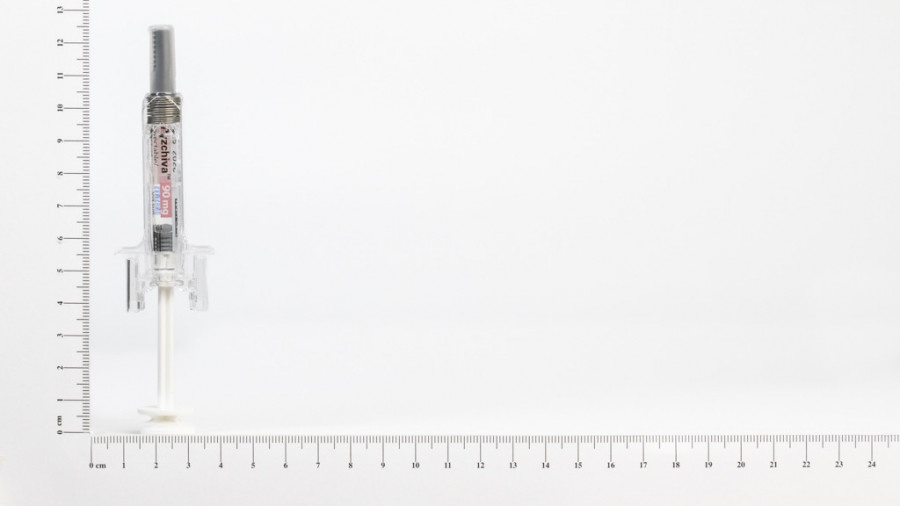
Kyntheum se presenta en una jeringa precargada de un solo uso. Cada jeringa contiene una dosis de Kyntheum de 210 mg. Su médico, farmacéutico o enfermero le indicarán la frecuencia con la que debe inyectarse el medicamento. Cada jeringa precargada deKyntheumsolo puede usarse una vez.
Si su médico decide que usted o un cuidador pueden administrar las inyecciones en casa, se les formará acerca de cómo preparar e inyectar Kyntheum correctamente. No trate de inyectarse el medicamento hasta que su médico le haya indicado cómo administrar las inyecciones correctamente.
Lea todas las instrucciones antes de usar la jeringa precargada Kyntheum.Llame a su médico, farmacéutico o enfermero si usted o su cuidador tienen alguna duda sobre cómo inyectar Kyntheum correctamente.
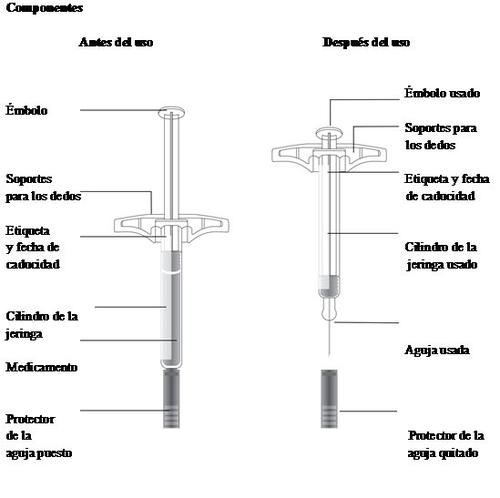
Importante:La aguja está dentro
Importante
Antes de usar una jeringa precargadaKyntheum,lea las siguientes instrucciones:
Conservación de las jeringas precargadasKyntheum
- Mantener fuera de la vista y del alcance de los niños.
- Conservar en el embalaje original para protegerlo de la luz o de daños físicos.
- Conservar en nevera (entre 2°C y 8°C).
- Si es necesario, se pueden conservar las jeringas precargadas Kyntheum a temperatura ambiente (hasta 25°C) durante un plazo máximo de 14 días. Es preciso desechar las jeringas de Kyntheum que se hayan conservado a temperatura ambiente durante más de 14 días.
- Nocongelar.
Uso de las jeringas precargadasKyntheum
- Nouse la jeringa después de la fecha de caducidad que figura en la etiqueta.
- Noagite la jeringa.
- Noretire el protector de la aguja hasta que esté listo para administrar la inyección.
- Nouse la jeringa precargada Kyntheum si se ha caído sobre una superficie dura. Esta medida se propone por si la jeringa se ha roto.
Paso1: Preparación
- Extraiga la jeringa precargada Kyntheum de la caja
Sujete la jeringa por el cilindro para extraerla de la bandeja.
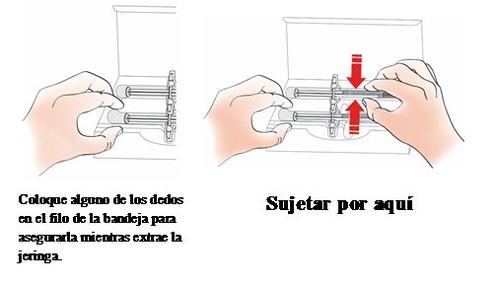
Si queda alguna jeringa sin usar, guarde la caja en la nevera.
Por razones de seguridad:
- Nosujete la jeringa por el émbolo.
- Nosujete la jeringa por el protector de la aguja.
- Noretire el protector de la aguja hasta que esté listo para administrar la inyección.
- Noretire los soportes para los dedos. Forman parte de la jeringa.
Deje la jeringa a temperatura ambiente durante al menos 30minutos antes de inyectar el medicamento.
- Novuelva a guardar la jeringa en la nevera si ya ha alcanzado la temperatura ambiente.
- Notrate de calentar la jeringa utilizando una fuente de calor, como agua caliente o un microondas.
- Noexponga la jeringa a la luz solar directa.
- Noagite la jeringa.
Importante:Sujete siempre la jeringa precargada por el cilindro.
- Examine la jeringa precargada Kyntheum
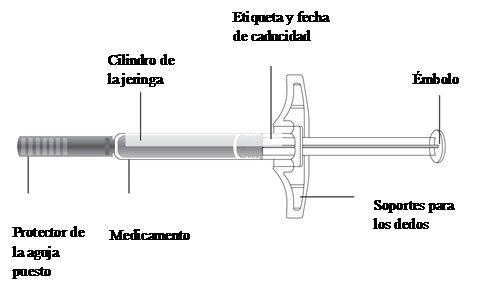
Sujete siempre la jeringa por el cilindro.
Asegúrese de que el medicamento de la jeringa es transparente o ligeramente nacarado e incoloro o ligeramente amarillo.
- Nouse la jeringa si:
- el medicamento está turbio, ha perdido color o contiene copos o partículas.
- parece estar rota o agrietada por alguna zona.
- Reúna todos los materiales necesarios
Lávese las manos minuciosamente con agua y jabón.
En una superficie de trabajo limpia y con buena luz, coloque:
- la nueva jeringa.
- toallitas impregnadas en alcohol.
- torundas de algodón o gasas.
- tiritas.
- recipiente para la eliminación de agujas (el color y el aspecto de este recipiente pueden variar en función de los requisitos nacionales).
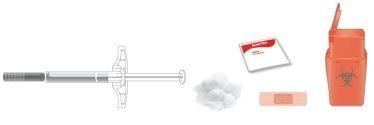
- Prepare y limpie la zona de inyección
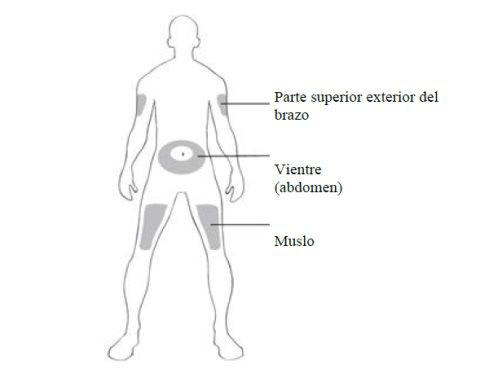
Usted o su cuidador pueden administrar la inyección en:
- el muslo
- el vientre (abdomen), excepto la zona alrededor del ombligo (diámetro de 5 cm).
Solo el cuidador podrá administrar la inyección en:
- la parte superior exterior del brazo.
- Noinyecte el medicamento en zonas en las que la piel esté sensible, irritada, enrojecida o indurada.
- Evite inyectar el medicamento en zonas con cicatrices o estrías.
- Evite inyectar el medicamento directamente en zonas de la piel gruesas, enrojecidas, escamosas o con bultos y en lesiones.
- Limpie la zona en la que va a inyectar el medicamento con una toallita impregnada en alcohol. Deje que la piel se seque.
- Novuelva a tocar esta zona antes de inyectar el medicamento.
- Si quiere usar la misma zona de inyección, asegúrese de no usar exactamente el mismo punto que seleccionó para la inyección anterior.
Paso2: Preparación para la inyección
- Cuando esté listo para inyectar el medicamento, retire el protector de la aguja con un movimiento en línea recta en dirección contraria a su cuerpo
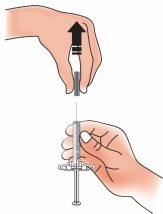
Deseche el protector de la aguja en el recipiente destinado para la eliminación de agujas.
- Nodoble ni tuerza el protector de la aguja.
- Novuelva a poner el protector de la aguja.
Puede ver pequeñas burbujas de aire en la jeringa o una gota de líquido en la punta de la aguja. Ambas son normales y no es necesario quitarlas.
- Pellizque la piel para crear una superficie firme
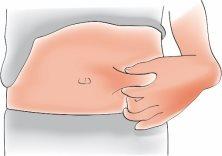
Sujete la piel con firmeza con el pulgar y los demás dedos y cree un área de unos 5 cm de ancho.
Importante:Siga sujetando la piel hasta que haya inyectado el medicamento.
Paso3: Inyección
- Sujete la piel. Una vez haya retirado el protector de la aguja, introduzca la jeringa en la piel en un ángulo entre 45 y 90 grados
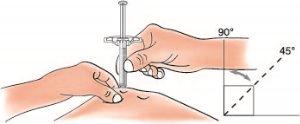
Nocoloque el dedo sobre el émbolo mientras introduce la aguja.
- Ejerza presión de forma lenta pero constante sobre el émbolo hasta que deje de desplazarse
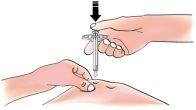
- Cuando haya terminado, retire el dedo pulgar. A continuación, extraiga la jeringa de la piel con cuidado
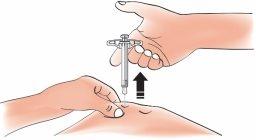
Importante:Si, al extraer la jeringa, ve que aún queda medicamento en el cilindro de la jeringa, no se habrá administrado toda la dosis. Llame a su médico, farmacéutico o enfermero de inmediato.
Paso4: Finalización
- Deseche la jeringa usada
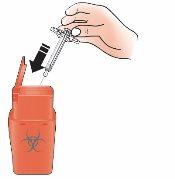
- Deseche la jeringa precargada usada en un recipiente para la eliminación de agujas resistente a los pinchazos inmediatamente después de usarla.
- Novuelva a usar la jeringa.
- Norecicle la jeringa ni el recipiente para la eliminación de agujas ni los tire a la basura.
Importante:Mantenga el recipiente para la eliminación de agujas fuera de la vista y del alcance de los niños.
- Compruebe la zona de inyección
Si hay sangre, presione la zona de inyección con una torunda de algodón o una gasa. Nofrote la zona de inyección. Cúbrala con una tirita si es necesario.
-

- País de registro
- Forma farmacéuticaINYECTABLE, 210 mg (140 mg/mL) mg
- Código ATCL04AC12
- Principio activo
- Requiere recetaSí
- Fabricante
- Esta información es de carácter general y no sustituye la consulta con un profesional sanitario.
- Alternativas a KYNTHEUM 210 MG SOLUCION INYECTABLE EN JERINGA PRECARGADAForma farmacéutica: INYECTABLE PERFUSION, 130 mgPrincipio activo: UstekinumabFabricante: Accord Healthcare S.L.U.Requiere recetaForma farmacéutica: INYECTABLE, 45 mgPrincipio activo: UstekinumabFabricante: Accord Healthcare S.L.U.Requiere recetaForma farmacéutica: INYECTABLE, 90 mgPrincipio activo: UstekinumabFabricante: Accord Healthcare S.L.U.Requiere receta

Médicos online para KYNTHEUM 210 MG SOLUCION INYECTABLE EN JERINGA PRECARGADA
Comenta la dosis, los posibles efectos secundarios, interacciones, contraindicaciones o la revisión de receta de KYNTHEUM 210 MG SOLUCION INYECTABLE EN JERINGA PRECARGADA, sujeto a valoración médica y a la normativa local.
Obtén una receta de KYNTHEUM 210 MG SOLUCION INYECTABLE EN JERINGA PRECARGADA online
Rellena un formulario de 2 minutos
Cuéntanos tus síntomas, historial y el medicamento que necesitas.
Elige un médico o nosotros te asignamos uno
Escoge un especialista o te conectamos con el próximo médico disponible.
El médico revisa tu caso
Normalmente en 30 minutos. Puede hacerte preguntas adicionales por chat.
Recógela en cualquier farmacia
Receta electrónica enviada a tu correo, válida en toda España.
Preguntas frecuentes
KYNTHEUM 210 MG SOLUCION INYECTABLE EN JERINGA PRECARGADA requires receta en España. Puedes confirmarlo con un médico online según tu caso.
El principio activo de KYNTHEUM 210 MG SOLUCION INYECTABLE EN JERINGA PRECARGADA es Brodalumab. Esta información ayuda a identificar medicamentos con la misma composición pero con diferentes nombres comerciales.
KYNTHEUM 210 MG SOLUCION INYECTABLE EN JERINGA PRECARGADA es fabricado por Leo Pharma A/S. La marca y el envase pueden variar según el distribuidor.
Los Médicos de familia, Psiquiatras, Dermatólogos, Cardiólogos, Endocrinólogos, Gastroenterólogos, Neumólogos, Nefrólogos, Reumatólogos, Hematólogos, Infectólogos, Alergólogos, Geriatras, Pediatras, Oncólogos pueden valorar la prescripción de KYNTHEUM 210 MG SOLUCION INYECTABLE EN JERINGA PRECARGADA cuando esté clínicamente indicado. Puedes reservar una videoconsulta para comentar tu caso y las opciones de tratamiento.
España cuenta con una infraestructura sanitaria bien desarrollada en ciudades principales como Madrid, Barcelona, Valencia y Sevilla. Las farmacias están ampliamente disponibles y operan bajo estrictas regulaciones, garantizando el acceso a medicamentos con receta.
Puedes comprar KYNTHEUM 210 MG SOLUCION INYECTABLE EN JERINGA PRECARGADA en Madrid, Barcelona, Sevilla o Valencia en cualquier farmacia local con una receta válida.
Para obtener una receta, puedes utilizar Oladoctor:
Otros medicamentos con el mismo principio activo (Brodalumab) incluyen ABSIMKY 130 MG CONCENTRADO PARA SOLUCION PARA PERFUSION, ABSIMKY 45 MG SOLUCION INYECTABLE EN JERINGA PRECARGADA, ABSIMKY 90 MG SOLUCION INYECTABLE EN JERINGA PRECARGADA. Pueden tener diferentes nombres comerciales o formulaciones, pero contienen el mismo componente terapéutico. Consulta siempre con un médico antes de cambiar o iniciar un nuevo medicamento.
