


Foscavir 24 mg/ml solución para perfusión

Revisión de receta online
Un médico revisará tu caso y determinará si la prescripción es médicamente apropiada.

Habla con un médico sobre este medicamento
Comenta tus síntomas y las opciones de tratamiento en una consulta online.



Cómo usar FOSCAVIR 24 mg/ml SOLUCION PARA PERFUSION
Contenido del prospecto
- Introducción
- Qué es Foscavir 24 mg/ml solución para perfusión y para qué se utiliza
- Qué necesita saber antes de empezar a usar Foscavir 24 mg/ml solución para perfusión
- Cómo usar Foscavir 24 mg/ml solución para perfusión
- Posibles efectos adversos
- Conservación de Foscavir 24 mg/ml solución para perfusión
- Contenido del envase e información adicional
- Titular de la autorización de comercialización y responsable de la fabricación
- Responsable de la fabricación
Introducción
Prospecto: información para el paciente
Foscavir 24 mg/ml solución para perfusión
Foscarnet sódico hexahidrato
Lea todo el prospecto detenidamente antes de empezar a usar este medicamento, porque contiene información importante para usted.
- Conserve este prospecto, ya que puede tener que volver a leerlo.
- Si tiene alguna duda, consulte a su médico o enfermero.
- Este medicamento se le ha recetado solamente a usted, y no debe dárselo a otras personas aunque tengan los mismos síntomas que usted, ya que puede perjudicarles.
- Si experimenta efectos adversos, consulte a su médico o enfermero, incluso si se trata de efectos adversos que no aparecen en este prospecto. Ver sección 4.
Contenido del prospecto
- Qué es Foscavir 24 mg/ml solución para perfusión y para qué se utiliza
- Qué necesita saber antes de empezar a usar Foscavir 24 mg/ml solución para perfusión
- Cómo usar Foscavir 24 mg/ml solución para perfusión
- Posibles efectos adversos
- Conservación de Foscavir 24 mg/ml solución para perfusión
- Contenido del envase e información adicional
1. Qué es Foscavir 24 mg/ml solución para perfusión y para qué se utiliza
El principio activo foscarnet, es un agente antiviral que actúa inhibiendo la multiplicación de algunos virus.
Foscavir se utiliza en el tratamiento de las siguientes infecciones, causadas por virus:
- Una infección ocular (retinitis) o del aparato digestivo, provocada por el virus del CMV, en pacientes con infección por VIH.
Foscavir está indicado en el tratamiento de inducción y mantenimiento de la enfermedad, aunque no puede reparar el daño causado.
- Infección de piel o mucosas provocadas por el virus del herpes simple (VHS) y que no hayan mejorado con aciclovir, en pacientes inmunosuprimidos (el sistema inmunológico no funciona adecuadamente).
- Infección viral producida por un virus, citomegalovirus (CMV), tras haber recibido un trasplante de médula ósea cuando otros tratamientos no han sido adecuados.

¿No estás seguro de si este medicamento es adecuado para ti?
Comenta tus síntomas y tratamiento con un médico online.
2. Qué necesita saber antes de empezar a usar Foscavir 24 mg/ml solución para perfusión
No use Foscavir24 mg/ml solución para perfusión
- Si es alérgico a foscarnet o a alguno de los demás componentes de este medicamento incluidos en la sección 6.
Advertencias y precauciones
Consulte a su médico o enfermero antes de empezar a usar Foscavir 24 mg/ml solución para perfusión
- Si presenta insuficiencia renal, ya que deben realizarse controles analiticos durante el tratamiento. Debe mantenerse una hidratación adecuada en todos los pacientes.
- Si tiene problemas cardiacos.
Foscavir se elimina en altas concentraciones por la orina y puede provocar una importante irritación genital y/o ulceraciones. Para evitar irritaciones y ulceraciones se recomienda extremar la higiene personal y la limpieza de la región genital tras la micción.
Foscavir se deposita en dientes, huesos y cartílagos. Los datos en animales muestran que el depósito es mayor en animales jóvenes. La seguridad de Foscavir y su efecto sobre el desarrollo del esqueleto no ha sido investigada en niños.
La administración del fármaco puede asociarse con una brusca reducción del calcio. Por esta razón, debe controlarse el nivel de calcio y magnesio, antes y durante el tratamiento con Foscavir para corregir las deficiencias si las hubiera. Igualmente deben controlarse concentraciones de electrolitos y minerales en sangre de forma periodica, especialmente calcio y magnesio.
Niños y adolescentes
La seguridad y eficacia de Foscavir en niños no ha sido establecida.
Otros medicamentos y Foscavir
Informe a su médico o farmacéutico si está utilizando, ha utilizado recientemente o pudiera utilizar otros medicamentos, incluso los adquiridos sin receta.En especial, si usted está tomando, aminoglucosidos (grupo de antibioticos); amfotericina B (por infección por hongos); ciclosporina A, metotrexato, tacrolimus (inmunodepresor); aciclovir (antiviral); pentamidina (inyecciones); quinidina, amiodarona, sotalol u otras medicinas que puedan afectar a su frecuencia y ritmo cardíacos; tranquilizantes (neurolépticos); así como algunos inhibidores de la proteasa como ritonavir y saquinavir.
Embarazo y lactancia
Si está embarazada o en periodo de lactancia, cree que podría estar embarazada o tiene intención de quedarse embarazada, consulte a su médico o farmacéutico antes de utilizar este medicamento.
- No se recomienda el uso de Foscavir durante el embarazo.
- No se recomienda intentar quedarse embarazada durante la terapia con Foscavir y por ello debería emplear métodos anticonceptivos efectivos.
- Los hombres que estén siendo tratados con Foscavir no deben procrear durante o hasta 6 meses después de la terapia.
- No tome Foscavir si está dando el pecho.
Conducción y uso de máquinas
Foscavir puede afectar su capacidad para conducir o utilizar máquinas. Consulte con su médico antes de realizar alguna de estas actividades.
Foscavir contiene sodio
La dosis máxima diaria recomendada de este medicamento contiene 2,75 g de sodio (que se encuentra en la sal de mesa). Esto es equivalente al 138% de la ingesta aimentaria máxima diaria de sodio recomendada en adultos.
Consulte con su médico o farmacéutico si necesita Foscavir a diario durante un período prolongado especialmente si le han recomendado una dieta baja en sal (sodio).
3. Cómo usar Foscavir 24 mg/ml solución para perfusión
Foscavir debe ser administrado por un profesional sanitario, por vía intravenosa.
Su médico calculará la cantidad correcta de Foscavir para usted, basándose en su peso corporal y en los resultados de sus análisis de sangre.
Su médico seguirá las pautas indicadas a continuación en función de la infección durante el tiempo que estime adecuado.
Si usted está en tratamiento debido a una retinitis por citomegalovirus (CMV), el tratamiento se realizará en dos etapas: inducción, y posteriormente, mantenimiento. La inducción es la etapa inicial en la que se le administrarán perfusiones de más de una hora de duración, a intervalos de 8 ó 12 horas al día, durante dos o tres semanas. Dependiendo de cómo responda el virus, se pasará o no a la etapa de mantenimiento, en la que se le administrarán las perfusiones una vez al día. Si en cualquier momento la infección vírica empeora, se podrá volver a instaurar el tratamiento de inducción. Su médico le indicará en todo momento los cambios necesarios en los tiempos de perfusión, modificando la dosis en caso necesario, para aumentar el efecto antivírico o para reducir el riesgo de daño para el riñón.
Si usted está en tratamiento debido a una infección gastrointestinal por citomegalovirus (CMV), este tratamiento se realizará en una única etapa. La perfusión se le administrará a intervalos de 12 horas durante 2-4 semanas.
Si usted está en tratamiento debido a infecciones de piel o mucosas originadas por el virus del herpes simple (VHS), este tratamiento también se realizará en una única etapa. La perfusión se le administrará a intervalos de 8 horas durante 2-3 semanas, o hasta la curación.
Si usted está en tratamiento tras haber recibido un trasplante de médula ósea, por una infección viral producida citomegalovirus (CMV), el tratamiento se realizará en dos etapas: inducción, y posteriormente, mantenimiento. La inducción es la etapa inicial en la que se le administrarán perfusiones de más de una hora de duración, a intervalos de 12 horas al día, durante dos semanas. Dependiendo de cómo responda el virus, se pasará o no a la etapa de mantenimiento, en la que se le administrarán las perfusiones 5 días a la semana durante dos semanas. Si en cualquier momento la infección vírica empeora, se podrá volver a instaurar el tratamiento de inducción. Su médico le indicará en todo momento los cambios necesarios en los tiempos de perfusión, modificando la dosis en caso necesario, para aumentar el efecto antivírico o para reducir el riesgo de daño para el riñón.
Hidratación
La toxicidad renal de este medicamento puede reducirse mediante una adecuada hidratación. Su médico seguirá las pautas más adeucadas para usted.
Pacientes con alteración de la función renal
Su médico tendrá en cuenta el grado de insuficiencia renal para el ajuste de dosis de acuerdo a la tabla anterior. No se recomienda el empleo de este medicamento en pacientes estén sometidos a hemodiálisis.
Pacientes con alteración de la función hepática
No es necesario reducir la dosis para pacientes con insuficiencia hepática.
Pacientes de edad avanzada
No requiere ajuste de dosis.
Si a usted se le administra más Foscavirdel que debe
Se han producido sobredosis relativas en algunos pacientes con problemas de riñón, debido a un ajuste inadecuado de la dosis; no obstante, tenga en cuenta que en algunos casos no se han originado secuelas clínicas después de esta sobredosis.
En caso de sobredosis o ingestión accidental consulte inmediatamente a su médico o farmacéutico o llame al Servicio de Información Toxicológica, teléfono: 91 562 04 20, indicando el medicamento y la cantidad ingerida.
Información para el profesional sanitario
La hemodiálisis aumenta la eliminación del medicamento, y puede ser beneficiosa en casos.

¿Has empezado a tomar el medicamento y tienes preguntas?
Comenta tus síntomas y tratamiento con un médico online.
4. Posibles efectos adversos
Al igual que todos los medicamentos, este medicamento puede producir efectos adversos, aunque no todas las personas los sufran.
Los efectos adversos observados con Foscavir son:
Muy frecuentes: pueden afectar a mas de 1 de cada 10 personas | Trastornos de la sangre y del sistema linfático: Disminución de algunas células sanguíneas denominadas granulocitos (granulocitopenia) y anemia. |
Trastornos del metabolismo y de la nutrición: Pérdida del apetito (anorexia), disminución de algunos electrolitos en sangre (potasio, magnesio y calcio). | |
Trastornos del sistema nervioso: Mareo, dolor de cabeza, sensación de hormigueo. | |
Trastornos gastrointestinales: Diarrea, náuseas, vómitos. | |
Trastornos de la piel y del tejido subcutáneo: Erupción en la piel. | |
Trastornos generales y alteraciones en el lugar de administración: Sensación de debilidad, escalofríos, fatiga, fiebre (pirexia). | |
Análisis complementarios: Aumento de la creatinina sérica, descenso de la concentración de hemoglobina. | |
Frecuentes: pueden afectar hasta 1 de cada 10 personas | Trastornos de la sangre y del sistema linfático: Disminución de algunas células sanguíneas (leucocitos incluyendo neutrófilos y plaquetas). |
Trastornos del sistema inmunológico: Infección generalizada (sepsis). | |
Trastornos del metabolismo y de la nutrición: Aumento o disminución de los fosfatos en sangre, disminución del sodio en sangre, aumento de algunas enzimas en sangre (fosfatasa alcalina y LDH), aumento del calcio en sangre, deshidratación. | |
Trastornos psiquiátricos: Cambios anímicos. Estos incluyen reacciones agresivas, agitación, ansiedad, confusión, depresión, nerviosismo. | |
Trastornos del sistema nervioso: Coordinación anormal de los movimientos, convulsiones, menor sensibilidad del tacto, contracciones musculares involuntarias, alteraciones del sistema nervioso periférico, temblor. | |
Trastornos cardiacos: Latidos acelerados del corazón (palpitaciones o taquicardia). | |
Trastornos vasculares: Aumento o disminución de la tensión arterial, inflamación de las venas. | |
Trastornos gastrointestinales: Dolor abdominal, estreñimiento, sensación de digestión pesada (dispepsia), inflamación del páncreas, sangrado gastrointestinal. | |
Trastornos hepatobiliares: Funcionamiento anormal del hígado. Trastornos de la piel y del tejido subcutáneo: Picor. Trastornos musculoesqueléticos: Dolores musculares. | |
Trastornos del sistema reproductor y de la mama: Incomodidad y ulceración genital. | |
Trastornos renales y urinarios: Insuficiencia renal, incapacidad del riñón para funcionar (fallo renal agudo), sensación de quemazón en la micción, micción anormalmente abundante. Puede haber cambios que se muestran en los análisis de orina (proteinuria). | |
Trastornos generales y alteraciones en el lugar de administración: Malestar general, hinchazón por acumulación de líquido, dolor en el pecho, hinchazón y dolor dónde se insertó la aguja de la inyección. | |
Análisis complementarios: Descenso del aclaramiento de creatinina, electrocardiograma anormal, aumento de algunas enzimas hepáticas en sangre (gamma-GT, ALT y AST) o enzima lipasa. | |
Poco frecuentes: pueden afectar hasta 1 de cada 100 personas | Trastornos de la piel y del tejido subcutáneo: Erupción con picazón (urticaria) hinchazón de la piel (angioedema). Trastornos renales y urinarios: Alteracion renal tubular, glomerulonefritis, síndrome nefrótico. Trastornos del metabolismo y de la nutrición: Alteración del pH sanguíneo (acidosis). Análisis complementarios: Aumento de la enzima creatina, fosfoquinasa y amilasa en sangre. |
Frecuencia no conocida (no puede estimarse a partir de los datos disponibles) | Trastornos de la sangre y del sistema linfático: Disminución de algunas células sanguíneas (eritrocitos, leucocitos (incluyendo neutrófilos) y plaquetas). Trastornos del sistema inmunológico: Reacciones alérgicas graves incluyendo una caída de la tensión arterial e shock. Se conocen como reacciones de hipersensibilidad, anafilácticas o anafilactoides. Si tiene alguno de los síntomas anteriores, comuníqueselo a su doctor de inmediato o vaya a la unidad de urgencias más cercana. Trastornos endocrinos: Alteración caracterizada por la necesidad frecuente de beber y abundante micción (diabetes insípida). Trastornos del metabolismo y de la nutrición: Aumento del sodio en sangre. Trastornos psiquiatricos: Cambios del estado mental. Trastornos del sistema nervioso: Encefalopatía. Trastornos cardiacos: Electrocardiograma anormal, alteraciones en el ritmo cardiaco ventricular, torsade de pointes. Trastornos gastrointestinales: Úlcera en su esófago (el canal por el que la comida pasa de la garganta al estómago). Esto puede resultar doloroso. Trastornos de la piel y del tejido subcutáneo: Reacciones de la piel graves. Estos tipos de reacciones pueden estar asociadas con enrojecimiento, hinchazón, y úlceras en la piel, la boca, la garganta, los ojos y otras zonas del interior del cuerpo y a veces pueden dar como resultado el fallecimiento. Se llaman eritema multiforme, síndrome de Stevens-Johnson y necrólisis epidérmica tóxica. Si tiene alguno de los síntomas anteriores, comuníqueselo a su doctor de inmediato o vaya a la unidad de urgencias más cercana. Trastornos musculoesqueléticos: Debilidad muscular, pérdida y debilidad de la masa muscular, inflamación de los músculos, ruptura de las células musculares (rabdomiólisis). Trastornos renales y urinarios: Dolor renal y/o otros problemas renales (acidosis tubular renal, necrosis tubular renal, necrosis tubular aguda, nefropatía por cristales), sangre en orina. Trastornos generales y alteraciones en el lugar de administración: Hinchazón, dolor y enrojecimiento en una vena o dónde se insertó la aguja de la inyección. |
Nota: En estos ensayos clínicos no se proporcionó hidratación o atención al equilibrio electrolítico de forma sistemática, por lo que la frecuencia de algunas reacciones adversas podrá ser inferior cuando se sigan las recomendaciones actuales (ver sección 3).
Comunicación de efectos adversos
Si experimenta cualquier tipo de efecto adverso, consulte a su médico o enfermero, incluso si se trata de posibles efectos adversos que no aparecen en este prospecto. También puede comunicarlos directamente a través del Sistema Español de Farmacovigilancia de medicamentos de Uso Humano: https://www.notificaram.es. Mediante la comunicación de efectos adversos usted puede contribuir a proporcionar más información sobre la seguridad de este medicamento.
5. Conservación de Foscavir 24 mg/ml solución para perfusión
Mantener este medicamento fuera de la vista y del alcance de los niños.
Antes de la apertura: Conservar a temperatura inferior a 25ºC. No conservar en nevera.
Si se conserva en nevera o se expone a temperaturas inferiores al punto de congelación puede precipitar. Este precipitado se puede volver a solubilizar manteniendo el frasco a temperatura ambiente y agitando repetidamente.
Antes de la apertura: No utilice este medicamento después de la fecha de caducidad que aparece en el frasco. La fecha de caducidad es el último día del mes que se indica.
Después de la primera apertura: la solución debe ser utilizada en 24 horas (no contiene conservantes).
Desde un punto de vista microbiológico, el producto debe utilizarse inmediatamente. Si no se utiliza inmediatamente, las condiciones de conservación y el tiempo, antes del uso, son responsabilidad del profesional no debiendo superar las 24 horas conservado entre 2 y 8 ºC, a menos que la reconstitución haya tenido lugar en condiciones asépticas controladas y validadas.
Los medicamentos no deben tirarse por los desagües ni a la basura. Pregunte a su farmacéutico cómo deshacerse de los envases y de los medicamentos que no necesita. De esta forma ayudará a proteger el medio ambiente.
6. Contenido del envase e información adicional
Composición deFoscavir24 mg/ml solución para perfusión
- El principio activo es foscarnet sódico hexahidrato. 1 ml de solución contiene 24 mg de foscarnet sódico hexahidrato. Ver sección 2 ‘Foscavir contiene sodio’.
- Los demás componentes son: ácido clorhídrico (E507) y agua para preparaciones inyectables.
Aspecto del producto y contenido del envase
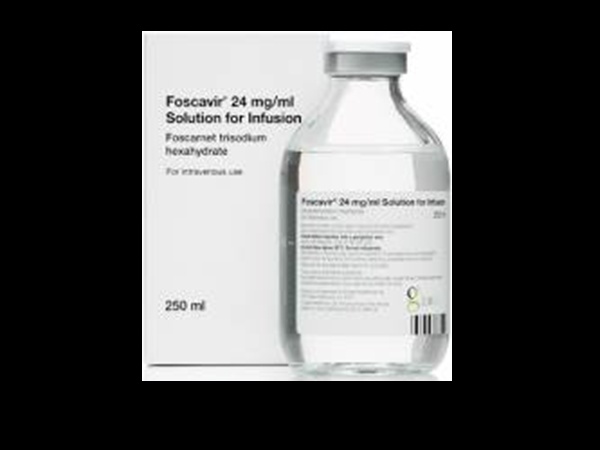
Este fármaco es una solución para perfusión, que se presenta en un frasco de 250 ml.
Titular de la autorización de comercialización y responsable de la fabricación
Titular de la autorización
Clinigen Healthcare B.V.
Schiphol Boulevard 359
WTC Schiphol Airport, D Tower 11th floor
1118BJ Schiphol
Países Bajos
Responsable de la fabricación
Fresenius Kabi Austria GmbHHafnerstraße 36A-8055 GrazAustria
Fecha de la última revisión de este prospecto:Mayo 2023
La información detallada de este medicamento está disponible en la página web de la Agencia Española del Medicamento y Productos Sanitarios (AEMPS) (http://www.aemps.gob.es/)
Esta información esta destinada únicamente a profesionales del sector sanitario:
INSTRUCCIONES PARA LA CORRECTA ADMINISTRACIÓN
Foscavir no contiene conservantes y una vez roto el precinto de esterilidad la solución debe ser utilizada en un plazo de 24 horas.
Desde un punto de vista microbiológico, el producto debe utilizarse inmediatamente. Si no se utiliza inmediatamente, las condiciones de conservación y el tiempo, antes del uso, son responsabilidad del profesional no debiendo superar las 24 horas conservado entre 2 y 8 ºC, a menos que la reconstitución haya tenido lugar en condiciones asépticas controladas y validadas. Las dosis de Foscavir a dispensar individualmente pueden ser transferidas asépticamente a bolsas de perfusión por los servicios de farmacia hospitalaria. La estabilidad físico-química de Foscavir y de las diluciones en partes iguales con cloruro de sodio al 9% (9 mg/ml) o glucosa 50 mg/ml, en bolsas de PVC, es de 7 días.
Posología
Adultos
Retinitis por CMV en pacientes con VIH
Tratamiento de inducción:Foscavir se administrará durante 2-3 semanas dependiendo de la respuesta clínica en forma de perfusiones intermitentes cada 8 horas a una dosis de 60 mg/kg o cada 12 horas a una dosis de 90 mg/kg en pacientes con función renal normal. La dosis debe ajustarse individualmente según la función renal (ver Tabla de dosis a continuación). La duración de cada perfusión no debe ser inferior a 2 h para la dosis de 90 mg/kg o de 1 h para la dosis de 60 mg/kg.
Tratamiento de mantenimiento:En el tratamiento de mantenimiento, una vez finalizado el tratamiento de inducción de la retinitis por CMV, Foscavir se administra 7 días a la semana durante el tiempo que se considere apropiado. En los pacientes con función renal normal, la dosis se encuentra comprendida entre los 90 y 120 mg/kg, en forma de perfusión única diaria de 2 horas de duración. La posología debe ser individualizada según la función renal del paciente (ver Tabla de dosis a continuación). Se recomienda iniciar el tratamiento con 90 mg/kg. La dosis se podrá aumentar gradualmente hasta 120 mg/kg en aquellos pacientes que presenten una buena tolerancia con la dosis previa.
Los pacientes que presenten una progresión de la retinitis durante el tratamiento de mantenimiento podrán pasar de nuevo al tratamiento de inducción o a un tratamiento combinado de Foscavir y ganciclovir. Una vez estabilizados, deberá establecerse el tratamiento de mantenimiento con Foscavir o una combinación de Foscavir y ganciclovir.
Por razones de incompatibilidad física, NO debe mezclarse Foscavir y ganciclovir.
Infecciones por CMV en el tracto gastrointestinal superior e inferior en pacientes con VIH
El tratamiento con Foscavir seadministrará Foscavir como perfusiones intermitentes cada 12 horas a una dosis de 90 mg/kg en pacientes con función renal normal. La mayoría de los pacientes experimentarán una remisión de sus síntomas al cabo de 2 a 4 semanas. La dosis debe ser individualizada según la función renal del paciente (ver Tabla de dosis a continuación). El tiempo de perfusión no debe ser inferior a 2 horas.
Infecciones mucocutáneas por VHS que no responden a aciclovir
Para el tratamiento de inducción, Foscavir se administrará en forma de perfusiones intermitentes durante 1 hora a una dosis de 40 mg/kg, cada 8 horas, en pacientes con función renal normal. La dosis debe ajustarse individualmente según la función renal (ver Tabla de dosis a continuación). La duración de cada perfusión no debe ser inferior a 1 h.
El tiempo hasta la curación depende del tamaño de la lesión inicial y el tratamiento con Foscavir debe continuar hasta la completa reepitelización, habitualmente 2-3 semanas. La respuesta clínica a Foscavir debe ser evidente después de una semana de tratamiento; debe reconsiderarse el tratamiento en pacientes que no responden en ese periodo de tiempo.
No se ha establecido la eficacia de la terapia de mantenimiento con Foscavir después del tratamiento de inducción en infecciones por VHS que no responden a aciclovir. En caso de producirse una recidiva, deberá confirmarse la falta de respuesta a aciclovir.
Tratamiento anticipado en pacientes de alto riesgo y tratamiento de la infección por CMV, en pacientes con TCMH
Tratamiento de inducción:se administra una dosis de 60 mg/kg durante 14 días en forma de perfusión intermitente cada 12 horas, en pacientes con función renal normal.
La dosis debe ajustarse individualmente según la función renal (ver Tabla de dosis a continuación).
La duración de cada perfusión no debe ser inferior a 1 hora.
Tratamiento de mantenimiento:una vez finalizado el tratamiento de inducción de la enfermedad por CMV, se administra 90 mg/kg, 5 días a la semana durante 14 días en pacientes con función renal normal, en forma de perfusión única diaria de 2 horas de duración.
La posología debe ser individualizada según la función renal del paciente (ver Tabla de dosis a continuación).
Los pacientes que presenten una progresión de la infección durante la terapia de mantenimiento podrán pasar de nuevo al tratamiento de inducción.
Tabla1Tabla de dosis de Foscavir
Tratamiento de inducción
Aclaramiento de creatinina (ml/min/kg) | Tratamiento anticipado y tratamiento por CMV(TCMH) | Enfermedad por retinitis por CMV (VIH) y CMV en tracto gastrointestinal (VIH) | Infección por VHS | |||||||
60 mg/kg durante 1 hora | 60 mg/kg durante 1 hora | 90 mg/kg durante al menos 2 horas | 40mg/kg durante 1hora | |||||||
(mg/kg) | (mg/kg) | (mg/kg) | (mg/kg) | |||||||
>1,4 | 60 | Cada 12 h | 60 | Cada 8 h | 90 | Cada 12 h | 40 | Cada 8 h | ||
1,4> | - | >1 | 45 | Cada 12 h | 45 | Cada 8 h | 70 | Cada 12 h | 30 | Cada 8 h |
1> | - | >0,8 | 35 | Cada 12 h | 35 | Cada 8 h | 50 | Cada 12 h | 20 | Cada 8 h |
0,8> | - | >0,6 | 25 | Cada 12 h | 40 | Cada 12 h | 80 | Cada 24 h | 25 | Cada 12 h |
0,6> | - | >0,5 | 20 | Cada 12 h | 30 | Cada 12 h | 60 | Cada 24 h | 20 | Cada 12 h |
0,5> | - | >0,4 | 15 | Cada 12 h | 25 | Cada 12 h | 50 | Cada 24 h | 15 | Cada 12 h |
<0,4 | Tratamiento no recomendado |
Tratamiento de mantenimiento
Aclaramiento de creatinina (ml/min/kg) | 90 mg/kg durante al menos 2 horas | 120 mg/kgdurante al menos 2 horas | ||||
(mg/kg) | (mg/kg) | |||||
>1,4 | 90 | Cada 24 h | 120 | Cada 24 h | ||
1,4> | - | >1 | 70 | Cada 24 h | 90 | Cada 24 h |
1> | - | >0,8 | 50 | Cada 24 h | 65 | Cada 24 h |
0,8> | - | >0,6 | 80 | Cada 48 h | 105 | Cada 48 h |
0,6> | - | >0,5 | 60 | Cada 48 h | 80 | Cada 48 h |
0,5> | - | >0,4 | 50 | Cada 48 h | 65 | Cada 48 h |
<0,4 | Tratamiento no recomendado |
Hidratación
Los pacientes clínicamente deshidratados deben corregir su estado antes de comenzar el tratamiento con Foscavir.
La toxicidad renal de Foscavir puede reducirse mediante una adecuada hidratación del paciente. Para ello, se recomienda favorecer la diuresis mediante hidratación con 0,5 - 1,0 litro de suero fisiológico antes de la primera perfusión de Foscavir y añadiendo posteriormente 0,5 - 1,0 litro de suero fisiológico a cada perfusión. En pacientes colaboradores puede utilizarse una pauta de hidratación similar aunque por vía oral.
Pacientes con alteración de la función renal
Debe reducirse la dosis para aquellos pacientes con insuficiencia renal de acuerdo con los índices de evacuación de creatinina descritos en la tabla superior. No se recomienda el empleo de Foscavir en pacientes sometidos a hemodiálisis, ya que no se han establecido las pautas de dosis.
Pacientes con alteración de la función hepática
No es necesario reducir la dosis para pacientes con insuficiencia hepática.
Pacientes de edad avanzada
No requiere ajuste de dosis.
Población pediátrica
La seguridad y la eficacia de foscarnet en niños no ha sido establecida.
Forma de administración
Foscavir debe administrarse únicamente por vía intravenosa, bien mediante un catéter venoso central o en una vena periférica.
NO adminsitrar este medicamento mediante inyección intravenosa rápida.
Para su administración en una vena periférica, la solución debe diluirse inmediatamente antes de su administración en glucosa al 5% o en suero fisiológico hasta una concentración de 12 mg/ml.
La solución de Foscavir puede administrarse sin dilución por vía venosa central.
El contacto accidental con la piel o con los ojos de la solución de Foscavir puede causar irritación local y sensación de quemazón. En caso de producirse un contacto accidental deberá lavarse la zona expuesta con agua.
- País de registro
- Forma farmacéuticaINYECTABLE PERFUSION, 24 mg foscarnet sodico/ml
- Código ATCJ05AD01
- Principio activo
- Requiere recetaSí
- Fabricante
- Esta información es de carácter general y no sustituye la consulta con un profesional sanitario.
- Alternativas a FOSCAVIR 24 mg/ml SOLUCION PARA PERFUSIONForma farmacéutica: INYECTABLE PERFUSION, 24 mg/mlPrincipio activo: foscarnetFabricante: Fresenius Kabi España, S.A.U.Requiere recetaForma farmacéutica: INYECTABLE PERFUSION, 24 mg/mlPrincipio activo: foscarnetFabricante: Laboratorios Tillomed Spain S.L.URequiere recetaForma farmacéutica: COMPRIMIDO, 300 MGPrincipio activo: AbacavirFabricante: Tarbis Farma S.L.Requiere receta
Médicos online para FOSCAVIR 24 mg/ml SOLUCION PARA PERFUSION
Comenta la dosis, los posibles efectos secundarios, interacciones, contraindicaciones o la revisión de receta de FOSCAVIR 24 mg/ml SOLUCION PARA PERFUSION, sujeto a valoración médica y a la normativa local.









Preguntas frecuentes
FOSCAVIR 24 mg/ml SOLUCION PARA PERFUSION requiere receta en España. Puedes confirmarlo con un médico online según tu caso.
El principio activo de FOSCAVIR 24 mg/ml SOLUCION PARA PERFUSION es foscarnet. Esta información ayuda a identificar medicamentos con la misma composición pero con diferentes nombres comerciales.
FOSCAVIR 24 mg/ml SOLUCION PARA PERFUSION es fabricado por Clinigen Healthcare B.V.. La marca y el envase pueden variar según el distribuidor.
Los Médicos de familia, Psiquiatras, Dermatólogos, Cardiólogos, Endocrinólogos, Gastroenterólogos, Neumólogos, Nefrólogos, Reumatólogos, Hematólogos, Infectólogos, Alergólogos, Geriatras, Pediatras, Oncólogos pueden valorar la prescripción de FOSCAVIR 24 mg/ml SOLUCION PARA PERFUSION cuando esté clínicamente indicado. Puedes reservar una videoconsulta para comentar tu caso y las opciones de tratamiento.
La receta la emite un médico tras valorar tu estado de salud. En España, FOSCAVIR 24 mg/ml SOLUCION PARA PERFUSION se dispensa en las farmacias con esa receta médica. Una consulta online no garantiza su emisión: la decisión corresponde siempre al médico.
Para solicitar una valoración puedes usar Oladoctor:
Otros medicamentos con el mismo principio activo (foscarnet) incluyen FOSCARNET KABI 24 MG/ML SOLUCION PARA PERFUSION EFG, FOSCARNET TILLOMED 24 MG/ML SOLUCION PARA PERFUSION EFG, ABACAVIR TARBIS 300 MG COMPRIMIDOS RECUBIERTOS CON PELICULA EFG. Pueden tener diferentes nombres comerciales o formulaciones, pero contienen el mismo componente terapéutico. Consulta siempre con un médico antes de cambiar o iniciar un nuevo medicamento.
