


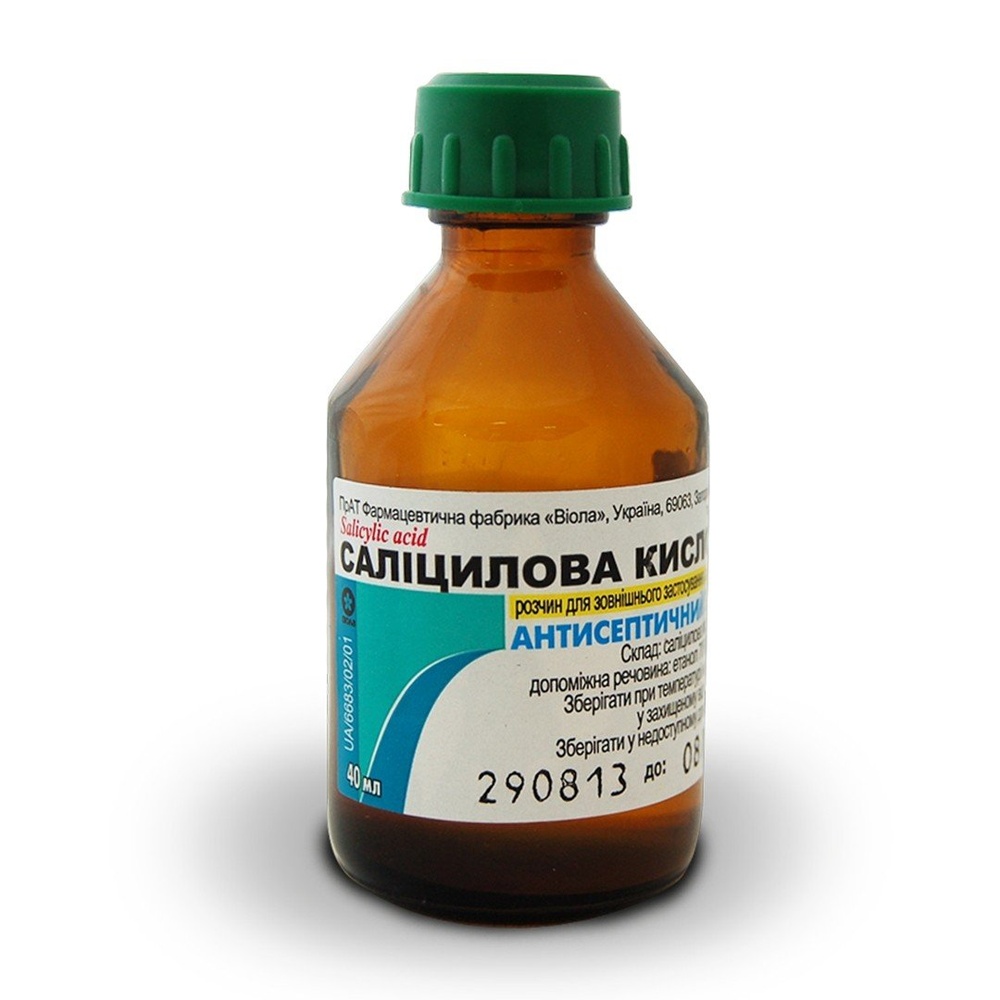
SALICILOVA KISLOTA
Ask a doctor about a prescription for SALICILOVA KISLOTA




How to use SALICILOVA KISLOTA
INSTRUCTIONS FOR MEDICAL USE OF PARACETAMOL BABY MEDICINE
Composition
active substance: paracetamol; 5 ml of the preparation contain 120 mg of paracetamol; excipients: sorbitol (E 420); citric acid, monohydrate; glycerin; methylparaben (E 218); propylparaben (E 216); xanthan gum; strawberry flavor, containing propylene glycol, flavoring substances (natural, identical to natural); purified water.
Pharmaceutical Form
Oral suspension.
Main Physico-Chemical Properties
Viscous suspension of white color with white crystals and a fruity smell.
Pharmacotherapeutic Group
Analgesics and antipyretics. Paracetamol. ATC Code N02B E01.
Pharmacological Properties
Pharmacodynamics
The analgesic and antipyretic effect of paracetamol is due to the inhibition of prostaglandin synthesis and the predominant effect on the thermoregulation center in the hypothalamus.
Pharmacokinetics
Paracetamol is well absorbed in the gastrointestinal tract. The peak concentration in plasma occurs 20-30 minutes after administration. It is metabolized in the liver with the formation of glucuronide and sulfate of paracetamol. It is excreted mainly by the kidneys. The half-life is from 1 to 4 hours.
Clinical Characteristics
Indications
Pain during teething, toothache, sore throat, fever in colds, flu, and childhood infections, such as chickenpox, whooping cough, measles, mumps. The drug is also recommended for the treatment of post-vaccination hyperthermia in infants from 3 months old.
Contraindications
Increased sensitivity to the components of the drug, severe liver or kidney dysfunction, congenital hyperbilirubinemia, glucose-6-phosphate dehydrogenase deficiency, alcoholism, blood diseases, Gilbert's syndrome, pronounced anemia, leukopenia. Age under 3 months.
Interaction with Other Medicinal Products and Other Types of Interactions
The rate of absorption of paracetamol may increase when used concurrently with metoclopramide and domperidone, and decrease with cholestyramine. The anticoagulant effect of warfarin and other coumarins may be enhanced with concurrent long-term use of paracetamol. Periodic intake has no significant effect. Barbiturates reduce the antipyretic effect of paracetamol. Anticonvulsant drugs (including phenytoin, barbiturates, carbamazepine), which stimulate the activity of microsomal liver enzymes, may enhance the toxic effect of paracetamol on the liver due to the increased conversion of the drug to hepatotoxic metabolites. When paracetamol is used concurrently with hepatotoxic agents, the toxic effect of the drug on the liver increases. Concurrent use of high doses of paracetamol with isoniazid increases the risk of developing hepatotoxic syndrome. Paracetamol reduces the effectiveness of diuretics. It is recommended to be cautious when using paracetamol with flucloxacillin, as such concurrent use is associated with metabolic acidosis with a high anion gap, especially in patients with risk factors (see "Special Instructions" section). Do not use concurrently with alcohol. High concentrations of paracetamol can affect laboratory results of glucose determination in blood by the oxidase-peroxidase method, uric acid when using the method with phosphotungstic acid.
Special Instructions
Do not use the drug with any other drugs containing paracetamol, used, for example, to reduce temperature, treat pain, symptoms of flu and colds, as well as insomnia. Concurrent use with other drugs containing paracetamol can lead to overdose. Overdose of paracetamol can cause liver failure, which can lead to the need for liver transplantation or be fatal. In case of liver or kidney disease, or decreased glutathione level, it is necessary to consult a doctor before using the drug. It should be taken into account that in patients with liver disease, the risk of hepatotoxic action of paracetamol increases. Treatment should be stopped if acute viral hepatitis is detected. There have been cases of liver dysfunction/liver failure in patients who had a decreased glutathione level, for example, in severe exhaustion, anorexia, low body mass index, chronic alcoholism, or sepsis. It is recommended to be cautious when using paracetamol with flucloxacillin due to the increased risk of metabolic acidosis with a high anion gap, especially in patients with severe kidney failure, sepsis, malnutrition, and other causes of glutathione deficiency (e.g., chronic alcoholism), as well as when using maximum daily doses of paracetamol. It is recommended to carefully monitor, including measuring the content of 5-oxoproline in urine. Symptoms of metabolic acidosis are deep, rapid, or difficult breathing, nausea, vomiting, loss of appetite. It is necessary to immediately consult a doctor if these symptoms appear. If symptoms do not disappear or worsen after 3 days of taking the drug, it is necessary to consult a doctor. If the glomerular filtration rate is less than 10 ml/min, the interval between taking the drug should be increased to 8 hours. Too long use of the drug or its use in high doses can lead to liver and kidney dysfunction, as well as changes in blood composition. Each 120 mg/5 ml of suspension contains 2 g of sorbitol per 5 ml of suspension. If the patient has intolerance to some sugars, it is necessary to consult a doctor before taking this drug. The presence of methylparaben (E 218) and propylparaben (E 216) in the composition may cause allergic reactions (possibly delayed).
Use During Pregnancy or Breastfeeding
The drug is intended for use in children.
Ability to Affect Reaction Speed When Driving or Operating Other Mechanisms
The drug is intended for use in children. It is not expected to affect reaction speed when working with machines or other mechanisms.
Method of Administration and Dosage
The drug is intended for oral administration. Before use, it is necessary to shake the bottle for 10 seconds or make the suspension uniform by rubbing the sachet. Do not exceed the recommended dose. It is necessary to use the lowest dose of the drug that is necessary to achieve a therapeutic effect. The interval between doses should be at least 4 hours.
For Relief of Post-Vaccination Reaction
For children from 3 months to 12 years old: a single dose of paracetamol is 10-15 mg/kg of body weight, the maximum daily dose is 60 mg/kg of body weight. If a second dose is necessary, it can be taken no earlier than 4 hours later. If the elevated temperature continues after the second intake, it is necessary to consult a doctor.
In Other Cases of Pain and Fever
For children from 3 months to 12 years old: a single dose of paracetamol is 10-15 mg/kg of body weight. If a second dose is necessary, it can be taken no earlier than 4 hours later, the maximum daily dose is 60 mg/kg of body weight. It is not recommended to take more than 4 doses within 24 hours. The maximum duration of use without consulting a doctor is 3 days.
The approximate dosage of the drug depending on the child's weight and age is given in the table below, but in any case, it is necessary to ensure that the dosage does not exceed 10-15 mg of paracetamol per kilogram of the child's weight.
| Body Weight, kg | Age | Single Dose, ml |
|---|---|---|
| 6-8 | 3-6 months | 3.5-4 |
| 8-10 | 6-12 months | 4.5-5 |
| 10-13 | 1-2 years | 6-6.5 |
| 13-15 | 2-3 years | 7-8 |
| 15-21 | 3-6 years | 9-10 |
| 21-29 | 6-9 years | 13-14 |
| 29-42 | 9-12 years | 18-19 |
In Case of Kidney or Liver Dysfunction in a Child
It is necessary to consult a doctor before using the drug. This is due to the presence of paracetamol in the composition of the drug.
For Convenient Dosing of the Suspension
The measuring device has marks from 0 to 5 ml. If it is necessary to measure a dose that is more than 5 ml, measure the first 5 ml of the suspension, and then the rest of the dose. When using the suspension in a dose that is a multiple of 5 ml or 10 ml, it is possible to use the drug in the form of sachets.
Children
The drug is not recommended for use in children under 3 months old. It is recommended to use the drug in children from 3 months to 12 years old.
Overdose
Overdose of paracetamol can cause liver failure, which can lead to the need for liver transplantation or be fatal. Experience shows that clinical signs of liver damage after paracetamol overdose usually appear within 24-48 hours after overdose and reach a maximum within 4-6 days. In case of overdose, immediate medical attention is necessary. Treatment should be started immediately, and the patient should be taken to the hospital, even if there are no early symptoms of overdose, since liver damage can develop later. It is recommended to consider treatment with N-acetylcysteine or methionine. Symptoms of overdose in the first 24 hours: pallor, nausea, vomiting, loss of appetite, and abdominal pain. There may be disturbances in glucose metabolism and metabolic acidosis. In severe poisoning, liver failure can progress to encephalopathy, hemorrhages, hypoglycemia, coma, and be fatal. Acute kidney failure with acute tubular necrosis can manifest as severe back pain, hematuria, proteinuria, and develop even in the absence of severe liver damage. Cardiac arrhythmias and pancreatitis, usually accompanied by liver dysfunction and hepatotoxicity, have also been reported. With prolonged use of the drug in high doses, aplastic anemia, pancytopenia, agranulocytosis, neutropenia, leukopenia, thrombocytopenia may develop from the side of the hematopoietic organs. When taking high doses from the side of the central nervous system, dizziness, psychomotor agitation, and disorientation are possible; from the side of the urinary system, nephrotoxicity (kidney colic, interstitial nephritis, capillary necrosis). Symptoms may be limited to nausea and vomiting or may not reflect the severity of the overdose or the risk of organ damage. In case of overdose, immediate medical attention is necessary. Treatment for overdose or even suspected overdose should be started immediately, for which the patient should be taken to the hospital, even if there are no early symptoms of overdose, since liver damage can develop later.
Adverse Reactions
Adverse reactions to paracetamol are rare.
From the Immune System
Anaphylaxis, hypersensitivity reactions, including skin itching, rash on the skin and mucous membranes (usually generalized rash, erythematous rash, urticaria), angioedema, multiform exudative erythema (including Stevens-Johnson syndrome), toxic epidermal necrolysis (Lyell's syndrome).
From the Gastrointestinal System
Nausea, abdominal pain. The drug may have a mild laxative effect.
From the Endocrine System
Hypoglycemia up to hypoglycemic coma.
From the Blood and Lymphatic System
Thrombocytopenia, agranulocytosis, anemia, sulfhemoglobinemia, and methemoglobinemia (cyanosis, dyspnea, chest pain), hemolytic anemia, bruising or bleeding.
From the Respiratory System
Bronchospasm in patients sensitive to acetylsalicylic acid and other nonsteroidal anti-inflammatory drugs (NSAIDs).
From the Hepatobiliary System
Liver dysfunction, increased liver enzyme activity, usually without the development of jaundice, hepatonecrosis.
From the Cardiovascular System
Decreased blood pressure.
From the Kidneys and Urinary System
Aseptic pyuria, kidney colic.
Shelf Life
3 years.
Storage Conditions
Store in the original packaging at a temperature not exceeding 25°C. Do not freeze. Store in a place inaccessible to children.
Packaging
100 ml in a bottle with a dosing device in a box; 5 ml or 10 ml in sachets No. 20 in a box.
Release Category
Over-the-counter (OTC).
Manufacturer
Limited Liability Company "Pharmaceutical Company "Zdorov'ya"."
Location of the Manufacturer and Address of the Place of Its Activity
Ukraine, 61013, Kharkiv region, city of Kharkiv, Shevchenko street, 22.
- Country of registration
- Active substance
- Prescription requiredNo
- Manufacturer
- This information is for reference only and does not constitute medical advice. Always consult a licensed doctor before taking any medication. Oladoctor is not responsible for medical decisions based on this content.
- Alternatives to SALICILOVA KISLOTADosage form: solution, 1% in 40 ml vialsActive substance: salicylic acidManufacturer: ТОВ "ТернофармPrescription not requiredDosage form: solution, 1% in 25ml or 40ml bottlesActive substance: salicylic acidManufacturer: ТОВ "Фарма ЧеркасPrescription not requiredDosage form: solution, 1% alcoholic, 40 ml in bottlesActive substance: salicylic acidManufacturer: ТОВ "ДКП "Фармацевтична фабрикаPrescription not required
Alternatives to SALICILOVA KISLOTA in other countries
The best alternatives with the same active ingredient and therapeutic effect.
Alternative to SALICILOVA KISLOTA in Spain
Online doctors for SALICILOVA KISLOTA
Discuss dosage, side effects, interactions, contraindications, and prescription renewal for SALICILOVA KISLOTA – subject to medical assessment and local rules.

Get updates and exclusive offers
Be the first to know about new services, marketplace updates, and subscriber-only promos.

