


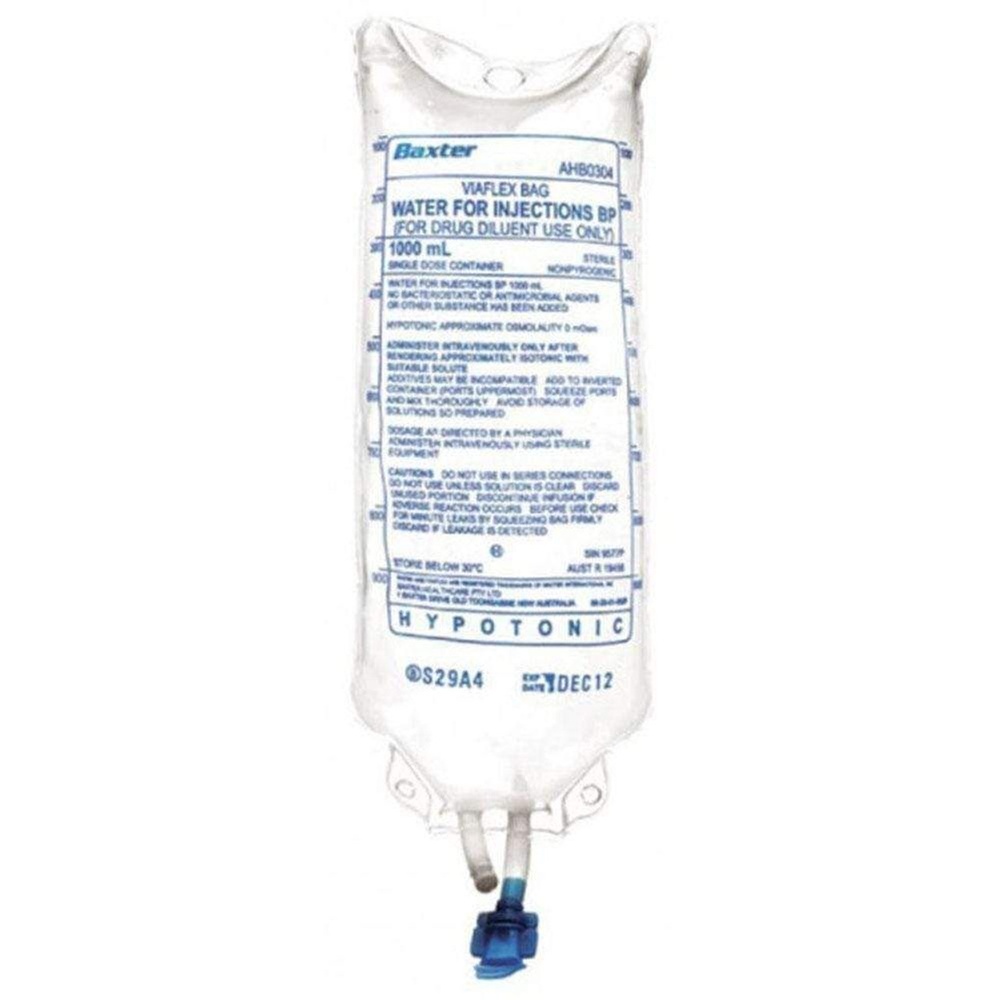
VIAFLEX GLUCOSE BAXTER 20% PERFUSION SOLUTION
Ask a doctor about a prescription for VIAFLEX GLUCOSE BAXTER 20% PERFUSION SOLUTION




How to use VIAFLEX GLUCOSE BAXTER 20% PERFUSION SOLUTION
Introduction
PACKAGE LEAFLET: INFORMATION FOR THE USER
Viaflex Glucose Baxter 20%solution for infusion
Active ingredient: Glucose
Read all of this leaflet carefully before you are given this medicine because it contains important information for you.
- Keep this leaflet, you may need to read it again.
- If you have any further questions, ask your doctor, pharmacist or nurse.
- If you experience any side effects, talk to your doctor, pharmacist or nurse, even if it is not listed in this leaflet. See section 4.
Contents of the pack:
- What Viaflex Glucose 20% is and what it is used for
- What you need to know before you are given Viaflex Glucose 20%
- How Viaflex Glucose 20% is given
- Possible side effects
- Storage of Viaflex Glucose 20%
- Contents of the pack and other information
1. What Viaflex Glucose 20% is and what it is used for
Viaflex Glucose 20% is a solution of sugar (glucose) in water. Glucose is one of the main sources of energy for the body. This solution for infusion provides 800 kilocalories per liter.
Viaflex Glucose 20% is used to:
- provide a source of carbohydrates (sugar) alone or, if required, for parenteral nutrition. Parenteral nutrition is used to feed patients who cannot eat. It is given by infusion (slow injection) through a vein.
- prevent or treat low blood sugar levels (hypoglycaemia)
- provide the patient with extra fluid when the body does not have enough water (dehydration) and needs extra carbohydrates (sugar).
as a support solution for administering other compatible medicines.
2. What you need to know before you are given Viaflex Glucose 20%
Viaflex Glucose 20% should not be given to you if you have any of the following conditions:
- if you are allergic to the active ingredient or any of the other ingredients of this medicine (listed in section 6).
- if you have untreated diabetes, so that the blood glucose concentration is higher than normal (uncontrolled diabetes),
- loss of consciousness (hyperosmolar coma). This is a type of coma that can occur if you have diabetes and do not receive adequate medication,
- thinning of the blood due to the addition of too much fluid (haemodilution),
- when there is too much fluid in the body's extracellular spaces (extracellular hyperhydration),
- when there is more blood in the blood vessels than there should be (hypervolaemia),
- high blood glucose levels (hyperglycaemia),
- high blood lactate levels (hyperlactataemia),
- severe kidney failure (when the kidneys do not work well and dialysis is needed)
- uncontrolled heart failure. If heart failure has not been adequately treated and causes symptoms such as:
- difficulty breathing,
- swelling of the ankles,
- if there is fluid accumulation under the skin, affecting the whole body, including the brain and lungs (generalized edema),
- liver disease that causes fluid accumulation in the abdomen (ascitic cirrhosis),
- any other condition that affects the way your body controls blood sugar levels,
- intolerance (hypersensitivity) to glucose, which can occur in patients with corn allergy.
Viaflex Glucose 20% should not be given to you if you have had a head injury in the last 24 hours.
If another medicine is added to your infusion solution, read the leaflet for that medicine. This will ensure that you can take that medicine.
Warnings and precautions
Viaflex Glucose 20% is a hypertonic (concentrated) solution. Your doctor will take this into account when calculating the amount of solution to be given to you.
If you develop or have developed any of the following conditions, tell your doctor.
- Diabetes,
- kidney failure,
- a life-threatening condition (critical illness),
- tell your doctor if you have had a head injury in the last 24 hours,
- increased pressure inside the skull (intracranial hypertension),
- stroke due to a blood clot in a blood vessel (cerebral stroke),
- heart disease (heart failure),
- lung disease (respiratory failure),
- reduced urine production (oliguria or anuria),
- excess water in the body (water intoxication),
- low sodium levels in the blood (hyponatraemia),
- allergy to corn (Viaflex Glucose 20% contains corn-derived sugar).
- If you have a condition that could cause high levels of vasopressin, a hormone that regulates fluid in your body. You may have too much vasopressin in your body because, for example:
- you have had a sudden and severe illness,
- you are in pain,
- you have had surgery,
- you have infections, burns or head injury
- you have diseases related to your heart, liver, kidneys or central nervous system,
- you are taking certain medicines (see Other medicines and Viaflex Glucose 20%).
This can increase the risk of low sodium levels in the blood and can cause headache, nausea, seizures, lethargy, coma, brain swelling and death. Brain swelling increases the risk of death and brain damage. People at higher risk of brain swelling are:
- children
- women (particularly if they are of childbearing age)
- people who have problems with their brain fluid levels, for example, due to meningitis, bleeding in the skull or a head injury.
When you receive this infusion, your doctor will monitor:
- the amount of electrolytes such as sodium and potassium in your blood (your plasma electrolytes),
- the amount of sugar (glucose),
- the amount of fluid in your body (your fluid balance),
- the acidity of your blood and urine (changes in acid-base balance).
Your doctor will adjust the amount of infusion solution to be given according to the results of the tests. These tests will indicate to your doctor if you need extra potassium, a blood chemical. If necessary, it can be given intravenously.
Since Viaflex Glucose 20% contains sugar (glucose), it can cause high blood sugar levels (hyperglycaemia). If this happens, your doctor may:
- adjust the infusion rate,
- give you insulin to lower your blood sugar levels,
- if necessary, give you extra potassium.
This is very important:
- if you have diabetes,
- if your kidneys do not work as well as normal,
- if you have recently had a stroke (acute ischaemic stroke). High blood sugar levels can worsen the effects of the stroke and affect recovery,
- if you have metabolic disorders due to starvation or a diet that does not provide the right balance of necessary nutrients (malnutrition),
- if you have low levels of thiamine (vitamin B1). This can happen if you have chronic alcoholism.
This solution should not be given using the same needle as a blood transfusion, as it could damage the red blood cells or cause them to clump together.
Your doctor will take into account if you are receiving parenteral nutrition (nutrition given by infusion into a vein). During long-term treatment with Viaflex Glucose 20%, you may need to receive extra nutrition.
To reduce the risk of low blood sugar levels, your doctor may change the rate at which you receive parenteral nutrition.
Depending on your specific situation, nutrients such as vitamins, minerals, proteins and fats may be added to the parenteral nutrition to prevent problems and help meet your daily needs.
To reduce the risk of high blood sugar levels, your doctor may need to adjust the components of the parenteral nutrition as necessary.
Some patients' livers may work too hard while receiving parenteral nutrition. Your doctor may request laboratory tests to see how your liver is responding and/or may change your parenteral nutrition based on how you respond.
While receiving parenteral nutrition, you may be at risk of infection. Keeping the nutrition bag and tubes that go into your body clean can help reduce the risk of infection.
As sugar-like crystals can form in the nutrition bags, it is a good idea to closely inspect the liquid in the bag and the tube to make sure there are no sugar-like crystals. Do not use the nutrition bag if you see sugar-like crystals.
If you have difficulty breathing, seek help immediately.
Children
Viaflex Glucose 20% should be given to children with special care.
Children should receive Viaflex Glucose 20% from a doctor or nurse. The amount given will be determined by a doctor specialized in the treatment of children and will depend on the child's age, weight and condition. If it is used to administer or dilute another medicine, or if other medicines are given at the same time, the dose may also be affected.
When the infusion is given to children, your doctor will take blood and urine samples to monitor the amount of electrolytes such as potassium in the blood (plasma electrolytes).
Newborns - especially premature and low-birth-weight babies - are at higher risk of developing low or high blood sugar levels (hypo- or hyperglycaemia). Therefore, they need close monitoring during treatment with glucose solutions given intravenously, to ensure adequate control of blood sugar levels and prevent possible long-term side effects. Low blood sugar levels in newborns can cause prolonged seizures, coma and brain damage. High blood sugar levels can cause brain haemorrhages, bacterial or fungal infections, eye damage (retinopathy of prematurity), intestinal infections (necrotizing enterocolitis), lung problems (bronchopulmonary dysplasia), prolonged hospital stay and death.
When given to a newborn, the solution bag may be connected to an infusion pump device, which allows for the exact administration of the required amount over a defined time interval. Your doctor or nurse will be monitoring the device to ensure safe administration.
Children (including newborns and older children) who receive Viaflex Glucose 20% are at higher risk of having low sodium levels in the blood (hyponatraemic hypo-osmolar syndrome) and a condition that affects the brain due to low blood sodium levels (hyponatraemic encephalopathy).
Other medicines and Viaflex Glucose 20%
Tell your doctor or pharmacist if you are using, have recently used or might use any other medicines.
Viaflex Glucose 20% and any other medicines taken at the same time may affect each other.
Do not use Viaflex Glucose 20% with certain hormones (catecholamines) including adrenaline or steroids as they increase blood sugar levels.
Consult your doctor if you are taking corticosteroids (medicines that reduce inflammation), corticotropin or diabetes medicines.
Some medicines affect the hormone vasopressin. These may include:
- anti-diabetic medication (chlorpropamide)
- cholesterol medication (clofibrate)
- certain cancer medicines (vincristine, ifosfamide, cyclophosphamide)
- selective serotonin reuptake inhibitors (used to treat depression)
- antipsychotics or opioids for severe pain relief
- medicines for pain and/or inflammation (also known as NSAIDs)
- medicines that mimic or enhance the effects of vasopressin, such as desmopressin (used to treat increased thirst and urination), terlipressin (used to treat bleeding from the oesophagus) and oxytocin (used to induce labour)
- antiepileptic medicines (carbamazepine and oxcarbazepine)
- diuretics
Using Viaflex Glucose 20% with food and drink
You should ask your doctor what you can eat or drink.
Pregnancy, breast-feeding and fertility
If you are pregnant or breast-feeding, think you may be pregnant or are planning to have a baby, ask your doctor for advice before taking this medicine.
Pregnancy
Viaflex Glucose 20% can be used during pregnancy. However, caution should be exercised when using a glucose solution during labour.
Fertility
There is not enough data on the effect of glucose on fertility, although no effect is expected.
Breast-feeding
There is not enough data on the use of a glucose solution during breast-feeding, although no effect is expected. Viaflex Glucose 20% can be used during breast-feeding.
However, if another medicine is added to the infusion solution during pregnancy or breast-feeding, you should:
- Consult your doctor.
- Read the leaflet for the medicine that is to be added.
Driving and using machines
Viaflex Glucose 20% does not affect your ability to drive or use machines.
3. How Viaflex Glucose 20% is given
Viaflex Glucose 20% will be given to you by a doctor or nurse. Your doctor will decide how much you need and when it should be given. This will depend on your age, weight, physical condition and the reason for the treatment. The amount you receive may also be affected by other treatments you are receiving.
You should not receive Viaflex Glucose 20% if there are particles floating in the solution or if the container is damaged in any way.
Generally, Viaflex Glucose 20% is given through a plastic tube connected to a large vein in your chest. However, your doctor may give you the medicine in a different way.
Viaflex Glucose 20% should be given slowly to prevent excessive urine production (osmotic diuresis).
Before and during the infusion, your doctor will monitor:
- the amount of fluid in your body
- the acidity of your blood and urine
- the amount of electrolytes in your body (particularly sodium, in patients with high levels of the hormone vasopressin, or who are taking other medicines that increase the effect of vasopressin).
Any unused solution should be discarded. You should not receive Viaflex Glucose 20% from a started bag.
If you receive more Viaflex Glucose 20% than you should
If you receive too much Viaflex Glucose 20% (overdose) or if it is given too quickly or too frequently, the following symptoms may occur:
- fluid accumulation in the tissues, causing swelling (edema) or water intoxication, with low sodium levels in the blood (hyponatraemia),
- high blood sugar levels (hyperglycaemia),
- excessive blood concentration (hyperosmolarity),
- glucose in the urine (hyperglycosuria),
- increased urine production (osmotic diuresis),
- water loss in the body (dehydration),
If you develop any of these symptoms, tell your doctor immediately. Your infusion will be stopped and you will receive treatment according to your symptoms.
If another medicine has been added to Viaflex Glucose 20% before the overdose, that medicine may also cause symptoms. You should read the list of possible symptoms in the leaflet for the added medicine.
In case of overdose or accidental ingestion, contact the Toxicology Information Service. Telephone 915.620.420
Stopping the infusion of Viaflex Glucose 20%
Your doctor will decide when you should stop this infusion.
If you have any further questions on the use of this product, ask your doctor or pharmacist.
4. Possible Adverse Effects
Like all medicines, this medicine may cause adverse effects, although not all people suffer from them.
If you consider that any of the adverse effects you suffer from is serious or if you notice any adverse effect not mentioned in this prospectus, inform your doctor or pharmacist. They may be signs of a very serious or even fatal allergic reaction (hypersensitivity):
Adverse effects may include:
- Hypersensitivity reactions, including a severe allergic reaction called anaphylaxis (potential manifestation in patients with corn allergy),
- difficulty breathing,
- inflammation of the skin of the face and lips or inflammation of the throat,
- fever,
- hives (urticaria),
- skin rash,
- redness of the skin (cutaneous erythema),
- chills,
- changes in blood electrolyte levels (electrolyte disturbances), including
- low sodium levels in the blood that can be acquired during hospitalization (nosocomial hyponatremia) and related neurological disorder (acute hyponatremic encephalopathy). Hyponatremia can cause irreversible brain damage and death due to brain edema/inflammation (see also the "Warnings and Precautions" section).
- low potassium levels in the blood (hypokalemia),
- low magnesium levels in the blood (hypomagnesemia),
- low phosphate levels in the blood (hypophosphatemia),
- high blood sugar levels (hyperglycemia),
- excess fluid in the blood vessels (hemodilution and hypervolemia),
- sugar in the urine (glucosuria),
- reactions related to the administration route:
- fever, febrile reaction (pyrexia),
- sweating,
- infection at the injection site,
- leakage of the perfusion solution to the surrounding tissues (extravasation). This can damage tissues and cause scarring,
- formation of a clot (thrombosis) at the perfusion site, which causes pain, inflammation, or redness in the area of the clot,
- irritation and inflammation of the vein through which the perfusion is performed (phlebitis). It can cause redness, pain, or itching or swelling in the perfusion vein,
- local reaction or pain (redness or swelling at the perfusion site),
If any adverse effect occurs, the perfusion should be stopped.
You will be prescribed treatment according to the symptoms.
If a medicine has been added to the perfusion solution, it may also cause adverse effects. These will depend on the medicine that has been added. You should read the prospectus of that medicine to obtain a list of possible symptoms.
Adverse Effect Notification
If you experience any type of adverse effect, consult your doctor or nurse, even if it is a possible adverse effect that does not appear in this prospectus. You can also report it directly through the Spanish Pharmacovigilance System for Human Use Medicines: https://www.notificaram.es. By reporting adverse effects, you can contribute to providing more information on the safety of this medicine.
5. Storage of Viaflex Glucose 20%
Keep this medicine out of sight and reach of children.
Do not store at a temperature above 25°C.
Do not use this medicine after the expiration date that appears on the bag and on the box after the expiration date. The expiration date is the last day of the month indicated.
Viaflex Glucose 20% should not be administered if there are floating particles in the solution or if the unit is damaged in any way.
6. Package Contents and Additional Information
Viaflex Glucose 20% Composition
The active ingredient is sugar (glucose): 20 g per liter.
The other component is water for injectable preparations.
Product Appearance and Package Contents
Viaflex Glucose 20% is a clear solution, without visible particles. It is supplied in PVC plastic bags (Viaflex). Each bag is wrapped with a sealed protective plastic overbag.
The bag sizes are:
- 250 ml
- 500 ml
- 1000 ml
The bags are supplied in cardboard boxes. Each cardboard box contains one of the following quantities:
- 20 bags of 250 ml
- 20 bags of 500 ml
- 10 bags of 1000 ml
Only some package sizes may be marketed.
Marketing Authorization Holder and Manufacturer
Marketing Authorization Holder:
Baxter, S.L.
Pouet de Camilo 2, 46394 Ribarroja del Turia
Manufacturer:
Baxter S.A.
Boulevard René Branquart, 80 7860 Lessines
Belgium
Date of the last revision of this prospectus in February 2020.
Detailed and updated information on this medicine is available on the website of the Spanish Agency for Medicines and Health Products (AEMPS) http://www.aemps.gob.es/
-----------------------------------------------------------------------------------------------------------------------------
This information is intended only for healthcare professionals:
Special Precautions for Disposal and Other Handling:
The solution should be administered with sterile equipment that includes a filter using an aseptic technique. The equipment should be primed with the solution to prevent air from entering the system.
Use only if the solution is clear, without visible particles, and if the packaging is not damaged. Administer immediately after inserting the perfusion equipment.
Do not remove the unit from the overbag until it is ready for use. The inner bag maintains the product's sterility.
Do not connect plastic containers in series. This type of use can produce gas embolisms due to residual air dragged from the primary container before the liquid contained in the secondary container is completely administered.
Disposal of unused medicine and all materials that have come into contact with it will be carried out in accordance with local regulations
Discard after single use
Discard any remaining portion.
Do not reconnect partially used bags.
1- To open
a- Remove the bag from the protective overbag immediately before use.
b- Check for small leaks by squeezing the inner bag firmly. If leaks are detected, discard the solution, as it may not be sterile.
c- Check the transparency of the solution and the absence of foreign particles. Discard the solution if it is not transparent or contains foreign particles.
2- Preparation for administration
Use sterile material for preparation and administration.
a- Hang the container by the handle
b- Remove the plastic protector from the outlet port at the bottom of the container.
- hold the small wing of the neck of the outlet tube with one hand.
- hold the large wing of the closure cap with the other hand and turn.
- the cap will come off.
c- Use an aseptic technique to prepare the perfusion
d- Connect the administration equipment. Consult the instructions accompanying the equipment for connection, priming, and administration of the solution.
3- Techniques for injecting added medication
Warning: Added medications may be incompatible.To add medication before administration
a Disinfect the injection point
b Using a syringe with a 19G to 22G needle, puncture the resealable injection point and inject.
c Mix the medication and solution carefully. For high-density medications, such as potassium chloride, gently move the tubes while they are in a vertical position and mix.
Precaution: do not store bags with added medication.
To add medication during administration
a Close the equipment clamp
b Disinfect the injection point
c Using a syringe with a 19G to 22G needle, puncture the resealable injection point and inject.
d Remove the container from the IV stand and/or turn it to put it in a vertical position.
e Empty both tubes by gently tapping them while the container is in a vertical position
f Mix the solution and medication carefully
g Put the container back in the use position, open the clamp again, and continue administration
- Expiry in use (additives)
The chemical and physical stability of medications added to the pH of Viaflex Glucose 20% in the Viaflex container must be determined before use.
From a microbiological point of view, the diluted product must be used immediately unless the reconstitution has been carried out under controlled and validated aseptic conditions. If it is not used immediately, the conditions and storage times used are the responsibility of the user.
- Incompatibilities of added medications
The glucose solution should not be administered simultaneously with, before, or after a blood transfusion through the same perfusion equipment, as it could cause hemolysis and clot formation.
The incompatibility of the medications to be added with Viaflex Glucose 20% should be evaluated before adding them.
In the absence of incompatibility studies, this product should not be mixed with others.
The prospectus of the medication to be added should be consulted.
Before adding a medication, verify that it is soluble and stable in water within the pH range of Viaflex Glucose 20% (pH 3.2 to 6.5).
When compatible medication is added to Viaflex Glucose 20%, the solution should be administered immediately.
Medications that are not compatible should not be used.
- Country of registration
- Active substance
- Prescription requiredYes
- Manufacturer
- This information is for reference only and does not constitute medical advice. Always consult a licensed doctor before taking any medication. Oladoctor is not responsible for medical decisions based on this content.
- Alternatives to VIAFLEX GLUCOSE BAXTER 20% PERFUSION SOLUTIONDosage form: INJECTABLE INFUSION, 50 g glucoseActive substance: carbohydratesManufacturer: Fresenius Kabi España, S.A.U.Prescription requiredDosage form: INJECTABLE PERFUSION, 11 gActive substance: carbohydratesManufacturer: Fresenius Kabi España, S.A.U.Prescription requiredDosage form: INJECTABLE INFUSION, Glucose Monohydrate 5.5 gActive substance: carbohydratesManufacturer: Fresenius Kabi España, S.A.U.Prescription required
Alternatives to VIAFLEX GLUCOSE BAXTER 20% PERFUSION SOLUTION in other countries
The best alternatives with the same active ingredient and therapeutic effect.
Alternative to VIAFLEX GLUCOSE BAXTER 20% PERFUSION SOLUTION in Poland
Online doctors for VIAFLEX GLUCOSE BAXTER 20% PERFUSION SOLUTION
Discuss dosage, side effects, interactions, contraindications, and prescription renewal for VIAFLEX GLUCOSE BAXTER 20% PERFUSION SOLUTION – subject to medical assessment and local rules.









Get updates and exclusive offers
Be the first to know about new services, marketplace updates, and subscriber-only promos.

