


LABRYCOR 0.2 mg/ml CONCENTRATE FOR INFUSION SOLUTION



How to use LABRYCOR 0.2 mg/ml CONCENTRATE FOR INFUSION SOLUTION
Translated with AI
This page provides general information and does not replace a doctor’s consultation. Always consult a doctor before taking any medication. Seek urgent medical care if symptoms are severe.
Show originalContents of the leaflet
Introduction
Patient Information Leaflet
Labrycor0.2 mg/ml concentrate for solution for infusion EFG
isoprenaline hydrochloride
Read all of this leaflet carefully before you start using this medicine because it contains important information for you.
- Keep this leaflet, you may need to read it again.
- If you have any further questions, ask your doctor or nurse.
- This medicine has been prescribed for you only. Do not pass it on to others. It may harm them, even if their signs of illness are the same as yours.
- If you get any side effects, talk to your doctor or nurse. This includes any possible side effects not listed in this leaflet. See section 4.
Contents of the pack
- What is Labrycor and what is it used for
- What you need to know before you use Labrycor
- How to use Labrycor
- Possible side effects
- Storage of Labrycor
- Contents of the pack and other information
1. What is Labrycor and what is it used for
Labrycor contains the active substance isoprenaline, which has a stimulating effect on part of the nervous system (sympathomimetic). Among other things, isoprenaline causes an increase in heart rate, an increase in cardiac contractility, and dilation of blood vessels, which reduces blood pressure.
Labrycor is used to treat:
- slow heart rate in patients awaiting pacemaker implantation or when a pacemaker is contraindicated.
- sudden fainting with loss of consciousness caused by a decrease in heart rate (known as Stokes-Adams syndrome).

2. What you need to know before you use Labrycor
Do not use Labrycor
- if you are allergic to isoprenaline hydrochloride or any of the other ingredients of this medicine (listed in section 6).
- if you are also receiving adrenaline, a medicine used in intensive care to treat cardiac arrest.
- if you have a faster than normal heart rate.
- if your heart is under stress (atrial or ventricular hyperexcitability).
- if you have received too much of a type of medicine called cardiac glycoside, such as digoxin (digitalis), a medicine used to treat cardiac arrhythmia and heart failure.
- if you are having a heart attack (myocardial infarction).
- if you have chest pain (angina pectoris).
- if you have an irregular heartbeat (ventricular arrhythmia) that requires treatment.
Warnings and precautions
Talk to your doctor or nurse before you start using Labrycor
- if you have heart problems.
- if you have diabetes.
- if you are taking digoxin (digitalis) (another medicine that affects the heart).
- if you have hyperthyroidism. This medicine should be avoided in case of uncontrolled hyperthyroidism.
- if you have a history of seizures.
- if you have ever had a reaction to a medicine that affects the heart and circulation (belonging to the group of sympathomimetic amines).
- during treatment with this medicine, you will be monitored by ECG and the dose may be adjusted.
- if you are being treated for a reduction in blood volume in the body (shock), Labrycor can only be used once blood volume has been restored.
- precautions will be taken when the doses are high enough to achieve a heart rate above 130 beats/minute.
Other medicines and Labrycor
Tell your doctor if you are using, have recently used, or might use any other medicines.
This is especially important if you are taking any of the following medicines:
- other heart stimulants or central nervous system stimulants.
- adrenaline(a medicine used in intensive care to treat cardiac arrest).
- digitalis(another medicine that affects the heart).
- monoamine oxidase inhibitors (MAOIs), a class of medicine used to treat depression.
- antidepressants (such as imipramine).
- sulfates, such as salicylamide(a pain reliever).
- entacapone(a class of medicine used for Parkinson's disease).
- doxapram(a class of medicine used in intensive care to increase respiratory rate).
- ergotamine(a class of medicine used to treat acute migraine attacks).
- sympathomimetic vasoconstrictors (such as oxytocin).
Labrycor must not be administered under the effects of anesthesiawith chloroform, cyclopropane, or halothane, or any other halogenated anesthetic.
Pregnancy and breastfeeding
If you are pregnant or breastfeeding, think you may be pregnant, or are planning to have a baby, ask your doctor for advice before taking this medicine.
The use of isoprenaline during pregnancy should be avoided. The clinical benefits must be weighed against the potential risks to the mother and the baby.
A decision must be made whether to discontinue breastfeeding or discontinue treatment after considering the benefit of breastfeeding to the child and the benefit of treatment to the mother.
Labrycorcontains sodium
This medicine contains less than 1 mmol of sodium (23 mg) per ml; i.e., it is essentially “sodium-free”.
Driving and using machines
As this medicine will be administered to you by a healthcare professional as an emergency medicine, this section is not relevant to you.
3. How to use Labrycor
This medicine will be administered to you by a specialist doctor through intravenous infusion.
Your doctor will decide what dose is appropriate for you. The medicine will be diluted in a saline solution or an isotonic glucose solution.
Your doctor will carefully increase the dose of Labrycor while closely monitoring your heart rate.
Isoprenaline is not intended for routine use.
If you use more Labrycorthan you should
The symptoms of overdose are nausea, headache, extra heartbeats, and increased heart rate.
If you use more Labrycor than you should, contact your doctor or nurse immediately.
In case of overdose or accidental ingestion, consult the Toxicology Information Service. Phone (91) 562 04 20.
If necessary, you may be given a plasma or blood transfusion.

4. Possible side effects
Like all medicines, this medicine can cause side effects, although not everybody gets them.
Frequency not known (can affect an unknown number of people):
- increased heart rate
- heart rhythm disorders
- chest pain
- low blood pressure
- high blood pressure
- nervousness
- tremors
- dizziness
- headaches
- nausea
- feeling of weakness and sweating
Reporting of side effects
If you experience any side effects, talk to your doctor or pharmacist. This includes any possible side effects not listed in this leaflet. You can also report side effects directly via the Spanish Medicines and Healthcare Products Agency (AEMPS) website: www.notificaRAM.es. By reporting side effects, you can help provide more information on the safety of this medicine.
5. Storage of Labrycor
Keep this medicine out of the sight and reach of children.
Do not use this medicine after the expiry date which is stated on the carton and on the label of the vial, after EXP. The expiry date is the last day of the month stated.
Before opening: Do not refrigerate. Keep the vial in the outer packaging to protect it from light.
After opening: The product should be used immediately.
After dilution:
The physical and chemical stability of the diluted solution in 5% glucose or 0.9% sodium chloride has been demonstrated for 24 hours at 25°C.
From a microbiological point of view, unless the opening method precludes the risk of microbial contamination, the product should be used immediately. If not used immediately, the in-use storage times and conditions are the responsibility of the user.
Do not use this medicine if you notice visible signs of deterioration.
Medicines should not be disposed of via wastewater or household waste. Ask your pharmacist how to dispose of medicines no longer required. This will help protect the environment.
6. Contents of the pack and other information
Composition of Labrycor
The active substance is isoprenaline hydrochloride. Each ml contains 0.2 mg of isoprenaline hydrochloride.
The other ingredients are:
disodium edetate, sodium citrate dihydrate, citric acid, sodium chloride, hydrochloric acid (for pH adjustment), sodium hydroxide (for pH adjustment), and water for injections.
Appearance of Labrycor and contents of the pack
Labrycor 0.2 mg/ml concentrate for solution for infusion EFG is a clear, colorless to pale yellow solution, free from visible particles.
1 ml - Each pack contains 1 or 5 glass vials with 1 ml of concentrate for solution for infusion each.
5 ml - Each pack contains 1 or 5 glass vials with 5 ml of concentrate for solution for infusion each.
Not all pack sizes may be marketed.
Marketing authorisation holder
Macure Healthcare Limited
62 Arclight Building
Triq L-Gharbiel
Is-Swieqi
Malta
Manufacturer1
SGS Pharma Magyarorszag Kft.
Derkovits Gyula Utca 53,
Budapest XIX,1193,
Hungary
Tillomed Malta Limited
Malta Life Sciences Park,
LS2.01.06 Industrial Estate,
San Gwann, SGN 3000,
Malta
This medicine is authorised in the Member States of the European Economic Area under the following names:
France ISOPRENALINE CHLORHYDRATE TILLOMED 0.2 mg/mL, concentrate for solution perfusion
Portugal Isoprenalina Tillomed
Austria Labrycor 0.2 mg/ml Konzentrat zur Herstellung einer Infusionslösung
Belgium Labrycor 0.2 mg/ml Konzentrat zur Herstellung einer Infusionslösung
Cyprus Labrycor 0.2 mg/ml Πυκν? δι?λυμα για παρασκευ? διαλ?ματος προς ?γχυση
Czech Republic Labrycor
Denmark Xytrina
Greece Labrycor
Spain Labrycor 0.2 mg/ml concentrate for solution for infusion EFG
Finland Xytrina 0.2 mg/ml infuusiokonsentraatti, liuosta varten
Ireland Labrycor 0.2 mg/ ml concentrate for solution for infusion
Netherlands Labrycor 0.2 mg/ml Concentraat voor oplossing voor infusie
Norway Xytrina
Sweden Xytrina 0.2 mg/ml koncentrat till infusionsvätska, lösning
1 In the printed leaflet, only the actual location will be indicated
Date of last revision of this leaflet: July 2024
Detailed information on this medicine is available on the website of the Spanish Agency for Medicines and Healthcare Products (AEMPS) http://www.aemps.gob.es/
This information is intended only for healthcare professionals:
Labrycor should only be administered by specialist doctors in anesthesia, cardiology, or intensive care, in an intensive care unit or under adequate monitoring. Circulatory and respiratory functions will be closely monitored.
Isoprenaline should not be used routinely.
Intravenous route.
Dilute 10 ml of concentrate for solution for infusion (= 2.0 mg) in 500 ml of sodium chloride 9 mg/ml (0.9%) injection solution or 50 mg/ml (5%) glucose injection solution. This will give a concentration of 4 micrograms/ml of isoprenaline infusion solution. Labrycor should be carefully adjusted under close supervision to the lowest dose that achieves a heart rate of 50-60 beats per minute.
The recommended initial dose is 0.01 micrograms/kg/minute.
The dose can be increased in increments of 0.01 micrograms/kg/minute up to a maximum dose of 0.15 micrograms/kg/minute.
The infusion rate will be adjusted according to the patient's heart rate.
National and international guidelines on the proper use of isoprenaline should be followed.
Labrycor should not be injected simultaneously with adrenaline under any circumstances. However, if it is necessary to administer both medicines, they can be administered alternately every 4 hours.
After dilution in a sodium chloride 9 mg/ml (0.9%) injection solution or a glucose 50 mg/ml (5%) injection solution, the physical and chemical stability has been demonstrated for 24 hours at 25°C.
From a microbiological point of view, the diluted solutions should be used immediately. If not used immediately, the in-use storage times and conditions before use of the diluted solution will be the responsibility of the user.
- Country of registration
- Active substance
- Prescription requiredYes
- Manufacturer
- This information is for reference only and does not constitute medical advice. Always consult a doctor before taking any medication. Oladoctor is not responsible for medical decisions based on this content.
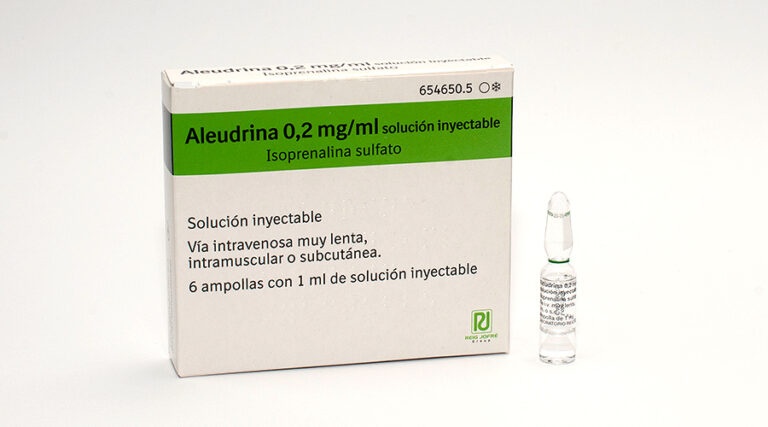
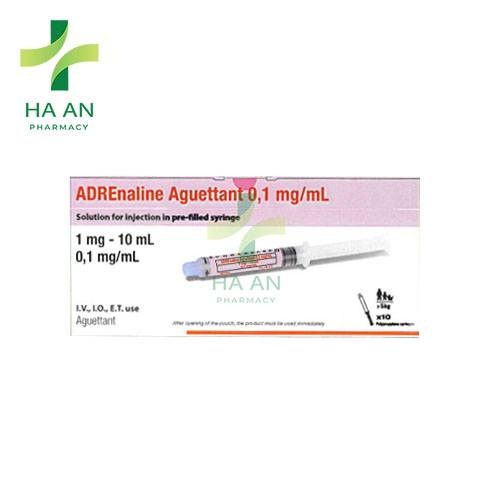
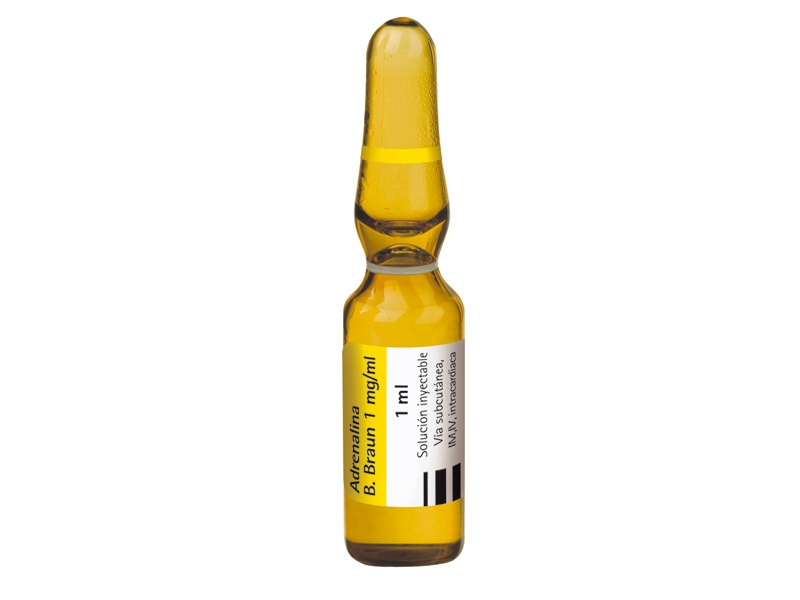
- Alternatives to LABRYCOR 0.2 mg/ml CONCENTRATE FOR INFUSION SOLUTIONDosage form: INJECTABLE, 0.2 mgActive substance: isoprenalineManufacturer: Laboratorio Reig Jofre, S.A.Prescription requiredDosage form: INJECTABLE, 1 mg/10 mlActive substance: epinephrineManufacturer: Laboratoire AguettantPrescription requiredDosage form: INJECTABLE, Epinephrine base 1 mg/mlActive substance: epinephrineManufacturer: B Braun Medical S.A.Prescription required
Online doctors for LABRYCOR 0.2 mg/ml CONCENTRATE FOR INFUSION SOLUTION
Discuss questions about LABRYCOR 0.2 mg/ml CONCENTRATE FOR INFUSION SOLUTION, including use, safety considerations and prescription review, subject to medical assessment and local regulations.







Frequently Asked Questions
