


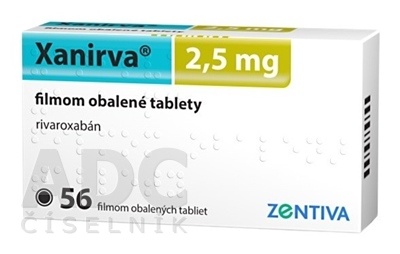
Xanirva
Ask a doctor about a prescription for Xanirva




How to use Xanirva
Leaflet accompanying the packaging: information for the user
Xanirva, 2.5 mg, hard capsules
Rivaroxaban
You should read the contents of the leaflet before taking the medicine because it contains important information for the patient.
- You should keep this leaflet so that you can read it again if you need to.
- You should consult a doctor or pharmacist if you have any further questions.
- This medicine has been prescribed specifically for you. Do not pass it on to others. The medicine may harm them, even if their symptoms are the same as yours.
- If you experience any side effects, including any possible side effects not listed in the leaflet, you should tell your doctor or pharmacist. See section 4.
Table of contents of the leaflet
- 1. What is Xanirva and what is it used for
- 2. Important information before taking Xanirva
- 3. How to take Xanirva
- 4. Possible side effects
- 5. How to store Xanirva
- 6. Contents of the packaging and other information
1. What is Xanirva and what is it used for
You have been given Xanirva because:
- you have been diagnosed with acute coronary syndrome (a group of diseases including heart attack and unstable angina, severe chest pain) and have elevated levels of cardiac biomarkers. Xanirva reduces the risk of another heart attack or reduces the risk of death due to heart or blood vessel disease in adults. Xanirva will not be given to you as the only medicine. Your doctor will also prescribe you to take:
- aspirin or
- aspirin and clopidogrel or ticlopidine.
or
- you have been diagnosed with a high risk of blood clots due to coronary artery disease or peripheral artery disease, which causes symptoms. Xanirva reduces the risk of blood clots (atherothrombotic events) in adults. Xanirva will not be given to you as the only medicine. Your doctor will also prescribe you to take aspirin. In some cases, if you are taking Xanirva after a procedure to open up a narrowed or blocked artery in your leg to restore blood flow, your doctor may also prescribe clopidogrel for you to take for a short time in addition to aspirin.
Xanirva contains the active substance rivaroxaban and belongs to a group of medicines called anticoagulants. Its action is to block the blood clotting factor (factor Xa) and thereby reduce the tendency to form blood clots.
2. Important information before taking Xanirva
When not to take Xanirva:
- -if you are allergic to rivaroxaban or any of the other ingredients of this medicine (listed in section 6);
- if you have excessive bleeding;
- if you have a disease or condition of the body that leads to an increased risk of serious bleeding (e.g. stomach ulcer, injury or bleeding into the brain, recent brain or eye surgery);
- if you are taking other medicines that prevent blood clotting (e.g. warfarin, dabigatran, apixaban or heparin), except when changing anticoagulant treatment or when heparin is given to maintain the patency of a catheter in a vein or artery;
- if you have had an acute coronary syndrome and have had bleeding or a blood clot in the brain (stroke);
- if you have coronary artery disease or peripheral artery disease and have had bleeding in the brain (stroke) or blockage of small arteries supplying blood to tissues in the deep structures of the brain (sinus thrombosis) or if you have had a blood clot in the brain (ischemic stroke) in the last month;
- if you have liver disease that leads to an increased risk of bleeding;
- if you are pregnant or breastfeeding.
Do not take Xanirva and inform your doctorif you suspect that any of the above circumstances apply to you.
Warnings and precautions
You should consult a doctor or pharmacist before taking Xanirva. Xanirva should not be taken with other blood clotting inhibitors, such as prasugrel or ticagrelor, except for aspirin, clopidogrel or ticlopidine.
When to be particularly careful when taking Xanirva
- if you have an increased risk of bleeding, such as:
- severe kidney disease, as kidney function may affect the amount of medicine acting in your body;
- taking other medicines that prevent blood clotting (e.g. warfarin, dabigatran, apixaban or heparin) when changing anticoagulant treatment or when heparin is given to maintain the patency of a catheter in a vein or artery (see "Other medicines and Xanirva");
- bleeding disorders;
- very high blood pressure that does not decrease despite taking medicines;
- stomach or intestinal diseases that may cause bleeding, such as inflammation of the intestines and stomach or esophagitis (throat and esophagus) e.g. due to gastroesophageal reflux disease (stomach acid flowing back into the esophagus) or tumors located in the stomach or intestines or genital or urinary system;
- vascular disease of the back of the eye (retinopathy);
- pulmonary disease in which the bronchi are dilated and filled with pus (bronchiectasis) or previous bleeding from the lungs;
- if you are over 75 years old;
- if you weigh less than 60 kg;
- if you have ischemic heart disease with symptoms of severe heart failure;
- in patients with prosthetic heart valves;
- in patients with antiphospholipid syndrome (immune system disorders that increase the risk of blood clots), you should inform your doctor, who will decide whether to change the treatment if necessary.
If you suspect that any of the above applies to you, you should inform your doctorbefore taking Xanirva. Your doctor will decide whether to use this medicine and whether you should be under close observation.
If you are going to have surgery:
- it is very important to take Xanirva exactly as directed by your doctor before and after surgery;
- if catheterization or spinal puncture is planned during surgery (e.g. for epidural or spinal anesthesia or to relieve pain):
- it is very important to take Xanirva exactly as directed by your doctor before and after the procedure;
- you should immediately inform your doctor if you experience numbness or weakness in your legs, bowel or bladder problems, or other symptoms after anesthesia, as immediate treatment may be necessary.
Children and adolescents
Xanirva 2.5 mg capsules are not recommended for people under 18 years of age. There is a lack of sufficient data on the use of the medicine in children and adolescents.
Xanirva and other medicines
You should tell your doctor or pharmacist about all medicines you are currently taking or have recently taken, as well as any medicines you plan to take, including those available without a prescription.
- -If you are taking:
- certain antifungal medicines (e.g. fluconazole, itraconazole, voriconazole, posaconazole), unless they are used only topically on the skin;
- ketokonazole tablets (used to treat Cushing's syndrome, in which the body produces too much cortisol);
- certain antibacterial medicines (e.g. clarithromycin, erythromycin);
- certain antiviral medicines used to treat HIV or AIDS (e.g. ritonavir);
- other medicines used to reduce blood clotting [e.g. enoxaparin, clopidogrel or vitamin K antagonists, such as warfarin and acenocoumarol, prasugrel and ticagrelor (see "Warnings and precautions")];
- anti-inflammatory and pain-relieving medicines (e.g. naproxen or aspirin);
- dronedarone, a medicine used to treat heart rhythm disorders;
- certain medicines used to treat depression (selective serotonin reuptake inhibitors (SSRIs) or serotonin and noradrenaline reuptake inhibitors (SNRIs)).
If you suspect that any of the above applies to you, you should inform your doctorbefore taking Xanirva, as the effect of Xanirva may be enhanced. Your doctor will decide whether to use this medicine and whether you should be under close observation.- -If you are taking
- certain medicines used to treat epilepsy (phenytoin, carbamazepine, phenobarbital);
- St. John's Wort (Hypericum perforatum), a herbal medicine used to treat depression;
- rifampicin, an antibiotic.
If you suspect that any of the above applies to you, you should inform your doctorbefore taking Xanirva, as the effect of Xanirva may be reduced when taken with the above medicines. Your doctor will decide whether to use Xanirva and whether you should be under close observation.Pregnancy and breastfeeding
Pregnancy and breastfeeding
Xanirva should not be taken if you are pregnant or breastfeeding. If there is a risk that you may become pregnant, you should use effective contraception while taking Xanirva. If you become pregnant while taking this medicine, you should immediately inform your doctor, who will decide on further treatment.
Driving and using machines
Xanirva may cause dizziness (frequent side effects) and fainting (uncommon side effects) (see section 4, "Possible side effects"). Patients who experience these side effects should not drive, ride a bike, or operate tools or machines.
Xanirva contains lactose monohydrate (a type of sugar), sodium, and orange yellow S (E 110).
If you have previously been diagnosed with intolerance to some sugars, you should consult your doctor before taking this medicine. The medicine contains less than 1 mmol of sodium (23 mg) per capsule, which means it is essentially "sodium-free". The excipient orange yellow S (E 110) may cause allergic reactions.
3. How to take Xanirva
This medicine should always be taken exactly as directed by your doctor. If you are unsure, you should consult your doctor or pharmacist.
How many capsules to take
The recommended dose is one 2.5 mg capsule twice a day. Xanirva should be taken at approximately the same time every day (e.g. one capsule in the morning and one in the evening). This medicine can be taken with or without food. If you have difficulty swallowing the whole capsule, you should talk to your doctor about other ways to take Xanirva. The contents of the capsule can be mixed with water or soft food, such as apple puree, immediately before taking. If necessary, your doctor may give the contents of the Xanirva capsule through a gastric tube. Xanirva will not be given to you as the only medicine. Your doctor will also prescribe you to take aspirin. If you are taking Xanirva after an acute coronary syndrome, your doctor may also prescribe clopidogrel or ticlopidine. If you are taking Xanirva after a procedure to open up a narrowed or blocked artery in your leg to restore blood flow, your doctor may also prescribe clopidogrel for you to take for a short time in addition to aspirin. Your doctor will tell you what doses to take (usually 75 to 100 mg of aspirin per day, or a daily dose of 75 to 100 mg of aspirin plus a daily dose of 75 mg of clopidogrel or a standard daily dose of ticlopidine).
When to start treatment with Xanirva
Treatment with Xanirva after an acute coronary syndrome should be started as soon as possible after stabilization of the acute coronary syndrome, at the latest 24 hours after hospitalization and when parenteral anticoagulant treatment (through injection) is normally discontinued. Your doctor will tell you when to start treatment with Xanirva if you have been diagnosed with coronary artery disease or peripheral artery disease. Your doctor will decide how long to continue treatment.
Taking a higher dose of Xanirva than recommended
If you have taken a higher dose of Xanirva than recommended, you should immediately consult your doctor. Taking too much Xanirva increases the risk of bleeding.
Missing a dose of Xanirva
You should not take a double dose to make up for a missed dose. If you have missed a dose, you should take the next dose at the usual time.
Stopping treatment with Xanirva
Xanirva should be taken regularly and for the time prescribed by your doctor. You should not stop taking Xanirva without first consulting your doctor. If you stop taking this medicine, you may increase the risk of another heart attack, stroke, or death due to heart or blood vessel disease. If you have any further questions about taking this medicine, you should consult your doctor or pharmacist.
4. Possible side effects
Like all medicines, Xanirva can cause side effects, although not everybody gets them. Like other medicines with a similar effect of reducing blood clot formation, Xanirva may cause bleeding, which can be life-threatening. Excessive bleeding may lead to a sudden drop in blood pressure (shock). The signs of bleeding may not always be obvious or visible. You should immediately inform your doctorif you experience any of the following side effects:
Signs of bleeding:
- bleeding into the brain or skull (symptoms may include headache, one-sided weakness, vomiting, seizures, decreased level of consciousness, and stiffness of the neck. A serious medical emergency. You should immediately seek medical help!),
- prolonged or heavy bleeding,
- unusual weakness, fatigue, paleness, dizziness, headache, unexplained swelling, shortness of breath, chest pain, or angina. Your doctor may decide to closely monitor you or change the treatment.
Signs of severe skin reactions
- widespread, acute skin rash, blistering, or changes in the mucous membranes, such as on the tongue or eyes (Stevens-Johnson syndrome, toxic epidermal necrolysis).
- drug reaction causing rash, fever, inflammation of internal organs, hematological disorders, and systemic disorders (DRESS syndrome). These side effects are very rare (may occur in less than 1 in 10,000 people).
Signs of a severe allergic reaction:
- swelling of the face, lips, mouth, tongue, or throat; difficulty swallowing; hives, and difficulty breathing;
a sudden drop in blood pressure. The frequency of severe allergic reactions is very rare (anaphylactic reactions, including anaphylactic shock, may occur in less than 1 in 10,000 people) and uncommon (angioedema and allergic edema may occur in 1 in 100 people).
General list of possible side effects:
Frequent(may occur in 1 in 10 people)
- decrease in red blood cell count, which may cause paleness of the skin and be the cause of weakness or shortness of breath
- bleeding from the stomach or intestine, bleeding from the urinary or genital system (including blood in the urine and heavy menstrual bleeding), nosebleeds, gum bleeding
- bleeding into the eye (including bleeding from the conjunctiva)
- bleeding into tissues or body cavities (hematoma, bruising)
- presence of blood in sputum while coughing (hemoptysis)
- bleeding from the skin or subcutaneous bleeding
- bleeding after surgery
- oozing of blood or fluid from the wound after surgery
- swelling of the limbs
- limb pain
- kidney problems (can be observed in tests performed by your doctor)
- fever
- stomach pain, nausea (nausea), vomiting, constipation, diarrhea
- low blood pressure (symptoms may include dizziness or fainting when standing up)
- general weakness and lack of energy (weakness, fatigue), headache, dizziness
- skin rash, itching
- increased activity of certain liver enzymes, which can be seen in blood test results.
Uncommon(may occur in 1 in 100 people)
- bleeding into the brain or skull (see above signs of bleeding),
- bleeding into the joint causing pain and swelling
- thrombocytopenia (low platelet count, cells involved in blood clotting)
- allergic reactions, including allergic skin reactions
- liver problems (can be observed in tests performed by your doctor)
- blood test results may show increased bilirubin levels, activity of certain pancreatic or liver enzymes, or platelet count
- fainting
- malaise
- rapid heartbeat
- dry mouth
- hives
Rare(may occur in 1 in 1,000 people)
- bleeding into the muscles
- cholestasis (bile stasis), hepatitis, including liver cell damage,
- jaundice (yellowing of the skin and eyes)
- local swelling
- hematoma (collection of blood) in the groin as a complication of heart catheterization, when a catheter is inserted into an artery in the leg (pseudoaneurysm)
Frequency not known(cannot be estimated from available data)
- kidney failure after severe bleeding
- increased pressure in the muscles of the legs and arms occurring after bleeding, which can lead to pain, swelling, changes in sensation, numbness, or paralysis (compartment syndrome after bleeding)
Reporting side effects
If you experience any side effects, including any possible side effects not listed in the leaflet, you should consult your doctor or pharmacist. Side effects can be reported directly to the Department of Drug Safety of the Office for Registration of Medicinal Products, Medical Devices, and Biocidal Products: Al. Jerozolimskie 181C, 02-222 Warsaw, tel.: +48 22 49 21 301, fax: +48 22 49 21 309, website: https://smz.ezdrowie.gov.pl. By reporting side effects, you can help gather more information on the safety of the medicine. Side effects can also be reported to the marketing authorization holder or its representative in Poland.
5. How to store Xanirva
The medicine should be stored out of sight and reach of children. Do not use this medicine after the expiry date stated on the blister and carton after: EXP. The expiry date refers to the last day of the month. Blisters with PVC/PVDC/Aluminum foil: Store in a temperature below 30°C. Store in the original packaging to protect from moisture. Blisters with OPA/Aluminum/PVC/Aluminum foil: No special storage precautions. Medicines should not be disposed of via wastewater or household waste. You should ask your pharmacist how to dispose of medicines that are no longer needed. This will help protect the environment.
6. Contents of the packaging and other information
What Xanirva contains
- The active substance of Xanirva is rivaroxaban. Each capsule contains 2.5 mg of rivaroxaban.
- The other ingredients are: capsule contents:lactose monohydrate, microcrystalline cellulose, sodium croscarmellose, hypromellose, sodium lauryl sulfate, magnesium stearate. capsule shell:gelatin, titanium dioxide (E 171), quinoline yellow (E 104), orange yellow S (E 110). black printing ink:shellac, iron oxide black (E 172), propylene glycol (E 1520), concentrated ammonia solution, potassium hydroxide.
What Xanirva looks like and what the packaging contains
Xanirva, 2.5 mg: yellow, opaque, capsules filled with white or almost white powder, size "5" (length 11.1 ± 0.4 mm), with black printing "2.5" on the cap. The hard capsules are packaged in blisters with PVC/PVDC/Aluminum foil or OPA/Aluminum/PVC/Aluminum foil and a cardboard box. Available in packs of 28, 56, or 100 hard capsules. Not all pack sizes may be marketed.
Marketing authorization holder
Zentiva, k.s. U kabelovny 130, Dolní Mĕcholupy 102 37 Prague 10 Czech Republic
Importer
S.C. Zentiva S.A. B-dul Theodor Pallady nr. 50, Sector 3 032266 Bucharest, Romania Pharmadox Healthcare Ltd. KW20A Kordin Industrial Park Paola PLA3000, Malta
For more information about the medicine and its names in the Member States of the European Economic Area, please contact:
Zentiva Polska Sp. z o.o. ul. Bonifraterska 17 00-203 Warsaw Tel. (22) 375 92 00 Date of last revision of the leaflet:April 2022
- Country of registration
- Active substance
- Prescription requiredNo
- ImporterPharmadox Healthcare Ltd. S.C. Zentiva S.A.
- This information is for reference only and does not constitute medical advice. Always consult a licensed doctor before taking any medication. Oladoctor is not responsible for medical decisions based on this content.
- Alternatives to XanirvaDosage form: Tablets, 2.5 mgActive substance: rivaroxabanManufacturer: Genericon Pharma Gesellschaft m.b.H. PharOS Mt Ltd Rontis Hellas Medical and Pharmaceutical Products S.A.Prescription not requiredDosage form: Tablets, 10 mgActive substance: rivaroxabanManufacturer: Genericon Pharma Gesellschaft m.b.H. PharOS Mt Ltd Rontis Hellas Medical and Pharmaceutical Products S.A.Prescription not requiredDosage form: Tablets, 15 mgActive substance: rivaroxabanManufacturer: Genericon Pharma Gesellschaft m.b.H. PharOS Mt Ltd Rontis Hellas Medical and Pharmaceutical Products S.A.Prescription not required
Alternatives to Xanirva in other countries
The best alternatives with the same active ingredient and therapeutic effect.
Alternative to Xanirva in Spain
Alternative to Xanirva in Ukraine
Online doctors for Xanirva
Discuss dosage, side effects, interactions, contraindications, and prescription renewal for Xanirva – subject to medical assessment and local rules.


Get updates and exclusive offers
Be the first to know about new services, marketplace updates, and subscriber-only promos.

