


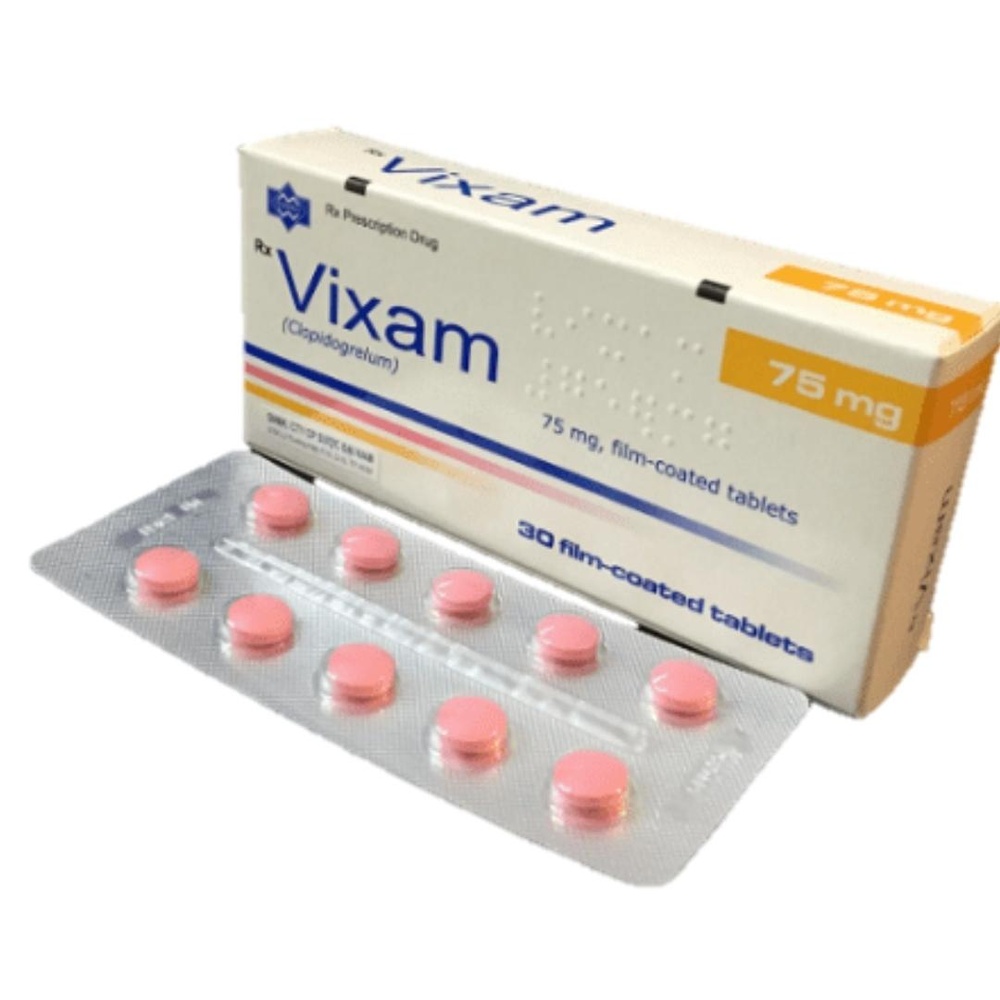
Vixam
Ask a doctor about a prescription for Vixam




How to use Vixam
Leaflet accompanying the packaging: information for the user
VIXAM, 75 mg, coated tablets
Clopidogrel
You should read the contents of the leaflet before taking the medicine, as it contains important information for the patient.
- You should keep this leaflet, so that you can read it again if you need to.
- You should consult a doctor or pharmacist if you have any further doubts.
- This medicine has been prescribed specifically for you. Do not pass it on to others.
- The medicine may harm another person, even if their symptoms are the same as yours.
- If any of the side effects get worse, or if you notice any side effects not listed in the leaflet, you should tell your doctor or pharmacist.
Table of contents of the leaflet:
- 1. What is Vixam and what is it used for
- 2. Important information before taking Vixam
- 3. How to take Vixam
- 4. Possible side effects
- 5. How to store Vixam
- 6. Contents of the packaging and other information
1. What is Vixam and what is it used for
Vixam belongs to a group of medicines called antiplatelet medicines. Platelets are very small bodies in the blood, smaller than red or white blood cells, which clump together during blood clotting. Antiplatelet medicines prevent platelets from clumping together, which reduces the risk of blood clots forming (a process called thrombosis). Vixam is given to prevent the formation of blood clots in hardened, atherosclerotic blood vessels (arteries) that can lead to the occurrence of atherosclerotic events (such as stroke, heart attack, or death). Vixam is prescribed to prevent blood clots and reduce the risk of these serious conditions, because:
- the patient has atherosclerotic hardening of the arteries (also known as atherosclerosis) and
- the patient has previously had a heart attack, stroke, or has a condition known as peripheral arterial disease, or
- the patient has had severe chest pain known as "unstable angina" or "myocardial infarction" (heart attack). To treat this condition, the doctor may place a stent in the blocked or narrowed artery to restore effective blood flow. The attending physician should also prescribe acetylsalicylic acid (a substance found in many medicines, used to relieve pain and reduce fever, as well as to prevent blood clotting).
2. Important information before taking Vixam
When not to take Vixam:
- if the patient is allergic to the active substance or any of the other ingredients of this medicine (listed in section 6),
- if the patient has a condition that is currently causing bleeding, such as a stomach ulcer or bleeding in the brain,
- if the patient has severe liver disease.
If the patient thinks that any of these problems apply to them, or has any other doubts, they should consult their doctor before taking Vixam.
Warnings and precautions
Before starting to take Vixam, the patient should consult their doctor or pharmacist. If any of the situations listed below apply to the patient, they should inform their doctor before taking Vixam:
- If there is a risk of bleeding, such as:
- a condition that increases the risk of internal bleeding (e.g., stomach ulcer),
- a blood disorder that increases the risk of internal bleeding (bleeding into tissues, organs, or joints),
- a recent severe injury,
- a recent surgical procedure (including dental),
- a planned surgical procedure (including dental) within the next 7 days.
- If the patient has had a blood clot in the brain (ischemic stroke) within the last 7 days.
- If the patient has kidney or liver disease.
While taking Vixam, the patient should inform their doctor:
- If the patient is scheduled to have surgery (including dental).
- If the patient has a condition known as thrombotic thrombocytopenic purpura (see section 4: Possible side effects).
- If bleeding does not stop after cutting or injuring (see section 4: Possible side effects). While taking Vixam, the doctor may order blood tests.
Vixam is not intended for use in children and adolescents.
Other medicines and Vixam
The patient should tell their doctor or pharmacist about all medicines they are currently taking or have recently taken, as well as any medicines they plan to take. Some other medicines may affect the action of Vixam and vice versa. In particular, the patient should inform their doctor if they are taking:
- oral anticoagulants, medicines used to prevent blood clotting,
- non-steroidal anti-inflammatory drugs, usually used to treat painful and/or inflammatory conditions of muscles or joints,
- heparin, or any other medicine used to reduce blood clotting,
- proton pump inhibitors (e.g., omeprazole), used to treat stomach disorders,
- fluconazole, voriconazole, ciprofloxacin, or chloramphenicol, medicines used to treat bacterial and fungal infections,
- cimetidine, a medicine used to treat stomach disorders,
- fluoxetine, fluvoxamine, or moclobemide, medicines used to treat depression,
- carbamazepine or oxcarbazepine, medicines used to treat certain types of epilepsy,
- ticlopidine and other antiplatelet medicines.
Patients who have had severe chest pain (unstable angina or heart attack) may be prescribed Vixam in combination with acetylsalicylic acid to relieve pain and reduce fever. Occasional use of acetylsalicylic acid (no more than 1000 mg in 24 hours) should not usually cause a problem. However, long-term use in other circumstances should be discussed with the attending physician.
Vixam with food and drink
Vixam can be taken with or without food.
Pregnancy and breastfeeding
If the patient is pregnant, breastfeeding, or thinks they may be pregnant, or are planning to become pregnant, they should consult their doctor or pharmacist before taking this medicine. This medicine is not recommended during pregnancy and breastfeeding. If the patient becomes pregnant while taking Vixam, they should immediately consult their doctor, as the use of clopidogrel during pregnancy is not recommended. While taking Vixam, the patient should ask their doctor if they can breastfeed.
Driving and using machines
Vixam is unlikely to affect the ability to drive or use machines.
Vixam contains lactose
Vixam contains 0.077643 g of lactose (0.0388215 g of galactose and 0.0388215 g of glucose) per coated tablet. This should be taken into account in patients with diabetes. If the patient has previously been diagnosed with intolerance to some sugars (e.g., lactose), they should contact their doctor before taking the medicine. Vixam also contains hydrogenated castor oil, which may cause gastrointestinal upset or diarrhea. Vixam also contains E124 (coszenilic red), which may cause allergic reactions.
3. How to take Vixam
This medicine should always be taken exactly as prescribed by the doctor. If the patient has any doubts, they should consult their doctor or pharmacist.
Recommended dose:
- 1 tablet (75 mg) per day,
- severe chest pain (unstable angina or heart attack) - 4 tablets of 75 mg (300 mg).
The medicine should be taken orally, with or without food. The medicine should be taken at the same time every day. The medicine should be taken for as long as prescribed by the doctor.
Taking a higher dose of Vixam than recommended
If the patient takes more than the recommended dose of Vixam, they should immediately contact their doctor or the nearest emergency department. The risk of bleeding may increase.
Missing a dose of Vixam
If the patient forgets to take a dose of Vixam, but remembers within 12 hours of the usual time, they should take the tablet immediately, and then take the next tablet at the usual time. If the patient forgets for more than 12 hours, they should simply take the next single dose at the usual time. The patient should not take a double dose to make up for the missed dose.
Stopping treatment with Vixam
The patient should not stop treatment. Before stopping, the patient should consult their doctor or pharmacist. If the patient has any further doubts about taking this medicine, they should consult their doctor or pharmacist.
4. Possible side effects
Like all medicines, Vixam can cause side effects, although not everybody gets them.
The patient should immediately contact their doctor if they experience:
- fever, signs of infection, or extreme fatigue. This may be due to a rare decrease in the number of certain blood cells,
- fever, purpura, petechiae (red, pinpoint spots on the skin), with or without unexplained extreme fatigue, confusion, jaundice (yellowing of the skin or eyes). These may be symptoms of thrombotic thrombocytopenic purpura,
- swelling of the lips, rash, itching, blisters. This may be a sign of an allergic reaction.
Very common side effects(more than 1 in 10 patients):
- bleeding.
Bleeding may occur as gastrointestinal bleeding, bruising, hematoma (unusual bleeding or bruising under the skin), nosebleeds, blood in the urine. Sometimes bleeding may occur in the eye, into the head, lungs, or joints. If bleeding persists while taking Vixam, the patient should immediately contact their doctor. After cutting or injuring, the time it takes for bleeding to stop may be slightly longer than usual. This is related to the way the medicine works, as it prevents blood clots from forming. This usually does not cause problems after minor cuts and injuries, such as cuts while shaving.Common side effects(between 1 in 10 and 1 in 100 patients):
- diarrhea,
- abdominal pain,
- indigestion or heartburn.
Uncommon side effects(between 1 in 100 and 1 in 1000 patients):
- headache, dizziness,
- gastric ulcer,
- vomiting, nausea,
- constipation,
- excess gas in the stomach or intestines,
- rash, itching,
- feeling of numbness or tingling.
Rare side effects(between 1 in 1000 and 1 in 10,000 patients):
- vertigo of labyrinthine origin.
Very rare side effects(less than 1 in 10,000 patients):
- jaundice,
- severe abdominal pain with or without back pain,
- fever,
- breathing difficulties, sometimes accompanied by cough,
- generalized allergic reactions,
- swelling of the lips,
- blistering skin,
- skin allergy,
- stomatitis (inflammation of the mucous membrane of the mouth),
- low blood pressure,
- confusional state (disorientation regarding time, place, situation, or own person),
- hallucinations (perception of non-existent objects or people),
- joint pain,
- muscle pain,
- disturbances in taste perception.
In addition, the doctor may detect changes in blood or urine test results. If the patient experiences any side effects, including those not listed in the leaflet, they should consult their doctor or pharmacist.
Reporting side effects
If the patient experiences any side effects, including those not listed in this leaflet, they should tell their doctor or pharmacist, or nurse. Side effects can be reported directly to the Department of Monitoring of Adverse Reactions to Medicinal Products of the Office for Registration of Medicinal Products, Medical Devices, and Biocidal Products: Al. Jerozolimskie 181C, 02-222 Warsaw, Tel.: 22 49-21-301, Fax: 22 49-21-309, Website: https://smz.ezdrowie.gov.pl. Side effects can also be reported to the marketing authorization holder. By reporting side effects, more information can be gathered on the safety of the medicine.
5. How to store Vixam
The medicine should be stored out of sight and reach of children. Store in a temperature below 30°C. Store in the original packaging to protect from light. Do not use Vixam if signs of deterioration are visible. Do not use this medicine after the expiry date stated on the carton and blister after: "EXP:". The expiry date refers to the last day of the month. Medicines should not be disposed of via wastewater or household waste. The patient should ask their pharmacist how to dispose of medicines that are no longer needed. This will help protect the environment.
6. Contents of the packaging and other information
What Vixam contains
- The active substance of Vixam is clopidogrel in the form of clopidogrel hydrogen sulfate. One tablet contains 75 mg of clopidogrel.
- The other ingredients are: lactose anhydrous, microcrystalline cellulose, corn starch, hydrogenated castor oil, macrogol 6000, coating: Kollicoat Protect (copolymer of polyvinyl alcohol and polyethylene glycol, polyvinyl alcohol, colloidal silica), hypromellose 6cp, talc, titanium dioxide (E171), E124 (coszenilic red).
What Vixam looks like and contents of the packaging
Vixam is a pink, round, biconvex, coated tablet. The packaging contains 28 tablets (4 blisters of 7 tablets) or 30 tablets (3 blisters of 10 tablets). The blisters are made of OPA/Al/PVC//Al and are packaged in a cardboard box.
Marketing authorization holder and manufacturer
Polfarmex S.A., ul. Józefów 9, 99-300 Kutno, Tel.: 24 357 44 44, Fax: 24 357 45 45, Email: [email protected], Date of last revision of the leaflet:December 2020.
- Country of registration
- Active substance
- Prescription requiredNo
- Manufacturer
- ImporterPolfarmex S.A.
- This information is for reference only and does not constitute medical advice. Always consult a licensed doctor before taking any medication. Oladoctor is not responsible for medical decisions based on this content.
- Alternatives to VixamDosage form: Tablets, 75 mgActive substance: clopidogrelManufacturer: Actavis Ltd.Prescription requiredDosage form: Tablets, 75 mgActive substance: clopidogrelPrescription not requiredDosage form: Tablets, 75 mgActive substance: clopidogrelPrescription required
Alternatives to Vixam in other countries
The best alternatives with the same active ingredient and therapeutic effect.
Alternative to Vixam in Hiszpania
Alternative to Vixam in Ukraina
Online doctors for Vixam
Discuss dosage, side effects, interactions, contraindications, and prescription renewal for Vixam – subject to medical assessment and local rules.


Get updates and exclusive offers
Be the first to know about new services, marketplace updates, and subscriber-only promos.

