


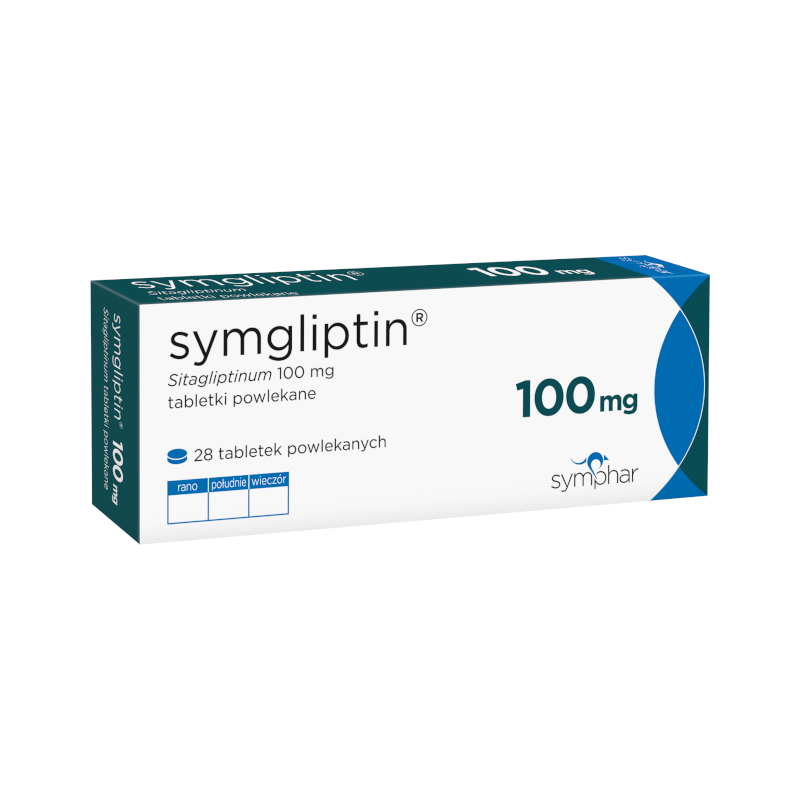
Simgliptin
Ask a doctor about a prescription for Simgliptin




How to use Simgliptin
Package Leaflet: Information for the Patient
Symgliptin, 25 mg, Film-Coated Tablets
Symgliptin, 50 mg, Film-Coated Tablets
Symgliptin, 100 mg, Film-Coated Tablets
Sitagliptin
Read the Package Leaflet Carefully Before Taking the Medication, as it Contains Important Information for the Patient.
- Keep this Package Leaflet, You May Need to Read it Again.
- If You Have Any Further Questions, Ask Your Doctor, Pharmacist, or Nurse.
- This Medication Has Been Prescribed for You Only. Do Not Pass it on to Others. It May Harm Them, Even if Their Symptoms are the Same as Yours.
- If You Experience Any Side Effects, Including Those Not Listed in this Package Leaflet, Tell Your Doctor, Pharmacist, or Nurse. See Section 4.
Package Leaflet Contents
- 1. What is Symgliptin and What is it Used For
- 2. Important Information Before Taking Symgliptin
- 3. How to Take Symgliptin
- 4. Possible Side Effects
- 5. How to Store Symgliptin
- 6. Package Contents and Other Information
1. What is Symgliptin and What is it Used For
Symgliptin Contains the Active Substance Sitagliptin, Which Belongs to a Class of Medications Called DPP-4 Inhibitors (Dipeptidyl Peptidase-4 Inhibitors), Which Reduce Blood Sugar Levels in Adults with Type 2 Diabetes.
This Medication Helps Increase the Amount of Insulin Released After a Meal and Decreases the Amount of Sugar Produced by the Body.
Your Doctor Has Prescribed this Medication to Reduce High Blood Sugar Levels, a Consequence of Type 2 Diabetes. This Medication Can be Used Alone or in Combination with Other Medications (Insulin, Metformin, Sulfonylurea Derivatives, or Glitazones) that Lower Blood Sugar Levels, Which May Already be Taken for Diabetes, Along with Diet and Exercise.
What is Type 2 Diabetes?
Type 2 Diabetes is a Disease in Which the Body Does Not Produce Enough Insulin, and the Insulin Produced Does Not Work Properly. The Body May Also Produce Too Much Sugar. If This Happens, Sugar (Glucose) Builds up in the Blood. This Can Lead to Serious Diseases, Such as Heart Disease, Kidney Disease, Vision Loss, and Limb Amputation.
2. Important Information Before Taking Symgliptin
When Not to Take Symgliptin
- If You are Allergic to Sitagliptin or Any of the Other Ingredients of this Medication (Listed in Section 6).
Warnings and Precautions
In Patients Taking Symgliptin, Cases of Pancreatitis Have Been Reported (See Section 4).
If You Experience Blisters on the Skin, it May be a Sign of a Disease Called Bullous Pemphigoid. Your Doctor May Advise You to Stop Taking Symgliptin.
Tell Your Doctor if You Have or Have Had:
- Pancreatic Disease (e.g., Pancreatitis);
- Gallstones, Alcohol Dependence, or Very High Triglyceride Levels in the Blood. In These Situations, the Risk of Pancreatitis May Increase (See Section 4);
- Type 1 Diabetes;
- Diabetic Ketoacidosis (a Complication of Diabetes Characterized by High Blood Sugar Levels, Rapid Weight Loss, Nausea, or Vomiting);
- Any Kidney Disease, Past or Present;
- An Allergic Reaction to Symgliptin (See Section 4).
Since this Medication Does Not Work When Blood Sugar Levels are Low, it is Unlikely to Cause Hypoglycemia. However, if this Medication is Taken with a Sulfonylurea Derivative or Insulin, Hypoglycemia May Occur. Your Doctor May Reduce the Dose of the Sulfonylurea Derivative or Insulin.
Children and Adolescents
Children and Adolescents Under 18 Years of Age Should Not Take this Medication. This Medication is Not Effective in Children and Adolescents Aged 10 to 17 Years. It is Not Known if this Medication is Safe and Effective in Children Under 10 Years of Age.
Symgliptin and Other Medications
Tell Your Doctor or Pharmacist About All Medications You are Currently Taking or Plan to Take.
In Particular, Tell Your Doctor if You are Taking Digoxin (a Medication Used to Treat Heart Rhythm Disorders and Other Heart Conditions). When Taking Symgliptin with Digoxin, Your Doctor May Monitor Your Digoxin Blood Levels.
Pregnancy and Breastfeeding
If You are Pregnant or Breastfeeding, Think You May be Pregnant, or Plan to Have a Child, Ask Your Doctor or Pharmacist for Advice Before Taking this Medication.
Do Not Take this Medication During Pregnancy.
It is Not Known if this Medication Passes into Breast Milk. Do Not Take this Medication During Breastfeeding or if You Plan to Breastfeed.
Driving and Using Machines
This Medication Has No or Negligible Influence on the Ability to Drive and Use Machines. However, When Driving or Using Machines, Consider that Dizziness and Drowsiness Have Been Reported.
Taking this Medication with Sulfonylurea Derivatives or Insulin May Cause Hypoglycemia, Which Can Affect Your Ability to Drive or Use Machines, or Work Without Safe Foot Support.
Symgliptin Contains Sodium
This Medication Contains Less Than 1 mmol (23 mg) of Sodium per Tablet, Which Means it is Essentially Sodium-Free.
3. How to Take Symgliptin
Always Take this Medication Exactly as Your Doctor Has Told You. If You are Not Sure, Ask Your Doctor or Pharmacist.
The Usual Recommended Dose is:
- One 100 mg Film-Coated Tablet;
- Once a Day;
- Taken Orally.
If You Have Kidney Problems, Your Doctor May Prescribe a Lower Dose of Symgliptin (e.g., 25 mg or 50 mg).
This Medication Can be Taken With or Without Food and Drink. Swallow the Tablets Whole; Do Not Crush or Chew Them.
Your Doctor May Advise You to Take Only this Medication or this Medication and Certain Other Medications that Lower Blood Sugar Levels.
Diet and Exercise Help Your Body Make Better Use of the Sugar in Your Blood. While Taking Symgliptin, it is Important to Follow the Diet and Exercise Plan Recommended by Your Doctor.
Taking More Than the Recommended Dose of Symgliptin
If You Take More Than the Recommended Dose of this Medication, Contact Your Doctor Immediately.
Missing a Dose of Symgliptin
If You Miss a Dose, Take it as Soon as Possible. If it is Almost Time for Your Next Dose, Skip the Missed Dose and Continue with Your Regular Schedule. Do Not Take a Double Dose of this Medication.
Stopping Symgliptin Treatment
To Maintain Control of Your Blood Sugar Levels, Take this Medication for as Long as Your Doctor Recommends. Do Not Stop Taking this Medication Without Consulting Your Doctor First.
If You Have Any Further Questions on the Use of this Medication, Ask Your Doctor or Pharmacist.
4. Possible Side Effects
Like All Medications, this Medication Can Cause Side Effects, Although Not Everybody Gets Them.
STOP Taking Symgliptin and Contact Your Doctor Immediately if You Experience Any of the Following Serious Side Effects:
- Severe and Persistent Abdominal Pain (in the Stomach Area), Which May Radiate to the Back, with or Without Nausea and Vomiting - These May be Symptoms of Pancreatitis.
If You Experience a Severe Allergic Reaction (Frequency Not Known), Including Rash, Hives, Blisters on the Skin, or Peeling Skin, and Swelling of the Face, Lips, Tongue, or Throat, Which May Cause Difficulty Breathing or Swallowing, Stop Taking this Medication and Contact Your Doctor Immediately. Your Doctor May Prescribe a Medication to Treat the Allergic Reaction and Another Medication to Treat Your Diabetes.
In Some Patients Who Added Sitagliptin to Metformin, the Following Side Effects Were Reported:
Common (May Affect Up to 1 in 10 People): Low Blood Sugar, Nausea, Bloating, Vomiting.
Uncommon (May Affect Up to 1 in 100 People): Stomach Pain, Diarrhea, Constipation, Drowsiness.
In Some Patients Who Took Sitagliptin in Combination with Metformin, Various Gastrointestinal Symptoms Were Reported (Common).
In Some Patients Who Took Sitagliptin in Combination with a Sulfonylurea Derivative and Metformin, the Following Side Effects Were Reported:
Very Common (May Affect More Than 1 in 10 People): Low Blood Sugar.
Common: Constipation.
In Some Patients Who Took Sitagliptin and Pioglitazone, the Following Side Effects Were Reported:
Common: Bloating, Swelling of the Hands or Feet.
In Some Patients Who Took Sitagliptin, Pioglitazone, and Metformin, the Following Side Effects Were Reported:
Common: Swelling of the Hands or Feet.
In Some Patients Who Took Sitagliptin and Insulin (With or Without Metformin), the Following Side Effects Were Reported:
Common: Flu.
Uncommon: Dry Mouth.
In Some Patients Who Took Sitagliptin Alone in Clinical Trials or Alone or with Other Anti-Diabetic Medications After Marketing Authorization, the Following Side Effects Were Reported:
Common: Low Blood Sugar, Headache, Upper Respiratory Tract Infections, Stuffy or Runny Nose, and Sore Throat, Joint or Muscle Pain.
Uncommon: Dizziness, Constipation, Itching.
Rare: Reduced Platelet Count.
Frequency Not Known: Kidney Disease (Sometimes Requiring Dialysis), Vomiting, Joint Pain, Muscle Pain, Back Pain, Interstitial Lung Disease, Bullous Pemphigoid (a Type of Blistering Skin Condition).
Reporting Side Effects
If You Experience Any Side Effects, Including Those Not Listed in this Package Leaflet, Tell Your Doctor or Pharmacist. You Can Also Report Side Effects Directly to the Department of Medicinal Product Monitoring, Office for Registration of Medicinal Products, Medical Devices, and Biocidal Products, Al. Jerozolimskie 181C, 02-222 Warsaw, Tel.: +48 22 49 21 301, Fax: +48 22 49 21 309, Website: https://smz.ezdrowie.gov.pl
You Can Also Report Side Effects to the Marketing Authorization Holder.
By Reporting Side Effects, You Can Help Provide More Information on the Safety of this Medication.
5. How to Store Symgliptin
Keep this Medication Out of the Sight and Reach of Children.
Do Not Use this Medication After the Expiration Date Stated on the Blister and Carton After “EXP”.
The Expiration Date Refers to the Last Day of the Month.
There are No Special Storage Conditions for this Medication.
Do Not Throw Away Medications via Wastewater or Household Waste. Ask Your Pharmacist How to Dispose of Medications No Longer Used. This Will Help Protect the Environment.
6. Package Contents and Other Information
What Symgliptin Contains
- The Active Substance is Sitagliptin. Each Film-Coated Tablet of Symgliptin Contains 25 mg (Symgliptin, 25 mg), 50 mg (Symgliptin, 50 mg), and 100 mg (Symgliptin, 100 mg) of Sitagliptin as Sitagliptin Phosphate Monohydrate.
- The Other Ingredients are:
- Microcrystalline Cellulose (E460), Calcium Hydrogen Phosphate (E341), Sodium Carboxymethylcellulose (E468), Magnesium Stearate (E470b), and Sodium Stearyl Fumarate.
- Tablet Coating: Opadry II Pink 85F540099 (25 mg, 100 mg) and Opadry II Pink 85F540265 (50 mg) Contain: Polyvinyl Alcohol, Titanium Dioxide (E171), Macrogol 4000 (E1521), Talc (E553b), Iron Oxide Red (E172), and Iron Oxide Yellow (E172).
What Symgliptin Looks Like and Contents of the Package
Symgliptin, 25 mg, Film-Coated Tablets
Round, Pink Film-Coated Tablets with a Diameter of Approximately 6.1 mm and a Thickness of 3.0 mm, with the Engraving “S17” on One Side and “H” on the Other Side.
Symgliptin, 50 mg, Film-Coated Tablets
Round, Pink Film-Coated Tablets with a Diameter of Approximately 7.9 mm and a Thickness of 3.6 mm, with the Engraving “S16” on One Side and “H” on the Other Side.
Symgliptin, 100 mg, Film-Coated Tablets
Round, Pink Film-Coated Tablets with a Diameter of Approximately 9.9 mm and a Thickness of 4.7 mm, with the Engraving “S15” on One Side and “H” on the Other Side.
PVC/PE/PVDC/Aluminum Blister Packs in a Carton. The Packs Contain 14, 28, 30, 50, 56, 84, 90, or 98 Film-Coated Tablets.
Not All Pack Sizes May be Marketed.
Marketing Authorization Holder and Manufacturer
Marketing Authorization Holder
Farmak International Sp. z o.o.
ul. Koszykowa 65
00-667 Warsaw
Manufacturer/Importer
Pharmadox Healthcare Ltd.
KW20A Kordin Industrial Park, Paola PLA3000,
Malta
Farmak International Sp. z o.o.
ul. Chełmżyńska 249
04-458 Warsaw
Date of Last Revision of the Package Leaflet:May 2025
- Country of registration
- Active substance
- Prescription requiredYes
- Manufacturer
- ImporterPharmadox Healthcare Ltd. Symphar Sp. z o.o.
- This information is for reference only and does not constitute medical advice. Always consult a licensed doctor before taking any medication. Oladoctor is not responsible for medical decisions based on this content.
- Alternatives to SimgliptinDosage form: Tablets, 25 mgActive substance: sitagliptinManufacturer: Lek Pharmaceuticals d.d. LEK S.A.Prescription requiredDosage form: Tablets, 50 mgActive substance: sitagliptinManufacturer: Lek Pharmaceuticals d.d. LEK S.A.Prescription requiredDosage form: Tablets, 100 mgActive substance: sitagliptinManufacturer: Lek Pharmaceuticals d.d. LEK S.A.Prescription required
Alternatives to Simgliptin in other countries
The best alternatives with the same active ingredient and therapeutic effect.
Alternative to Simgliptin in España
Alternative to Simgliptin in Ucrania
Online doctors for Simgliptin
Discuss dosage, side effects, interactions, contraindications, and prescription renewal for Simgliptin – subject to medical assessment and local rules.





Get updates and exclusive offers
Be the first to know about new services, marketplace updates, and subscriber-only promos.

