


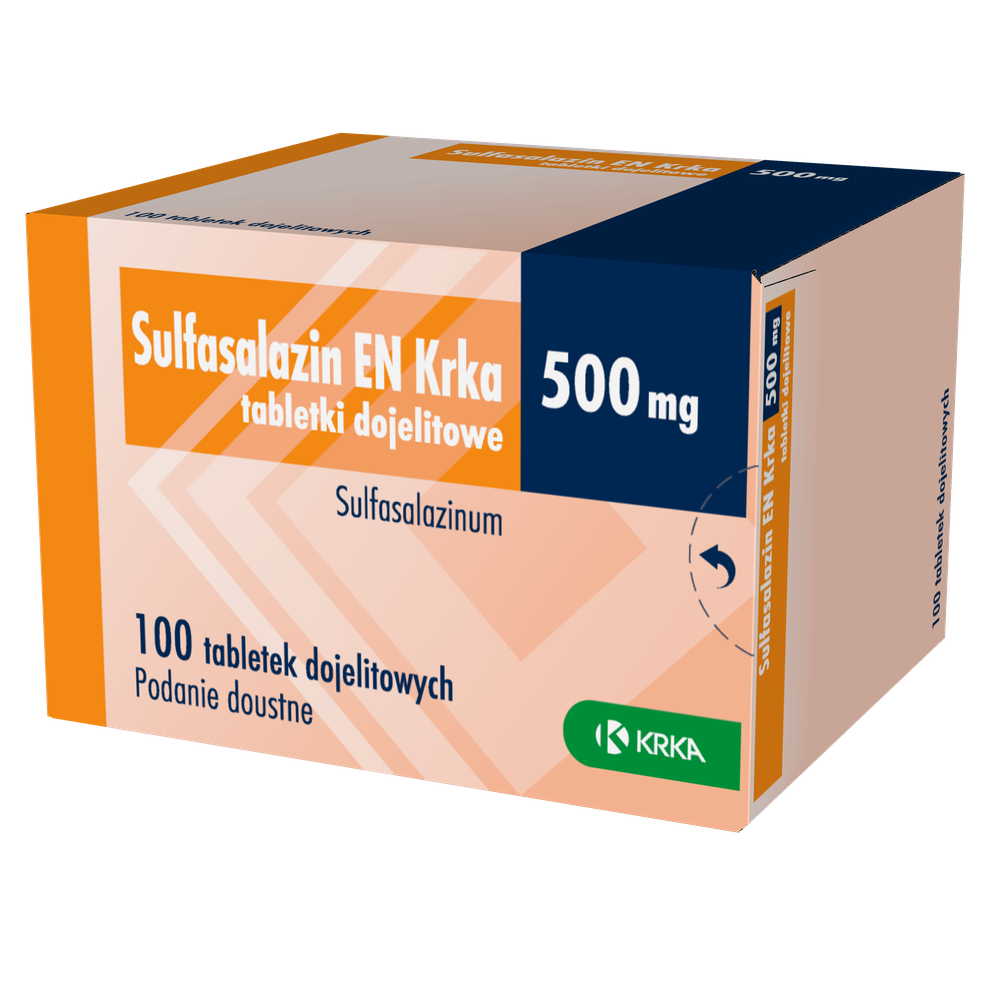
Sulfasalazin En Krka
Ask a doctor about a prescription for Sulfasalazin En Krka




How to use Sulfasalazin En Krka
Leaflet accompanying the packaging: patient information
Sulfasalazin EN Krka, 500 mg, enteric-coated tablets
Sulfasalazine
Read the leaflet carefully before taking the medicine, as it contains important information for the patient.
- Keep this leaflet, you may need to read it again.
- If you have any further questions, ask your doctor or pharmacist.
- This medicine has been prescribed for you only. Do not pass it on to others. It may harm them, even if their symptoms are the same as yours.
- If you experience any side effects, including those not listed in this leaflet, please inform your doctor or pharmacist. See section 4.
Table of contents of the leaflet
- 1. What is Sulfasalazin EN Krka and what is it used for
- 2. Important information before taking Sulfasalazin EN Krka
- 3. How to take Sulfasalazin EN Krka
- 4. Possible side effects
- 5. How to store Sulfasalazin EN Krka
- 6. Contents of the pack and other information
1. What is Sulfasalazin EN Krka and what is it used for
Sulfasalazin EN Krka is an anti-inflammatory medicine.
Sulfasalazin EN Krka is a combination of 5-aminosalicylic acid and sulfapyridine. A smaller part of sulfasalazine is absorbed in the large intestine and mainly deposited in connective tissue. The larger part of the drug is broken down into 5-aminosalicylic acid and sulfapyridine, which reduce inflammation.
Sulfapyridine reduces systemic inflammatory response; the anti-inflammatory effect of 5-aminosalicylic acid, due to its poor absorption, occurs only in the large intestine. Sulfasalazin EN Krka does not have analgesic effects.
Sulfasalazin EN Krka is used to treat:
- rheumatoid arthritis, resistant to treatment with non-steroidal anti-inflammatory drugs,
- inflammatory bowel diseases (e.g. ulcerative colitis, Crohn's disease).
2. Important information before taking Sulfasalazin EN Krka
Inform your doctor about any chronic diseases, metabolic disorders, allergies to other medicines, and the use of other medicines.
When not to take Sulfasalazin EN Krka
- if you are allergic to sulfasalazine or any of the other ingredients of this medicine (listed in section 6),
- if you are allergic to sulfonamides and salicylates,
- if you have acute intermittent porphyria, mixed porphyria,
- if you have urinary or intestinal obstruction,
- in children under 2 years of age.
Warnings and precautions
Before starting treatment with Sulfasalazin EN Krka, discuss it with your doctor or pharmacist if:
- you have severe allergies and/or bronchial asthma,
- you have a deficiency of glucose-6-phosphate dehydrogenase, as it may cause hemolytic anemia,
- you have kidney or liver function disorders, or abnormal blood count.
During treatment, drink plenty of fluids due to the possibility of kidney stone formation.
Inform your doctor about taking or recently taking Sulfasalazin EN Krka or other medicines containing sulfasalazine, as they may affect blood and urine test results.
Before starting treatment, your doctor may recommend a blood test, including a white blood cell count and liver function tests, and then repeat these tests every 2 weeks during the first 3 months of treatment.
For the next 3 months, control tests should be performed every 4 weeks, and then every 3 months, as well as in situations where it is clinically justified.
Assessment of kidney function (including urine analysis) should be performed in all patients at the start of treatment, as well as at least once a month during the first 3 months of treatment.
Then, control should be performed when clinically justified.
The occurrence of clinical symptoms such as sore throat, fever, pallor, petechiae, and jaundice during sulfasalazine treatment may indicate bone marrow suppression, hemolysis, and hepatotoxicity. Sulfasalazine treatment should be discontinued while waiting for blood test results.
During treatment with Sulfasalazin EN Krka, potentially life-threatening skin rashes have been observed (exfoliative dermatitis, Stevens-Johnson syndrome, toxic epidermal necrolysis), which initially have the shape of reddened lesions or round spots, often with centrally located blisters. Additional symptoms may occur, such as oral, throat, nose, genital, and conjunctival ulcers (red and swollen eyes). These life-threatening skin rashes are often accompanied by flu-like symptoms. In the further development of the rash, extensive blisters or peeling of large skin areas may appear.
The greatest risk of serious skin reactions exists in the first few weeks of treatment.
If a patient develops Stevens-Johnson syndrome or toxic epidermal necrolysis while taking Sulfasalazin EN Krka, they should never again take this medicine.
If a patient develops a rash, mucosal disorders, other symptoms of hypersensitivity, or the aforementioned skin symptoms, they should immediately consult a doctor and inform them about taking this medicine.
During treatment with Sulfasalazin EN Krka, severe, life-threatening hypersensitivity reactions have been reported, such as drug rash with eosinophilia (an increase in the number of a certain type of white blood cell - eosinophils in the blood) and systemic symptoms (DRESS).
It should be borne in mind that early symptoms of hypersensitivity may appear, even if a rash is not present.
Sulfasalazin EN Krka and other medicines
Inform your doctor or pharmacist about all medicines you are taking, have recently taken, or plan to take.
Sulfasalazin EN Krka may:
- reduce the absorption of digoxin (used to treat heart failure and atrial fibrillation),
- reduce the absorption of folic acid (prescribed by a doctor as a dietary supplement), leading to its deficiency.
Concomitant oral administration of sulfasalazine and mercaptopurine (used to treat certain leukemias and autoimmune diseases) or azathioprine (used in transplantation and treatment of autoimmune diseases) may cause bone marrow disorders and leukopenia (decreased white blood cell count).
Sulfasalazin EN Krka with food and drink
Tablets should be taken during meals, with a glass of water. Tablets should be swallowed whole, without chewing or crushing.
During treatment, drink plenty of fluids.
Pregnancy and breastfeeding
If you are pregnant or breastfeeding, think you may be pregnant, or plan to have a child, consult your doctor or pharmacist before taking this medicine.
Because the risk associated with the use of this medicine during pregnancy cannot be excluded, sulfasalazine may be used in pregnant women only if absolutely necessary.
The medicine reduces the number and motility of sperm, which may affect fertility.
This effect is usually reversible after treatment is discontinued.
Sulfasalazine and sulfapyridine pass into breast milk in small amounts. This should not pose a risk to a healthy child.
Caution is advised in premature infants and newborns with physiological jaundice. Bloody stools or diarrhea have been reported in breastfed infants whose mothers were taking sulfasalazine. In these cases, bloody stools or diarrhea resolved in infants after the mother discontinued sulfasalazine.
Driving and using machines
No effect of Sulfasalazin EN Krka on the ability to drive and use machines has been observed.
Sulfasalazin EN Krka contains sodium
This medicine contains less than 1 mmol (23 mg) of sodium per dose, which means the medicine is considered "sodium-free".
3. How to take Sulfasalazin EN Krka
This medicine should always be taken as directed by your doctor. If you are unsure, consult your doctor or pharmacist. Do not change the dosage or stop treatment without consulting your doctor.
Tablets should be swallowed whole (do not chew or crush), as the tablet coating reduces unwanted effects on the gastrointestinal tract.
Tablets should be taken during meals with a glass of water.
Rheumatoid arthritis
Adults and the elderly
The recommended dose is 1 g to 3 g per day. The most commonly used dose is 2 tablets twice a day. Treatment starts with smaller doses, which are gradually increased according to the scheme presented in the table below.
If after 2-3 months the doctor finds that the patient's response to treatment is unsatisfactory, the daily dose of sulfasalazine may be increased to a maximum of 3 g.
In patients who have experienced side effects, the dose can be temporarily reduced.
Inflammatory bowel diseases (i.e. ulcerative colitis, Crohn's disease)
The doctor will recommend the appropriate dose based on the patient's clinical condition, tolerance to the medicine, and response to treatment.
It is recommended that in patients who have never been treated with sulfasalazine before, the dose be increased gradually (over several weeks). The daily dose should be divided into equal parts.
Acute condition
Adults and the elderly
Severe exacerbations of the disease: 2 to 4 tablets 3 to 4 times a day (3 g to 8 g per day).
Mild and moderate exacerbations: 2 tablets 3 to 4 times a day.
Children
40-60 mg/kg body weight per day in 3 to 6 divided doses.
Maintenance treatment
Adults and the elderly
The recommended maintenance dose in the treatment of patients with ulcerative colitis and Crohn's disease in remission is 2 tablets 2 to 3 times a day. Treatment with this dose should not be discontinued and should be continued long-term, unless side effects occur. In case of disease exacerbation, the doctor may decide to increase the dose to 2 to 4 tablets taken 3 to 4 times a day.
Children
20-30 mg/kg body weight per day in 3 to 6 divided doses.
If you feel that the effect of the medicine is too strong or too weak, consult your doctor.
Taking a higher dose of Sulfasalazin EN Krka than recommended
In case of taking a higher dose of the medicine than recommended, contact your doctor or pharmacist.
Symptoms of overdose may include: nausea, vomiting, crystalluria (formation of crystals in urine), hematuria, oliguria, and anuria, hypoglycemia, and in single cases methemoglobinemia (loss of hemoglobin's ability to carry oxygen), cyanosis, liver symptoms, sulfhemoglobinemia. Hypersensitivity reactions, such as changes in blood morphology (which can lead to death from agranulocytosis - a lack of a certain type of white blood cell, granulocytes), urticaria, polyneuritis, symptoms related to the brain.
In case of taking a higher dose of Sulfasalazin EN Krka than recommended, contact your doctor. Depending on the symptoms, the doctor will apply appropriate treatment.
Missing a dose of Sulfasalazin EN Krka
Do not take a double dose to make up for a missed dose.
Take the missed dose as soon as possible, unless the time for the next dose is near. In this case, wait and take only one dose at the right time.
| Day 1-4 | Day 5-8 | Day 9 and later | |
| Morning | 1 enteric-coated tablet | 1 enteric-coated tablet | 2 enteric-coated tablets |
| Evening | 2 enteric-coated tablets | 2 enteric-coated tablets | 2 enteric-coated tablets |
Stopping treatment with Sulfasalazin EN Krka
Only your doctor can decide to stop treatment.
If you have any further questions about the use of this medicine, ask your doctor or pharmacist.
4. Possible side effects
Like all medicines, Sulfasalazin EN Krka can cause side effects, although not everybody gets them.
Most side effects caused by Sulfasalazin EN Krka are mild.
Side effects usually disappear on their own, after reducing the dose or stopping treatment.
Sulfapyridine side effects are mainly related to its blood concentration, especially in patients with slower metabolism.
Very common side effects (may affect more than 1 in 10 people):
- gastrointestinal disorders, nausea
Common side effects (may affect up to 1 in 10 people):
- leukopenia (decreased white blood cell count in peripheral blood),
- loss of appetite,
- dizziness, headache, taste disorders,
- tinnitus,
- cough,
- abdominal pain, diarrhea, bloating, vomiting,
- itching,
- joint pain,
- proteinuria (presence of protein in urine),
- fever.
Uncommon side effects (may affect up to 1 in 100 people):
- thrombocytopenia (decreased platelet count),
- depression,
- dyspnea (breathing difficulties),
- alopecia, urticaria,
- facial edema,
- increased liver enzyme activity.
Rare side effects (may affect up to 1 in 1,000 people):
- changes in the nail area,
- jaundice.
Very rare side effects (may affect up to 1 in 10,000 people):
- potentially life-threatening skin rashes: toxic epidermal necrolysis (Lyell's syndrome) - a disease characterized by the presence of large, flaccid blisters on erythematous patches (especially in areas exposed to pressure), which quickly rupture, resulting in extensive erosions; bullous erythema multiforme (Stevens-Johnson syndrome, fever, severe rash with blister formation on mucous membranes) (see section 2).
Frequency not known side effects (cannot be estimated from available data):
- aseptic meningitis, pseudomembranous colitis,
- agranulocytosis (complete or almost complete lack of granulocytes in the blood), aplastic anemia (bone marrow failure to produce new red or white blood cells), hemolytic anemia (abnormal premature breakdown of red blood cells), macrocytosis (excessive enlargement of red blood cells), megaloblastic anemia (anemia due to vitamin B12 or folic acid deficiency), pancytopenia (decreased number of all blood cell elements: red blood cells, white blood cells, and platelets),
- anaphylactic shock (severe allergic reaction)* (symptoms of anaphylactic shock include: rapidly worsening condition, itching, urticaria, pale and moist skin, rapid and shallow breathing, dyspnea, tachycardia, significant decrease in blood pressure, vomiting, diarrhea, swelling of the face and other parts of the body, fever of unknown origin or chills), serum sickness (allergic, systemic reaction to intravenously administered foreign serum or medicine),
- encephalopathy (brain function disorders), peripheral neuropathy (disorders of peripheral nerves), smell disorders,
- pericarditis, cyanosis,
- pulmonary fibrosis, interstitial lung disease*, pulmonary infiltrates,
- exacerbation of symptoms in ulcerative colitis, pancreatitis,
- liver failure*, fulminant hepatitis*, hepatitis,
- drug rash with eosinophilia and systemic symptoms*, angioedema*, toxic, blistering skin rashes, rash, urticaria, exfoliative dermatitis, lichen planus, photosensitivity,
- systemic lupus erythematosus (a chronic autoimmune disease that can cause damage to various organs, especially the skin, joints, blood, and kidneys), Sjögren's syndrome,
- nephrotic syndrome (a set of symptoms caused by excessive loss of protein in the urine), interstitial nephritis, kidney stones, hematuria,
- transient oligospermia (low sperm count in male semen),
- yellow discoloration of skin and body fluids*,
- induction of autoantibodies.
*Side effects identified after the medicine was placed on the market.
Very rare, serious side effects may occur, for which the doctor may recommend stopping treatment.
If you experience symptoms such as itching, rash, difficulty breathing or swallowing, swelling of the eyelids, face, or other parts of the body, fever of unknown origin, or chills, sore throat, cough, unusual fatigue, pallor, severe abdominal pain, jaundice, skin bleeding, unusual bruising, or central nervous system disorders (dizziness, tinnitus, uncoordinated movements, seizures, insomnia, and hallucinations), contact your doctor immediately.
Reporting side effects
If you experience any side effects, including those not listed in this leaflet, inform your doctor or pharmacist. Side effects can be reported directly to the Department of Drug Safety Monitoring of the Office for Registration of Medicinal Products, Medical Devices, and Biocidal Products:
Jerozolimskie Avenue 181C, 02-222 Warsaw
Phone: +48 22 49 21 301
Fax: +48 22 49 21 309
Website: https://smz.ezdrowie.gov.pl
Side effects can also be reported to the marketing authorization holder.
By reporting side effects, you can help provide more information on the safety of this medicine.
5. How to store Sulfasalazin EN Krka
Keep the medicine out of sight and reach of children.
Store in a temperature below 25°C.
Do not use this medicine after the expiry date stated on the packaging. The expiry date refers to the last day of the month.
Medicines should not be disposed of via wastewater or household waste. Ask your pharmacist how to dispose of medicines that are no longer needed. This will help protect the environment.
6. Contents of the pack and other information
What Sulfasalazin EN Krka contains
- The active substance of the medicine is sulfasalazine. Each enteric-coated tablet contains sulfasalazine in the form of granules with povidone, equivalent to 500 mg of sulfasalazine.
- Other ingredients are: maize starch, magnesium stearate, silica colloidal anhydrous, titanium dioxide (E 171), yellow iron oxide (E 172), talc, triethyl citrate, macrogol 6000, sodium carmellose, methacrylic acid, and ethyl acrylate copolymer (1:1). See section 2 "Sulfasalazin EN Krka contains sodium".
What Sulfasalazin EN Krka looks like and contents of the pack
Round, slightly biconvex enteric-coated tablets, beige in color.
Packaging: 50, 100, or 300 enteric-coated tablets in blisters, in a cardboard box.
Marketing authorization holder and manufacturer
KRKA, d.d., Novo mesto, Šmarješka cesta 6, 8501 Novo mesto, Slovenia
To obtain more detailed information, contact the local representative of the marketing authorization holder:
Krka Polska Sp. z o.o.
Równoległa 5
02-235 Warsaw
Poland
Phone: +48 22 573 75 00
Date of last revision of the leaflet:
- Country of registration
- Active substance
- Prescription requiredYes
- Manufacturer
- ImporterKrka, d.d., Novo mesto
- This information is for reference only and does not constitute medical advice. Always consult a licensed doctor before taking any medication. Oladoctor is not responsible for medical decisions based on this content.
- Alternatives to Sulfasalazin En KrkaDosage form: Tablets, 500 mgActive substance: sulfasalazinePrescription requiredDosage form: Tablets, 500 mgActive substance: sulfasalazineManufacturer: Krka, d.d., Novo mestoPrescription requiredDosage form: Tablets, 250 mgActive substance: mesalazinePrescription required
Alternatives to Sulfasalazin En Krka in other countries
The best alternatives with the same active ingredient and therapeutic effect.
Alternative to Sulfasalazin En Krka in Ukraine
Alternative to Sulfasalazin En Krka in Spain
Online doctors for Sulfasalazin En Krka
Discuss dosage, side effects, interactions, contraindications, and prescription renewal for Sulfasalazin En Krka – subject to medical assessment and local rules.


Get updates and exclusive offers
Be the first to know about new services, marketplace updates, and subscriber-only promos.

