



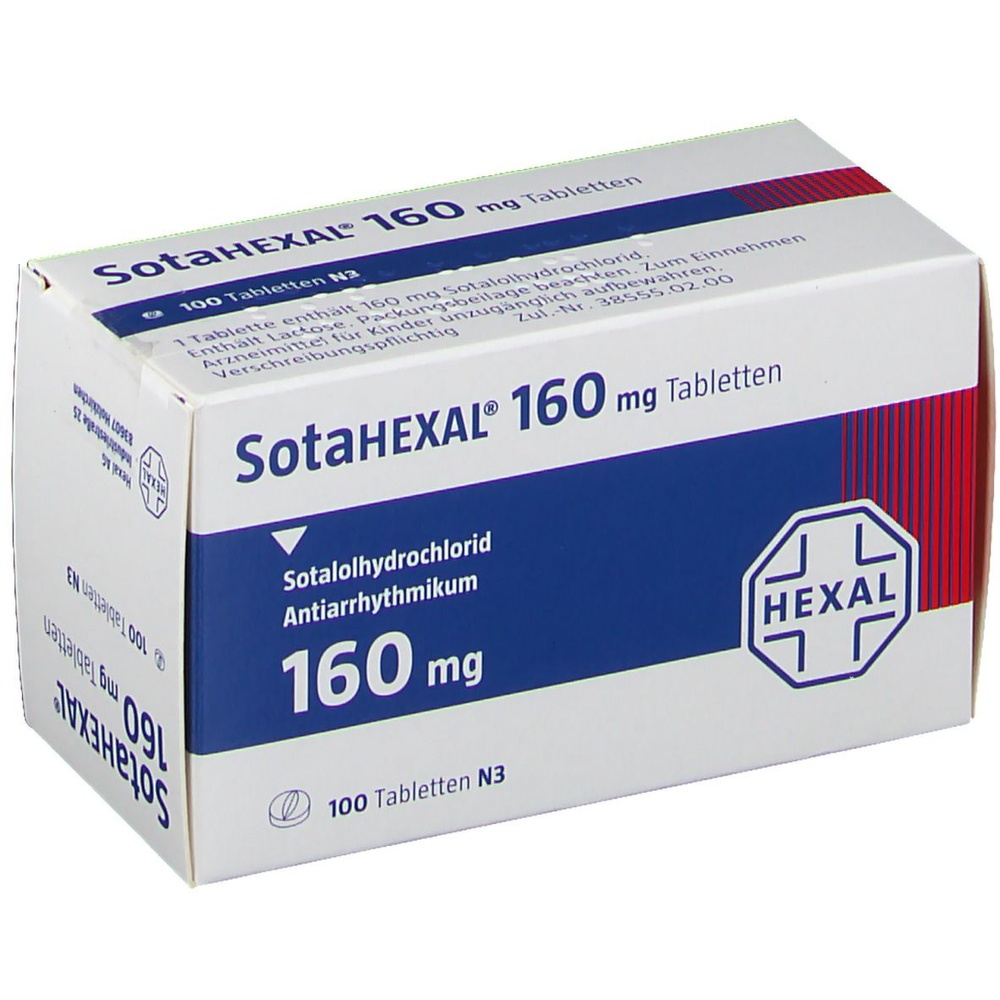
SOTAHEXAL 160 mg Tablets

Prescription review online
A doctor will review your case and decide whether a prescription is medically appropriate.

Talk to a doctor about this medicine
Discuss your symptoms and possible next steps in a quick online consultation.



How to use Sotahexal 160
Contents of the leaflet
- Leaflet attached to the packaging: patient information
- SotaHEXAL 40, 40 mg, tablets
- SotaHEXAL 80, 80 mg, tablets
- SotaHEXAL 160, 160 mg, tablets
- What is SotaHEXAL and what is it used for
- Important information before taking SotaHEXAL
- How to take SotaHEXAL
- Possible side effects
- How to store SotaHEXAL
- Contents of the packaging and other information
Leaflet attached to the packaging: patient information
SotaHEXAL 40, 40 mg, tablets

Not sure if this medicine is right for you?
Discuss your symptoms and treatment with a doctor online.
SotaHEXAL 80, 80 mg, tablets
SotaHEXAL 160, 160 mg, tablets
Sotalol hydrochloride
Read the leaflet carefully before taking the medicine, as it contains important information for the patient.
- Keep this leaflet, so you can read it again if you need to.
- If you have any doubts, consult your doctor or pharmacist.
- This medicine has been prescribed specifically for you. Do not pass it on to others. The medicine may harm another person, even if their symptoms are the same.
- If the patient experiences any side effects, including any side effects not listed in this leaflet, they should tell their doctor or pharmacist. See section 4.
Table of contents of the leaflet:
- 1. What is SotaHEXAL and what is it used for
- 2. Important information before taking SotaHEXAL
- 3. How to take SotaHEXAL
- 4. Possible side effects
- 5. How to store SotaHEXAL
- 6. Contents of the packaging and other information

Started taking the medicine and have questions?
Discuss your symptoms and treatment with a doctor online.
1. What is SotaHEXAL and what is it used for
SotaHEXAL tablets contain the active substance sotalol hydrochloride - a medicine with antiarrhythmic action.
SotaHEXAL is used to treat supraventricular and ventricular arrhythmias, especially in the form of ventricular tachycardia.
2. Important information before taking SotaHEXAL
When not to take SotaHEXAL
if the patient is allergic to sotalol, sulfonamides, or any of the other ingredients of this medicine (listed in section 6). The symptoms of an allergy may be a rash, itching, swelling of the face or lips, shortness of breath.
if the ECG (electrocardiogram) examination has shown that the patient has a so-called QT interval prolongation or the patient has life-threatening arrhythmias (of the torsade de pointestype) or is taking medicines that may cause such arrhythmias.
if the patient has asthma, has had asthma attacks, or has been diagnosed with chronic obstructive pulmonary disease.
if the patient has a slow heart rate (<45-50 beats per minute), low blood pressure, discoloration of the hands and feet (pallor or severe redness), circulatory disorders, heart disease (such as uncontrolled failure).
if the patient has recently had a heart attack.
if the patient has been diagnosed with metabolic or diabetic ketoacidosis.
if the patient has kidney failure or an untreated adrenal gland tumor.
if the patient is taking an antidepressant from the MAO-A inhibitor group or floctafenine (from the group of non-steroidal anti-inflammatory drugs).
If the patient has any doubts as to whether any of the above applies to them, they should consult their doctor.
Before starting treatment with SotaHEXAL and during treatment, the doctor may recommend that the patient undergo a test to check the level of potassium and magnesium in the blood. If the level of potassium and magnesium in the patient's blood is low, the doctor may not prescribe SotaHEXAL.
During treatment, it is essential to strictly follow the doctor's recommendations for tests.
Warnings and precautions
Before starting to take SotaHEXAL, the patient should discuss it with their doctor or pharmacist if:
the patient has had kidney disease in the past, as it may be necessary to adjust the dose of SotaHEXAL.
the patient has diabetes, as it may be necessary to adjust the dose of the antidiabetic medicine. SotaHEXAL may mask or weaken the warning signs of low blood sugar (hypoglycemia).
the patient is taking any heart or blood pressure medicines.
the patient has hyperthyroidism, as SotaHEXAL may mask some symptoms of the disease or worsen them in case of sudden discontinuation of treatment.
the patient is to undergo surgery. The anesthesiologist must be informed about the use of SotaHEXAL.
the patient is allergic to various allergens, as SotaHEXAL may exacerbate an allergic reaction.
the patient has severe and/or prolonged diarrhea or is taking medicines that may reduce the amount of potassium and magnesium in the body (e.g., diuretics), as this may lead to serious heart rhythm disorders.
If the patient is to undergo tests related to the suspected presence of a pheochromocytoma, they should inform the laboratory staff about the use of SotaHEXAL.
SotaHEXAL and other medicines
The patient should tell their doctor or pharmacist about all medicines they are currently taking or have recently taken, as well as any medicines they plan to take.
SotaHEXAL and other medicines may interact with each other (so-called interactions). This applies in particular to such medicines as:
medicines used to treat high blood pressure;
medicines used to treat heart failure or arrhythmias;
antidiabetic medicines;
diuretics;
medicines used to treat asthma and other respiratory diseases;
medicines used to treat depression, anxiety, nervous system disorders, and mental illnesses;
antibacterial medicines (antibiotics and chemotherapeutics);
medicines used to treat allergies (e.g., hay fever);
corticosteroids;
non-steroidal anti-inflammatory drugs (NSAIDs) used to treat pain and inflammation;
laxatives.
If the patient is to undergo surgery under general anesthesia, they must inform the anesthesiologist about the use of SotaHEXAL. It may be necessary to discontinue treatment before surgery by gradually reducing the dose of the medicine over a period of 1 week.
SotaHEXAL with food and drink
The tablets should be taken before a meal, with a liquid. Meals, especially dairy products, reduce the absorption of the medicine.
Pregnancy and breastfeeding
If the patient is pregnant or breastfeeding, thinks they may be pregnant, or plans to have a child, they should consult their doctor before taking this medicine.
Pregnancy
SotaHEXAL can be used during pregnancy only if the doctor considers it necessary.
Treatment should be discontinued 2 to 3 days before the planned delivery.
Breastfeeding
Do not breastfeed while taking SotaHEXAL.
Driving and operating machinery
The effect of SotaHEXAL on the ability to drive and operate machinery is not known.
Patients who experience dizziness, fatigue, or dizziness should not drive or operate machinery without consulting their doctor or pharmacist.
SotaHEXAL contains lactose and sodium
If the patient has been diagnosed with intolerance to some sugars, they should consult their doctor before taking the medicine.
The medicine contains less than 1 mmol (23 mg) of sodium per tablet, which means it is considered "sodium-free".
3. How to take SotaHEXAL
This medicine should be taken strictly according to the doctor's recommendations. If in doubt, consult your doctor or pharmacist.
Adults
Usually, a dose of 80 mg to 320 mg per day is used. In some patients, in the treatment of life-threatening ventricular arrhythmias, a higher daily dose may be necessary, up to 480-640 mg.
The medicine can be taken in a single dose or in divided doses, according to the doctor's recommendation.
The doctor may recommend smaller doses for elderly patients or patients with kidney function disorders.
It is essential to strictly follow the doctor's recommendations for regular check-ups and tests.
Use in children
SotaHEXAL is not intended for the treatment of children.
Taking a higher dose of SotaHEXAL than recommended
If the patient has taken too many tablets, they should immediately consult their doctor or go directly to the nearest hospital. They should take the packaging or leaflet with them, so the medical staff knows which medicine has been overdosed.
Overdose symptoms may include slow heart rate, heart failure, decreased blood pressure, bronchospasm, decreased blood glucose levels, and arrhythmias.
Missing a dose of SotaHEXAL
If the patient forgets to take a dose, they should do so as soon as they remember, unless it is almost time for the next dose. In this case, they should take the tablet at the usual time. Never take a double dose of the medicine.
Taking the medicine at the same time every day helps to remember to take it.
Discontinuing SotaHEXAL
Do not discontinue SotaHEXAL without consulting your doctor.
In case of sudden discontinuation of treatment, life-threatening circulatory disorders may occur. If discontinuation of treatment is necessary, the doctor will recommend gradual reduction of the dose over 1 to 2 weeks, including possible replacement therapy if necessary.
In case of any further doubts related to the use of this medicine, consult your doctor or pharmacist.
4. Possible side effects
Like all medicines, this medicine can cause side effects, although not everybody gets them.
The side effects of SotaHEXAL are usually temporary, disappear after dose reduction, and rarely require discontinuation of treatment.
The following side effects may occur during treatment with sotalol:
Common (may occur in less than 1 in 10 people): anxiety, sleep disorders, mood changes, depression, dizziness, fainting, headache, paresthesia, fainting, feeling of fainting, taste disorders, vision disorders, hearing disorders, arrhythmias of the torsade de pointestype, arrhythmia, shortness of breath, chest pain, slow heart rate (bradycardia), palpitations, changes in the electrocardiogram (ECG), disorders of atrioventricular conduction, heart failure, low blood pressure, abdominal pain, nausea, vomiting, diarrhea, indigestion, bloating, dry mouth, muscle cramps, sexual dysfunction, feeling of tiredness, asthenia, fever, swelling.
Uncommon (may occur in less than 1 in 100 people): bronchospasm in patients with asthma or a history of asthma.
Rare (may occur in less than 1 in 10,000 people): decreased tear secretion.
Frequency not known (cannot be estimated from the available data): abnormally low platelet count in the blood, also known as thrombocytopenia, Raynaud's disease, worsening of intermittent claudication, pain and coldness of the limbs, rash, exacerbation of psoriasis, hair loss, excessive sweating, production of antinuclear antibodies.
Reporting side effects
If side effects occur, including any side effects not listed in the leaflet, the patient should tell their doctor, pharmacist, or nurse. Side effects can be reported directly to the Department of Monitoring of Adverse Reactions to Medicinal Products of the Office for Registration of Medicinal Products, Medical Devices, and Biocidal Products
Al. Jerozolimskie 181C
02-222 Warsaw
tel.: + 48 22 49 21 301
fax: + 48 22 49 21 309
website: https://smz.ezdrowie.gov.pl
Reporting side effects will help to gather more information on the safety of the medicine.
5. How to store SotaHEXAL
Keep the medicine out of sight and reach of children.
Do not use this medicine after the expiry date stated on the packaging after EXP. The expiry date refers to the last day of the month stated.
There are no special precautions for storage.
Medicines should not be disposed of via wastewater or household waste. Ask your pharmacist how to dispose of medicines that are no longer needed. This will help protect the environment.
6. Contents of the packaging and other information
What SotaHEXAL contains
The active substance of the medicine is sotalol hydrochloride.
One tablet contains 40 mg, 80 mg, or 160 mg of sotalol hydrochloride.
The other ingredients are: lactose monohydrate, cornstarch, hydroxypropyl cellulose, sodium carboxymethyl cellulose (type A), colloidal silica anhydrous, magnesium stearate.
What SotaHEXAL looks like and what the packaging contains
SotaHEXAL tablets are packaged in PP/Aluminum blisters in a cardboard box.
The packaging contains 20 or 30 tablets.
Responsible entity
Sandoz GmbH.
Biochemiestrasse 10
6250 Kundl, Austria
Manufacturer
Salutas Pharma GmbH
Otto-von-Guericke-Allee 1
39179 Barleben, Germany
Lek S.A.
ul. Domaniewska 50 C
02-672 Warsaw
To obtain more detailed information, please contact:
Sandoz Polska Sp. z o.o.
ul. Domaniewska 50 C
02-672 Warsaw
tel. 22 209 70 00
Date of the last update of the leaflet:
Logo Sandoz
- Country of registration
- Dosage formTablets, 160 mg
- ATC codeC07AA07
- Active substance
- Prescription requiredYes
- Manufacturer
- ImporterLEK S.A. Salutas Pharma GmbH
- This information is for reference only and does not constitute medical advice. Always consult a doctor before taking any medication. Oladoctor is not responsible for medical decisions based on this content.
- Alternatives to Sotahexal 160Dosage form: Tablets, 40 mgActive substance: sotalolPrescription requiredDosage form: Tablets, 80 mgActive substance: sotalolPrescription requiredDosage form: Tablets, 40 mgActive substance: sotalolManufacturer: LEK S.A. Salutas Pharma GmbHPrescription required
Online doctors for Sotahexal 160
Discuss questions about Sotahexal 160, including use, safety considerations and prescription review, subject to medical assessment and local regulations.
Get Sotahexal 160 Prescription Online
Fill in a 2-min form
Tell us your symptoms, history, and what medicine you're requesting.
Pick a doctor or let us assign
Choose a specialist or we'll match you with the next available doctor.
Doctor reviews your case
Usually within 30 minutes. They may ask follow-up questions via chat.
Collect from any pharmacy
Electronic prescription sent to your email — valid across Spain.
Frequently Asked Questions
Sotahexal 160 requires a prescription in Poland. You can check with a doctor online whether this medicine may be appropriate for your situation.
The active ingredient in Sotahexal 160 is sotalol. This information helps identify medicines with the same composition but different brand names.
Sotahexal 160 is manufactured by LEK S.A. Salutas Pharma GmbH. Pharmacy brands and packaging may differ depending on the distributor.
Doctors such as Family doctors, Psychiatrists, Dermatologists, Cardiologists, Endocrinologists, Gastroenterologists, Pulmonologists, Nephrologists, Rheumatologists, Hematologists, Infectious disease physicians, Allergists, Geriatricians, Paediatricians, Oncologists may assess whether Sotahexal 160 is appropriate, depending on your situation and local regulations. You can book an online consultation to discuss your symptoms and possible next steps.
Spain has a well-developed healthcare infrastructure across major cities such as Madrid, Barcelona, Valencia, and Seville. Pharmacies are widely available and operate under strict regulations, ensuring access to prescribed medications.
You can buy Sotahexal 160 in Madrid, Barcelona, Seville, or Valencia at any local pharmacy with a valid prescription.
To obtain a prescription, you can use Oladoctor:
Other medicines with the same active substance (sotalol) include Biosotal 40, Biosotal 80, Sotahexal 40. These may have different brand names or formulations but contain the same therapeutic ingredient. Always consult a doctor before switching or starting a new medicine.
